Hubbry Logo
search
logo
1809381

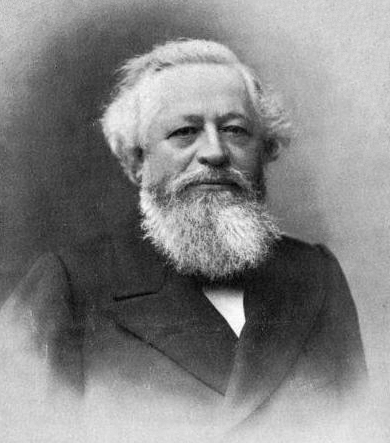
Alexandre Guilmant

logo
Community Hub0 Subscribers
Read side by side
from Wikipedia

Félix-Alexandre Guilmant (French pronunciation: [feliks alɛksɑ̃dʁ ɡilmɑ̃]; 12 March 1837 – 29 March 1911) was a French organist and composer. He was the organist of La Trinité from 1871 until 1901. A noted pedagogue, performer, and improviser, Guilmant helped found the Schola Cantorum de Paris. He was appointed as Professor of Organ in the Conservatoire de Paris in 1896.[1]

Key Information

Biography

[edit]

Guilmant was born in Boulogne-sur-Mer. A student first of his father Jean-Baptiste and later of the Belgian master Jacques-Nicolas Lemmens, he became an organist and teacher in his place of birth.

In 1871 he was appointed to play the organ regularly at la Trinité church in Paris, and this position, organiste titulaire, was one he held for 30 years.[2] Guilmant was known for his improvisations, both in the concert and church setting. His inspiration came from Gregorian chants, and he was greatly noted amongst his colleagues for his mastery of the melodies.[1] From then on, Guilmant followed a career as a virtuoso; he gave concerts in the United States (the first major French organist to tour that country), and in Canada, as well as in Europe, making especially frequent visits to England. His American achievements included a 1904 series of no fewer than 40 recitals on the largest organ in the world, the St. Louis Exposition Organ, now preserved as the nucleus of Philadelphia's Wanamaker Organ.

With his younger colleague André Pirro, Guilmant published a collection of scores, Archives des Maîtres de l'Orgue (Archives of the Masters of the Organ), a compilation of the compositions of numerous pre-1750 French composers. The collection was printed in ten volumes, the first in 1898 and the last (which Guilmant did not live to finalize) in 1914. Guilmant provided a rather similar survey of organ pieces by foreign composers, publishing l'École classique de l'Orgue (Classical School of the Organ). These anthologies, despite all the musicological developments which have taken place since Guilmant's own time, remain very valuable sources of early music.

In 1894 Guilmant founded the Schola Cantorum with Charles Bordes and Vincent d'Indy. He taught there up until his death at his home in Meudon, near Paris, in 1911. In addition, he taught at the Conservatoire de Paris where he succeeded Charles-Marie Widor as organ teacher in 1896.[2] As a teacher, Guilmant was noted for his kindness and attention to detail. His students' recollections feature accounts of a particular focus on all facets of a note: attack, release, character.[3] Marcel Dupré was the most celebrated of his many students. Others included Augustin Barié, Joseph-Arthur Bernier, Joseph Bonnet, Alexandre Eugène Cellier, Abel Decaux, Gabriel Dupont, Charles Henry Galloway, Philip Hale, Edgar Henrichsen, Édouard Mignan, and Émile Poillot. See: List of music students by teacher: G to J#Alexandre Guilmant.

Guilmant's interest in Marcel Dupré began when the latter was a child. Albert Dupré, father of the celebrated Marcel, studied organ with Guilmant for seven years prior to his son's birth. In Dupré's memoirs, he includes an anecdote where Guilmant visits his mother upon his birth and declares that the child will grow up to be an organist. After frequent visits throughout his childhood, Marcel Dupré began studying with Guilmant formally at age 11. From this time until his death, Guilmant championed the young virtuoso and did much to advance his career.[4] Guilmant's house was later purchased then demolished by Dupré and rebuilt. His home organ was also sold to Dupré.

Compositions

[edit]
Clarence Eddy and Alexandre Guilmant, 1898

Guilmant was an accomplished and extremely prolific composer. Unlike Widor, who produced a great deal of music in all the main genres, Guilmant devoted himself almost entirely to works for his own instrument, the organ. His organ output includes: 'Pièces dans différents styles', published in 18 books; 'L'organiste pratique', published in 12 books; Eighteen 'Pièces Nouvelles'; and 'L'Organiste liturgique', published in 10 books. Guilmant's Eight Sonatas were conceived with the Cavaillé-Coll organ of La Trinité in mind, and are therefore symphonic in style and form, taking their place alongside the symphonic organ works of César Franck and the Organ Symphonies of Charles-Marie Widor.

The Sonate No. 1/Symphonie No. 1 for organ and orchestra, Op. 42, was programmed by Sergei Koussevitzky in the 1930s, but was not heard again until Igor Buketoff revived it for a 1977 live recording with the Butler University Orchestra (note, the composer's name is misspelled "Gilmont" in the source).[5]

Though few in number, his works for instruments besides the organ have not been entirely neglected. For example, the Morceau Symphonique is one of the most frequently performed trombone solos, enjoying longstanding popularity among both professional and advanced student trombonists.

Opus list

[edit]
Opus Title
1 Ave Verum pour Choeur et Orgue
2 O Salutaris Hostia pour Choeur et Orgue
3 Faux-Bourdons - Chant de la Commission de Reims et Cambras
4 Messe en Fa majeur pour Choeur et Orgue
6 Première Messe à 4 Voix, Choeur et Orgue
7 Te Deum pour Choeur et Orgue
8 Quam Dilecta (Psaume 83) pour Choeur et Orgue
9 Messe Brève pour Choeur et Orgue
11 Troisième Messe Solennelle pour Choeur et Orgue
12 Cinq Litanies en l’honneur de la bienheureuse Vierge Marie à une, deux, trois ou quatre voix
(13) Échos du mois de Marie - Cantiques à une ou deux voix égales avec accompagnement d'orgue ou d'harmonium
14 12 Motets pour Choeur et Orgue
15 Pièces dans différents styles pour orgue, livraison 1
16 Pièces dans différents styles pour orgue, livraison 2
17 Pièces dans différents styles pour orgue, livraison 3
18 Pièces dans différents styles pour orgue, livraison 4
19 Pièces dans différents styles pour orgue, livraison 5
20 Pièces dans différents styles pour orgue, livraison 6
21 Kyrie Eleison pour Choeur et Orgue/Orchestre
22 Prière pour Violoncello et Piano
23 Deux Morceaux pour Harmonium
24 Pièces dans différents styles pour orgue, livraison 7
25 Pièces dans différents styles pour orgue, livraison 8
26 Pastorale pour Harmonium et Piano duo
27 Prière et Berceuse pour Harmonium
28 Canzonetta pour Harmonium
29 Fughetta de Concert pour Harmonium
30 Aspiration Religieuse pour Harmonium
31 Scherzo pour Harmonium
32 Deux Pièces pour Harmonium
33 Pièces dans différents styles pour orgue, livraison 9
34 Marche Triomphale pour Harmonium et Piano duo
35 Mazurka de Salon pour Harmonium
36 Scherzo Capriccioso pour Harmonium et Piano duo
37 O Salutaris pour Basse ou Baryton et Orgue
38 Idylle pour Piano
39 L'Organiste Pratique pour Harmonium, livraison 1
40 Pièces dans différents styles pour orgue, livraison 10
41 L'Organiste Pratique pour Harmonium, livraison 2
42 Sonate No. 1/Symphonie No. 1 pour Orgue (et Orchestre)
43 Fantaisie sur deux Mélodie Anglaises pour Orgue
44 Pièces dans différents styles pour orgue, livraison 11
45 Pièces dans différents styles pour orgue, livraison 12
46 L'Organiste Pratique pour Harmonium, livraison 3
47 L'Organiste Pratique pour Harmonium, livraison 4
48 Six petites pièces pour Piano réunies
49 L'Organiste Pratique pour Harmonium, livraison 5
50 L'Organiste Pratique pour Harmonium, livraison 6
(Seconde Sonate pour Grand Orgue)
51 Balthazar: Scène Lyrique
52 L'Organiste Pratique pour Harmonium, livraison 7
53 Symphonie-Cantate Ariane
54 Cantate en l’honneur de Frédéric Sauvage pour Choeur et Orchestre
55 L'Organiste Pratique pour Harmonium, livraison 8
56 L'Organiste Pratique pour Harmonium, livraison 9
(Troisième Sonate pour Grand Orgue)
57 L'Organiste Pratique pour Harmonium, livraison 10
58 L'Organiste Pratique pour Harmonium, livraison 11
59 L'Organiste Pratique pour Harmonium, livraison 12
60 Noëls pour Harmonium ou Orgue (4 livraisons)
61 Quatrième Sonate pour Harmonium ou Grand Orgue
62 Couronnement de Notre-Dame de Boulogne-sur-Mer pour Choeur et Orchestre
63 Méditation sur le Stabat Mater pour Orgue et Orchestre
64 Christus Vincit pour Choeur et Orgue
65 L'Organiste Liturgiste pour Orgue ou Harmonium (10 livraisons)
66 Ecce Panis pour Choeur et Orgue
67 Deux Romances sans Paroles pour Violoncello ou Violon et Piano
68 60 Interludes dans la tonalité Grégorienne pour Orgue ou Harmonium
69 Pièces dans différents styles pour orgue, livraison 13
70 Pièces dans différents styles pour orgue, livraison 14
71 Pièces dans différents styles pour orgue, livraison 15
72 Pièces dans différents styles pour orgue, livraison 16
73 Pie Jesu pour Baryton et Choeur
74 Pièces dans différents styles pour orgue, livraison 17
75 Pièces dans différents styles pour orgue, livraison 18
77 Sept pièces for organ
78 Berceuse (Elegie) pour Flûte et Piano
79 Berceuse pour Flûte ou Violon et Piano
80 Sonate No. 5 pour Grand Orgue
81 Allegro pour Orgue et Orchestre
82 Two pieces for organ
83 Final alla Schumann pour Orgue et Orchestre
84 Grand Choeur en forme de Marche pour Grand Orgue
85 Romance sans Paroles pour Flute et Piano
86 Sonate No. 6 pour Grand Orgue
87 Offertoire sur le commun des confesseurs non pontifes
88 Morceau Symphonique pour Trombone et Piano
89 Sonate No. 7 (Suite) pour Grand Orgue, dédié à Monsieur Charles Galloway
90 18 Pièces Nouvelles pour Orgue (7 livraisons)
91 Sonate No. 8/Symphonie No. 2 pour Grand Orgue/Orgue et Orchestre
92 Voluntary for the Organ
93 Chorals et Noëls pour Orgue
94 Trois Oraisons pour Orgue

References

[edit]
[edit]
Revisions and contributorsEdit on WikipediaRead on Wikipedia
from Grokipedia
Félix-Alexandre Guilmant (1837–1911) was a French organist, composer, and pedagogue, celebrated for his virtuoso performances, extensive organ compositions, and efforts to revive early music through scholarly editions during the late Romantic era.[1] Born on March 12, 1837, in Boulogne-sur-Mer, France, to organist Jean-Baptiste Guilmant, he received initial training from his father before studying with the renowned organist Jacques-Nicolas Lemmens in Brussels and later in Paris.[1][2] At age 16, he performed for Napoleon III, marking the start of his public career, and by 1871, he had become the principal organist at the Church of La Trinité in Paris, a position he held until 1901.[1][2] Guilmant's international reputation grew through extensive concert tours across Europe, the United States, and Canada, including a notable 1893 tour of America where he performed at the World's Columbian Exposition in Chicago.[1] In 1894, he co-founded the Schola Cantorum de Paris with composers Charles Bordes and Vincent d'Indy, an institution dedicated to sacred music and plainchant that became a major influence on French musical education.[1][2] From 1896 until his death, he succeeded Charles-Marie Widor as professor of organ at the Paris Conservatoire, where he mentored prominent students such as Marcel Dupré, emphasizing technical mastery and historical awareness.[1][2] As a composer, Guilmant produced over 100 opus numbers, predominantly for organ, including eight grand symphonies (sonatas), the Pièces dans différents styles (18 books), and the popular Morceau symphonique, Op. 88, originally for trombone and orchestra but widely adapted.[1][2] His works blend Romantic expressiveness with classical forms, often drawing on French Baroque influences, and he also composed chamber music, orchestral pieces like the Symphony No. 1, Op. 42 (for organ and orchestra), and vocal works including the cantata Ariane (Op. 53).[2][3] Guilmant's scholarly legacy includes co-editing the ten-volume Archives des maîtres de l'orgue (1898–1914) with André Pirro, which preserved and transcribed works by composers like Titelouze and Buxtehude, and the École classique de l'orgue series, promoting authentic performance practices for early organ repertoire.[1][4] His cautious editorial methods, separating original texts from interpretive additions, shaped organ scholarship until the mid-20th century and helped bridge Romantic and historical styles in French music.[4] Guilmant died on March 29, 1911, in Meudon, France, leaving an enduring impact on organ performance and composition.[1]

Early Life and Education

Family and Childhood

Félix-Alexandre Guilmant was born on 12 March 1837 in Boulogne-sur-Mer, a coastal town in northern France.[5] He was the son of Jean-Baptiste Guilmant, a professional organist who served at the Church of Saint-Nicolas, and Marie Thérèse Poulain.[6] The Guilmant family came from a long line of organists and organ builders in the region, with Jean-Baptiste and his father constructing pipe organs primarily in northern France.[7] This heritage made music a central element of family life, rather than a mere avocation, within a modest middle-class household sustained by Jean-Baptiste's role in the local church.[8] Guilmant grew up with several siblings—at least eight in total—amid a provincial environment where the family's musical pursuits fostered regular performances and discussions at home.[5] Some family members followed in the organist tradition, contributing to an atmosphere that served as an informal musical hub in Boulogne-sur-Mer. Jean-Baptiste provided his son's initial organ lessons in early childhood, introducing him to the instrument through hands-on practice at the family home and church. By age 12, he was substituting for his father at church services, gaining practical experience.[8] From a young age, Guilmant was immersed in the sounds of church music, including Gregorian chants, due to his father's position at Saint-Nicolas, where liturgical services formed the core of daily life.[9] This early exposure in a supportive yet unpretentious setting laid the groundwork for his lifelong dedication to the organ.[8]

Musical Training

Guilmant received his initial musical instruction from his father, Jean-Baptiste Guilmant, a professional organist in Boulogne-sur-Mer, who taught him the fundamentals of organ playing, including basic technique essential for church music performance.[10][11] His father also fostered an early versatility that extended beyond the organ. Additionally, local musician Gustave Carulli provided supplementary training, helping to refine Guilmant's foundational abilities before more advanced studies.[10] In 1860, at the age of 23, Guilmant traveled to Brussels to pursue advanced organ studies with the renowned Belgian pedagogue Jacques-Nicolas Lemmens, whose rigorous "style sévère" emphasized classical organ technique, precise pedal work, and disciplined improvisation rooted in the German tradition.[10][11][12] This brief but intensive period under Lemmens proved decisive, instilling in Guilmant a mastery of counterpoint and structural clarity that contrasted with the more flamboyant French styles of the era, such as those of Lefébure-Wély.[10] Lemmens' influence is evident in Guilmant's later emphasis on pedal independence and the integration of Baroque elements into Romantic expression.[13] Guilmant supplemented his formal training through self-directed study of Johann Sebastian Bach and other early masters, absorbing principles of counterpoint and fugal writing that shaped his compositional approach.[10] He began making frequent visits to Paris in the 1860s for performances and greater exposure to contemporary musical circles, including at Saint-Sulpice (1862) and Notre-Dame (1868); upon relocating permanently in 1871, he formed a lifelong friendship with César Franck that further enriched his development in composition and performance. His early compositional efforts emerged around this time, with initial publications including choral and organ pieces like the Ave Verum, Op. 1 (c. 1860).[14] By his early twenties, Guilmant had begun experimenting with piano works, though his primary focus remained on organ repertoire that reflected his evolving romantic style.[15]

Professional Career

Organist Positions

Guilmant commenced his Paris career before assuming the role of principal organist at the Église de la Sainte-Trinité in 1871, a post he maintained for three decades until 1901.[16][17] At La Trinité, Guilmant gained fame for his improvisational prowess during weekly services, frequently drawing upon Gregorian chants and motifs from earlier masters such as Bach, which captivated audiences including international visitors eager to witness his virtuosity.[18] The church's Aristide Cavaillé-Coll organ, installed in 1869, profoundly shaped his performance and compositional style, emphasizing a symphonic palette with rich dynamic contrasts and orchestral timbres that became hallmarks of his organ works.[19] Guilmant resigned from La Trinité in 1901 following a heated dispute with church authorities over unsatisfactory renovations to the instrument by the Merklin firm, though he returned for occasional performances in subsequent years.[18] Through his advocacy for revitalizing French organ traditions, including the promotion of classical repertoire and liturgical integration, he contributed significantly to broader reforms in church organ practices.[10]

International Tours

Guilmant's international concert career began in the 1870s with tours across Europe, where he performed in England, Germany, and Belgium, often premiering his own compositions alongside classical repertoire. These early European engagements established his reputation as a virtuoso capable of blending French romanticism with historical organ traditions, paving the way for broader transcontinental invitations.[20][21] His first major tour outside Europe occurred in 1893, when he traveled to the United States for the World's Columbian Exposition in Chicago, performing four recitals at Festival Hall on the Farrand & Votey organ. Arranged by American organist Clarence Eddy, the tour extended to major cities including New York, Detroit, and Ann Arbor, where Guilmant introduced audiences to the French romantic organ style through programs featuring his own sonatas, Bach preludes and fugues, and works by contemporaries like Charles-Marie Widor and Théodore Dubois. This visit marked him as the first prominent French organist to tour the U.S. extensively, captivating listeners with his technical precision and thematic improvisations on familiar hymns.[22][7] Subsequent U.S. visits further solidified his transatlantic influence. In 1898, during his second tour, Guilmant delivered numerous recitals across the country, including stops in Troy, New York, and North Adams, Massachusetts, while also founding the Guilmant Organ School in New York City to train American musicians in French techniques. His 1904 tour culminated at the St. Louis World's Fair, where he presented an unprecedented 40 recitals on the exposition's massive Los Angeles Art Organ Company instrument—the largest in the world at the time with five manuals and 140 stops—mixing his symphonies and Bach transcriptions to highlight organ versatility. Additional performances that year included Vassar College in New York and the Peabody Conservatory in Baltimore, emphasizing the growing demand for his interpretive style.[7][23] Canadian performances were integrated into his North American itineraries, expanding his reach beyond the U.S. border. In 1893, he played at Montreal's Notre-Dame Basilica on a Casavant Frères organ, drawing over 20,000 attendees across two events, and returned in 1898 for a recital in Toronto on a Karn & Warren instrument, where his programs of original works and Bach arrangements resonated with local organ enthusiasts. These engagements helped disseminate French organ traditions northward, fostering early cross-border appreciation.[7] Overall, Guilmant's tours positioned him as a pioneer in globalizing French organ music, with programs that balanced his compositions—such as Sonate No. 1 and Symphonie No. 1—with Bach transcriptions like the Prelude and Fugue in G Major, BWV 541, to bridge historical and romantic eras. His performances not only elevated international interest in the organ but also influenced instrument design and pedagogy abroad, as evidenced by the enduring legacy of the Guilmant Organ School and shifts in American organ repertoire toward French influences.[21][7]

Teaching Roles

In 1894, Alexandre Guilmant co-founded the Schola Cantorum de Paris alongside Vincent d'Indy and Charles Bordes, establishing it as an institution dedicated to the study and performance of sacred music traditions, including Gregorian chant and Renaissance polyphony, in response to the Paris Conservatoire's emphasis on opera.[1][2] He served as professor of organ there from its inception until his death in 1911, shaping its curriculum to prioritize historical and liturgical elements over contemporary dramatic styles.[24][25] In 1896, Guilmant was appointed professor of organ at the Paris Conservatoire, succeeding Charles-Marie Widor in a role previously held by César Franck until 1890, and he continued teaching until 1911.[12][26] His classes emphasized improvisation as a core skill, drawing from his own renowned concert experiences, while integrating historical performance practices and the analysis of early music forms such as Renaissance polyphony.[24][26] This approach also incorporated Gregorian chant to foster a deeper connection between organ technique and liturgical context.[2] A key pedagogical initiative was Guilmant's editing of L'École Classique de l'Orgue, a comprehensive 25-volume collection of classical organ works by foreign masters, published between 1898 and 1903, designed specifically to support teaching and repertoire expansion in organ education.[2] Through his work at the Schola Cantorum, Guilmant helped steer French music education toward sacred and classical roots, influencing post-Wagnerian developments by reinforcing polyphonic and chant-based traditions against operatic dominance.[24][25] His international tours further informed his teaching by introducing diverse repertoires that enriched classroom discussions on global organ styles.[12]

Musical Compositions

Organ Works

Alexandre Guilmant was a prolific composer of organ music, producing over 80 pieces that form the core of his output, including eight sonatas (Opp. 42, 50, 56, 61, 80, 86, 89, and 91, composed between 1874 and 1906) and the extensive collection Pièces dans Différents Styles comprising 18 books (Opp. 15–20, 24, 25, 33, 40, 44, 45, 69–72, 74, and 75, spanning 1878 to 1907).[27] These works, alongside standalone pieces and cycles, reflect his dedication to the instrument, with more than 60 opus numbers devoted exclusively to organ repertoire. Guilmant's compositional focus on the organ stemmed from his role as a virtuoso performer, allowing him to tailor his music to the capabilities of the era's instruments. Stylistically, Guilmant's organ music embodies Romantic symphonic writing characterized by French clarity and elegance, incorporating Bach-inspired counterpoint in fugal passages and Franck-like chromaticism for emotional depth.[28] He frequently drew on modal scales derived from Gregorian chant sources, infusing his pieces with a liturgical sensibility that blended historical reverence with modern expressiveness.[4] This synthesis is evident in the structural balance of his works, where symphonic development meets contrapuntal rigor, often evoking vivid programmatic imagery while maintaining formal coherence. Among his notable compositions, the Sonata No. 1 in D minor, Op. 42 (1874) stands out for its pastoral finale in Allegro assai, a rondo-toccata form that combines energetic virtuosity with lyrical, hymn-like episodes reminiscent of Mendelssohn.[28] The Pastorale from Pièces dans Différents Styles, Book 3, Op. 17 (1880) evocatively captures rural scenes through gentle, flowing melodies and subtle dynamic contrasts. Additionally, his Livre d'Orgue cycles integrate prelude-fugue forms, drawing on classical models to create cohesive sets that highlight contrapuntal interplay and thematic development. Most of Guilmant's organ works were published by the French firm Durand and the German house Schott, ensuring wide dissemination across Europe. Composed specifically for the symphonic organs of Aristide Cavaillé-Coll, they exploit the instrument's dynamic registrations, such as swelling reeds and colorful mutations, to achieve orchestral effects.[29] His compositional process often involved premiering pieces in his own recitals at venues like the Palais du Trocadéro in Paris, where he refined them through live performance before final publication.

Non-Organ Works

Guilmant's non-organ compositions represent a modest portion of his oeuvre, comprising fewer than 20 opus numbers out of his total of 94 published opus numbers, with the majority dedicated to the organ.[30] These pieces, often premiered in concerts alongside his organ performances, encompass chamber music, orchestral works, piano solos, songs, and sacred vocal music, yet they remain less performed today due to the dominance of his organ repertoire. His approach in these genres frequently adapts organistic techniques, such as sustained pedal lines and contrapuntal textures, to instrumental and vocal ensembles, reflecting his foundational expertise as an organist. In chamber music, Guilmant explored lyrical melodies and polyphonic structures suited to strings and piano, evoking the expressive depth of his organ writing. Though limited in number, these works highlight Guilmant's versatility beyond the keyboard.[2] Orchestral and vocal compositions form another key category, with sacred choral pieces like the Messe Solennelle No. 3, Op. 11, and motets such as O Salutaris, Op. 37, emphasizing choral sonority and liturgical elegance. The Morceau Symphonique, Op. 88 (1902), stands out as a prominent orchestral work for trombone and orchestra (or brass band), featuring dramatic contrasts and virtuosic solos that premiered as an examination piece for the Paris Conservatory. His most ambitious non-organ vocal effort is the sinfonia cantata Ariane, Op. 53, a large-scale choral-orchestral piece drawing on mythological themes with rich symphonic development. Other genres include piano solos like the Nocturne, Op. 1, which offers contemplative lyricism, alongside songs and incidental music that extend his melodic gift to smaller vocal forms. The 12 Motets, Op. 14, exemplify his sacred vocal style with concise, devotional settings for choir. Overall, these compositions integrate organ-derived elements—such as imitative counterpoint and pedal-like bass lines—into orchestral and chamber contexts, underscoring Guilmant's unified compositional voice across mediums.

Legacy and Influence

Students and Publications

Guilmant mentored several prominent organists and musicians at the Paris Conservatoire and Schola Cantorum, emphasizing rigorous technique, improvisation, and historical fidelity in performance. Among his notable students were Marcel Dupré, who regarded Guilmant as a primary influence on his improvisational skills and later succeeded Widor at Saint-Sulpice Church; Joseph Bonnet, who studied organ with him and went on to teach at institutions like the Eastman School of Music; and Nadia Boulanger, who took private organ lessons from Guilmant alongside her Conservatoire training. These pupils carried forward Guilmant's focus on precise execution of early repertoire, blending classical forms with romantic expressiveness.[10][31][32][33][34][35] A key aspect of Guilmant's scholarly legacy involved editorial work to revive and adapt historical organ music for modern instruments. Collaborating with musicologist André Pirro, he co-edited the ten-volume Archives des Maîtres de l'Orgue des XVIe, XVIIe et XVIIIe Siècles between 1898 and 1914, which featured annotated transcriptions of works by composers such as Dietrich Buxtehude, Johann Sebastian Bach, and French masters like Nicolas Lebègue and François Couperin. This project preserved obscure manuscripts from European libraries, providing biographical notes by Pirro and practical adaptations by Guilmant to suit contemporary organs while maintaining stylistic authenticity. The series played a crucial role in reintroducing Baroque and Classical organ literature to performers and educators.[36][4] Guilmant also produced the École Classique de l'Orgue series from 1898 to 1903, comprising 26 volumes of selected pieces by international composers, including fugues by George Frideric Handel, preludes by Buxtehude, and works by Johann Gottfried Walther. Intended for pedagogical purposes, these editions promoted the 17th- and 18th-century French organ school through annotated scores that highlighted contrapuntal techniques and registration practices, aiding students in achieving historical accuracy. By curating such collections, Guilmant bridged Renaissance and Baroque traditions with the evolving French symphonic style, influencing teaching methods at the Conservatoire.[2][4] Through his students, Guilmant shaped the French Symphonic School, as Dupré, Bonnet, and others assumed organist positions at major cathedrals and conservatories, perpetuating his synthesis of improvisation, historical scholarship, and symphonic grandeur in organ playing. Dupré, in particular, inherited and expanded Guilmant's improvisational legacy, applying it to liturgical and concert settings that echoed the romantic organ tradition. Guilmant's editorial efforts further reinforced this influence by making early repertory accessible, ensuring his pupils could integrate classical precision into their performances.[37][38][39] Guilmant died on 29 March 1911 at his home in Meudon, near Paris, at the age of 74. In the aftermath, his personal house organ, built by Aristide Cavaillé-Coll in 1899, was acquired by Marcel Dupré, who installed it in his own residence and drew inspiration from it for compositions and teaching.[1][40]

Modern Reception

Guilmant's organ music reached its peak of popularity in the early 20th century, exemplified by his acclaimed series of 40 recitals at the 1904 St. Louis Exposition, which showcased the symphonic style of French Romantic organ composition. However, by the 1930s, the rise of modernism and the Orgelbewegung movement led to a decline in interest, as composers and performers shifted toward experimental techniques, neoclassical reforms, and a reevaluation of Baroque aesthetics that marginalized the lush, orchestral textures of Romantic works like Guilmant's. This mid-century dip was exacerbated by alterations to Cavaillé-Coll organs to suit neo-Baroque ideals, reducing the suitability of symphonic repertoire for the evolving instrument.[41] A revival began in the late 20th century, particularly from the 1970s onward, driven by the historical performance movement and the Early Music revival, which renewed appreciation for 19th-century French organ traditions as a bridge between classical clarity and Romantic expressivity. Guilmant's compositions, with their cyclical forms and melodic invention, gained traction in academic studies for linking these eras, influencing later figures like Olivier Messiaen, who expanded the symphonic organ palette while drawing on the French school's coloristic innovations. His scholarly editions, such as the École Classique de l'Orgue and Archives des Maîtres de l'Orgue, continue to promote historical awareness and informed performance practices among contemporary organists.[41][4][42] Recordings have played a key role in this resurgence, with extensive discographies featuring complete sets of his eight organ sonatas. Notable interpretations include Marie-Claire Alain's recordings of works like the Final from Sonata No. 1 in D minor, Op. 42, captured on historic instruments to highlight their liturgical and concert vitality. Olivier Latry has also contributed through live and studio performances, such as his rendition of the same sonata's finale at Notre-Dame de Paris. Digital releases on labels like Naxos, which offer volumes of his organ works performed by artists like Robert Delcamp, and Hyperion, featuring selections in broader organ anthologies, have made his music widely accessible.[43][44][45][46] Today, Guilmant's pieces are regularly programmed at major organ festivals, including the St. Albans International Organ Festival, where they are valued for their technical demands and melodic accessibility in both recital and educational contexts. While praised for inventive themes and structural elegance, his oeuvre is sometimes critiqued for its conservatism, adhering closely to 19th-century forms amid modernism's innovations—though his sonatas demonstrate experimental elements like thematic unification. Scholarly interest persists in his Bach transcriptions and arrangements, which advanced early music research and remain staples for studying performance practice transitions.[47][42][4]

References

User Avatar
No comments yet.