
Recent from talks
Alligator
Knowledge base stats:
Talk channels stats:
Members stats:
Alligator
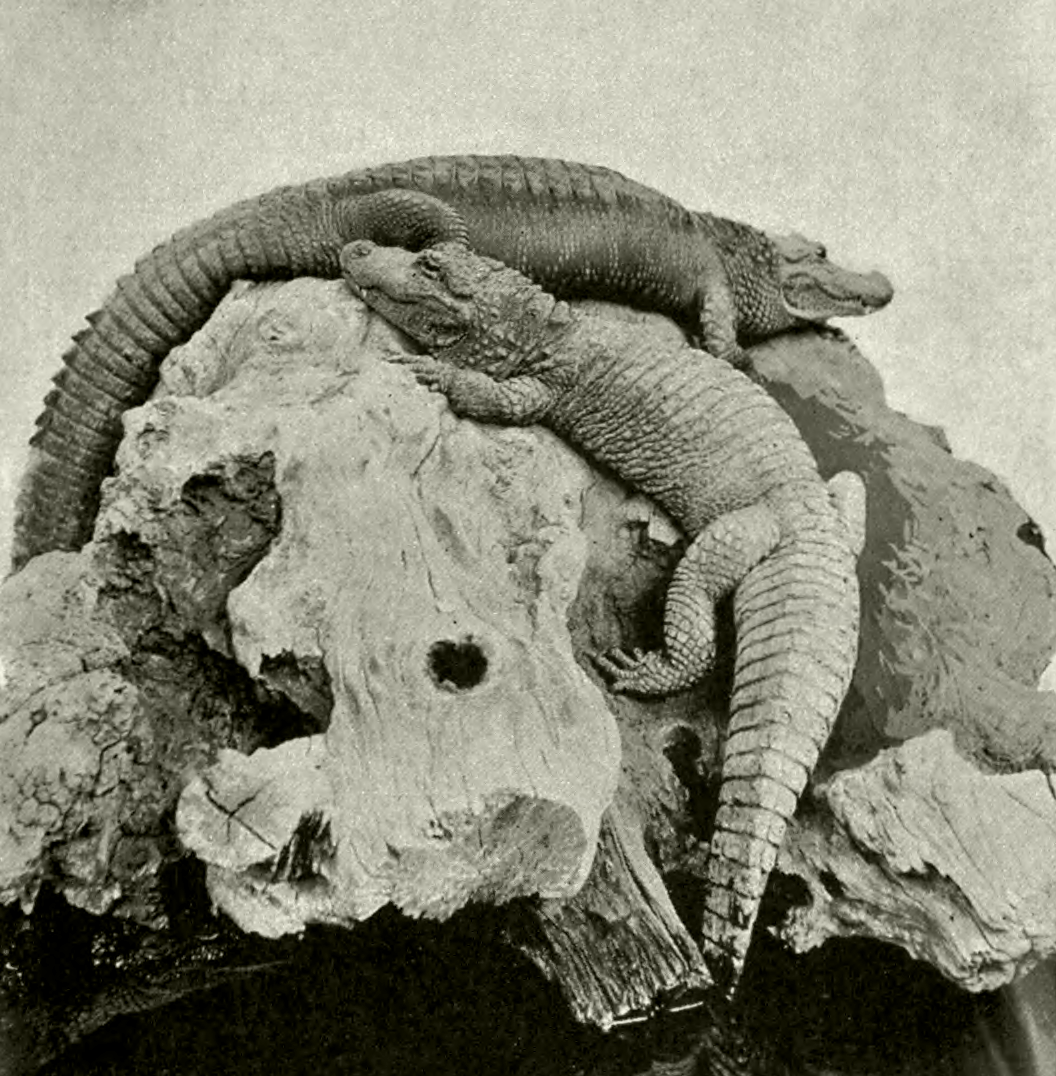
An alligator, or colloquially gator, is a large reptile in the genus Alligator of the family Alligatoridae in the order Crocodilia. The two extant species are the American alligator (A. mississippiensis) and the Chinese alligator (A. sinensis). Additionally, several extinct species of alligator are known from fossil remains. Alligators first appeared during the late Eocene epoch about 37 million years ago.
The term "alligator" is likely an anglicized form of el lagarto, Spanish for "the lizard", which early Spanish explorers and settlers in Florida called the alligator. Early English spellings of the name included allagarta and alagarto.
Alligators are notable for their ability to inhabit climates that are considerably more temperate than those of most other crocodilians. Although they generally prefer subtropical to tropical regions, they are also capable of surviving colder winters in the northern parts of their range.
Alligators and caimans split in North America during the early Tertiary or late Cretaceous (about 53 million to 65 million years ago). The Chinese alligator split from the American alligator about 33 million years ago and probably descended from a lineage that crossed the Bering land bridge during the Neogene. The modern American alligator is well represented in the fossil record of the Pleistocene. The alligator's full mitochondrial genome was sequenced in the 1990s. The full genome, published in 2014, suggests that the alligator evolved much more slowly than mammals and birds.
The genus Alligator belongs to the subfamily Alligatorinae, which is the sister taxon to Caimaninae (the caimans). Together, these two subfamilies form the family Alligatoridae. The cladogram below shows the phylogeny of alligators.
An average adult American alligator's weight and length is 360 kg (790 lb) and 4 m (13 ft), but they sometimes grow to 4.4 m (14 ft) long and weigh over 450 kg (990 lb). The largest ever recorded, found in Louisiana, measured 5.84 m (19.2 ft). The Chinese alligator is smaller, rarely exceeding 2.1 m (7 ft) in length. Additionally, it weighs considerably less, with males rarely over 45 kg (100 lb).
Adult alligators are black or dark olive-brown with white undersides, while juveniles have bright yellow or whitish stripes which sharply contrast against their dark hides, providing them additional camouflage amongst reeds and wetland grasses.
Alligators commonly live up to 50 years, but there have been examples of alligators living over 70. One of the oldest recorded alligator lives was that of Saturn, an American alligator who was hatched in 1936 in Mississippi and spent nearly a decade in Germany before spending the majority of his life at the Moscow Zoo, where he died at the age of 83 or 84 on 22 May 2020. Another one of the oldest lives on record is that of Muja, an American alligator who was brought as an adult specimen to the Belgrade Zoo in Serbia from Germany in 1937. Although no valid records exist about his date of birth, as of 2012, he was in his 80s and possibly the oldest alligator living in captivity.
Hub AI
Alligator AI simulator
(@Alligator_simulator)
Alligator
An alligator, or colloquially gator, is a large reptile in the genus Alligator of the family Alligatoridae in the order Crocodilia. The two extant species are the American alligator (A. mississippiensis) and the Chinese alligator (A. sinensis). Additionally, several extinct species of alligator are known from fossil remains. Alligators first appeared during the late Eocene epoch about 37 million years ago.
The term "alligator" is likely an anglicized form of el lagarto, Spanish for "the lizard", which early Spanish explorers and settlers in Florida called the alligator. Early English spellings of the name included allagarta and alagarto.
Alligators are notable for their ability to inhabit climates that are considerably more temperate than those of most other crocodilians. Although they generally prefer subtropical to tropical regions, they are also capable of surviving colder winters in the northern parts of their range.
Alligators and caimans split in North America during the early Tertiary or late Cretaceous (about 53 million to 65 million years ago). The Chinese alligator split from the American alligator about 33 million years ago and probably descended from a lineage that crossed the Bering land bridge during the Neogene. The modern American alligator is well represented in the fossil record of the Pleistocene. The alligator's full mitochondrial genome was sequenced in the 1990s. The full genome, published in 2014, suggests that the alligator evolved much more slowly than mammals and birds.
The genus Alligator belongs to the subfamily Alligatorinae, which is the sister taxon to Caimaninae (the caimans). Together, these two subfamilies form the family Alligatoridae. The cladogram below shows the phylogeny of alligators.
An average adult American alligator's weight and length is 360 kg (790 lb) and 4 m (13 ft), but they sometimes grow to 4.4 m (14 ft) long and weigh over 450 kg (990 lb). The largest ever recorded, found in Louisiana, measured 5.84 m (19.2 ft). The Chinese alligator is smaller, rarely exceeding 2.1 m (7 ft) in length. Additionally, it weighs considerably less, with males rarely over 45 kg (100 lb).
Adult alligators are black or dark olive-brown with white undersides, while juveniles have bright yellow or whitish stripes which sharply contrast against their dark hides, providing them additional camouflage amongst reeds and wetland grasses.
Alligators commonly live up to 50 years, but there have been examples of alligators living over 70. One of the oldest recorded alligator lives was that of Saturn, an American alligator who was hatched in 1936 in Mississippi and spent nearly a decade in Germany before spending the majority of his life at the Moscow Zoo, where he died at the age of 83 or 84 on 22 May 2020. Another one of the oldest lives on record is that of Muja, an American alligator who was brought as an adult specimen to the Belgrade Zoo in Serbia from Germany in 1937. Although no valid records exist about his date of birth, as of 2012, he was in his 80s and possibly the oldest alligator living in captivity.
Recent media