


Community hub
Recent from talks
Contribute something
Nothing was collected or created yet.
List of generation IV Pokémon
View on Wikipedia
| List of Pokémon by generation |
| Related: List of Pokémon |
The fourth generation (generation IV) of the Pokémon franchise features 107 fictional species of creatures introduced to the core video game series in the 2006 Nintendo DS games Pokémon Diamond and Pearl. Some Pokémon in this generation were introduced in games and animated adaptations of the franchise before Diamond and Pearl, such as Bonsly, Mime Jr., and Munchlax, which were recurring characters in the Pokémon anime series in 2005 and 2006.
The following list details the 107 Pokémon of generation IV in order of their National Pokédex number. The first Pokémon, Turtwig, is number 387 and the last, Arceus, is number 493. Alternate forms that result in type changes are included for convenience. Mega Evolutions and regional forms are included on the pages for the generation in which they were introduced.
Design and development
[edit]Pokémon are a species of fictional creatures created for the Pokémon media franchise. Developed by Game Freak and published by Nintendo, the Japanese franchise began in 1996 with the video games Pokémon Red and Green for the Game Boy, which were later released in North America as Pokémon Red and Blue in 1998.[1] In these games and their sequels, the player assumes the role of a Trainer whose goal is to capture and use the creatures' special abilities to combat other Pokémon. Some Pokémon can transform into stronger species through a process called evolution via various means, such as exposure to specific items.[2] Each Pokémon have one or two elemental types, which define its advantages and disadvantages when battling other Pokémon.[3] A major goal in each game is to complete the Pokédex, a comprehensive Pokémon encyclopedia, by capturing, evolving, and trading with other Trainers to obtain individuals from all Pokémon species.[2]
List of Pokémon
[edit]| Name[nb 2] | Type(s) | Evolves from | Evolves into | Notes | |
|---|---|---|---|---|---|
| Turtwig Naetoru (ナエトル)[5] (0387) |
Grass | — | Grotle (#388) | Its shell is made from hardened soil. It can photosynthesize with its body. It becomes more energetic under sunlight. The sprout on its head wilts if it is thirsty. | |
| Grotle Hayashigame (ハヤシガメ)[6] (0388) |
Grass | Turtwig (#387) | Torterra (#389) | It lives in forests near clean spring water, and carries thirsty Pokémon to those springs. It goes out during the day to bathe in the sun. | |
| Torterra Dodaitosu (ドダイトス)[7] (0389) |
Grass / Ground | Grotle (#388) | — | Some Pokémon make their nests on a Torterra's back, and their children may spend their entire lives there. Groups of Torterra roaming around in search of clear water have been mistaken for forests moving on their own. Ancient civilizations believed that a giant Torterra lived underground. | |
| Chimchar Hikozaru (ヒコザル)[8] (0390) |
Fire | — | Monferno (#391) | Its rear end expels gas created in its belly and lights it on fire. It only puts the fire out when sleeping to avoid causing wildfires. | |
| Monferno Mōkazaru (モウカザル)[9] (0391) |
Fire / Fighting | Chimchar (#390) | Infernape (#392) | The brightness of its facial markings and the fire on its tail indicates its rank in a pack. It climbs around walls and ceilings to attack, and uses fire to keep the opponent at a safe distance. | |
| Infernape Gōkazaru (ゴウカザル)[10] (0392) |
Fire / Fighting | Monferno (#391) | — | It uses all its limbs in battle to toss opponents around. Its fighting style resembles a sort of martial art or dance. | |
| Piplup Pochama (ポッチャマ)[6] (0393) |
Water | — | Prinplup (#394) | A proud and stubborn species, it does not easily accept food or care from its Trainer. It can dive under cold waters for up to 10 minutes to hunt. | |
| Prinplup Pottaishi (ポッタイシ)[10] (0394) |
Water | Piplup (#393) | Empoleon (#395) | Because each Prinplup believes it is the most important of its species, it prefers to live alone. Its wings are strong enough to snap trees in half. | |
| Empoleon Enperuto (エンペルト)[6] (0395) |
Water / Steel | Prinplup (#394) | — | The Empoleon with the biggest horns is the one that leads a pack. While it prefers avoiding unnecessary violence, it will attack anything that hurts its pride. The edges of its wings are strong and sharp enough to cut chunks of ice. | |
| Starly Mukkuru (ムックル)[6] (0396) |
Normal / Flying | — | Staravia (#397) | A lone Starly is weak, so it lives in flocks, though they may start bickering if the group becomes too big. | |
| Staravia Mukubādo (ムクバード)[10] (0397) |
Normal / Flying | Starly (#396) | Staraptor (#398) | Staravia is also weak on its own, so it joins or commands flocks. A territorial species, it may compete with other bird Pokémon. | |
| Staraptor Mukuhōku (ムクホーク)[11] (0398) |
Normal / Flying | Staravia (#397) | — | Upon evolution, it leaves its flock to lead a solitary life. It is strong enough to carry large Pokémon without effort. It cares for its comb. | |
| Bidoof Bippa (ビッパ)[12] (0399) |
Normal | — | Bibarel (#400) | It creates and lives in dams with other Bidoof and Bibarel. Its teeth have been noted to grow at the same rate as those of Rattata. It gnaws on wood to keep them filed down. | |
| Bibarel Bīdaru (ビーダル)[12] (0400) |
Normal / Water | Bidoof (#399) | — | It builds dams from wood and mud. Its fur can repel water and retain heat. It is more skilled at swimming than walking. | |
| Kricketot Korobōshi (コロボーシ)[12] (0401) |
Bug | — | Kricketune (#402) | By rubbing its antennae together, it emits sounds similar to those of a xylophone, which it uses for communication. Groups of Kricketot chirp frequently during autumn evenings. | |
| Kricketune Korotokku (コロトック)[12] (0402) |
Bug | Kricketot (#401) | — | Its arms are similar to blades. It rubs them on its body to produce melodic sounds. Its violin-like cry is the subject of an internet meme, which was officially referenced in Pokémon Legends: Arceus.[13] | |
| Shinx Korinku (コリンク)[8] (0403) |
Electric | — | Luxio (#404) | The movements of its muscles generate static electricity, which makes it glow. It can flash light on opponents to blind them, and emit light from the tip of its tail to communicate with other Shinx. | |
| Luxio Rukushio (ルクシオ)[10] (0404) |
Electric | Shinx (#403) | Luxray (#405) | It gathers with other Luxio to generate more electricity than usual. It can release up to 1,000,000 volts on an opponent through its claws. | |
| Luxray Rentorā (レントラー)[14] (0405) |
Electric | Luxio (#404) | — | It can see through solid objects, though the energy this takes requires that it sleeps for long periods of time. Luxray form packs led by a male. | |
| Budew Subomī (スボミー)[15] (0406) |
Grass / Poison | — | Roselia (#315) | The opening of its buds spreads pollen, which can cause sneezing. It keeps them closed during winter, and opens them in spring. Budew raised on cleaner water have more toxic pollen. | |
| Roserade Rozureido (ロズレイド)[10] (0407) |
Grass / Poison | Roselia (#315) | — | The thorns on its arms have different, though equally deadly types of poison. It lures prey in with a sweet aroma, and attacks with thorny vines hidden on its body. | |
| Cranidos Zugaidosu (ズガイドス)[10] (0408) |
Rock | — | Rampardos (#409) | Cranidos, Shieldon, and their respective evolutions have been revived from 100 million year old fossils.
It used its thick skull to break trees and fight against Aerodactyl. It hardens its head further by headbutting other Cranidos. | |
| Rampardos Ramuparudo (ラムパルド)[16] (0409) |
Rock | Cranidos (#408) | — | Though strong and sturdy enough to topple skyscrapers, its skull has left so little space for its brain that it is smaller than that of a Cranidos. Researchers theorize that it went extinct due to its low intelligence. | |
| Shieldon Tatetopusu (タテトプス)[12] (0410) |
Rock / Steel | — | Bastiodon (#411) | Its facial bones are heavily armored, so fossils have shown no damage to them. It avoids fighting by withstanding attacks to its head, though it is weak to attacks from behind. | |
| Bastiodon Toridepusu (トリデプス)[16] (0411) |
Rock / Steel | Shieldon (#410) | — | When attacked, they form a wall with their shield-esque faces to protect themselves and others. | |
| Burmy Minomutchi (ミノムッチ)[12] (0412) |
Bug | — | Wormadam (#413)[nb 3] Mothim (#414)[nb 4] |
It makes cloaks out of nearby materials, glued together with its silk. If the cloak is broken, it rushes to create another. Male Burmy evolve into Mothim, while female Burmy evolve into Womadam.
It produces a "Plant Cloak" from sticks and leaves; | |
| a "Sandy Cloak" from sand, mud, and rocks; | |||||
| and a "Trash Cloak" from urban trash. | |||||
| Wormadam Minomadamu (ミノマダム)[12] (0413) |
Bug / Grass | Burmy (#412) | — | Its cloak has become a part of its body which it never sheds, and gives it a second type.
The Plant Cloak has grown flowers. | |
| Bug / Ground | The Sandy Cloak is harder than usual, and can protect it from a Starly's attacks. | ||||
| Bug / Steel | The Trash Cloak provides protection and camouflage in more populated areas. | ||||
| Mothim Gāmeiru (ガーメイル)[17] (0414) |
Bug / Flying | Burmy (#412) | — | A nomadic species, it is constantly looking for honey and nectar to consume. It tends to steal honey from Combee hives. | |
| Combee Mitsuhanī (ミツハニー)[10] (0415) |
Bug / Flying | — | Vespiquen (#416)[nb 5] | It has three heads, each with its own mind. Swarms of around 100 Combee form walls similar to beehives. They are constantly gathering honey to please their Vespiquen. | |
| Vespiquen Bīkuin (ビークイン)[6] (0416) |
Bug / Flying | Combee (#415) | — | Only female Combee can evolve into Vespiquen. It houses growing Combee in its abdomen. It uses pheromones to issue commands to its hive. | |
| Pachirisu Pachirisu (パチリス)[18] (0417) |
Electric | No evolution | It was used by Sejun Park to win the 2014 Pokémon World Championships.[19] It grooms its tail regularly, and uses it as a pillow when sleeping. It uses its shed fur to make furballs, charges them with static electricity, and stores them and its hoarded food inside tree holes to deter unsuspecting thieves. | ||
| Buizel Buizeru (ブイゼル)[20] (0418) |
Water | — | Floatzel (#419) | It has a sac on its neck that it inflates to float on water, or deflates to dive. It spins its tails like a propeller to swim faster and slice through seaweed that clings to its body. | |
| Floatzel Furōzeru (フローゼル)[12] (0419) |
Water | Buizel (#418) | — | Its sac evolved to more efficiently hunt prey, though it spends most of its time rescuing drowning people and helping fishermen carry their catch. | |
| Cherubi Cherinbo (チェリンボ)[21] (0420) |
Grass | — | Cherrim (#421) | It has a second, smaller head that stores nutrients required for evolution. Before evolving, it shrivels and falls off. Other Pokémon, such as Starly, may try to eat it. | |
| Cherrim Cherimu (チェリム)[9] (0421) |
Grass | Cherubi (#420) | — | In its bud-like "Overcast Form", it normally stands still waiting for sunlight to absorb, and is protected by a hard, petal-like shell. In its "Sunshine Form", it blooms, becomes more active, and emits a sweet scent that may attract predators. Its petals close again when the sunlight wanes. | |
| Shellos Karanakushi (カラナクシ)[22] (0422) |
Water | — | Gastrodon (#423) | Following an event of allopatric speciation, Shellos and Gastrodon have been divided into two visually different forms based on their habitat, the temperature of their water, and their diet. East sea Shellos live in colder water, while west sea Shellos live in warmer water. Normally a friendly species, they ooze a sticky fluid, thought to be a form of sweat, when bothered. They can go on land for short periods of time, but have to go back to water to keep themselves hydrated. | |
| Gastrodon Toritodon (トリトドン)[17] (0423) |
Water / Ground | Shellos (#422) | — | A relative of the Shellder line, it used to have a shell. Traces of it still remain in its genes. It can excrete different mucuses to soften blows, make its flesh bitter to deter predators, and melt prey. East and west sea Gastrodon may fight each other if they meet. | |
| Ambipom Etebōsu (エテボース)[6] (0424) |
Normal | Aipom (#190) | — | It uses its tails to fight, climb around trees, grab food, and form rings with other Ambipom. Sometimes, humans are accepted into its rings. It fights with Passimian for territory. | |
| Drifloon Fuwante (フワンテ)[23] (0425) |
Ghost / Flying | — | Drifblim (#426) | Wanting company, it tries to carry children away, though it can be shaken off, and struggles to carry heavier children. It is said that it may carry them to the afterlife, or eat their souls and add them to its body. Some video game journalists regarded Drifloon's design as insipid and strange, while others considered it one of the weirdest or disturbing Pokémon ever.[24][25][26][27][28][29][30] There has also been some commentary on Drifloon's backstory and origins, with critics labelling it as "horrifying,"[31] "odd piece of lore,"[32] "creepy,"[33] "one messed up pocket monster,"[34] and even "the ultimate predator."[35] Gizmodo described Drifloon as the Ghost-type Pokémon that murders unsuspecting humans to drain their life force.[36] Gita Jackson of Kotaku stated that "in cultures all across the world, a common way for people to show their respects to children who have died is to release balloons, when it is said that children who tug on the hands of Drifloon, mistaking it for a balloon will mysteriously disappear."[28] Steven Bogos of The Escapist listed Drifloon as his favorite Pokémon, stating that "Drifloon is a goddamn balloon. Some people would call it one of the worst Pokémon designs, but those people have obviously never kicked the crap out of the elite four with a balloon."[37] Andrew Webster of The Verge claimed that Drifloon is the best Pokémon of all time, stating that "Drifloon is a classic example of how deceptive appearances can be."[38] | |
| Drifblim Fuwaraido (フワライド)[16] (0426) |
Ghost / Flying | Drifloon (#425) | — | Though it can carry heavier people and Pokémon, it can only drift along the wind, so its destination is effectively random. The gas inside its body is thought to be composed of souls. | |
| Buneary Mimiroru (ミミロル)[10] (0427) |
Normal | — | Lopunny (#428) | It keeps one or both of its ears curled up at all times. It unrolls them on opponents as an attack, or on the ground to jump. It is strong enough to break boulders. | |
| Lopunny Mimiroppu (ミミロップ)[16] (0428) |
Normal | Buneary (#427) | Mega Evolution | It sheds its fur twice a year to adapt to the seasons. Its winter fur is used to make clothing. Despite its timid nature, it is skilled at kicking opponents away. It gained a Normal/Fighting-type Mega Evolution in generation VI. | |
| Mismagius Mūmāji (ムウマージ)[9] (0429) |
Ghost | Misdreavus (#200) | — | It can employ various types of incantations. It is sought after to bring happiness, ward off potential disasters, or make others fall in love, though it may inflict hallucinations or cause disasters itself when provoked. | |
| Honchkrow Donkarasu (ドンカラス)[8] (0430) |
Dark / Flying | Murkrow (#198) | — | It commands murders of over a hundred Murkrow to hunt, collect food, and fight for it. It chases and punishes Murkrow that fail or desert it. | |
| Glameow Nyarumā (ニャルマー)[39] (0431) |
Normal | — | Purugly (#432) | Its eyes have hypnotic properties. A fickle species, it will claw at anything it dislikes. It may attack its Trainer by the nose if not constantly fed. | |
| Purugly Bunyatto (ブニャット)[12] (0432) |
Normal | Glameow (#431) | — | It cinches its waist with its tails to appear intimidating. A brutish species, it has a habit of stealing nests from other Pokémon. | |
| Chingling Lisyan (リーシャン)[6] (0433) |
Psychic | — | Chimecho (#358) | It has an orb in its mouth that rings whenever it moves. It shakes the orb to emit high-frequency sounds to deter opponents. | |
| Stunky Sukanpū (スカンプー)[12] (0434) |
Poison / Dark | — | Skuntank (#435) | It sprays a poisonous fluid from its rear. The smell of the poison can spread up to 1.25 miles (2,010 m) away, lingers for up to a day, and can cause memory loss. | |
| Skuntank Sukatanku (スカタンク)[14] (0435) |
Poison / Dark | Stunky (#434) | — | It fires poison from the tip of its tail, which is typically positioned over its head. The poison's smell becomes stronger the longer it is allowed to build up inside its body. | |
| Bronzor Dōmirā (ドーミラー)[12] (0436) |
Steel / Psychic | — | Bronzong (#437) | It is said that, in ancient times, it had a mirror-like surface, and the pattern on its back held a mysterious power. It is commonly found in ancient ruins, though their relation is unclear. | |
| Bronzong Dōtakun (ドータクン)[14] (0437) |
Steel / Psychic | Bronzor (#436) | — | It can open portals to another world, and bring rain from them. Ancient civilizations revered it as a bringer of bountiful harvests. | |
| Bonsly Usohachi (ウソハチ)[40] (0438) |
Rock | — | Sudowoodo (#185) | People often feel bad for it since it often cries to get moisture out of its system so it can be healthy. This is because if it gets too wet, it will die. Its sweat and tears actually have flavor. | |
| Mime Jr. Manene (マネネ)[41] (0439) |
Psychic / Fairy[nb 6] | — | Mr. Mime (#122) | It habitually mimics foes, and once looked at, they won't be able to look away, then it escapes. Sometimes it likes to mimic people so much, it ends up forgetting it was mimicking something else. It likes to go where people gather. It mimics the expressions and motions of those it sees to understand the feelings of others, though it's not very good at it. It especially tries to mimic the movements of Mr. Rime, who is a good dancer.
In the Galar region, Mime Jr. evolves into Galarian Mr. Mime, which can then subsequently evolve into Mr. Rime. | |
| Happiny Pinpuku (ピンプク)[42] (0440) |
Normal | — | Chansey (#113) | Doing its best to imitate Chansey and Blissey, it will store anything white, small, and round inside its pouch and cherish it dearly. If it puts too many stones in its pouch, it can be overloaded and then cannot move. Yet if you take them away, it will throw a tantrum. It sometimes will play house with children for fun. | |
| Chatot Perap[20] (0441) |
Normal / Flying | No evolution | It can copy sounds to make itself sound like other people and Pokémon to confuse them into thinking it is one of them. | ||
| Spiritomb Mikaruge (ミカルゲ)[11] (0442) |
Ghost / Dark | No evolution | It is said that 108 malevolent spirits formed this Pokémon. It was banished for its misdeeds 500 years ago. It lays curses by thinking wicked thoughts. | ||
| Gible Fukamaru (フカマル)[16] (0443) |
Dragon / Ground | — | Gabite (#444) | It loves hot weather, so living with one can be a pain. It is known as the Land Shark Pokémon. | |
| Gabite Gabaito (ガバイト)[9] (0444) |
Dragon / Ground | Gible (#443) | Garchomp (#445) | It habitually digs up and hoards gems in its nest. Its loot is constantly targeted by thieves. | |
| Garchomp Gaburiasu (ガブリアス)[43] (0445) |
Dragon / Ground | Gabite (#444) | Mega Evolution | When it folds its body and extends its wings, it looks like a jet plane and it flies fast enough to beat one. It dives into flocks of bird Pokémon, swallowing the entire flock whole, and it will never let its prey escape. It can bring down prey and return to its den before its body has chilled from being outside. It has mid-air battles with Salamence to compete for food. It can even run at high speeds and the wind it produces can knock over trees. It seems that its fine scales don't just reduce wind resistance, but their sharp edges also cause injury to any opponent who attacks it. The protuberances on its head serve as sensors and it can detect distant prey. Garchomp makes its home in volcanic mountains. It has a feral disposition, so you should be extremely cautious if you happen to meet a Garchomp out in the wild. | |
| Munchlax Gonbe (ゴンベ)[44] (0446) |
Normal | — | Snorlax (#143) | It loves to eats any type of food, even if its a bit rotten, as its stomach can handle such food. It also like to hide food in its fur for later, though it usually forgets about it. | |
| Riolu Rioru (リオル)[6] (0447) |
Fighting | — | Lucario (#448) | Its body is little yet powerful. It can crest three mountains and cross two canyons in one night. | |
| Lucario Rukario (ルカリオ)[45] (0448) |
Fighting / Steel | Riolu (#447) | Mega Evolution | It can sense aura miles away, which lets it know where something is and how it's feeling. No foes are able to hide from Lucario because of this. It can use this aura as a weapon to pulverize rocks too. It understands human speech. It is a playable character in Super Smash Bros. Brawl, Super Smash Bros. for Nintendo 3DS and Wii U and Super Smash Bros. Ultimate. | |
| Hippopotas Hipopotasu (ヒポポタス)[12] (0449) |
Ground | — | Hippowdon (#450) | It visually looks different depending on its gender. When hunting, it simply sifts through the sand eating whatever it can find, while the excess sand pours out of the ports on its body. It is also difficult to detect due to it camouflaging in the sand. If angered, it will spray sand from its nostrils. | |
| Hippowdon Kabarudon (カバルドン)[8] (0450) |
Ground | Hippopotas (#449) | — | Like with Hippopotas, Hippowdon visually looks different depending on its gender. It is extremely short-tempered and easily angered .It can whip up a sandstorm simply by eating sand, using it to crush its foes spirit, then attacks. | |
| Skorupi Sukorupi (スコルピ)[12] (0451) |
Poison / Bug | — | Drapion (#452) | It grips prey with its razor sharp tail claws and injects poison. It tenaciously hangs on until the poison takes the foe's life. It is weakened by the cold. | |
| Drapion Dōrāpion (ドラピオン)[6] (0452) |
Poison / Dark | Skorupi (#451) | — | It has a ferocious temperament. Its body is encased in a sturdy shell. Its head rotates 180 degrees, eliminating blind spots. | |
| Croagunk Guregguru (グレッグル)[6] (0453) |
Poison / Fighting | — | Toxicroak (#454) | Croagunk and Toxicroak are both based on the poison dart frog. In the anime, Croagunk, taking over Misty and Max's job, uses his Poison Jab to keep Brock away from attractive, beautiful women. It has a wickedly cruel personality. However, people don't mind because of its cry and comical features. | |
| Toxicroak Dokuroggu (ドクロッグ)[8] (0454) |
Poison / Fighting | Toxicroak (#453) | — | Its poison is so toxic that a scratch from its knuckle claw can prove fatal. However, its toxin can become a tonic if you dilute it, mix it with several wild grasses, and boil it over two days. | |
| Carnivine Masukippa (マスキッパ)[46] (0455) |
Grass | No evolution | Hanging from branches using its tentacles in marshes, it looks like a plant. It awaits prey, mouth wide open. It attracts prey with its sweet-smelling saliva, then chomps down. It takes a whole day to eat prey. It walks around on its tentacles in search of a tree branch where it can dangle and ambush prey. Though this is a plant Pokémon, it has a gluttonous and unruly temperament. | ||
| Finneon Keikouo (ケイコウオ)[47] (0456) |
Water | — | Lumineon (#457) | Finneon and Lumineon are based on the freshwater butterflyfish.[48] | |
| Lumineon Neoranto (ネオラント)[14] (0457) |
Water | Finneon (#456) | — | ||
| Mantyke Tamanta (タマンタ) (0458) |
Water / Flying | — | Mantine (#226) | Mantyke are based on the giant oceanic manta ray.[48] It likes to see boats due to its friendly nature. | |
| Snover Yukikaburi (ユキカブリ)[8] (0459) |
Grass / Ice | — | Abomasnow (#460) | It grows berries on its head in the spring, which bird Pokémon like to eat. | |
| Abomasnow Yukinoō (ユキノオー)[43] (0460) |
Grass / Ice | Snover (#459) | Mega Evolution | It is based on the abominable snow monster. As soon the snow flowers bloom they come out, but when they fall, they retreat into places unknown. It can whip up blizzards in the mountains it lives in; that is why it has been called " The Ice Monster". A powerful Pokémon, if it sees any packs of Darumaka chasing Snover, it swings its large hammer-like arms, which are able to split boulders with ease. It tends to live a quiet life alone in the mountains. | |
| Weavile Manyūra (マニューラ)[45] (0461) |
Dark / Ice | Sneasel (#215) | — | As an extremely sneaky Pokémon, its claws and increased intelligence help it attack prey in packs of four or five. It communicates with other Weavile by scratching odd symbols on frosted trees or boulders. In Alola, it often hunts Alolan Vulpix and Sandshrew. One Weavile will trip a Sandshrew while another one finishes it off by slashing its soft belly with its claws. A scratch delivered by Weavile's cold claws could cause frostbite. Like Sneasel, it can climb trees easily to steal Pokémon eggs. | |
| Magnezone Jibakoiru (ジバコイル)[12] (0462) |
Electric / Steel | Magneton (#082) | — | Exposing it to a special magnetic field rearranged its cells, causing it to evolve. Its three units generate magnetism. A group actually tried to make it evolve again, but failed. Sometimes if two of them meet, the magnetism they produce is so strong that they attract each other and then are unable to move. There have been mentions of UFO sightings, but it is usually just Magnezone flying by. As it flies, it seems to be receiving and transmitting strange radio signals for unknown reasons. It uses its radar to monitor its territory, and intruders are quickly Hyper Beamed away. | |
| Lickilicky Beroberuto (ベロベルト)[49] (0463) |
Normal | Lickitung (#108) | — | Its long, adept, saliva covered tongue will leave you drenched in drool if you go near it. Its saliva has a very powerful acid that is able to dissolve almost anything. It has a space in its throat to store either saliva or its tongue. Contests are held to see how far one's Lickilicky can stretch its tongue, and the current record is more than 82 feet. It is so skilled with its tongue, it can pick up a small bean easily. Its hands and feet are rather clumsy compared to its tongue. | |
| Rhyperior Dosaidon (ドサイドン)[6] (0464) |
Ground / Rock | Rhydon (#112) | — | Its carapace is so tough that it can withstand sword strikes from master swordsman, volcanic eruptions, and even lava to a certain point. | |
| Tangrowth Mojanbo (モジャンボ)[9] (0465) |
Grass | Tangela (#114) | — | If a foe eats part of its arm or vines, it is alright with it because in the summer its vines grow so much that you can't even see its eyes. It looks like a shrub in appearance and can hide like one. It ensnares its prey with its long, wrapping vines. | |
| Electivire Erekiburu (エレキブル)[50] (0466) |
Electric | Electabuzz (#125) | — | Electivire is so powerful that it can power a big city for a whole year. | |
| Magmortar Būbān (ブーバーン)[10] (0467) |
Fire | Magmar (#126) | — | If Magmortar uses its arm too much for firing fireballs, it could partially melt its arm. When hunting, it avoids this method and roasts its prey. | |
| Togekiss Togekissu (トゲキッス)[51] (0468) |
Fairy[nb 6] / Flying | Togetic (#176) | — | It will not appear where there is violence in the world, only where pure people live. Not many people have seen it. | |
| Yanmega Megayanma (メガヤンマ)[8] (0469) |
Bug / Flying | Yanma (#193) | — | Its long tail helps it balance itself when carrying something as big as an adult human. It is extremely violent, and will waste no time going straight for its prey's most vital openings. Training this Pokémon will require a lot of bravery. | |
| Leafeon Rīfia (リーフィア)[52] (0470) |
Grass | Eevee (#133) | — | It likes clean air because it uses photosynthesis like a plant. It is not one to fight, but if it has to, it can sharpen its tail enough to cut large trees. Galarian people favor the distinctive aroma that drifts from this Pokémon's leaves. There's a popular perfume made using that scent. Its cells were found to be just like plants too. The younger they are, the more they smell like fresh grass. With age, their fragrance takes on the odor of fallen leaves. | |
| Glaceon Gureishia (グレイシア)[9] (0471) |
Ice | Eevee (#133) | — | It can freeze the moisture in the air into ice and fire it at enemies. It can drop its body temperature below -75 °F if it needs to. It can cause snow to form in the air, so it is quite popular in ski resorts. | |
| Gliscor Guraion (グライオン)[9] (0472) |
Ground / Flying | Gligar (#207) | — | It observes prey while hanging upside down from branches, and when the chance comes, it swoops. Its flight is soundless, and when catching prey, its long tail picks them up and its elongated fangs do the rest. If it surprises prey, it can land a critical hit in an instant. After it drains them of their blood, it takes on a look of satisfaction. If it succeeds in catching even the slightest breeze, it can circle the globe without flapping its wings once. | |
| Mamoswine Manmū (マンムー)[9] (0473) |
Ice / Ground | Piloswine (#221) | — | Its population thinned after the earth warmed up because its twin tusks are made of ice. | |
| Porygon-Z Porigon Z (ポリゴンZ)[14] (0474) |
Normal | Porygon2 (#233) | — | It has not appeared in the anime due to the episode "Dennō Senshi Porygon", which caused Japanese children to have seizures in 1997. Additional software was installed in it, hoping to make it better. However it began acting strangely. The bizarre disc that was used might have had some bugs. It was modified to allow it to travel through alien dimensions, though it didn't work as planned. Not even academics really know if Porygon-Z can truly be considered an evolution. | |
| Gallade Erureido (エルレイド)[10] (0475) |
Psychic / Fighting | Kirlia (#281) | Mega Evolution | This male-only Pokémon, along with Gardevoir, seem to be a current relative of Iron Valiant. True to its honorable warrior image, it is a master of courtesy and swordsmanship, and it can extend its elbows into blades and fight savagely, but it usually does this to protect something or someone. Because it can sense what its foe is thinking, its attacks burst out first, fast, and fierce. Sharply attuned to others' wishes for help, this Pokémon seeks out those in need and aids them in battle. The blades extending from its elbows are sharper than the finest swords. Its swordsmanship, albeit self-taught, is astonishingly impressive. | |
| Probopass Dainōzu (ダイノーズ)[12] (0476) |
Rock / Steel | Nosepass (#299) | — | It controls its three "mini-noses" at its sides to attack or hunt for food, but it can lose them if it's not careful. | |
| Dusknoir Yonowāru (ヨノワール)[8] (0477) |
Ghost | Dusclops (#356) | — | The antenna on its head acts as a radar. Some say that it is a radar to tell Dusknoir to take spirits to the underworld. | |
| Froslass Yukimenoko (ユキメノコ)[12] (0478) |
Ice / Ghost | Snorunt (#361) | Mega Evolution | It is a female-only Pokémon whose design is inspired by the Japanese yōkai Yuki-onna, a vengeful spirit that takes the form of a woman and traps its victims with its icy breath or within blizzards.[53] If you are inside your house (and trapped in a blizzard), you should always be careful. When you hear a knocking at your door, always check before you answer because it might be a wild Froslass, which can freeze you to death instantly. | |
| Rotom Rotomu (ロトム)[8] (0479) |
Electric / Ghost | No evolution | It has a body made of plasma, and its known as a troublesome Pokémon, wreaking havoc upon others. Its electrical body can infiltrate machines and control them in battle or mischief. Research continues on it, as it could be the power source of a unique motor. A boy's invention led to multiple different machines that take advantage of its strange capabilities. Rotom is capable of changing between six different forms by possessing various household appliances. It can also possess a special Pokédex used in Alola to assist trainers and a phone in Galar. It can transform into: | ||
| Electric / Fire[nb 7] | "Heat Rotom" by possessing an oven. Heat Rotom inhabits a toaster oven made just for it. It has a flair for manipulating flames, as it will happily burn your favorite outfit. It makes mischief by turning up the heat, and it will sear the surrounding area, then smile in delight. If the oven isn't working right, it will then become sick. | ||||
| Electric / Water[nb 7] | "Wash Rotom" by possessing a washing machine. Wash Rotom inhabits a washing machine made just for it. It likes coming up with water-based pranks, so be careful if you don't want your room flooded. It blasts out water to flood places and fight enemies. It smirks in satisfaction at what it has done. The model of washing machine Rotoms can possess are now discontinued, so they're traded at high prices. | ||||
| Electric / Ice[nb 7] | "Frost Rotom" by possessing a refrigerator. Frost Rotom inhabits a refrigerator made just for it. It battles by spewing cold air, and it pulls pranks just the same way. If left alone, you many find that the bath you just filled has been turned to ice. Then it leaps gleefully in delight after freezing the surrounding area. The special motor within the refrigerator is the key to bringing about Rotom's change in form. | ||||
| Electric / Flying[nb 7] | "Fan Rotom" by possessing a fan. Fan Rotom inhabits a fan made just for it. It applies the power of wind to pull even better pranks. It will happily blow away any kind of important documents you might have. It whips up powerful winds that really blow people away. It then smirks after a prank well pulled. Out of all the machines it can use, the first one was an electric fan. | ||||
| Electric / Grass[nb 7] | and "Mow Rotom" by possessing a lawnmower. Mow Rotom inhabits a lawnmower made just for it. As it mows down grass and any flowers you were growing, it scatters the clippings everywhere, then proudly swaggers around, cheering about its accomplishments. It is one of the appliances that led to the development of the Rotom Dex found only in Alola. | ||||
| Uxie Yukushī (ユクシー)[9] (0480) |
Psychic | No evolution | Known as the "Being of Knowledge", it is said that this Legendary Pokémon can wipe away memories of those who see its eyes. It is thought that when Uxie flew, it gave humans the intelligence to improve their quality of life and to solve problems. It is feared yet respected for wiping the memories of evil people. | ||
| Mesprit Emuritto (エムリット)[54] (0481) |
Psychic | No evolution | Known as the "Being of Emotion", this Legendary Pokémon taught humans emotions such as sorrow, pain, and joy. Although it slumbers at the bottom of a lake, its spirit is said to fly on top of it. It is feared as those who disrespected it would have their emotions thrown into disarray. | ||
| Azelf Agunomu (アグノム)[10] (0482) |
Psychic | No evolution | Known as the "Being of Willpower", this Legendary Pokémon sleeps at the bottom of a lake to keep the world in balance. It is thought that Uxie, Azelf and Mesprit all came from the same egg. When Azelf flew, people gained the willpower and determination to do things. It was dreaded in Hisui, as tales of it show that it manipulated the will of others, turning them into a puppet of its own. | ||
| Dialga Diaruga (ディアルガ)[55] (0483) |
Steel / Dragon | No evolution | Part of the Pokémon of Myth created by Arceus, this Legendary Pokémon has complete control over time and it can use it to travel to the past, present, future, as well as to start and stop time at will. It appears as a deity in myths and legends. It is thought that when Dialga was born, time began, and with every heart beat, time grows more stable. In the past, it was worshipped as a deity by the Diamond Clan as "almighty Sinnoh", which was mistaken for its creator Arceus. From Pokémon Legends: Arceus onwards, it can assume an Origin Forme resembling Arceus with the Adamant Crystal. Its signature move is Roar of Time. | ||
| Palkia Parukia (パルキア)[56] (0484) |
Water / Dragon | No evolution | Part of the Pokémon of Myth created by Arceus, this Legendary Pokémon has complete control over space and dimensions. It can use its power to distort space and create and destroy dimensions at will. It appears as a myth and a deity in Sinnoh legends. It is thought that when Palkia was born, space and dimensions were created, and with every breath it takes, space grows more stable. It is theorized that it lives in a gap in the spatial dimension parallel to our own. In the past, it was worshipped as a deity by the Pearl Clan as "almighty Sinnoh", which was mistaken for its creator Arceus. From Pokémon Legends: Arceus onwards, it can assume an Origin Forme resembling Arceus with the Lustrous Globe. Its signature move is Spacial Rend. | ||
| Heatran Hīdoran (ヒードラン)[9] (0485) |
Fire / Steel | No evolution | It lives in volcanic caves as it climbs walls with its cross shaped feet. Its body is made of rugged steel, but due to its own body heat, it is partially melted in some spots. Boiling blood like magma circulates in its body. Stories of it tell that it was born from magma on Mount Coronet. Until generation 8, with the introduction of Kubfu and Urshifu, Heatran was the only Legendary Pokémon that could either be male or female. | ||
| Regigigas Rejigigasu (レジギガス)[8] (0486) |
Normal | No evolution | There is an enduring legend about how this Legendary Pokémon towed the continents together with just rope. It created smaller versions of itself out of clay (Regirock), a special ice mountain (Regice), magma (Registeel), electrons (Regieleki), and dragon energy (Regidrago). | ||
| Giratina Giratina (ギラティナ)[57] (0487) |
Ghost / Dragon | No evolution | The final member of the Pokémon of Myth created by Arceus, this Legendary Pokémon has complete control of antimatter and can use it to make all common knowledge distorted and strange. Giratina appeared in myths and legends, but records of it were stricken out of fear from the ancient Sinnoh people. Because of its violent nature, Arceus banished it to the Distortion World, an alternate dimension where the laws of physics are frequently disobeyed, and it gazes from there. As a result of this banishment, Giratina developed a strong grudge against its creator, and was willing to oppose it alongside the human merchant Volo. It sometimes appears in cemeteries. There is one Hisuian verse that tells of a powerful light creating a deep shadow. That deep shadow could be Giratina. It has an Origin Forme which was introduced in Pokémon Platinum, though it assumes a serpentine appearance in contrast to Dialga and Palkia's Origin Formes which resemble Arceus. In order to change between the Altered and Origin forms, the player must give it the Griseous Orb or the Griseous Core from Pokémon Legends: Arceus onwards. Its signature move is Shadow Force. | ||
| Cresselia Kureseria (クレセリア)[58][12] (0488) |
Psychic | No evolution | Part of the Lunar Duo, one who holds Cresselia's feather can make a Darkrai's horrible nightmare vanish and have joyful dreams. Cresselia represents the crescent moon. | ||
| Phione Fione (フィオネ)[59] (0489) |
Water | No evolution | It can only be obtained by breeding Manaphy, however Phione are incapable of evolving into Manaphy. It is a member of the Sea Guardian Duo along with Manaphy. These Mythical Pokémon live in packs in warm seas. It inflates the sac on its head to drift and look for food. It always returns to where it was born, no matter how far way it may have drifted. Its azure body blends in with the surrounding water, theoretically being a defense mechanism. It is based on Clione Limacina, and its English name is a portmanteau of the last syllable of Manaphy and the word Clione. | ||
| Manaphy Manafi (マナフィ)[60] (0490) |
Water | No evolution | Manaphy is other member of the Sea Guardian Duo along with Phione. Manaphy was the last Pokémon in the Sinnoh Pokédex before the Platinum expansion. This Mythical Pokémon lives on the cold sea floor. It always returns to where it was born, no matter how far way it has drifted. Water makes up 80% of its small body, so it is easily affected by its environment. It is born with a wondrous power to let it befriend any creature. It greatly resembles Phione, though the relation is unclear. It is based on Clione Limacina. | ||
| Darkrai Dākurai (ダークライ)[14] (0491) |
Dark | No evolution | Darkrai was officially revealed in February 2007. It is the other member of the Lunar Duo together with Cresselia. Though it means no harm, it can lull people to nightmarish sleep to protect its territory on moonless nights. | ||
| Shaymin Sheimi (シェイミ)[6] (0492) |
Grass | No evolution | "Land Forme"
Shaymin has a second Forme activated by using a Gracidea flower in the daytime. Shaymin's Sky Forme will revert to its Land Forme during the night, while frozen solid, or if deposited in the PC. Its Land Forme is based on a hedgehog. This Mythical Pokémon lives in flower patches and avoids detection by curling up to blend in. It can dissolve toxins in the air, instantly transforming devastated lands into beautiful paradises. If hugged and loved enough, beautiful flowers will appear all over its body. When winter ends and spring begins, people in Hisui celebrate and Shaymin comes to cover the land with lush flowers. | ||
| Grass / Flying | "Sky Forme"
As opposed to its original Land Forme, Shaymin becomes the Grass/Flying-type Sky Forme. Shaymin was officially revealed in February 2008, when it was listed as a star of Giratina and the Sky Warrior. In early June of the same year, its Sky Forme was revealed and based on a deer and an angel. When this Mythical Pokémon smells the scent of the particularly rare Gradicea flower, its tiny body transforms into this form. Some people also smelled the flower, but their bodies remain unchanged. | ||||
| Arceus Aruseusu (アルセウス)[16] (0493) |
Normal | No evolution | Arceus is a white llama-like Pokémon with a golden arch on its back. It serves as the creator deity for the Pokémon universe. The Pokémon's name in both English and Japanese may be derived from the Ancient Greek word "arkhé" (αρχή), meaning "origin" or "beginning". It may also be derived from "alpha", "deus", a Latin word meaning "god", or "archeus", a part of the astral plane in alchemy.[61] When exposed to a plate of a specific type, Arceus changes its type and color to match that plate.[62] With the Legend Plate, however, Arceus' type changes dynamically to whichever is most effective against the opponent.[63][64] Arceus debuted in the movie Arceus and the Jewel of Life, where it serves as one of the film's main characters.[65] In the Pokémon universe, Arceus is known as "The Original One", as it is told in mythology that it emerged from an egg before the universe even existed, and that it "shaped all there is in this world".[66][67] It is also said to have created the universe with its "1,000 arms", as well as the Pokémon of Myth Dialga, Palkia, and Giratina.[68][69] It appears in Pokémon Legends: Arceus, where it takes a central role.[70] In the past, it was worshipped as "almighty Sinnoh"; the Diamond and Pearl Clans also worship it, but they mistook Dialga and Palkia respectively for Arceus. Arceus also stars in Pokémon: The Arceus Chronicles, a miniseries that takes some inspiration from Legends: Arceus.[71] Arceus and Smeargle are the only two Pokémon that can learn its signature move Judgement.[72] | ||
Notes
[edit]- ^ Details on Pokémon names, National Pokédex numbers, types and evolutions are obtained from The Pokémon Company International's online Pokédex.[4]
- ^ English and Japanese name, as well as National Pokédex number
- ^ Only female Burmy evolve into Womadam and their form is determined by the last location Burmy was used in battle.
- ^ Only male Burmy evolve into Mothim.
- ^ Only female Combee are capable of evolution.
- ^ a b Before X and Y, Mime Jr. was a pure Psychic type while Togekiss was Normal/Flying.
- ^ a b c d e Before Black and White, all forms of Rotom were dual Electric and Ghost type.
References
[edit]- ^ Hilliard, Kyle (December 25, 2016). "Pokémon Red & Blue – A Look Back At The 20-Year Journey To Catch 'Em All". Game Informer. Archived from the original on October 1, 2023. Retrieved January 22, 2024.
- ^ a b Allison, Anne (May 2006). Millennial Monsters: Japanese Toys and the Global Imagination. University of California Press. pp. 192–197. ISBN 9780520938991.
- ^ Pokémon Deluxe Essential Handbook. Scholastic Inc. July 28, 2015. p. 5. ISBN 9780545795661.
- ^ "Pokédex". The Pokémon Company International. 2015. Archived from the original on March 6, 2017. Retrieved October 19, 2015.
- ^ "第4994655号". 13 October 2006. Archived from the original on 28 July 2010.IPDL
- ^ a b c d e f g h i j k l "キメわざポケモンキッズDP". Bandai Co., Ltd. (via WebCite). December 2008. Archived from the original on 24 May 2024. Retrieved 28 July 2010.
- ^ "第5028726号". 23 February 2007. Archived from the original on 28 July 2010.IPDL
- ^ a b c d e f g h i j "キメわざポケモンキッズDP5". Bandai Co., Ltd. (via WebCite). May 2010. Archived from the original on 24 May 2024. Retrieved 28 July 2010.
- ^ a b c d e f g h i j "キメわざポケモンキッズDP3". Bandai Co., Ltd. (via WebCite). June 2009. Archived from the original on 24 May 2024. Retrieved 28 July 2010.
- ^ a b c d e f g h i j k "キメわざポケモンキッズDP2". Bandai Co., Ltd. (via WebCite). March 2009. Archived from the original on 24 May 2024. Retrieved 28 July 2010.
- ^ a b "Japanese Pokémon names". 11 January 2017. Archived from the original on 12 November 2020. Retrieved 11 January 2017.IPDL
- ^ a b c d e f g h i j k l m n o p q "Battle Dictionary" (PDF). The Pokémon Company International. Archived (PDF) from the original on 29 November 2015. Retrieved 1 February 2016.
- ^ "Pokemon Legends: Arceus Contains the Ultimate Fan Easter Egg". Gaming. Retrieved 2024-06-11.
- ^ a b c d e f "ポケモンメダルコレクション ダイヤモンド&パール4". Bandai Co., Ltd. Archived from the original on 23 July 2011. Retrieved 18 April 2011.
- ^ "第5028745号". 23 February 2007. Archived from the original on 28 July 2010.IPDL
- ^ a b c d e f "キメわざポケモンキッズDP4". Bandai Co., Ltd. (via WebCite). December 2009. Archived from the original on 24 May 2024. Retrieved 28 July 2010.
- ^ a b "Pokémon Double-Battle Seal Retsuden". Ensky. 28 March 2015. Archived from the original on 2 January 2017. Retrieved 1 January 2017.
- ^ "第5018029号". 12 January 2007. Archived from the original on 28 July 2010.IPDL
- ^ Patricia Hernandez (August 18, 2014). "Nobody Expected This Pokémon To Win The Championship Last Weekend". Kotaku. Gawker Media. Archived from the original on September 18, 2016. Retrieved October 11, 2015.
- ^ a b "キメわざポケモンキッズ5". Bandai Co., Ltd. (via WebCite). October 2006. Archived from the original on 24 May 2024. Retrieved 28 July 2010.
- ^ "第5050395号". 25 May 2007. Archived from the original on 28 July 2010.IPDL
- ^ "第5028748号". 23 February 2007. Archived from the original on 28 July 2010.IPDL
- ^ "第5050396号". 25 May 2007. Archived from the original on 28 July 2010.IPDL
- ^ January 2014, Brittany Vincent 29 (29 January 2014). "14 Pokémon that are basically just ordinary objects with googly eyes". gamesradar. Archived from the original on 11 July 2021. Retrieved 28 July 2021.
{{cite web}}: CS1 maint: numeric names: authors list (link) - ^ "Pokémon's Ten Most Disturbing Pokedex Entries". ComicsAlliance. 15 March 2011. Archived from the original on 2021-07-24. Retrieved 2021-07-28.
- ^ "10 Disturbing Pokémon, As Told By the Pokedex". Shacknews. 24 November 2016. Archived from the original on 2016-11-25. Retrieved 2021-07-28.
- ^ "A Small, Disturbing Side Story In Ultra Pokémon Sun and Moon". Kotaku. 21 November 2017. Archived from the original on 2 August 2021. Retrieved 28 July 2021.
- ^ a b Colangelo, B. J. (November 14, 2018). "The extremely dark, disturbing origins of 25 Pokémon". SYFY WIRE. Archived from the original on July 31, 2019. Retrieved July 28, 2021.
- ^ "The 10 most disturbing Pokémon of all time". Red Bull. 28 March 2017. Archived from the original on 2021-07-15. Retrieved 2021-07-28.
- ^ Hilliard, Kyle. "23 Of The Weirdest Pokémon". Game Informer. Archived from the original on 2021-07-27. Retrieved 2021-07-28.
- ^ Caswell, Tom (August 22, 2016). "Pokémon backstories are actually horrifying". GameZone. Archived from the original on July 11, 2021. Retrieved July 28, 2021.
- ^ "Pokémon: The 10 Strangest Myths In The Franchise's Lore". ScreenRant. June 26, 2021. Archived from the original on January 7, 2023. Retrieved July 28, 2021.
- ^ "Every Game Could Use More Geralt Of Rivia". Kotaku. 6 March 2018. Archived from the original on 3 August 2021. Retrieved 28 July 2021.
- ^ "Drifloon Steals Children And Was Created By Ghosts". Kotaku. 9 March 2019. Archived from the original on 28 July 2021. Retrieved 28 July 2021.
- ^ "The 100 Best Pokémon". pastemagazine.com. February 27, 2017. Archived from the original on December 18, 2022. Retrieved July 28, 2021.
- ^ "Pokémon's Spooky Lore Is Better the More Messed Up It Is". Gizmodo. 15 October 2020. Archived from the original on 1 August 2021. Retrieved 28 July 2021.
- ^ "Top 100 Pokémon - From 100 to 86". February 21, 2016. Archived from the original on July 12, 2021. Retrieved July 28, 2021.
- ^ Webster, Andrew (February 27, 2016). "The 10 best Pokémon of all time". The Verge. Archived from the original on November 27, 2022. Retrieved July 28, 2021.
- ^ "第5028734号". 23 February 2007. Archived from the original on 28 July 2010.IPDL
- ^ "キメわざポケモンキッズ". Bandai Co., Ltd. (via WebCite). October 2005. Archived from the original on 24 May 2024. Retrieved 28 July 2010.
- ^ "キメわざポケモンキッズ6". Bandai Co., Ltd. (via WebCite). March 2007. Archived from the original on 24 May 2024. Retrieved 28 July 2010.
- ^ "第5028733号". 23 February 2007. Archived from the original on 28 July 2010.IPDL
- ^ a b "ポケメタルコレクションXY メガエボリューション編". Takara Tomy Arts. Archived from the original on 1 January 2017. Retrieved 1 January 2017.
- ^ "キメわざポケモンキッズ3". Bandai Co., Ltd. (via WebCite). April 2006. Archived from the original on 24 May 2024. Retrieved 28 July 2010.
- ^ a b "キメわざポケモンキッズ2". Bandai Co., Ltd. (via WebCite). January 2006. Archived from the original on 24 May 2024. Retrieved 28 July 2010.
- ^ "第5028751号". 23 February 2007. Archived from the original on 28 July 2010.IPDL
- ^ "第5028752号". 23 February 2007. Archived from the original on 28 July 2010.IPDL
- ^ a b Mendes, Augusto B.; Guimarães, Felipe V.; Eirado-Silva, Clara B. P.; Silva, Edson P. (2017). "The ichthyological diversity of Pokémon" (PDF). Journal of Geek Studies. 4 (1): 39–67. ISSN 2359-3024. Retrieved July 12, 2019.
- ^ "第5028753号". 23 February 2007. Archived from the original on 28 July 2010.IPDL
- ^ "キメわざポケモンキッズDP6". Bandai Co., Ltd. September 2010. Archived from the original on 2015-04-05. Retrieved 2017-01-01.
- ^ "第5028754号". 23 February 2007. Archived from the original on 28 July 2010.IPDL
- ^ "第5028755号". 23 February 2007. Archived from the original on 28 July 2010.IPDL
- ^ Lucas Sullivan (February 8, 2014). "17 Pokémon based on real-world mythology". GamesRadar. Future plc. Archived from the original on March 5, 2016. Retrieved January 27, 2016.
- ^ "第5050388号". 25 May 2007. Archived from the original on 28 July 2010.IPDL
- ^ "第5040947号". 13 April 2007. Archived from the original on 28 July 2010.IPDL
- ^ "第5009064号". 8 December 2006. Archived from the original on 28 July 2010.IPDL
- ^ "第5028739号". 23 February 2007. Archived from the original on 28 July 2010.IPDL
- ^ "第5045643号". 11 May 2007. Archived from the original on 28 July 2010.IPDL
- ^ "第5028740号". 23 February 2007. Archived from the original on 28 July 2010.IPDL
- ^ "キメわざポケモンキッズ4". Bandai Co., Ltd. (via WebCite). July 2006. Archived from the original on 24 May 2024. Retrieved 28 July 2010.
- ^ Radulovic, Petrana (2022-01-31). "So ... how do you pronounce Arceus?". Polygon. Archived from the original on 2022-09-30. Retrieved 2022-09-30.
- ^ Flores, Sky (2021-12-07). "Pokémon BDSP: Where To Find Every Arceus Plate (& What They Do)". ScreenRant. Archived from the original on 2022-09-13. Retrieved 2022-09-13.
- ^ Watts, Steve (2022-02-08). "Pokémon Legends: Arceus - The Deified Pokémon And How To Catch Arceus". GameSpot. Archived from the original on 2022-09-30. Retrieved 2022-09-30.
- ^ Game Freak (2022-01-28). Pokémon Legends: Arceus (Nintendo Switch). Nintendo.
Legend Plate: A stone tablet imbued with the essence of all creation. When used on a certain Pokémon, it allows that Pokémon to gain the power of every type there is.
- ^ Max, Josh (2011-05-16). "Pokémon: Arceus and the Jewel of Life - Feature". Nintendo World Report. Archived from the original on 2022-09-30. Retrieved 2022-09-30.
- ^ Game Freak (2013-08-12). Pokémon Y (Nintendo 3DS). Nintendo.
Pokédex: It is told in mythology that this Pokémon was born before the universe even existed.
- ^ Game Freak (2009-03-22). Pokémon Platinum (Nintendo DS). Nintendo.
Pokédex: It is said to have emerged from an egg in a place where there was nothing, then shaped the world.
- ^ Grindle, Ben (2022-03-21). "Pokémon Legends: Arceus - The Story Behind the Old Verses". Game Rant. Archived from the original on 2022-09-13. Retrieved 2022-09-13.
- ^ Wald, Heather (2021-10-28). "Pokémon Legends: Arceus - Who is Arceus in Pokémon lore?". gamesradar. Archived from the original on 2022-09-13. Retrieved 2022-09-13.
- ^ Webster, Andrew (26 February 2021). "Pokémon Legends: Arceus is an open-world RPG coming to the Switch". The Verge. Archived from the original on 26 February 2021. Retrieved 26 February 2021.
- ^ Diaz, Ana (2022-08-09). "Pokémon: Arceus Chronicles is a new Pokémon special coming to Netflix". Polygon. Archived from the original on 2022-09-30. Retrieved 2022-09-30.
- ^ Garcia, Ethan (2022-03-15). "How to catch Arceus in Pokémon Brilliant Diamond and Shining Pearl". Dot Esports. Archived from the original on 2022-09-30. Retrieved 2022-09-30.
| |||||||||||||||||||||||||||||||||||||||||||||||||
| |||||||||||||||||||||||||||||||||||||||||||||||||
| |||||||||||||||||||||||||||||||||||||||||||||||||


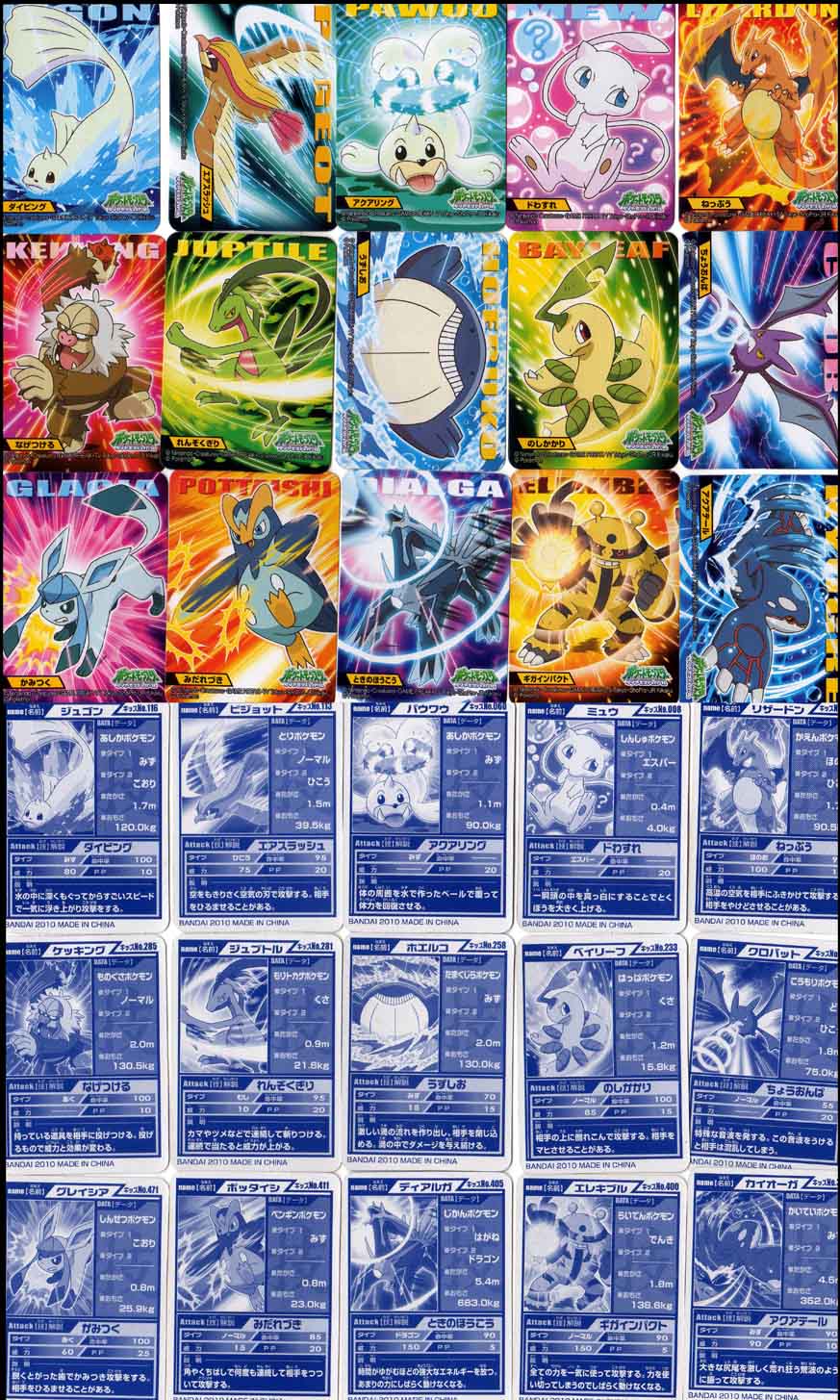


List of generation IV Pokémon
View on GrokipediaBackground and Context
Generation IV Games
The Generation IV Pokémon games, developed by Game Freak and published by Nintendo, marked the franchise's debut on the Nintendo DS handheld console. The initial pair, Pokémon Diamond and Pokémon Pearl, were released in Japan on September 28, 2006, followed by North America on April 22, 2007, Australia on June 21, 2007, and Europe on July 27, 2007.[5][6] These titles introduced 107 new Pokémon species and were set in the Sinnoh region, expanding the series' world with new lore centered on time, space, and creation myths. An enhanced version, Pokémon Platinum, launched in Japan on September 13, 2008, North America on March 22, 2009, Australia on May 14, 2009, and Europe on May 22, 2009.[7] Later, Pokémon HeartGold and Pokémon SoulSilver, remakes of the Generation II games, arrived in Japan on September 12, 2009, North America on March 14, 2010, Australia on March 25, 2010, and Europe on March 26, 2010.[8] All titles leveraged the Nintendo DS's dual-screen design, with the bottom touchscreen facilitating menu navigation, Pokémon viewing, and interactive battles, while the top screen displayed core gameplay elements.[9] A major gameplay innovation in Diamond, Pearl, and subsequent Generation IV titles was the physical/special damage split for moves, which shifted categorization from move types to individual properties, allowing greater strategic depth by aligning attacks with a Pokémon's Attack or Special Attack stats.[10] This change addressed longstanding limitations in prior generations, enabling diverse type combinations for offensive strategies. The games also pioneered online features through the Nintendo Wi-Fi Connection service, enabling global player matchmaking for battles and trades directly from the DS.[11] Complementing this, the Global Trade System (GTS) allowed asynchronous Pokémon exchanges worldwide, where players could deposit a Pokémon and request a specific one in return, fostering community interaction via the in-game Global Terminal.[12] Version-specific elements added replayability, with Diamond featuring the Legendary Pokémon Dialga as its mascot—embodying time control—and Pearl highlighting Palkia, the embodiment of space.[6] Platinum integrated both Dialga and Palkia, while introducing Giratina, the Renegade Pokémon tied to antimatter, as a central figure in an expanded Distortion World storyline.[13] HeartGold and SoulSilver, set in the Johto region, retained these mechanics but incorporated Generation IV enhancements like the physical/special split and online connectivity into their remastered content.[8]Sinnoh Region and Pokédex
The Sinnoh region, the setting for the core Generation IV Pokémon games, encompasses a diverse array of terrains including sharp mountain peaks, dense woodlands, sandy beaches, swampy wetlands, and snow-covered areas reaching waist height in certain locales. This geography facilitates exploration through interconnected routes, underground caves, and expansive bodies of water, all woven into the narrative fabric of legendary Pokémon encounters and regional lore. Central to the region's layout is Mt. Coronet, a massive mountain that bisects the mainland into eastern and western sections, symbolizing a pivotal divide in both physical and mythological terms.[14] The Sinnoh region's design draws inspiration from Hokkaido, the northernmost island of Japan, incorporating elements like volcanic landscapes and northern climates to evoke a sense of isolation and natural grandeur. Three prominent lakes—Lake Acuity in the north, Lake Verity in the southwest, and Lake Valor in the southeast—form a symbolic triangle around the periphery, each harboring deep mythological significance as sites where legendary Pokémon are said to slumber. These lakes tie directly into Sinnoh's creation myths, where the entities residing within represent fundamental aspects of existence: knowledge at Lake Acuity (Uxie), emotion at Lake Verity (Mesprit), and willpower at Lake Valor (Azelf). The lake guardians, as they are known, embody the region's emphasis on ancient lore involving the origins of the Pokémon world and the balance maintained by Dialga, Palkia, and Arceus.[15] The Sinnoh Pokédex organizes 151 Pokémon based on their encounter locations across the region in Pokémon Diamond and Pearl, selected from prior generations and many of the 107 new species introduced in Generation IV, with the complete National Pokédex expanding to 493 entries. This regional Pokédex prioritizes native Sinnoh species while excluding some evolutions available only through trading or post-game unlocks. In Pokémon Platinum, the Pokédex expands to 210 entries, incorporating additional Pokémon like Rotom and Giratina, and introduces the Distortion World—a parallel dimension accessed via a portal at the Spring Path, featuring gravity-defying platforms and warped environments that challenge traditional navigation.[16][17] While Generation IV does not feature regional variant forms that alter a Pokémon's type or appearance based on location—a mechanic introduced later—the games include version-exclusive Pokémon to encourage trading between Diamond and Pearl players. For instance, Cranidos and its evolution Rampardos are obtainable only in Diamond via the Skull Fossil revived at the Oreburgh Mining Museum, whereas Shieldon and Bastiodon are exclusive to Pearl through the Armor Fossil. These exclusives, along with others like Stunky in Pearl and Glameow in Diamond, highlight the interconnected gameplay design without altering core species traits.[18]Design and Development
Conceptualization and Influences
The development of the Generation IV Pokémon species was overseen by Game Freak, with Junichi Masuda directing the project and Ken Sugimori responsible for the core artwork and creature designs. This team sought to build on the expanded biodiversity of Generation III by integrating a mythological framework tied to the Sinnoh region's lore, emphasizing interconnected narratives among legendary Pokémon to deepen the world's backstory.[19] Central to the generation's conceptualization was a theme of creation and origins, inspired by Shinto mythological elements, where Arceus emerges as a primordial, god-like entity responsible for shaping the universe. To enhance type balance and evolutionary lines, 107 new species were introduced, including fossil revivals like Shieldon, which draws from ancient ceratopsian dinosaurs to represent prehistoric resilience.[20][3][21] Influences spanned Japanese folklore, natural phenomena, and global legends, with designs like Lucario evoking lupine guardians and Egyptian Anubis motifs for a sense of mystical protection, while Turtwig's shell incorporates an ecosystem of flora and fauna inspired by world turtle myths. Regigigas, meanwhile, reflects golem legends from various cultures, portraying a colossal shaper of continents.[22][23][24] Early prototypes highlighted experimental fusions, such as Spiritomb's concept as a bound entity comprising 108 malevolent spirits, rooted in Buddhist traditions of earthly defilements and New Year's bell-ringing rituals to exorcise temptations.[25]Art, Animation, and Refinements
The Generation IV Pokémon games on the Nintendo DS employed 2D sprites for both overworld navigation and battle scenes, representing a significant advancement in visual fidelity over prior generations. Battle sprites were fully animated for the first time in the core series, incorporating fluid movements to depict attacks, cries, and idle poses that added dynamism to encounters. Overworld sprites benefited from enhanced walking cycles, providing smoother and more varied locomotion to reflect each Pokémon's personality and design. Ken Sugimori, the lead artist since the franchise's inception, contributed official illustrations that highlighted expressive facial details and dynamic, action-oriented poses, evolving his signature watercolor-inspired style to suit the Sinnoh region's mythical themes while preserving accessibility for a broad audience.[26] Animation innovations in Generation IV extended beyond battles to include the following Pokémon feature, debuting in a limited capacity in Pokémon Platinum's Amity Square—where select species could accompany the player—and fully realized in HeartGold and SoulSilver, allowing any Pokémon to trail the trainer across the overworld for increased immersion. Shiny forms received refined color palettes to distinguish them more clearly, as seen in Garchomp's variant, which shifts to a darker gray body while retaining vivid red fin accents for visual impact without altering core silhouettes. These changes aimed to enhance rarity appeal while maintaining consistency with Sugimori's artwork.[27][28] Development refinements involved iterative adjustments from beta designs. A major refinement was the introduction of the physical/special move split, which categorized moves as physical or special based on their type rather than the Pokémon's stats, ensuring greater strategic viability amid new Pokémon introductions.[29] The DS's dual-screen architecture facilitated touch-based Pokédex interactions, enabling stylus navigation for detailed entries on the lower screen, which streamlined data access during gameplay. Complementing these, the 2008 spin-off My Pokémon Ranch pioneered 3D models for Generation IV species, permitting players to deposit up to 1,000 Pokémon from Diamond, Pearl, or Platinum via connectivity and observe their low-poly animations in a ranch environment alongside Miis.[30]List of Pokémon
By National Pokédex Number
Generation IV added 107 new Pokémon species to the National Pokédex, spanning numbers 387 through 493, as featured in the core games Pokémon Diamond, Pearl, and Platinum. These Pokémon encompass a diverse range of types and evolutionary lines, with 48 single-stage species and 59 that evolve, often through level-based progression or special conditions. Among them are mythical Pokémon such as Phione (#489), Manaphy (#490), Darkrai (#491), Shaymin (#492), and Arceus (#493), which are obtainable only through special events or post-game content rather than standard wild encounters. The table below details each species in sequential order, including name, type(s), category, height, weight, a brief physical description, and evolution chain notation where applicable.[3]| # | Name | Type(s) | Category | Height | Weight | Brief Physical Description | Evolution Chain |
|---|---|---|---|---|---|---|---|
| 387 | Turtwig | Grass | Tiny Leaf Pokémon | 0.4 m | 10.2 kg | Small green turtle with a sprout on its head. | Turtwig → Grotle (#388) at Lv. 18 → Torterra (#389) at Lv. 32 |
| 388 | Grotle | Grass | Grove Pokémon | 1.1 m | 97.0 kg | Larger turtle with a shrub-covered shell. | Part of Turtwig line |
| 389 | Torterra | Grass / Ground | Continent Pokémon | 2.2 m | 310.0 kg | Massive tortoise bearing a tree on its back. | Final evolution of Turtwig |
| 390 | Chimchar | Fire | Chimp Pokémon | 0.5 m | 4.3 kg | Small monkey with a flame on its rear. | Chimchar → Monferno (#391) at Lv. 14 → Infernape (#392) at Lv. 36 |
| 391 | Monferno | Fire / Fighting | Playful Pokémon | 0.9 m | 22.2 kg | Agile monkey with burning tail and fists. | Part of Chimchar line |
| 392 | Infernape | Fire / Fighting | Flame Pokémon | 1.2 m | 55.0 kg | Fiery ape with muscular build and blazing head. | Final evolution of Chimchar |
| 393 | Piplup | Water | Penguin Pokémon | 0.4 m | 5.5 kg | Blue penguin with a yellow crest. | Piplup → Prinplup (#394) at Lv. 16 → Empoleon (#395) at Lv. 36 |
| 394 | Prinplup | Water | Emperor Penguin Pokémon | 0.7 m | 23.0 kg | Sleeker penguin with fin-like wings. | Part of Piplup line |
| 395 | Empoleon | Water / Steel | Emperor Pokémon | 1.7 m | 84.5 kg | Regal penguin with metallic crest and wings. | Final evolution of Piplup |
| 396 | Starly | Normal / Flying | Starling Pokémon | 0.3 m | 2.0 kg | Small brown bird with white underbelly. | Starly → Staravia (#397) at Lv. 14 → Staraptor (#398) at Lv. 34 |
| 397 | Staravia | Normal / Flying | Starling Pokémon | 0.6 m | 15.5 kg | Larger bird with bolder wing patterns. | Part of Starly line |
| 398 | Staraptor | Normal / Flying | Predator Pokémon | 1.2 m | 24.9 kg | Fierce eagle-like bird with sharp talons. | Final evolution of Starly |
| 399 | Bidoof | Normal | Beaver Pokémon | 0.5 m | 20.5 kg | Brown beaver with prominent front teeth. | Bidoof → Bibarel (#400) at Lv. 15 |
| 400 | Bibarel | Normal / Water | Beaver Pokémon | 1.0 m | 31.5 kg | Larger beaver with wooden dam-like tail. | Evolves from Bidoof |
| 401 | Kricketot | Bug | Cricket Pokémon | 0.3 m | 2.3 kg | Tiny red cricket with yellow antennae. | Kricketot → Kricketune (#402) at Lv. 10 |
| 402 | Kricketune | Bug | Cricket Pokémon | 1.0 m | 25.5 kg | Musical cricket with violin-like arms. | Evolves from Kricketot |
| 403 | Shinx | Electric | Lion Cub Pokémon | 0.4 m | 9.5 kg | Blue kitten with star-shaped ears. | Shinx → Luxio (#404) at Lv. 15 → Luxray (#405) at Lv. 30 |
| 404 | Luxio | Electric | Lion Cub Pokémon | 0.9 m | 30.5 kg | Adolescent lion with charged mane. | Part of Shinx line |
| 405 | Luxray | Electric | Gleam Eyes Pokémon | 1.4 m | 42.0 kg | Majestic lion with x-ray vision eyes. | Final evolution of Shinx |
| 406 | Budew | Grass / Poison | Bud Pokémon | 0.4 m | 1.2 kg | Small rosebud with droopy face. | Budew → Roselia (#315, Gen III) with high friendship (daytime) |
| 407 | Roserade | Grass / Poison | Bouquet Pokémon | 1.0 m | 14.5 kg | Elegant rose with toxic bouquets on hands. | Roserade (#407) evolves from Roselia (#315) via Shiny Stone |
| 408 | Cranidos | Rock | Head Butt Pokémon | 0.7 m | 31.5 kg | Blue dinosaur with bony helmet head. | Cranidos → Rampardos (#409) at Lv. 30 |
| 409 | Rampardos | Rock | Head Butt Pokémon | 1.6 m | 102.5 kg | Hulking dinosaur with massive skull crest. | Evolves from Cranidos |
| 410 | Shieldon | Rock / Steel | Shield Pokémon | 0.5 m | 57.0 kg | Armored dinosaur with metal face shield. | Shieldon → Bastiodon (#411) at Lv. 30 |
| 411 | Bastiodon | Rock / Steel | Shield Pokémon | 1.3 m | 150.0 kg | Immovable dinosaur with full-body plating. | Evolves from Shieldon |
| 412 | Burmy | Bug | Bagworm Pokémon | 0.2 m | 0.4 kg | Larva that cloaks itself in plant matter. | Burmy → Wormadam (#413) or Mothim (#414) at Lv. 20 (gender/form dependent) |
| 413 | Wormadam | Bug / Grass, Ground, or Steel (depending on cloak form) | Bagworm Pokémon | 0.5 m | 2.5 kg | Female bagworm with cloak of leaves, sand, or trash. | Evolves from female Burmy |
| 414 | Mothim | Bug / Flying | Bagworm Pokémon | 0.9 m | 17.5 kg | Male moth with patterned wings. | Evolves from male Burmy |
| 415 | Combee | Bug / Flying | Tiny Bee Pokémon | 0.3 m | 0.3 kg | Small honeybee with three faces. | Combee → Vespiquen (#416, female only) at Lv. 21 |
| 416 | Vespiquen | Bug / Flying | Beehive Pokémon | 1.2 m | 38.5 kg | Queen bee with hive-like skirt. | Evolves from female Combee |
| 417 | Pachirisu | Electric | EleSquirrel Pokémon | 0.4 m | 3.9 kg | Squirrel with black-tipped tail and cheeks. | Single-stage |
| 418 | Buizel | Water | Sea Weasel Pokémon | 0.7 m | 29.5 kg | Orange weasel with inflatable neck floats. | Buizel → Floatzel (#419) at Lv. 26 |
| 419 | Floatzel | Water | Sea Weasel Pokémon | 1.1 m | 26.5 kg | Streamlined weasel with yellow floats. | Evolves from Buizel |
| 420 | Cherubi | Grass | Cherry Pokémon | 0.4 m | 2.2 kg | Pink cherry-like fruit with green stem head. | Cherubi → Cherrim (#421) at high friendship (daytime) |
| 421 | Cherrim | Grass | Blossom Pokémon | 0.4 m | 2.2 kg | Cherry that blooms into flower form in sunlight. | Evolves from Cherubi |
| 422 | Shellos | Water | Sea Slug Pokémon | 0.3 m | 6.0 kg | Pink or blue slug with gem-like shell. | Shellos → Gastrodon (#423) at Lv. 30 (form preserved) |
| 423 | Gastrodon | Water / Ground | Sea Slug Pokémon | 0.9 m | 29.9 kg | Larger slug with crystalline belly. | Evolves from Shellos |
| 424 | Ambipom | Normal | Long Tail Pokémon | 1.2 m | 13.5 kg | Purple monkey with two tail hands. | Ambipom evolves from Aipom (#190, Gen III) by leveling up while knowing Double Hit |
| 425 | Drifloon | Ghost / Flying | Balloon Pokémon | 0.4 m | 0.5 kg | Purple balloon ghost with string tail. | Drifloon → Drifblim (#426) at Lv. 28 |
| 426 | Drifblim | Ghost / Flying | Balloon Pokémon | 1.2 m | 15.0 kg | Giant balloon with dangling arms. | Evolves from Drifloon |
| 427 | Buneary | Normal | Rabbit Pokémon | 0.4 m | 5.5 kg | Brown rabbit with floppy ears. | Buneary → Lopunny (#428) at high friendship |
| 428 | Lopunny | Normal | Rabbit Pokémon | 1.2 m | 33.3 kg | Sleek rabbit that stands on hind legs. | Evolves from Buneary |
| 429 | Mismagius | Ghost | Magic Pokémon | 1.3 m | 4.4 kg | Witch-like ghost with hat and ribbons. | Mismagius evolves from Misdreavus (#200, Gen II) via Dusk Stone |
| 430 | Honchkrow | Dark / Flying | Mafia Pokémon | 0.9 m | 27.5 kg | Black crow with wide-brimmed hat feathers. | Honchkrow evolves from Murkrow (#198, Gen II) via Dusk Stone |
| 431 | Glameow | Normal | Catty Pokémon | 0.5 m | 3.9 kg | Sleek gray cat with curled tail. | Glameow → Purugly (#432) at Lv. 38 |
| 432 | Purugly | Normal | Tiger Cat Pokémon | 1.0 m | 43.8 kg | Fat, menacing cat with glaring eyes. | Evolves from Glameow |
| 433 | Chingling | Psychic | Bell Pokémon | 0.3 m | 0.6 kg | Small golden bell with red eyes. | Chingling → Chimecho (#358, Gen III) with high friendship (night) |
| 434 | Stunky | Poison / Dark | Skunk Pokémon | 0.4 m | 5.3 kg | Purple skunk with striped tail. | Stunky → Skuntank (#435) at Lv. 34 |
| 435 | Skuntank | Poison / Dark | Skunk Pokémon | 1.0 m | 38.0 kg | Larger skunk with toxic fumes. | Evolves from Stunky |
| 436 | Bronzor | Steel / Psychic | Bronze Pokémon | 0.3 m | 6.5 kg | Ancient bronze disc with markings. | Bronzor → Bronzong (#437) at Lv. 33 |
| 437 | Bronzong | Steel / Psychic | Bronze Bell Pokémon | 1.3 m | 187.0 kg | Suspended bronze bell with legs. | Evolves from Bronzor |
| 438 | Bonsly | Rock | Rock Head Pokémon | 0.3 m | 6.2 kg | Rock-like baby with teary eyes. | Bonsly → Sudowoodo (#185, Gen II) by leveling up knowing Mimic |
| 439 | Mime Jr. | Psychic / Fairy | Mime Pokémon | 0.6 m | 5.5 kg | Small clown with makeup and diaper. | Mime Jr. → Mr. Mime (#122, Gen I) by leveling up knowing Mimic |
| 440 | Happiny | Normal | Playhouse Pokémon | 0.6 m | 24.4 kg | Pink blob carrying an oval stone. | Happiny → Chansey (#183, Gen I) by leveling up holding Oval Stone |
| 441 | Chatot | Normal / Flying | Music Note Pokémon | 0.5 m | 1.9 kg | Parrot with musical note head pattern. | Single-stage |
| 442 | Spiritomb | Ghost / Dark | Forbidden Pokémon | 1.0 m | 108.0 kg | Ethereal figure in a cracked stone slab. | Single-stage (evolves from Odd Keystone event) |
| 443 | Gible | Dragon / Ground | Land Shark Pokémon | 0.7 m | 20.9 kg | Small blue shark with dorsal fin. | Gible → Gabite (#444) at Lv. 24 → Garchomp (#445) at Lv. 48 |
| 444 | Gabite | Dragon / Ground | Cave Pokémon | 1.4 m | 56.0 kg | Fin-backed reptile with red spikes. | Part of Gible line |
| 445 | Garchomp | Dragon / Ground | Mach Pokémon | 1.9 m | 95.0 kg | Winged land shark with scythe arms. | Final evolution of Gible |
| 446 | Munchlax | Normal | Big Eater Pokémon | 0.6 m | 101.4 kg | Round blue bear with yellow cross crest. | Munchlax → Snorlax (#143, Gen I) at high friendship |
| 447 | Riolu | Fighting | Emanation Pokémon | 0.7 m | 20.2 kg | Small blue canine with red eyes and spikes. | Riolu → Lucario (#448) at high friendship (daytime) |
| 448 | Lucario | Fighting / Steel | Aura Pokémon | 1.2 m | 54.0 kg | Jackal-like fighter with aura-sensing appendages. | Evolves from Riolu |
| 449 | Hippopotas | Ground | Hippo Pokémon | 0.8 m | 49.5 kg | Orange hippo with sand-spewing mouth. | Hippopotas → Hippowdon (#450) at Lv. 34 |
| 450 | Hippowdon | Ground | Heavy Weight Pokémon | 2.0 m | 300.0 kg | Massive sandy hippo with dreadlock-like spines. | Evolves from Hippopotas |
| 451 | Skorupi | Poison / Bug | Scorpion Pokémon | 0.3 m | 12.0 kg | Purple scorpion with claw and tail stinger. | Skorupi → Drapion (#452) at Lv. 40 |
| 452 | Drapion | Poison / Dark | Ogre Scizor Pokémon | 1.3 m | 61.5 kg | Large scorpion with humanoid arms. | Evolves from Skorupi |
| 453 | Croagunk | Poison / Fighting | Toxic Mouth Pokémon | 0.7 m | 22.0 kg | Frog with purple hood and red cheeks. | Croagunk → Toxicroak (#454) at Lv. 37 |
| 454 | Toxicroak | Poison / Fighting | Toxic Mouth Pokémon | 1.3 m | 44.3 kg | Poisonous frog with chest plates. | Evolves from Croagunk |
| 455 | Carnivine | Grass | Bug Catcher Pokémon | 1.7 m | 70.0 kg | Green flytrap plant with hooked leaves. | Single-stage (found in Great Marsh) |
| 456 | Finneon | Water | Wing Fish Pokémon | 0.4 m | 7.0 kg | Small blue fish with light-emitting tail. | Finneon → Lumineon (#457) at Lv. 31 |
| 457 | Lumineon | Water | Neon Pokémon | 1.2 m | 24.0 kg | Elegant fish with glowing fin wings. | Evolves from Finneon |
| 458 | Mantyke | Water / Flying | Dandy Pokémon | 1.0 m | 65.0 kg | Baby manta ray with patterned back. | Mantyke → Mantine (#226, Gen II) with Remoraid in party |
| 459 | Snover | Grass / Ice | Frost Tree Pokémon | 1.0 m | 34.0 kg | Snowy tree-like creature with branches. | Snover → Abomasnow (#460) at Lv. 40 |
| 460 | Abomasnow | Grass / Ice | Frost Tree Pokémon | 2.2 m | 135.5 kg | Yeti-like tree with wooden horns. | Evolves from Snover |
| 461 | Weavile | Dark / Ice | Sharp Claw Pokémon | 1.1 m | 34.0 kg | Sly weasel with red feathers and claws. | Weavile evolves from Sneasel (#215, Gen II) holding Razor Claw (night) |
| 462 | Magnezone | Electric / Steel | Magnet Area Pokémon | 1.2 m | 180.0 kg | Floating magnet with three horseshoe magnets. | Magnezone evolves from Magneton (#082, Gen I) by leveling up inside Mt. Coronet (special magnetic field) |
| 463 | Lickilicky | Normal | Licking Pokémon | 1.7 m | 140.0 kg | Pink blob with massive tongue. | Lickilicky evolves from Lickitung (#108, Gen I) by learning Rollout |
| 464 | Rhyperior | Ground / Rock | Drill Pokémon | 1.6 m | 282.8 kg | Armored rhino with rock launcher arms. | Rhyperior evolves from Rhydon (#112, Gen I) holding Protector |
| 465 | Tangrowth | Grass | Vine Pokémon | 2.0 m | 128.6 kg | Blue vine mass with tangled arms. | Tangrowth evolves from Tangela (#114, Gen I) by learning Ancient Power |
| 466 | Electivire | Electric | Thunderbolt Pokémon | 1.8 m | 138.6 kg | Yellow electric humanoid with tail plug. | Electivire evolves from Electabuzz (#125, Gen I) holding Electirizer |
| 467 | Magmortar | Fire | Blast Pokémon | 1.6 m | 68.0 kg | Red fiery humanoid with cannon arms. | Magmortar evolves from Magmar (#126, Gen I) holding Magmarizer |
| 468 | Togekiss | Fairy / Flying | Jubilee Pokémon | 1.5 m | 38.0 kg | Graceful bird with angelic wings. | Togekiss evolves from Togetic (#175, Gen II) via Shiny Stone |
| 469 | Yanmega | Bug / Flying | Odonata Pokémon | 1.5 m | 51.5 kg | Giant dragonfly with red compound eyes. | Yanmega evolves from Yanma (#193, Gen II) by learning Ancient Power |
| 470 | Leafeon | Grass | Verdant Pokémon | 1.0 m | 25.5 kg | Fox with leaf mane and tail blades. | Leafeon evolves from Eevee (#133, Gen I) near Moss Rock |
| 471 | Glaceon | Ice | Fresh Snow Pokémon | 0.8 m | 25.4 kg | Fox with icy mane and crystalline tail. | Glaceon evolves from Eevee near Ice Rock |
| 472 | Gliscor | Ground / Flying | Fang Scorpion Pokémon | 2.0 m | 75.5 kg | Purple scorpion bat with claw wings. | Gliscor evolves from Gligar (#207, Gen II) holding Razor Fang (night) |
| 473 | Mamoswine | Ice / Ground | Twin Tusk Pokémon | 2.5 m | 291.0 kg | Woolly mammoth with curved tusks. | Mamoswine evolves from Piloswine (#221, Gen II) by learning Ancient Power |
| 474 | Porygon-Z | Normal | Virtual Pokémon | 0.9 m | 34.0 kg | Glitchy polygonal duck-like form. | Porygon-Z evolves from Porygon2 (#233, Gen II) via trade holding Dubious Disc |
| 475 | Gallade | Psychic / Fighting | Blade Pokémon | 1.6 m | 52.0 kg | Armored humanoid with blade arms. | Gallade evolves from male Kirlia (#281, Gen III) via Dawn Stone |
| 476 | Probopass | Rock / Steel | Compass Pokémon | 1.4 m | 339.5 kg | Miniature golem with magnetic nose. | Probopass evolves from Nosepass (#299, Gen III) near magnetic field |
| 477 | Dusknoir | Ghost | Gripper Pokémon | 2.2 m | 110.5 kg | Black cyclops ghost with large arms. | Dusknoir evolves from Dusclops (#355, Gen III) via Reaper Cloth |
| 478 | Froslass | Ice / Ghost | Snow Land Pokémon | 1.3 m | 26.6 kg | Female snow ghost with kimono-like body. | Froslass evolves from female Snorunt (#361, Gen III) via Dawn Stone |
| 479 | Rotom | Electric / Ghost | Plasma Pokémon | 0.3 m | 0.6 kg | Orange ghost with lightbulb head and arms. | Single-stage; has multiple appliance forms via special items |
| 480 | Uxie | Psychic | Knowledge Pokémon | 0.3 m | 0.4 kg | Yellow pixie with closed eyes and yellow wisps. | Legendary; single-stage, Hall of Origin |
| 481 | Mesprit | Psychic | Emotion Pokémon | 0.3 m | 0.2 kg | Pink pixie with floating gems. | Legendary; single-stage, roams Sinnoh |
| 482 | Azelf | Psychic | Willpower Pokémon | 0.3 m | 0.3 kg | Blue pixie with defiant expression. | Legendary; single-stage, roams Sinnoh |
| 483 | Dialga | Steel / Dragon | Temporal Pokémon | 5.4 m | 683.0 kg | Silver metallic dragon with diamond chest. | Legendary; single-stage, Spear Pillar |
| 484 | Palkia | Water / Dragon | Spatial Pokémon | 4.2 m | 426.0 kg | Pearl-white dragon with shoulder pearls. | Legendary; single-stage, Spear Pillar |
| 485 | Heatran | Fire / Steel | Lava Dome Pokémon | 1.7 m | 988.8 kg | Red volcanic beast with heat vents. | Legendary; single-stage, Stark Mountain |
| 486 | Regigigas | Normal | Colossal Pokémon | 3.7 m | 420.0 kg | White golem with yellow markings and dots on face. | Legendary; single-stage, Snowpoint Temple |
| 487 | Giratina | Ghost / Dragon | Renegade Pokémon | 4.5 m | 750.0 kg | Skeletal dragon with golden wheel. (Altered Forme in Distortion World) | Legendary; single-stage, Turnback Cave |
| 488 | Cresselia | Psychic | Lunar Pokémon | 1.5 m | 85.6 kg | Serene pink swan with crescent headdress. | Legendary; single-stage, Fullmoon Island |
| 489 | Phione | Water | Sea Drifter Pokémon | 0.4 m | 3.1 kg | Small blue sea star with red horns. | Mythical; single-stage, bred from Manaphy |
| 490 | Manaphy | Water | Seafaring Pokémon | 0.3 m | 1.4 kg | Tiny blue jellyfish-like with antenna. | Mythical; single-stage, event distribution |
| 491 | Darkrai | Dark | Pitch-Black Pokémon | 1.1 m | 26.5 kg | Black shadowy humanoid with white scarf. | Mythical; single-stage, Newmoon Island event |
| 492 | Shaymin | Grass | Gratitude Pokémon | 0.2 m | 2.1 kg | Small hedgehog with flower petals. (Sky Forme via Gracidea) | Mythical; single-stage, Flower Paradise event |
| 493 | Arceus | Normal | Alpha Pokémon | 3.2 m | 320.0 kg | White equine with golden wheel and plates. | Mythical; single-stage, Hall of Origin post-game |