Hubbry Logo
Anti-proverbAnti-proverbMain
Open search
Anti-proverb
Community hub
Anti-proverb
logo
8 pages, 0 posts
0 subscribers
Be the first to start a discussion here.
Anti-proverb
Anti-proverb
from Wikipedia
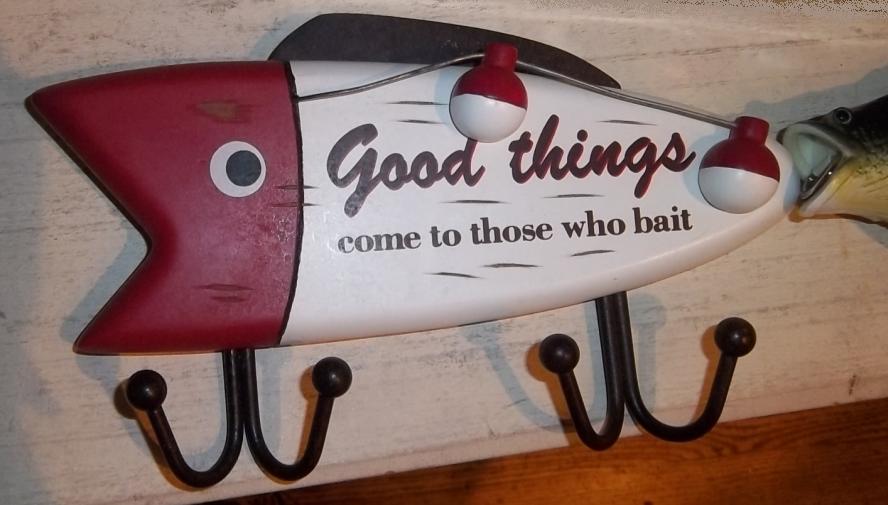
A fishing pun on the proverb "Good things come to those who wait."
Graphic spoof on the proverbial concept of "big fish eat little fish", from Spanish context. (The text translates as "Don't panic, organize!")

An anti-proverb or a perverb is the transformation of a standard proverb for humorous effect.[1] Paremiologist Wolfgang Mieder defines them as "parodied, twisted, or fractured proverbs that reveal humorous or satirical speech play with traditional proverbial wisdom".[2] Anti-proverbs are ancient, Aristophanes having used one in his play Peace, substituting κώẟων "bell" (in the unique compound "bellfinch") for κύων "bitch, female dog", twisting the standard and familiar "The hasty bitch gives birth to blind" to "The hasty bellfinch gives birth to blind".[3]

Anti-proverbs have also been defined as "an allusive distortion, parody, misapplication, or unexpected contextualization of a recognized proverb, usually for comic or satiric effect".[4] To have full effect, an anti-proverb must be based on a known proverb. For example, "If at first you don't succeed, quit" is only funny if the hearer knows the standard proverb "If at first you don't succeed, try, try again". Anti-proverbs are used commonly in advertising, such as "Put your burger where your mouth is" from the Red Robin restaurant chain.[5] Anti-proverbs are also common on T-shirts, such as "Taste makes waist" and "If at first you don't succeed, skydiving is not for you".

T-shirts are common sites for anti-proverbs

Standard proverbs are essentially defined phrases, well known to many people, as e. g. Don't bite the hand that feeds you. When this sequence is deliberately slightly changed ("Don't bite the hand that looks dirty") it becomes an anti-proverb. The relationship between anti-proverbs and proverbs, and a study of how much a proverb can be changed before the resulting anti-proverb is no longer seen as proverbial, are still open topics for research.[6]

Classification

[edit]

There have been various attempts at classifying different types of anti-proverbs, based on structure and semantics, including by Mieder, Litovkina,[7] and Valdeva.[8] What follows is somewhat synthetic of these.

Classification on formal criteria

[edit]
  • Association: The similarity to the original sequence is strong enough to identify it, but there is no further connection: The early worm gets picked first.
  1. Original phrase: The early bird gets the worm.
  • Change of homonyms: A word which has several meanings is interpreted in a new way: Where there's a will, there's a lawsuit.
  1. Original phrase: Where there's a will [motivation], there's a way [to accomplish a task].
  2. Contrast this with the changed homonym phrase, which implies a highly contentious legal document ("will") that determines the distribution of an individual's possessions to other persons and groups upon the individual's death.
  • Combination: Two sequences are combined: One brain washes the other.
  1. Original phrases: One hand washes the other. and One [half of one] brain watches [complements, keeps "in check", verifies] the other.
  • Permutation: While keeping the syntactic structure, the words are re-organized: A waist is a terrible thing to mind.
  1. Original phrase: A mind is a terrible thing to waste, which means one of several things:
    1. "One should not become addicted to bad habits like drugs or losing sleep that destroy the ability to think in reasonable ways."
    2. "One should pursue an academic or intellectual job [such as an engineer, researcher, doctor] if they are smart.".
  2. Contrast this with the permuted phrase, which means "One should not waste their time thinking about their body's waist and its shape or diameter".
  • Abridgement: The sequence is cut and thus changed completely: All's well that ends.
  1. Original phrase: All's well that ends well, meaning "Everything that ends with an okay result will also have the sequence of steps to achieve that end result be okay".
  2. Contrast this with the abridged phrase, which means "Everything that ends [regardless of whether the final result is okay, and regardless of whether the intermediate steps taken are okay] is okay".
  • Substitution: Parts of the sequence are replaced: Absence makes the heart go wander.
  1. Original phrase: Absence makes the heart grow fonder.
  2. Contrast this with the substituted phrase, which means "The person who has left causes the heart of the person who has stayed to try to find a new third person to enjoy"
  • Supplementation: A sentence with a contrasting meaning is added to the original sequence: A man's home is his castle – let him clean it.
  1. Original phrase: A man's home is his castle, meaning the man is a king, and as such, he should not have to do lowly peasant-class duties such as cleaning, cooking, and other chores.
  • Syntactic change: The semantic structure of the sentence changes while the sequence of words stays the same: Men think: "God governs."A good man will think of himself: after, all the others.
  1. Original phrase: A good man will think of himself [only] after [thinking of] all [the] others.
  2. Contrast this with the syntactically-changed phrase, which means "A good man will [first] think of himself [because he is selfish], and after he does so, he will then think of all the other people."

Classification on content criteria

[edit]
  • Mitigation: The meaning seems kept, but is qualified by the supplement: Everything has an end, but a sausage has two.[9]
  • Apology: The original sequence is defended against attacks: German example, translated: Art (Kunst) comes from 'able' (können), not from 'will' (wollen), or we'd better call it wirt (Wulst or Wunst, fantasy word).
  • Conservation: The meaning is similar, with and without the supplement: There is no such thing as a free lunch, but there is always free cheese in a mousetrap.
  • Break of metaphor: Metaphors are interpreted literally: Duty is calling? We call back.
  • Neogenesis: The meaning of the new sentence is completely independent of the original one: An onion a day keeps everybody away.

Types of humorous effects

[edit]
  • Bisociation: This is a technical term coined by Arthur Koestler. He says that a funny text is situated in two different semantic levels. In the beginning, the hearer or reader is aware of only one of them. The sudden and unexpected punch line is what makes this humorous. For example: I only want your best – your money.
  • Destruction: This is where the saying is completely altered and has an opposite meaning, such as: Jesus may love you – but will he respect you in the morning?
  • Fictional catastrophe: Catastrophes which are only made up or solved in one's mind might be humorous, as can be seen in the quotation: The light at the end of the tunnel is only muzzle flash.

History

[edit]

Anti-proverbs have been used and recognized for a long time. The Greek musician Stratonicus of Athens used an anti-proverb to mock a cithara-singer who had been nicknamed "Ox". He twisted the standard Greek proverb "The ass hears the lyre", replacing the first word to produce "The Ox hears the lyre."[10]

However, the term "anti-proverb" was not coined until 1982 by Wolfgang Mieder.[4] The term became more established with the publication of Twisted Wisdom: Modern Anti-Proverbs by Wolfgang Mieder and Anna T. Litovkina.[11]

An anti-proverb, formed by adding an unexpected cynical phrase to the end, with an apropos cartoon

They were one of the many experimental styles explored by the French literary movement Oulipo. The term perverb is attributed to Maxine Groffsky.[12][13] The concept was popularised by Oulipo collaborator Harry Mathews in his Selected Declarations of Dependence (1977).[13]

Anti-proverbs have been alternatively named "postproverbials" by Aderemi Raji-Oyelade, (also known by his pen name, Remi Raji).[14] This term has been adopted by some African proverb scholars, seen in a large collection of articles about antiproverbs/postproverbials in the journal Matatu 51,2, edited by Aderemi Raji-Oyelade and Olayinka Oyeleye.[15]

In literature

[edit]

Some authors have bent and twisted proverbs, creating anti-proverbs, for a variety of literary effects. For example, in the Harry Potter novels, J. K. Rowling reshapes a standard English proverb into "It's no good crying over spilt potion" and Professor Dumbledore advises Harry not to "count [his] owls before they are delivered".[16]

From Nigeria, Adeyemi shows the use of both proverbs and anti-proverbs in Rérẹ́ Rún by Okediji. [17] Adeyemi believes that they add humor, color and beauty to his writing. But on a political plane, he believes "Anti-proverbs were also used to stimulate critical consciousness in the readers to fight for their rights but with wisdom. The conclusion of the paper was that the conscious manipulation of the so-called fixed proverbs could generate new proverbs, encourage creativity in the writers and expose hidden meanings of proverbs."[18]

In a slightly different use of reshaping proverbs, in the Aubrey–Maturin series of historical naval novels by Patrick O'Brian, Capt. Jack Aubrey humorously mangles and mis-splices proverbs, such as "Never count the bear's skin before it is hatched" and "There's a good deal to be said for making hay while the iron is hot."[19] An earlier fictional splicer of proverb is a character found in a novel by Beatrice Grimshaw, producing such combinations as "Make hay while the iron is hot" (very similar to an example from Capt. Aubrey) and "They lock the stable door when the milk is spilt".[20]

Part of G. K. Chesterton’s reputation as the "Prince of Paradoxes" rested on his ability to turn proverbs and clichés on their heads. One example of this facility occurs in his What’s Wrong with the World: Arguing that the education of children is better left to their mothers than to professional educators, he ends his argument with, "... [I]f a thing is worth doing, it is worth doing badly."[21] Commenting on this, Dale Ahlquist in the Society of Gilbert Keith Chesterton blog, argues that there is considerable good sense in this paradoxical anti-proverb. He cites Chesterton’s own remark that "Paradox has been defined as 'Truth standing on her head to get attention'", and notes that Chesterton in the same passage explicitly concedes that there are things, like astronomy, that need to be done very well; whereas when it comes to writing love letters or blowing one’s nose, Chesterton argues that, "These things we want a man to do for himself, even if he does them badly."[22]

Variations

[edit]

Splicing two proverbs

[edit]

In a slightly different pattern of reshaping proverbs humorously, pieces of multiple proverbs can be spliced together, e.g. "Never count the bear's skin before it is hatched" and "There's a good deal to be said for making hay while the iron is hot."[19]

Garden path proverbs

[edit]

The term has also been used to describe a garden path sentence based on a proverb; namely, a sentence that starts out like the proverb, but ends in such a way that the listener is forced to back up and re-parse several words in order to get its real sense:

  • Time flies like to fly around clocks.
    ("time flies like an arrow" / the habits of "time flies", a fictitious kind of fly.)

Proverbs beginning with Time flies like ... are popular examples in linguistics, e.g. to illustrate concepts related to syntax parsing. These examples are presumably inspired by the quip "Time flies like the wind; fruit flies like a banana", attributed to Groucho Marx.[23]

To be effective in written form, a garden-path proverb must have the same spelling and punctuation as the original proverb, up to the point where the reader is supposed to back up, as in the "time flies" example above. These spelling or punctuation constraints may be relaxed in perverbs that are spoken, rather than written:

  • Don't count your chickens will do it for you.
    ("don't count your chickens before they hatch" / "don't count, your chickens will ...")
  • Think before you were born you were already loved.
    ("think before you act" / "think: before you were born, you were ...")
  • You can't teach an old dog would be better for your students.
    ("you can't teach an old dog new tricks" / "you can't teach; an old dog would be ...")

Proverbs with surprising or silly endings

[edit]
Proverb with twisted ending

The term is also used in the weaker sense of any proverb that was modified to have an unexpected, dumb, amusing, or nonsensical ending—even if the changed version is no harder to parse than the original:

Puns on a proverb

[edit]

The word has also been used for puns on proverbs:[13]

  • Slaughter is the best medicine.
    ("Laughter is the best medicine".)
  • What doesn't kill you makes you stranger.
    ("What doesn't kill you makes you stronger".)
  • Nothing succeeds like excess.
    ("Nothing succeeds like success".)
  • Levity is the soul of wit.
    ("Brevity is the soul of wit".)
  • Absinthe makes the heart grow fonder / Absence makes the heart go wander.
    ("Absence makes the heart grow fonder".)

See also

[edit]

References

[edit]

Further reading

[edit]
Revisions and contributorsEdit on WikipediaRead on Wikipedia
from Grokipedia
An anti-proverb is a parodied, twisted, or fractured version of a traditional , deliberately altered through addition, deletion, substitution, or other transformations to produce a humorous or satirical effect by playing on the original's wording or meaning. The term "anti-proverb" (or Antisprichwort in German) was first introduced by paremiologist Wolfgang Mieder in 1982 to describe these innovative distortions of proverbial wisdom. Anti-proverbs maintain a recognizable connection to their source , allowing audiences to appreciate the witty , and are often analyzed within paremiology—the scholarly study of —for their role in linguistic creativity and cultural commentary. They frequently appear in modern contexts such as , cartoons, greeting cards, and jokes, where they serve to challenge or invert for comedic impact. For instance, the traditional proverb "A rolling stone gathers no moss" might be transformed into "A rolling stone gathers momentum," subverting the original to emphasize positive aspects of movement. Other common modern sarcastic anti-proverbs include variations on "carpe diem" (seize the day) such as "seize the nap", "carpe noctem" (seize the night, often used sarcastically by night owls), "seize the pizza", or "let the day seize you"; and on "strike while the iron is hot" such as "wait until the iron is cold", "strike when the opportunity has passed", or "procrastinate while the iron cools". These informal twists, prevalent in internet memes and online discussions, highlight cynical or laid-back attitudes toward traditional motivational advice. Scholars like Mieder and Charles Clay Doyle have documented anti-proverbs extensively, noting their prevalence in English-language and their evolution in the 20th and 21st centuries as reflections of contemporary societal shifts. These variants are not mere errors but intentional rhetorical devices that demonstrate how proverbs adapt through humor, often subverting moral or advisory tones to critique or entertain. Cross-linguistic studies reveal similar structures in languages like Hungarian, Serbian, and Kazakh, underscoring anti-proverbs' universal appeal in verbal humor.

Definition and Characteristics

Definition

An anti-proverb is a parodied, twisted, or fractured version of a traditional that subverts the original proverbial wisdom to produce humorous, satirical, or ironic effects. This form of expression deliberately alters the structure, wording, or meaning of an established , often resulting in a complete that conveys a interpretation. Paremiologist Wolfgang Mieder, who coined the term "anti-proverb" (from German Antisprichwort), defines it as involving distortion, , or misuse of a known to generate fresh meanings, typically in spoken or written discourse for rhetorical impact. Strict criteria distinguish anti-proverbs from mere errors or idioms: they must be intentional, self-contained statements rooted in recognizable proverbs, and aimed at creating contrast or surprise through . Within paremiology—the academic study of s, their origins, and variations—anti-proverbs represent a specialized category of proverb transformations that highlight creative linguistic play and cultural adaptation. A classic example is "Absence makes the heart go wander," which parodies the traditional proverb "Absence makes the heart grow fonder" to ironically imply wandering affections rather than deepening love.

Key Characteristics

Anti-proverbs are characterized by their structural to traditional proverbs in terms of , , and partial phrasing, which they partially retain to maintain familiarity while introducing alterations that generate surprise and humor. These modifications often involve techniques such as the addition of words or phrases, omission or of elements, substitution of key terms, or blending components from multiple proverbs, ensuring the altered form echoes the original's but subverts its expected conclusion. Functionally, anti-proverbs serve primarily as vehicles for humor or , challenging established wisdom or social norms through witty reinterpretation, and they appear frequently in informal speech, , , and media to engage audiences or critique conventions. Unlike mere jokes, they leverage the authority of proverbs to amplify their ironic impact, often functioning to persuade, express personal sentiment, or highlight cultural absurdities in everyday . Linguistically, anti-proverbs demonstrate through deliberate manipulations including phonological shifts for puns, semantic reversals to invert meaning, grammatical rearrangements, and lexical substitutions that create incongruity between expectation and outcome. These alterations—such as reversing proverbial logic or adding unexpected elements—produce the core humorous effect by exploiting the proverb's fixed form. In distinction from related linguistic phenomena, anti-proverbs emphasize intentional parody and innovation, whereas malapropisms arise from unintentional word substitutions due to similarity in sound but differing meaning, and eggcorns stem from mishearings that reinterpret phrases logically yet erroneously, without the purposeful satirical intent central to anti-proverbs.

Classification

Formal Criteria

Anti-proverbs are classified formally by the types of structural and linguistic modifications applied to traditional proverbs, which alter their form while often preserving recognizability for humorous effect. Common modification types include substitution, where one or more words are replaced; addition, involving the insertion of new elements; deletion, or omission of parts; and reversal, such as inverting the word order or structure. These classifications stem from paremiological analyses, such as those by Partington, who identifies substitution, insertion (), (deletion), and rephrasing (potentially including ) as key techniques in modifying proverbial phrases. Similarly, Litovkina and colleagues outline substitution (single or multiple words), , omission, and word-order as prevalent alterations across multiple languages. Formal metrics for evaluating anti-proverbs emphasize structural fidelity to the original, including similarity, which typically maintains brevity for proverbial conciseness; preservation of syntactic patterns, such as parallel clauses or phrasing; and phonetic resemblance, often through or to enhance memorability and humor. For instance, substitution frequently retains syntactic structure, as in "A miss is as good as a mister," which replaces "mile" with "mister" in the original "A miss is as good as a mile," preserving and while introducing a gender-based twist. Quantitative scholarship highlights the dominance of certain modifications in corpora; substitution emerges as the most frequent type, for approximately 63% of alterations in specialized collections like Zivaisms, while addition and reversal appear less commonly but contribute to structural diversity. Analyses of broader proverb corpora, such as those compiled by Mieder and Litovkina, reveal over 79 variations for a single like "," predominantly featuring substitution and addition to adapt form across contexts.

Content Criteria

Anti-proverbs are classified according to their semantic content and the ways in which they subvert the of traditional proverbs, often challenging established through ironic or critical reinterpretations. These classifications emphasize how anti-proverbs distort meaning to reflect contemporary perspectives, prioritizing thematic irony over structural form. Thematic categories in anti-proverbs frequently involve the of , where ethical advice is twisted to highlight contradictions or hypocrisies in traditional values, such as altering proverbs that promote into critiques of . represents another key category, particularly through subversions targeting roles, where proverbs reinforcing stereotypes about men and women are inverted to expose inequalities or outdated norms. Everyday advice forms a third category, with anti-proverbs reworking guidance on , work, or daily routines to underscore modern absurdities, like transforming productivity sayings into satires on . Recent studies as of 2025 have extended these themes to specific domains, such as anti-proverbs about , which often employ to satirize economic realities. Content distortion types provide a framework for understanding these thematic shifts, including opposition, where the original proverb's advice is directly reversed to create ironic contrast; exaggeration, which amplifies elements of the proverb to absurd extremes for satirical effect; and literalization, involving the interpretation of metaphorical language in a strictly literal sense to undermine the intended wisdom. For instance, the anti-proverb "What doesn't kill you makes you stranger" exemplifies opposition by reversing the motivational essence of "What doesn't kill you makes you stronger," introducing thematic irony that questions resilience in favor of psychological eccentricity. Formal structures, such as word substitutions or syntactic alterations, often facilitate these content distortions by allowing seamless integration of subversive meanings. Comparative studies reveal patterns in anti-proverb content, where thematic subversions of , social, and practical advice appear consistently across diverse linguistic traditions, adapting universal motifs to local contexts without significant variation in core distortion strategies. These patterns underscore the global adaptability of anti-proverbs in critiquing shared human experiences through semantic innovation.

Humorous Effects

Anti-proverbs generate humor through mechanisms rooted in classical of , including incongruity, superiority, and . The incongruity explains much of their comedic effect, where humor emerges from the violation of expectations tied to familiar proverbs, creating a surprising opposition between anticipated and an unexpected twist. Superiority contributes by allowing audiences to feel intellectually or socially elevated, as the anti-proverb mocks the outdated or overly simplistic of traditional sayings, positioning the creator or interpreter as more savvy. applies in cases where anti-proverbs satirically release tension from rigid cultural norms, offering a of proverbial authority. These effects are amplified by the intertextual of anti-proverbs, which rely on shared cultural knowledge for the punchline. Recent analyses as of 2023-2025 have applied these to media contexts, such as pseudo-proverbs in . At the core of these humorous effects lies a psychological mechanism of expectation violation, where the brain processes the initial script— a cognitive of established meaning—only to encounter an opposing script that disrupts it, triggering surprise and . This script opposition, as formalized in the Script-Based Semantic Theory of Humor (SSTH), requires partial overlap between the original and altered scripts for the humor to land effectively, often through techniques like extension or substitution. For instance, the anti-proverb "The early bird gets the worm, but the early worm gets eaten" builds on the expected script of reward for promptness but opposes it with a script of peril, exemplifying incongruity via extension and leading to through resolved surprise. Such disruptions engage non-bona-fide communication, shifting from literal interpretation to playful reinterpretation. Scholarly analysis highlights the cognitive processing involved, where anti-proverbs provoke disruption in proverb recognition, forcing rapid reconfiguration of mental models and enhancing the surprise element central to humor. Studies applying SSTH to English anti-proverbs, drawn from collections of over 3,000 examples, show that expected/unexpected oppositions dominate (in about 70% of cases), underscoring how this cognitive shift underlies the response. This process not only entertains but also reflects evolving societal values, as the humor critiques traditional in light of modern contexts.

Historical Development

Origins and Early Examples

The of anti-proverbs, characterized by the parodic or twisted alteration of traditional for humorous, satirical, or ironic purposes, has in the oral traditions of , where such expressions served as playful counters to the didactic authority of conventional sayings. Paremiological research indicates that these folkloric parodies emerged as part of broader speech play in , often undocumented until their appearance in literary works and early proverb collections. In English and other European traditions, anti-proverb-like forms reflected a cultural tendency to subvert moralistic through , particularly in contexts where proverbs were ubiquitous in everyday and . Early examples can be found in 16th- and 17th-century English literature, where authors employed proverb twists to enhance dramatic irony and character development. , in particular, frequently used such devices in his plays. For example, in 1 Henry IV (Act 1, Scene 2), parodies the "Give the devil his due" by applying it sarcastically to Falstaff, implying that the knight's pretended repentance is merely a facade for his devilish nature, thus inverting the proverb's original meaning of according fair credit. Similarly, in Othello (Act 3, Scene 3), Othello distorts "He that is not sensible of his loss has lost nothing" to dismiss evidence of Desdemona's supposed infidelity, transforming a stoic acceptance of loss into a self-deceptive rationalization driven by . In Richard II (Act 1, Scene 3), Thomas Mowbray inverts "Good that the teeth guard the tongue" to protest his banishment, shifting the proverb's advice for verbal restraint into a over forced silence imposed by authority. These instances demonstrate how early modern writers drew on folkloric proverb play to explore themes of , power, and human folly. By the , twisted proverbs appeared in humor anthologies and anonymous variations, capturing oral traditions in written form. Proverb collections from this period, such as those compiling English sayings, occasionally included parodic forms that highlighted satirical takes on traditional wisdom, reflecting their persistence in popular European humor.

Coining and Modern Scholarship

The term "anti-proverb" was coined by paremiologist Wolfgang Mieder in 1982 to describe deliberate parodies or transformations of traditional proverbs that play on their familiar structures for humorous or satirical effect. Mieder's foundational work began with the German-language collection Antisprichwörter, published in three volumes between 1982 and 1989, which systematically gathered and analyzed hundreds of such innovations from and . These volumes established anti-proverbs as a distinct category within paremiology, emphasizing their role in subverting proverbial wisdom while retaining rhetorical potency. Mieder's scholarship has profoundly shaped the field, with his extensive paremiological research integrating anti-proverbs into broader studies of evolution and cultural adaptation. Collaborations, particularly with Anna T. Litovkina, have explored thematic dimensions such as stereotypes in anti-proverbs; for instance, their joint analysis in Marriage Seen Through Proverbs and Anti-Proverbs (2019) examines how transformations reveal evolving social attitudes toward relationships and roles. Litovkina's subsequent solo work, Women Through Anti-Proverbs (2018), builds on this foundation by cataloging sexist biases and subversive elements in Anglo-American examples, attributing methodological rigor to Mieder's influence. Key developments since the 1980s include the compilation of large corpora to document anti-proverbs' prevalence and variation, with Mieder's collections serving as core resources for empirical analysis. Comparative studies have expanded this to cross-linguistic contexts, such as English, German, and Russian; a notable example is Anti-Proverbs in Five Languages: Structural Features and Verbal Humor Devices (2022), co-authored by Litovkina, Hrisztova-Gotthardt, Barta, Vargha, and Mieder, which contrasts structural patterns and humor mechanisms across English, German, French, Russian, and Hungarian to highlight universal and culture-specific traits. Post-2000 publications reflect trends toward digital methodologies, including analyses of anti-proverbs in online environments like memes, where they adapt to contemporary and viral formats for satirical commentary. Works such as Old Proverbs Never Die, They Just Diversify: A Collection of Anti-Proverbs (2006) by Mieder and Litovkina underscore this shift by incorporating media-derived examples. More recent studies, as of 2025, continue to apply to examine anti-proverbs in digital discourse, such as emergent forms in and digital ethnography. For instance, research in 2024-2025 has explored punning mechanisms and addition in thematic anti-proverbs using updated corpora.

Types and Variations

Spliced Proverbs

Spliced proverbs, also referred to as proverb blendings, constitute a distinct category of anti-proverbs wherein elements from two or more traditional are fused together, typically by combining the opening segment of one proverb with the concluding segment of another. This deliberate hybridization disrupts the expected proverbial logic, yielding a novel expression that parodies through incongruity. The process often exploits structural similarities between proverbs—such as parallel phrasing or thematic overlap—to create seamless yet subversive merges, enhancing the potential for witty reinterpretation. Representative examples illustrate this technique's versatility in English. One common splice is "A penny saved gathers no moss," which merges "A penny saved is a penny earned" with "A rolling stone gathers no moss," implying that frugality results in inertia rather than prosperity. Another is "Make hay while the iron is hot," blending "Make hay while the sun shines" and "Strike while the iron is hot" to absurdly suggest agricultural labor during metalworking. A more complex variant, "A closed mouth gathers no feet," splices "A closed mouth catches no flies," "A rolling stone gathers no moss," and the expression "to put one's foot in one's mouth," evoking humorous imagery of dietary mishaps and immobility. The primary effect of spliced proverbs lies in their capacity to generate humor via semantic mismatch, where the audience anticipates resolution from a familiar proverb but encounters an illogical or ironic twist that underscores the limitations of rote advice. This absurdity fosters surprise and amusement, often amplifying satirical commentary on everyday situations, while the retained proverbial cadence ensures recognizability and memorability. In English-language corpora, spliced anti-proverbs occur infrequently due to their constructed nature, but they feature prominently in paremiological compilations, such as those in Litovkina and Mieder's collection, where blends represent a significant portion of transformations. Within , they appear regularly for stylistic flair; for instance, Australian author Beatrice Grimshaw incorporated at least 18 spliced proverbs in her 1914 novel The Sorcerer's Stone, including "A in the bush blows nobody good," to infuse dialogue with ironic humor. Such usage highlights their role in literary , extending beyond oral into narrative contexts.

Garden Path Proverbs

Garden path proverbs constitute a distinct variant of anti-proverbs, relying on to initially mimic the structure of a conventional , thereby misleading the listener or reader into a false interpretation before revealing an unexpected twist that generates humor. This mechanism draws from the linguistic phenomenon known as the garden path effect, where the initial parse of the sentence commits to one syntactic path, only to require reanalysis upon encountering disambiguating elements, often resulting in a comedic "aha" moment. Paremiologists Wolfgang Mieder and Anna T. Litovkina describe these as deliberate proverb innovations that exploit structural expectations for playful effect, distinguishing them from other anti-proverb forms by their emphasis on single-proverb syntactic misdirection rather than multi-proverb blending. A classic example is "Don't count your chickens will do it for you," which begins as the familiar "Don't count your chickens before they hatch" but syntactically veers into implying that the chickens themselves will handle the counting, creating confusion and amusement through the abrupt shift. Another instance involves extending "Don't change horses in midstream" to "Don't change horses until they stop in midstream," where the listener anticipates advice on stability during change but is led to a literal, absurd reinterpretation of waiting for the horse to halt. These constructions highlight how garden path proverbs manipulate and boundaries to delay resolution, enhancing their impact in oral delivery. Linguistically, the humor in garden path proverbs depends heavily on prosody—rhythmic and intonational cues—and contextual cues to facilitate the reanalysis, as the initial misparse persists briefly before the correct structure emerges. Studies on garden path sentences demonstrate that prosodic boundaries can mitigate or exacerbate the disruption, with a pause or shift often signaling the twist in spoken forms, allowing the to recover and appreciate the . In anti-proverbs, this effect is amplified by cultural familiarity with the source , making the deviation more striking. Garden path proverbs are particularly effective in spoken humor and jokes, where timing and delivery can heighten the surprise, as seen in or casual banter, though they translate less seamlessly to written contexts without aids. Mieder notes their prevalence in modern discourse for subverting expectations without altering the core proverbial imagery, contributing to their role in light-hearted . This usage underscores their value in oral traditions, where the auditory processing reinforces the syntactic trickery for maximum comedic payoff.

Unexpected Endings

Anti-proverbs featuring unexpected endings typically initiate with the familiar phrasing of a traditional , thereby priming the listener's expectations, before veering into an absurd, ironic, or irrelevant conclusion that undermines the original moral or wisdom. This structural deviation creates a comedic payoff through incongruity, as the twist subverts anticipated closure and highlights modern reinterpretations of age-old sayings. Scholar Wolfgang Mieder, who formalized the concept of anti-proverbs in the , describes such transformations as deliberate innovations that oppose or proverbial semantics for satirical or humorous purposes. A classic example is the anti-proverb "He who laughs last thinks slowest," which echoes the structure of "He who laughs last laughs best" but replaces the triumphant ending with a mocking implication of mental sluggishness, thus inverting into ridicule. Another instance, "Man proposes, mother-in-law opposes," builds on "" by shifting the authoritative opposition from divine will to familial interference, amplifying everyday relational humor. Similarly, "If at first you don’t succeed, blame it on your wife" diverges from "If at first you don’t succeed, try, try again" by introducing a twist that satirizes dynamics and persistence. The humorous intent of these anti-proverbs lies in their exploitation of script opposition—pitting the expected against the unforeseen—to generate surprise and , often through lexical substitutions or added clauses in the concluding segment. In a corpus analysis of 103 English anti-proverbs, alterations to the second part (such as these unexpected endings) accounted for 21% of transformations, underscoring their prevalence in stylistic play. For instance, " cannot buy —but it can corrupt it!" extends " cannot buy " with a cynical escalation that mocks the proverb's . Such forms are commonly deployed in casual to inject levity into discussions and in sketches to characterize witty or irreverent personas, as seen in adaptations within sitcoms where proverbial twists underscore . An example from modern media includes "The is a man's best friend," parodying "A is a man's best friend" by concluding with a nod to sedentary habits, thereby subverting into for relatable laughs.

Pun-Based Anti-Proverbs

Pun-based anti-proverbs constitute a distinct subtype of anti-proverbs that derive their humor primarily from puns, leveraging homophones, homonyms, paronyms, or double meanings to alter the original 's structure and intent. These transformations exploit phonetic similarities between words to create ambiguous or ironic reinterpretations, often subverting the proverb's traditional moral into something playful or satirical. As defined in paremiological research, such puns involve a single sound sequence carrying multiple semantic layers, enabling the anti-proverb to evoke both the familiar proverb and a , humorous twist simultaneously. The core technique in pun-based anti-proverbs centers on phonetic and semantic overlap, where similar-sounding words or phrases replace key elements of the original to generate layered meanings. For instance, paronymous puns—using words with near-identical sounds but slight or differences—dominate this category, as they allow for subtle yet effective . Homophonous puns, relying on words that sound exactly alike but differ in and meaning, and homonymous puns, where identical forms yield multiple interpretations, further enhance the . This overlap not only preserves the proverb's rhythmic familiarity but also introduces that fuels the humor, as the audience grapples with the dual interpretations. Bilingual puns occasionally appear, incorporating foreign words for added cultural flair, though they remain less common in monolingual English contexts. Representative examples illustrate these mechanisms effectively. "A fool and his money are soon partying" parodies "A fool and his money are soon parted" through a paronymous pun on "parted" and "partying," implying reckless spending on social enjoyment rather than inevitable loss. Similarly, "There’s no fuel like an old fuel" twists "There’s no fool like an old fool" via a homophonous pun substituting "fool" with "fuel," evoking of outdated energy sources while mocking persistent foolishness. Another classic is "Two wrongs don’t make a right, but two Wrights made an ," employing a homophonous pun on "right" and the surname "Wrights" (referring to the ) to blend moral with historical fact for witty effect. These examples, drawn from mid-20th-century collections, highlight how condense complex humor into concise, memorable forms. Pun-based anti-proverbs are particularly prevalent in English due to the language's abundance of homophones and paronyms, which provide fertile ground for such phonetic manipulations compared to languages with fewer words. Scholarly analyses of Anglo-American corpora reveal that paronymous puns form the largest class of punning variations in documented anti-proverbs, underscoring their role in everyday satirical expression. This richness facilitates widespread use in informal speech, , and , where the brevity of proverbs amplifies the pun's impact without requiring extensive explanation.

Sarcastic and Ironic Anti-Proverbs

Sarcastic and ironic anti-proverbs represent a modern subtype of anti-proverbs that derive humor from cynicism, exaggeration, or direct inversion of the motivational or optimistic message in traditional proverbs. Rather than relying on phonetic wordplay, these variants use semantic opposition or absurd alternatives to express reluctance, defeatism, or laziness, often commenting ironically on societal pressures for productivity and action. Prominent examples target the classical exhortation "carpe diem" (seize the day), which urges proactive engagement with life. Common sarcastic alternatives include:
  • "Seize the nap", prioritizing rest over activity
  • "Carpe noctem" (seize the night), frequently used by self-identified night owls to justify nocturnal preferences
  • "Seize the pizza", a playful, food-oriented subversion
  • "Let the day seize you", advocating passive acceptance rather than initiative
Likewise, the proverb "strike while the iron is hot", which advises seizing timely opportunities, has inspired ironic twists such as:
  • "Wait until the iron is cold"
  • "Strike when the opportunity has passed"
  • "Procrastinate while the iron cools"
These expressions, which emphasize delay, missed chances, or trivial pursuits, originate primarily from internet memes, Reddit discussions, and compilations of cynical proverb variations. They reflect contemporary humorous and cynical commentary on traditional wisdom, often highlighting the perceived futility or exhaustion of constant self-improvement in modern life.

Usage Contexts

In Literature

Anti-proverbs have appeared in 19th- and early 20th-century literature as tools for satire and wit, often twisting traditional sayings to critique societal norms or highlight absurdity. Mark Twain employed them in his 1870 essay "The Revised Catechism," published in The Galaxy magazine, where he parodied Benjamin Franklin's famous maxim "Never put off till tomorrow what you can do today" by transforming it into "Never put off till to-morrow what you can do day after to-morrow just as well." This alteration underscores Twain's humorous disdain for overly prescriptive moral advice, using the anti-proverb to satirize Franklin's industrious ethos within a broader critique of American puritanism. Lewis Carroll incorporated proverbial twists in his nonsense literature to emphasize logical paradoxes and playful irreverence, such as the , "Which form of do you prefer: Better late than never, or Better never than late?"—a direct subversion of the standard "Better late than never" that invites readers to question the absoluteness of through absurd . This example illustrates Carroll's use of anti-proverbs to enhance the whimsical, philosophical tone of his works, contributing to character dialogue that reveals deeper inconsistencies in . In modern literature, anti-proverbs continue to serve satirical and developmental purposes, particularly in where they adapt to fantastical settings. integrates them into the series, such as in Harry Potter and the Goblet of Fire (2000), where the phrase "It's no good crying over spilt potion" reworks "There's no use crying over spilt milk" to fit the wizarding world's alchemical mishaps, adding ironic humor to scenes of magical failure. Scholarly analysis highlights how these alterations reveal Rowling's playful engagement with proverbial traditions, enriching narrative irony and cultural adaptation. Patrick O'Brian's Aubrey-Maturin naval novels, like (1969), feature protagonist mangling proverbs for comic effect, as in "Never count the bear's skin before it is hatched," blending "Don't count your chickens before they hatch" with "Don't sell the bear's skin before catching it." This serves character development, portraying Aubrey's boisterous, seafaring persona while satirizing naval hierarchies through verbal clumsiness. (Note: Secondary reference to primary literary use.) Anti-proverbs also function in for irony and cultural critique, especially in addressing stereotypes. In Wolfgang Mieder's collections, such as Twisted Wisdom: Modern Anti-Proverbs (2002), examples like "A woman's place is in the —and in the " parody the sexist "A woman's place is in the home," subverting patriarchal norms to advocate . These appear in feminist-leaning works and analyses, where they aid in character arcs that challenge traditional roles or highlight societal irony, as explored in Anna T. Litovkina's Women Through Anti-Proverbs (2019), which documents how such transformations reinforce or dismantle biases in contexts.

In Media and Advertising

Anti-proverbs have become a staple in advertising, where they twist familiar sayings to inject humor, satire, and memorability into commercial messages, often targeting consumer behaviors or product benefits. A prominent example is the Red Robin restaurant chain's slogan "Put your burger where your mouth is," a playful alteration of the proverb "Put your money where your mouth is," used to encourage bold enjoyment of their menu items. Similarly, Olive Garden's "When you're here, you're family" parodies "Blood is thicker than water," fostering a sense of communal dining while satirizing traditional familial bonds. These adaptations draw on the incongruity of expected wisdom turned absurd, making ads more engaging and shareable, as noted in analyses of proverbial humor in commercial contexts. In television and film, anti-proverbs feature prominently in comedic dialogues to heighten wit and character quirks, particularly in sitcoms where verbal misfires drive humor. In the American sitcom (2005–2013), protagonist Michael Scott frequently employs anti-proverbs and pseudo-proverbs, such as "early bird and night owl, so I’m wise and have worms," to underscore his bumbling leadership and generate laughter through unexpected subversion. This technique aligns with broader media trends post-2010, where such phrases appear in movies and TV to satirize everyday scenarios, enhancing audience relatability without relying on overt exposition. The digital age has amplified anti-proverbs' role in , transforming them into viral memes that spread rapidly across platforms like and , often adapting traditional wisdom for contemporary irony. Since around 2010, examples include formats twisting proverbs into demotivational quips, such as "A journey of begins with a single step... back to bed," which gain traction through shareability and user remixing. This viral dissemination fosters cross-language variations, as seen in multilingual studies where English anti-proverbs inspire equivalents in German, French, Russian, and Hungarian, like "Neue Wesen kehren gut" (a on "Neues Besen kehrt gut" meaning "A new sweeps clean"). In and media, this satirical edge not only boosts engagement by challenging norms but also reflects cultural shifts toward ironic , encouraging interactive commentary on social issues.

References

Add your contribution
Related Hubs
User Avatar
No comments yet.