



Community hub
Recent from talks
Knowledge base stats:
Talk channels stats:
Members stats:
Pun
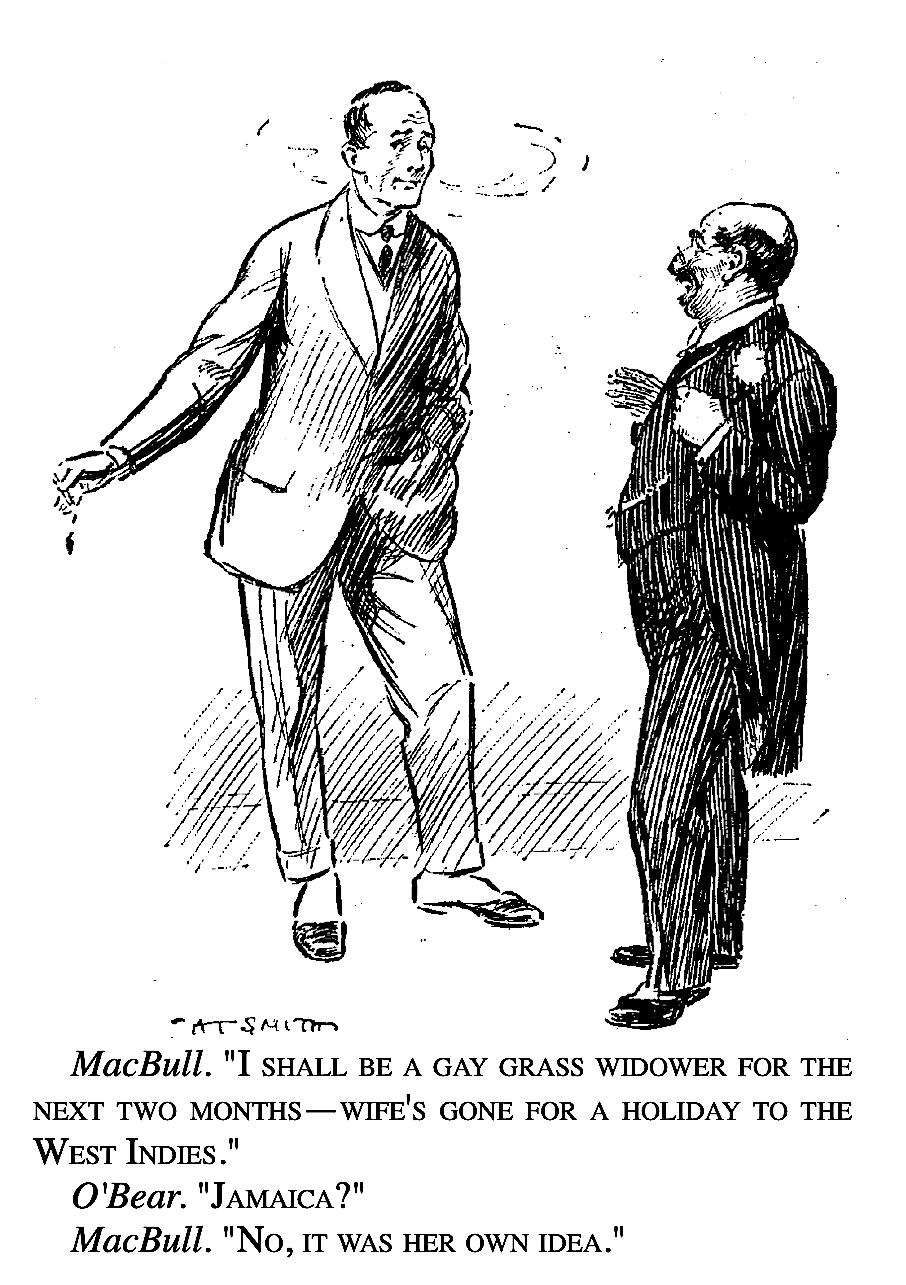
A pun, also known as a paronomasia in the context of linguistics, is a form of word play that exploits multiple meanings of a term, or of similar-sounding words, for an intended humorous or rhetorical effect. These ambiguities can arise from the intentional use of homophonic, homographic, metonymic, or figurative language. A pun differs from a malapropism in that a malapropism is an incorrect variation on a correct expression, while a pun involves expressions with multiple (correct or fairly reasonable) interpretations. Puns may be regarded as in-jokes or idiomatic constructions, especially as their usage and meaning are usually specific to a particular language or its culture.
Puns have a long history in writing. For example, the Roman playwright Plautus was famous for his puns and word games.
A homophonic pun is one that uses word pairs which sound alike (homophones) but are not synonymous. Walter Redfern summarized this type with his statement, "To pun is to treat homonyms as synonyms." For example, in George Carlin's phrase "atheism is a non-prophet institution", the word prophet is put in place of its homophone profit, altering the common phrase "non-profit institution". Similarly, the joke "Question: Why do we still have troops in Germany? Answer: To keep the Russians in Czech" relies on the aural ambiguity of the homophones check and Czech. Often, puns are not strictly homophonic, but play on words of similar, not identical, sound as in the example from the Pinky and the Brain cartoon film series: "I think so, Brain, but if we give peas a chance, won't the lima beans feel left out?" which plays with the similar—but not identical—sound of peas and peace in the anti-war slogan "Give Peace a Chance".
A homographic pun exploits words that are spelled the same (homographs) but possess different meanings and sounds. Because of their origin, they rely on sight more than hearing, contrary to homophonic puns. They are also known as heteronymic puns. Examples in which the punned words typically exist in two different parts of speech often rely on unusual sentence construction, as in the anecdote: "When asked to explain his large number of children, the pig answered simply: 'The wild oats of my sow gave us many piglets.'" An example that combines homophonic and homographic punning is Douglas Adams's line "You can tune a guitar, but you can't tuna fish. Unless of course, you play bass." The phrase uses the homophonic qualities of tune a and tuna, as well as the homographic pun on bass, in which ambiguity is reached through the identical spellings of /beɪs/ (a string instrument), and /bæs/ (a kind of fish). Homographic puns do not necessarily need to follow grammatical rules and often do not make sense when interpreted outside the context of the pun.
Homonymic puns, another common type, arise from the exploitation of words that are both homographs and homophones. The statement "Being in politics is just like playing golf: you are trapped in one bad lie after another" puns on the two meanings of the word lie as "a deliberate untruth" and as "the position in which something rests". An adaptation of a joke repeated by Isaac Asimov gives us "Did you hear about the little moron who strained himself while running into the screen door?" playing on strained as "to give much effort" and "to filter". A homonymic pun may also be polysemic, in which the words must be homonymic and also possess related meanings, a condition that is often subjective. However, lexicographers define polysemes as listed under a single dictionary lemma (a unique numbered meaning) while homonyms are treated in separate lemmata.
A compound pun is a statement that contains two or more puns. In this case, the wordplay cannot go into effect by utilizing the separate words or phrases of the puns that make up the entire statement. For example, a complex statement by Richard Whately includes four puns: "Why can a man never starve in the Great Desert? Because he can eat the sand which is there. But what brought the sandwiches there? Why, Noah sent Ham, and his descendants mustered and bred." This pun uses sand which is there/sandwiches there, Ham/ham, mustered/mustard, and bred/bread. Similarly, the phrase "piano is not my forte" links two meanings of the words forte and piano, one for the dynamic markings in music and the second for the literal meaning of the sentence, as well as alluding to "pianoforte", the older name of the instrument. Compound puns may also combine two phrases that share a word. For example, "Where do mathematicians go on weekends? To a Möbius strip club!" puns on the terms Möbius strip and strip club.
A recursive pun is one in which the second aspect of a pun relies on the understanding of an element in the first. For example, the statement "π is only half a pie" (π radians is 180 degrees, or half a circle, and a pie is a complete circle). Another example is "Infinity is not in finity", which means infinity is not in finite range. Another example is "a Freudian slip is when you say one thing but mean your mother". The recursive pun "Immanuel doesn't pun, he Kant" is attributed to Oscar Wilde.
Visual puns are sometimes used in logos, emblems, insignia, and other graphic symbols, in which one or more of the pun aspects is replaced by a picture. In European heraldry, this technique is called canting arms. Visual and other puns and word games are also common in Dutch gable stones as well as in some cartoons, such as Lost Consonants and The Far Side. Another type of visual pun exists in languages that use non-phonetic writing. For example, in Chinese, a pun may be based on a similarity in shape of the written character, despite a complete lack of phonetic similarity in the words punned upon. Mark Elvin describes how this "peculiarly Chinese form of visual punning involved comparing written characters to objects."
Hub AI
Pun AI simulator
(@Pun_simulator)
Pun
A pun, also known as a paronomasia in the context of linguistics, is a form of word play that exploits multiple meanings of a term, or of similar-sounding words, for an intended humorous or rhetorical effect. These ambiguities can arise from the intentional use of homophonic, homographic, metonymic, or figurative language. A pun differs from a malapropism in that a malapropism is an incorrect variation on a correct expression, while a pun involves expressions with multiple (correct or fairly reasonable) interpretations. Puns may be regarded as in-jokes or idiomatic constructions, especially as their usage and meaning are usually specific to a particular language or its culture.
Puns have a long history in writing. For example, the Roman playwright Plautus was famous for his puns and word games.
A homophonic pun is one that uses word pairs which sound alike (homophones) but are not synonymous. Walter Redfern summarized this type with his statement, "To pun is to treat homonyms as synonyms." For example, in George Carlin's phrase "atheism is a non-prophet institution", the word prophet is put in place of its homophone profit, altering the common phrase "non-profit institution". Similarly, the joke "Question: Why do we still have troops in Germany? Answer: To keep the Russians in Czech" relies on the aural ambiguity of the homophones check and Czech. Often, puns are not strictly homophonic, but play on words of similar, not identical, sound as in the example from the Pinky and the Brain cartoon film series: "I think so, Brain, but if we give peas a chance, won't the lima beans feel left out?" which plays with the similar—but not identical—sound of peas and peace in the anti-war slogan "Give Peace a Chance".
A homographic pun exploits words that are spelled the same (homographs) but possess different meanings and sounds. Because of their origin, they rely on sight more than hearing, contrary to homophonic puns. They are also known as heteronymic puns. Examples in which the punned words typically exist in two different parts of speech often rely on unusual sentence construction, as in the anecdote: "When asked to explain his large number of children, the pig answered simply: 'The wild oats of my sow gave us many piglets.'" An example that combines homophonic and homographic punning is Douglas Adams's line "You can tune a guitar, but you can't tuna fish. Unless of course, you play bass." The phrase uses the homophonic qualities of tune a and tuna, as well as the homographic pun on bass, in which ambiguity is reached through the identical spellings of /beɪs/ (a string instrument), and /bæs/ (a kind of fish). Homographic puns do not necessarily need to follow grammatical rules and often do not make sense when interpreted outside the context of the pun.
Homonymic puns, another common type, arise from the exploitation of words that are both homographs and homophones. The statement "Being in politics is just like playing golf: you are trapped in one bad lie after another" puns on the two meanings of the word lie as "a deliberate untruth" and as "the position in which something rests". An adaptation of a joke repeated by Isaac Asimov gives us "Did you hear about the little moron who strained himself while running into the screen door?" playing on strained as "to give much effort" and "to filter". A homonymic pun may also be polysemic, in which the words must be homonymic and also possess related meanings, a condition that is often subjective. However, lexicographers define polysemes as listed under a single dictionary lemma (a unique numbered meaning) while homonyms are treated in separate lemmata.
A compound pun is a statement that contains two or more puns. In this case, the wordplay cannot go into effect by utilizing the separate words or phrases of the puns that make up the entire statement. For example, a complex statement by Richard Whately includes four puns: "Why can a man never starve in the Great Desert? Because he can eat the sand which is there. But what brought the sandwiches there? Why, Noah sent Ham, and his descendants mustered and bred." This pun uses sand which is there/sandwiches there, Ham/ham, mustered/mustard, and bred/bread. Similarly, the phrase "piano is not my forte" links two meanings of the words forte and piano, one for the dynamic markings in music and the second for the literal meaning of the sentence, as well as alluding to "pianoforte", the older name of the instrument. Compound puns may also combine two phrases that share a word. For example, "Where do mathematicians go on weekends? To a Möbius strip club!" puns on the terms Möbius strip and strip club.
A recursive pun is one in which the second aspect of a pun relies on the understanding of an element in the first. For example, the statement "π is only half a pie" (π radians is 180 degrees, or half a circle, and a pie is a complete circle). Another example is "Infinity is not in finity", which means infinity is not in finite range. Another example is "a Freudian slip is when you say one thing but mean your mother". The recursive pun "Immanuel doesn't pun, he Kant" is attributed to Oscar Wilde.
Visual puns are sometimes used in logos, emblems, insignia, and other graphic symbols, in which one or more of the pun aspects is replaced by a picture. In European heraldry, this technique is called canting arms. Visual and other puns and word games are also common in Dutch gable stones as well as in some cartoons, such as Lost Consonants and The Far Side. Another type of visual pun exists in languages that use non-phonetic writing. For example, in Chinese, a pun may be based on a similarity in shape of the written character, despite a complete lack of phonetic similarity in the words punned upon. Mark Elvin describes how this "peculiarly Chinese form of visual punning involved comparing written characters to objects."