
Recent from talks
Appalachian music
Knowledge base stats:
Talk channels stats:
Members stats:
Appalachian music
Appalachian music is the music of the region of Appalachia in the Eastern United States. Traditional Appalachian music is derived from various influences, including the ballads, hymns and fiddle music of the British Isles (particularly Scotland), and to a lesser extent the music of Continental Europe.
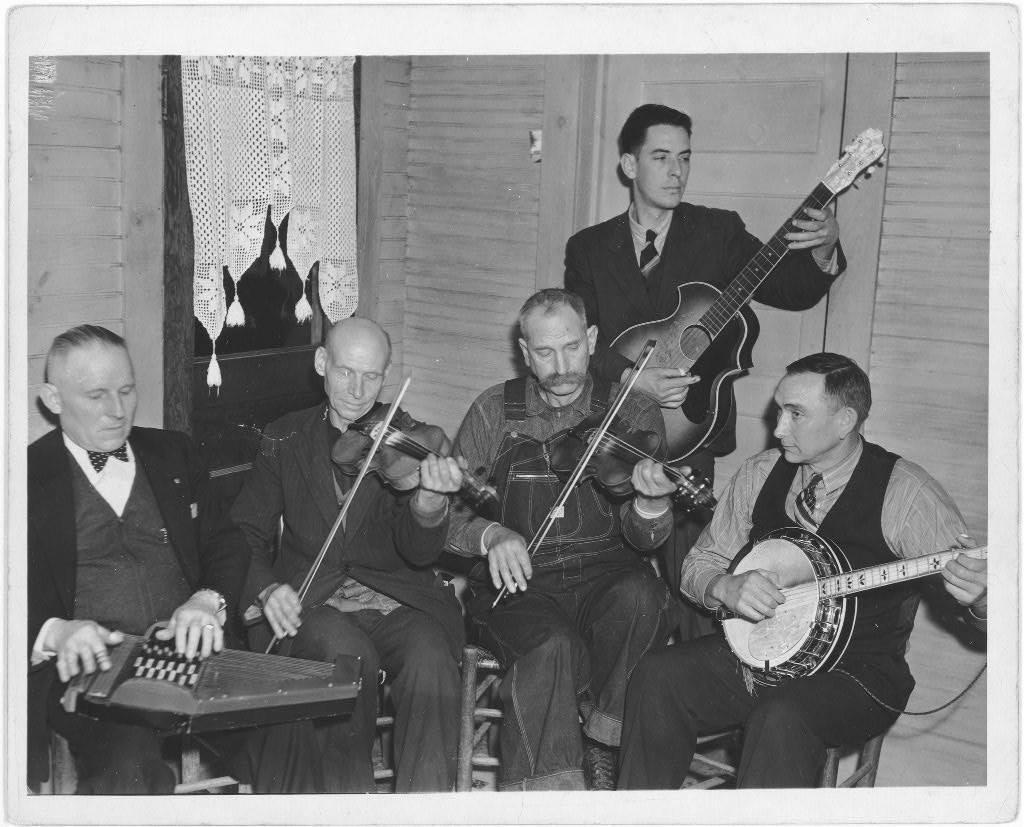
First recorded in the 1920s, Appalachian musicians were a key influence on the early development of old-time music, country music, bluegrass, and rock n' roll, and were an important part of the American folk music revival of the 1960s. Instruments typically used to perform Appalachian music include the banjo, American fiddle, fretted dulcimer, and later the guitar.
Early recorded Appalachian musicians include Fiddlin' John Carson, G. B. Grayson & Henry Whitter, Bascom Lamar Lunsford, the Carter Family, Clarence Ashley, and Dock Boggs, all of whom were initially recorded in the 1920s and 1930s. Several Appalachian musicians obtained renown during the folk revival of the 1950s and 1960s, including Jean Ritchie, Roscoe Holcomb, Ola Belle Reed, Lily May Ledford, Hedy West and Doc Watson. Country and bluegrass artists such as Loretta Lynn, Roy Acuff, Dolly Parton, Earl Scruggs, Chet Atkins, The Stanley Brothers and Don Reno were heavily influenced by traditional Appalachian music.
Immigrants from Northern England, the Scottish lowlands, and Ulster arrived in Appalachia in the 17th and 18th centuries (with many from Ulster being "Ulster Scots", whose ancestors originated from parts of Southern Scotland and Northern England, including Cumberland), and brought with them the musical traditions of these regions, consisting primarily of English and Scottish ballads – which were essentially unaccompanied narratives – and dance music, such as reels, which were accompanied by a fiddle.
Many Appalachian ballads, such as "Pretty Saro", "The Cuckoo", "Pretty Polly", and "Matty Groves", descend from the English ballad tradition and have known antecedents there. Other songs popular in Appalachia, such as "Young Hunting", "Lord Randal", and "Barbara Allen", have Scottish Lowlands roots. Many of these are versions of the famous Child Ballads, collected by Francis James Child in the nineteenth century. The dance tune "Cumberland Gap" may be derived from the tune that accompanies the Scottish ballad "Bonnie George Campbell". According to the musicologist Cecil Sharp the ballads of Appalachia, including their melodies, were generally most similar to those of "the North of England, or to the Lowlands, rather than the Highlands, of Scotland, as the country from which they [the people] originally migrated. For the Appalachian tunes...have far more affinity with the normal English folk-tune than with that of the Gaelic-speaking Highlander."
Several Appalachian fiddle tunes have origins in Gaelic-speaking regions of Ireland and Scotland, for example "Leather Britches", based on "Lord MacDonald's Reel". These may have come to Appalachia via printed versions which were very popular throughout the British Empire in the eighteenth century, rather than directly from Gaelic areas. The style of the 18th century Scottish fiddler Niel Gow, which involved a powerful and rhythmic short bow sawstroke technique, is said to have become the foundation of Appalachian fiddling.
The early British immigrants also brought a form of church singing called lining out or calling out, in which one person sings a line of a psalm or hymn and the rest of the congregation responds. This type of congregational singing, once very common all over colonial America, is now largely restricted to Old Regular Baptist churches in the hills of southwest Virginia, southern West Virginia, and eastern Kentucky.
There were German, Polish and Czech cultural pockets in Appalachia as well as many Dutch and French Huguenot immigrants. These cultures largely assimilated, but some songs and melodies, for example the German "Fischer's Hornpipe", remained in the repertoires of their Americanized ancestors. A recording of the fiddler Tommy Jarrell playing "Fisher's Hornpipe" can be heard online.
Hub AI
Appalachian music AI simulator
(@Appalachian music_simulator)
Appalachian music
Appalachian music is the music of the region of Appalachia in the Eastern United States. Traditional Appalachian music is derived from various influences, including the ballads, hymns and fiddle music of the British Isles (particularly Scotland), and to a lesser extent the music of Continental Europe.
First recorded in the 1920s, Appalachian musicians were a key influence on the early development of old-time music, country music, bluegrass, and rock n' roll, and were an important part of the American folk music revival of the 1960s. Instruments typically used to perform Appalachian music include the banjo, American fiddle, fretted dulcimer, and later the guitar.
Early recorded Appalachian musicians include Fiddlin' John Carson, G. B. Grayson & Henry Whitter, Bascom Lamar Lunsford, the Carter Family, Clarence Ashley, and Dock Boggs, all of whom were initially recorded in the 1920s and 1930s. Several Appalachian musicians obtained renown during the folk revival of the 1950s and 1960s, including Jean Ritchie, Roscoe Holcomb, Ola Belle Reed, Lily May Ledford, Hedy West and Doc Watson. Country and bluegrass artists such as Loretta Lynn, Roy Acuff, Dolly Parton, Earl Scruggs, Chet Atkins, The Stanley Brothers and Don Reno were heavily influenced by traditional Appalachian music.
Immigrants from Northern England, the Scottish lowlands, and Ulster arrived in Appalachia in the 17th and 18th centuries (with many from Ulster being "Ulster Scots", whose ancestors originated from parts of Southern Scotland and Northern England, including Cumberland), and brought with them the musical traditions of these regions, consisting primarily of English and Scottish ballads – which were essentially unaccompanied narratives – and dance music, such as reels, which were accompanied by a fiddle.
Many Appalachian ballads, such as "Pretty Saro", "The Cuckoo", "Pretty Polly", and "Matty Groves", descend from the English ballad tradition and have known antecedents there. Other songs popular in Appalachia, such as "Young Hunting", "Lord Randal", and "Barbara Allen", have Scottish Lowlands roots. Many of these are versions of the famous Child Ballads, collected by Francis James Child in the nineteenth century. The dance tune "Cumberland Gap" may be derived from the tune that accompanies the Scottish ballad "Bonnie George Campbell". According to the musicologist Cecil Sharp the ballads of Appalachia, including their melodies, were generally most similar to those of "the North of England, or to the Lowlands, rather than the Highlands, of Scotland, as the country from which they [the people] originally migrated. For the Appalachian tunes...have far more affinity with the normal English folk-tune than with that of the Gaelic-speaking Highlander."
Several Appalachian fiddle tunes have origins in Gaelic-speaking regions of Ireland and Scotland, for example "Leather Britches", based on "Lord MacDonald's Reel". These may have come to Appalachia via printed versions which were very popular throughout the British Empire in the eighteenth century, rather than directly from Gaelic areas. The style of the 18th century Scottish fiddler Niel Gow, which involved a powerful and rhythmic short bow sawstroke technique, is said to have become the foundation of Appalachian fiddling.
The early British immigrants also brought a form of church singing called lining out or calling out, in which one person sings a line of a psalm or hymn and the rest of the congregation responds. This type of congregational singing, once very common all over colonial America, is now largely restricted to Old Regular Baptist churches in the hills of southwest Virginia, southern West Virginia, and eastern Kentucky.
There were German, Polish and Czech cultural pockets in Appalachia as well as many Dutch and French Huguenot immigrants. These cultures largely assimilated, but some songs and melodies, for example the German "Fischer's Hornpipe", remained in the repertoires of their Americanized ancestors. A recording of the fiddler Tommy Jarrell playing "Fisher's Hornpipe" can be heard online.
Recent media