
Recent from talks
Archaeology of Iowa
Knowledge base stats:
Talk channels stats:
Members stats:
Archaeology of Iowa
The archaeology of Iowa is the study of the buried remains of human culture within the U.S. state of Iowa from the earliest prehistoric through the late historic periods. When the American Indians first arrived in what is now Iowa more than 13,000 years ago, they were hunters and gatherers living in a Pleistocene glacial landscape. By the time European explorers visited Iowa, American Indians were largely settled farmers with complex economic, social, and political systems. This transformation happened gradually. During the Archaic period (10,500–2,800 years ago) American Indians adapted to local environments and ecosystems, slowly becoming more sedentary as populations increased. More than 3,000 years ago, during the Late Archaic period, American Indians in Iowa began utilizing domesticated plants. The subsequent Woodland period saw an increase on the reliance on agriculture and social complexity, with increased use of mounds, ceramics, and specialized subsistence. During the Late Prehistoric period (beginning about AD 900) increased use of maize and social changes led to social flourishing and nucleated settlements. The arrival of European trade goods and diseases in the Protohistoric period led to dramatic population shifts and economic and social upheaval, with the arrival of new tribes and early European explorers and traders. During the Historical period European traders and American Indians in Iowa gave way to American settlers and Iowa was transformed into an agricultural state.
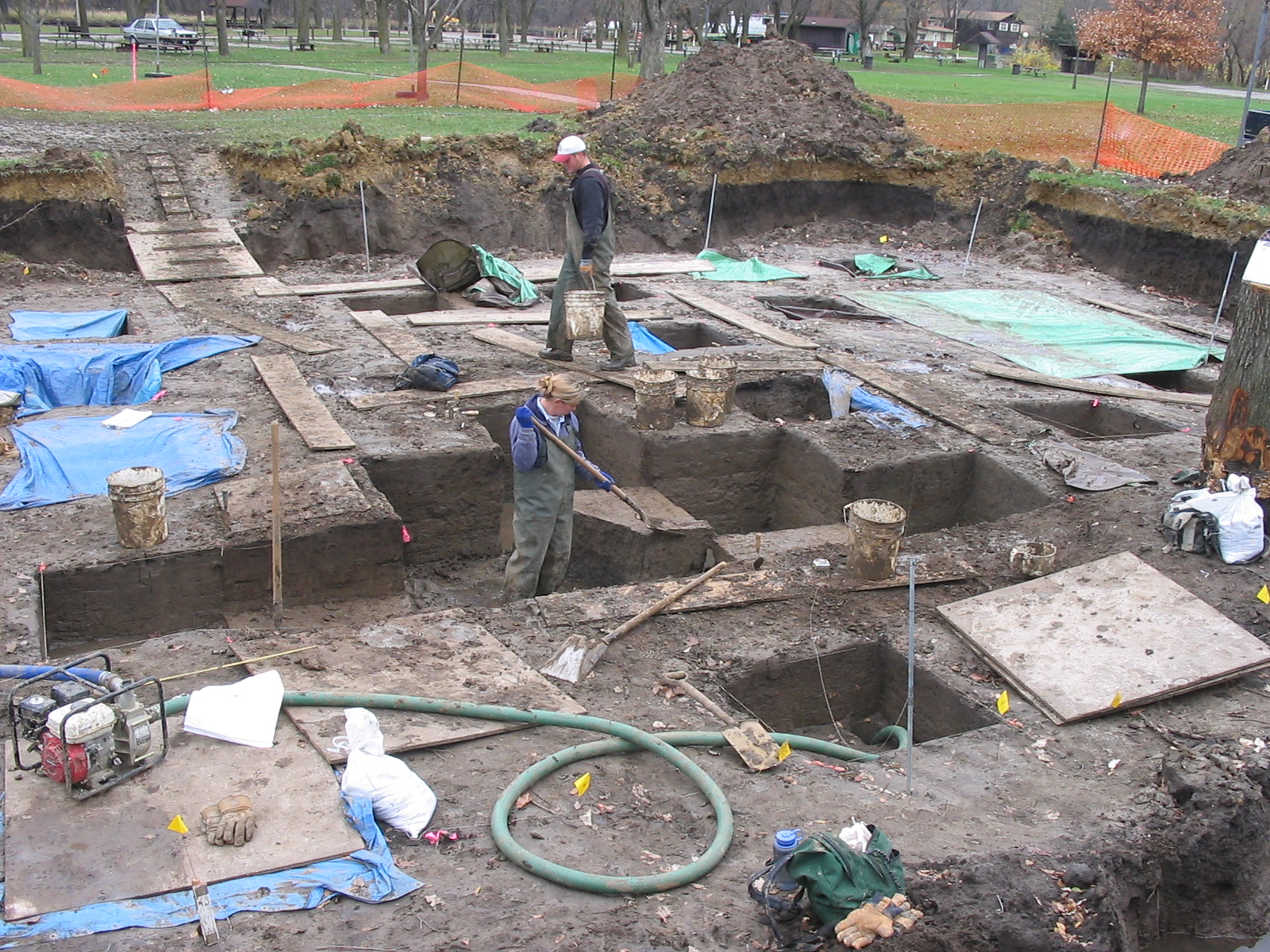
Archaeologists have studied the prehistory of Iowa since the mid-19th century, when large American Indian mounds were first observed along the Mississippi. Early archaeologists such as S.V. Proudfit and Theodore Lewis documented large sites such as earthworks, mounds, and earthlodges. Truly systematic recording of Iowa sites began with Charles R. Keyes and Ellison Orr’s surveys and excavations beginning in the 1920s. Documenting hundreds of sites, often just before they disappeared under the plow, Keyes’ and Orr’s work led to the formation of the Iowa Archaeological Survey, the Iowa Archeological Society, and the designation of Effigy Mounds National Monument. After their deaths in 1951, the Survey was disbanded, and their efforts were continued by the University of Iowa’s Department of Sociology and Anthropology, which formed the Office of the State Archaeologist (OSA) in 1959. The OSA maintains an extensive list of more than 23,000 recorded archaeological sites in Iowa, and conducts survey and excavation across the state. Other institutions conducting archaeological research in Iowa include the State Historical Society of Iowa, the Iowa Archeological Society, the University of Iowa, Iowa State University, Grinnell College, Luther College, and private archaeological firms. Professional archaeologists in Iowa are represented by the Association of Iowa Archaeologists. Iowa archaeology grew dramatically beginning in the 1960s with the introduction of Cultural Resources Management legislation that required archaeological survey and excavation at many federal projects in Iowa.
Paleoindian hunters and gatherers were the first occupants of Iowa, entering the state at the end of the Pleistocene glacial period. At the time the state was covered by tundra, conifer forests, and deciduous forests. Areas immediately north of Des Moines extending to Minnesota were covered by the receding Des Moines Lobe, a large glacier system. Highly mobile, their sites are scattered across Iowa and are noted for their large stone points. While Paleoindians were traditionally viewed as big game hunters, more recent research suggests much of their subsistence was derived from small game and wild plants. Paleoindian points are found throughout Iowa, but almost no intact Paleoindian sites have been excavated, probably because they were ephemeral and are now either destroyed by plowing or are very deeply buried in river valleys.
The oldest artifacts found in Iowa are Clovis points, large lanceolate points found occasionally in all parts of the state except for the Des Moines Lobe. Possible sources of game were giant Pleistocene megafauna, including mammoth, mastodon, and giant forms of bison, all of which are now extinct. While widespread, only two Clovis sites have been excavated in Iowa. The Rummells-Maske site is a Clovis site in Cedar County; unfortunately, this site was damaged by plowing, although 20 points and point fragments were recovered. The Carlisle Clovis Cache Site in Warren County contained 38 unfinished stone tools that appear to date to the Clovis period, but these results have not yet been published.
Other Iowa Early Paleoindian points include Gainey, a point that appears to be intermediate between Clovis and Folsom. Gainey points were also recovered at Rummells-Maske. While Folsom points are found throughout Iowa, especially western Iowa, none have been excavated in a well-preserved site.
At the beginning of the glacial-free Holocene Epoch, humans in Iowa utilized projectile point found throughout the mid-continent, including Dalton, Fayette, Agate Basin, and Hell Gap. Humans were still highly mobile, and by this time most of the Pleistocene megafauna had gone extinct. As with the Early Paleoindian period, no intact Late Paleoindian sites have been excavated in Iowa.
The Archaic is the longest period of Iowa prehistory, lasting about 8,000 years. Overall, populations appear to have increased in Iowa during the Archaic, despite a changing climate. During this time American Indians transitioned from highly mobile hunters and gatherers with large ranges towards a focus on local resources and ecosystems. Domesticated plants appeared in Iowa towards the end of the Archaic.
During the Early Archaic period regional variation in point forms is seen in Iowa, and Indians adapted to more localized forms of hunting and gathering while probably maintaining seasonal movements from camp to camp. Common stone tool types are Corner-notched St. Charles points and Thebes Knives. Soon Hardin and Kirk points appear in Iowa as well. Excavated Early Archaic sites in Iowa include the Soldow Site, Horizons IIIa and II of the Cherokee Sewer Site, and the Simonsen Site.
Hub AI
Archaeology of Iowa AI simulator
(@Archaeology of Iowa_simulator)
Archaeology of Iowa
The archaeology of Iowa is the study of the buried remains of human culture within the U.S. state of Iowa from the earliest prehistoric through the late historic periods. When the American Indians first arrived in what is now Iowa more than 13,000 years ago, they were hunters and gatherers living in a Pleistocene glacial landscape. By the time European explorers visited Iowa, American Indians were largely settled farmers with complex economic, social, and political systems. This transformation happened gradually. During the Archaic period (10,500–2,800 years ago) American Indians adapted to local environments and ecosystems, slowly becoming more sedentary as populations increased. More than 3,000 years ago, during the Late Archaic period, American Indians in Iowa began utilizing domesticated plants. The subsequent Woodland period saw an increase on the reliance on agriculture and social complexity, with increased use of mounds, ceramics, and specialized subsistence. During the Late Prehistoric period (beginning about AD 900) increased use of maize and social changes led to social flourishing and nucleated settlements. The arrival of European trade goods and diseases in the Protohistoric period led to dramatic population shifts and economic and social upheaval, with the arrival of new tribes and early European explorers and traders. During the Historical period European traders and American Indians in Iowa gave way to American settlers and Iowa was transformed into an agricultural state.
Archaeologists have studied the prehistory of Iowa since the mid-19th century, when large American Indian mounds were first observed along the Mississippi. Early archaeologists such as S.V. Proudfit and Theodore Lewis documented large sites such as earthworks, mounds, and earthlodges. Truly systematic recording of Iowa sites began with Charles R. Keyes and Ellison Orr’s surveys and excavations beginning in the 1920s. Documenting hundreds of sites, often just before they disappeared under the plow, Keyes’ and Orr’s work led to the formation of the Iowa Archaeological Survey, the Iowa Archeological Society, and the designation of Effigy Mounds National Monument. After their deaths in 1951, the Survey was disbanded, and their efforts were continued by the University of Iowa’s Department of Sociology and Anthropology, which formed the Office of the State Archaeologist (OSA) in 1959. The OSA maintains an extensive list of more than 23,000 recorded archaeological sites in Iowa, and conducts survey and excavation across the state. Other institutions conducting archaeological research in Iowa include the State Historical Society of Iowa, the Iowa Archeological Society, the University of Iowa, Iowa State University, Grinnell College, Luther College, and private archaeological firms. Professional archaeologists in Iowa are represented by the Association of Iowa Archaeologists. Iowa archaeology grew dramatically beginning in the 1960s with the introduction of Cultural Resources Management legislation that required archaeological survey and excavation at many federal projects in Iowa.
Paleoindian hunters and gatherers were the first occupants of Iowa, entering the state at the end of the Pleistocene glacial period. At the time the state was covered by tundra, conifer forests, and deciduous forests. Areas immediately north of Des Moines extending to Minnesota were covered by the receding Des Moines Lobe, a large glacier system. Highly mobile, their sites are scattered across Iowa and are noted for their large stone points. While Paleoindians were traditionally viewed as big game hunters, more recent research suggests much of their subsistence was derived from small game and wild plants. Paleoindian points are found throughout Iowa, but almost no intact Paleoindian sites have been excavated, probably because they were ephemeral and are now either destroyed by plowing or are very deeply buried in river valleys.
The oldest artifacts found in Iowa are Clovis points, large lanceolate points found occasionally in all parts of the state except for the Des Moines Lobe. Possible sources of game were giant Pleistocene megafauna, including mammoth, mastodon, and giant forms of bison, all of which are now extinct. While widespread, only two Clovis sites have been excavated in Iowa. The Rummells-Maske site is a Clovis site in Cedar County; unfortunately, this site was damaged by plowing, although 20 points and point fragments were recovered. The Carlisle Clovis Cache Site in Warren County contained 38 unfinished stone tools that appear to date to the Clovis period, but these results have not yet been published.
Other Iowa Early Paleoindian points include Gainey, a point that appears to be intermediate between Clovis and Folsom. Gainey points were also recovered at Rummells-Maske. While Folsom points are found throughout Iowa, especially western Iowa, none have been excavated in a well-preserved site.
At the beginning of the glacial-free Holocene Epoch, humans in Iowa utilized projectile point found throughout the mid-continent, including Dalton, Fayette, Agate Basin, and Hell Gap. Humans were still highly mobile, and by this time most of the Pleistocene megafauna had gone extinct. As with the Early Paleoindian period, no intact Late Paleoindian sites have been excavated in Iowa.
The Archaic is the longest period of Iowa prehistory, lasting about 8,000 years. Overall, populations appear to have increased in Iowa during the Archaic, despite a changing climate. During this time American Indians transitioned from highly mobile hunters and gatherers with large ranges towards a focus on local resources and ecosystems. Domesticated plants appeared in Iowa towards the end of the Archaic.
During the Early Archaic period regional variation in point forms is seen in Iowa, and Indians adapted to more localized forms of hunting and gathering while probably maintaining seasonal movements from camp to camp. Common stone tool types are Corner-notched St. Charles points and Thebes Knives. Soon Hardin and Kirk points appear in Iowa as well. Excavated Early Archaic sites in Iowa include the Soldow Site, Horizons IIIa and II of the Cherokee Sewer Site, and the Simonsen Site.
Recent media