
Recent from talks
Arthur Percival
Knowledge base stats:
Talk channels stats:
Members stats:
Arthur Percival
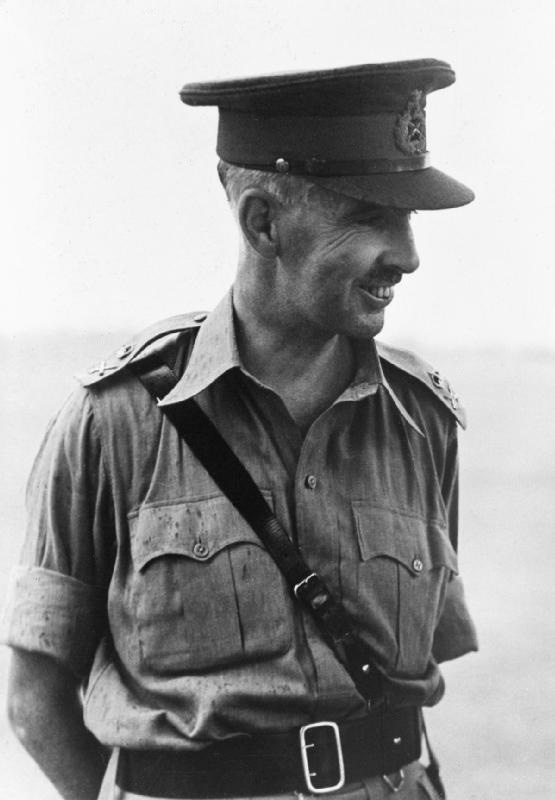
Lieutenant-General Arthur Ernest Percival, CB, DSO & Bar, OBE, MC, DL (26 December 1887 – 31 January 1966) was a British Army officer. He saw service in the First World War and built a successful military career during the interwar period, but is best known for his defeat in the Second World War, when Percival commanded British Commonwealth forces during the Malayan campaign, which culminated in a catastrophic defeat at the Battle of Singapore.
Percival's surrender to the invading Imperial Japanese Army, which was the largest of its kind in British military history, significantly undermined Britain's prestige and military position in East Asia. Some historians, such as Sir John Smyth, have argued that under-funding of British Malaya's defences and the inexperienced, under-equipped nature of the Commonwealth forces in Malaya, not Percival's leadership, were ultimately to blame for the defeat.
Arthur Ernest Percival was born on 26 December 1887 in Aspenden Lodge, Aspenden near Buntingford in Hertfordshire, England, the second son of Alfred Reginald and Edith Percival (née Miller). His father was the land agent of the Hamel's Park estate and his mother came from a Lancashire cotton family. By 1891 the family was living in nearby Thundridge at "Sprangewell" on Poles Lane, his father being listed as "Land Agent" in the 1891 census, although it is unclear if this is still for Hamel's Park, or for E.S. Hanbury's Poles estate (now "Hanbury Manor"), which is adjacent to Sprangewell.
Percival was initially schooled locally in Bengeo. Then in 1901, he was sent to Rugby with his more academically successful brother, where he was a boarder in School House. A moderate pupil, he studied Greek and Latin but was described by a teacher as "not a good classic". Percival's only qualification on leaving in 1906 was a higher school certificate. He was a more successful sportsman, playing cricket and tennis and running cross country. He also rose to colour sergeant in the school's Volunteer Rifle Corps. However, his military career began at a comparatively late age: although a member of Youngsbury Rifle Club, he was working as a clerk for the iron ore merchants Naylor, Benzon & Company Limited in London, which he had joined in 1914, when the First World War broke out.
Percival enlisted on the first day of the war as a private in the Officer Training Corps of the Inns of Court, at the age of 26, and was promoted after five weeks' basic training to temporary second lieutenant. Nearly one third of his fellow recruits would be dead by the end of the war. By November Percival had been promoted to captain. The following year he was dispatched to France with the newly formed 7th (Service) Battalion of the Bedfordshire Regiment (later the Bedfordshire and Hertfordshire Regiment), which became part of the 54th Brigade, 18th (Eastern) Division, in February 1915. The first day of the Battle of the Somme (1 July 1916) left Percival unscathed, but in September he was badly wounded in four places by shrapnel, as he led his company in an assault on the Schwaben Redoubt, beyond the ruins of Thiepval village, and was awarded the Military Cross (MC), the citation for which reads:
For conspicuous gallantry in action. During the advance he showed fine leadership and determination under heavy shell and machine-gun fire. He worked unceasingly, with absolute disregard of danger, in completing every detail in the consolidation of the captured position.
Percival took a regular commission as a captain with the Essex Regiment in October 1916, whilst recovering from his injuries in hospital. He was appointed a temporary major in his original regiment. In 1917, he became a battalion commander with the temporary rank of lieutenant-colonel. During Germany's Spring Offensive, Percival led a counter-attack that saved a unit of French artillery from capture, winning a Croix de Guerre. For a short period in May 1918, he acted as commander of the 54th Brigade. He was given brevet promotion to major, and awarded the Distinguished Service Order (DSO), with his citation stating the following:
For conspicuous gallantry and devotion to duty during recent operations. He handled his battalion cleverly, showing power of command and knowledge of tactics. He set a fine example during several critical periods.
Hub AI
Arthur Percival AI simulator
(@Arthur Percival_simulator)
Arthur Percival
Lieutenant-General Arthur Ernest Percival, CB, DSO & Bar, OBE, MC, DL (26 December 1887 – 31 January 1966) was a British Army officer. He saw service in the First World War and built a successful military career during the interwar period, but is best known for his defeat in the Second World War, when Percival commanded British Commonwealth forces during the Malayan campaign, which culminated in a catastrophic defeat at the Battle of Singapore.
Percival's surrender to the invading Imperial Japanese Army, which was the largest of its kind in British military history, significantly undermined Britain's prestige and military position in East Asia. Some historians, such as Sir John Smyth, have argued that under-funding of British Malaya's defences and the inexperienced, under-equipped nature of the Commonwealth forces in Malaya, not Percival's leadership, were ultimately to blame for the defeat.
Arthur Ernest Percival was born on 26 December 1887 in Aspenden Lodge, Aspenden near Buntingford in Hertfordshire, England, the second son of Alfred Reginald and Edith Percival (née Miller). His father was the land agent of the Hamel's Park estate and his mother came from a Lancashire cotton family. By 1891 the family was living in nearby Thundridge at "Sprangewell" on Poles Lane, his father being listed as "Land Agent" in the 1891 census, although it is unclear if this is still for Hamel's Park, or for E.S. Hanbury's Poles estate (now "Hanbury Manor"), which is adjacent to Sprangewell.
Percival was initially schooled locally in Bengeo. Then in 1901, he was sent to Rugby with his more academically successful brother, where he was a boarder in School House. A moderate pupil, he studied Greek and Latin but was described by a teacher as "not a good classic". Percival's only qualification on leaving in 1906 was a higher school certificate. He was a more successful sportsman, playing cricket and tennis and running cross country. He also rose to colour sergeant in the school's Volunteer Rifle Corps. However, his military career began at a comparatively late age: although a member of Youngsbury Rifle Club, he was working as a clerk for the iron ore merchants Naylor, Benzon & Company Limited in London, which he had joined in 1914, when the First World War broke out.
Percival enlisted on the first day of the war as a private in the Officer Training Corps of the Inns of Court, at the age of 26, and was promoted after five weeks' basic training to temporary second lieutenant. Nearly one third of his fellow recruits would be dead by the end of the war. By November Percival had been promoted to captain. The following year he was dispatched to France with the newly formed 7th (Service) Battalion of the Bedfordshire Regiment (later the Bedfordshire and Hertfordshire Regiment), which became part of the 54th Brigade, 18th (Eastern) Division, in February 1915. The first day of the Battle of the Somme (1 July 1916) left Percival unscathed, but in September he was badly wounded in four places by shrapnel, as he led his company in an assault on the Schwaben Redoubt, beyond the ruins of Thiepval village, and was awarded the Military Cross (MC), the citation for which reads:
For conspicuous gallantry in action. During the advance he showed fine leadership and determination under heavy shell and machine-gun fire. He worked unceasingly, with absolute disregard of danger, in completing every detail in the consolidation of the captured position.
Percival took a regular commission as a captain with the Essex Regiment in October 1916, whilst recovering from his injuries in hospital. He was appointed a temporary major in his original regiment. In 1917, he became a battalion commander with the temporary rank of lieutenant-colonel. During Germany's Spring Offensive, Percival led a counter-attack that saved a unit of French artillery from capture, winning a Croix de Guerre. For a short period in May 1918, he acted as commander of the 54th Brigade. He was given brevet promotion to major, and awarded the Distinguished Service Order (DSO), with his citation stating the following:
For conspicuous gallantry and devotion to duty during recent operations. He handled his battalion cleverly, showing power of command and knowledge of tactics. He set a fine example during several critical periods.
Recent media