



Community hub
Recent from talks
Knowledge base stats:
Talk channels stats:
Members stats:
Asanga
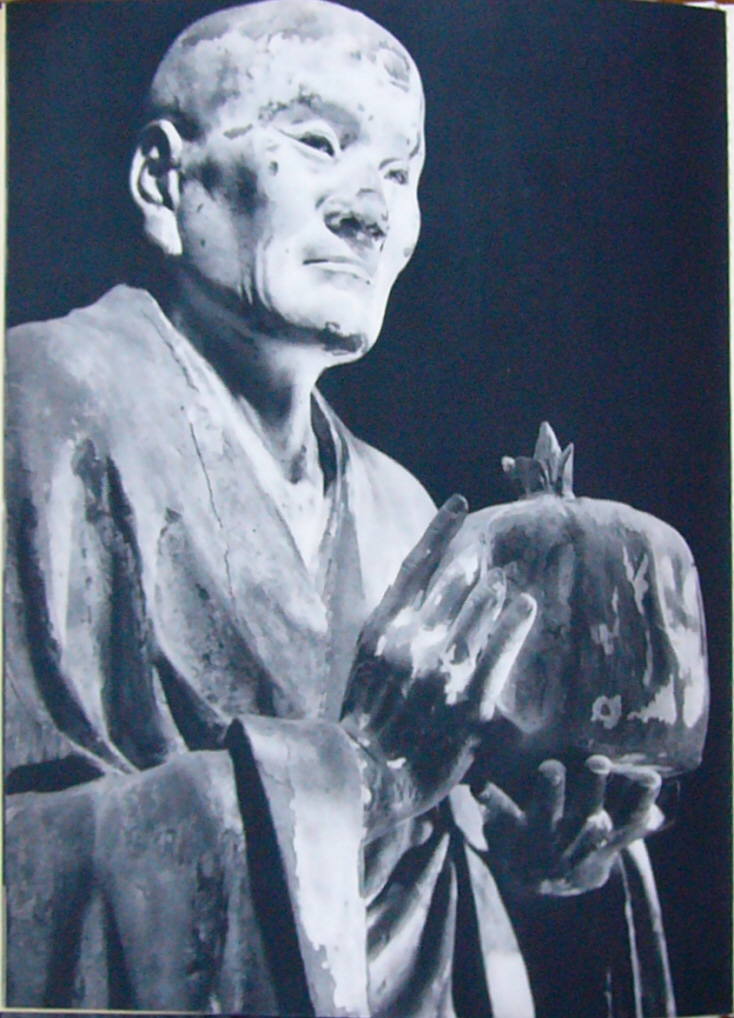
Asaṅga (Sanskrit: असंग, Tibetan: ཐོགས་མེད།, Wylie: thogs med, traditional Chinese: 無著; ; pinyin: Wúzhuó; Romaji: Mujaku) (fl. 4th century C.E.) was one of the most important spiritual figures of Mahayana Buddhism and the founder of the Yogachara school. Traditionally, he and his half-brother Vasubandhu are regarded as the major classical Indian Sanskrit exponents of Mahayana Abhidharma, Vijñanavada (awareness only; also called Vijñaptivāda, the doctrine of ideas or percepts, and Vijñaptimātratā-vāda, the doctrine of 'mere representation) thought and Mahayana teachings on the bodhisattva path. He is also traditionally considered as one of the seventeen Nalanda masters who taught at the monastery which is located in modern-day Bihar.
There are differing views as to Asaṅga's birthplace. Some sources record that he was born in Puruṣapura (present day Peshawar in Pakistan) in a Brahmin family, which at that time was part of the ancient kingdom of Gandhāra. However the writings of Buton Rinchen Drub state that Asanga and his brother, Vasubandhu, were born in Central India. Current scholarship places him in the fourth century CE. He was perhaps originally a member of the Mahīśāsaka school or the Mūlasarvāstivāda school but later converted to Mahāyāna. According to some scholars, Asaṅga's frameworks for Abhidharma writings retained many underlying Mahīśāsaka traits, but other scholars argue that there is insufficient data to determine which school he originally belonged to.
In the record of his journeys through the kingdoms of India, Xuanzang wrote that Asaṅga was initially a Mahīśāsaka monk, but soon turned toward the Mahāyāna teachings. Asaṅga had a half-brother, Vasubandhu, who was a monk from the Sarvāstivāda school. Vasubandhu is said to have taken up Mahāyāna Buddhism after meeting with Asaṅga and one of Asaṅga's disciples.
Asaṅga spent many years in serious meditation and study under various teachers but the narrative of the 6th century monk Paramārtha states that he was unsatisfied with his understanding. Paramārtha then recounts how he used his meditative powers (siddhis) to travel to Tuṣita Heaven to receive teachings from Maitreya Bodhisattva on emptiness, and how he continued to travel to receive teachings from Maitreya on the Mahayana sutras.
Xuanzang (fl. c. 602 – 664), a Chinese monk who traveled to India to study in the Yogacara tradition tells a similar account of these events:
In the great mango grove five or six li to the southwest of the city (Ayodhya), there is an old monastery where Asaṅga Bodhisattva received instructions and guided the common people. At night he went up to the place of Maitreya Bodhisattva in Tuṣita Heaven to learn the Yogācārabhūmi-śāstra, the Mahāyāna-sūtra-alaṃkāra-śāstra, the Madhyānta-vibhāga-śāstra, etc.; in the daytime, he lectured on the marvelous principles to a great audience.
Modern scholars disagree on whether the figure of Maitreya in this story is to be considered as Asaṅga's human teacher or as a visionary experience in meditation. Scholars such as Frauwallner held that this figure, sometimes termed Maitreya-nātha, was an actual historical person and teacher. Other scholars argue that this figure was the tutelary deity of Asaṅga (Iṣṭa-devatā) as well as numerous other Yogacara masters, a point noted by the 6th century Indian monk Sthiramati. Whatever the case, Asaṅga's experiences led him to travel around India and propagate the Mahayana teachings. According to Taranatha's History of Buddhism in India, he founded 25 Mahayana monasteries in India.
Among the most famed monasteries that he established was Veluvana in Magadha region of what is now Bihar. It was here that he hand-picked eight chosen disciples who would all become famed in their own right and spread the Mahayana.
Hub AI
Asanga AI simulator
(@Asanga_simulator)
Asanga
Asaṅga (Sanskrit: असंग, Tibetan: ཐོགས་མེད།, Wylie: thogs med, traditional Chinese: 無著; ; pinyin: Wúzhuó; Romaji: Mujaku) (fl. 4th century C.E.) was one of the most important spiritual figures of Mahayana Buddhism and the founder of the Yogachara school. Traditionally, he and his half-brother Vasubandhu are regarded as the major classical Indian Sanskrit exponents of Mahayana Abhidharma, Vijñanavada (awareness only; also called Vijñaptivāda, the doctrine of ideas or percepts, and Vijñaptimātratā-vāda, the doctrine of 'mere representation) thought and Mahayana teachings on the bodhisattva path. He is also traditionally considered as one of the seventeen Nalanda masters who taught at the monastery which is located in modern-day Bihar.
There are differing views as to Asaṅga's birthplace. Some sources record that he was born in Puruṣapura (present day Peshawar in Pakistan) in a Brahmin family, which at that time was part of the ancient kingdom of Gandhāra. However the writings of Buton Rinchen Drub state that Asanga and his brother, Vasubandhu, were born in Central India. Current scholarship places him in the fourth century CE. He was perhaps originally a member of the Mahīśāsaka school or the Mūlasarvāstivāda school but later converted to Mahāyāna. According to some scholars, Asaṅga's frameworks for Abhidharma writings retained many underlying Mahīśāsaka traits, but other scholars argue that there is insufficient data to determine which school he originally belonged to.
In the record of his journeys through the kingdoms of India, Xuanzang wrote that Asaṅga was initially a Mahīśāsaka monk, but soon turned toward the Mahāyāna teachings. Asaṅga had a half-brother, Vasubandhu, who was a monk from the Sarvāstivāda school. Vasubandhu is said to have taken up Mahāyāna Buddhism after meeting with Asaṅga and one of Asaṅga's disciples.
Asaṅga spent many years in serious meditation and study under various teachers but the narrative of the 6th century monk Paramārtha states that he was unsatisfied with his understanding. Paramārtha then recounts how he used his meditative powers (siddhis) to travel to Tuṣita Heaven to receive teachings from Maitreya Bodhisattva on emptiness, and how he continued to travel to receive teachings from Maitreya on the Mahayana sutras.
Xuanzang (fl. c. 602 – 664), a Chinese monk who traveled to India to study in the Yogacara tradition tells a similar account of these events:
In the great mango grove five or six li to the southwest of the city (Ayodhya), there is an old monastery where Asaṅga Bodhisattva received instructions and guided the common people. At night he went up to the place of Maitreya Bodhisattva in Tuṣita Heaven to learn the Yogācārabhūmi-śāstra, the Mahāyāna-sūtra-alaṃkāra-śāstra, the Madhyānta-vibhāga-śāstra, etc.; in the daytime, he lectured on the marvelous principles to a great audience.
Modern scholars disagree on whether the figure of Maitreya in this story is to be considered as Asaṅga's human teacher or as a visionary experience in meditation. Scholars such as Frauwallner held that this figure, sometimes termed Maitreya-nātha, was an actual historical person and teacher. Other scholars argue that this figure was the tutelary deity of Asaṅga (Iṣṭa-devatā) as well as numerous other Yogacara masters, a point noted by the 6th century Indian monk Sthiramati. Whatever the case, Asaṅga's experiences led him to travel around India and propagate the Mahayana teachings. According to Taranatha's History of Buddhism in India, he founded 25 Mahayana monasteries in India.
Among the most famed monasteries that he established was Veluvana in Magadha region of what is now Bihar. It was here that he hand-picked eight chosen disciples who would all become famed in their own right and spread the Mahayana.