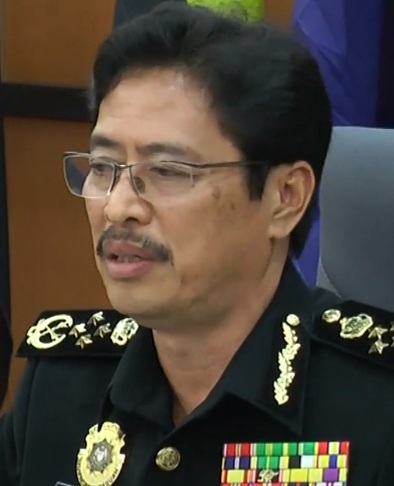
Azam Baki
Azam Baki
Main page
2561058

Azam Baki

logo
Community Hub0 subscribers

Wikipedia

from Wikipedia

Azam bin Baki (Jawi: عزام بن باقي; born 12 May 1963) is a Malaysian government official who served as the sixth chief commissioner of the Malaysian Anti-Corruption Commission (MACC) from 2020 to 2026.[1]

Key Information

He has been the subject of controversy after it was revealed that he owned an excessive amount of stock while sitting on the top rank of MACC.[2][3]

Early life and education

[edit]

Azam was born on 12 May 1963 inNegeri Sembilan, Malaysia to Mat Baki Nordin and Maimun Bador. He is the eldest of three brothers. He obtained Diploma of Engineering (DipEng) in Electrical (Power) from University of Technology Malaysia, Bachelor of Jurisprudence (B.Juris) from University of Malaya and master's degree from Asia e University.[4]

Career

[edit]

Azam began his career as an Assistant Investigation Officer at the Anti-Corruption Agency (ACA) in 1984. He quickly rose through the ranks from there, becoming Director of Intelligence in 2013, Director of Investigation in 2015, Deputy Chief Commissioner (Operations) in 2016, and Chief Commissioner in 2020.[2]

Controversies and issues

[edit]

Stock ownership scandal

[edit]

Lalitha Kunaratnam's articles

[edit]

Lalitha Kunaratnam, an investigative journalist, published two articles titled “Business ties among MACC leadership: How deep does it go? (Part 1)” and “Business ties among MACC leadership: How deep does it go (Part 2)” on the Independent News Service news portal.[2] The article provides details about business link among a group of individuals including Azam Baki, former chief commissioner of MACC Abu Kassim Mohamed, two of Azam's brothers, Abu Kassim's son, and all five's alleged associates: Mohd Aswadi Mat Zain and Lim Kok Han. The article was originally published on 26 October 2021.[3]

She claimed that Azam's brothers, Nasir and Radzuan, became increasingly involved in numerous businesses as Azam rose to the top. According to the article, Azam was a shareholder in Gets Global Berhad. He had 1,930,000 shares as of 30 April 2015, and 1,029,500 shares as of 31 March 2016. In March 2016, he was in possession of 2,156,000 warrants in Excel Force MSC Berhad.[2] The other individuals mentioned in the article also held the same shares and warrants during the same period as Azam. The author concluded that Azam Baki's brothers and associates control a conglomerate. She further added that when top law enforcement officers or their family members are involved in a variety of businesses, a conflict of interest arises, which can lead to abuse of power and corruption.[3]

On 14 December 2021, Sungai Buloh MP Sivarasa Rasiah asked parliament to discuss the allegation that Azam Baki owned shares in two companies listed on the exchange in excess of the amount allowed.[5]

Edmund Terence Gomez's resignation

[edit]

On 27 December 2021, one of the MACC Consultation and Corruption Prevention Panel member, Edmund Terence Gomez has resigned in protest of its inaction against Azam's stock ownership allegation. Gomez said that he had written three times to the panel's chairman, Borhan Dollah, requesting that a meeting be held as soon as November to discuss the matter. Despite the fact that Borhan initially responded immediately and agreed to a meeting, it never took place. Gomez stated that he had also written to the chairman of the MACC Anti-Corruption Advisory Board (ACAB), Abu Zahar Ujang, on three occasions, but had received no response.[6][7]

MACC's press conference

[edit]

On 5 January 2022, MACC held a press conference. The Anti-Corruption Advisory Board (ACAB) chairman, Abu Zahar Ujang, claimed that they are satisfied with the explanation by Azam regarding the alleged ownership of shares in excessive amounts.[8][9]

During a meeting [on 24 November 2021], Azam had explained the situation to [the ACAB members] that his share account was then used by his brother, Nasir Baki to buy related shares in 2015, in which he does not have any interest in the purchase or ownership of the shares. At the same time, the purchase of the shares was made on the open stock market and there was no conflict of interest for the purchase of the shares in 2015. However, he said that all the shares had been transferred back to Nasir in the relevant year. After a lengthy discussion, the ACAB members are of the opinion that Azam has no interest in the shares.

— Abu Zahar Ujang, 6 January 2022

Abu Zahar further added that there is no need to convene a Royal Commission of Inquiry (RCI) to look into the allegations levelled against Azam. However, he will hand over the decision to the Prime Minister, Ismail Sabri Yaakob, if he wants the investigation to continue by setting up the RCI.[10]

Azam Baki stated at the same press conference that he believes he did not commit any offence and thus does not need to respond to the allegations levelled against him. He also denied that his brother's purchase of shares created a conflict of interest.

When pressed to explain why his brother had to use someone else's name to acquire the shares, Azam stated that it was not an issue. In fact, Azam challenged the dissatisfied parties to prove that the action was a violation of the law.[11] Azam also claimed that the allegation that he controlled many companies was a 'total lie' that was purposefully created to cast a negative light on him. He added that the accusation was portrayed as if he controlled a large conglomerate to tarnish his reputation as the Chief Commissioner and MACC as a whole.[12]

Criticism by Ideas

[edit]

In a statement issued on 5 January 2022, Malaysian think tank, Institute for Democracy and Economic Affairs (Ideas) welcomed the ACAB's decision to respond publicly to the allegations, but they called for additional action to investigate the allegations against Azam. According to Ideas, ACAB chairman Abu Zahar Ujang's statement did not fully address public concerns about the MACC's integrity.

Ideas urged the ACAB to reveal the process used to clear Azam's name of any wrongdoing, as well as whether Azam met the property declaration criteria based on government circulars requiring civil servants to declare their property. Ideas stated that if the decision to release Azam was made solely on Azam's explanation in a single meeting without a thorough investigation, then ACAB was not doing its job properly, and it should not happen in an organisation tasked with overseeing the MACC.[13]

Securities Commission Malaysia investigated Azam Baki

[edit]

On 6 January 2022, the Securities Commission Malaysia (SC) said it would speak to Azam after he admitted that his brother had used the name of his trading account to buy shares. The SC informed that under Section 25 of the Central Depository Securities Industry Act 1991 (Sicda), every securities account opened with a central depository must be in the name of the beneficial owner of the shares deposited or in the name of a company authorized by the nominee.[14]

Criticism by Edmund Terence Gomez

[edit]

On the same day, Edmund Terence Gomez claimed that the statements of both Azam and Abu Zahar raised more questions than answers and raised 'extremely distressing new concerns' regarding Azam's business interests. He said many expected a clearer answer from Abu Zahar on the serious allegations against Azam regarding the ownership of shares worth millions of ringgit. Gomez said the statements of the two also raised three core questions. "Is the administration in the MACC so weak? Can the advisory board act fairly and appropriately when dealing with serious allegations of impropriety by senior MACC officers? Has Azam's answer raised new legal and regulatory questions about the importance of his business?"[15]

Azam demanded apology from Lalitha

[edit]

Azam Baki has demanded a public apology and RM10 million from Lalitha Kunaratnam in Azam's stock trading scandal for alleged defamation. Lalitha was served with a demand letter, which also requested the removal of two articles titled "Business ties among MACC leadership: How deep does it go? (Part 1)" and "Business ties among MACC leadership: How deep does it go (Part 2)." Azam gave Lalitha 14 days to comply or he would file defamation charges against her. Edmund Terence Gomez referred to Azam's letter of demand as an act of intimidation, advising him to withdraw the notice immediately because Lalitha had raised a legitimate issue of national interest.[16][17]

Other ACAB member denied the stance of its chairman

[edit]

On 8 January 2022, all ACAB member except Abu Zahar Ujang denied the stance expressed by the chairman of the board, Abu Zahar, on the controversy. Instead, they said, Abu Zahar's statement in the press conference was entirely the personal stand himself. The statement was issued jointly by six ACAB member, namely Ismail Omar, Azman Ujang, Akhbar Satar, Hamzah Kassim, David Chua Kok Tee and Mohammad Agus Yusoff. They added that before the press conference, the board members had a separate discussion with Abu Zahar. In the discussion they said, it was proposed that the matter be referred either to an independent committee; Parliamentary Select Committee (PSC) on corruption; or the MACC Complaints Committee panel.[18]

Comment by the Prime Minister

[edit]

On the same day, Prime Minister, Ismail Sabri Yaakob stated that further action is being taken by the relevant parties and he believes, the problem will be resolved. At the same time, he stressed the need to be fair to all parties by making decisions after the completion of the investigation procedure. Ismail Sabri explained that the MACC itself was originally the Anti-Corruption Agency (ACA) and was later placed under a commission so that there would be no interference by the government. When asked why Azam was not rested while the investigation was carried out, Ismail Sabri stressed that there should be no favoritism in this issue.[19]

Supports by the deputy commissioners

[edit]

On 9 January 2022, three MACC deputy commissioners have declared their support for Azam, who is currently facing an ongoing investigation following allegations of share ownership. The statement claimed that three deputies' statement "represents all of the MACC member". The three of Azam deputies, Ahmad Khusairi Yahaya (operations), Norazlan Mohd Razali (prevention) and Junipah Wandi (management and professionalism) denied the allegations against Azam and described it as an attack on MACC.[20]

Defamation suit retracted by Azam

[edit]

On 11 June 2024, Azam's solicitors filed a withdrawal note and withdrew his defamation suit against Lalitha Kunaratnam on 21 June 2024.[21][22]

Abuse of power

[edit]

Bloomberg report

[edit]

On 12 February 2026, a report made by Bloomberg alleged that the Chief Commissioner of the Malaysian Anti-Corruption Commission (MACC), Azam Baki, is working with businessmen to take over companies. This has caused protests in Kuala Lumpur calling for his arrest for alleged abuse of power that took place in his commission.[23][24]

Defamation suit against Bloomberg

[edit]

Azam Baki denied any wrongdoing. He sent a Letter of Demand (LOD) to Bloomberg calling the report "malicious and misleading" and is seeking 100 million Ringgit ($25.7 million USD) in damages. [25]

Honours

[edit]

Honours of Malaysia

[edit]

References

[edit]

Grokipedia

from Grokipedia
Tan Sri Dato' Sri Haji Azam bin Baki (born 12 May 1963) is a Malaysian senior civil servant and the Chief Commissioner of the Malaysian Anti-Corruption Commission (MACC), an independent agency tasked with investigating and prosecuting corruption offenses.[1][2] Appointed to the position on 9 March 2020, he leads efforts to combat graft through investigations, asset recovery, and institutional reforms.[2] Azam began his career with the Anti-Corruption Agency (predecessor to MACC) on 24 December 1984 as an investigation officer after earning a diploma in electrical power engineering from Universiti Teknologi Malaysia.[1] Over nearly four decades, he advanced through roles including superintendent handling prosecutions, head of high-profile case task forces in 2007, director of intelligence in 2013, and leader of the 1MDB international task force in 2018, while pursuing further qualifications in law and business operations.[1] Under his leadership, MACC has pursued major cases such as the 1MDB scandal, SRC International, and the Op Water corruption probe, alongside recovering over RM28 billion in assets from corruption activities in recent years.[3][4] The agency has also emphasized digital tools like AI for detection and proposed frameworks such as deferred prosecution agreements to enhance recovery in large-scale cases involving public figures and corporations.[5][6] His tenure has included multiple one-year extensions granted by the Prime Minister, prompting debates on agency independence, and faced scrutiny over decisions like declaring no sufficient evidence in certain probes, as well as past allegations of personal shareholdings in private firms, though investigations into his conduct remain unresolved.[7][8][9][10]

Personal Background

Early Life and Family

Azam Baki was born on 12 May 1963 in Negeri Sembilan, Malaysia.[11][12] Public records provide limited details on his upbringing or familial origins beyond this birthplace in the state.[13]

Education and Initial Influences

Azam Baki obtained a Diploma in Electrical Engineering (Power) from Universiti Teknologi Malaysia in Kuala Lumpur, which equipped him with technical and analytical skills applicable to investigative roles.[1][14] This qualification preceded his entry into public service, reflecting an early foundation in systematic problem-solving that later informed his approach to corruption probes.[7] While serving in the Anti-Corruption Agency (now MACC), Baki pursued advanced legal studies, earning a Bachelor of Jurisprudence from the University of Malaya in 2002.[1][15] He subsequently completed a Master of Business Administration at Universiti Teknologi MARA in 2005, broadening his expertise in operational management and governance.[1] These later qualifications demonstrate a deliberate shift toward legal and administrative proficiency, driven by the evolving demands of anti-corruption enforcement.[12] Baki's initial career trajectory into the Anti-Corruption Agency in 1984, shortly after his engineering diploma, underscores the influence of public sector opportunities on his professional path, fostering a commitment to institutional integrity amid Malaysia's governance challenges of the era.[16] His later reflections on leadership draw from historical figures like Tun Dr. Ismail Abdul Rahman, suggesting enduring influences from principled public service models that shaped his ethical framework from early professional exposure.[17]

Professional Career

Service in the Anti-Corruption Agency

Azam Baki joined the Anti-Corruption Agency (ACA), the predecessor to the Malaysian Anti-Corruption Commission (MACC), on December 24, 1984, as an investigation officer holding the rank of assistant superintendent.[1] In this capacity, he performed core duties encompassing investigations, intelligence collection, and, from 1990 onward, court prosecutions related to corruption cases.[1] In 1997, Baki advanced to the rank of superintendent, where he oversaw investigation teams, managed prosecutions, conducted training programs, and supervised junior officers until 2000.[1] Midway through the 2000s, he transferred to the MACC's Perak state office, introducing innovative proactive investigation methods such as undercover operations, providing advisory support on prosecutions, and founding the agency's Forfeiture of Property Unit to enhance asset recovery from corrupt activities.[1] By 2007, Baki returned to MACC headquarters in Putrajaya and assumed leadership of a specialized task force dedicated to high-profile corruption probes, including the Port Klang Free Zone scandal, which implicated senior public officials in graft exceeding hundreds of millions of ringgit.[1] In 2013, he was elevated to director of the Intelligence Division, directing undercover and proactive operations while serving as a liaison with Bank Negara Malaysia and as a member of the Football Association of Malaysia's integrity committee.[1] His tenure further involved coordinating Malaysia's participation in the 2018 international task force aimed at recovering assets from the 1MDB scandal.[1] Spanning over three decades by the time of his senior appointments, Baki's service demonstrated consistent progression from frontline enforcement to strategic oversight roles within the agency, accumulating expertise in both domestic and cross-border anti-corruption efforts.[11][1]

Key Roles in the Malaysian Anti-Corruption Commission

Azam Baki assumed several pivotal leadership positions within the Malaysian Anti-Corruption Commission (MACC) following its establishment in 2009 from the predecessor Anti-Corruption Agency. In 2013, he was appointed Director of the Intelligence Division, overseeing proactive investigations, undercover operations, special operations, and acting as liaison officer with Bank Negara Malaysia on money laundering cases.[1] In 2015, Baki was promoted to Director of the Investigation Division, managing core investigative functions and high-profile corruption probes involving senior officials.[18] On 4 October 2016, he advanced to Deputy Chief Commissioner (Operations), succeeding Shukri Abdull and directing operational strategies, resource allocation, and enforcement activities across the agency.[19] These roles positioned him as a key architect in MACC's operational framework, emphasizing intelligence-driven and investigation-led anti-corruption efforts prior to his elevation to the top post.[11]

Appointment as Chief Commissioner

Tan Sri Azam Baki was appointed as Chief Commissioner of the Malaysian Anti-Corruption Commission (MACC) on 9 March 2020 by the Yang di-Pertuan Agong, Sultan Abdullah of Pahang, succeeding Latheefa Beebi Koya, whose contract was shortened in line with her request.[20][11] The appointment was made on the nomination of then-Prime Minister Muhyiddin Yassin, following the process outlined in the MACC Act 2009, which requires the Prime Minister to consult the Special Committee on Corruption before recommending a candidate to the King.[21] Prior to his elevation, Azam had served as MACC Deputy Chief Commissioner (Operations) since 2019, accumulating over 35 years of experience in anti-corruption investigations since joining the Anti-Corruption Agency (ACA), MACC's predecessor, as an investigation officer on 24 December 1984.[1][11] His selection was attributed to this extensive internal expertise, with Muhyiddin later stating that the appointment emerged from the committee's due process rather than personal choice.[21][22] The tenure was initially set for four years, but subsequent one-year extensions have been granted, including in May 2023, May 2024, and May 2025, reflecting ongoing governmental confidence amid criticisms of the extension mechanism's alignment with the MACC Act's intent for fixed terms.[23][24]

Leadership and Anti-Corruption Initiatives

Strategic Reforms and Policies

Under Azam Baki's leadership, the Malaysian Anti-Corruption Commission (MACC) prioritized the integration of artificial intelligence (AI) and digital tools into its operations to enhance detection and prevention of corruption. This included adopting natural language processing and other advanced systems to cover investigative, analytical, and preventive stages of anti-corruption efforts, aiming to improve organizational efficiency and adapt to digital-age threats.[25][6] A core policy focus was the advancement of the National Anti-Corruption Strategy (NACS), with 16 sub-strategies completed by mid-2025 across 11 ministries and agencies, including measures like the Border Control and Protection Agency Act 2024 and integrity frameworks in procurement. These reforms emphasized empirical research and data-driven policymaking, with Baki advocating for stronger data analysis to inform anti-graft policies and counter evolving corruption tactics.[26][27][28] Baki championed the introduction of a Deferred Prosecution Agreement (DPA) framework, endorsed by Prime Minister Anwar Ibrahim in September 2025, to facilitate corporate accountability, asset recovery, and non-prosecutorial resolutions in suitable cases, drawing from international models while adapting to Malaysia's context. Additionally, enhanced cross-agency collaboration was pursued under a whole-of-government approach, targeting procurement oversight as a 2025 priority and aligning with legislative changes like the Government Procurement Act 2025 to address systemic vulnerabilities.[5][29][30] In implementing the National Anti-Corruption Plan (NACP) 2019-2023, MACC under Baki completed 29 of 115 initiatives by the plan's end, including mandatory asset declarations for administrative members and judicial integrity enhancements, though critics noted incomplete progress in broader enforcement reforms. These efforts reflected a shift toward preventive, technology-enabled strategies over reactive investigations alone.[31][32]

Major Investigations and Operations

Under Azam Baki's leadership as Chief Commissioner since August 2020, the Malaysian Anti-Corruption Commission (MACC) has prioritized high-impact investigations into systemic graft, including monopolies, project cartels, and abandoned infrastructure projects, expanding beyond traditional bribery cases to employ forensic accounting and multi-agency task forces.[33] As of July 31, 2025, the MACC had opened 728 investigation papers, with 109 classified as high-profile or public-interest matters, reflecting a focus on recovering billions in misappropriated public funds amid estimated national losses of RM277 billion from corruption over the prior six years.[34][35] A key operation, Op Grip, launched in 2025, targets retrospective tax leakage, illicit financial flows, and money laundering through collaboration with Bank Negara Malaysia, the Inland Revenue Board, and Customs Department, using forensic tools to trace historical transactions and seize assets for revenue recovery.[36][37] This effort builds on broader MACC-led task forces that, since 2024, have detained 61 suspects—including 34 civil servants—and seized assets valued at RM1.6 billion linked to corruption and laundering, with 2025 operations yielding RM55 million in additional recoveries.[38][39] In infrastructure-related probes, the MACC pursued the Maju Expressway Phase II (MEX II) corruption case, charging nine additional individuals in September 2025 for graft involving the highway project awarded in the early 2010s, as part of ongoing efforts to dismantle bidding irregularities and recover funds.[40] Complementary operations like Op White addressed misappropriation of RM174.7 million in government milk powder supply contracts, while Op Sky in early 2025 summoned celebrities and associates for statements on unexplained wealth and laundering tied to high-profile networks.[39][41] The MACC also intensified scrutiny of financial institutions, charging former bank officers in October 2025 with receiving over RM100,000 in bribes for approving loans, with investigations implicating around 20 personnel across multiple counts totaling RM10,802.51 in one instance.[42] In parallel, counter-setting strategies extended probes to suspects' family members and associates under anti-money laundering laws, as seen in September 2025 cases involving asset freezes and international tracing.[43] On the 1MDB scandal, inherited from prior administrations, the MACC under Baki facilitated the recovery of RM30 billion in assets by September 2025 through global cooperation, though full resolution remains pending.[44] These operations underscore a shift toward proactive asset forfeiture and digital forensics, with Baki emphasizing independence from political influence despite criticisms of selective targeting in politically charged probes.[35][45]

International Cooperation and Engagements

Under Azam Baki's leadership as Chief Commissioner, the Malaysian Anti-Corruption Commission (MACC) has pursued enhanced international partnerships to address transnational corruption challenges. On July 11, 2025, the MACC signed a memorandum of understanding with the International Anti-Corruption Academy (IACA) in Laxenburg, Austria, aimed at bolstering capacity-building, knowledge exchange, and joint training programs for anti-corruption practitioners worldwide.[46] This agreement facilitates collaboration on research, academic exchanges, and specialized courses, reflecting Baki's emphasis on leveraging global expertise to strengthen Malaysia's enforcement mechanisms.[1] Baki has actively engaged with international bodies, including representing the MACC at the International Anti-Corruption Conference (IACC) in Putrajaya, Malaysia, in 2015, where discussions focused on global strategies against graft.[1] More recently, on July 14, 2025, he hosted IACA Dean Emilia Taseva in Kuala Lumpur, advocating for cross-border cooperation as essential to tackling corruption networks that span jurisdictions, such as money laundering and asset concealment.[47][48] Baki confirmed his attendance at the World Anti-Corruption Conference in 2025, underscoring commitments to multilateral forums for sharing investigative techniques and best practices.[49] Regionally, the MACC under Baki hosted the 21st ASEAN Association of Public Sector Institutions and Anti-Corruption Agencies (AAPSIAC) meeting in October 2025, drawing delegates from all 10 ASEAN member states and observers from international organizations to coordinate on harmonized anti-corruption policies and mutual legal assistance.[50][51] Bilateral ties have expanded, including a memorandum of understanding signed on October 7, 2025, with Pakistan's National Accountability Bureau (NAB) to enable joint operations, intelligence sharing, and extradition support in pursuing corrupt assets.[52] Additionally, engagements with Uzbekistan's anti-corruption authorities in August 2025 explored adopting MACC's investigative models, while Baki has supported Malaysia's implementation of Article 36 of the United Nations Convention against Corruption (UNCAC), promoting specialized anti-corruption bodies through global oversight mechanisms.[53][54] These initiatives align with Baki's strategy of integrating international standards to combat financial crimes, including probes extending beyond Malaysia's borders for asset recovery.[55]

Controversies and Criticisms

Stock Ownership Allegations

In late 2021, whistleblower K. Lalitha published blog posts alleging that Azam Baki, then Chief Commissioner of the Malaysian Anti-Corruption Commission (MACC), owned substantial shares in public-listed companies, including 2.15 million shares in Excel Force MSC Bhd and 1.93 million shares in Gets Global Bhd (formerly KBES Bhd), acquired around 2015.[56][57] These claims questioned how a civil servant, subject to government circulars prohibiting ownership of listed company shares exceeding RM100,000 without approval, could afford such investments reportedly valued at millions of ringgit at the time.[58][59] Azam responded that the shares were purchased by his brother using Azam's trading account without his knowledge or benefit, and that he had no control or interest in them; he later clarified possessing full control of the account as the named holder.[60][61] Critics, including opposition lawmakers and the Malaysian Bar, highlighted potential conflicts of interest, non-disclosure in asset declarations to the Prime Minister, and failure to obtain prior approval for share dealings, urging full publication of his asset statements.[9][62][63] Multiple probes followed, including by the Securities Commission Malaysia (SC), MACC's Independent Special Committee (ISC), and others, totaling six bodies by 2024; the SC stated in January 2022 it could not conclusively determine a legal breach but noted no violation of securities laws, while the ISC cleared Azam of wrongdoing.[64][65] Law Minister Wan Junaidi Tuanku Jaafar described the shares' value as approximately RM330,000 at acquisition (around 30-33 sen per share in 2016), deeming it affordable for many civil servants.[66][67] Azam filed a defamation suit against Lalitha in 2022 over the allegations but discontinued it on June 21, 2024, without prejudice.[68] The episode drew public ridicule and calls for greater transparency in MACC leadership asset disclosures, with former MACC advisory panel head Hamzah Abu Samah warning it could deter investors amid perceptions of governance lapses.[58][57] No charges were filed against Azam, though questions persisted regarding the brother's use of the account and initial non-declaration.[69][70] In February 2026, a Bloomberg report alleged further impropriety by Azam Baki, including ties with businessmen and violation of share ownership regulations for high-ranking civil servants through holding nearly 17.7 million shares in Velocity Capital Partners Berhad valued at around RM800,000.[71] This prompted calls for his suspension and investigation by Prime Minister Anwar Ibrahim. The report questioned oversight of the MACC, which is advised by the Anti-Corruption Advisory Board (ACAB) and operates under the Malaysian Anti-Corruption Commission Act 2009, with its chief commissioner appointed by the Prime Minister.[71]

Claims of Selective Enforcement and Political Interference

Critics have accused Azam Baki of overseeing selective enforcement by the Malaysian Anti-Corruption Commission (MACC), alleging that investigations disproportionately target political opponents while sparing individuals aligned with the ruling coalition. In August 2022, then-DAP leader Lim Guan Eng claimed Azam engaged in selective prosecution, citing the charging of Umno president Ahmad Zahid Hamidi on 47 counts of criminal breach of trust and money laundering in 2018–2019, contrasted with the lack of action against a cabinet minister and two deputy ministers facing similar allegations of graft involving foreign travel perks.[72] Lim demanded Azam's resignation, arguing the disparity undermined MACC's impartiality.[72] Azam rejected the accusations, maintaining that all cases are pursued based on evidence without political influence.[73] Similar claims resurfaced in June 2024 amid probes into high-profile figures, including former deputy prime minister Ismail Sabri Yaakob's aide Hamzah Ahmad, who alleged MACC's actions amounted to "character assassination" rather than impartial investigation.[74] Azam countered that the agency had acted professionally on verified evidence, denying any selective targeting.[74] In March 2025, following the arrest of journalist Alana Tan on bribery charges, MACC faced renewed bias allegations, with critics arguing the case exemplified enforcement against media critics of the government; Azam again denied selective practices, emphasizing decisions rest with the deputy public prosecutor.[75][76] Azam's contract extensions—first in May 2024 for one year, and a planned further extension announced in April 2025 by Prime Minister Anwar Ibrahim—intensified scrutiny, with opposition figures and activists contending they reflect political interference shielding perceived leniency toward ruling allies.[77][78] Anwar defended the decisions, citing Azam's performance, while Azam dismissed personal attacks as expected resistance to anti-corruption efforts.[79][78] These controversies highlight ongoing debates over MACC's independence, though Azam has consistently affirmed the agency's operational autonomy since his 2021 statement denying any political meddling in cases.[73]

Reappointment and Ongoing Scrutiny

Tan Sri Azam Baki was reappointed as Chief Commissioner of the Malaysian Anti-Corruption Commission (MACC) for a third consecutive one-year term, effective May 13, 2025, extending his tenure until May 12, 2026.[7][23] The reappointment, approved by the Yang di-Pertuan Agong Sultan Ibrahim Sultan Iskandar, followed prior extensions from May 12, 2023, to May 11, 2024, and from May 12, 2024, to May 12, 2025, despite Azam having reached the mandatory retirement age of 60 in 2023.[80][81] Azam, who assumed the role on March 9, 2020, expressed gratitude for the royal assent, describing it as an honor and pledging continued commitment to anti-corruption efforts amid public discontent over institutional trust.[82][83] The decision has faced scrutiny from civil society groups and activists, who argue it reflects a failure to implement promised MACC reforms under Prime Minister Anwar Ibrahim's administration.[84][85] The Corruption, Crime and Governance (C4) Center labeled the extension a "shameful continuation" of feeble anti-corruption policies, citing Azam's repeated use of defamation lawsuits against critics as an attempt to suppress dissent rather than address substantive issues.[84][86] Anti-corruption activist Edmund Terence Gomez questioned the extension's rationale, emphasizing the need for fresh leadership to restore public confidence in the agency.[87] Similarly, Aliran Kesedaran Negara highlighted it as evidence of stalled institutional reforms, despite Anwar's pre-2022 election pledges to enhance governance transparency.[85][88] Supporters, including transparency watchdog groups, defended the reappointment as essential for continuity in ongoing anti-corruption drives, pointing to Azam's experience in major investigations.[89][90] In response to critics, Azam stated that the role prioritizes public trust over personal legacy, vowing not to be remembered for failure and committing to improve Malaysia's international anti-corruption ranking.[91][16] The extensions have sparked broader debate on the independence of MACC appointments, with calls for greater involvement of the Public Service Commission to ensure checks and balances, as raised by think tanks like the Institute for Democracy and Economic Affairs in prior years.[92]

Honours and Recognition

Malaysian National Honours

Azam Baki was conferred the federal honour of Darjah Panglima Setia Mahkota (PSM) from the Order of Loyalty to the Crown of Malaysia in conjunction with the Yang di-Pertuan Agong's birthday celebrations on 13 November 2021, entitling him to the style Tan Sri.[93] He received the Seri Panglima Darjah Kinabalu (SPDK), Sabah's highest state award from the Order of Kinabalu, on 2 October 2022, which carries the title Datuk Seri Panglima.[94][95] Azam Baki has also been awarded honours from Pahang state, including membership in the Most Illustrious Order of Sultan Ahmad Shah of Pahang and the Most Distinguished Order of the Defender of the Realm, as listed in his official biography on the Malaysian Anti-Corruption Commission website.[11]

References

User Avatar
No comments yet.