



Community hub
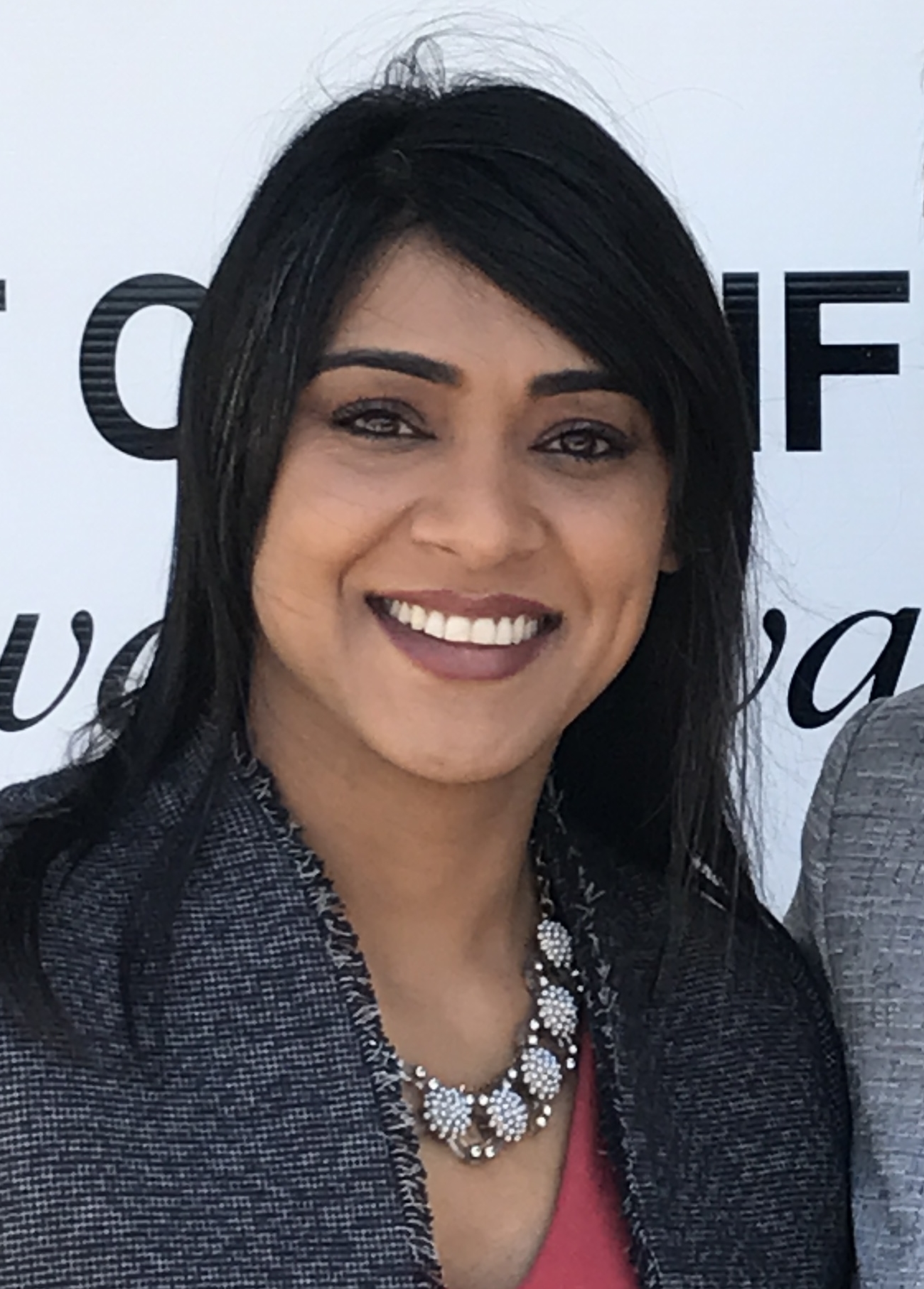
Bardish Chagger
View on Wikipedia
Bardish Chagger (born April 6, 1980) is a Canadian politician who has served as the member of Parliament (MP) for Waterloo since 2015. A member of the Liberal Party, Chagger was the minister of small business and tourism from 2015 to 2018, Government House Leader from 2016 to 2019, and the minister of diversity, inclusion and youth from 2019 to 2021. Chagger is the first woman to serve as Government House Leader. Chagger is known for her role in the WE Charity scandal, which ultimately led to her removal from cabinet.
Key Information


In the 2025 Liberal Party of Canada Leadership, Chagger declined to endorse any candidate in the race, despite almost 50 of her colleagues in the Ontario caucus declaring their preference in the race. After Mark Carney won the leadership and became Canada's next Prime Minister, Carney declined to return Chagger to Cabinet, extending her four-year absence from a Ministerial position.
Early life and education
[edit]Chagger's parents immigrated to Waterloo from Punjab, India in the 1970s. Her family is Sikh.[1] Her father, Gurminder "Gogi" Chagger, was active in the Liberal Party and an admirer of Prime Minister Pierre Trudeau. Chagger's first involvement in politics came in the 1993 federal election as a 13-year-old volunteer for Andrew Telegdi's successful campaign in Waterloo.[2]
She attended the University of Waterloo, with aspirations to become a nurse, but she subsequently became an executive assistant to Telegdi, who represented Waterloo in the House of Commons for the Liberals from 1993 to 2008.[2]
Chagger graduated from the University of Waterloo with a bachelor of science degree.[3] After Telegedi's defeat in 2008, Chagger became a director of special events for the Kitchener-Waterloo Multicultural Centre.[3]
Federal politics
[edit]Chagger volunteered for Justin Trudeau's 2013 party leadership bid, and subsequently became the Liberal Party's candidate in the newly reconstituted Waterloo riding. She took 49.7% of the vote and defeated two-term Conservative incumbent Peter Braid, who had earlier ousted her former employer Andrew Telegdi.[2][3]
Minister for Small Business and Tourism
[edit]On November 4, 2015, Chagger was sworn in as Minister of Small Business and Tourism.[4]
As a result of the July 18, 2018 cabinet shuffle, Chagger's responsibilities for Small Business were given to Mary Ng, and Mélanie Joly took on the responsibilities of Tourism.[5] She was later appointed to the role of Minister of Diversity and Inclusion and Youth, which she held until 2021.[6]
Leader of the Government in the House of Commons
[edit]On August 19, 2016, Chagger was sworn in as Leader of the Government in the House of Commons replacing Dominic Leblanc in the position. She retained her responsibilities as Minister of Small Business and Tourism until the July 18, 2018 cabinet shuffle.[7]
On March 10, 2017, Chagger in her role as Government House Leader released a discussion paper titled Modernization of the Standing Orders of the House of Commons[8] which sought to implement different ways that House of Commons procedure and practice could be improved to be more accountable, predictable and available to all Members of Parliament, and the public. The modernization paper suggested reforms to the House of Commons such as the implementation of electronic voting, the curtailment of Friday sittings, the reformation of Question Period, including a Prime Minister's Question Period, changes to the process of prorogation, greater powers for the Speaker to separate votes and committee studies on omnibus bills and legislative programming.
Opposition members of Parliament were concerned with the reforms proposed in the discussion paper, in particular with proposals to implement legislative programming and the elimination or change of Friday sittings in the House of Commons. In late April 2017, Chagger sent a letter to her counterparts, then New Democratic Party House Leader Murray Rankin and Conservative House Leader Candice Bergen, to inform them that the government would be abandoning several of the key proposals that were part of the modernization paper, such as changes to the Friday sitting, legislative programming, and electronic voting.[9] They would continue however with proposals that were explicitly part of the 2015 Liberal election platform, including the decision to have a Prime Minister's Question Period, requiring the government to issue a report following the use of prorogation, and allowing the speaker of the House of Commons to separate votes or committee studies on different parts of a bill that he or she deems to be omnibus.[10]
WE Charity ethics investigation
[edit]In July 2020, Chagger was the first witness who testified in front of a parliamentary committee investigating the awarding of a sole-sourced contract to run the Canada Student Service Grant (CSSG) program to WE Charity, an organization with ties to Prime Minister Justin Trudeau and Finance Minister Bill Morneau. Chagger was the one who signed the contracts with WE Charity, and had met with WE Charity days before the student program was announced by Trudeau.[11][12] Originally it was reported that WE Charity would get a payment of at least $19.5 million; later it was disclosed that the contract was paying them up to $43.5 million to run the student volunteer grant program. Chagger testified that it was the public service – specifically, Assistant Deputy Minister of Employment and Social Development Rachel Wernick – that recommended the grant program be outsourced to a third party via a contribution agreement.[13]
Removal from Cabinet
[edit]Chagger was removed from Cabinet in 2021 as a part of cabinet reshuffle.[14]
Committee Chair
[edit]On December 3, 2021, Chagger became Chair of the Canadian House of Commons Standing Committee on Procedure and House Affairs. She unexpectedly resigned from the committee on April 29, 2024.
Electoral record
[edit]| 2025 Canadian federal election: Waterloo | ||||||||
|---|---|---|---|---|---|---|---|---|
| ** Preliminary results — Not yet official ** | ||||||||
| Party | Candidate | Votes | % | ±% | Expenditures | |||
| Liberal | Bardish Chagger | 37,580 | 59.49 | +14.01 | ||||
| Conservative | Waseem Botros | 20,534 | 32.51 | +5.07 | ||||
| New Democratic | Héline Chow | 2,620 | 4.15 | –14.97 | ||||
| Green | Simon Guthrie | 1,602 | 2.54 | –0.87 | ||||
| People's | Douglas Ross | 350 | 0.55 | –4.00 | ||||
| Independent | Val Neekman | 180 | 0.28 | N/A | ||||
| Rhinoceros | Santa Claus Chatham | 119 | 0.19 | N/A | ||||
| Independent | Hans Roach | 104 | 0.16 | N/A | ||||
| Independent | Jamie Hari | 76 | 0.12 | N/A | ||||
| Total valid votes/expense limit | ||||||||
| Total rejected ballots | ||||||||
| Turnout | 63,165 | 72.39 | ||||||
| Eligible voters | 87,261 | |||||||
| Liberal notional hold | Swing | +4.47 | ||||||
| Source: Elections Canada[15][16] | ||||||||
| 2021 Canadian federal election: Waterloo | ||||||||
|---|---|---|---|---|---|---|---|---|
| Party | Candidate | Votes | % | ±% | Expenditures | |||
| Liberal | Bardish Chagger | 26,926 | 45.1 | -3.7 | $107,712.63 | |||
| Conservative | Meghan Shannon | 16,528 | 27.7 | +3.2 | $61,976.35 | |||
| New Democratic | Jonathan Cassels | 11,360 | 19.0 | +3.8 | $11,709.64 | |||
| People's | Patrick Doucette | 2,802 | 4.7 | +3.0 | $7,490.55 | |||
| Green | Karla Villagomez Fajardo | 2,038 | 3.4 | -6.3 | $4,629.92 | |||
| Total valid votes/expense limit | 59,654 | 99.4 | – | $115.523.52 | ||||
| Total rejected ballots | 353 | 0.6 | ||||||
| Turnout | 60,007 | 69.4 | ||||||
| Eligible voters | 86,456 | |||||||
| Liberal hold | Swing | -3.5 | ||||||
| Source: Elections Canada[17] | ||||||||
| 2019 Canadian federal election: Waterloo | ||||||||
|---|---|---|---|---|---|---|---|---|
| Party | Candidate | Votes | % | ±% | Expenditures | |||
| Liberal | Bardish Chagger | 31,085 | 48.8 | -0.9 | $107,088.00 | |||
| Conservative | Jerry Zhang | 15,615 | 24.5 | -7.8 | $84,796.68 | |||
| New Democratic | Lori Campbell | 9,710 | 15.2 | +0.3 | none listed | |||
| Green | Kirsten Wright | 6,184 | 9.7 | +6.8 | none listed | |||
| People's | Erika Traub | 1,112 | 1.7 | – | $5,385.50 | |||
| Total valid votes/expense limit | 63,706 | 100.0 | – | 112,180.38 | ||||
| Total rejected ballots | 417 | 0.65 | +0.33 | |||||
| Turnout | 64,123 | 74.76 | -2.9 | |||||
| Eligible voters | 85,761 | |||||||
| Liberal hold | Swing | +3.45 | ||||||
| Source: Elections Canada,[18] Global News[19] | ||||||||
| 2015 Canadian federal election: Waterloo | ||||||||
|---|---|---|---|---|---|---|---|---|
| Party | Candidate | Votes | % | ±% | Expenditures | |||
| Liberal | Bardish Chagger | 29,752 | 49.7 | +11.38 | $140,131.74 | |||
| Conservative | Peter Braid | 19,318 | 32.3 | -9.08 | $148,370.13 | |||
| New Democratic | Diane Freeman | 8,928 | 14.9 | -0.04 | $96,964.67 | |||
| Green | Richard Walsh | 1,713 | 2.9 | -1.78 | – | |||
| Animal Alliance | Emma Hawley-Yan | 138 | 0.2 | – | $4,066.17 | |||
| Total valid votes/expense limit | 59,849 | 100.0 | $212,120.63 | |||||
| Total rejected ballots | 198 | – | – | |||||
| Turnout | 60,047 | – | – | |||||
| Eligible voters | 77,312 | |||||||
| Source: Elections Canada[20][21] | ||||||||
References
[edit]- ^ D'Amato, Luisa (15 December 2017). "Bardish Chagger's politics are always local, and her office rarely locked". Waterloo Region Record. Retrieved 26 June 2018.
- ^ a b c Mercer, Greg (27 October 2015). "Newly elected Waterloo MP Bardish Chagger loves the political life". The Waterloo Region Record. Retrieved 4 November 2015.
- ^ a b c "Waterloo MP Bardish Chagger named to Justin Trudeau's cabinet". CBC News. 4 November 2015. Retrieved 4 November 2015.
- ^ Record Staff, Waterloo MP Chagger named to federal cabinet, The Waterloo Region Record, November 4, 2015
- ^ Harris, Kathleen (July 18, 2018). "Trudeau cabinet shuffle brings new faces, several changes for run-up to 2019 campaign". CBC News. Retrieved July 28, 2018.
- ^ CBC News (2019-11-20). "Waterloo MP Bardish Chagger named minister of diversity and inclusion and youth". CBC News.
- ^ "Bardish Chagger adds government House leader to small business, tourism duties". CBC News. 19 August 2016.
- ^ Office, Privy Council (2017-03-10). "Reforming the Standing Orders of the House of Commons". aem. Retrieved 2019-04-08.
- ^ "Government House Leader Bardish Chagger's letter to her opposition counterparts | Government". Scribd. Retrieved 2019-04-08.
- ^ "Liberals shelve House of Commons reform plans after opposition criticism - National | Globalnews.ca". globalnews.ca. 2017-04-30. Retrieved 2019-04-08.
- ^ "Liberal minister Bardish Chagger met with WE Charity days before student program was announced by Trudeau". thestar.com. 2020-07-20. Retrieved 2020-08-02.
- ^ "Waterloo MP Chagger says she won't resign over WE Charity scandal". CBC News. Jul 21, 2020. Retrieved Aug 2, 2020.
- ^ "Trudeau government was willing to pay WE Charity up to $43.5M to run student volunteer grant program". National Post. Retrieved 2020-07-17.
- ^ "Waterloo MP Bardish Chagger loses post in Trudeau's cabinet shuffle | Globalnews.ca". Global News. Retrieved 2024-01-14.
- ^ "Voter information service". Elections Canada. Retrieved April 18, 2025.
- ^ "Election Night Results - Electoral Districts". Elections Canada. 29 April 2025. Retrieved 29 April 2025.
- ^ "List of confirmed candidates – September 20, 2021 Federal Election". Elections Canada. Retrieved 2 September 2021.
- ^ "List of confirmed candidates". Elections Canada. Retrieved 4 October 2019.
- ^ "Canada election results: Waterloo". GlobalNews. Retrieved 26 October 2019.
- ^ Elections Canada – Confirmed candidates for Waterloo, 30 September 2015
- ^ Elections Canada – Preliminary Election Expenses Limits for Candidates Archived 2015-08-15 at the Wayback Machine
External links
[edit]- Official website
- Bio & mandate from the Prime Minister Archived 2020-12-10 at the Wayback Machine
- Bardish Chagger – Parliament of Canada biography
| International | |
|---|---|
| National | |

Bardish Chagger
View on GrokipediaEarly life and background
Family origins and immigration
Bardish Chagger's family hails from Punjab, India, where her father, Gurminder "Gogi" Chagger, was born in Ludhiana.[10] In the 1970s, her grandfather initially migrated to Canada, later returning to bring the rest of the family, including her grandparents and father, who settled in Waterloo, Ontario.[11] This relocation aligned with broader Punjabi Sikh immigration patterns following Canada's relaxation of racial quotas in the 1960s, which facilitated increased arrivals from India amid economic pull factors like manufacturing jobs.[12] Upon arrival, Chagger's family took up work in Waterloo's carpet factories, reflecting the manual labor opportunities available in the region's industrial sector during that era.[13] [14] They faced initial racism but adapted through persistent employment, embodying immigrant reliance on available low-skilled positions rather than state dependency.[15] Her parents, described as hard-working seekers of better prospects, established roots in this manufacturing hub before Chagger's birth in 1980.[16] As a Sikh family, they maintained ties to Punjabi cultural and religious practices, including community involvement typical of early Sikh settlers in Ontario, where the provincial Sikh population formed the national core amid national growth from roughly 33,500 permanent residents before 1980 to over 70,000 by 1990.[2] [17] Waterloo's appeal stemmed from its industrial base, drawing Punjabis for steady factory work over agricultural returns back home, though specific family motivations remain undocumented beyond economic migration.[18]Education and early career
Chagger graduated from the University of Waterloo in 2004 with a Bachelor of Science degree.[19][20] During her university years, she engaged in early political activities as a supporter of the Liberal Party.[20] Her professional experience prior to entering elected office centered on community service and political assistance in the Waterloo region. At age 13, in 1993, Chagger volunteered on Andrew Telegdi's successful federal campaign for the Waterloo riding, marking her initial foray into politics.[2] She subsequently worked as Telegdi's executive assistant after his election, managing operations for both his parliamentary office in Ottawa and his local constituency office in Waterloo.[19] Following Telegdi's electoral defeat in 2008, Chagger transitioned to the Kitchener-Waterloo Multicultural Centre, serving as director of special events and special projects coordinator, where her responsibilities included organizing community initiatives to support newcomer integration and diversity efforts.[2][20] These roles honed skills in event coordination and multicultural outreach within Waterloo's diverse, university-influenced local economy, which features high concentrations of students and immigrants drawn to institutions like the University of Waterloo.[20]Entry into federal politics
2015 election and initial appointment
In the federal election on October 19, 2015, Bardish Chagger, the Liberal candidate, won the Waterloo riding with 49.3% of the popular vote, defeating incumbent Conservative MP Peter Braid who received 39.9%.[21] This result flipped the seat from Conservative hands, where Braid had secured victory in the redistributed riding's predecessor area in 2011 with 40.9% amid a closer three-way race.[22] The Liberal surge aligned with national momentum against the Harper government, as the party captured 184 seats overall, forming a majority while vote turnout in Waterloo reached approximately 70% of eligible voters.[23] Chagger's campaign emphasized her deep local connections, having been born and raised in Waterloo to Punjabi Sikh immigrant parents, and targeted outreach to the riding's growing immigrant communities, including its notable Sikh population estimated at several thousand households.[4] This approach capitalized on anti-incumbent sentiment and the Liberals' promise of change, without relying on extensive prior political experience; Chagger had worked in community engagement roles at the University of Waterloo prior to running.[24] Following the election, on November 4, 2015, Prime Minister Justin Trudeau appointed Chagger as Minister of Small Business and Tourism, marking her as one of 15 women in a 30-member cabinet designed for gender parity—the first such balance in Canadian history.[25] This selection of a rookie MP underscored Trudeau's explicit prioritization of demographic representation, including visible minorities like Chagger, over parliamentary tenure, as articulated in his post-announcement remarks emphasizing a government "that looks like Canada."[24][26]Early parliamentary activities
Chagger was sworn into the 42nd Parliament on December 3, 2015, shortly after her cabinet appointment as Minister of Small Business and Tourism on November 4, 2015.[4] In her initial months, she participated in House of Commons proceedings, including recorded votes on key government legislation such as budget implementation bills, though comprehensive attendance metrics are not formally tracked by the Parliament.[27] As a cabinet minister, she responded to opposition questions during Question Period, defending Liberal fiscal policies and transparency measures, such as in debates over government expenditures in late 2016.[28] Her parliamentary footprint during this period emphasized executive alignment rather than independent legislative proposals, with no private member's bills or motions sponsored by her between 2015 and 2017.[29] [30] Assigned as an alternate member to the Treasury Board cabinet committee from 2015, Chagger contributed to internal government deliberations on fiscal management and procurement, foreshadowing her later roles.[1] No standing committee assignments were recorded for her in the House during 2015-2016, limiting her direct involvement in legislative scrutiny outside cabinet duties.[3] Critics noted the Liberal government's overall low legislative output in the 42nd Parliament's early sessions, with fewer bills passed compared to prior administrations, attributing this to a focus on consultations over rapid tabling; Chagger publicly countered such assessments by highlighting qualitative progress on middle-class tax relief.[31] In her Waterloo constituency, Chagger prioritized local economic advocacy, establishing her office to assist small businesses and promote tourism initiatives amid regional growth in tech and manufacturing sectors.[32] She engaged community organizations, including the Rotary Club of Waterloo, to build caucus loyalty and grassroots support within the Liberal Party, positioning herself for further promotions by August 2016.[33] This foundational work yielded verifiable outputs like constituent casework on federal grants, though measurable legislative impacts remained modest given her swift transition to higher executive responsibilities.[3]Ministerial positions
Minister of Small Business and Tourism
Bardish Chagger served as Canada's Minister of Small Business and Tourism from November 4, 2015, to July 18, 2018, following her election as the Liberal Member of Parliament for Waterloo.[24] [34] In this role, she oversaw federal efforts to bolster small and medium-sized enterprises (SMEs), which represent over 99% of Canadian businesses and contribute approximately 40% to GDP, amid post-recession economic recovery.[35] Her department focused on enhancing access to financing and innovation supports while promoting tourism as a key service export sector employing 1.8 million people and sustaining 200,000 businesses.[36] Key small business initiatives under Chagger included amendments to the Canada Small Business Financing Program in 2016, which raised lending limits and reduced fees to improve affordability and lender participation, facilitating over 5,100 loans annually for equipment, property, and expansion.[37] [38] In March 2017, she co-announced the launch of the Canadian Business Growth Fund, committing $1 billion over 10 years to provide debt and equity financing to SMEs facing capital gaps, with an initial $500 million deployment.[39] By June 2018, first investments under the $400 million Venture Capital Catalyst Initiative were revealed, aiming to catalyze private venture capital for high-potential SMEs.[40] These measures sought to address financing barriers during a period of modest GDP growth averaging 2.1% annually from 2015 to 2018.[35] On tourism, Chagger advanced the Federal Tourism Strategy, targeting a 30% increase in international visitors by 2021 and doubling arrivals from China.[36] International overnight visitors rose 7.5% in 2015 to generate over $90 billion in revenues, culminating in a record 20.8 million visitors in 2017, the highest ever.[41] [36] [42] She led trade missions, including a 2018 delegation to China connecting Canadian operators with markets in Beijing, Shanghai, and Guangzhou.[43] However, business advocacy groups like the Canadian Federation of Independent Business criticized the Liberal government's broader regulatory framework during this era for imposing disproportionate compliance costs on SMEs, with small firms spending up to five times more per employee on red tape than larger ones, potentially limiting innovation gains from financing programs.[44] [45]Government House Leader
Bardish Chagger served as Leader of the Government in the House of Commons from August 19, 2016, to November 20, 2019, becoming the first woman and first visible minority to hold the position.[3][46] In this capacity, she coordinated the Liberal government's legislative agenda during the 42nd Parliament's majority phase, scheduling debates, allocating time for bills, and liaising with opposition house leaders to advance priorities such as tax reforms and infrastructure spending.[47] Her responsibilities included maintaining caucus unity on votes, where the Liberal majority—184 seats post-2015 election—facilitated high discipline rates, with few recorded rebellions on key government measures.[48] The government's legislative productivity under Chagger's leadership drew scrutiny for lagging behind predecessors despite the majority advantage. By June 2017, the Trudeau administration had enacted roughly half the government bills passed by the Harper Conservatives at a comparable stage in their majority term, with only 18 public bills receiving royal assent in the first 18 months compared to 36 under Harper.[49] Chagger defended the record by emphasizing substantive achievements over volume, such as middle-class tax cuts and cannabis legalization, arguing that "it's not just numbers" but the quality of debate and implementation.[31] By May 2019, the House had passed 82 government bills since the parliament's opening, though critics attributed delays to extended committee reviews and filibusters rather than inherent procedural flaws.[48] Chagger encountered opposition resistance in advancing the agenda, particularly during attempts to reform House standing orders in 2017 to streamline sittings and boost efficiency, including proposals to extend hours and limit adjournments.[50] These efforts provoked clashes, with Conservatives and New Democrats accusing the government of curtailing debate rights, leading Chagger to withdraw the motion in April 2017 amid stalemate to avoid further gridlock.[51] Such negotiations highlighted challenges in bipartisan consensus even with a majority, as opposition tactics prolonged sessions on contentious items like electoral reform. Her approach was later critiqued for lacking the assertive negotiation style of predecessors, contributing to perceptions of uneven session management.[52] Chagger's replacement by Pablo Rodriguez in the November 20, 2019, cabinet shuffle followed the October 21 election yielding a Liberal minority, prompting a pivot to a more seasoned operator for cross-party deal-making.[53] Internal assessments reportedly viewed her tenure as hampered by rookie inexperience in high-stakes procedural battles, though caucus loyalty remained intact with near-unanimous support on whipped votes.[54]Minister of Diversity, Inclusion, and Youth
Chagger was appointed Minister of Diversity, Inclusion, and Youth on November 20, 2019, succeeding Ahmed Hussen in a cabinet shuffle following the 2019 federal election.[55] Her portfolio encompassed advancing federal multiculturalism policies, anti-racism efforts, and youth engagement initiatives under the Department of Canadian Heritage.[56] This role aligned with the Liberal government's emphasis on identity-based inclusion, building on prior budgets' allocations for multiculturalism and anti-racism programs established in 2018 and 2019.[57] Key programs under her oversight included the Anti-Racism Strategy's action fund, which disbursed $15 million across 85 projects in October 2020 targeting online hate speech and discriminatory hiring practices.[58] Another initiative involved $15 million for 76 LGBTQ2 community capacity-building projects announced in February 2021, aimed at enhancing organizational support for affected groups.[59] These efforts prioritized grants to civil society organizations for awareness, training, and policy advocacy, with a focus on equity-deserving communities.[60] However, public reporting on participation metrics—such as the number of individuals directly served or hiring outcomes from diversity pushes—remained aggregate and unevaluated for causal impact, limiting assessments of whether funds translated into measurable reductions in barriers beyond administrative outputs.[56] Youth-specific components integrated with broader federal employment strategies, though direct oversight emphasized symbolic inclusion over targeted job metrics. Chagger's ministry contributed to the promotion of youth participation in public affairs, aligning with Liberal commitments to multiculturalism, but lacked distinct metrics tying her programs to employment gains.[61] During her tenure, Canada's youth unemployment rate (ages 15-24) climbed amid the COVID-19 pandemic, standing 2.6 percentage points higher in June 2021 than in June 2019, per Statistics Canada data—a trend attributable primarily to economic shutdowns rather than isolated policy effects.[62] Critics of analogous identity-focused grants have argued they foster tokenistic gestures, prioritizing funding distribution over rigorous efficacy testing, though such accusations were not prominently directed at Chagger's specific allocations independent of contemporaneous controversies.[63] Empirically, the portfolio's initiatives reinforced Canada's statutory multiculturalism framework under the Canadian Multiculturalism Act, with annual reporting highlighting increased project approvals but no independent audits demonstrating sustained causal reductions in exclusionary practices.[56][64] Government self-assessments portrayed these as advancing inclusive rebuilding post-pandemic, yet the absence of pre-post outcome data—beyond expenditure tallies—suggests greater symbolic reinforcement of Liberal multiculturalism ideals than verifiable shifts in youth or diversity metrics.[65] Her tenure ended with a cabinet reshuffle on October 26, 2021, amid broader political shifts.[66]WE Charity involvement and ethics controversy
Role in contract selection process
Internal government documents released to the House of Commons finance committee reveal that Bardish Chagger, as Minister of Diversity, Inclusion and Youth, met with WE Charity co-founder Craig Kielburger on April 17, 2020, to discuss potential youth programs amid the COVID-19 pandemic, marking the initial pivot toward WE's involvement in the Canada Student Service Grant (CSSG).[6][5] This meeting preceded bureaucratic discussions of WE by two days, with Employment and Social Development Canada (ESDC) officials emailing on April 19 about engaging Kielburger on a volunteer-matching project, suggesting Chagger's interaction prompted the shift.[67] On April 22, 2020, Kielburger emailed Chagger thanking her for the meeting and referencing her suggestion to incorporate a "summer service opportunity" stream—elements that evolved into the CSSG framework—while noting connections made to ministry officials.[5][7] Pre-April 17 documents indicate public servants had considered multiple organizations for youth support initiatives, but post-meeting communications centered exclusively on adapting WE's unsolicited proposal, with no evidence of broader outreach or competitive evaluation proceeding.[6][7] The process bypassed standard competitive bidding, resulting in a sole-source contribution agreement for WE to administer up to $912 million in student grants, despite WE's history of prior contracts with the Liberal government for similar youth programs totaling over $100 million since 2016.[67] These documents, obtained via parliamentary request and analyzed by the New Democratic Party, demonstrate Chagger's advocacy steered departmental focus toward WE through direct collaboration suggestions and exclusive briefings, prioritizing an organization with established Liberal ties over alternative providers or merit-based procurement.[6][5] While the New Democratic Party, as opposition, emphasized this to critique government favoritism, the underlying records contradict assertions of independent public service recommendation, highlighting ministerial influence in narrowing options to a pre-favored partner.[7]Testimony and public scrutiny
On July 16, 2020, Bardish Chagger testified before the House of Commons Standing Committee on Finance regarding the selection of WE Charity to administer the Canada Student Service Grant program.[68] She stated that public servants had recommended WE as the only organization capable of delivering the program at scale, and that she accepted this advice without directing the process herself.[68] Chagger emphasized that the decision-making was at arm's length from political interference, with her role limited to approving the recommendation after briefing notes indicated no suitable alternatives existed.[69] During the session, Chagger faced pointed questioning from opposition members, including Conservative MP Pierre Poilievre, who challenged the timeline and ministerial oversight in awarding the sole-source contract valued at up to $912 million.[70] Poilievre pressed on whether Chagger's office had influenced WE's involvement, highlighting emails and communications that suggested earlier departmental discussions, to which Chagger reiterated reliance on expert advice and denied personal advocacy.[71] These exchanges underscored scrutiny over potential discrepancies between her account of a neutral process and internal records showing proactive engagement with WE prior to formal recommendations.[5] Media reports immediately following the testimony amplified questions about the arm's-length claim, with Global News detailing Chagger's assertion that the Prime Minister's Office had not directed her office on the contract while noting the rapid progression from proposal to approval in weeks.[69] NDP members critiqued her denial of a substantive role, arguing in subsequent coverage that testimony overlooked her office's documented push for WE's involvement, including meetings with WE co-founder Craig Kielburger that contradicted her limited-contact narrative.[5][6] The testimony fueled broader public skepticism toward Liberal handling of ethics in procurement, contributing to polling data showing 49% of Canadians viewed the WE controversy as damaging to Prime Minister Justin Trudeau's reputation and 42% reporting a worsened opinion of the government amid ethics concerns.[72] This erosion reflected heightened distrust in institutional safeguards, as opposition and media highlighted gaps between ministerial statements and emerging evidence of decision-making influences.[5]Investigations, findings, and consequences
The House of Commons Standing Committee on Finance and National Revenue examined the Canada Student Service Grant program during summer 2020 hearings, with Bardish Chagger testifying on July 16 that the government planned to compensate WE Charity up to $43.5 million in fees for program administration, excluding volunteer reimbursements. Released documents from August 2020 revealed that Chagger's ministerial office had proactively contacted Employment and Social Development Canada officials in early May to highlight WE Charity's prior experience with similar youth initiatives, influencing the department's consideration of the organization despite an initial sole-source recommendation process.[73][5][67] The Conflict of Interest and Ethics Commissioner, Mario Dion, did not find Chagger in violation of the Conflict of Interest Act, as his investigations centered on Prime Minister Justin Trudeau and then-Finance Minister Bill Morneau; Dion's May 2021 Trudeau III Report concluded no breach by Trudeau in failing to recuse himself, while an earlier Morneau report confirmed Morneau's improper acceptance of WE-organized travel and failure to disclose it. Parliamentary scrutiny, including from the Standing Committee on Access to Information, Privacy and Ethics, highlighted procedural lapses in the contract's rushed sole-sourcing without open competition, though no criminal charges resulted against any officials. The WE Charity contract was terminated on July 3, 2020, amid public backlash, with the program ultimately not proceeding.[74][75][76] Chagger faced calls to resign from opposition parties, citing her role in advocating for WE, but she rejected them on July 21, 2020, affirming responsibility for the decision while defending the intent to support students during the COVID-19 pandemic. The scandal linked to Morneau's resignation on August 17, 2020, after Dion's findings on his ethics breaches, amplifying reputational costs for involved ministers without formal sanctions beyond the contract's cancellation and subsequent lobbying reforms recommended by Commons committees in June 2021.[8][77][75]Removal from cabinet and political repercussions
Cabinet dismissal details
On October 26, 2021, Prime Minister Justin Trudeau announced a major cabinet reshuffle one month after the September 20, 2021 federal election, in which the Liberal Party secured a minority government with 160 seats. Bardish Chagger, who had served as Minister of Diversity, Inclusion, and Youth since November 20, 2019, was dropped from cabinet entirely, alongside Foreign Affairs Minister Marc Garneau and International Trade Minister Jim Carr; her portfolio was reassigned to Ahmed Hussen, formerly Minister of Families, Children and Social Development.[78][79] The shuffle expanded cabinet to 38 members, emphasizing new appointments amid the government's precarious parliamentary position requiring support from opposition parties like the New Democratic Party to pass legislation.[80] Trudeau provided no explicit rationale for Chagger's removal, framing the overall changes as necessary to build a team that reflects Canada's diversity while incorporating fresh talent and experience to address post-pandemic priorities.[81] This occurred against the backdrop of lingering fallout from the 2020 WE Charity ethics scandal, in which Chagger had been centrally involved as the minister responsible for youth programs and testified before parliamentary committees defending the sole-sourced contract award process; some analysts attributed her ouster to Trudeau's strategy of distancing the government from prior controversies to bolster credibility in the minority context.[82][83] Chagger accepted the decision without contesting it or acknowledging any fault tied to prior investigations, issuing a statement via Twitter expressing gratitude: "It has been the privilege of a lifetime to serve in that capacity," while thanking Trudeau and her colleagues for the opportunity.[83] Her removal marked the end of her ministerial tenure, which had previously included roles as Government House Leader and Minister of Small Business and Tourism, amid the Liberal government's efforts to recalibrate its executive amid ethical scrutiny and electoral vulnerabilities.[84]Public and partisan reactions
Opposition parties, particularly the Conservative Party of Canada (CPC) and New Democratic Party (NDP), criticized Chagger's handling of the WE Charity contract selection, viewing it as indicative of broader Liberal ethical shortcomings in awarding public funds to organizations with partisan ties. CPC MP Pierre Poilievre confronted Chagger during House of Commons Finance Committee hearings on August 11, 2020, questioning the decision-making process and alleging undue political influence in selecting WE Charity despite identified risks.[71] Similarly, NDP ethics critic Charlie Angus demanded Chagger's resignation on September 1, 2020, asserting that internal documents revealed her office's pivotal role in advancing the sole-source contract, contradicting her testimony that public servants led the initiative.[5] [85] Media outlets, including the National Post, amplified scrutiny by reporting on September 1, 2020, that documents showed Chagger's political staff nudged bureaucrats toward WE Charity, undermining claims of an apolitical process.[7] The Globe and Mail documented on July 17, 2020, Liberal resistance to additional parliamentary probes into the controversy, highlighting partisan efforts to limit exposure of decision-making flaws.[86] Such coverage portrayed Chagger's involvement as emblematic of systemic favoritism rather than isolated error, countering narratives that downplayed the scandal's implications for government integrity. Liberal supporters defended Chagger's actions as responsive to urgent pandemic needs, with her office emphasizing on July 21, 2020, that she took responsibility for the contract while attributing initial WE Charity identification to civil servants.[8] Despite these assertions, her exclusion from the October 26, 2021, cabinet following the federal election was widely interpreted by critics as a direct repercussion of the ethics probe, though Liberal commentary focused on regional representation gaps rather than accountability.[79] No significant public approval decline in her Waterloo riding materialized, as evidenced by her re-election margins, but the episode fueled opposition narratives of unaddressed cronyism within the governing party.[87]Post-cabinet parliamentary roles
Committee assignments and interparliamentary work
Following the 2021 federal election, Bardish Chagger was elected chair of the Standing Committee on Procedure and House Affairs (PROC) on December 2, 2021.[88] In this role, she presided over committee meetings examining electoral processes, parliamentary privileges, and House administration, contributing to reports such as the 52nd report on procedural matters tabled in the 44th Parliament.[89] She held the position until May 2024, when she stepped down amid internal party dynamics.[90] Chagger also serves as a member of the Standing Joint Committee on the Library of Parliament (BILI), responsible for advising on the direction and operations of the parliamentary library, including budget oversight and resource allocation.[91] Her involvement in BILI dates to the 44th Parliament and continues into the 45th, with attendance at meetings focused on library mandates and expenditures, though specific outputs like individual motions or reports attributable to her are not prominently documented in public records.[92] In interparliamentary work, Chagger joined multiple associations in the 45th Parliament, including the Canada-France Inter-Parliamentary Association on September 23, 2025, aimed at fostering bilateral exchanges on policy issues.[93] She is also affiliated with the Canada-Africa Parliamentary Association (CAAF), Canada-China Legislative Association (CACN), Canada-Germany Interparliamentary Group (CADE), Canada-Europe Parliamentary Association (CAEU), and Canada-United Kingdom Inter-Parliamentary Association (RUUK), participating in delegations and discussions on international cooperation, though verifiable outputs such as joint statements or travel reports from her specific involvement remain limited as of October 2025.[91] [94] Chagger's parliamentary contributions include interventions in House of Commons debates, such as her remarks on amendments to the Criminal Code on October 20, 2025, addressing procedural and substantive aspects of justice legislation.[95] Earlier in 2025, she participated in debates on government priorities and opposition motions, reflecting routine backbench engagement rather than leadership on major legislative initiatives.[96] These roles indicate a shift to oversight and associative functions post-cabinet, with attendance records showing consistent but non-headline participation in committee and plenary proceedings.[97]Re-elections in 2021 and 2025
In the 2021 federal election held on September 20, Chagger secured re-election in Waterloo amid the Liberal Party's formation of a minority government, retaining her seat despite the preceding WE Charity ethics controversy that had led to her cabinet removal. She received 19,778 votes, representing 42.3% of the popular vote, narrowly defeating Conservative candidate Tim Aubin who garnered 18,777 votes (40.2%), resulting in a margin of just 1,001 votes.[98][99] This outcome marked a significant reduction from her 2015 landslide, where she captured 29,024 votes (60.5%) against the Conservative's 11,989 (25.0%), a margin exceeding 17,000 votes, highlighting diminished Liberal dominance in the riding post-scandal but sufficient voter resilience tied to local factors such as the university-heavy electorate and immigrant communities favoring progressive branding.[100] Chagger achieved a fourth consecutive term in the April 28, 2025, federal election, again under a projected Liberal minority government led by Mark Carney, who had assumed party leadership earlier that year. Official preliminary results showed her obtaining 37,579 votes, approximately 45-50% of the total (exact percentage pending final validation), over Conservative Waseem Botros's 20,571 votes (32.6%), yielding a healthier margin of over 17,000 votes compared to 2021's razor-thin lead.[9][101][102] This stronger performance aligned with Carney's national coattail effects in urban Ontario ridings, bolstered by Waterloo's demographics—including a large South Asian immigrant base and the progressive-leaning University of Waterloo student population—amid Conservative challenges in mobilizing opposition in diverse, educated locales despite regional gains elsewhere in Waterloo Region.[103] Voter analyses attributed her retention to Liberal resilience on issues like youth and diversity policies, contrasting with perceived Conservative weaknesses on local economic appeals in a tech-innovation hub.[104]Electoral history
Summary of federal election results
Bardish Chagger first won the federal riding of Waterloo on October 19, 2015, defeating incumbent Conservative Peter Braid with 49.3% of the vote to Braid's 37.6%, securing a margin of approximately 6,145 votes amid a national Liberal wave that ended nine years of Conservative government.[21] In the October 21, 2019, election, she retained the seat against Conservative Jerry Zhang, capturing 48.8% (31,085 votes) to Zhang's 39.3% (25,005 votes), a margin of 6,080 votes, as Liberal national support slipped to a minority government.[105] Her 2021 re-election on September 20 narrowed further to 40.1% (23,571 votes) over Conservative Meghan Shannon's 36.6% (21,494 votes), a slim 2,077-vote edge, reflecting localized resilience despite stagnant Liberal performance federally.[98] Chagger prevailed again in the April 28, 2025, contest, marking her fourth term as Liberals formed another minority, holding Waterloo amid Conservative gains in surrounding Waterloo Region ridings.[9] These results demonstrate consistent victories for Chagger, with vote shares above 40% each time, bucking broader Liberal erosion nationally—from a 2015 majority to successive minorities—attributable in part to steadfast backing from Waterloo's sizable Sikh community, where ethnic and cultural ties foster loyalty overriding federal-level discontent over economic and policy issues.[102]| Election Year | Chagger Votes (% Share) | Main Opponent Votes (% Share) | Margin (Votes) | National Liberal Outcome |
|---|---|---|---|---|
| 2015 | 25,825 (49.3%) | Peter Braid (Con): 19,680 (37.6%) | 6,145 | Majority government |
| 2019 | 31,085 (48.8%) | Jerry Zhang (Con): 25,005 (39.3%) | 6,080 | Minority government |
| 2021 | 23,571 (40.1%) | Meghan Shannon (Con): 21,494 (36.6%) | 2,077 | Minority government |
| 2025 | Re-elected (projected hold) | Conservative opponent (flipped region context) | Narrow (regional Conservative surge avoided in Waterloo) | Minority government |