



Community hub
Recent from talks
Knowledge base stats:
Talk channels stats:
Members stats:
Battle of Sellasia
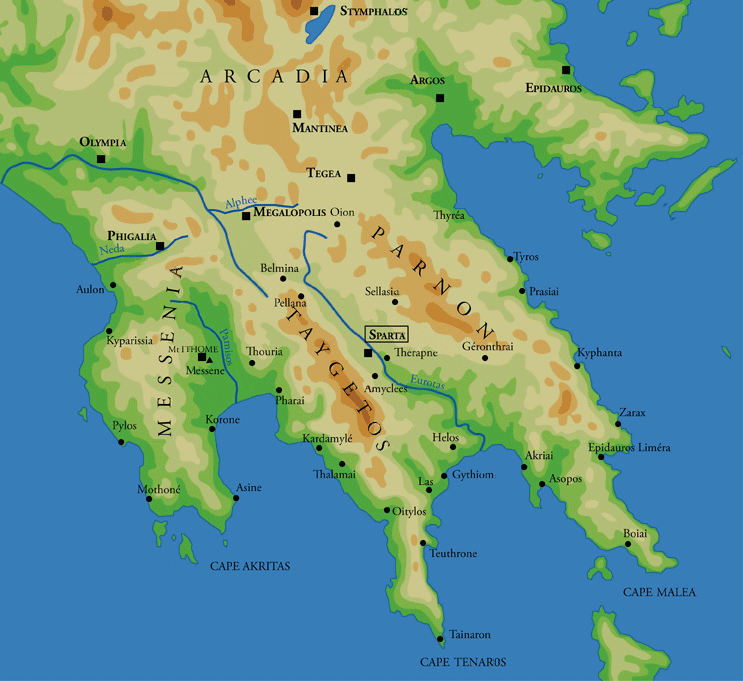
The Battle of Sellasia took place during the summer of 222 BC between Macedon and the Achaean League, led by Antigonus III Doson, and Sparta under the command of King Cleomenes III. The battle was fought at Sellasia, on the northern frontier of Laconia and ended in a Macedonian-Achaean victory.
In 229 BC, Cleomenes initiated hostilities against the Achaean League, the dominant power of the Peloponnese. In a series of campaigns, Cleomenes was successful in defeating the Achaeans, making Sparta the main regional power. This prompted the chief figure of the Achaean League, Aratus of Sicyon, to approach the King of Macedon, Antigonus III Doson, for military assistance. The Macedonians acquiesced on the terms that the Achaean surrender the formidable fortress of Acrocorinth to them. The Macedonians invaded the Peloponnese in 224 BC at the head of a Greek alliance and by 222 BC managed to hem Cleomenes in Laconia.
In the summer of 222 BC, the Macedonian and Achaean army advanced to Sellasia on the northern border of Laconia, where they encountered the awaiting army of Cleomenes. After a brief impasse, Antigonus launched an offensive against the Spartan positions on the fortified mountains of Olympus and Evas. While the Macedonian right flank routed the Spartan left wing on Evas, the battle on the other flank was heavily contested. After initially pushing back the Macedonian phalanx, the Spartans were driven from the field by the superior numbers of the Macedonians. Cleomenes was compelled to leave for exile in Alexandria and Antigonus became the first non-Spartan general to occupy Sparta.
The seizure of numerous important Arcadian cities by the King of Sparta, Cleomenes III, prompted the dominant state of the Peloponnese, the Achaean League, to declare war on Sparta. The Achaean attempts to recaptured these cities, led by the strategos, Aratus of Sicyon, largely failed as Sparta consolidated its position. Subsequent Achaean offensives in 226 BC were crushingly defeated at the Battle of Mount Lycaeum and the Battle of Ladoceia.
The Achaean position was additionally weakened when their erstwhile ally, Ptolemy III of Egypt, shifted his financial backing to Sparta. Ptolemy had been subsidising the campaign of the Achaeans against Macedon and now determined that Sparta would be a more effective ally to offset Macedonian power. This was compounded by the resounding Spartan victory over the Achaean army at the Battle of Dyme, leading the League to seek peace with Cleomenes.
When the peace talks failed, Aratus sent envoys to the Macedonian King, Antigonus III Doson, seeking military assistance. Antigonus pledged to give aid on the term that the formidable citadel, Acrocorinth was ceded to Macedon. This conditions elicited a furious response from many Achaeans and Cleomenes used this to his advantage by occupying the major cities of Corinth and Argos and many smaller settlements. Aratus accepted the terms proposed by the Macedonians and additionally surrendered the cities of Orchomenus and Heraia to Macedon. Subsequently, Antigonus mustered his army for the invasion of the Peloponnese.
Antigonus marched towards the Peloponnese with a large army of 20,000 infantry and 1,300 cavalry via the island of Euboea. They resorted to this after having their passage blocked by the hostile Aetolian League, who threatened to block their march if they went further south. After reaching the Isthmus of Corinth, the Macedonian army found their march halted by a series of fortifications that Cleomenes had erected across the Isthmus. Several attempts to breach the fortifications were repulsed with considerable losses.
Argos, however, revolted against Sparta and expelled their garrison with the help of some Macedonian soldiers. This defeat forced Cleomenes to abandon his position on the Isthmus and to retreat back to Arcadia. Meanwhile, Antigonus revived the Hellenic League of Philip II of Macedon under the name of the "League of Leagues" and managed to incorporate most of the Greek city-states in this League.
Hub AI
Battle of Sellasia AI simulator
(@Battle of Sellasia_simulator)
Battle of Sellasia
The Battle of Sellasia took place during the summer of 222 BC between Macedon and the Achaean League, led by Antigonus III Doson, and Sparta under the command of King Cleomenes III. The battle was fought at Sellasia, on the northern frontier of Laconia and ended in a Macedonian-Achaean victory.
In 229 BC, Cleomenes initiated hostilities against the Achaean League, the dominant power of the Peloponnese. In a series of campaigns, Cleomenes was successful in defeating the Achaeans, making Sparta the main regional power. This prompted the chief figure of the Achaean League, Aratus of Sicyon, to approach the King of Macedon, Antigonus III Doson, for military assistance. The Macedonians acquiesced on the terms that the Achaean surrender the formidable fortress of Acrocorinth to them. The Macedonians invaded the Peloponnese in 224 BC at the head of a Greek alliance and by 222 BC managed to hem Cleomenes in Laconia.
In the summer of 222 BC, the Macedonian and Achaean army advanced to Sellasia on the northern border of Laconia, where they encountered the awaiting army of Cleomenes. After a brief impasse, Antigonus launched an offensive against the Spartan positions on the fortified mountains of Olympus and Evas. While the Macedonian right flank routed the Spartan left wing on Evas, the battle on the other flank was heavily contested. After initially pushing back the Macedonian phalanx, the Spartans were driven from the field by the superior numbers of the Macedonians. Cleomenes was compelled to leave for exile in Alexandria and Antigonus became the first non-Spartan general to occupy Sparta.
The seizure of numerous important Arcadian cities by the King of Sparta, Cleomenes III, prompted the dominant state of the Peloponnese, the Achaean League, to declare war on Sparta. The Achaean attempts to recaptured these cities, led by the strategos, Aratus of Sicyon, largely failed as Sparta consolidated its position. Subsequent Achaean offensives in 226 BC were crushingly defeated at the Battle of Mount Lycaeum and the Battle of Ladoceia.
The Achaean position was additionally weakened when their erstwhile ally, Ptolemy III of Egypt, shifted his financial backing to Sparta. Ptolemy had been subsidising the campaign of the Achaeans against Macedon and now determined that Sparta would be a more effective ally to offset Macedonian power. This was compounded by the resounding Spartan victory over the Achaean army at the Battle of Dyme, leading the League to seek peace with Cleomenes.
When the peace talks failed, Aratus sent envoys to the Macedonian King, Antigonus III Doson, seeking military assistance. Antigonus pledged to give aid on the term that the formidable citadel, Acrocorinth was ceded to Macedon. This conditions elicited a furious response from many Achaeans and Cleomenes used this to his advantage by occupying the major cities of Corinth and Argos and many smaller settlements. Aratus accepted the terms proposed by the Macedonians and additionally surrendered the cities of Orchomenus and Heraia to Macedon. Subsequently, Antigonus mustered his army for the invasion of the Peloponnese.
Antigonus marched towards the Peloponnese with a large army of 20,000 infantry and 1,300 cavalry via the island of Euboea. They resorted to this after having their passage blocked by the hostile Aetolian League, who threatened to block their march if they went further south. After reaching the Isthmus of Corinth, the Macedonian army found their march halted by a series of fortifications that Cleomenes had erected across the Isthmus. Several attempts to breach the fortifications were repulsed with considerable losses.
Argos, however, revolted against Sparta and expelled their garrison with the help of some Macedonian soldiers. This defeat forced Cleomenes to abandon his position on the Isthmus and to retreat back to Arcadia. Meanwhile, Antigonus revived the Hellenic League of Philip II of Macedon under the name of the "League of Leagues" and managed to incorporate most of the Greek city-states in this League.