
Recent from talks
Battle of Warsaw (1920)
Knowledge base stats:
Talk channels stats:
Members stats:
Battle of Warsaw (1920)
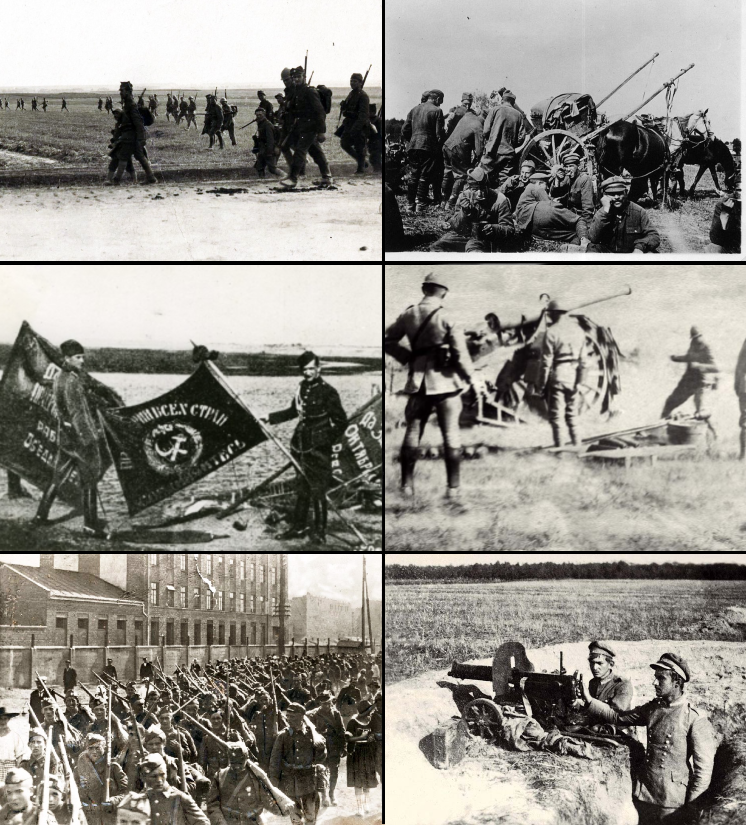
The Battle of Warsaw (Polish: Bitwa Warszawska; Russian: Варшавская битва, Varshavskaya bitva), also known as the Miracle on the Vistula (Polish: Cud nad Wisłą), was a series of battles that resulted in a decisive Polish victory and complete disintegration of the Red Army in August 1920 during the Polish–Soviet War.
After the Polish Kiev offensive, Soviet forces launched a successful counterattack in summer 1920, forcing the Polish army to retreat westward. The Polish forces seemed on the verge of disintegration and observers predicted a decisive Soviet victory.
The Battle of Warsaw was fought from August 1920, as Red Army forces commanded by Mikhail Tukhachevsky approached the Polish capital of Warsaw and the nearby Modlin Fortress. On August 16, Polish forces commanded by Józef Piłsudski counterattacked from the south, disrupting the enemy's offensive, forcing the Russian forces into a disorganized withdrawal eastward and behind the Neman River. Estimated Russian losses were 10,000 killed, 500 missing, 30,000 wounded and 66,000 taken prisoner, compared with Polish losses of some 4,500 killed, 10,000 missing and 22,000 wounded.
The defeat crippled the Red Army; Vladimir Lenin, the Bolshevik leader, called it "an enormous defeat" for his forces. In the following months, several more Polish follow-up victories secured Poland's independence and led to a peace treaty with Soviet Russia and Soviet Ukraine later that year, securing the Polish state's eastern frontiers until 1939.
The politician and diplomat Edgar Vincent regards this event as one of the most important battles in history on his expanded list of most decisive battles, since the Polish victory over the Soviets halted the spread of communism further westwards into Europe. A Soviet victory, which would have led to the creation of a Soviet-established government in Poland, would have put the Soviets directly on the German border, where they were expecting or were promised aligned forces.
In the aftermath of World War I, Poland fought to preserve its newly regained independence, lost in the 1795 partitions of Poland, and to carve out the borders of a new multinational federation (Intermarium) from the territories of their former partitioners, Russia, Germany, and Austria.
At the same time in 1919, the Bolsheviks had gained the upper hand in the Russian Civil War, having dealt crippling blows to the Russian White Movement. Vladimir Lenin viewed Poland as a bridge to bring communism to Central and Western Europe, and the Polish–Soviet War seemed the perfect way to test the Red Army's strength. The Bolshevik's speeches asserted that the revolution was to be carried to western Europe on the bayonets of Russian soldats and that the shortest route to Berlin and Paris lay through Warsaw. The conflict began when Polish head of state Józef Piłsudski formed an alliance with the Ukrainian leader Symon Petlyura (on April 21, 1920) and their combined forces began to push into Ukraine, entering Kiev on May 7.
The two sides were embroiled in the Polish–Ukrainian War, amidst competing territorial claims. After early setbacks against Poland in 1919, the Red Army was overwhelmingly successful in a counter-offensive in early 1920 that nullified the Polish Kiev Operation, forcing a Polish retreat. By mid-1920, Poland's very survival was at stake and foreign observers expected it to collapse at any moment. The Russian strategy called for a mass push toward the Polish capital, Warsaw. Its capture would have had a major propaganda effect for the Russian Bolsheviks, who expected the fall of the Polish capital not only to undermine the morale of the Poles, but to spark an international series of communist uprisings and clear the way for the Red Army to join the German Revolution.
Hub AI
Battle of Warsaw (1920) AI simulator
(@Battle of Warsaw (1920)_simulator)
Battle of Warsaw (1920)
The Battle of Warsaw (Polish: Bitwa Warszawska; Russian: Варшавская битва, Varshavskaya bitva), also known as the Miracle on the Vistula (Polish: Cud nad Wisłą), was a series of battles that resulted in a decisive Polish victory and complete disintegration of the Red Army in August 1920 during the Polish–Soviet War.
After the Polish Kiev offensive, Soviet forces launched a successful counterattack in summer 1920, forcing the Polish army to retreat westward. The Polish forces seemed on the verge of disintegration and observers predicted a decisive Soviet victory.
The Battle of Warsaw was fought from August 1920, as Red Army forces commanded by Mikhail Tukhachevsky approached the Polish capital of Warsaw and the nearby Modlin Fortress. On August 16, Polish forces commanded by Józef Piłsudski counterattacked from the south, disrupting the enemy's offensive, forcing the Russian forces into a disorganized withdrawal eastward and behind the Neman River. Estimated Russian losses were 10,000 killed, 500 missing, 30,000 wounded and 66,000 taken prisoner, compared with Polish losses of some 4,500 killed, 10,000 missing and 22,000 wounded.
The defeat crippled the Red Army; Vladimir Lenin, the Bolshevik leader, called it "an enormous defeat" for his forces. In the following months, several more Polish follow-up victories secured Poland's independence and led to a peace treaty with Soviet Russia and Soviet Ukraine later that year, securing the Polish state's eastern frontiers until 1939.
The politician and diplomat Edgar Vincent regards this event as one of the most important battles in history on his expanded list of most decisive battles, since the Polish victory over the Soviets halted the spread of communism further westwards into Europe. A Soviet victory, which would have led to the creation of a Soviet-established government in Poland, would have put the Soviets directly on the German border, where they were expecting or were promised aligned forces.
In the aftermath of World War I, Poland fought to preserve its newly regained independence, lost in the 1795 partitions of Poland, and to carve out the borders of a new multinational federation (Intermarium) from the territories of their former partitioners, Russia, Germany, and Austria.
At the same time in 1919, the Bolsheviks had gained the upper hand in the Russian Civil War, having dealt crippling blows to the Russian White Movement. Vladimir Lenin viewed Poland as a bridge to bring communism to Central and Western Europe, and the Polish–Soviet War seemed the perfect way to test the Red Army's strength. The Bolshevik's speeches asserted that the revolution was to be carried to western Europe on the bayonets of Russian soldats and that the shortest route to Berlin and Paris lay through Warsaw. The conflict began when Polish head of state Józef Piłsudski formed an alliance with the Ukrainian leader Symon Petlyura (on April 21, 1920) and their combined forces began to push into Ukraine, entering Kiev on May 7.
The two sides were embroiled in the Polish–Ukrainian War, amidst competing territorial claims. After early setbacks against Poland in 1919, the Red Army was overwhelmingly successful in a counter-offensive in early 1920 that nullified the Polish Kiev Operation, forcing a Polish retreat. By mid-1920, Poland's very survival was at stake and foreign observers expected it to collapse at any moment. The Russian strategy called for a mass push toward the Polish capital, Warsaw. Its capture would have had a major propaganda effect for the Russian Bolsheviks, who expected the fall of the Polish capital not only to undermine the morale of the Poles, but to spark an international series of communist uprisings and clear the way for the Red Army to join the German Revolution.
Recent media