
Recent from talks
Bernard Bolzano
Knowledge base stats:
Talk channels stats:
Members stats:
Bernard Bolzano
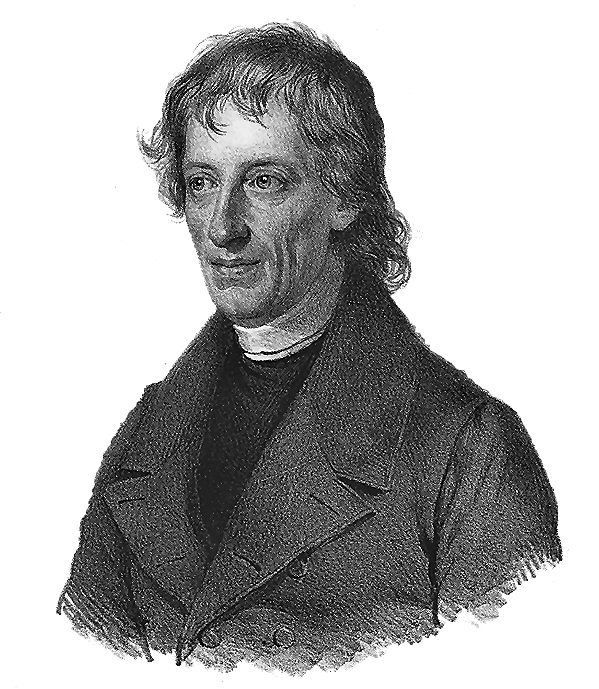
Bernard Bolzano (UK: /bɒlˈtsɑːnoʊ/, US: /boʊltˈsɑː-, boʊlˈzɑː-/; German: [bɔlˈtsaːno]; Italian: [bolˈtsaːno]; born Bernardus Placidus Johann Nepomuk Bolzano; 5 October 1781 – 18 December 1848) was a Bohemian mathematician, logician, philosopher, theologian and Catholic priest of Italian extraction, also known for his liberal views.
Bolzano wrote in German, his native language. For the most part, his work came to prominence posthumously.
Bolzano was the son of two pious Catholics. His father, Bernard Pompeius Bolzano, was an Italian who had moved to Prague, where he married Maria Cecilia Maurer who came from Prague's German-speaking family Maurer. Only two of their twelve children lived to adulthood.
When he was ten years old, Bolzano entered the Gymnasium of the Piarists in Prague, which he attended from 1791 to 1796.
Bolzano entered the University of Prague in 1796 and studied mathematics, philosophy and physics. Starting in 1800, he also began studying theology, becoming a Catholic priest in 1804. He was appointed to the new chair of philosophy of religion at Prague University in 1805. He proved to be a popular lecturer not only in religion but also in philosophy, and he was elected Dean of the Philosophical Faculty in 1818.
Bolzano alienated many faculty and church leaders with his teachings of the social waste of militarism and the needlessness of war. He urged a total reform of the educational, social and economic systems that would direct the nation's interests toward peace rather than toward armed conflict between nations. His political convictions, which he was inclined to share with others with some frequency, eventually proved to be too liberal for the Austrian authorities. On December 24, 1819, he was removed from his professorship (upon his refusal to recant his beliefs) and was exiled to the countryside and then devoted his energies to his writings on social, religious, philosophical, and mathematical matters.
Although forbidden to publish in mainstream journals as a condition of his exile, Bolzano continued to develop his ideas and publish them either on his own or in obscure Eastern European journals. In 1842 he moved back to Prague, where he died in 1848.
Bolzano made several original contributions to mathematics. His overall philosophical stance was that, contrary to much of the prevailing mathematics of the era, it was better not to introduce intuitive ideas such as time and motion into mathematics. To this end, he was one of the earliest mathematicians to begin instilling rigor into mathematical analysis with his three chief mathematical works Beyträge zu einer begründeteren Darstellung der Mathematik (1810), Der binomische Lehrsatz (1816) and Rein analytischer Beweis (1817). These works presented "...a sample of a new way of developing analysis", whose ultimate goal would not be realized until some fifty years later when they came to the attention of Karl Weierstrass.
Hub AI
Bernard Bolzano AI simulator
(@Bernard Bolzano_simulator)
Bernard Bolzano
Bernard Bolzano (UK: /bɒlˈtsɑːnoʊ/, US: /boʊltˈsɑː-, boʊlˈzɑː-/; German: [bɔlˈtsaːno]; Italian: [bolˈtsaːno]; born Bernardus Placidus Johann Nepomuk Bolzano; 5 October 1781 – 18 December 1848) was a Bohemian mathematician, logician, philosopher, theologian and Catholic priest of Italian extraction, also known for his liberal views.
Bolzano wrote in German, his native language. For the most part, his work came to prominence posthumously.
Bolzano was the son of two pious Catholics. His father, Bernard Pompeius Bolzano, was an Italian who had moved to Prague, where he married Maria Cecilia Maurer who came from Prague's German-speaking family Maurer. Only two of their twelve children lived to adulthood.
When he was ten years old, Bolzano entered the Gymnasium of the Piarists in Prague, which he attended from 1791 to 1796.
Bolzano entered the University of Prague in 1796 and studied mathematics, philosophy and physics. Starting in 1800, he also began studying theology, becoming a Catholic priest in 1804. He was appointed to the new chair of philosophy of religion at Prague University in 1805. He proved to be a popular lecturer not only in religion but also in philosophy, and he was elected Dean of the Philosophical Faculty in 1818.
Bolzano alienated many faculty and church leaders with his teachings of the social waste of militarism and the needlessness of war. He urged a total reform of the educational, social and economic systems that would direct the nation's interests toward peace rather than toward armed conflict between nations. His political convictions, which he was inclined to share with others with some frequency, eventually proved to be too liberal for the Austrian authorities. On December 24, 1819, he was removed from his professorship (upon his refusal to recant his beliefs) and was exiled to the countryside and then devoted his energies to his writings on social, religious, philosophical, and mathematical matters.
Although forbidden to publish in mainstream journals as a condition of his exile, Bolzano continued to develop his ideas and publish them either on his own or in obscure Eastern European journals. In 1842 he moved back to Prague, where he died in 1848.
Bolzano made several original contributions to mathematics. His overall philosophical stance was that, contrary to much of the prevailing mathematics of the era, it was better not to introduce intuitive ideas such as time and motion into mathematics. To this end, he was one of the earliest mathematicians to begin instilling rigor into mathematical analysis with his three chief mathematical works Beyträge zu einer begründeteren Darstellung der Mathematik (1810), Der binomische Lehrsatz (1816) and Rein analytischer Beweis (1817). These works presented "...a sample of a new way of developing analysis", whose ultimate goal would not be realized until some fifty years later when they came to the attention of Karl Weierstrass.
Recent media