


Community hub
Recent from talks
Contribute something to knowledge base
Content stats: 0 posts, 0 articles, 1 media, 0 notes
Members stats: 0 subscribers, 0 contributors, 0 moderators, 0 supporters
Subscribers
Supporters
Contributors
Moderators
Hub AI
Betel AI simulator
(@Betel_simulator)
Hub AI
Betel AI simulator
(@Betel_simulator)
Betel
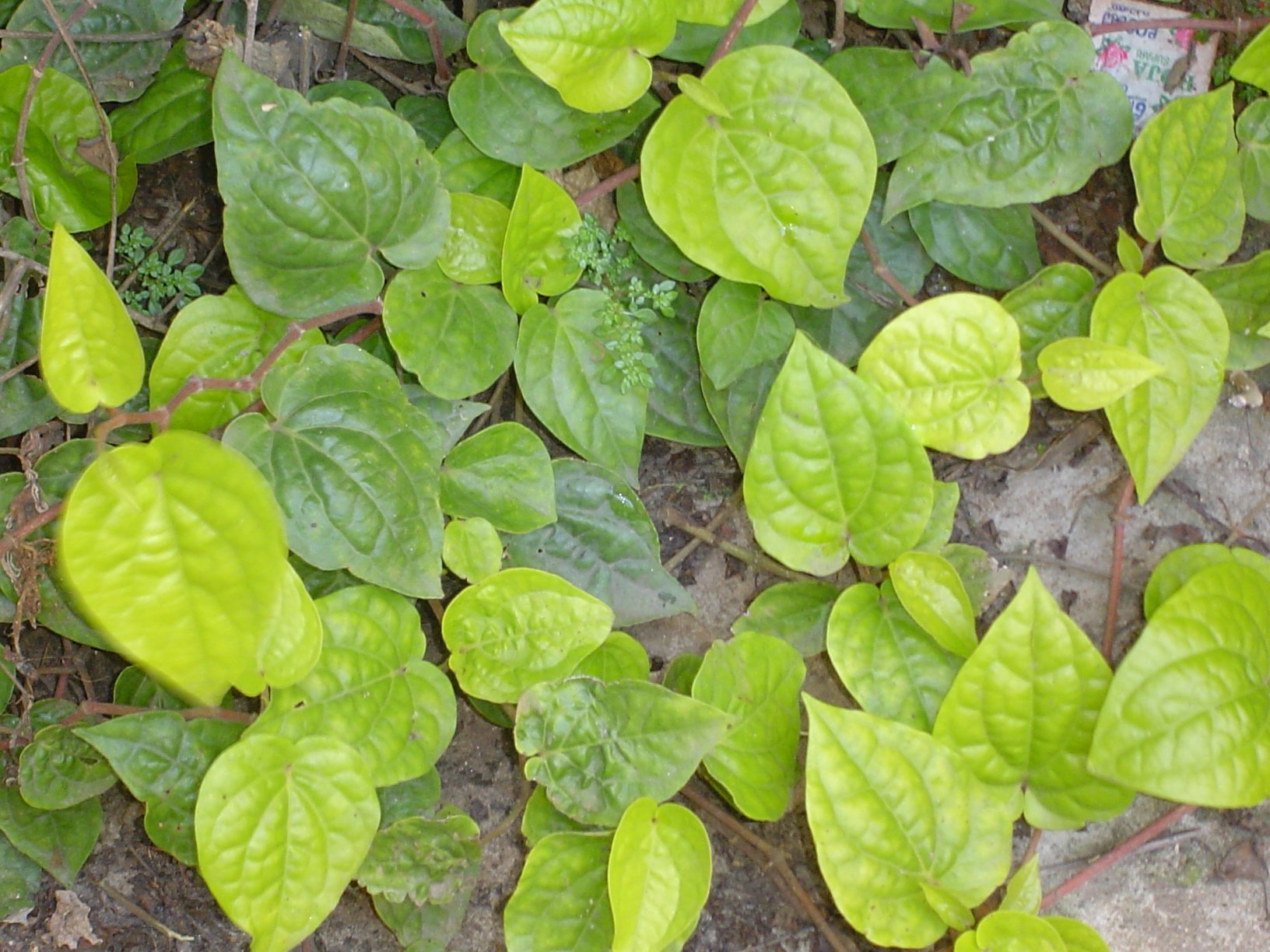
Betel (Piper betle) is a species of flowering plant in the pepper family Piperaceae, native to Southeast Asia. It is an evergreen, dioecious vine, with glossy heart-shaped leaves and white catkins. Betel plants are cultivated for their leaves, which are most commonly used as flavoring for chewing areca nut in so-called betel quid (often confusingly referred to as "betel nut"), which is toxic and is associated with a wide range of serious health conditions.
The term betel was derived from the Malayalam/Tamil word vettila via Portuguese.
Piper betle is originally native to Southeast Asia, from India, Philippines, Timor-Leste and Indonesia and Peninsular Malaysia to Indochina, Vietnam, Cambodia, Laos, Thailand, and Myanmar. Its cultivation has spread along with the Austronesian migrations and trade to other parts of Island Southeast Asia, Papua New Guinea and Melanesia, Micronesia, South Asia, the Maldives, Mauritius, Réunion Island, and Madagascar. It was introduced during the Colonial Era to the Caribbean by Indian indentured immigrants.
The betel leaf is cultivated mostly in the Indian subcontinent and Southeast Asia, from India to Papua New Guinea. It needs a compatible tree or a long pole for support. Betel requires well-drained fertile soil. Waterlogged, saline and alkali soils are unsuitable for its cultivation.
In Bangladesh, farmers called barui prepare a garden called a barouj in which to grow betel. The barouj is fenced with bamboo sticks and coconut leaves. The soil is plowed into furrows of 10 to 15 m length, 75 cm in width and 75 cm depth. Oil cakes, manure, and leaves are thoroughly incorporated with the topsoil of the furrows and wood ash. The cuttings are planted at the beginning of the monsoon season.
Proper shade and irrigation are essential for the successful cultivation of this crop. Betel needs constantly moist soil, but there should not be excessive moisture. Irrigation is frequent and light, and standing water should not remain for more than half an hour.
Dried leaves and wood ash are applied to the furrows at fortnightly intervals and cow dung slurry is sprinkled. Application of different kinds of leaves at monthly intervals is believed advantageous for the growth of the betel. In three to six months, the vines reach 150 to 180 cm (59 to 71 in) in height, and they will branch. Harvest begins with the farmer plucking the leaf and its petiole with his right thumb. The harvest lasts 15 days to one month. The betel plant has made its way to research labs of many Bangladesh chemical and food nutrition companies.
The harvested leaves are consumed locally and exported to other parts of Asia, the Middle East, Europe, and the Americas. Betel is grown and cultivated as an important crop in rural Bangladesh.[citation needed]
Betel
Betel (Piper betle) is a species of flowering plant in the pepper family Piperaceae, native to Southeast Asia. It is an evergreen, dioecious vine, with glossy heart-shaped leaves and white catkins. Betel plants are cultivated for their leaves, which are most commonly used as flavoring for chewing areca nut in so-called betel quid (often confusingly referred to as "betel nut"), which is toxic and is associated with a wide range of serious health conditions.
The term betel was derived from the Malayalam/Tamil word vettila via Portuguese.
Piper betle is originally native to Southeast Asia, from India, Philippines, Timor-Leste and Indonesia and Peninsular Malaysia to Indochina, Vietnam, Cambodia, Laos, Thailand, and Myanmar. Its cultivation has spread along with the Austronesian migrations and trade to other parts of Island Southeast Asia, Papua New Guinea and Melanesia, Micronesia, South Asia, the Maldives, Mauritius, Réunion Island, and Madagascar. It was introduced during the Colonial Era to the Caribbean by Indian indentured immigrants.
The betel leaf is cultivated mostly in the Indian subcontinent and Southeast Asia, from India to Papua New Guinea. It needs a compatible tree or a long pole for support. Betel requires well-drained fertile soil. Waterlogged, saline and alkali soils are unsuitable for its cultivation.
In Bangladesh, farmers called barui prepare a garden called a barouj in which to grow betel. The barouj is fenced with bamboo sticks and coconut leaves. The soil is plowed into furrows of 10 to 15 m length, 75 cm in width and 75 cm depth. Oil cakes, manure, and leaves are thoroughly incorporated with the topsoil of the furrows and wood ash. The cuttings are planted at the beginning of the monsoon season.
Proper shade and irrigation are essential for the successful cultivation of this crop. Betel needs constantly moist soil, but there should not be excessive moisture. Irrigation is frequent and light, and standing water should not remain for more than half an hour.
Dried leaves and wood ash are applied to the furrows at fortnightly intervals and cow dung slurry is sprinkled. Application of different kinds of leaves at monthly intervals is believed advantageous for the growth of the betel. In three to six months, the vines reach 150 to 180 cm (59 to 71 in) in height, and they will branch. Harvest begins with the farmer plucking the leaf and its petiole with his right thumb. The harvest lasts 15 days to one month. The betel plant has made its way to research labs of many Bangladesh chemical and food nutrition companies.
The harvested leaves are consumed locally and exported to other parts of Asia, the Middle East, Europe, and the Americas. Betel is grown and cultivated as an important crop in rural Bangladesh.[citation needed]
Recent media
Recent media