
Recent from talks
Bhaktisiddhanta Sarasvati
Knowledge base stats:
Talk channels stats:
Members stats:
Bhaktisiddhanta Sarasvati
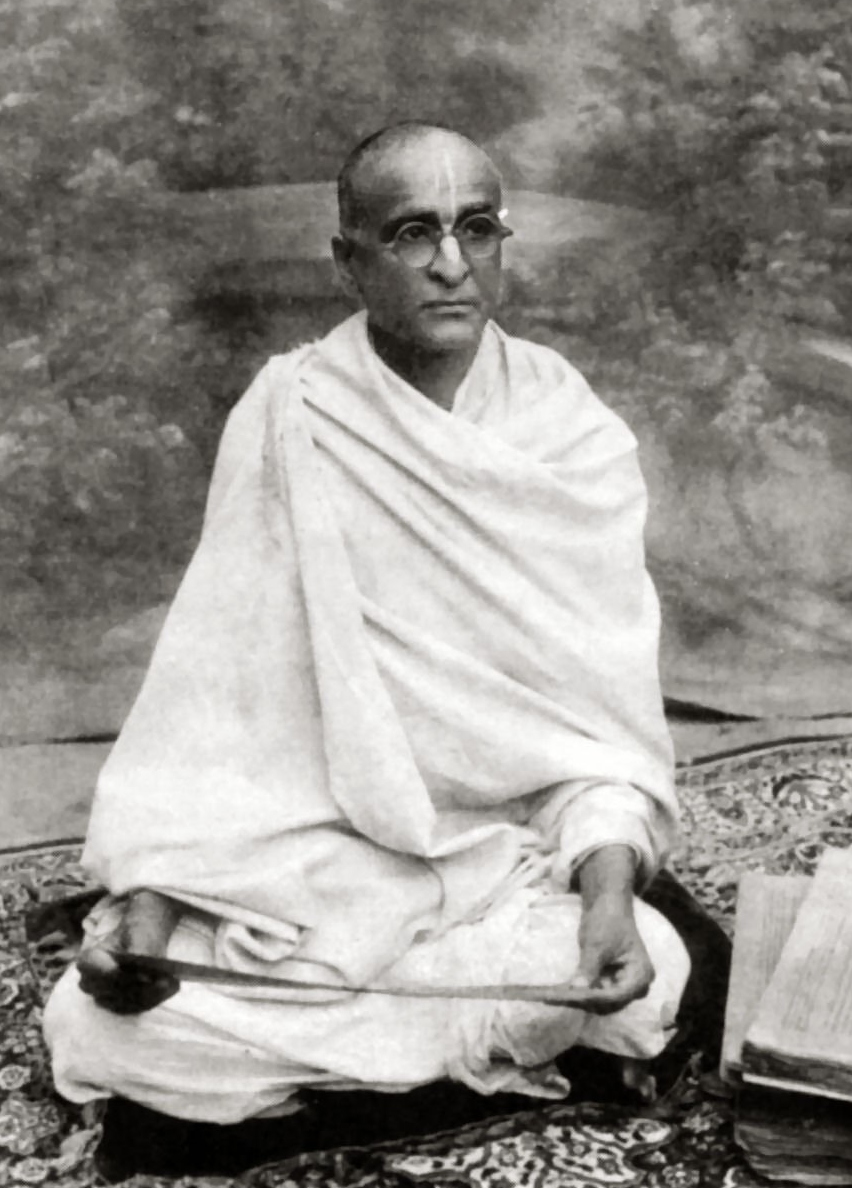
Bhaktisiddhanta Sarasvati (IAST: Bhakti-siddhānta Sarasvatī Thakur (Prabhupada); Bengali: ভক্তিসিদ্ধান্ত সরস্বতী; Bengali: [bʱɔktisiddʱanto ʃɔrɔʃbɔti] ⓘ; (6 February 1874 – 1 January 1937), born Bimala Prasad Datt (Bimalā Prasāda Datta, Bengali: [bimola prɔʃad dɔtto]), was a Gaudiya Vaishnava guru (spiritual master), Ācārya, and revivalist in early twentieth-century India, known to his followers as Śrīla Prabhupāda.
Bimala Prasad was born in 1874 in Puri (then Bengal Presidency, now Odisha) in a Bengali Hindu Kayastha family as a son of Kedarnath Datta Bhaktivinoda Thakur, a Bengali Gaudiya Vaishnava philosopher and teacher. Bimala Prasad received Western and traditional Indian education from the late 1880s up until he graduated from Sanskrit College in 1895. His studies gradually gained him recognition from the bhadralok (Western-educated Hindu Bengali residents of colonial Calcutta), earning the title Siddhānta Sarasvatī ("the pinnacle of wisdom"). In 1900, Bimala Prasad was initiated into Gaudiya Vaishnavism from the Vaishnava ascetic Gaurakishora Dāsa Bābājī.
In 1918, following the death of his father in 1914 and the death of his guru Gaurakishora Dāsa Bābājī the following year, Bimala Prasad accepted the Hindu formal order of asceticism (sannyasa) from a photograph of his guru and took the name Bhaktisiddhanta Saraswati Goswami Prabhupada. He started the first center of his institution in Calcutta, later known as the Gaudiya Math. It developed into a missionary and educational institution with branches in India and abroad, distributing books and hosting public programs.[citation needed]
Bhaktisiddhanta opposed the non-dualistic interpretation of Hinduism, or Advaita, that had emerged as the prevalent strand of Hindu thought in India, seeking to promote Krishna-bhakti, which he regarded as its fulfillment and higher synthesis. He was critical of numerous Gaudiya Vaishnava lineages, describing them as apasampradayas – deviations from the original Gaudiya Vaishnavism taught in the 16th century by Chaitanya Mahaprabhu and his early successors. Additionally, he targeted what he alleged as casteism among "Smarta Brahmins". [citation needed]
The mission initiated by Bhaktivinoda Thakur and developed by Bhaktisiddhanta Saraswati was referred to as "the most powerful reformist movement" of Vaishnavism in Bengal of the 19th and early 20th century. In 1966 its offshoot, the International Society for Krishna Consciousness (ISKCON), known for extensively popularizing Gaudiya Vaishnavism outside of India, was founded by Bhaktisiddhanta's disciple A. C. Bhaktivedanta Swami in New York City.
Srila Bhaktisiddhanta Saraswati Goswami Prabhupāda was born Bimala Prasad at 3:30 pm on 6 February 1874 in Puri – a town in the Indian state of Orissa best known for its 12th-century Jagannath Temple. He was born a few hundred meters away from the Jagannath temple on Puri's Grand Road, the traditional venue for the Hindu Ratha-yatra festival.
Bimala Prasad was the seventh of fourteen children of his father Kedarnath Datta and mother Bhagavati Devi, devout Vaishnavas of the Bengali kayastha community. At that time, Kedarnath Datta worked as a deputy magistrate and deputy collector, and spent most of his off-hours studying Vaishnava scripture under the guidance of local pandits. He translated scripture and wrote works on Vaishnava theology and practice in Bengali, Sanskrit, and English. He was also a prominent associate of the Ghosh brothers, who launched the pro-Vaishnava Amrita Bazar Patrika newspaper. His literary and spiritual achievements later earned him the honorific title Bhaktivinoda.
In 1869, after being posted to Puri as a deputy magistrate, Kedarnatha felt he needed assistance in his attempts to promote the cause of Gaudiya Vaishnavism in India and abroad. Shortly thereafter, he had a dream of Jagannath, in which the deity encouraged Kedarnatha to drop his pursuit of the law and attend to his role as a Vaishnava. After Kedarnatha expressed his difficulty in pursuing his cause alone, Jagannath requested Kedarnatha to pray for an assistant to the image of the Goddess Bimala Devi. When his wife gave birth to a new child, Kedarnatha linked the event to the divinatory dream and named his son Bimala Prasad ('"the mercy of Bimala Devi").
Hub AI
Bhaktisiddhanta Sarasvati AI simulator
(@Bhaktisiddhanta Sarasvati_simulator)
Bhaktisiddhanta Sarasvati
Bhaktisiddhanta Sarasvati (IAST: Bhakti-siddhānta Sarasvatī Thakur (Prabhupada); Bengali: ভক্তিসিদ্ধান্ত সরস্বতী; Bengali: [bʱɔktisiddʱanto ʃɔrɔʃbɔti] ⓘ; (6 February 1874 – 1 January 1937), born Bimala Prasad Datt (Bimalā Prasāda Datta, Bengali: [bimola prɔʃad dɔtto]), was a Gaudiya Vaishnava guru (spiritual master), Ācārya, and revivalist in early twentieth-century India, known to his followers as Śrīla Prabhupāda.
Bimala Prasad was born in 1874 in Puri (then Bengal Presidency, now Odisha) in a Bengali Hindu Kayastha family as a son of Kedarnath Datta Bhaktivinoda Thakur, a Bengali Gaudiya Vaishnava philosopher and teacher. Bimala Prasad received Western and traditional Indian education from the late 1880s up until he graduated from Sanskrit College in 1895. His studies gradually gained him recognition from the bhadralok (Western-educated Hindu Bengali residents of colonial Calcutta), earning the title Siddhānta Sarasvatī ("the pinnacle of wisdom"). In 1900, Bimala Prasad was initiated into Gaudiya Vaishnavism from the Vaishnava ascetic Gaurakishora Dāsa Bābājī.
In 1918, following the death of his father in 1914 and the death of his guru Gaurakishora Dāsa Bābājī the following year, Bimala Prasad accepted the Hindu formal order of asceticism (sannyasa) from a photograph of his guru and took the name Bhaktisiddhanta Saraswati Goswami Prabhupada. He started the first center of his institution in Calcutta, later known as the Gaudiya Math. It developed into a missionary and educational institution with branches in India and abroad, distributing books and hosting public programs.[citation needed]
Bhaktisiddhanta opposed the non-dualistic interpretation of Hinduism, or Advaita, that had emerged as the prevalent strand of Hindu thought in India, seeking to promote Krishna-bhakti, which he regarded as its fulfillment and higher synthesis. He was critical of numerous Gaudiya Vaishnava lineages, describing them as apasampradayas – deviations from the original Gaudiya Vaishnavism taught in the 16th century by Chaitanya Mahaprabhu and his early successors. Additionally, he targeted what he alleged as casteism among "Smarta Brahmins". [citation needed]
The mission initiated by Bhaktivinoda Thakur and developed by Bhaktisiddhanta Saraswati was referred to as "the most powerful reformist movement" of Vaishnavism in Bengal of the 19th and early 20th century. In 1966 its offshoot, the International Society for Krishna Consciousness (ISKCON), known for extensively popularizing Gaudiya Vaishnavism outside of India, was founded by Bhaktisiddhanta's disciple A. C. Bhaktivedanta Swami in New York City.
Srila Bhaktisiddhanta Saraswati Goswami Prabhupāda was born Bimala Prasad at 3:30 pm on 6 February 1874 in Puri – a town in the Indian state of Orissa best known for its 12th-century Jagannath Temple. He was born a few hundred meters away from the Jagannath temple on Puri's Grand Road, the traditional venue for the Hindu Ratha-yatra festival.
Bimala Prasad was the seventh of fourteen children of his father Kedarnath Datta and mother Bhagavati Devi, devout Vaishnavas of the Bengali kayastha community. At that time, Kedarnath Datta worked as a deputy magistrate and deputy collector, and spent most of his off-hours studying Vaishnava scripture under the guidance of local pandits. He translated scripture and wrote works on Vaishnava theology and practice in Bengali, Sanskrit, and English. He was also a prominent associate of the Ghosh brothers, who launched the pro-Vaishnava Amrita Bazar Patrika newspaper. His literary and spiritual achievements later earned him the honorific title Bhaktivinoda.
In 1869, after being posted to Puri as a deputy magistrate, Kedarnatha felt he needed assistance in his attempts to promote the cause of Gaudiya Vaishnavism in India and abroad. Shortly thereafter, he had a dream of Jagannath, in which the deity encouraged Kedarnatha to drop his pursuit of the law and attend to his role as a Vaishnava. After Kedarnatha expressed his difficulty in pursuing his cause alone, Jagannath requested Kedarnatha to pray for an assistant to the image of the Goddess Bimala Devi. When his wife gave birth to a new child, Kedarnatha linked the event to the divinatory dream and named his son Bimala Prasad ('"the mercy of Bimala Devi").
Recent media