Hubbry Logo
Brenda ChapmanBrenda ChapmanMain
Open search
Brenda Chapman
Community hub
Brenda Chapman
logo
8 pages, 0 posts
0 subscribers
Be the first to start a discussion here.
Brenda Chapman
Brenda Chapman
from Wikipedia

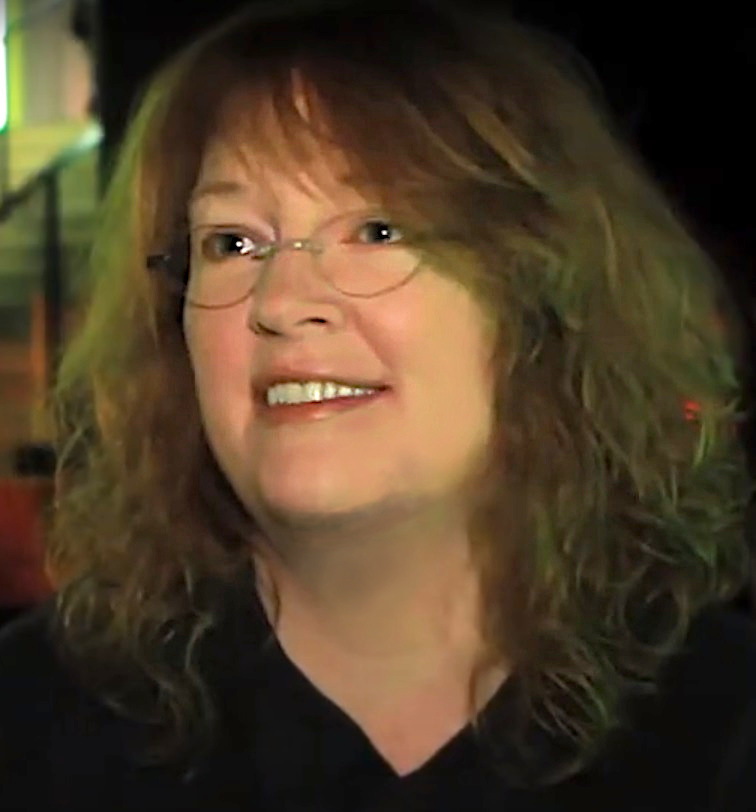
Brenda Chapman (born 1962 or 1963)[1] is an American animator, screenwriter, storyboard artist, and director. In 1998, she became the first woman to direct an animated feature from a major studio, DreamWorks Animation's The Prince of Egypt.[2] In 2012, she directed the Disney/Pixar film Brave with Mark Andrews (and co-direction from Steve Purcell), becoming the first woman to win the Academy Award for Best Animated Feature.[3][4]

Key Information

Early life

[edit]

Chapman was born in Beason, Illinois[5] as the youngest of five.[6] She went to Lincoln College in Lincoln, Illinois, receiving her Associate of Arts degree.[7] She then moved to California and studied animation at the California Institute of the Arts (CalArts).

Career

[edit]

During her summer breaks, Chapman began her professional career working in syndicated television animation. In 1987, she graduated with a BFA in character animation, and was hired as a story trainee on The Little Mermaid (1989). Chapman then worked as a storyboard artist on The Rescuers Down Under (1990) and Beauty and the Beast (1991), where she worked closely with Roger Allers to define many of the key sequences and motifs used in the film. She later served as head of story, the first woman to do so in an animated feature film, for The Lion King (1994).

Chapman joined DreamWorks Animation at its inception in the fall of 1994. Chapman was one of a team of three directors who worked on 1998's The Prince of Egypt, along with Steve Hickner and Simon Wells. She became the first female director for an animated feature by a major studio;[4] three others had previously helmed independent efforts including Lotte Reiniger of The Adventures of Prince Achmed (1926), Joy Batchelor of Animal Farm (1954), and Arna Selznick of The Care Bears Movie (1985).[4][8] She also worked on Chicken Run, and several projects in development while at DreamWorks before leaving the studio on maternity leave.[9] In May 2003, Chapman and Allers were announced to direct Tam Lin, an adaptation of the Scottish folk ballad, for Sony Pictures Animation.[10]

However, later that same year, Chapman moved to Pixar after being invited by her old colleague Joe Ranft, where she had a brief stint on Cars (2006) before developing The Bear and the Bow, which was re-titled Brave (2012).[9] In April 2008, Chapman was announced as the director of the film, making her Pixar's first female director.[11][12] In October 2010, however, she was replaced by Mark Andrews following creative disagreements between her and John Lasseter.[13] There were rumors that she subsequently left Pixar, but she remained on staff until shortly after the film's release.[14] In 2012, Chapman's work in Brave won her an Academy Award, BAFTA, and Golden Globe for Best Animated Feature Film, making her the first woman to win this category.[15] By July 2012, Chapman worked as a consultant at Lucasfilm Animation,[16] helping to resolve story problems on Strange Magic (2015).[17][18][19] When asked whether she will return to Pixar, Chapman responded by saying she has no desire to go back there feeling that "[t]he atmosphere and the leadership doesn't fit well with me."[17]

In 2013, she returned to DreamWorks Animation,[1][20] where she helped in developing Rumblewick that had a strong female protagonist and was described as "funny with magic and heart."[17][21] Chapman then left DreamWorks shortly afterwards.[9] As of 2016, she began developing projects for Chapman Lima Productions, with her husband Kevin Lima.[21][22]

In May 2016, it was reported that Chapman would make her live-action directorial debut with Come Away (2020), a fantasy drama that serves as a prequel to Alice in Wonderland and Peter Pan.[23] In May 2018, it was reported that Angelina Jolie and David Oyelowo were portraying the parents of Alice and Peter, with both actors also serving as producers.[24] Anna Chancellor and Clarke Peters joined the cast in August, with filming in London starting that same month.[25]

In February 2020, it was reported that Chapman was attached to write and direct a live-action hybrid film adaptation of Ghost Squad.[26] In December of that year, Chapman stated she had "kind of stepped away" from the project, deciding instead to work on other projects with Lima. She also stated she was writing "a novel and thinking about turning it into an animated screenplay."[27]

Personal life

[edit]

Chapman is married to director Kevin Lima (A Goofy Movie, Tarzan, Enchanted), whom she met at California Institute of the Arts.[1] They have a daughter, Emma Rose Lima (b. 1999), who was the inspiration for Mérida, Brave's young princess.[1][20][28] Emma has also been featured as a voice actress for Disney movies such as Bambi II and Enchanted.[29] They reside in Tamalpais Valley, California.[30] Chapman is of Scottish ancestry.[14] In 2014, Chapman urged Scots to back independence in the September referendum.[31]

Filmography

[edit]

Feature films

[edit]
Year Title Director Writer Artistic
Supervisor
Story
Artist
Other Voice Role Notes
1988 Who Framed Roger Rabbit No No No No Yes In-between Artist: Additional Animation
Oliver & Company No No No No Yes
1989 The Little Mermaid No No No Yes No
1990 The Rescuers Down Under No No No Yes No
1991 Beauty and the Beast No No No Yes No
1994 The Lion King No No Story No No
1996 The Hunchback of Notre Dame No No No Yes No
1998 The Prince of Egypt Yes No No No Yes Miriam (singing)
1999 Fantasia 2000 No No No No Yes Original Concept: "The Pines of Rome"
2000 The Road to El Dorado No No No Additional No
Chicken Run No No No Additional No
2001 Shrek No No No No Yes Special Thanks
2003 Sinbad: Legend of the Seven Seas No No No No Yes
2006 Cars No No No Yes No
2007 Ratatouille No No No No Yes Pixar Productions
2008 WALL-E No No No No Yes Pixar Senior Creative Team
2009 Up No No No No Yes Dog[32]
2010 Toy Story 3 No No No No Yes
2011 Cars 2 No No No No Yes
2012 Brave Yes Yes No No Yes
2015 Strange Magic No No No No Yes Imp Story Consultant
2019 The Lion King No No No No Yes Thanks
2020 Come Away Yes No No No No

Television

[edit]
Year Title Notes
1984 Heathcliff lip sync checker
21 episodes
1985–1986 Hulk Hogan's Rock 'n' Wrestling character designer
5 episodes
1986 Dennis the Menace lip sync checker
65 episodes
1986–1987 The Real Ghostbusters animator
76 episodes
lip sync checker
2 episodes
1997 Cartoon Sushi special thanks
1 episode

Accolades

[edit]
Award Category Title Result Ref.
Academy Awards Best Animated Feature Brave Won [33]
Annie Awards Best Achievement in Story Contribution The Lion King Won [34]
Best Achievement in Storyboarding The Hunchback of Notre Dame Nominated [35]
Outstanding Individual Achievement for Directing in an Animated Feature Production The Prince of Egypt Nominated [36]
Best Animated Feature Brave Nominated [37]
Writing in an Animated Feature Production Brave Nominated [38]
Critics' Choice Movie Awards Best Animated Feature The Prince of Egypt Won[a] [39]
Golden Globe Awards Best Animated Feature Film Brave Won [40][41]
Hugo Awards Best Dramatic Presentation Beauty and the Beast Nominated [42]
Saturn Awards Best Animated Film Brave Won [43]
Visual Effects Society Outstanding Animation in an Animated Feature Motion Picture Brave Won [44]

Notes

[edit]

References

[edit]
[edit]
Revisions and contributorsEdit on WikipediaRead on Wikipedia
from Grokipedia
Brenda Chapman (born c. 1963) is an American , , , and director recognized for pioneering contributions to feature at major studios including Disney, DreamWorks, and . She began her career at Feature Animation in 1987 as a story artist, contributing to films such as (1994), where she served as story supervisor and received an Annie Award for her work. Chapman later joined , co-directing (1998), which marked her as the first woman to direct an animated feature film from a major Hollywood studio. In 2003, she moved to Animation Studios, initially as a story artist on (2006), before developing and directing Brave (2012), a film inspired by her relationship with her daughter that explores themes of mother-daughter dynamics in medieval . For Brave, co-directed with Mark Andrews, Chapman became the first woman to win the Academy Award for Best Animated Feature, along with a Golden Globe and BAFTA in the same category. Throughout her career, she has advocated for greater female representation in , highlighting barriers in a historically male-dominated industry while contributing to story development across multiple studios.

Early Life

Upbringing and Influences

Brenda Chapman was born on November 1, 1962, in Beason, , a small rural village in Logan County with a population under 200 during her childhood. She grew up as the youngest of five children in a environment that fostered her early creative tendencies, though specific details on parental occupations or direct familial artistic involvement remain undocumented in primary accounts. From a young age, Chapman demonstrated a passion for , engaging in it persistently as a primary activity. This self-directed pursuit laid the groundwork for her artistic development in a setting far removed from major hubs. Her initial influences stemmed from exposure to classic American animated shorts, particularly productions featuring characters like . These cartoons, known for their dynamic character animation and comedic timing, sparked her interest in the medium, distinguishing her early inspirations from the Disney-centric paths common among later animators. Chapman has attributed this affinity to the humor and visual storytelling in such works, which she consumed during childhood viewings.

Education and Initial Aspirations

Chapman earned an Associate of Arts degree from Lincoln College in , prior to relocating to . She then enrolled at the (CalArts), completing a in Film/Video in 1987. From an early age, Chapman demonstrated a strong interest in , which she had pursued since childhood and sought to incorporate into her professional life. Upon attending CalArts, selected for its reputation in training, she initially envisioned a career in fields such as or , akin to many peers. However, her studies there shifted her focus toward , where she developed a particular affinity for story development and narrative elements, influencing her subsequent entry into feature animation as a story trainee.

Career

Disney Animation Tenure

Brenda Chapman joined Feature Animation in 1987 as a story artist, marking the start of her professional career in feature . Her early contributions included work as a story trainee on (1989), where she helped develop narrative elements during production. She advanced to a key story artist role on Beauty and the Beast (1991), earning a story credit for her input on character development and plot progression amid the film's innovative hand-drawn techniques. Chapman served as head of story—or story supervisor—on (1994), the first woman to hold that position on a major animated feature film, overseeing a team of writers and artists to refine the original storyline inspired by Shakespeare's and African wildlife documentaries. For this work, she received the Annie Award for Outstanding Individual Achievement for Writing in a Feature Production, recognizing her role in crafting the film's emotional arcs and thematic depth. She also contributed story elements to other projects during this period, including (1990) and (1996), supporting Disney's animation renaissance through focused narrative revisions and storyboard sequences. Her Disney tenure, spanning from 1987 to the mid-1990s, positioned her at the forefront of story development during a prolific era, after which she transitioned to co-founding opportunities at emerging studios.

DreamWorks and The Prince of Egypt

Chapman joined in the fall of 1994, shortly after the studio's inception, following her tenure at where she had served as head of story on . She aimed to establish and lead the studio's story department, contributing to the foundational development of its early projects. Her most prominent role at DreamWorks came with (1998), an animated adaptation of the from the , which became the studio's second feature film following . Initially focused on story work, Chapman was persuaded by studio co-founder to take on a directing position, marking her as the first woman to direct an animated feature from a major Hollywood studio; she co-directed alongside Steve Hickner and . Despite initial reluctance and concerns over collaborative dynamics—exacerbated by the merger with —she and her co-directors divided responsibilities across departments while aligning on core story and animation elements, ultimately achieving synergy. Chapman's contributions emphasized emotional depth and relational realism, centering the narrative on the brotherhood between and Rameses to humanize the biblical events and appeal to adult audiences rather than prioritizing preachiness. She streamlined extraneous characters, such as a comic-relief and ' servant, to maintain focus on sincerity and heart in the . Additionally, she provided the singing voice for during the reprise of "River Lullaby." Released on December 18, 1998, grossed $218 million worldwide against a $70 million budget, earning critical acclaim for its , , and faithful yet accessible retelling of story; it received an Academy Award nomination for Best Original Song (). This project solidified Chapman's reputation in feature before her departure from DreamWorks around 2003.

Pixar Involvement and Brave Development

Chapman joined Animation Studios in September 2003 as a senior story artist, initially contributing to after an invitation from colleague . Her tenure at marked a shift toward original project development, where she conceived a story inspired by her strained relationship with her teenage daughter, evolving into the concept for Brave. In April 2008, Pixar announced Chapman as the director and writer of Brave, positioning her as the studio's first female feature director and highlighting the film's focus on a Scottish rejecting traditional marriage in favor of and independence. Development spanned several years, involving story revisions through 's Braintrust process, which Chapman described as both supportive and challenging, with input from artists enhancing Merida's character traits. By October 2010, amid reported creative differences with chief creative officer , Chapman was removed as sole director and replaced by Mark Andrews, though she retained co-director credit alongside Andrews and . This transition, confirmed by multiple outlets, reflected internal production adjustments rather than outright dismissal, as Chapman later noted the collaborative evolution preserved core elements of her vision.

Later Independent Projects

Following her departure from Pixar after the 2012 release of Brave, Chapman transitioned to independent filmmaking, marking her debut in live-action direction with (2020). The film, written by first-time Marissa Kate Goodhill, reimagines characters from Peter Pan and as siblings Alice (Keira Chansa) and Peter () in early 20th-century , coping with the death of their older brother during by embarking on imaginative adventures that foreshadow their literary fates. Starring as their mother Rose, as their father Jack, and as a grandfather figure, the project blended fantasy elements with themes of grief and family resilience, drawing from Chapman's personal experiences with loss. Come Away premiered in the Kids section of the on January 24, where Chapman sought distribution deals. It was acquired by Vertical Entertainment and released theatrically in the United States on November 13, 2020, following a limited international rollout. The film received mixed critical reception, with a 29% approval rating on based on 69 reviews, praised for its imaginative premise and young leads but critiqued for uneven pacing and underdeveloped emotional depth. Box office performance was modest, grossing under $1 million domestically amid the pandemic's impact on theaters. In parallel, Chapman developed other independent ventures outside major studios. In February 2020, she was announced to write and direct Ghost Squad, a live-action/CG hybrid adaptation of Claribel A. Ortega's 2019 novel about three Cuban-American girls encountering ghosts of enslaved Africans during a family trip to , with production eyed by . As of 2025, the project remains in development without a confirmed release date. Additionally, Chapman attached herself to direct a Chinese-financed animated feature titled Truth for Truth Pictures, though details on its progress or production status are limited. These efforts reflect her shift toward diverse storytelling formats and themes of and elements, independent of her prior affiliations.

Controversies

Directorship Replacement on Brave

In October 2010, approximately two years into production, Brenda Chapman was removed as director of Pixar's Brave and replaced by Mark Andrews, a veteran at the studio. Chapman, who had conceived the project inspired by her relationship with her daughter and focused on a mother-daughter dynamic, retained co-director credit alongside Andrews and contributed to the final screenplay. The studio maintained that such directorial shifts occur periodically to align creative visions and ensure project quality, citing prior examples like and . Chapman publicly expressed deep personal distress over the decision, calling it "devastating" and likening the film to a child being taken from her. She confirmed the replacement stemmed primarily from disagreements over the protagonist Merida's character arc, though she noted ultimately preserved much of her original intent despite installing Andrews to guide the film to completion. In subsequent reflections, Chapman acknowledged broader gender challenges in , observing that she had been hired at in 1987 explicitly because "we need a " but faced constraints where "men still get to be in charge of the final draft." However, she attributed uneven treatment more to individual collaborators than in her specific case, stating she had often felt she held "an equal voice" with male colleagues but "not always." The replacement drew immediate criticism for highlighting gender imbalances at Pixar, where all prior features had been directed by men, prompting online accusations of sexism and questions about the studio's commitment to female leadership. Chapman herself did not frame the ouster as overtly discriminatory, emphasizing instead the pain of creative detachment over gendered motives, though the incident fueled ongoing debates about women's underrepresentation in directing roles within . Brave released in June 2012 under Andrews' primary direction, earning Chapman an Academy Award for Best Animated Feature as co-director.

Broader Debates on Gender Dynamics in Animation

Chapman's ouster as sole director of Brave in October 2010, when she was replaced by Mark Andrews amid reported creative tensions with Pixar leadership including John Lasseter, intensified scrutiny of gender imbalances in animation directing roles. She publicly described the decision as "heartbreaking, devastating, and distressing," implying it stemmed from resistance to female authority in a male-dominated creative environment, though Pixar officials cited unspecified production needs without detailing gender as a factor. This event fueled arguments that studios prioritize male directors for high-stakes projects, perpetuating a cycle where women, despite contributions to story development, rarely helm features independently. Empirical data underscores persistent disparities: women comprised just 3% of animated directors over the 12 years leading into 2025, even as overall female employment in climbed to 34% by 2023 through targeted initiatives. In , women directed 16.9% of animated titles from 2014 to 2023, a doubling from prior decades but still far below parity, often in lower-budget or non-theatrical works. Chapman herself highlighted the scarcity of female-voiced narratives for girls, stating in 2013 that remains a "boys club" limiting diverse perspectives and that 21st-century progress lags in story geared toward female protagonists. Critics of claims, including some industry observers, counter that underrepresentation may reflect pipeline issues—such as women opting for flexible roles amid family demands—or merit-based selections in collaborative fields like , where creative clashes (as reportedly occurred on Brave) transcend . Yet Chapman's case, as 's first female director hire explicitly for balance before reassignment, exemplifies debates over versus genuine opportunity, with mainstream outlets often framing it as evidence of entrenched despite limited counter-data on internals. Post-Brave analyses, including Chapman's advocacy for and self-assertion, underscore calls for structural reforms like quotas or , though empirical gains in junior roles have not proportionally advanced women to directorial power.

Personal Life

Family Background

Brenda Chapman was born on November 1, 1962, in Beason, Illinois, as the youngest of five children in a family from a small rural farming community. She grew up in this modest Midwestern setting, which emphasized traditional values and , before pursuing higher education at Lincoln College in nearby , where she earned an Associate of Arts degree. Chapman married fellow animation director Kevin Lima in 1990, having met him during their studies at the California Institute of the Arts. Lima, known for directing films such as A Goofy Movie (1995), Tarzan (1999), and Enchanted (2007), shares Chapman's professional background in animation. The couple has one daughter, Emma Rose Lima, born in 1999. The family resides in Tamalpais Valley, California.

Personal Motivations and Worldview

Brenda Chapman's personal motivations in stem from a desire to reshape female narratives, inspired by her frustration with traditional depictions of women as helpless figures like and [Snow White](/page/Snow White), which she encountered growing up in a conservative Midwestern . Observing her mother's subservient role to her father, reinforced by societal approval, fueled her drive to enter the industry and create stories that empower rather than constrain women. This resolve crystallized during her teenage years, when a dinner incident—her father complaining about fetching his own salt in a household with two women—marked her conscious embrace of feminism, rejecting expectations of female servitude. Her worldview emphasizes female agency and diverse expressions of strength, viewing ultimate fulfillment for girls as self-determined rather than prescribed by romance or combat archetypes. Chapman advocates for media that provides authentic role models, critiquing Hollywood's assumption that boys avoid "girl movies" as a learned rather than innate difference, and calls for more stories from female perspectives to counter the scarcity of positive mother-daughter dynamics. Deeply influenced by her own motherhood, she draws creative motivation from her strong-willed daughter's challenges to her authority since age five, channeling this into projects like Brave (2012), which portrays a non-romantic mother-daughter "love story" resolving generational conflicts without princes or external saviors. In approaching religious narratives, such as co-directing (1998), Chapman prioritizes human emotional bonds—like the brotherly tie between Moses and Rameses—over doctrinal preaching, aiming for universal resonance across faiths while humanizing biblical figures to appeal beyond children. She seeks to inspire through storytelling that entertains while challenging viewers to envision expanded possibilities for women, reflecting a progression from her conservative roots toward a feminist lens that values relational authenticity and .

Filmography and Contributions

Directed Films

Brenda Chapman's directorial debut was the animated biblical epic (1998), co-directed with Steve Hickner and for . Released on December 18, 1998, the film retells the Exodus story from the , featuring voice performances by , , and , and grossed over $218 million worldwide. As the first woman to direct an animated feature from a major Hollywood studio, Chapman contributed to its story development and visual , emphasizing themes of faith and family. Chapman conceived Brave (2012) as a Studios project inspired by her relationship with her daughter, focusing on a mother-daughter bond in medieval . She served as director from 2006 until October 2010, when chief creative officer replaced her with Mark Andrews amid reported creative disagreements, though she retained co-director and co-writer credits. The film, released on June 22, 2012, follows Princess Merida's quest for independence, earning $539 million globally and the Academy Award for Best Feature, making Chapman the first woman to win in that category. Transitioning to live-action, Chapman directed (2020), a fantasy drama blending elements of Peter Pan and Alice in Wonderland. Released on November 13, 2020, the film stars , , and , exploring a family's after losing their son, with siblings Peter and Alice finding solace in imagination before . It premiered at the and received mixed reviews for its thematic depth on loss and resilience. Chapman is attached to direct the upcoming hybrid live-action/animation film Ghost Squad, based on Claribel A. Ortega's novel about two friends in , who summon ghosts to resolve a family curse. Announced in February 2020, the project is produced by Scholastic Entertainment and 'Twas Entertainment, with no release date set as of 2025.

Story and Writing Credits

Chapman's early contributions to story development at Walt Disney Feature Animation included serving as a story trainee on (1989), followed by story work on Beauty and the Beast (1991). She advanced to head of story for (1994), where she led the narrative team and received a writer credit for the storyline. Her story responsibilities continued with (1996), earning another writer credit for shaping the adaptation's plot and character arcs. At , Chapman contributed writing to (1998), focusing on biblical adaptation elements during and development. Returning to , she originated the core story for Brave (2012), drawing from personal family dynamics, and co-wrote the screenplay alongside Mark Andrews, , and . This marked her as the primary narrative architect for the film's mother-daughter themes and integration. In live-action, Chapman received a for (2020), a fantasy drama reimagining Peter Pan and Alice in Wonderland origins, blending her expertise with hybrid . Her credits emphasize foundational story creation over sole authorship, often in collaborative pipelines where she influenced plot structure and emotional beats.

Accolades and Legacy

Major Awards

Chapman co-directed Brave (2012), for which she shared the Academy Award for Best Animated Feature with Mark Andrews at the on February 24, 2013, marking her as the first woman to win in this category. The film also earned her recognition through the British Academy Film Award (BAFTA) for Best Animated Film at the 66th BAFTA Awards in 2013. Additionally, Brave secured the Golden Globe Award for Best Animated Feature Film at the on January 13, 2013. Earlier in her career, Chapman received the Annie Award for Best Achievement in Story Contribution for her work on The Lion King (1994) at the 22nd Annie Awards in 1995. For Brave, the film won the Annie Award for Best Animated Feature at the 40th Annie Awards in 2013, with Chapman credited as co-director alongside Andrews.
AwardYearFilmNotes
Academy Award for Best Animated Feature2013BraveShared with Mark Andrews; first woman winner in category
BAFTA Award for Best Animated Film2013BraveShared credit as co-director
Golden Globe Award for Best Animated Feature Film2013BraveFilm award attributed to directing role
Annie Award for Best Story Contribution1995The Lion KingIndividual win for story work
Annie Award for Best Animated Feature2013BraveFilm win as co-director

Industry Impact and Recognition

Chapman's direction of Brave (2012), despite her mid-production replacement by Mark Andrews due to reported creative clashes, resulted in shared credit as co-director and co-writer, culminating in the Academy Award for Best Animated Feature on February 24, 2013—the first such win for a in the category. The film also secured a BAFTA Award for Best Animated Feature Film and a Golden Globe Award for Best Animated Feature Film, both shared with Andrews. Earlier contributions include an Annie Award for story supervision on Disney's (1994), recognizing her role in shaping its narrative structure. Her tenure at Pixar marked a milestone as the studio's inaugural director for a , though the handover to Andrews amid production delays drew criticism from industry observers and bloggers for underscoring barriers to women retaining leadership in . Chapman publicly critiqued the animation sector's tendency to sideline directors, stating in that it was "too quick to discard women," a view echoed in discussions of persistent underrepresentation in creative roles. This episode amplified broader conversations on gender dynamics, with Chapman positioning herself as an for storytellers since her entry into Disney's male-dominated story department in 1989. Beyond awards, Chapman's foundational work at , co-developing (1998), influenced the studio's early storytelling standards and helped establish it as a viable rival. Her career trajectory, from to director, demonstrated pathways for women in animation pipelines, though data from the era indicated women comprised only about 16% of studio workforces by 2006, with leadership roles even scarcer. Post-Brave, she directed The Bear (2018) for , earning praise for advancing voices outside major studios.

References

Add your contribution
Related Hubs
User Avatar
No comments yet.