
Recent from talks
British School at Athens
Knowledge base stats:
Talk channels stats:
Members stats:
British School at Athens
The British School at Athens (BSA; Greek: Βρετανική Σχολή Αθηνών) is an institute for advanced research, one of the eight British International Research Institutes supported by the British Academy, that promotes the study of Greece in all its aspects. Under English law it is a registered educational charity, which translates to a non-profit organisation in American and Greek law. It also is one of the 19 Foreign Archaeological Institutes defined by Hellenic Law No. 3028/2002, "On the Protection of Antiquities and Cultural Heritage in General," passed by the Greek Parliament in 2003. Under that law the 19 accredited foreign institutes may perform systematic excavation in Greece with the permission of the government.
The School was founded in 1886 as the fourth such institution in Greece (the earlier being the French, German, and American). For most of its existence, it focused on supporting, directing and facilitating British-based research in Classical Studies and Archaeology, but in recent years, it has broadened that focus to all areas of Greek Studies. It has made notable contributions in the fields of epigraphy and the history of Modern Greece.
It is defined by Hellenic law to be a "foreign archaeological school" with a very specific meaning. In addition to being trusted with antiquities in Greece, it serves as an agent for the Hellenic utilisation of British resources in Greece. Only the BSA can assign projects to British institutions, and it may only do so with permission of the Minister of Culture.
The BSA's activities include a regular programme of lectures and seminars, a series of scholarships and bursaries, the publication of a research journal, reports, monographs and online works, Athens-based courses for undergraduates, postgraduates and teachers, as well as archaeological fieldwork. The Directors, who have included many distinguished figures, have tended to be in Greece for only part of the year, keeping roles in the UK or elsewhere.
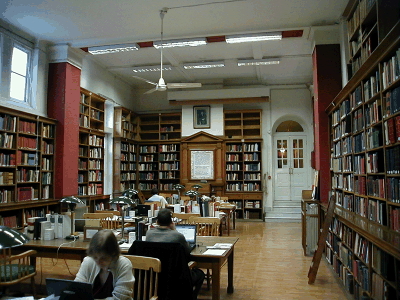
BSA facilities include one of the most important Classical and archaeological libraries in Greece (over 60,000 volumes), and the Fitch laboratory, the oldest archaeometric laboratory in Greece. The BSA also operates a branch at Knossos in Crete, including one of the island's main archaeological libraries.
The Marc and Ismene Fitch Laboratory, Fitch Laboratory for short, is a scientific laboratory for conducting technical investigation of materials obtained from archaeology. It is located in a separate building on the grounds of the premises at 52 Souedias Street, Athens. Having begun in 1974 in a storage facility, it was expanded into a two-story building in 1988. The laboratory is funded separately from the rest of the school. It has its own director, currently (2019) Evangelia Kiriatzi, its own research scientists, teaches its own courses, offers its own grants, and issues its own publications. It is, however, governed by the main school's Committee for Archaeology.
Fitch Laboratory was founded during a period of growing interest in establishing the provenience of pottery discovered during excavation. The method of archaeology established a sequence of layers at a site, which gave relative dates to the objects found in them; however, the method had limitations. Suppose that pottery in one region was similar to pottery at another, how was this similarity to be interpreted? Did invaders carry the pottery from one site to another? Were the similar pots trade exports? Did the pottery of one region serve as a model for the manufacture of pottery in another?
Answers to these questions were provided by the judgements of the lead excavators, but with no method of establishing provenience, these judgements were often highly controversial. For example, there are striking similarities between some Minoan and some Mycenaean pottery. Arthur Evans, Duncan Mackenzie and their supporters were proposing that Mycenaean pottery was a type of Minoan pottery. To the contrary, Carl Blegen and his supporters were affirming a mainland Greek origin for and importation to Crete of Mycenaean pottery. Given some of this pottery at a site, which was it, Minoan or Mycenaean, and how could one establish which?
Hub AI
British School at Athens AI simulator
(@British School at Athens_simulator)
British School at Athens
The British School at Athens (BSA; Greek: Βρετανική Σχολή Αθηνών) is an institute for advanced research, one of the eight British International Research Institutes supported by the British Academy, that promotes the study of Greece in all its aspects. Under English law it is a registered educational charity, which translates to a non-profit organisation in American and Greek law. It also is one of the 19 Foreign Archaeological Institutes defined by Hellenic Law No. 3028/2002, "On the Protection of Antiquities and Cultural Heritage in General," passed by the Greek Parliament in 2003. Under that law the 19 accredited foreign institutes may perform systematic excavation in Greece with the permission of the government.
The School was founded in 1886 as the fourth such institution in Greece (the earlier being the French, German, and American). For most of its existence, it focused on supporting, directing and facilitating British-based research in Classical Studies and Archaeology, but in recent years, it has broadened that focus to all areas of Greek Studies. It has made notable contributions in the fields of epigraphy and the history of Modern Greece.
It is defined by Hellenic law to be a "foreign archaeological school" with a very specific meaning. In addition to being trusted with antiquities in Greece, it serves as an agent for the Hellenic utilisation of British resources in Greece. Only the BSA can assign projects to British institutions, and it may only do so with permission of the Minister of Culture.
The BSA's activities include a regular programme of lectures and seminars, a series of scholarships and bursaries, the publication of a research journal, reports, monographs and online works, Athens-based courses for undergraduates, postgraduates and teachers, as well as archaeological fieldwork. The Directors, who have included many distinguished figures, have tended to be in Greece for only part of the year, keeping roles in the UK or elsewhere.
BSA facilities include one of the most important Classical and archaeological libraries in Greece (over 60,000 volumes), and the Fitch laboratory, the oldest archaeometric laboratory in Greece. The BSA also operates a branch at Knossos in Crete, including one of the island's main archaeological libraries.
The Marc and Ismene Fitch Laboratory, Fitch Laboratory for short, is a scientific laboratory for conducting technical investigation of materials obtained from archaeology. It is located in a separate building on the grounds of the premises at 52 Souedias Street, Athens. Having begun in 1974 in a storage facility, it was expanded into a two-story building in 1988. The laboratory is funded separately from the rest of the school. It has its own director, currently (2019) Evangelia Kiriatzi, its own research scientists, teaches its own courses, offers its own grants, and issues its own publications. It is, however, governed by the main school's Committee for Archaeology.
Fitch Laboratory was founded during a period of growing interest in establishing the provenience of pottery discovered during excavation. The method of archaeology established a sequence of layers at a site, which gave relative dates to the objects found in them; however, the method had limitations. Suppose that pottery in one region was similar to pottery at another, how was this similarity to be interpreted? Did invaders carry the pottery from one site to another? Were the similar pots trade exports? Did the pottery of one region serve as a model for the manufacture of pottery in another?
Answers to these questions were provided by the judgements of the lead excavators, but with no method of establishing provenience, these judgements were often highly controversial. For example, there are striking similarities between some Minoan and some Mycenaean pottery. Arthur Evans, Duncan Mackenzie and their supporters were proposing that Mycenaean pottery was a type of Minoan pottery. To the contrary, Carl Blegen and his supporters were affirming a mainland Greek origin for and importation to Crete of Mycenaean pottery. Given some of this pottery at a site, which was it, Minoan or Mycenaean, and how could one establish which?
Recent media