



Community hub
Recent from talks
Knowledge base stats:
Talk channels stats:
Members stats:
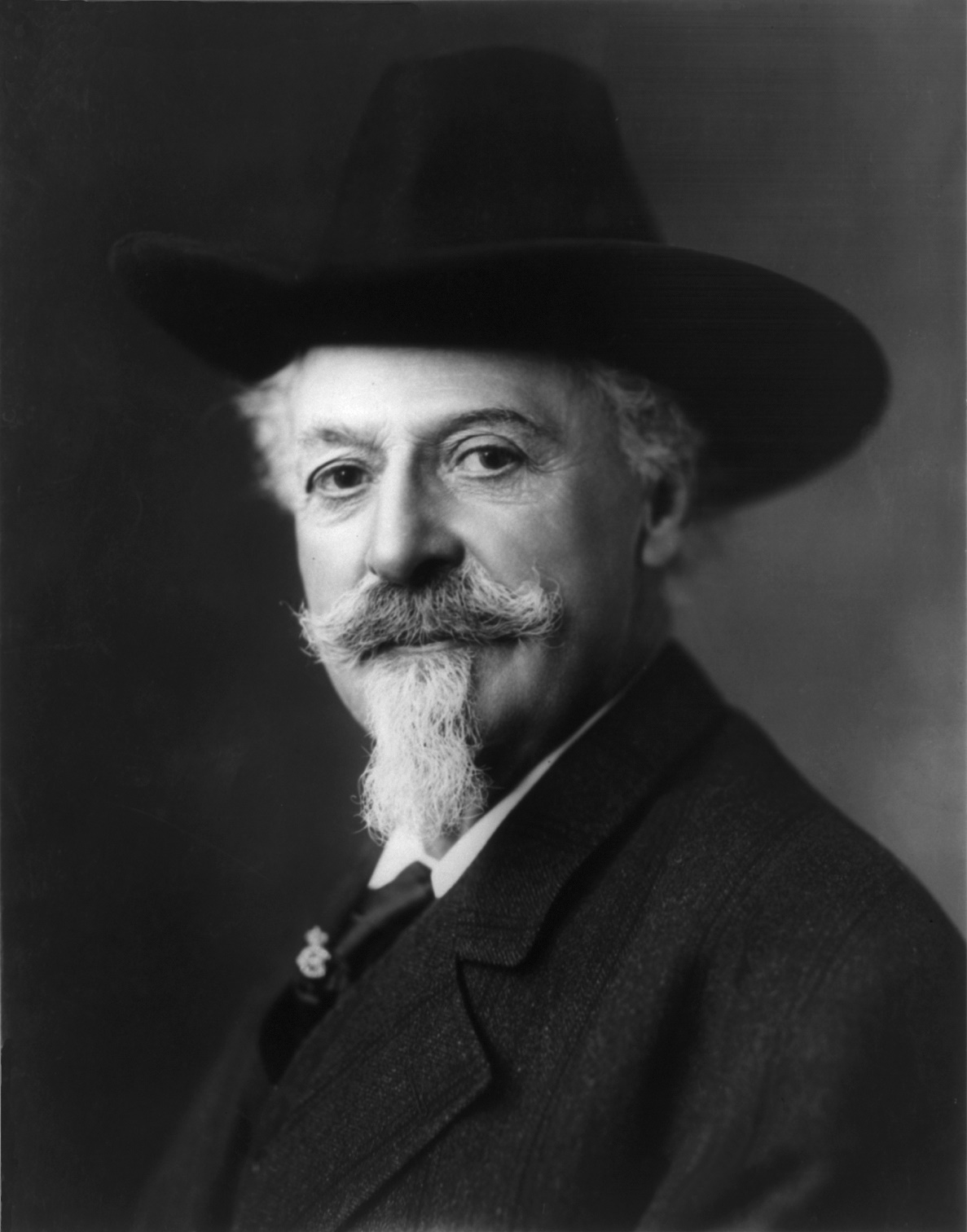
Buffalo Bill
William Frederick Cody (February 26, 1846 – January 10, 1917), better known as Buffalo Bill, was an American soldier, bison hunter, and showman. One of the most famous figures of the American Old West, Cody began performing at the age of 23. He performed in shows that displayed cowboy themes and episodes from the frontier and Indian Wars. He founded Buffalo Bill's Wild West in 1883, taking his large company on tours in the United States and, beginning in 1887, in Europe.
He was born in Le Claire, Iowa Territory (now the U.S. state of Iowa), but he lived for several years in his father's hometown in modern-day Mississauga, Ontario, before the family returned to the Midwest and settled in the Kansas Territory. Buffalo Bill started working at the age of 11, after his father's death, and became a rider for the Pony Express at age 15. During the American Civil War, he served the Union from 1863 to the end of the war in 1865. Later he served as a civilian scout for the U.S. Army during the Indian Wars. While he was initially awarded the Medal of Honor in 1872 for his actions in the Indian Wars, he was among 911 recipients to have the award rescinded in 1917. Congress reinstated the medals for Cody and four other civilian scouts in 1989.
Cody was born on February 26, 1846, on a farm just outside Le Claire, Iowa. His father, Isaac Cody, was born on September 5, 1811, in Toronto Township, Upper Canada, now part of Mississauga, Ontario, directly west of Toronto. Mary Ann Bonsell Laycock, Bill's mother, was born about 1817 in Trenton, New Jersey. She moved to Cincinnati to teach school, and there she met and married Isaac. She was a descendant of Josiah Bunting, a Quaker who had settled in Pennsylvania. There is no evidence to indicate Buffalo Bill was raised as a Quaker.[page needed] In 1847 the couple moved to Ontario, having their son baptized in 1847, as William Cody, at the Dixie Union Chapel in Peel County (present-day Peel Region, of which Mississauga is a part), not far from the farm of his father's family. The chapel was built with Cody money, and the land was donated by Philip Cody of Toronto Township. They lived in Ontario for several years.
In 1853, Isaac Cody sold his land in rural Scott County, Iowa, for $2,000 (equivalent to $76,000 in 2024), and the family moved to Fort Leavenworth, Kansas Territory. In the years before the Civil War, Kansas was overtaken by political and physical conflict over the slavery question in an episode called Bleeding Kansas. Isaac Cody was against slavery. He was invited to speak at Rively's store, a local trading post where pro-slavery men often held meetings. His antislavery speech so angered the crowd that they threatened to kill him if he did not step down. A man jumped up and stabbed him twice with a Bowie knife. Rively, the store's owner, rushed Cody to get treatment, but he never fully recovered from his injuries.
In Kansas, the family was frequently persecuted by pro-slavery supporters. Cody's father spent time away from home for his safety. His enemies learned of a planned visit to his family and plotted to kill him on the way. Bill, despite his youth and being ill at the time, rode thirty miles (48 km) to warn his father. Isaac Cody went to Cleveland, Ohio, to organize a group of thirty families to bring back to Kansas, to add to the antislavery population. During his return trip, he caught a respiratory infection which, compounded by the lingering effects of his stabbing and complications from kidney disease, led to his death in April 1857.
After his death, the family suffered financially. At age 11, Bill worked for the freight carrier Russel, Major, and Waddel as a "boy extra". On horseback, he would ride up and down the length of a wagon train and deliver messages between the drivers and workmen. Next, he joined Johnston's Army as an unofficial member of the scouts assigned to guide the United States Army to Utah, to put down a rumored rebellion by the Mormon population of Salt Lake City.
According to Cody's account in Buffalo Bill's Own Story, the Utah War was where he began his career as an "Indian fighter":
Presently the moon rose, dead ahead of me; and painted boldly across its face was the figure of an Indian. He wore this war-bonnet of the Sioux, at his shoulder was a rifle pointed at someone in the river-bottom 30 feet [9 meters] below; in another second he would drop one of my friends. I raised my old muzzle-loader and fired. The figure collapsed, tumbled down the bank and landed with a splash in the water. "What is it?" called McCarthy, as he hurried back. "It's over there in the water." "Hi!" he cried. "Little Billy's killed an Indian all by himself!" So began my career as an Indian fighter.
Hub AI
Buffalo Bill AI simulator
(@Buffalo Bill_simulator)
Buffalo Bill
William Frederick Cody (February 26, 1846 – January 10, 1917), better known as Buffalo Bill, was an American soldier, bison hunter, and showman. One of the most famous figures of the American Old West, Cody began performing at the age of 23. He performed in shows that displayed cowboy themes and episodes from the frontier and Indian Wars. He founded Buffalo Bill's Wild West in 1883, taking his large company on tours in the United States and, beginning in 1887, in Europe.
He was born in Le Claire, Iowa Territory (now the U.S. state of Iowa), but he lived for several years in his father's hometown in modern-day Mississauga, Ontario, before the family returned to the Midwest and settled in the Kansas Territory. Buffalo Bill started working at the age of 11, after his father's death, and became a rider for the Pony Express at age 15. During the American Civil War, he served the Union from 1863 to the end of the war in 1865. Later he served as a civilian scout for the U.S. Army during the Indian Wars. While he was initially awarded the Medal of Honor in 1872 for his actions in the Indian Wars, he was among 911 recipients to have the award rescinded in 1917. Congress reinstated the medals for Cody and four other civilian scouts in 1989.
Cody was born on February 26, 1846, on a farm just outside Le Claire, Iowa. His father, Isaac Cody, was born on September 5, 1811, in Toronto Township, Upper Canada, now part of Mississauga, Ontario, directly west of Toronto. Mary Ann Bonsell Laycock, Bill's mother, was born about 1817 in Trenton, New Jersey. She moved to Cincinnati to teach school, and there she met and married Isaac. She was a descendant of Josiah Bunting, a Quaker who had settled in Pennsylvania. There is no evidence to indicate Buffalo Bill was raised as a Quaker.[page needed] In 1847 the couple moved to Ontario, having their son baptized in 1847, as William Cody, at the Dixie Union Chapel in Peel County (present-day Peel Region, of which Mississauga is a part), not far from the farm of his father's family. The chapel was built with Cody money, and the land was donated by Philip Cody of Toronto Township. They lived in Ontario for several years.
In 1853, Isaac Cody sold his land in rural Scott County, Iowa, for $2,000 (equivalent to $76,000 in 2024), and the family moved to Fort Leavenworth, Kansas Territory. In the years before the Civil War, Kansas was overtaken by political and physical conflict over the slavery question in an episode called Bleeding Kansas. Isaac Cody was against slavery. He was invited to speak at Rively's store, a local trading post where pro-slavery men often held meetings. His antislavery speech so angered the crowd that they threatened to kill him if he did not step down. A man jumped up and stabbed him twice with a Bowie knife. Rively, the store's owner, rushed Cody to get treatment, but he never fully recovered from his injuries.
In Kansas, the family was frequently persecuted by pro-slavery supporters. Cody's father spent time away from home for his safety. His enemies learned of a planned visit to his family and plotted to kill him on the way. Bill, despite his youth and being ill at the time, rode thirty miles (48 km) to warn his father. Isaac Cody went to Cleveland, Ohio, to organize a group of thirty families to bring back to Kansas, to add to the antislavery population. During his return trip, he caught a respiratory infection which, compounded by the lingering effects of his stabbing and complications from kidney disease, led to his death in April 1857.
After his death, the family suffered financially. At age 11, Bill worked for the freight carrier Russel, Major, and Waddel as a "boy extra". On horseback, he would ride up and down the length of a wagon train and deliver messages between the drivers and workmen. Next, he joined Johnston's Army as an unofficial member of the scouts assigned to guide the United States Army to Utah, to put down a rumored rebellion by the Mormon population of Salt Lake City.
According to Cody's account in Buffalo Bill's Own Story, the Utah War was where he began his career as an "Indian fighter":
Presently the moon rose, dead ahead of me; and painted boldly across its face was the figure of an Indian. He wore this war-bonnet of the Sioux, at his shoulder was a rifle pointed at someone in the river-bottom 30 feet [9 meters] below; in another second he would drop one of my friends. I raised my old muzzle-loader and fired. The figure collapsed, tumbled down the bank and landed with a splash in the water. "What is it?" called McCarthy, as he hurried back. "It's over there in the water." "Hi!" he cried. "Little Billy's killed an Indian all by himself!" So began my career as an Indian fighter.