Hubbry Logo
search
logo
881372

Butlins Bognor Regis

logo
Community Hub0 Subscribers
Read side by side
from Wikipedia

Butlin's Bognor Regis is a holiday camp in the seaside resort of Bognor Regis, West Sussex, England. It lies 55.5 miles (89 km) south southwest of London. Butlin's presence in the town began in 1932 with the opening of an amusement park; their operation soon expanded to take in a zoo as well. In 1960, Billy Butlin opened his first post-war mainland holiday camp, moving both the amusement park and zoo into the new camp. The camp survived a series of cuts in the early 1980s, attracting further investment and again in the late 1990s when it was retained as one of only three camps still bearing the Butlin name. The camp has since seen a raft of new construction as the company moves from chalet towards hotel-based accommodation.

Key Information

History

[edit]
Butlins Recreation Shelter in the 1930s

In 1932, Butlin saw an opportunity to create a similar amusement park in Bognor Regis to the one he had in Skegness. Butlin purchased land on the corner of Lennox Street and the Esplanade, which had previously been the Olympian Gardens.[news 1] Butlin constructed his amusement park on the land and called it "Butlin's Recreation Shelter".[web 1] In 1928, Butlin had secured an exclusive license to sell Dodgem cars in Europe,[notes 1] and these were one of the first attractions in the shelter along with one-armed bandits.[web 1] The shelter was a popular venue with the local press of the time reporting that patrons could "meet the elite" there.[news 2]

The following year, Butlin opened a zoo on the seafront. It opened on 5 July and contained brown, black and polar bears, hyenas, leopards, pelicans, kangaroos, and monkeys.[news 1] The zoo had a snake pit as its star attraction where Togo the snake king would regularly give shows. For some time, the park in Bognor was run by Butlin's mother Bertha Butlin though she later left to run his park on Hayling Island. [notes 2]

During World War II, the park at Bognor was a cause for concern for Butlin. The park had always had a shooting range and during the late 1930s the targets were replaced with images of Hitler, Göring, Goebbels, and Ribbentrop. After the Battle of Dunkirk, Butlin became concerned that should the Germans invade the south coast, the first thing they might see was the gallery, making Butlin into a target.[notes 3]

Butlin's Holiday Camp

[edit]

In late 1959, Butlin was looking to open another camp in the town and reached a deal with Bognor Regis town council to purchase a 39-acre (16 ha) site at the east end of the promenade. The agreement was met with local opposition (as some of his previous camps had), so Butlin ran an advert in the local press advising that he would remove his "unsightly" fun fairs from the middle of promenade, if he was allowed to move them to his new site. Further to this, he commented that he would be willing to spend more on advertising the town than any of the local hoteliers had.[news 1][news 3]

Many local residents disliked the new camp, despite Butlin having created some 500 local jobs during the construction period. There were complaints that the site bore a resemblance to a prison, and that the town would have been better off if the site had been used for new housing.[news 2] During construction, one of the works that was required was the straightening of a stream known as the Aldingbourne Rife which formed a U shape onto the proposed site.[notes 4] However, due to a particularly wet winter, the river burst its banks and flooded the site, leaving it deep in mud. As well as the poor underfoot conditions, Butlin developed gout, which hindered his mobility.[notes 5] Those who worked on the site recalled vehicles becoming stuck due to the conditions, and mattresses in their plastic wrappings being used to form walkways throughout the camp.[news 2]

Butlins Bognor Camp in 1962

On 2 July 1960, Billy Butlin opened his new holiday camp at Bognor. The cost of construction was £2.5 million and due to the flooding the camp was not ready on its opening date. Butlin offered his patrons the chance to be re-sited at the Clacton camp instead; however, a number of guests opted to stay and help; those who did received a free bottle of Champagne as a reward. Once opened, the camp accommodated around 5,000 campers and another 5,000-day visitors.[web 2]

At its peak, the camp saw 6,000 guests moving in every Saturday whilst the last 6,000 left the same day. The camp had 1,300 staff to look after the needs of the guests, including the Redcoats.[notes 6] When the camp opened, all guests were catered on either full or half board basis; however, in 1968 Butlin handed running of the company to his son Bobby Butlin, who introduced self-catering accommodation as a means to reduce labour costs.[notes 7]

Butlin's Bognor was refurbished through the 1980s. In 1987, the camp was renamed Southcoast World following a £16.5 million spend on new and updated accommodation, the addition of a new indoor water complex and a new miniature steam railway.[web 2]

In 1998, as one of Butlin's three remaining locations, Bognor again underwent major refurbishment. The Southcoast World identity was dropped, and £45 million was invested in redevelopment. A Skyline Pavilion was added to the resort, providing a huge undercover area for year-round, weather-protected facilities. The Skyline Pavilion contained new shops, bars, restaurants and entertainment areas. The refurbishment also included further updates to the chalet accommodation, a redesign for the Redcoat uniform and the provision of a resort police constable to improve security. The camp was relaunched by pop star Ronan Keating in May 1999.[web 2] At the same time, the company dropped its use of the possessive apostrophe, changing from Butlin's to Butlins;[news 4] after the refurbishment, the resort was renamed as Butlins Resort Bognor Regis.[notes 8]

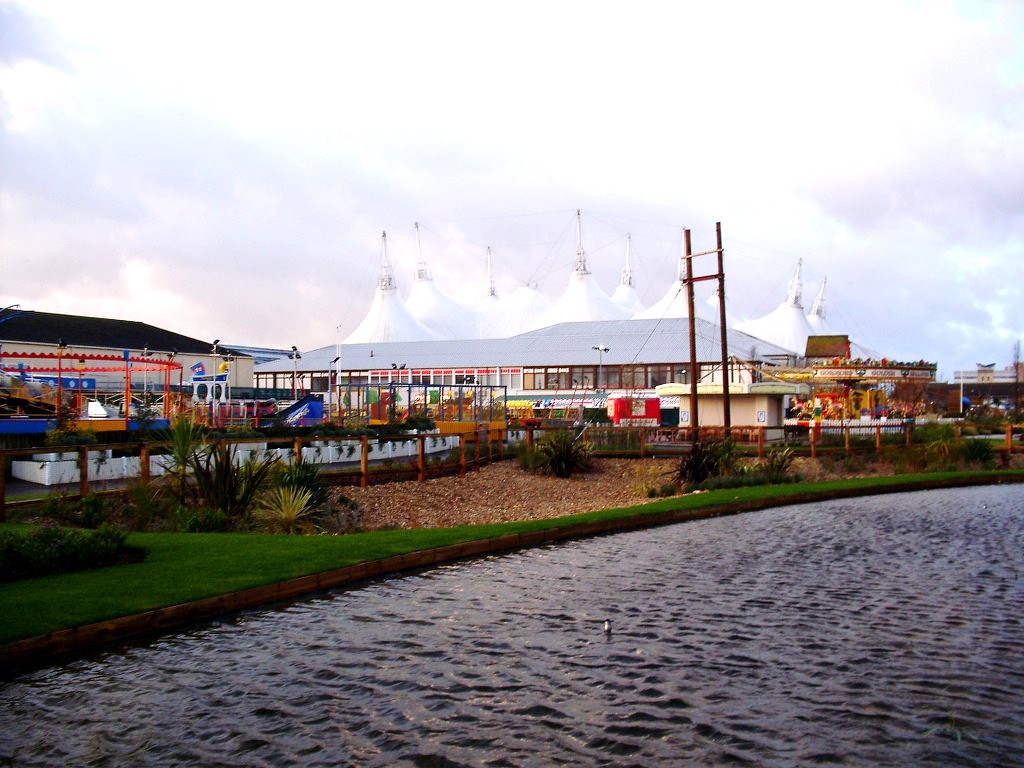
A panorama of the Butlins Bognor Resort taken from the Wave hotel

Butlins Resort Bognor Regis

[edit]

As of 2011, the resort catered for over 385,000 visitors per year with 300,000 being resident and 85,000 visiting for the day, and employed 850 staff each year, 35 of which made up the Redcoat team.[web 3] It was one of the largest employers in the Bognor Regis area as of 2007.[news 2]

Over the years, many of the attractions have been removed.[web 4] However the resort still retains a swimming pool and funfair. Today it provides a range of activities such as rock climbing, fencing, and archery. It also provides a wide range of entertainment, aided by the formation of strategic partnerships with popular brands, including The X Factor, Britain's Got Talent, Thomas & Friends, Brainiac: Science Abuse, Guinness World Records, Bob the Builder, Pingu and Angelina Ballerina.[web 3]

The site is 60 acres in size, and has been at the forefront of a move towards hotel accommodation by the company. Including the hotels, the camp has 4,800 beds available.[web 3]

Bognor Hotels

[edit]
Butlins Bognor Regis hotels

In 2005, further work was undertaken to update the resort with the introduction of the Shoreline Hotel. £10 million was spent on the hotel and its surrounding landscaped gardens. With big porthole windows, and a ship-like prow, the four-floor hotel was designed with a slightly nautical feel. The hotel provides 160 rooms of three different grades. in addition to the regular Butlin's facilities. The success of the Shoreline saw another hotel opening in the autumn of 2009. Costing £20 million to construct, the hotel was named the Ocean Hotel. In July 2012, Butlins' latest hotel opened; named the Wave Hotel, it is the first Butlins' hotel to feature self-catering apartments. A further three hotels are being planned as part of Bognor Regis Regeneration.[web 2][news 5][news 6]

Influence

[edit]

The camp was the location for a scene in the film The Beauty Jungle (1963) starring Janette Scott and Ian Hendry.[web 5] The film was produced by The Rank Organisation,[notes 9] which owned Butlin's Ltd itself from 1972 till 2000.[notes 10] Butlins Bognor Regis also served as the setting for the honeymoon scenes in the film The Leather Boys (1964) directed by Sidney J. Furie.

Musical acts to have played at Bognor include The Hollies, The Four Tops, Billy Ocean, Edwin Starr, The Osmonds and Fats Domino as well as later acts such as Atomic Kitten, Mis-Teeq, Olly Murs, and Peter Andre.[web 3]

Entertainment

[edit]

The original Bognor Regis camp featured Butlins Redcoats, a funfair, a ballroom, a boating lake, tennis courts, a sports field (for the three legged and egg & spoon races and the donkey derby), table tennis and snooker tables, amusement arcades, a theatre and arcades of shops.[web 2]

Bibliography

[edit]

References

[edit]
[edit]
Revisions and contributorsEdit on WikipediaRead on Wikipedia
from Grokipedia
Butlin's Bognor Regis is a seaside holiday resort in Bognor Regis, West Sussex, England, offering family-oriented accommodations, entertainment, and activities along the English Channel coast. Opened on 2 July 1960 by entrepreneur Billy Butlin at a construction cost of £2.5 million, the resort was built on a 39-acre site leased from the local council for 99 years and initially attracted over 30,000 visitors in its first season, despite delays from flooding during construction.[1][2] The resort's development began in the late 1950s as part of Butlin's expansion of holiday camps, which pioneered affordable, all-inclusive seaside vacations in post-war Britain with features like chalets, communal dining, and organized entertainment led by "Redcoats." Early investments by Billy Butlin in Bognor Regis dated back to 1932 with a seafront recreation shelter and the opening of Butlin's Zoo in 1933, laying groundwork for the full camp. By the end of the 1960s, it had become a key site in Butlin's portfolio, alongside resorts in Skegness and Minehead.[1][2] Significant modernizations occurred in the late 1990s and 2000s, including a multi-million-pound revamp in 1999 that introduced the Skyline Pavilion and the opening of three themed hotels: Shoreline in 2005, Ocean (with a spa) in 2009, and Wave in 2012. In 2019, a £40 million investment added the UK's largest indoor water park at the time, featuring slides, pools, and wave machines. The resort now borders the South Downs National Park, providing access to beaches and countryside, and includes diverse accommodations like deluxe lodges and apartments.[1][3] Owned by Bourne Leisure since 2000 and repurchased by the Harris family in a £300 million deal in 2022, Butlin's Bognor Regis attracted over 200,000 visitors annually as of 2019 and commits to operations until at least 2050. Current highlights include the 2024-opened £15 million PLAYXPERIENCE indoor activity centre with laser tag, VR arcades, and mini-golf; live entertainment at the refurbished Reds venue; a traditional fairground; family pools; and a new £1.8 million playground unveiled in 2025, emphasizing its role as a year-round entertainment hub.[4][1][3][2][5]

History

Origins and Pre-War Development

Butlin's presence in Bognor Regis began in 1932 when Billy Butlin opened the Butlin's Recreation Shelter on the corner of Lennox Street and the Esplanade.[1] This seaside amusement venue featured Dodgem cars, one-armed bandits, a mirror maze, laughing clowns, children's rides, and what was advertised as the largest range of slot machines on the coast.[1] The shelter served as an early hub for Butlin's expanding portfolio of fairground entertainments, drawing local and holiday visitors to the town's esplanade with affordable, novelty-based attractions that capitalized on the growing popularity of mechanical amusements in the interwar period.[1] In 1933, Butlin expanded the site by opening Butlin's Zoo adjacent to the shelter, enhancing its appeal as a family-oriented destination.[1] The zoo housed a variety of exotic animals, including lions, tigers, elephants, brown bears, black bears, polar bears, hyenas, leopards, pelicans, kangaroos, and monkeys, displayed amid a plasterwork Alpine range for dramatic effect.[1][6] These animals were sourced from international suppliers and circuses, reflecting the era's trade in wild specimens for British entertainment venues.[7] The opening was marked by publicity stunts, such as a staged "escaped lion" incident involving a lion named Rex, which generated widespread media attention and boosted visitor numbers.[7][8] Throughout the 1930s, the site evolved into a key component of Butlin's pre-war amusement empire, attracting day-trippers and holidaymakers with its blend of thrill rides and animal exhibits.[1] Additional facilities, including an expanded fairground with more rides such as carousels and novelty games, were introduced by the mid-decade to accommodate growing crowds.[9] By 1939, the Recreation Shelter and zoo had established Bognor Regis as a prominent stop in Butlin's network of seaside ventures, laying the groundwork for wartime repurposing.[1]

World War II and Post-War Period

In 1939, with the outbreak of World War II, the Butlin's Zoo in Bognor Regis was closed amid fears of German invasion along the south coast. The facility's exotic animals, including bears, hyenas, leopards, polar bears, kangaroos, pelicans, and monkeys, were dispersed to other collections to ensure their safety and prevent potential escapes during wartime disruptions.[1] The zoo and associated amusement facilities remained shuttered throughout the war, as Bognor Regis's coastal location placed it within a heavily fortified defensive zone against anticipated enemy landings. Billy Butlin, whose other holiday camps were requisitioned for military training, focused his wartime efforts on supporting the armed forces through catering and construction contracts, while the Bognor site lay dormant.[10] Following the war's end in 1945, Butlin envisioned expanding his holiday camp model to deliver affordable, all-inclusive family breaks to the British working class, inspired by the 1938 Holidays with Pay Act and the need for post-austerity leisure. This vision emphasized structured entertainment and communal activities to foster family bonding at low cost, transforming seaside holidays from luxury to accessible recreation.[11] For Bognor Regis, initial recovery efforts involved assessing the pre-war amusement site, but broader planning shifted toward a dedicated holiday camp to meet growing demand in the 1950s economic boom.[12] By the mid-1950s, Butlin pursued site acquisition in Bognor to realize this expansion, culminating in a key milestone in 1958 when the local town council granted a 99-year lease on a 39-acre plot for an annual rent of £12,000. Construction planning advanced amid post-war material shortages, but severe flooding from heavy rains in the late 1950s delayed groundwork and infrastructure development on the low-lying coastal land.[1][13] These challenges underscored the logistical hurdles of converting wartime-idle seaside areas into modern holiday facilities, setting the stage for the camp's eventual realization by 1959.

Establishment as a Holiday Camp

Construction of Butlins Bognor Regis began in October 1959 on a 39-acre site leased for 99 years at an annual cost of £12,000, with Billy Butlin overseeing the project alongside his wife Norah from a rented flat in the town.[1] The development, which cost £2.5 million, involved 500 staff members paid 8s 6d per hour to construct 1,600 chalets, plant 2,000 trees and 20,000 rose bushes, and divert a local river, though heavy rainfall hampered progress and caused delays.[14] These weather-related issues resulted in teething problems at launch, such as missing doors and windows in some chalets, prompting Butlin to offer free champagne to early guests and alternative camp stays to affected parties.[14] The holiday camp officially opened on 2 July 1960, attracting 3,000 visitors on the first day and over 30,000 in the inaugural season, with bookings reaching 500 per day by February of that year.[1] Initial facilities included modern two-story chalets equipped with running water, electric lighting, and verandas for outdoor relaxation, alongside two large dining halls named Kent and Windsor, a Playhouse Theatre for performances, an indoor swimming pool adorned with imitation parrots and monkeys, floodlit tennis courts, boating lakes, and the Viennese Ballroom for evening entertainment.[14] All amusements were included in the fixed-price package, emphasizing family-oriented value in the post-war era.[14] In its early years, the camp introduced Butlins' signature Redcoats—energetic resident entertainers who guided guests with a "ready breakfast smile," organized activities, and hosted competitions such as Knobbly Knees contests and talent shows that drew crowds from breakfast through to nightly dances.[14] Visitor experiences highlighted the camp's vibrant, all-inclusive atmosphere, with families enjoying structured fun amid colorful gardens and seaside proximity, though some noted the rushed construction's minor inconveniences.[14] By the mid-1960s, capacity had expanded to approximately 4,000 beds, supporting weekly turnovers of thousands and solidifying Bognor Regis as a key Butlins destination.[1]

Expansions and Renamings

In the 1980s, Butlins Bognor Regis faced significant challenges amid the broader decline of the Butlins brand, driven by the rise of affordable package holidays abroad and cultural mockery through television programs like Hi-de-Hi!, which portrayed the camps as outdated.[15] Despite closures of other sites such as Clacton and Filey in 1982, Bognor Regis survived as one of the remaining camps under Rank Organisation ownership, with investments including new fun pools and chalets to modernize facilities.[16] To revitalize the site, a major refurbishment occurred in 1987, involving a £16.5 million investment in updated accommodation and amenities, after which the camp was renamed Southcoast World as part of a rebranding effort that also affected the Skegness site, renamed Funcoast World.[16] This period marked a shift away from the traditional Butlins identity, with the name change reflecting Rank's attempt to reposition the holiday camps as more contemporary leisure destinations. Throughout the 1990s, under continued Rank ownership, the Butlins name was phased out in favor of "Holiday Worlds," signaling further corporate evolution amid ongoing industry pressures.[15] In 1999, the site underwent another significant overhaul, with £40 million invested in upgrades including refurbished chalets and the addition of a massive Skyline Pavilion—an indoor entertainment dome the size of a Wembley football pitch—designed to house shops, restaurants, and family activities year-round.[17] The camp reverted to the Butlins name, becoming Butlins Resort Bognor Regis, and was rebranded as part of the "Family Entertainment Resorts" initiative launched across the surviving sites.[16][17] The transition culminated in September 2000 when Bourne Leisure acquired the Butlins operations, including Bognor Regis, from Rank for £650 million plus up to £50 million in additional payments, enabling a renewed focus on family-oriented entertainment and resort-style holidays.[15][18] This ownership change supported further enhancements, such as improved indoor pools and chalet updates, solidifying the site's role as a modern family destination by the early 2000s.[16] In September 2022, Bourne Leisure sold Butlin's, including the Bognor Regis resort, back to the founding Harris family (led by Peter Harris) for £300 million, marking a return to family ownership and committing to ongoing operations and investments at the site.[4]

Facilities and Accommodation

On-Site Amenities

Butlins Bognor Regis occupies a 60-acre site along the seafront, featuring a central amusement park area integrated with fairground rides and recreational spaces designed for family enjoyment. The layout includes dedicated zones for water-based activities, adventure pursuits, and relaxation facilities, all accessible within the resort boundaries to provide a self-contained holiday experience.[19] The resort's swimming facilities center on an indoor family pool complex themed around British seaside elements, complete with a wave pool, tots' pool for young children, and multiple water slides such as the Helter Skelter, Stick of Rock, Racer Slides, Seaside Garden Rapids, Adrenaline Flume, and Family Raft Ride. These features cater to various age groups, with height and supervision requirements ensuring safety, and lifeguards present throughout. Adjacent to the pools, the fairground offers unlimited access to rides including carousels, waltzers, Waveswinger, and Rockin' Tug as part of standard breaks, though additional fees apply for go-karts and bungee trampolines.[20][21] A key recent addition is the PLAYXPERIENCE activity centre, a £15 million indoor facility spanning nearly 50,000 square feet that opened on 7 October 2024, offering nine interactive experiences across two floors. It includes four themed escape rooms tailored to different age groups, hi-tech mini golf courses, laser tag arenas, virtual reality challenges, and evening bar games like shuffleboard and glow pong, all bookable via activity tokens for family budgeting.[22][23] In April 2025, Butlin's opened the Skyline Gang Soft Play, its largest indoor soft play centre to date, at a cost of £1.8 million. This three-level facility caters to babies, toddlers, and juniors with climbing structures, slides, nets, sensory spaces, and interactive elements, accommodating up to 200 children, and includes an adjacent puppet theatre for performances.[24] Complementing these are the Ocean Spa, providing hydrotherapy pools, saunas, a crystal steam room, outdoor hot tub, foot spas, and relaxation areas for a two-hour session at £25 per person, with treatments like massages and facials available separately. Outdoor and adventure amenities encompass a climbing wall as part of aerial adventures, archery sessions for ages 8 and above, and fencing instruction, bookable in advance through the resort app to accommodate varying skill levels. The Reds entertainment venue underwent a refresh in 2025, enhancing its setup for family-oriented evening activities while maintaining its central role in the resort's leisure offerings.[25][26][27][28] Dining amenities focus on convenience with multiple food courts offering bottomless buffets at venues like Coral Beach and Ocean Drive, featuring unlimited breakfast and dinner options under dining plans. Papa Johns provides pizza delivery directly to tables via the B-Serve app, integrated as a new service for on-resort meals, alongside grab-and-go outlets for snacks and light bites.[29][3]

Hotels and Lodging Options

Butlins Bognor Regis offers a variety of modern lodging options, primarily centered around three themed hotels that cater to families and groups seeking convenient access to the resort's seaside location. The Shoreline Hotel, the first of these, opened on August 17, 2005, as a £10 million development featuring 160 rooms designed with a nautical, seaside theme to evoke a cruise liner experience.[30] Positioned closest to the coastline, it provides family-friendly rooms sleeping up to four, equipped with amenities such as tea and coffee facilities, mini coolers, and free WiFi, emphasizing comfort for younger children.[31] The Ocean Hotel followed in 2009, constructed at a cost of £20 million and targeted at families with its central location offering easy access to entertainment venues.[32] This seven-story property includes rooms for two to four guests, featuring plush furnishings, balconies with partial sea views in select units, and on-site facilities like a spa and restaurant to enhance the stay.[33] In 2012, the Wave Hotel opened as the resort's third hotel, costing £22.5 million and introducing self-catering apartments ideal for larger groups of four to six or more.[34] Its nautical-themed design includes open-plan lounge and dining areas, fully equipped kitchens with ovens and fridges, and corner balconies, providing a home-like option with en-suite bathrooms in premium units.[35] Beyond the hotels, the resort maintains traditional chalet accommodations dating back to the 1960s, alongside upgraded lodges and deluxe apartments for diverse preferences. These self-catering units, sleeping up to eight, include options like deluxe lodges with sea-view patios, equipped kitchens, and lounge areas to suit extended families.[36] Recent enhancements, such as the £2.4 million nautical revamp of Shoreline Hotel bedrooms in 2015 and ongoing refurbishments of over 200 accommodation units, have improved comfort levels across the site.[37] Hotels provide additional services like daily housekeeping, made-up beds on arrival, and limited room service availability to support guest convenience.[38]

Entertainment and Activities

Live Shows and Performances

The live shows and performances at Butlins Bognor Regis form a central pillar of the resort's entertainment offerings, featuring a mix of original productions, celebrity-led spectacles, and interactive family events hosted primarily by the iconic Redcoats.[39] These performances have evolved from the resort's early emphasis on communal, high-energy entertainment to contemporary partnerships with major television brands, ensuring broad appeal for all ages.[40] Redcoats, the resort's signature entertainers, serve as hosts, performers, and facilitators for many live events, engaging guests through singing, dancing, presenting, and DJing to create memorable experiences.[40] Originating in 1936 when Billy Butlin tasked engineer Norman Bradford with boosting guest participation at the Skegness camp—inspired by the visibility of Canadian Mounties' uniforms—the Redcoats adopted their distinctive red blazers to stand out and energize crowds.[40] At Bognor Regis, they lead shows at venues like the Reds entertainment space, incorporating live music, gameshows, party dances, and sing-along sessions as part of the daily programming.[40] Key performance spaces include Centre Stage, the primary late-night venue accommodating West End-style productions with live bands and theatrical spectacles, and Studio 36, a versatile 1,600-capacity hall equipped for immersive shows, including simulated live TV studio experiences and concerts.[41][42] Productions such as Iconic, a full-length musical journey celebrating global megastars with eye-popping visuals and an interval, exemplify the resort's commitment to high-quality, Broadway-inspired entertainment at Centre Stage.[43] Historically, Butlins entertainment at Bognor Regis has progressed from traditional variety acts and talent contests in the mid-20th century to strategic collaborations with popular media franchises.[2] A notable evolution came through partnerships with The X Factor, beginning around 2010, which brought winners like Ben Haenow, Matt Cardle, and Fleur East to perform in live "Reality All-Stars" shows, blending contestant performances with audience interaction to mirror the TV format.[44] These tie-ins, extended into summer lineups as recently as 2021, highlighted the resort's adaptation of broadcast talent competitions into on-site spectacles.[45] For 2025, the lineup emphasizes Saturday night specials with high-profile TV crossovers, including The Masked Singer Live at Studio 36, featuring costumed celebrity performers and audience guessing games in the evening.[39] Additional highlights comprise the family panto Snow White & Her Magnificent Friends and new additions like Iconic and Animals & Mythical Beasts by The Animal Guyz, all included in holiday packages to sustain the tradition of accessible, star-driven entertainment.[39]

Adventure and Family Attractions

Butlins Bognor Regis offers a range of thrilling adventure attractions designed to provide adrenaline-pumping experiences for families. The Splash Waterworld features looping water slides, adrenaline flumes, and rapids that cater to various age groups, including dedicated tot pools for younger children.[20][46] Unlimited fairground rides, such as waltzers, carousels, dodgems, and trampolines, are included in holiday packages, ensuring accessible fun for all family members without additional costs.[21][47] In 2025, the resort introduced the SKYLINE soft play area, a multi-level playground for children aged 5 and above, featuring epic climbing towers, thrilling tunnel slides, and interactive games as part of the Skyline Gang branded experience.[47] Family-oriented activities within the PLAYXPERIENCE indoor center, spanning nearly 50,000 square feet across two floors, include hi-tech mini golf courses like TechPutt, laser tag arenas for group battles, and escape rooms with themed challenges.[23] Outdoor pursuits such as archery sessions—for ages 8 and adults, with mini versions for 5-7 year olds—and fencing lessons using foam swords for younger participants provide opportunities for skill-building and physical engagement.[26][48][49] Children's programs emphasize age-appropriate, branded interactions to foster family bonding, including character photoshoots with popular figures like those from Peppa Pig and dedicated sessions in the Little Stars fairground area.[50][51] For younger visitors, soft play zones and baby/toddler swimming in shallow pools with mini slides support early development.[50] Accessibility features across these attractions include pool hoists, wet chairs for Splash Waterworld, lifts to upper play areas, and disabled toilets, with advance booking recommended for adapted needs.[52][53] Recent 2025 enhancements, such as all-inclusive options at PLAYXPERIENCE's café and bar, further improve convenience for family groups.[23]

Cultural and Economic Impact

Influence in Media and Culture

Butlins Bognor Regis has been depicted in various British films and television productions, often capturing the vibrant atmosphere of post-war holiday camps. The site served as the location for the honeymoon scenes in the 1964 film The Leather Boys, directed by Sidney J. Furie, where it portrayed a lively seaside escape for the protagonists.[54] In television, the 2003–2004 ITV documentary series Redcoats filmed extensively at Bognor Regis, following the lives of Butlins' entertainment staff over multiple seasons and highlighting their role in camp activities.[55] These portrayals underscore the camp's role as a quintessential setting for stories of leisure and social interaction in mid-20th-century Britain. Musical references to Butlins holiday camps, including Bognor Regis, emerged in the 1960s as part of the era's popular culture, reflecting the camps' communal sing-alongs and entertainment. The Trebletones released "Butlin Holiday" in 1961, a novelty single specifically promoting the Butlins experience with upbeat lyrics about camp festivities, which was distributed at the resorts to encourage repeat visits. Additionally, traditional camp songs like "Knees Up Mother Brown" and "Under the Bridges of Paris" became staples performed by Redcoats, influencing the light-hearted, participatory music style associated with British seaside holidays. Butlins Bognor Regis holds an iconic place in British seaside holiday traditions, helping to popularize affordable family vacations in the post-war period. Opened in 1960, it exemplified Billy Butlin's vision of self-contained resorts offering all-inclusive entertainment, which democratized seaside breaks for working-class families following the 1938 Holidays with Pay Act.[56] By providing structured activities and communal facilities, the camp contributed to the cultural shift toward organized family outings, embedding itself in collective memories of 1960s Britain as a symbol of accessible joy and escapism.[11] The site's influence extends to cultural artifacts and entertainment tropes, with memorabilia collections preserving its legacy. Private archives, such as that of collector Mark Banks, feature items like 1960s postcards, badges, and uniforms from Bognor Regis, illustrating the camp's role in shaping visual representations of holiday life. In broader media, Butlins-inspired tropes—such as enthusiastic hosts and rowdy group entertainments—were satirized in the BBC sitcom Hi-de-Hi! (1980–1988), loosely based on Butlins camps and drawing from creator Jimmy Perry's experiences as a Redcoat, thereby cementing the holiday camp as a comedic archetype in British television.[15]

Role in Local Economy

Butlin's Bognor Regis serves as the largest single employer in the area, supporting approximately 1,300 jobs (as of 2020) across various roles including hospitality, entertainment, and maintenance.[57] This workforce figure reflects updates following significant post-2011 investments and expansions, contributing to year-round employment stability in a region where seasonal tourism dominates.[58] As of 2020, the resort attracted around 350,000 visitors annually (comprising resident guests and day visitors), which sustains local tourism by drawing families and groups to the West Sussex coast.[57] These visitors generated an estimated £90 million in annual sales for the site (as of 2020), injecting vital revenue into the regional economy through spending on accommodations, activities, and off-site services.[57] Butlin's fosters partnerships with Bognor Regis businesses and institutions, such as collaborations with the University of Chichester for cultural and educational initiatives, enhancing economic ties since the resort's 2007 lease renewal with Arun District Council.[58][https://peninsulapartnership.org.uk/abd/wp-content/uploads/2012/12/Draft_Bognor_Regis_Seafront_Strategy.pdf] Economic studies from 2007 onward, including the 2009 Bognor Regis Seafront Strategy and DTZ's "Coastal West Sussex: Education-Led Regeneration" report, underscore the resort's role in driving regeneration through £39 million in investments between 2004 and 2009, which supported new visitor influxes and job creation.[58] Recent developments, including the £15 million PLAYXPERIENCE activity centre opened in October 2024, have created 30 additional jobs and are projected to further boost the local economy by attracting more day visitors and enhancing holiday packages for 2025 breaks.[22][https://www.experienceuk.org/blog/butlin%E2%80%99s-unveils-%C2%A315-million-playxperience-centre-at-bognor-regis-holiday-park] In January 2025, Butlin's announced a £1.8 million investment in a new soft play area and puppet theatre, expected to create further employment opportunities and increase family visitor numbers.[59] This investment aligns with ongoing efforts to integrate the resort with Bognor Regis's 360 tourism SMEs, potentially amplifying economic benefits amid improved regional connectivity.[60]

References

User Avatar
No comments yet.