Hubbry Logo
Billy OceanBilly OceanMain
Open search
Billy Ocean
Community hub
Billy Ocean
logo
8 pages, 0 posts
0 subscribers
Be the first to start a discussion here.
Billy Ocean
Billy Ocean
from Wikipedia

Key Information

Leslie Sebastian Charles MBE (born 21 January 1950), known professionally as Billy Ocean, is a Trinidadian-born British singer and songwriter. Between 1976 and 1988, he had a series of hit songs in the UK and internationally.

He achieved breakthrough success with the 1976 single "Love Really Hurts Without You". His second single was released under the stage name Billy Ocean, and peaked at no. 2 in the UK and no. 3 in Australia. In 1977, his single "Red Light Spells Danger" also peaked at no. 2. He released the single "Caribbean Queen (No More Love on the Run)" in 1984. In the UK, the song peaked at no. 6. In the U.S., it entered the Billboard Hot 100 at no. 85 but peaked at no. 1 ten weeks later. Ocean won the 1985 Grammy Award for Best Male R&B Vocal Performance for the song. It also charted in Australia, Canada, Ireland, New Zealand, South Africa and across Europe under three different titles. In 1985, "When the Going Gets Tough, the Tough Get Going" peaked at no. 1 in the UK and no. 2 in the U.S. the following year. In the same year, he achieved an American no. 1 with the single "There'll Be Sad Songs (To Make You Cry)". In 1988, his single "Get Outta My Dreams, Get into My Car" reached no. 1 in the U.S. and no. 3 in the UK.

Ocean was appointed Member of the Order of the British Empire (MBE) in the 2020 New Year Honours for services to music.

Early life and stardom

[edit]

Ocean was born on 21 January 1950 in Fyzabad, Trinidad and Tobago, to Hainsley Charles, a Grenadian musician,[1][2] and his wife Violet.[3][4] He moved to Romford, Essex, England, when he was 10 years old, shortly before Trinidad and Tobago became independent in 1962.[5] While also working as a tailor in London's Savile Row he sang regularly in a London nightclub.[2]

He was discovered by his first manager, John Morphew, who recorded a double A-side single at Pye Studios in London with a full orchestra. However, the ballad-singing style of Ocean was going out of fashion, and Morphew was unable to get any major label to release it, so remains unreleased. Ocean's father — who had countersigned the management contract as Ocean was underage — asked Morphew to release him from the recording contract, which he did without penalty. In 1969, he joined a local London band as lead vocalist, the Shades of Midnight, who were still active in 2024.[6] He recorded a David Myers and John Worsley composition, "Nashville Rain",[7][8] his first single, backed with "Sun in the Morning", in 1971 for Spark Records under the name Les Charles, and for two years fronted a studio band called Scorched Earth, with whom he released "On The Run" backed with "Super Woman, Super Lover" in 1974.[9]

In an interview with Myf Warhurst on ABC Radio Melbourne, Ocean stated that the story of his stage name being taken from the local Ocean Estate, Stepney in London's East End,[10] where he was living at the time, was incorrect. According to the interview, the name was derived from a local football team that was in his home town in Trinidad and Tobago, who called themselves "Oceans 11".[11]

International success

[edit]
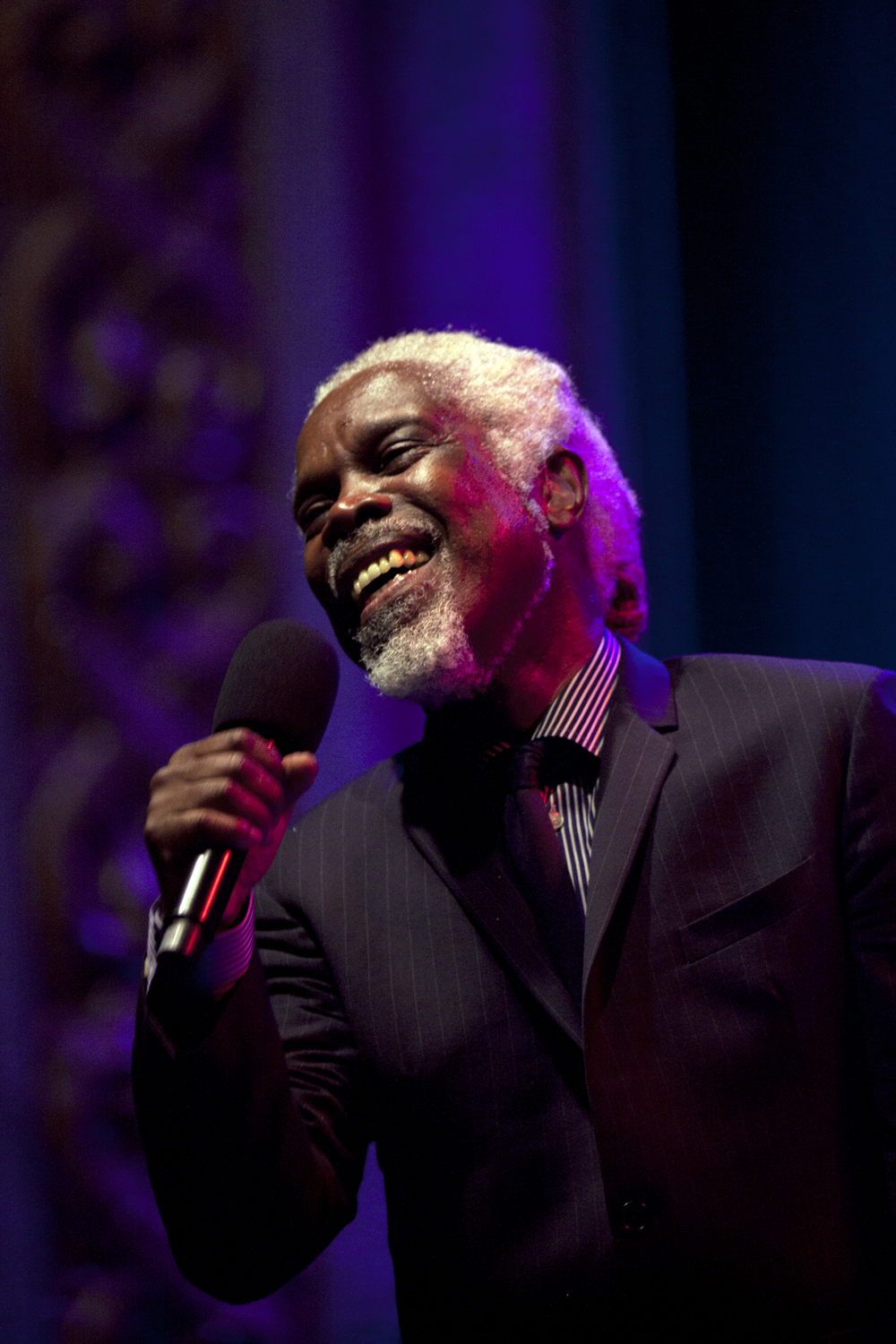
Ocean performing in New York City, 1988

Between 1976 and 1982, Ocean released four studio albums: Billy Ocean (1976), City Limit (1980), Nights (Feel Like Getting Down) (1981) and Inner Feelings (1982)[12] through his record label GTO, none of which scored success on any musical charts, aside from his biggest single up to that point, 1976's "Love Really Hurts Without You", which was a top 40 in the U.S. (no. 22) and a top 10 hit in the UK (no. 2).[12]

As Sony Music acquired GTO Records in 1978, Ocean was shifted to Jive from Epic, in which he received a second breakthrough in his career in the early 1980s. Late 1984 saw the release of his fifth studio album Suddenly and its main single, "Caribbean Queen (No More Love on the Run)" becoming successes on the charts.[12] "Caribbean Queen" became Ocean's first no. 1 single on both the U.S. Billboard Hot 100 and Hot Black Singles charts in late 1984, and the album debuted in the top ten, peaking at no. 9 on both the US Billboard 200 and the UK Albums Chart simultaneously in the U.S. and UK.[12] Suddenly reached gold in the UK, and was certified double platinum by the Recording Industry Association of America (RIAA). He also recorded with Scott Walker in 1984, singing harmony vocals on "Track Three" from Walker's eleventh studio album Climate of Hunter.[13]

“Caribbean Queen” scored Ocean two Grammy Award nominations, and he won the Grammy Award for Best Male R&B Vocal Performance at the 1985 Grammy Awards.[14] Ocean was later presented his award by Jeffrey Daniel of vocal group Shalamar on 620 Soul Train, a UK incarnation of the American musical variety television show Soul Train.[12] The album's title track also became a success, peaking at no. 4 in both the U.S. and the UK. The song "Loverboy" was a no. 2 U.S. success in 1985. Ocean appeared at Live Aid from JFK Stadium in Philadelphia in 1985, singing "Caribbean Queen" and "Loverboy".[15]

His sixth studio album Love Zone (1986) also sold well. It included the successful singles "When the Going Gets Tough, the Tough Get Going", the theme from the film The Jewel of the Nile (1985); this was a no. 1 success in the UK and a no. 2 in the United States; and "There'll Be Sad Songs (To Make You Cry)" (a U.S. no. 1 and a major UK success). Also included were the title track and "Love Is Forever", which were no. 10 and no. 16 U.S. successes for Ocean, respectively.[12] It also earned Ocean a second nomination for Best Male R&B Vocal Performance at the 1987 Grammy Awards.[14]

In February 1986, Ocean's music video for "When the Going Gets Tough, the Tough Get Going" was banned by the BBC, owing to such non-union members as the American actors Michael Douglas, Kathleen Turner and Danny DeVito, all three of whom were cast members of Romancing the Stone (1984) and The Jewel of the Nile (1985), miming to the backing vocals.[16][17][18] In 1987, he was nominated for the Brit Award for Best British Male Artist.[19] He was the most popular British R&B singer-songwriter of the early to mid- 1980s.[20]

Tear Down These Walls (1988), Ocean's next studio album, featured the no. 1 single "Get Outta My Dreams, Get into My Car", and the album was certified platinum.[2]

Later career

[edit]

Ocean's eighth studio album Time to Move On (1993) failed to produce any major successes, but his 1989 Greatest Hits collection has been a steady seller over the years, and his 1997 compilation album L.I.F.E. – Love Is for Ever made no. 7 on the UK Albums Chart. Ocean's last studio album for Jive Records was Time to Move On, which he recorded in Chicago with R&B star R. Kelly.[21]

In 2002, the University of Westminster in London awarded Ocean an honorary doctorate of music.[22] The awards ceremony took place in the Barbican Centre in London.[23] He continues to tour and record in Europe. The Tech Music Schools in London,[24] made up of Drumtech, Vocaltech, Guitar-X and Keyboardtech, Ocean is a patron.[24]

In February and March 2008 he toured Australia and the Far East. His ninth studio album Because I Love You was released on 2 February 2009.[25]

In April 2010, an 18-track compilation album was released in the UK by Sony Music titled The Very Best of Billy Ocean to tie in with a 30-date tour of the UK and Ireland. Featuring Ocean's biggest hits, the album debuted in the UK Albums Chart at no. 17.[26]

Ocean performing in Cambridge, England, 2014

In October 2007, Ocean commenced his first UK tour in more than 15 years.[27]

On 20 October 2010, Ocean was presented with the Lifetime Achievement Award at the MOBO Awards in London.[28] On 29 July 2011, Ocean became a Companion of the Liverpool Institute for Performing Arts.[29] His title was presented by Paul McCartney.[29]

In 2012, Ocean made a cameo in the British comedy film Keith Lemon: The Film as Lemon's father. In January 2016, Ocean appeared on The Tonight Show with Jimmy Fallon to perform some of his hits as part of a promo tour for his new album. Ocean toured the UK during March and April 2017.

Ocean recorded a new studio album in mid-2019 at Eve Studios in Stockport, working again with producer Barry Eastmond as co-writer. The album One World was to be released on 17 April 2020.[30] After a delay, it was later released on 4 September 2020.[31]

Personal life

[edit]

Ocean has lived in Sunningdale, Berkshire, England, with his wife, Judy, since 1978.[32] They have three children. His son played rugby sevens at the 2014 Commonwealth Games for Barbados.[33]

Ocean decided to become vegetarian after the 1989 death of his mother from ovarian cancer.[34] He is a member of the Rastafari movement.[35]

Honours

[edit]

Ocean was appointed Member of the Order of the British Empire (MBE) in the 2020 New Year Honours for services to music.[36][37]

Awards and nominations

[edit]

In 2002, he was presented with an honorary doctorate of music by the University of Westminster. In 2010, he received a Lifetime Achievement Award at the MOBO Awards. The following year, he became a Companion of the Liverpool Institute for Performing Arts.[29]

ASCAP Pop Music Awards

[edit]
Year Nominee / work Award Result Ref.
1986 "Caribbean Queen (No More Love on the Run)" Most Performed Songs Won [38]
"Loverboy" Won
"Suddenly" Won
1987 "There'll Be Sad Songs (To Make You Cry)" Won [39]
"When the Going Gets Tough, the Tough Get Going" Won
1988 "Love Is Forever" Won [40]
1989 "Get Outta My Dreams, Get into My Car" Won [41]

Billboard Music Awards

[edit]
Year Nominee / work Award Result Ref.
1985 Himself Top R&B Singles Artist Nominated [42]
Top R&B Album Artist Nominated
Top Adult Contemporary Artist Nominated
Suddenly Top R&B Album Nominated
"Suddenly" Top R&B Song Nominated
Top Adult Contemporary Single Nominated
1986 Himself Top Artist Nominated [43]
Top R&B Artist Nominated
Top R&B Singles Artist Nominated
Top R&B Album Artist Nominated
Top Billboard 200 Artist Nominated
Top Billboard 200 Artist – Male Nominated
Top Hot 100 Artist Nominated
Top Hot 100 Artist – Male Won
Top Adult Contemporary Artist Won
Love Zone Top R&B Album Nominated
"There'll Be Sad Songs (To Make You Cry)" Top Hot 100 Song Nominated
Top R&B Song Nominated
Top Adult Contemporary Single Nominated
"When the Going Gets Tough" Top Hot 100 Song Nominated
Top R&B Song Nominated
Top Adult Contemporary Single Nominated
"Love Zone" Top R&B Song Nominated
Top Adult Contemporary Single Nominated

Grammy Awards

[edit]

Billy Ocean has been nominated three times for a Grammy Award, with one win.[14]

Year Nominee / work Award Result
1985 "Caribbean Queen (No More Love on the Run)" Best Male R&B Vocal Performance Won[14]
Best R&B Song (shared with Keith Diamond) Nominated[14]
1987 Love Zone Best Male R&B Vocal Performance Nominated[14]

Ivor Novello Awards

[edit]
Year Nominee / work Award Result
1985 "Caribbean Queen (No More Love on the Run)" International Hit of the Year Nominated
1989 "Get Outta My Dreams, Get into My Car" Nominated
Most Performed Work Nominated
2018 Himself International Achievement Won

Pollstar Concert Industry Awards

[edit]
Year Nominee / work Award Result Ref.
1985 Himself Comeback of the Year Nominated [44]

Soul Train Music Awards

[edit]
Year Nominee / work Award Result
1987 Love Zone Album of the Year – Male Nominated

Discography

[edit]

Studio albums

See also

[edit]

References

[edit]
[edit]
Revisions and contributorsEdit on WikipediaRead on Wikipedia
from Grokipedia
Billy Ocean (born Leslie Sebastian Charles, 21 January 1950) is a Trinidadian-British , and best known for his blend of R&B, , and that produced several international hit singles during the and . Born in , , Ocean moved to London's East End as a child, where he was exposed to a mix of calypso, artists like and , and British rock acts such as and . His family relocated to , , at the age of ten, immersing him in the vibrant music scene of the era and shaping his early interest in performing. By his teenage years, Ocean was writing songs and performing in local clubs under various stage names before adopting "Billy Ocean," derived from the Ocean Estate in London's East End. Ocean's professional career began in the mid-1970s when he signed with GTO Records and released his self-titled debut album in 1976, featuring the Top 10 hit "," which also reached the Top 20. Transitioning to in the early 1980s, he achieved global breakthrough with the 1984 album Suddenly, propelled by the single "Caribbean Queen (No More Love on the Run)," which topped the and earned him the 1985 Grammy Award for Best Male R&B Vocal Performance—the first for a British in that category. Follow-up successes included "When the Going Gets Tough, the Tough Get Going" (1985), the theme for the film , which peaked at No. 2 on the , "There'll Be Sad Songs (To Make You Cry)" (1986), and "Get Outta My Dreams, Get Into My Car" (1988), a number-one hit from albums Love Zone (1986) and Tear Down These Walls (1988), respectively. Over his career, Ocean has sold more than 30 million records worldwide and received multiple gold and platinum certifications. In recognition of his contributions to music, Ocean was appointed Member of the Order of the British Empire (MBE) in the 2020 New Year Honours. He has remained active into the , releasing albums such as Here You Are (2016) and One World (2019), and continuing international tours, including headline runs in 2023 and 2025. Ocean resides in , , with his wife Judy, whom he married in 1978, and they have three children.

Early life

Childhood in Trinidad

Leslie Sebastian Charles, who would later adopt the stage name Billy Ocean, was born on 21 January 1950 in , a rural town in southern . He was the third of six children born to Hainsley Charles, a Grenadian immigrant and local musician known for playing guitar and composing calypsos as a village entertainer, and his wife Violet, a who also enjoyed singing. The family lived in humble, resource-limited conditions typical of many households in colonial Trinidad, a time when the island was transitioning from British rule toward greater self-governance amid an emerging oil economy that brought some industrial development to areas like but left rural communities grappling with poverty and social divisions. In this multicultural setting, blending African, Indian, European, and other influences, young grew up immersed in community traditions, including lively street life and festivals that highlighted Trinidad's rhythmic heritage. Music permeated Charles's early years, largely through his father's performances and the omnipresent calypso genre that defined Trinidadian culture. At around five or six years old, a family friend gifted him a blue , on which he learned basic chords from a local blind musician, while his father arranged for him to receive a steel drum, allowing him to experiment with the island's iconic percussive sounds. His mother actively encouraged his budding talents by having him sing to her, and under the guidance of his headmaster, he performed in competitions across the , often as the sole boy in a of girls. These formative experiences in a setting of scarcity instilled a deep appreciation for and that would underpin his future musical pursuits.

Move to England and early career

Around the age of seven, Billy Ocean's family emigrated from Trinidad to London's East End (), where he faced significant cultural challenges adjusting from the predominantly non-white society of Trinidad to a predominantly environment. He later described the experience as disorienting, noting that his school had around 1,000 white students and only four Black students, a stark contrast to the social structure he knew in Trinidad. The family then relocated to , , around the age of eight, seeking better economic opportunities in the British economy. After leaving school around age 16, Ocean took up an apprenticeship as a on London's , working for firms like to learn the trade at his mother's insistence. To support his family, he also labored in the garment industry's rag trade and on the assembly line at the in , often working night shifts for several years. Ocean's initial foray into music came as a teenager, when he began singing in nightclubs under his birth name, Les Charles. In 1969, at age 19, he joined the R&B group Shades of Midnight as , performing cover songs in venues like the Blue Coat Boy Inn near Street until the band's initial disbandment in 1972. The group, originally formed in the as a outfit, reformed with a new lineup in 2003 and remains active as of 2024, occasionally referencing Ocean's early contributions. Ocean adopted his stage name around this time, drawing "Ocean" from the name of a local football team, , for which his father had played in Trinidad—debunking persistent myths that it derived from London's Ocean Estate in . His Trinidadian roots subtly shaped his emerging R&B style, blending influences with British and American sounds he encountered in .

Initial musical endeavors

In the early 1970s, Leslie Sebastian Charles (who later adopted the stage name Billy Ocean) began his recording career with modest ambitions in London's burgeoning music scene. His debut single, "Nashville Rain," backed with "Sun in the Morning," was released in 1971 on Spark Records, showcasing a ballad-oriented style that drew from emerging influences but struggled to gain traction. The following year, he followed with "Reach Out a Hand," another Spark Records release that similarly received limited attention, highlighting the challenges of breaking through as an independent artist amid a shifting pop landscape dominated by rock and emerging sounds. Charles's initial professional steps were supported by his first manager, John Morphew, who facilitated a recording session at Pye Studios in for a double A-side single backed by a full , though it failed to achieve commercial release or . Around 1974, he fronted the studio band for their single "On the Run," an effort that blended raw energy but also met with negligible sales and radio exposure. These early endeavors were marked by unreleased demos and experimental tracks, often crafted in makeshift sessions, as Charles navigated the competitive underbelly of the city's clubs and studios while holding day jobs as a to sustain himself. By 1975, Ocean signed with GTO Records, marking a pivotal shift toward a more structured solo path under the name Billy Ocean, and began preparing material with producer Ben Findon, including tracks that would define his nascent sound. His performance style during this period fused R&B and grooves with calypso rhythms rooted in his Trinidadian heritage, creating a distinctive Caribbean-inflected vibe that set him apart in London's circuit. Despite persistent hurdles like sparse and disappointing sales for releases such as his GTO debut "Tell Him to Move Over," Ocean demonstrated resilience by gigging relentlessly in East End venues and refining his craft through live sets that emphasized emotive vocals and rhythmic fusion. This tenacity in the face of early setbacks laid the groundwork for his evolving artistry, even as financial instability from low-paying session work tested his commitment.

Musical career

Breakthrough and early hits

Billy Ocean achieved his breakthrough in 1976 with the release of his debut single "Love Really Hurts Without You," which showcased his soulful R&B style influenced by Motown and Caribbean rhythms. The track, co-written by Ocean and producer Ken Gold, climbed to number 2 on the UK Singles Chart and number 22 on the US Billboard Hot 100, marking his first major commercial success and establishing him as a rising talent in the British music scene. That same year, Ocean released his self-titled debut album on GTO Records, featuring tracks such as "Stop (Think Again)" and "Do You Know (What You Do)," both of which highlighted his songwriting and in a blend of , , and pop. While the album achieved modest sales and did not reach the upper echelons of the charts, it helped build a dedicated fanbase in the UK and introduced Ocean's production involvement, often collaborating closely with engineers to shape his sound. Follow-up singles sustained his momentum through the late , including "Red Light Spells Danger" in 1977, which peaked at number 2 on the UK Singles Chart and further demonstrated Ocean's knack for crafting emotive, danceable soul anthems co-written with . In 1980, "Stay the Night" appeared as a single from his City Limit, reaching number 42 on the UK Singles Chart and signaling his growing appeal in club scenes. Ocean's early songwriting credits, including these hits, underscored his role as both performer and creator, often penning lyrics that drew from personal experiences of and longing. In 1981, Ocean transitioned labels, moving from GTO Records in the UK to for broader international distribution, culminating in the release of his Nights (Feel Like Getting Down). The title track served as a preview single, peaking at number 7 on the US chart and number 4 on the US chart, exemplifying Ocean's production input alongside co-writer Nigel Martinez, with its upbeat grooves bridging his early roots to emerging pop sensibilities. This shift laid the groundwork for his expanded reach beyond the market.

International success and peak years

Ocean's international breakthrough came with his 1984 album Suddenly, released on after signing with the label in 1983, which marked his shift toward a more polished pop-R&B sound and established him as a major artist in the . Produced primarily by Keith Diamond, the album peaked at number 9 on both the and the US Billboard 200. Its lead single, "Caribbean Queen (No More Love on the Run)," became Ocean's first US number-one hit on the , holding the top spot for two weeks, while reaching number 6 in the UK. The track earned Ocean the 1985 Grammy Award for Best Male R&B Vocal Performance, making him the first British artist to win in that category. This success with Suddenly propelled Ocean's global profile and focus on the US market. His 1986 album Love Zone further solidified his commercial peak, featuring the title track that reached number 10 on the US Billboard Hot 100. The standout single "When the Going Gets Tough, the Tough Get Going," written by Ocean with co-writers and serving as the theme for the film The Jewel of the Nile, topped the UK Singles Chart for four weeks and hit number 2 in the US. However, the song's music video, featuring actors Michael Douglas, Kathleen Turner, and Danny DeVito, was banned by the BBC due to its use of non-union performers, limiting its UK television exposure. Another key track from the album, "There'll Be Sad Songs (To Make You Cry)," also reached number 1 on the US Billboard Hot 100, underscoring Ocean's dominance in the R&B and pop charts. Ocean's momentum continued into 1988 with Tear Down These Walls, produced with input from Mutt Lange on select tracks, which debuted at number 8 on the and number 18 on the US 200. The album's lead single, "Get Outta My Dreams, Get into My Car," co-written by Ocean and Lange, became his third US number-one hit and topped the UK Singles Chart. During this period, Ocean performed at the 1985 concert in , delivering "Caribbean Queen" and "Loverboy" to a global audience of millions. By the late 1980s, Ocean had sold over 30 million records worldwide, driven largely by these multi-platinum albums and collaborations with producers like Diamond and Lange that blended soulful vocals with synth-driven pop.

Later career and recent tours

Following the commercial peak of his 1980s work, Billy Ocean's 1990s output included his eighth studio album, Time to Move On, released on June 8, 1993, by . Recorded in with contributions from , the album blended and soul but achieved limited commercial success compared to his earlier releases. In the , Ocean focused more on live performances, embarking on his first tour in over 15 years starting in October 2007, featuring his daughter Cherie on backing vocals alongside dates in , the , , and the . This resurgence continued with tours in and the in 2008, followed by an extensive 30-date run across the and in 2010. The 2010s saw Ocean maintain visibility through compilations and media appearances, including the release of The Very Best of Billy Ocean on April 26, 2010, by , which debuted at number 17 on the and later achieved platinum certification for over 300,000 units sold. He made a as Keith Lemon's father in the 2012 Keith Lemon: The Film, performing "When the Going Gets Tough, the Tough Get Going." In January , Ocean performed a medley of "Suddenly" and "Caribbean Queen" on Starring Jimmy Fallon, marking a rare US television spotlight. That same year, the two-disc compilation Here You Are: The Best of Billy Ocean was released on May 6 by , featuring newly recorded covers of soul classics alongside his hits. Ocean's 2020s career emphasized new music and global touring, beginning with his eleventh studio album, One World, released on September 4, 2020, by after a delay from its original April date due to the ; the 12-track set included originals like "We Gotta Find Love" and addressed themes of unity. In September 2024, he announced a 2025 headline tour titled The Very Best of Billy Ocean, with initial dates in June selling out and prompting additional shows in , , Newcastle, , and other cities due to demand. Ocean extended his One World Tour to in September-October 2025, performing in cities including (September 13), (September 15), (September 25), and (September 23), where reviews praised his enduring vocal delivery of classics like "Caribbean Queen" alongside newer material at age 75. A September 29, 2025, concert review highlighted the tour's blend of high-energy hits and emotional depth, affirming his sustained appeal as a live performer. In October 2025, Ocean was announced as headliner for the opening night of the Darley Park Weekender on August 21, 2026, in , , with special guest . At 75, Ocean remains an active touring artist, prioritizing live shows that mix his timeless 1980s anthems with selections from recent releases.

Personal life

Family and residence

Ocean married his wife, Judy Bayne, in 1978 after meeting her in during his teenage years. The couple, who first knew each other as school friends, have maintained a stable partnership that has supported Ocean's professional life amid his rise to fame. They have three children together: daughters and Cherie, and son Anthony. The couple also experienced the loss of their first son in infancy. Cherie has occasionally joined her father as a backing singer on tour, contributing to his performances. Their son, Anthony Bayne-Charles, represented in at the , where he played against teams including and . In 1978, Ocean and his family relocated to in , , establishing it as their long-term home despite his Trinidadian roots. This move coincided with the early stages of his music career and has allowed the family to live relatively privately in the affluent village. Ocean's family has been instrumental in providing emotional stability throughout his career, prompting him to take an extended break in the 1990s to help raise his children, a decision he later described as one he would repeat without hesitation. The family has largely stayed out of the public eye, focusing on personal milestones rather than media attention.

Lifestyle and beliefs

Billy Ocean adopted a vegetarian diet following the death of his mother from ovarian cancer in 1989, a pivotal event that prompted him to prioritize his own well-being. In a 2015 interview cited in a 2024 article, he reflected, "When my mother died from ovarian cancer in 1989, it transformed my life... I realized I had to take care of myself... I became more spiritual and just went off meat." He has since promoted the benefits of a plant-based lifestyle in various interviews, emphasizing avoidance of processed foods and the physical demands of performing, stating, "When you’re on stage, giving everything you have, it does require physical, mental and spiritual energy." This choice, made over 35 years ago, aligns with his broader commitment to health-conscious living. Ocean is a member of the Rastafari movement, which he began practicing around 1989, viewing it as an anchor that provides discipline and grounds his life amid the music industry's challenges. He describes Rastafari not as a trend but as a form of Christianity centered on personal study and responsibility, stating in a 2010 interview, "Rastafarians are Christians, and it's up to you, of your own accord, to learn. I base my family life on that." Without formal church affiliation, his beliefs emphasize themes of love and unity, which permeate his music, as seen in the overarching message of his 2020 album One World: "One world, we've got to find love all over the world, the balance." In a 2019 discussion, he affirmed, "I am Christian, that is what being Rasta is all about," highlighting its role in maintaining personal integrity. Ocean engages in low-profile philanthropy, particularly supporting music education through mentoring young artists. He has expressed enjoyment in low-key performances and guidance sessions at institutions like Tech Music Schools, where he shares his experiences to inspire emerging talent. His efforts also extend to causes connected to his heritage, reflecting a commitment to giving back quietly without seeking publicity. At age 75 in 2025, Ocean maintains a fitness regimen essential for his ongoing international tours, delivering energetic performances that showcase his enduring vitality. In reflections on work-life balance post-fame, he has spoken of intentionally stepping away from music in the early for five years to focus on , a decision he would repeat, prioritizing personal fulfillment over career pressures. This approach, influenced by , allows him to sustain a simple, grounded lifestyle while selectively returning to the stage.

Recognition

Honours

In recognition of his enduring contributions to music, Billy Ocean was appointed Member of the (MBE) in the for services to music. Ocean received an honorary Doctor of Music from the in on 11 November 2002, acknowledging his significant impact on the music industry and culture. On 29 July 2011, he was named a Companion of the (LIPA), with the honor presented by Sir during the institution's graduation ceremony. Additionally, Ocean was awarded the MOBO Lifetime Achievement Award on 20 October 2010 at the Music of Black Origin ( in , celebrating his lifetime contributions to music as a non-competitive distinction. As of November 2025, no further formal honors have been bestowed upon Ocean following the 2020 MBE.

Awards and nominations

Billy Ocean's competitive awards reflect his prominence in the pop and R&B genres during the 1980s, with one Grammy win and three nominations overall. His sole Grammy victory came at the in 1985 for Best Male R&B Vocal Performance for the single "Caribbean Queen (No More Love on the Run)," which was also nominated that year for Best R&B Song; this marked a highlight tied to his breakthrough international hit. also nominated him for Best Male R&B Vocal Performance in 1987 for "," underscoring his consistent recognition in vocal excellence during his peak commercial years. Beyond the Grammys, Ocean earned multiple ASCAP Awards for most performed songs from his tracks, highlighting the enduring radio and chart impact of his songwriting. His accolades peaked in the to mirror his global , though no significant new competitive nominations have occurred since 2020 as of 2025.

Awards and nominations

Grammy Awards

Billy Ocean earned one Grammy Award and three nominations during the , all centered in R&B categories that underscored his vocal prowess and songwriting in the genre. His sole win came at the in 1985 for Best Male R&B Vocal Performance for the single "Caribbean Queen (No More Love on the Run)," the lead track from his breakthrough album Suddenly. That same year, he received a nomination for Best R&B Song (shared with Keith Diamond) in recognition of the composition's impact. In 1987, Ocean was nominated again at the for Best Male R&B Vocal Performance, this time for "Love Zone," the title track from his follow-up album. These honors marked the height of his commercial and critical success in R&B during the decade, reflecting his smooth fusion of soul, pop, and influences. Ocean did not submit work for Grammy consideration after 1990, aligning with a shift toward more selective touring and releases in his later career.

ASCAP Pop Music Awards

Billy Ocean earned multiple ASCAP Pop Music Awards for Most Performed Songs between 1985 and 1989, recognizing the exceptional airplay and commercial success of his songwriting during his commercial peak. These included awards for "Caribbean Queen (No More Love on the Run)," "Loverboy," "Suddenly," "There'll Be Sad Songs (To Make You Cry)," "When the Going Gets Tough, the Tough Get Going," and "Get Outta My Dreams, Get Into My Car." These accolades positioned Ocean as one of the leading songwriters in pop and R&B, underscoring his contributions to the era's mainstream sound through consistent performance metrics.

Billboard Music Awards

Billy Ocean's impressive chart performance on Billboard during the mid-1980s garnered him notable recognition through the publication's year-end awards, which honored top artists based on sales and airplay metrics. In the 1986 Billboard awards, Ocean was ranked as the top male pop singles artist, driven by his three consecutive Top 10 hits—"There'll Be Sad Songs (To Make You Cry)" (No. 1), "When the Going Gets Tough, the Tough Get Going" (No. 2), and "Love Zone" (No. 10)—from his platinum-certified album Love Zone. He also placed third among top Black singles artists that year, underscoring his crossover appeal in both pop and R&B genres. These honors were fueled by his string of U.S. No. 1 hits, including "Caribbean Queen (No More Love on the Run)" from 1984, which peaked at No. 1 on the Hot 100 and topped the Black Singles chart. Ocean earned additional nominations in the for Love Zone and its singles across 1986 and 1987, as well as for his 1988 album Tear Down These Walls and "Get Outta My Dreams, Get Into My Car" (No. 1 Hot 100), reflecting sustained commercial momentum. He reportedly received over 20 nominations overall between 1985 and 1987, though specific categories beyond year-end rankings remain limited in archival records. Following the formal launch of the televised in 1990, Ocean did not secure further wins, aligning with the decline in his U.S. chart dominance after the 1980s.

Ivor Novello Awards

Billy Ocean earned acclaim from the , which celebrate outstanding songwriting in the UK . At the 1985 , Ocean received a for International Hit of the Year for "Caribbean Queen (No More Love on the Run)," co-written with Keith Diamond, acknowledging its breakthrough success across international markets. In 1989, he received two nominations at the for "Get Outta My Dreams, Get Into My Car," co-written with Robert John "Mutt" Lange: Most Performed Work and International Hit of the Year. In 2018, Ocean was awarded the Ivor Novello Award for International Achievement in recognition of his international success and the impact of his songwriting career. These achievements underscored Ocean's role in elevating British songwriting to global prominence during the and beyond, demonstrating his ability to create universally appealing hits that resonated beyond the .

Other notable awards

In 2010, Billy Ocean received the Lifetime Achievement Award at the , recognizing his enduring contributions to music of black origin as a pioneering Trinidadian-British artist. This honor, presented during the ceremony at the Echo Arena in and broadcast live by the , highlighted his career spanning decades, including multiple chart-topping hits and over 30 million records sold worldwide. Ocean's acceptance speech expressed gratitude for the recognition, underscoring the award's significance in celebrating black music excellence. Ocean has continued to receive recognition for his contributions, including the Award for International Achievement in 2018. As of November 2025, no additional major music awards have been announced since then, though he continues to perform and release music, maintaining his legacy through touring and new material.

Discography

Studio albums

Billy Ocean has released ten studio albums throughout his career, beginning with his self-titled debut in 1976 and culminating in One World in 2020. His early albums on GTO and Epic labels marked his entry into the music industry with and R&B influences, achieving modest commercial reception. The mid-1980s shift to brought mainstream breakthrough, with albums like Suddenly, , and Tear Down These Walls reaching high chart positions in the and , earning platinum and gold certifications for strong sales. Later releases, including Time to Move On, Here You Are, and One World, reflect a return to independent and limited distribution, receiving positive critical feedback but lower commercial impact. Overall, Ocean's studio highlights his evolution from UK artist to international pop-R&B star, with cumulative album sales exceeding several million units globally, driven primarily by his output.
AlbumRelease YearLabelUK PeakUS PeakCertifications
Billy Ocean1976GTO48
City Limit1980Epic
Nights (Feel Like Getting Down)1981Epic62
Inner Feelings1982Epic
Suddenly1984Jive99US: 2× Platinum; UK: Gold
1986Jive210US: Platinum
Tear Down These Walls1988Jive421US: Gold; UK: Gold
Time to Move On1993Jive
Here You Are20134
One World2020BMG14
The hit singles from these albums, such as "Caribbean Queen" from Suddenly and "There'll Be Sad Songs (To Make You Cry)" from , contributed to their commercial success but are detailed in the singles section.

Compilation albums

Billy Ocean's compilation albums primarily serve as retrospective collections of his most enduring hits, curated to appeal to longtime fans and introduce his music to new audiences, often aligning with touring schedules. These releases emphasize his breakthrough success in the , featuring tracks like "Caribbean Queen (No More Love on the Run)" and "Suddenly" without delving into full studio album tracklists. The earliest significant compilation, Greatest Hits, was released on October 16, 1989, by . It peaked at number 4 on the and remained on the chart for 17 weeks. Certified by the BPI in December 1989 for over 300,000 units sold in the , the album solidified Ocean's commercial legacy by aggregating his key singles from the mid-. In 2010, issued The Very Best of Billy Ocean, a single-disc overview of his career highlights spanning the and . The album debuted at number 17 on the and charted for 7 weeks, selling over 100,000 copies in the by 2010. It was later certified by the BPI in 2025 for exceeding 300,000 units. Released to coincide with a and tour, it provided a concise entry point to Ocean's pop and R&B catalog. The Here You Are: The Best of Billy Ocean, a two-disc set from released on April 29, 2016, combines greatest hits with Ocean's covers of personally influential tracks. It achieved Ocean's highest chart position for a compilation at number 4, spending 12 weeks on the Official Albums Chart and marking his strongest performance since 1988. Tied to a promotional tour, the release highlighted both commercial peaks and artistic inspirations without introducing new original material. In 2021, released Love Really Hurts Without You: The Greatest Hits of Billy Ocean, a 46-track compilation spanning his career. It did not chart significantly but served as an extensive retrospective. Additional compilations include reissues of the 1984 album Suddenly—such as the 2011 Cherry Red expanded edition with remixes—and multi-album box sets like The Ultimate Collection (2004) and (1997, which peaked at UK #7). No new compilation albums have appeared since 2021 as of November 2025, maintaining focus on these core retrospectives for fan engagement during live performances.

Singles

Billy Ocean has released over 20 singles throughout his career, primarily achieving chart success in the UK and markets during the 1970s through 1990s, with a focus on R&B, , and pop genres. His breakthrough came with early hits in the UK, followed by international breakthroughs in the via in the 1980s, where several tracks reached the top of the Hot 100. Later releases, including those from his 2020 album One World, have been more album-oriented without significant chart peaks. In 2021, he released the single "" featuring and Ruti. Key singles include his debut hit "Love Really Hurts Without You" (1976), which peaked at No. 2 on the UK Singles Chart and No. 22 on the . "Caribbean Queen (No More Love on the Run)" (1984) marked his US breakthrough, topping the for two weeks while reaching No. 6 in the UK. Follow-up "Loverboy" (1984) hit No. 2 on the and No. 15 in the UK. In the mid-1980s, Ocean scored multiple top 10 hits from the Love Zone album, including "Suddenly" (1985) at No. 4 on both the and UK chart, and "When the Going Gets Tough, the Tough Get Going" (1985), which topped the UK Singles Chart for four weeks and reached No. 2 in the . "There’ll Be Sad Songs (To Make You Cry)" (1986) became his second US No. 1 on the , peaking at No. 12 in the UK. His final major US hit was "Get Outta My Dreams, Get Into My Car" (1988) from Tear Down These Walls, which spent one week at No. 1 on the and reached No. 3 in the UK. Other notable 1980s singles include "" (1986, US No. 10) and "Love Is Forever" (1986, US No. 16). Later singles had more modest chart performance, such as "Licence to Chill" (1993), which peaked at No. 81 on the UK Singles Chart. From his 2020 album One World, tracks like "One World" and "We Gotta Find Love" were released as singles but did not achieve notable chart positions. No new singles have been released since 2021 as of November 2025. Several of Ocean's 1980s US No. 1 singles, including "Caribbean Queen," "There’ll Be Sad Songs," and "Get Outta My Dreams," contributed to multi-platinum sales for their parent albums, with the singles themselves earning certifications from the RIAA for over 500,000 units sold each. Early UK hits like "Love Really Hurts Without You" and "Red Light Spells Danger" (1977, UK No. 2) also featured notable B-sides, such as instrumental versions or album tracks, though specific pairings varied by region.
Single TitleRelease YearUK PeakUS Billboard Hot 100 Peak
Love Really Hurts Without You1976222
Caribbean Queen (No More Love on the Run)198461
Loverboy1984152
Suddenly198544
When the Going Gets Tough, the Tough Get Going198512
There’ll Be Sad Songs (To Make You Cry)1986121
Get Outta My Dreams, Get Into My Car198831
Licence to Chill199381-
One World2020--
Lovely Day (feat. YolanDa Brown & Ruti)2021--
This table highlights major hits; full includes additional charting singles like "Stop Me (If You’ve Heard It All Before)" ( No. 12, 1976) and "Calypso Crazy" ( No. 35, 1989).

References

Add your contribution
Related Hubs
User Avatar
No comments yet.