


Community hub
Recent from talks
Contribute something to knowledge base
Content stats: 0 posts, 0 articles, 1 media, 0 notes
Members stats: 0 subscribers, 0 contributors, 0 moderators, 0 supporters
Subscribers
Supporters
Contributors
Moderators
Hub AI
USS United States (1797) AI simulator
(@USS United States (1797)_simulator)
Hub AI
USS United States (1797) AI simulator
(@USS United States (1797)_simulator)
USS United States (1797)
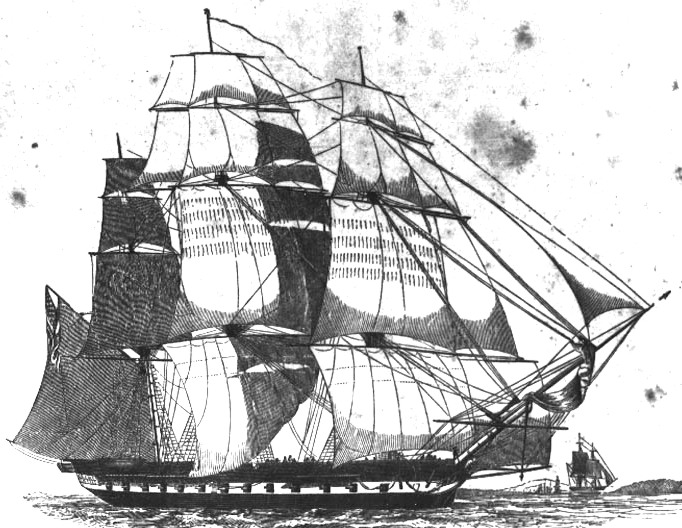
USS United States was a wooden-hulled, three-masted heavy frigate of the United States Navy and the first of the six original frigates authorized for construction by the Naval Act of 1794. The name "United States" was among ten names submitted to President George Washington by Secretary of War Timothy Pickering in March 1795 for the frigates that were to be constructed. Joshua Humphreys designed the frigates to be the young Navy's capital ships, and so United States and her sisters were larger and more heavily armed and built than typical frigates of the period. She was built at Humphrey's shipyard in Philadelphia, Pennsylvania and launched on 10 May 1797 and immediately began duties with the newly formed United States Navy protecting American merchant shipping during the Quasi-War with France.
In 1861, United States was in port at Norfolk when she was seized by the Virginia Navy. She was commissioned into the Confederate navy as CSS United States, but was later scuttled by Confederate forces. The U.S. Navy raised United States after retaking Norfolk, Virginia, but the aged and damaged ship was not returned to service; instead, United States was held at the Norfolk Navy Yard until she was broken up in December 1865.
During the 1790s American merchant vessels began to fall prey to Barbary pirates in the Mediterranean, most notably from Algiers. Congress's response was the Naval Act of 1794. The Act provided funds for the construction of six frigates; however, it included a clause stating that construction of the ships would cease if the United States agreed to peace terms with Algiers.
Joshua Humphreys' design was deep, long on keel and narrow of beam (width) for mounting very heavy guns. The design incorporated a diagonal scantling (rib) scheme to limit hogging while giving the ships extremely heavy planking. This gave the hull greater strength than those of more lightly built frigates. Humphreys developed his design after realizing that the fledgling United States could not match the navy sizes of the European states. He therefore designed his frigates to be able to overpower other frigates, but with the speed to escape from a ship of the line.
Originally designated as "Frigate A" and subsequently named United States by President George Washington, her keel was laid down in 1795 at Humphreys' shipyard in Philadelphia Pennsylvania. Humphreys was assigned as her constructor and John Barry as its captain and was the first commissioned Captain of the newly established U.S. Navy. As Philadelphia was at the time America's capital, many visitors walked through observing her construction as it progressed. Humphreys personally led President Washington and First Lady Martha on a tour. The President expressed his admiration of the great size of the ship. A less desirable visitor, Benjamin Franklin Bache (grandson of Benjamin Franklin) was physically assaulted by Clement Humphreys (Joshua's son) allegedly over Bache's opposition to the Federalist Party and his opposition newspaper, the Philadelphia Aurora.
Fearing sabotage, Humphreys was concerned about the open nature of his ship yard which allowed anyone to wander in. He requested from the War Department a number of guards which were posted to keep out visitors but to little effect.
Construction slowly continued until a peace treaty was announced between the United States and Algiers in March 1796. In accordance with the clause in the Naval Act, construction of United States was discontinued. President Washington requested instructions from Congress on how to proceed. Several proposals circulated before a final decision was reached allowing Washington to complete the three frigates nearest to completion; United States, Constellation and Constitution were chosen.
On 10 May 1797 she was the first American warship to be launched under the Naval Act of 1794, and the first ship of the United States Navy. She was fitted out at Philadelphia during the spring of 1798 and, on 3 July ordered to proceed to sea. Relations with the French government had deteriorated, starting the Quasi-War.
USS United States (1797)
USS United States was a wooden-hulled, three-masted heavy frigate of the United States Navy and the first of the six original frigates authorized for construction by the Naval Act of 1794. The name "United States" was among ten names submitted to President George Washington by Secretary of War Timothy Pickering in March 1795 for the frigates that were to be constructed. Joshua Humphreys designed the frigates to be the young Navy's capital ships, and so United States and her sisters were larger and more heavily armed and built than typical frigates of the period. She was built at Humphrey's shipyard in Philadelphia, Pennsylvania and launched on 10 May 1797 and immediately began duties with the newly formed United States Navy protecting American merchant shipping during the Quasi-War with France.
In 1861, United States was in port at Norfolk when she was seized by the Virginia Navy. She was commissioned into the Confederate navy as CSS United States, but was later scuttled by Confederate forces. The U.S. Navy raised United States after retaking Norfolk, Virginia, but the aged and damaged ship was not returned to service; instead, United States was held at the Norfolk Navy Yard until she was broken up in December 1865.
During the 1790s American merchant vessels began to fall prey to Barbary pirates in the Mediterranean, most notably from Algiers. Congress's response was the Naval Act of 1794. The Act provided funds for the construction of six frigates; however, it included a clause stating that construction of the ships would cease if the United States agreed to peace terms with Algiers.
Joshua Humphreys' design was deep, long on keel and narrow of beam (width) for mounting very heavy guns. The design incorporated a diagonal scantling (rib) scheme to limit hogging while giving the ships extremely heavy planking. This gave the hull greater strength than those of more lightly built frigates. Humphreys developed his design after realizing that the fledgling United States could not match the navy sizes of the European states. He therefore designed his frigates to be able to overpower other frigates, but with the speed to escape from a ship of the line.
Originally designated as "Frigate A" and subsequently named United States by President George Washington, her keel was laid down in 1795 at Humphreys' shipyard in Philadelphia Pennsylvania. Humphreys was assigned as her constructor and John Barry as its captain and was the first commissioned Captain of the newly established U.S. Navy. As Philadelphia was at the time America's capital, many visitors walked through observing her construction as it progressed. Humphreys personally led President Washington and First Lady Martha on a tour. The President expressed his admiration of the great size of the ship. A less desirable visitor, Benjamin Franklin Bache (grandson of Benjamin Franklin) was physically assaulted by Clement Humphreys (Joshua's son) allegedly over Bache's opposition to the Federalist Party and his opposition newspaper, the Philadelphia Aurora.
Fearing sabotage, Humphreys was concerned about the open nature of his ship yard which allowed anyone to wander in. He requested from the War Department a number of guards which were posted to keep out visitors but to little effect.
Construction slowly continued until a peace treaty was announced between the United States and Algiers in March 1796. In accordance with the clause in the Naval Act, construction of United States was discontinued. President Washington requested instructions from Congress on how to proceed. Several proposals circulated before a final decision was reached allowing Washington to complete the three frigates nearest to completion; United States, Constellation and Constitution were chosen.
On 10 May 1797 she was the first American warship to be launched under the Naval Act of 1794, and the first ship of the United States Navy. She was fitted out at Philadelphia during the spring of 1798 and, on 3 July ordered to proceed to sea. Relations with the French government had deteriorated, starting the Quasi-War.
Recent media
Recent media