
Recent from talks
Captain Pipe
Knowledge base stats:
Talk channels stats:
Members stats:
Captain Pipe
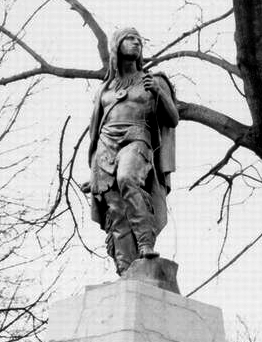
Captain Pipe (c. 1725? – c. 1818?) (Lenape), called Konieschquanoheel and also known as Hopocan in Lenape, was an 18th-century Head Peace chief of the Algonquian-speaking Lenape (Delaware) and War Chief. He succeeded his maternal uncle Custaloga as chief by 1773. Likely born in present-day Pennsylvania, he later migrated with his people into eastern Ohio.
Although Hopocan tried to stay neutral during the American Revolutionary War, after many of his family and people were killed in colonial American raids, he allied with the British. After the war, he moved his people fully into Ohio Country. He made treaties with the Continental Congress to try to protect Lenape land. American settlers continued to encroach on his people and territory.
In 1812 he moved with his people westward into present-day Indiana, where some accounts say he died. By 1821, most of the Lenape were forcibly removed to Kansas, which was considered part of Indian Territory. They and other Native Americans were under pressure from the United States to remove from all areas east of the Mississippi River. Congress later formalized this policy under the Indian Removal Act of 1830, signed by President Andrew Jackson.
In Lenape culture, people did not share their real names, because it could give spiritual power to enemies. In addition, individuals were often given new names, or nicknames, at different periods of their lives, particularly to mark life passages, such as reaching manhood. Konieschquanoheel (meaning "Maker of Daylight") was born about 1725 or 1740; this was his real name. His "public" name was Hopocan (meaning tobacco pipe). Because of the translated meaning and his status as a chief, the British called him Captain Pipe. This name was documented in the colonial historical records.
Hopocan was born into the Wolf Clan of his mother, for the Lenape have a matrilineal kinship system of descent and inheritance. Children take their social status from their mother's family and clan. In this system, his mother's eldest brother was more important in her children's lives in the clan than their biological father, who was always from another clan. Marriages were exogamous, or outside one's clan. The uncle served especially as a male mentor to boys, bringing them into tribal male society.
Little is known of Hopocan's early years. He was probably born about 1725 near the Susquehanna River in Pennsylvania. His maternal uncle was Chief Custaloga, whom he later succeeded as hereditary chief, according to the matrilineal kinship rules. Captain Pipe likely spent his early years either at Custaloga's Town, along French Creek in Mercer County. He may also have lived at his uncle's other main village, Cussewago, at the present site of Meadville in Crawford County.
The boy received the public name or nickname of Hopocan (meaning tobacco pipe). Captain Pipe, as the colonists called him, is first noted in historical records in 1759 among the warriors at a conference held at Fort Pitt, July 1759. Hugh Mercer, agent of Sir William Johnson, the chief British Indian agent in the Northeast, noted Captain Pipe among the attendees. Mercer had brought together the Six Nations of the Iroquois, as well as the Lenape and Shawnee, trying to secure their alliance with Great Britain during its Seven Years' War with the French (known on the North American front as the French and Indian War). The war lasted from 1754 to 1763.
Custaloga was known to have moved his band from French Creek into what is now Ohio. There is some evidence that he may have returned to Pennsylvania to the Kuskuskies Towns, on the Shenango River near present-day New Castle. These four villages had earlier been inhabited by Seneca people of the Iroquois League, but by 1756 they were settled by Lenape displaced from further east during the French and Indian War.
Hub AI
Captain Pipe AI simulator
(@Captain Pipe_simulator)
Captain Pipe
Captain Pipe (c. 1725? – c. 1818?) (Lenape), called Konieschquanoheel and also known as Hopocan in Lenape, was an 18th-century Head Peace chief of the Algonquian-speaking Lenape (Delaware) and War Chief. He succeeded his maternal uncle Custaloga as chief by 1773. Likely born in present-day Pennsylvania, he later migrated with his people into eastern Ohio.
Although Hopocan tried to stay neutral during the American Revolutionary War, after many of his family and people were killed in colonial American raids, he allied with the British. After the war, he moved his people fully into Ohio Country. He made treaties with the Continental Congress to try to protect Lenape land. American settlers continued to encroach on his people and territory.
In 1812 he moved with his people westward into present-day Indiana, where some accounts say he died. By 1821, most of the Lenape were forcibly removed to Kansas, which was considered part of Indian Territory. They and other Native Americans were under pressure from the United States to remove from all areas east of the Mississippi River. Congress later formalized this policy under the Indian Removal Act of 1830, signed by President Andrew Jackson.
In Lenape culture, people did not share their real names, because it could give spiritual power to enemies. In addition, individuals were often given new names, or nicknames, at different periods of their lives, particularly to mark life passages, such as reaching manhood. Konieschquanoheel (meaning "Maker of Daylight") was born about 1725 or 1740; this was his real name. His "public" name was Hopocan (meaning tobacco pipe). Because of the translated meaning and his status as a chief, the British called him Captain Pipe. This name was documented in the colonial historical records.
Hopocan was born into the Wolf Clan of his mother, for the Lenape have a matrilineal kinship system of descent and inheritance. Children take their social status from their mother's family and clan. In this system, his mother's eldest brother was more important in her children's lives in the clan than their biological father, who was always from another clan. Marriages were exogamous, or outside one's clan. The uncle served especially as a male mentor to boys, bringing them into tribal male society.
Little is known of Hopocan's early years. He was probably born about 1725 near the Susquehanna River in Pennsylvania. His maternal uncle was Chief Custaloga, whom he later succeeded as hereditary chief, according to the matrilineal kinship rules. Captain Pipe likely spent his early years either at Custaloga's Town, along French Creek in Mercer County. He may also have lived at his uncle's other main village, Cussewago, at the present site of Meadville in Crawford County.
The boy received the public name or nickname of Hopocan (meaning tobacco pipe). Captain Pipe, as the colonists called him, is first noted in historical records in 1759 among the warriors at a conference held at Fort Pitt, July 1759. Hugh Mercer, agent of Sir William Johnson, the chief British Indian agent in the Northeast, noted Captain Pipe among the attendees. Mercer had brought together the Six Nations of the Iroquois, as well as the Lenape and Shawnee, trying to secure their alliance with Great Britain during its Seven Years' War with the French (known on the North American front as the French and Indian War). The war lasted from 1754 to 1763.
Custaloga was known to have moved his band from French Creek into what is now Ohio. There is some evidence that he may have returned to Pennsylvania to the Kuskuskies Towns, on the Shenango River near present-day New Castle. These four villages had earlier been inhabited by Seneca people of the Iroquois League, but by 1756 they were settled by Lenape displaced from further east during the French and Indian War.
Recent media