Hubbry Logo
CercusCercusMain
Open search
Cercus
Community hub
Cercus
logo
8 pages, 0 posts
0 subscribers
Be the first to start a discussion here.
Cercus
Cercus
from Wikipedia
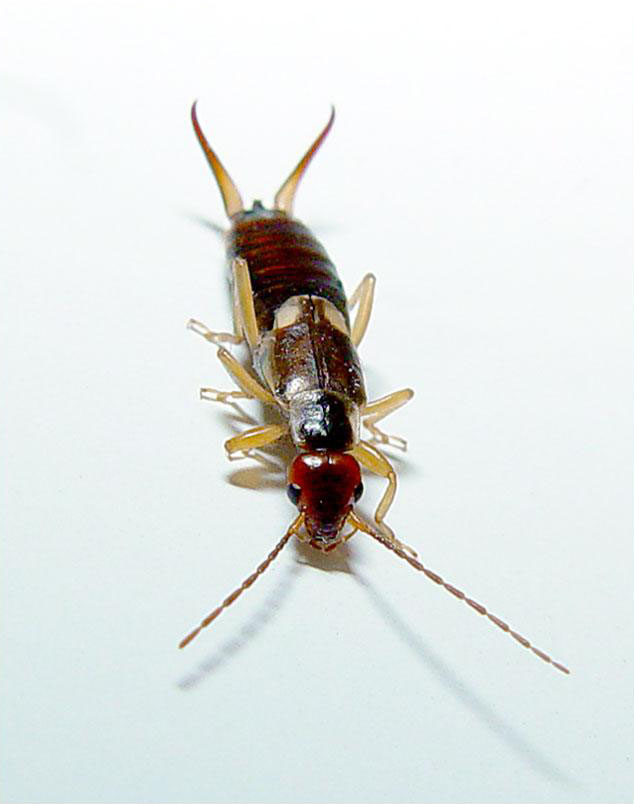
Earwig with large cerci (top)

Cerci (sg.: cercus) are paired appendages usually on the rear-most segments of many arthropods, including insects and symphylans. Many forms of cerci serve as sensory organs, but some serve as pinching weapons or as organs of copulation.[1] In many insects, they simply may be functionless vestigial structures.

In basal arthropods, such as silverfish, the cerci originate from the eleventh abdominal segment. As segment eleven is reduced or absent in the majority of arthropods, in such cases, the cerci emerge from the tenth abdominal segment.[2] It is not clear that other structures so named are homologous. In the Symphyla they are associated with spinnerets.[1]

Morphology and functions

[edit]

Most cerci are segmented and jointed, or filiform (threadlike), but some take very different forms. Some Diplura, in particular Japyx species, have large, stout forcipate (pincer-like) cerci that they use in capturing their prey.[3]

The Dermaptera, or earwigs, are well known for the forcipate cerci that most of them bear, though species in the suborders Arixeniina and Hemimerina do not. It is not clear how many of the Dermaptera use their cerci for anything but defense, but some definitely feed on prey caught with the cerci, much as the Japygidae do.[3]

Crickets have particularly long cerci while other insects have cerci that are too small to be noticeable. However, it is not always obvious that small cerci are without function; they are rich in sensory cells and may be of importance in guiding copulation and oviposition.

Cercus of an adult female Gryllus pennsylvanicus

In groups such as crickets and cockroaches, cerci play important sensory roles. They have been shown to be sensitive to puffs of air and low-frequency vibration, and thus trigger anti-predatory responses such as escape in response to certain predators. In field crickets, the range of frequency detection by the cerci spans from infrasonic sound to nearly 1 kHz. In crickets, higher-frequency sound such as stridulation and ultrasonic bat calls are picked up by a separate tympanal organ, not the cerci.[4]

Some hexapods such as mayflies, silverfish and diplurans possess an accompanying third central tail filament which extends from the tip of the abdomen. This is referred to as the terminal filament and is not regarded as a cercus.[2]

Aphids have tube-like cornicles or siphunculi that are sometimes mistaken for cerci but are not morphologically related to cerci.

Evolutionary origin

[edit]

Like many insect body parts, including mandibles, antennae and stylets, cerci are thought to have evolved from what were legs on the primal insect form,[3] a creature that may have resembled a velvet worm, Symphylan or a centipede, worm-like with one pair of limbs for each segment behind the head or anterior tagma.[5]

[edit]

References

[edit]
[edit]
Revisions and contributorsEdit on WikipediaRead on Wikipedia
from Grokipedia
A cercus (plural: cerci) is a paired, segmented arising from the tenth segment at the posterior terminus of the in many , particularly , functioning primarily as a sensory organ. These structures, which can range from short and triangular in grasshoppers to long and filament-like in , are innervated by sensory neurons that detect tactile stimuli, air movements, and vibrations, aiding in behaviors such as predator evasion, courtship, and orientation. In orthopteran like , cerci are covered with mechanosensory hairs that enable precise localization of wind stimuli for rapid escape responses, while in , they contribute to directed turning during locomotion.

Definition and Morphology

Basic Structure

Cerci are paired, jointed appendages located at the posterior end of the in most arthropods, serving as sensory structures that extend from the last abdominal segment. In , they typically articulate laterally on the tenth abdominal segment, arising from a membranous articulation that allows for flexible movement; in basal forms like , they originate from the eleventh. The typical form of a cercus is filiform, or thread-like, with a tapered, spike-shaped structure that is often segmented by annuli or joints, providing flexibility and enabling bending or swaying in response to stimuli. The exoskeleton is composed of chitin, forming a lightweight yet durable covering, and is embedded with numerous sensory setae—fine, hair-like structures known as filiform sensillae—that house mechanoreceptors for detecting air currents and vibrations. These setae are arranged in regular rows and columns, with each hair innervated by a single afferent sensory neuron that projects to the central nervous system. At the base, cerci are attached via a hinged articulation to the abdominal tergite through a flexible membranous area, permitting multi-directional motion such as or deflection. Innervation originates from the terminal abdominal , where sensory axons from the cerci converge, forming connections that transmit signals to for processing. Cerci exhibit a wide size range across arthropods, from microscopic dimensions less than 1 mm in small flies like those in the order Diptera, where they form part of the reduced terminalia, to several centimeters in length in larger insects such as , where each cercus can measure approximately 1 cm or more.

Variations in Form

Cerci exhibit considerable morphological diversity across arthropods, ranging from simple thread-like structures to highly modified forms adapted to specific ecological niches. The most common form is filiform, characterized by long, slender, and segmented appendages that maintain a uniform thickness throughout their length. In orthopterans such as , these filiform cerci can extend to nearly half the body length, providing an extended sensory surface. In contrast, ensiform cerci are flattened and sword-like, offering a broader, blade-shaped profile that differs markedly from the thread-like filiform type. This form occurs in certain orthopterans, where the cerci adopt a more robust, laterally compressed structure, potentially enhancing stability or interaction with the environment. A striking modification is the forcipate form, where cerci evolve into asymmetrical, pincer-like appendages with a movable articulating against a fixed one, resembling . This configuration is prominent in earwigs (Dermaptera), where the cerci are unsegmented and heavily sclerotized, varying in curvature between sexes but always capable of closing together. Similar forcipate cerci appear in diplurans, such as species in the genus Japyx, underscoring a convergent adaptation in these non-insect arthropods. In many derived arthropods, cerci are reduced to vestigial stubs or entirely absent, reflecting evolutionary simplification. In Coleoptera (beetles), cerci are typically diminutive and non-functional remnants, often obscured by the fused abdominal segments. Similarly, in Diptera (flies), cerci are greatly reduced, sometimes to a single segment on the proctiger. Complete absence is characteristic of higher , such as bees and wasps, where the eleventh abdominal segment is suppressed, eliminating cerci altogether. Sexual dimorphism further diversifies cercal form, with males often displaying exaggerated features for reproductive behaviors. In crickets like the (Anabrus simplex), male cerci are longer and wider than those of females, adapted for gripping the female's during copulation and consistent with pressures. Regarding and segmentation, primitive arthropods retain multi-jointed cerci with distinct annuli, allowing flexibility. In (), cerci are long and multisegmented, comprising numerous joints that facilitate movement and sensory detection. Conversely, in more derived forms like earwigs, cerci become unsegmented, forming a rigid, single-piece structure optimized for mechanical functions.

Functions

Sensory Roles

Cerci primarily serve as mechanosensory organs, detecting air currents, wind puffs, and vibrations through specialized sensilla distributed along their length. These include trichoid sensilla, which are filiform hairs sensitive to air movement, and campaniform sensilla, which respond to mechanical strain and vibrations at the base of the hairs. The filiform structure of cerci enhances their sensitivity to subtle , allowing rapid detection of environmental disturbances. In , the cercal system processes mechanosensory signals via , such as giant , which integrate inputs for predator escape behaviors. These respond to stimuli in a low-frequency range of approximately 5–500 Hz, enabling the detection of wind and vibrations. Bilateral cerci facilitate directional sensing of wind stimuli in species like , where asymmetric airflow triggers oriented escape responses. Campaniform sensilla also provide proprioceptive feedback on body position and movement, aiding in postural adjustments during locomotion. Sensory information from cerci travels via afferents in the cercal nerve to the ventral nerve cord, where it synapses with interneurons in the terminal abdominal ganglion. In cockroaches (Periplaneta americana), each cercus is innervated by approximately 1000 sensory neurons, supporting high-fidelity signal transmission for rapid behavioral responses. Notable examples include the cricket escape response to bat echolocation, where cercal detection of air disturbances from approaching predators activates giant interneurons to initiate flight or running. In cockroaches, wind puffs detected by cerci evoke directional turns or freezing behaviors, enhancing survival against aerial threats.

Non-Sensory Roles

In earwigs (order Dermaptera), the forceps-like cerci function primarily as defensive structures, allowing individuals to pinch and deter predators such as birds or other arthropods by twisting the abdomen forward or sideways to engage threats. This mechanical action provides a non-lethal but effective means of escape, often combined with chemical secretions from abdominal glands for enhanced protection. Similarly, in diplurans (class Diplura), particularly in the superfamily Japygoidea such as species of Japyx, the pincer-shaped cerci serve as predatory tools to capture and hold small invertebrates like springtails or soil mites, enabling these soil-dwelling arthropods to grasp prey securely during hunts. The robust, opposed morphology of these cerci facilitates a firm grip, distinct from their sensory capabilities in related groups. Beyond defense and predation, cerci play mechanical roles in reproduction across various orthopterans. In male crickets (family , such as Gryllodes sigillatus), the cerci are used to clasp the female's during copulation, ensuring stable positioning for transfer and post-copulatory mate guarding. This clasping action provides tactile guidance without relying on sensory feedback, aiding in the alignment of genitalia during mating sequences. In some bushcrickets (), cerci assist in pulling the female's into position relative to the male's genitalia, facilitating internal behaviors that promote successful . Cerci also contribute to locomotion in certain aquatic and terrestrial arthropods. In mayfly nymphs (order Ephemeroptera), the elongated cerci, often fringed with hairs, act as stabilizers during swimming, providing hydrodynamic balance and alignment in water currents to enhance maneuverability. For instance, these appendages help maintain orientation while the nymphs propel themselves through streams, reducing drag and aiding in predator evasion. In grasshoppers (suborder ), short cerci may assist in postural stability during jumps, though their role is secondary to hindleg mechanics. In more derived insect lineages, such as certain holometabolous orders (e.g., Diptera and Coleoptera), cerci are often reduced to vestigial structures that serve no apparent active mechanical or sensory function, representing evolutionary remnants of ancestral appendages. These diminutive forms highlight a shift toward other abdominal adaptations for survival in advanced taxa.

Distribution Across Arthropods

In Insects

Cerci are present in the majority of orders, particularly those retaining a relatively complete abdominal structure, but they are absent in taxa exhibiting extreme abdominal reduction, such as and Siphonaptera. In basal insect lineages like the , cerci are prominent and multi-segmented, serving sensory and defensive roles; for instance, in (jumping bristletails), the cerci are long and annulated appendages equipped with sensilla for detecting environmental stimuli and deterring predators through rapid movements. Similarly, in (), the cerci form part of a three-pronged structure alongside a median epiproct, functioning in mechanoreception and evasion behaviors. Within the , cerci exhibit diverse adaptations across orders. In , such as crickets and grasshoppers, cerci are elongated, unsegmented structures primarily serving sensory functions, including detection of air currents and vibrations that aid in predator avoidance and orientation during jumping. In Dermaptera (earwigs), cerci are highly modified into forceps-like pincers, used defensively to grasp threats or prey, with pronounced where males possess more curved and robust cerci for combat and displays. In holometabolous orders, cerci are generally reduced. Coleoptera (beetles) typically lack distinct cerci, with abdominal segment 11 greatly reduced or absent, resulting in minimal associated structures and functions. In Diptera (flies), cerci are vestigial, often fused into a small proctiger region with limited sensory or structural roles. For Hymenoptera, cerci vary by suborder: they are often absent or vestigial in aculeate groups like bees and wasps due to abdominal modifications for stinging, but present and functional in Symphyta (sawflies), where they assist in positioning during oviposition. A notable example is found in (), where cerci bear filiform hairs sensitive to wind direction and velocity, enabling rapid escape responses to approaching predators by relaying stimuli to the . This wind-detection mechanism highlights the cerci's role in survival across insect taxa, though specific forms and functions adapt to each order's .

In Non-Insect Arthropods

In myriapods, cerci are absent in most centipedes of the class Chilopoda, which lack these terminal appendages on their abbreviated abdomens. In contrast, symphylans (class ) possess a pair of short, pointed cerci on the anal segment, which bear silk-producing glands and are equipped with long sensory structures known as trichobothria or calicles for detecting environmental cues. These cerci aid in and defensive silk secretion, allowing symphylans to anchor themselves or create escape threads in subterranean habitats. Diplura, a group of non-insect hexapods, feature well-developed cerci that vary by . In campodeids, the cerci are annulate and primarily sensory, while in japygids (such as Japyx ), they are forcipate and modified into pincer-like for capturing small prey like springtails and soil mites. These enable predatory behavior by grasping and immobilizing victims in dark, moist soils, with some exhibiting to escape threats. Among crustaceans, true cerci are not present, but homologous structures appear as caudal furca or cercopods (synonymous with furcal claws) on the , particularly in primitive groups like branchiopods. In anostracans (fairy ), for example, the furcal rami function analogously to cerci by providing during and sensory input in aquatic environments, reflecting shared evolutionary origins with cerci as post-anal appendages. Uropods in more derived crustaceans, such as malacostracans, serve similar steering and sensory roles but represent further modifications of this ancestral structure. Cerci are generally absent in chelicerates, including , where terminal abdominal structures like the in scorpions or spinnerets in spiders have diverged significantly from cerci-like forms. In spiders, spinnerets derive from limb buds on abdominal segments and produce for web-building or prey capture, potentially sharing distant homology with the limb series that includes cerci in other arthropods, though direct equivalence is not established. This absence underscores the specialized of chelicerate post-abdomen for functions like stinging or silk extrusion rather than sensory or grasping roles typical of cerci.

Evolutionary Origins and Development

Homology and Evolutionary History

The cerci of are considered homologous to the trunk appendages of early forms such as Fuxianhuia protensa, a primitive euarthropod from the Chengjiang biota, where the posterior end bears paired biramous appendages similar to those on the trunk, suggesting an origin from segmented, limb-like post-anal appendages in onychophoran-like ancestors. These ancestral structures likely evolved from the lobopodian limb series of panarthropods, where simple, unjointed lobopods served as locomotory organs, with the posterior pairs giving rise to the biramous, sensory cerci seen in basal arthropods through progressive jointing and specialization. Recent genomic studies of panarthropods, including onychophorans and tardigrades, support this lobopodian origin for arthropod appendages, including cerci homologs. imprints from deposits reveal primitive filiform cerci, elongated and thread-like, indicating an early adaptation for environmental sensing rather than robust locomotion. Serially, cerci exhibit homology with paraprocts and gonopods derived from the abdominal segments, particularly the eleventh, where they function as modified lateral plates or valvulae in the terminalia; this is evident in comparisons across Pancrustacea, with cerci corresponding to the caudal rami of crustaceans, sharing skeletomuscular patterns such as extrinsic musculature insertions. In insects, these appendages often arise from the paraproctal region, as described in apterygote forms like Thysanura, where cerci retain a cercal filament and integrate with gonopodal elements for reproductive or sensory roles. This serial homology underscores cerci as remnants of a more uniformly limbed ancestral body plan, with modifications reflecting segment-specific tagmosis. The evolutionary timeline of cerci traces to the , with early hexapod fossils from Late strata (approximately 407–358 million years ago) indicating their inferred appearance in terrestrializing , though direct fossil evidence of cerci is first clear in the . Cerci remained conserved in basal insect lineages, such as and , but underwent reduction in endopterygote orders due to advanced tagmosis and abdominal compaction. Fossil evidence from the highlights prominent cerci in Paleodictyoptera, such as griffenfly-like forms, serving sensory functions. Variations appear in Permian myriapod fossils, such as euthycarcinoid-like arthropods, showing shorter, multi-segmented caudal structures analogous to cerci, reflecting diversification in non-insect lineages. Over evolutionary time, cerci shifted from primarily locomotory roles in ancestors—assisting in substrate propulsion akin to trunk legs—to predominantly sensory functions in modern , such as wind detection via filiform setae, driven by ecological pressures like predation avoidance. This transition is linked to tagmosis, where fusion of posterior segments in derived arthropods led to cerci loss or vestigialization in groups like Diptera and Coleoptera, prioritizing streamlined body plans over retention.

Developmental Mechanisms

Cerci in arise from ectodermal invaginations located on the posterior margin of abdominal segment 11 during embryogenesis. These structures develop as paired appendages implanted on membranous areas between the tenth tergum and paraprocts, with sclerotic continuity linking their bases to the epiproct, the tergum of the eleventh segment. In hemimetabolous such as and grasshoppers, cerci form directly through embryonic ectodermal growth, whereas in holometabolous species like , they originate from imaginal discs associated with the genital that elaborate during . The segmental identity of the region bearing cerci is specified by , particularly Abdominal-B (Abd-B), which patterns the posterior and terminalia. Abd-B expression in the genital disc represses proximal-distal signaling to limit outgrowth in abdominal segments, ensuring appropriate development of terminal structures including cerci. Segmentation within the cercus involves engrailed, which demarcates posterior compartments along the axis. outgrowth and proximal-distal patterning of cerci are regulated by Distal-less (Dll), a essential for distal fate specification. In the hemimetabolous , Dll is expressed early in the distal cercus region during embryonic elongation and segmentation, becoming restricted to distal areas in later stages to promote outgrowth and articulation formation. This pattern correlates with cercus morphology, where Dll drives distal elongation without intervening segments, distinguishing it from multi-segmented legs. The proximal domain is specified by homothorax, which antagonizes Dll to subdivide the axis, as seen in analogous systems. Sensory neuron differentiation within the cercus occurs under proneural control, with clusters of neurons arising in spatiotemporal sequence to innervate mechanosensory hairs. During postembryonic development, cerci regenerate following through coordinated ectodermal proliferation and molting, ensuring continuity across instars. In certain , sexual dimorphism in cercus form is mediated by (dsx), a at the base of the sex determination hierarchy. For instance, in the hemimetabolous Thermobia domestica, dsx produces male-specific isoforms required for differentiation of sexual morphology, including elongated cerci in males versus shorter female forms. Mutations disrupting these mechanisms can result in developmental anomalies. In , loss-of-function alleles of Abd-B cause homeotic transformations of posterior segments, leading to reduction or absence of cerci alongside genital structures. Similarly, Dll mutants in appendages exhibit truncated outgrowth, with cercal equivalents showing distal loss in model systems. Representative examples illustrate these processes. In the Schistocerca gregaria, cercus embryogenesis proceeds across defined stages, with early luminal sensory neurons migrating from the into the cercal lumen around 40-50% of embryogenesis, forming distinct branches via intermediate targeting on proximal cell bodies; epidermal neurons and associated hair cells differentiate later, around 60-70%, integrating into preexisting axonal scaffolds. In the holometabolous Tribolium castaneum, embryonic abdominal appendages including rudimentary cerci express Tc-Dll from early germband extension, supporting transient outgrowth before larval resorption, with patterning conserved via Hox and limb gap genes.

References

Add your contribution
Related Hubs
User Avatar
No comments yet.