Hubbry Logo
ChinchillidaeChinchillidaeMain
Open search
Chinchillidae
Community hub
Chinchillidae
logo
8 pages, 0 posts
0 subscribers
Be the first to start a discussion here.
Chinchillidae
Chinchillidae
from Wikipedia

Chinchillidae
Temporal range: Late Oligocene–Recent
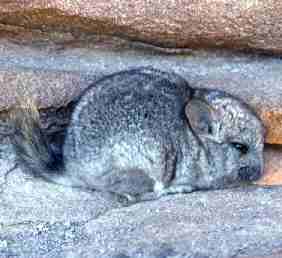
Chinchilla chinchilla (formerly Chinchilla brevicaudata)[1]
Scientific classification Edit this classification
Kingdom: Animalia
Phylum: Chordata
Class: Mammalia
Order: Rodentia
Superfamily: Chinchilloidea
Family: Chinchillidae
Bennett, 1833
Type genus
Chinchilla
Bennett, 1829
Genera

Eoviscaccia
Incamys
Chinchilla
Lagidium
Lagostomus
Pliolagostomus
Prolagostomus

The family Chinchillidae is in the order Rodentia and consists of the chinchillas, the viscachas, and their fossil relatives. This family is restricted to southern and western South America, mostly living in mountainous regions of the Andes, except one species living on plains. They are medium to large-sized rodents, weighing from 800 g (28 oz) to 8 kg (18 lb), with strong hind legs and large ears and a bushy tail. All species have thick, soft fur, which is considered valuable in some cultures.[2]

Characteristics

[edit]

Members of the family Chinchillidae are somewhat rabbit or squirrel-like rodents varying in weight from 0.5 to 8 kilograms (1.1 to 17.6 lb). They have large eyes, medium-sized ears, soft dense fur and short bushy tails. The forelegs are shorter than the hind legs. The forefeet have four toes while the hind feet have four small-clawed toes in Lagidium and Chinchilla but three large-clawed toes in Lagostomus, a digging species. Their dental formula is 1.0.1.31.0.1.3 and their incisors grow continually throughout their lives. Chinchillids are generally brownish-grey or grey on the dorsal (upper) surface and pale on the ventral (under) surface. Plains viscachas have distinctive black and white markings on their faces.[3]

Distribution

[edit]

The Chinchillidae are native to South America. Chinchillas and mountain viscachas live in remote mountainous regions of Chile and Peru, on rocky surfaces and among boulders. Plains viscachas are found in the plains of Argentina, from the Gran Chaco area southwards to Patagonia.[3]

Behaviour

[edit]

Members of this family are herbivorous and live in colonies of up to several hundred individuals. Plains viscachas live in extensive networks of burrows on plains where it is said that ten viscachas can eat as much as does one sheep. Mountain viscachas and chinchillas live in craggy upland regions where they inhabit crevices among rocks and are skilled climbers. Although they can jump, they mostly move about by walking or running. They use vocalizations to communicate with each other, especially the plains viscachas.[3]

Status

[edit]

Both species of chinchillas are listed by the IUCN as being "critically endangered" and may be extinct in the wild. They were at one time relatively common but have been overexploited by hunters catching them for the fur trade.[4][5] The plains viscacha is rated as being of "least concern" as it seems tolerant of habitat disturbance and although some populations have been eliminated locally through pest control measures and hunting, others have expanded into newly cleared areas.[6] Both the northern and southern mountain viscachas are also considered of "least concern" as they have a wide range and are locally abundant in some areas.[7][8]

Classification

[edit]

Three extant and three fossil genera are currently recognized:

References

[edit]
Revisions and contributorsEdit on WikipediaRead on Wikipedia
from Grokipedia
Chinchillidae is a family of hystricognath rodents in the order Rodentia, endemic to , that includes the and viscachas. This family comprises three extant genera—Chinchilla (two species of ), Lagidium (four species of mountain viscachas), and Lagostomus (one species of plains viscacha)—for a total of seven living species, divided into the subfamilies Chinchillinae and Lagostominae. Members are small to medium-sized herbivores with slender bodies, thick and dense fur for insulation, and specialized adaptations such as ever-growing incisors and cheek teeth suited for on tough . These rodents are primarily adapted to arid and semi-arid environments, with chinchillas and mountain viscachas inhabiting rocky Andean slopes at elevations of 3,000–5,000 meters in countries including , , , and , where they shelter in rock crevices. Plains viscachas, in contrast, occupy lowland grasslands, deserts, and pampas up to 2,680 meters in , , and , digging extensive burrow systems in colonies. Socially, chinchillids live in matriarchal groups ranging from 4 to 75 individuals, exhibiting behaviors such as dust-bathing for fur maintenance, vocalizations for communication, and colonial burrowing or crevice-dwelling for protection against predators like foxes and . Dietarily, they are folivores and grazers, consuming grasses, shrubs, forbs, and succulents, with chinchillas favoring high-altitude plants like and Stipa species. is polygynous and seasonal, with gestation periods varying from 111 days in chinchillas to 154 days in plains viscachas, typically producing litters of 1–3 precocial young; lifespans in the wild average 10 years, though captives can exceed 20. Conservation concerns are significant, as the (C. chinchilla) is classified as critically endangered and the (C. lanigera) as endangered by the IUCN (as of ) due to historical overhunting for their luxurious fur and ongoing habitat loss, while some species face similar threats and plains viscachas are of least concern. The family's fossil record extends to the Early , highlighting their long evolutionary history in South American caviomorph radiations.

Taxonomy and Phylogeny

Classification

The family Chinchillidae belongs to the order Rodentia, suborder , infraorder Hystricognathi, and superfamily Chinchilloidea. Chinchillidae is divided into two subfamilies: Chinchillinae and Lagostominae. The subfamily Chinchillinae includes the Chinchilla, comprising two extant : Chinchilla chinchilla () and Chinchilla lanigera (), and the Lagidium with four : Lagidium peruanum, Lagidium viscacia, Lagidium wolffsohni, and Lagidium ahuacaense (collectively known as mountain s). The subfamily Lagostominae contains the Lagostomus with a single , Lagostomus maximus (plains viscacha). As of 2025, these represent a total of seven extant within the family. The family name Chinchillidae derives from the genus Chinchilla, the , with the suffix -idae indicating a taxonomic family in New Latin ; the genus name itself originates from the Chincha people of the , who historically used these for and . Phylogenetically, Chinchillidae forms a monophyletic clade closely related to other caviomorph within Hystricognathi, supported by molecular evidence from cytochrome b sequences and comprehensive total evidence analyses combining morphological and genetic data.

Fossil Record

The family Chinchillidae originated in South America during the early Oligocene, approximately 33–31 million years ago, corresponding to the Tinguirirican South American Land Mammal Age (SALMA), with the earliest definitive fossils documented from the Tinguiririca Formation in central Chile. These initial records include stem chinchillids such as Eoviscaccia, represented by dental and postcranial remains that indicate a rapid diversification of the pan-Chinchillidae clade shortly after its emergence. Although fragmentary, additional early Oligocene chinchilloid fossils from sites in Patagonia, Argentina, and Bolivia further support this timeline, highlighting the group's endemic radiation within the isolated South American continent. During the Miocene, Chinchillidae underwent significant diversification, particularly in the early to middle (approximately 20–16 million years ago), as evidenced by fossils from the Santa Cruz Formation in southern . Extinct genera such as Prolagostomus and Pliolagostomus, known from well-preserved cranial and dental material in this formation, exemplify this expansion, alongside other Miocene taxa like Incamys and Saremmys from Andean localities in and . These forms document multiple radiation events, including a notable burst in the Laventan SALMA, driven by ecological shifts toward open habitats, though the group remained confined to with no fossil evidence in due to continental isolation. Fossil evidence reveals the early development of key adaptations in Chinchillidae, notably the evolution of (high-crowned) teeth from protohypsodont ancestors in stem taxa to fully euhypsodont cheek teeth in crown members. This dental progression, observed in genera like Eoviscaccia and Prolagostomus, facilitated efficient processing of abrasive vegetation in arid environments. Postcranial fossils, including robust hind limbs and reinforced skeletal elements in specimens from the Santa Cruz Formation, suggest burrowing behaviors akin to those of modern viscachas, linking ancient forms to extant lineages through shared structural traits for excavation and terrestrial locomotion. Cladistic analyses of dental and skeletal morphology position Chinchillidae as diverging from other hystricognath caviomorphs during the early , with pan-Chinchillidae encompassing stem lineages like Eoviscaccia basal to the crown group comprising subfamilies Chinchillinae and Lagostominae. Phylogenetic reconstructions, incorporating total evidence datasets from Miocene fossils such as Prolagostomus, underscore this separation, emphasizing the family's within and its isolation-driven evolution without intermingling with northern hystricognaths.

Physical Characteristics

External Morphology

Members of the Chinchillidae family exhibit a range of external morphologies adapted to their respective lifestyles, with slender to robust body plans, dense coverings, and specialized sensory structures. These generally possess short forelimbs relative to their longer, muscular hindlimbs, which facilitate agile movements such as jumping and digging, and all have four digits on the forefeet. Body sizes vary significantly across the family, reflecting differences in and . Species in the genus are more compact, with head-body lengths ranging from 225 to 380 mm and tail lengths from 75 to 150 mm; adults typically weigh 400–800 g, with females larger than males. In contrast, viscachas are larger: species have head-body lengths of 295–464 mm and tails of 215–376 mm, weighing up to 2.1 kg, while Lagostomus maximus reaches head-body lengths of 470–660 mm, tail lengths of 150–200 mm, and weights up to 9 kg, also with females generally larger. The of chinchillids is notably thick and serves as a key distinguishing feature, providing insulation in arid environments. Chinchillas possess the densest fur among terrestrial mammals, with up to 60 fine hairs emerging from each follicle, resulting in a soft, pelage that is typically bluish-gray on the dorsum and yellowish-white on the venter, complemented by bushy tails with coarse terminal hairs. fur is generally coarser and less dense than that of chinchillas; species have soft, dense body fur that is pale gray to yellowish on the upperparts, while Lagostomus exhibits a thicker underfur with coarse, dark guard hairs that vary from light brown in sandy areas to dark gray in others, and fully furred tails. Head and sensory features are well-developed for nocturnal or crepuscular activity. All chinchillids have large, black eyes with vertical slit pupils that enhance low-light vision, and prominent, rounded ears measuring 30–80 mm that aid in detecting predators. Long vibrissae, or , extend from the muzzle and are used for tactile navigation in dark or rocky terrains, with Chinchilla species featuring particularly elongated ones up to 100 mm. The dental formula is consistent across the family at I 1/1 : C 0/0 : P 1/1 : M 3/3 (total 20 teeth), with , lophodont incisors and cheek teeth that grow continuously to handle abrasive vegetation. Morphological variations among genera highlight adaptations to specific ecological niches. Chinchilla species are compact and agile, with four digits on all feet bearing weak claws suited for climbing rocky outcrops, and their dense, fine emphasizing thermal retention in high-altitude environments. Lagidium viscachas feature elongated hindlimbs for bipedal jumping, four hind digits with weak claws, and softer that blends with montane substrates. In Lagostomus, the plains viscacha displays a more robust build with a blunt head, three powerful hind digits and stout claws for burrowing, a shorter relative to body , and coarser adapted to lowland .

Internal Anatomy and Adaptations

High-altitude species such as chinchillas and mountain viscachas, inhabiting Andean environments up to 5,000 meters, exhibit specialized respiratory and circulatory adaptations to cope with hypoxia. Their hemoglobin displays elevated oxygen affinity, characterized by a left-shifted oxygen dissociation curve, which facilitates efficient oxygen loading in low-oxygen atmospheres compared to lowland rodents. This adaptation is particularly pronounced in Andean chinchillas, where hemoglobin-oxygen binding is tighter than in related species, enhancing oxygen transport under chronic hypobaric conditions. Additionally, the heart appears relatively large in proportion to the lungs, supporting increased cardiac output to maintain systemic oxygen delivery despite reduced atmospheric pressure. The digestive system of Chinchillidae is adapted for processing a high-fiber, low-nutrient diet typical of arid scrublands. As fermenters, they possess an elongated that serves as the primary site for microbial fermentation of cellulose-rich plant material, enabling extraction of volatile fatty acids and nutrients from otherwise indigestible . Gastrointestinal transit time ranges from 12 to 15 hours, allowing prolonged microbial breakdown in the and colon. Coprophagy further enhances nutritional efficiency, as individuals reingest soft cecotropes rich in vitamins, , and fermented proteins produced overnight, a common among small fermenters to compensate for rapid digesta passage. Skeletal and muscular structures in Chinchillidae support agile locomotion in rocky, uneven terrains. The hind limbs are elongated and muscular, with robust extensor muscles like the gastrocnemius and biceps femoris providing high force generation for saltatorial leaps, enabling jumps of significant height to evade predators or navigate crevices. The tarsal-metatarsal complex features specialized articulations that enhance propulsion and stability during bounding, reflecting caviomorph adaptations for jumping. In burrowing like viscachas, the exhibits reinforced zygomatic arches and a broad cranium to withstand stresses from excavating communal warrens in hard soil. Sensory and thermoregulatory adaptations prioritize fur maintenance and in fluctuating high-altitude climates. Chinchillidae lack functional sweat glands and have minimal sebaceous glands, relying instead on behavioral such as seeking shade or burrows to dissipate heat, as their dense fur insulation—exceeding 60 hairs per follicle—prevents evaporative cooling. Chinchillids rely on behavioral with external fine dust to distribute natural skin oils through the fur, repelling and parasites while preventing matting in dry environments. This behavior, performed daily, maintains the fur's insulating properties without wetting the coat, which could lead to or fungal issues.

Distribution and Habitat

Geographic Distribution

The family Chinchillidae is endemic to South America, with its distribution confined to the continent's southern and western regions, extending from Peru southward to Patagonia. This range encompasses high-altitude Andean habitats for most species and lowland plains for others, reflecting the family's adaptation to diverse topographic features across the region. The genus Chinchilla occupies the Andean cordillera, primarily in Peru, Bolivia, Chile, and Argentina. The short-tailed chinchilla (Chinchilla chinchilla) historically ranged across the Andes from southern Peru through western Bolivia to northern Chile, but its current distribution is severely restricted to fragmented, isolated populations in northern Chile, such as in the Sierra de Vicuña and Nevado Tres Cruces National Park, and southern Bolivia. As of 2025, these include small populations in southern Bolivia. Similarly, the (Chinchilla lanigera) formerly extended through the Andean highlands of , , , and northwestern , though viable wild populations today persist only in northern and central . These range contractions have reduced the occupied area for Chinchilla species to less than 10% of their pre-colonial extents, driven by historical impacts leading to fragmentation. The Lagidium, including mountain viscachas, spans the from southward to and , with species like the (Lagidium viscacia) distributed in southern , western and central , northern and central , and western . The (Lagidium peruanum) occurs in the of and possibly northern (and ). A related species, the Ahuaca mountain viscacha (Lagidium ahuacaense), is found further north in . In contrast, the plains viscacha (Lagostomus maximus), the sole member of its , inhabits lowland areas across central and eastern , southern , and southwestern . Altitudinal ranges differ markedly among genera: and species predominantly inhabit elevations between 2,000 and 5,000 meters in the Andean mountains, while Lagostomus maximus occupies lower elevations from to 2,680 meters in plains and . Historical distributions for the family were broader and more continuous before European colonization, with subsequent human activities causing fragmentation across multiple species' ranges.

Habitat Types

Chinchillidae species primarily inhabit arid and semi-arid environments across , with distinct preferences shaped by their burrowing and rock-dwelling behaviors. Chinchillas (genus ) and mountain viscachas (genus ) favor Andean rocky slopes, particularly talus fields and boulder-strewn areas at elevations between 3,000 and 5,000 meters. These microhabitats feature crevices and rock outcrops that serve as natural burrows, supporting sparse vegetation such as bunchgrasses and shrubs adapted to low water availability. In contrast, the plains viscacha (Lagostomus maximus) occupies open plains and in lowland regions, where deep, loamy soils allow for extensive networks known as viscacheras. These systems can span up to 600 square meters, with tunnels reaching depths of 3 meters and multiple entrances (4–30 per ), often covering hectares in communal "viscacha towns." Vegetation in these habitats includes grasslands and dry thorn scrub, providing open foraging areas adjacent to burrow complexes. Across these habitats, Chinchillidae thrive in climates characterized by low (typically under 300 mm annually) and significant diurnal fluctuations, with cold nights dropping to -20°C in high Andean zones and milder conditions in lowland . Preference for south-facing slopes in mountainous areas maximizes solar exposure for warmth during the day. These rodents act as engineers through their ing activities, which enhance aeration, cycling, and within colonies. maintain stable microclimates, buffering against extreme cold and heat, while towns modify local landscapes by altering and promoting diverse plant regrowth around entrances.

Behavior and Lifestyle

Social Behavior

Members of the display diverse social structures adapted to their environments. s (genus Chinchilla) typically form small groups of 5 to 20 individuals, often consisting of a and their offspring, within larger loose colonies that can number up to 100 animals. (genus Lagidium) live in more dispersed units, usually comprising one adult male and several females along with juveniles, forming colonies of 4 to 75 individuals that utilize rocky outcrops for shelter. In contrast, plains viscachas (Lagostomus maximus) inhabit large, stable colonies of 15 to 30 individuals centered around extensive communal systems, where groups include multiple adult females as the core social unit, transient males, and immatures. These group sizes facilitate collective vigilance against predators while allowing resource sharing in harsh habitats. Communication among Chinchillidae is multimodal, involving vocalizations, olfactory signals, and physical displays to maintain cohesion and alert group members. Vocalizations include barks or whistles to signal danger, soft purrs or grunts for contact within groups, and honks for attention-seeking, with adult males often leading calls in viscachas. Scent marking occurs via secretions from anal glands, used to delineate territories, particularly by females in chinchillas who may spray urine aggressively. Tail-flagging, a rapid wagging motion, serves as a visual alert across age classes, while allogrooming—nibbling necks and backs—strengthens bonds exclusively within groups and is observed in all sex-age classes among plains viscachas. Dust-bathing is a prominent social and maintenance behavior across the , where individuals roll in fine soil or volcanic dust to clean and condition their dense fur, often performed communally in groups several times a day to remove excess oils and parasites. Social hierarchies and roles vary by , emphasizing territorial defense and group maintenance. In plains viscachas, there is no strict among females, who form the stable core of groups, while resident males, though transient annually, defend entrances and contribute to vigilance through alarm calls; agonistic interactions are more common between groups than within. Chinchillas exhibit female dominance, with aggressive behaviors like chasing and teeth chattering to protect and resources within units. Across genera, cooperative interactions support group dynamics, including communal tending of young in shared spaces, though males play limited direct roles in pup-rearing. Interspecific interactions where ranges overlap show minimal direct between Chinchillidae genera, but indirect for sites or rocky refuges can influence local distributions.

Daily Activity and Movement

Members of the Chinchillidae family exhibit varied activity patterns adapted to their high-altitude Andean habitats, primarily to avoid diurnal heat and predators. Chinchillas (genus Chinchilla) are largely nocturnal, with peak activity including defecation between 0300 and 0600 h and cecotrope consumption from 0800 to 1400 h, while resting in burrows or rock crevices during the day. Mountain viscachas (Lagidium spp.) display diurnal to crepuscular rhythms, with foraging, resting, and locomotion concentrated in the morning and at sunset to minimize exposure to extreme temperatures. Plains viscachas (Lagostomus maximus) are crepuscular and nocturnal, emerging at dusk to forage and retreating to burrows before dawn, which helps evade daytime predators and conserve energy in arid environments. Locomotion in Chinchillidae is characterized by agile, saltatorial movements suited to rocky terrains. Chinchillas employ bipedal ricochetal hopping on their elongated hind legs, enabling them to navigate steep slopes and leap up to 1.8 m vertically or horizontally to access crevices and escape threats, with reported speeds reaching approximately 24 km/h. Mountain viscachas are quadrupedal bounders, using powerful hind limbs for rapid dashes across rock faces and climbing near-vertical surfaces with ease. Plains viscachas often adopt an upright bipedal stance on their hind legs and tail for enhanced vigilance while scanning for dangers, supplemented by quadrupedal galloping during flights. Home ranges in Chinchillidae reflect their colonial lifestyles and resource distribution, with central burrows serving as focal points. For chinchillas, individuals remain philopatric within small areas, contributing to colony ranges of 1.5–113.5 ha at densities of about 4.37 individuals/ha, though individual overlaps suggest effective personal ranges around 0.1–0.5 ha. Plains viscachas share communal home ranges averaging 1.29 ha in semiarid scrub, expanding seasonally up to 10 ha to track vegetation, with burrow systems acting as secure hubs. Mountain viscachas maintain smaller, rock-centered ranges of 0.5–2 ha, shifting minimally due to stable high-elevation food sources but adjusting for weather. Anti-predator movements emphasize evasion through speed and cover rather than confrontation. Chinchillids typically freeze upon detecting threats, then execute rapid bipedal hops or bounds into narrow rock crevices inaccessible to larger predators like foxes or . In some species, such as plains viscachas, caudal provides an additional escape mechanism, allowing partial tail detachment to distract pursuers during chases. Chinchillas may also release fur bundles (fur-slip) while fleeing to impede grasping by predators, facilitating quick retreats to burrows.

Diet and Feeding

Members of the Chinchillidae family are strictly herbivorous, relying on a diet composed primarily of grasses, bark, seeds, succulents, and occasionally roots, which supports their nutritional needs in arid and semi-arid environments. Chinchillas (genus Chinchilla), such as the long-tailed chinchilla (C. lanigera), exhibit a folivorous feeding pattern, with perennial graminoids like Nassella chilensis forming the bulk of their intake, alongside shrubs, herbs, and cacti; they demonstrate opportunistic generalist behavior, consuming up to 55% of available plant species in wet years but narrowing to 40% in dry conditions. In contrast, viscachas (genera Lagidium and Lagostomus) show greater selectivity, favoring high-quality grasses such as Stipa speciosa and Poa lanuginosa, which comprise over 50% of their diet, while incorporating a broader array of forbs, shrubs, and roots in species like the northern viscacha (L. peruanum). This dietary strategy allows viscachas to exploit low-quality forage through targeted selection, maintaining a narrow trophic niche without significant seasonal shifts. Foraging in Chinchillidae occurs predominantly at ground level through grazing and clipping vegetation with their specialized incisors, enabling efficient harvesting of sparse resources near rocky outcrops or burrows. Seasonal adaptations are evident, particularly in chinchillas, where dry winters prompt shifts toward bark and dried leaves for sustenance when fresh grasses are scarce, while viscachas maintain consistent grass consumption year-round. Coprophagy plays a crucial role in nutrient recycling across the family; individuals produce soft, nutrient-rich caecotrophs that are re-ingested to enhance absorption of proteins and vitamins from fibrous plant material, a behavior observed in both captive and wild populations. These techniques optimize energy extraction from abrasive, low-nutrient diets typical of their habitats. The dentition of Chinchillidae is adapted for processing tough vegetation, featuring ever-growing, aradicular hypsodont molars and premolars that continuously erupt to counteract wear from silica-rich grasses. Jaw mechanics include anisognathism, with a wider mandible than maxilla, facilitating lateral grinding motions that pulverize plant fibers effectively; the occlusal surfaces of cheek teeth are angled to promote thorough mastication. Ecologically, selective grazing by Chinchillidae influences plant communities, reducing biomass and cover in heavily foraged areas while promoting diversity in moderately disturbed zones through patch creation. Viscacha burrow systems further enhance biodiversity by aerating soil, fostering microhabitats that support diverse flora and fauna, thus altering ecosystem structure in grasslands and steppes.

Reproduction and Life Cycle

Mating and Reproduction

Members of the Chinchillidae family exhibit polygynous systems, where males compete for access to multiple females within social groups. In the plains viscacha (Lagostomus maximus), dominant males establish residency through physical contests and mate with several females in the group, while males disperse annually and are replaced by newcomers. Similarly, in chinchillas ( spp.), males vie for females using vocalizations and displays, though females often show toward males year-round. Breeding is generally seasonal in the wild, with chinchillas showing peak activity in spring (November to May in the for captive populations reflecting natural cycles), and viscachas breeding in summer months, such as March-April mating leading to July-August births in regions like east-central . In captivity, can occur year-round across the family due to consistent conditions. Females can produce 1-3 litters per year depending on conditions and species. Courtship behaviors include chasing, vocalizing, and grooming, which facilitate pair formation and . Males in Lagostomus engage in physical fights during the breeding season to secure rights, accompanied by vocal signals for communication. In chinchillas, females are induced ovulators, meaning is triggered by copulation via neural or hormonal stimuli from , leading to a post-partum estrus that allows rapid re-breeding. Plains viscachas exhibit a mix of spontaneous and induced , releasing numerous ova (up to 800) per cycle but implanting only a few, which may serve to eliminate defective oocytes while ensuring fertilization success. Gestation periods vary by genus: approximately 111 days in chinchillas, 140 days in mountain viscachas (Lagidium spp.), and 154 days in plains viscachas. Litter sizes typically range from 1 to 3 young, with chinchillas averaging 2 (up to 6), mountain viscachas usually producing 1, and plains viscachas averaging 2 (1-4). Offspring are precocial, born fully furred with open eyes, mobile, and capable of following the mother shortly after birth; in burrowing species like viscachas, they remain in protected warrens initially. Parental care is provided solely by females, involving nursing, protection, and provisioning until independence. Weaning occurs at around 6-8 weeks, after which young integrate into the social group.

Growth and Development

Newborn members of the Chinchillidae family are precocial, born with eyes open and fully furred, though they remain dependent on their mothers for nursing and protection. At birth, chinchillas typically weigh 30-40 grams, while viscachas are heavier, around 180-200 grams depending on the species. Developmental milestones progress rapidly in the early weeks. Eyes are open from birth, and juveniles begin exploring their surroundings shortly thereafter. Independent typically starts around 4-8 weeks of age, coinciding with ; chinchillas wean at 6-8 weeks, while viscachas wean at approximately 8 weeks. is reached between 6 and 12 months, with chinchillas maturing earlier (around 8 months) compared to viscachas (7-15 months, varying by sex and species). Growth is characterized by rapid early weight gain, particularly in the first month, during which juveniles often double their through consistent daily increments of several grams. In the wild, lifespans vary by : chinchillas approximately 10 years, plains viscachas 7-8 years, and mountain viscachas around 3 years, limited by environmental pressures; whereas in captivity, lifespans extend to 15-20 years for chinchillas and up to 19 years for viscachas. Juvenile mortality is primarily driven by predation and risks associated with dispersal, as young animals venture from natal groups and face higher exposure to predators like pumas. In dense colonies, particularly among viscachas, can delay by restricting access to breeding sites for dispersing juveniles. Litters generally consist of 1-4 offspring, influencing early developmental pressures.

Conservation Status

Threats

The primary historical threat to Chinchillidae populations has been through the fur trade, which intensified in the following European demand for their dense pelts. Spanish explorers initially exported chinchilla furs in the , but commercial hunting escalated dramatically by the late 1800s, leading to the near extirpation of wild populations across their Andean range. Between 1898 and 1910, exported over seven million chinchilla pelts in total, with annual peaks around 500,000–700,000, driven by methods such as and dogs that decimated colonies. Habitat loss and fragmentation continue to pose severe risks to Chinchillidae, primarily from activities on Andean slopes, including for minerals like and , , and by and . These pressures degrade the rocky, arid shrublands essential for burrowing and foraging, reducing available cover and food resources. In , for instance, and land conversion have significantly fragmented habitats since the , contributing to isolated populations. Introduced predators, such as foxes and feral cats, exacerbate mortality rates among Chinchillidae, particularly in fragmented habitats where natural refuges are scarce. Parasites transmitted from domestic animals, including , further threaten health by increasing susceptibility in wild populations. Climate change intensifies these vulnerabilities through prolonged droughts that diminish vegetation cover and water availability in the high , indirectly affecting and survival. Ongoing and illegal trade remain critical threats, targeting species like Chinchilla lanigera for both and the pet market despite international bans. Hunters continue to capture live individuals or harvest pelts, sustaining a that undermines population recovery and affects distributional ranges by depleting remnant colonies.

Current Status and Conservation Measures

The two species in the genus Chinchilla are classified as Endangered by the International Union for Conservation of Nature (IUCN) as of 2025, with C. chinchilla persisting in very small, isolated colonies (estimated at fewer than 500 individuals in known sites) and C. lanigera at approximately 5,350 mature individuals, both experiencing ongoing declines driven by habitat loss and poaching. Species in the genus Lagidium exhibit varying statuses on the IUCN Red List, ranging from Least Concern to Critically Endangered, reflecting localized threats in their Andean habitats, while Lagostomus maximus is assessed as Least Concern owing to its widespread distribution and stable populations across South American grasslands. Wild populations of are confined to isolated colonies in high-altitude Andean regions of and . Recent surveys in protected areas, such as those conducted in Chilean reserves, indicate slight population recovery in select sites where measures and restoration have been implemented, though overall trends remain downward. Conservation efforts for Chinchillidae emphasize legal protections and management. Both species are listed under Appendix I of the Convention on International Trade in Endangered Species of Wild Fauna and Flora (), prohibiting international commercial trade in wild specimens to curb historical fur exploitation. In the , key protected areas include Las Chinchillas National Reserve in , which safeguards rocky desert s critical for chinchilla colonies, and Lauca , supporting viscacha populations through enforced no-hunting zones. The AZA SAFE Chinchilla Program, outlined in its 2025-2028 plan, coordinates reintroduction efforts, population monitoring via camera traps, genetic management, and collaboration with Chilean authorities to expand wild colonies and downlist statuses. Captive breeding programs maintain numerous individuals across zoological institutions and conservation centers, incorporating genetic management protocols to minimize and preserve diversity for potential reintroductions. In , community-based initiatives around plains (Lagostomus maximus) warrens promote sustainable land use, generating local income while reducing habitat encroachment from agriculture.

References

Add your contribution
Related Hubs
User Avatar
No comments yet.