Hubbry Logo
Jo Young-namJo Young-namMain
Open search
Jo Young-nam
Community hub
Jo Young-nam
logo
8 pages, 0 posts
0 subscribers
Be the first to start a discussion here.
Jo Young-nam
Jo Young-nam
from Wikipedia

Key Information

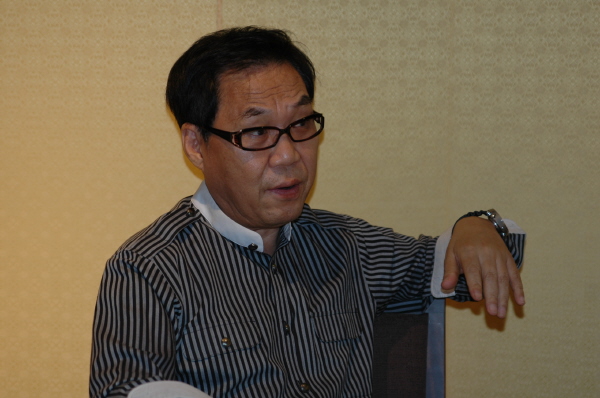
Jo Young-nam (Korean조영남; Hanja趙英男; born April 2, 1945), also known as Cho Youngnam,[1] is a South Korean singer-songwriter, painter, writer, and television personality.[2] He started his singing career in 1968.

More recently, he was known for his art fraud case, where he used an assistant to help with his paintings. He was found not guilty of fraud in the South Korean Supreme Court.

Career

[edit]

Music

[edit]

Some of Young-nam's most popular songs include "Delilah" (1968), which was his first release, as well as "My Home Chungchong Province" and "Hwagae Marketplace." He has also recorded many well-known tracks, such as "Swallow," "Barley Field," and "Farewell to the City," to mention just a few.[1] He has stated that the reason he feels he was not more successful was because he mainly did covers in the beginning of his career.[1]

Painting

[edit]

In 2016, Young-nam was charged with fraud for selling 21 paintings by two other painters to 17 people for 160 million won. He was declared not guilty by the Seoul Central District Court, but the court overturned the conviction, stating that the first court misunderstood the law. He was sentenced to 10 months in jail, but the case was appealed.[3]

Young-Nam's attorneys denied the charges by saying that most painters have assistants. In a second trial in 2018, the court ruled that using assistants in modern painting is not an area for the judgment of law and Jo Young Nam had no obligation to state that his assistants had painted the pictures, so he was found not guilty.[4][unreliable source?] The prosecution then took the case to the supreme court and again he was found not guilty on 2020.[5][6]

Personal life

[edit]

Jo married actress Youn Yuh-jung in 1974, but divorced in 1987.[7][unreliable source?][8][unreliable source?] He married again a second time and divorced Paek Eun-Sil.[1]

References

[edit]

Etymology

[edit]
  • Media related to Jo Young-nam at Wikimedia Commons
Revisions and contributorsEdit on WikipediaRead on Wikipedia
from Grokipedia
Jo Young-nam (born 1945) is a South Korean , , writer, radio host, and television personality renowned for pioneering the fusion of Korean with Western vocal techniques during the late and . Debuting professionally at age 24 with the hit single "" in 1968, he quickly achieved stardom through performances at popular venues like and OB's Cabin, establishing himself as a campus singing sensation while studying at . His career diversified in the and beyond, encompassing as a minister after studying in the United States from 1973 to 1978, authorship of six philosophical books each selling around 300,000 copies, and a successful pivot to in the mid-1990s, where his works featuring Korean motifs fetched up to $5,000 each. Young-nam's personal life has often drawn public scrutiny, including his high-profile marriage to acclaimed actress from 1974 to 1987, which ended amid his admitted extramarital affairs and produced two sons. In 2016, he faced charges for selling 21 pieces of artwork primarily created by an assistant but signed with his name to 17 buyers, leading to a 10-month initially; however, higher courts overturned the conviction, and the upheld his acquittal in 2020, sparking debates on artistic authorship in Korea. Post-acquittal, he resumed exhibitions, including a year-long show in 2020, while continuing television appearances on programs like Immortal Songs and Radio Star. In 2025, at age 80, Young-nam married caricature artist and actress Jung Eun-hye, who has , in May, with the couple continuing to appear together on media shows like as of September 2025, highlighting his ongoing media presence amid criticisms of his outspoken demeanor.

Early life and education

Upbringing

Jo Young-nam was born on April 2, 1945, in Pyeongsan, (now part of ), in the waning days of Japanese colonial rule over Korea. His birth year reflects his status as a "Haebangdungi" (child of liberation), as confirmed by his mother's account, though family records show some discrepancy with his father's registration listing 1944. He was the seventh of nine children—born to father Jo Seung-cheol, a carpenter known for his playful and resilient spirit, and mother Kim Jeong-shin—in a large family that included an older sister and six older brothers, with one younger brother. The outbreak of the Korean War in 1950 profoundly disrupted the family's life, forcing them to flee southward during the chaotic 1.4 retreat when UN forces withdrew from the Yalu River in the face of Chinese intervention. They eventually resettled in the rural village of Sapdari, Sapgyo-myeon, Yesan-gun, in southern Chungcheongnam-do Province. This relocation marked the beginning of Jo's childhood in post-war South Korea, where the family adapted to life as displaced persons amid ongoing instability. He graduated from Sapgyo Elementary School and Sapgyo Middle School in the area. In the rural setting of , Jo's early years were shaped by family influences and local traditions, particularly through regular attendance at Sapgyo Church with his parents, where he began singing as a soloist. His father's encouragement of playful activities, such as teaching card games and lighthearted pranks, instilled a creative and humorous outlook that later informed Jo's artistic pursuits, while the church environment provided his initial formal exposure to via hymns and choral . Local folk customs in the countryside, including communal gatherings and traditional songs, further enriched this formative period, blending with familial piety to nurture his interests in arts and expression. The post-war era brought severe economic hardships to the Jo family, compounded by and displacement. Living in , they relied on limited resources in the rural , with Jo recalling the era's widespread deprivation. These challenges intensified when his father suffered a during Jo's fifth-grade year, leaving him paralyzed and for 13 years, which strained the family's finances as his mother cared for him and the children without complaint. The family subsequently relocated to for better medical care and opportunities, forging Jo's resilience, though it delayed his transition to formal until middle school in the area.

Academic pursuits

Jo Young-nam graduated from Gangmun High School in in the early , during which time he cultivated early interests in , particularly . In 1962, he enrolled in the Vocal Music program at but dropped out shortly thereafter due to personal reasons involving a romantic with a female student who was already engaged. This experience marked an early challenge in his formal , yet it did not deter his passion for musical performance. Following his departure from Hanyang, Jo enrolled in the Vocal Music department at in 1964, where he studied for three years before dropping out in 1967 to focus on his burgeoning singing career after passing an audition for the U.S. 8th Army show unit. In recognition of his contributions to , he later received an honorary from the university in the 2000s. These academic experiences in during his late teens and early twenties solidified his foundation in the , while also inspiring a parallel interest in that he pursued through self-taught methods thereafter.

Career

Musical career

Jo Young-nam made his professional debut in with the single "," a Korean-language adaptation of Tom Jones' hit song of the same name, which introduced him to the and scenes in . While studying , he performed part-time at U.S. military bases, blending Western influences with Korean styles early in his career. This debut marked the beginning of his songwriting and singing endeavors, focusing on emotive melodies that resonated with post-war audiences. In the 1970s, Jo achieved breakthrough success with a series of folk-influenced hits that drew from rural themes and personal narratives, solidifying his place in Korean popular music. Key releases included "My Home Chungchong Province" (1970), which evoked nostalgia for his hometown, as well as "Hwagae Marketplace," "Swallow," "Barley Field," and "Farewell to the City," the latter reflecting urban migration struggles. These songs combined trot rhythms with folk elements, often inspired by his Chungcheong Province roots, and helped popularize a heartfelt, accessible style during a period of rapid social change in South Korea. Throughout his over five-decade career, Jo Young-nam contributed to the evolution and popularization of trot music by incorporating Korean-language covers of American pop songs, expanding the genre's appeal beyond traditional boundaries. His discography features more than 20 major singles, alongside numerous albums released from the 1980s through the 2000s, including compilations like 20 Golden Hits of Cho Young Nam (1972) and later works such as 조영남 50th (2021). As a veteran artist, he maintained enduring popularity through live performances and recordings that preserved trot's sentimental core while adapting to contemporary tastes.

Artistic career

In the early 1970s, while serving his mandatory military duty, Jo Young-nam began as a alongside his burgeoning , developing his skills through self-directed practice without formal training after dropping out of university programs in . His works primarily feature abstract and motifs, drawing inspiration from traditional Korean aesthetics such as serene natural scenes and symbolic representations like the Korean flag. He held his first solo exhibition in in 1973, marking the start of his parallel artistic pursuits. During the 2000s and 2010s, Jo established himself as a multifaceted through numerous exhibitions in Korea and abroad, including a show at the Korean Cultural Center in New York featuring landscapes and flag-themed pieces, which highlighted his fusion of cultural symbolism and personal expression. His paintings gained commercial traction, with individual works selling for up to $5,000, reflecting growing recognition of his visual art as complementary to his musical legacy. By the mid-2010s, he had held multiple solo and group shows, solidifying his reputation in the scene. In 2016, Jo faced charges of after allegedly selling 21 paintings for approximately 160 million won (about $130,000 USD at the time) between 2011 and 2015, where the works—primarily created by assistants under his direction and final touches—were presented as solely his own to 17 buyers, raising questions about authorship in . A district court convicted him in October 2017, sentencing him to 10 months in prison suspended for two years, but the overturned the ruling in August 2018, citing insufficient evidence of deceptive intent. The Supreme Court upheld the on June 25, 2020, affirming that his with assistants did not constitute , as such practices are common in production. Following the , Jo resumed his career with renewed focus on personal artistic expression over commercial sales, launching a year-long in to showcase his ongoing body of work and emphasizing authenticity in his creative process. This period marked a shift toward introspective themes, allowing him to continue as a without the shadow of legal disputes.

Writing and media appearances

Jo Young-nam began his writing career in the , producing memoirs that drew from his experiences in the music industry, including reflections on culture and the evolution of Korean . His essays often explored the intersections of and , blending personal anecdotes with cultural commentary. He also authored six philosophical , each selling around 300,000 copies. By the 2000s, he had authored over 18 , establishing himself as a prolific whose works frequently referenced musical themes to illustrate broader life lessons. Notable titles include Jo Young-nam Yangsimhak (a collection on and ) and Nolmen Nolmen (playful essays on and ), which captured his multifaceted perspective. In the realm of media appearances, Jo transitioned into television in the 1990s as a charismatic personality, known for delivering humorous anecdotes and sharp commentary on celebrity life during variety shows like Star Golden Bell. His veteran status in Korean entertainment made him a sought-after guest, appearing regularly on programs such as Knowing Bros in the 2010s, where he discussed the history of K-pop with wit and insight. Examples include his 2015 episode of Immortal Songs: Singing the Legend, where he shared stories of trot legends, and guest spots on Radio Star that highlighted his entertaining storytelling style. Through these appearances, Jo solidified his role as a bridge between past and present Korean pop culture. Jo's radio career further extended his media influence, particularly as the longtime host of MBC's Now Is the Radio Era (지금은 라디오시대) starting in the early , a program where he entertained audiences with career retrospectives and lighthearted banter for over a decade. In later years, his presence in grew, including invitations that promoted his books and artistic endeavors, such as discussions on platforms revisiting his music memoirs. In 2025, he joined his wife Jung Eun-hye on the Same Bed, Different Dreams 2, offering glimpses into their life while drawing on his signature humorous style.

Personal life

Marriages and family

Jo Young-nam married actress in 1974 in the United States, where the couple resided for several years after her immigration to join him. They had two sons during the marriage, which was marked by their status as a prominent celebrity couple in the entertainment industry. The union ended in divorce in 1987, primarily due to Jo's , after which Youn returned to Korea and raised their sons as a single mother while reviving her acting career. Post-divorce, Jo and Youn have maintained amicable relations, with Jo expressing public regret over his actions and congratulating her on major achievements, such as her 2021 Academy Award for Best Supporting Actress. The co-parenting arrangement allowed Youn to focus on supporting the family financially through her professional endeavors, while Jo continued his own career pursuits. Their shared history as parents has occasionally surfaced in media discussions, highlighting the enduring familial ties despite the separation. One of their sons came out as in 2000 and later entered a . In 1989, Jo remarried actress Baek Eun-sil, who was 18 years his junior, but this second marriage lasted only five years, ending in in the mid-1990s; no children resulted from this union. The dissolution further shaped Jo's views on relationships, as reflected in his later public statements about marital challenges. In 2025, Jo married actress Jung Eun-hye, known for her role in the drama and who has , on May 3 in a private ceremony in Yangpyeong County, Gyeonggi Province. The couple met while working at a public job site for individuals with developmental disabilities. As of November 2025, they remain married. His two sons from the first marriage are now adults in their late 40s. Family life, including the impacts of his divorces, has influenced his personal writings, where he explores themes of regret and resilience in relationships.

Health issues

Jo Young-nam has maintained a long-standing habit of and drinking, which he publicly acknowledged as contributing to his decline over the years. He has abstained from alcohol since approximately 2015, following a health scare. In late 2024, while deeply engaged in writing on poet , Jo Young-nam suffered a mild , as he disclosed during a , 2024, with NewsPIM TV. He described the episode occurring amid intensive research, highlighting the sudden onset during his intellectual pursuits. Earlier accounts from indicate a prior mild that led to hospitalization, immediate medication, and a narrow escape from hemiplegia, with symptoms including finger numbness while playing the guitar. By early 2025, he reported full recovery from these events through ongoing medication and lifestyle adjustments, including over a decade of abstinence from alcohol post-2010 diagnosis. Family members provided brief support during his recovery periods, aiding his return to normalcy. Despite these setbacks, he continues to manage age-related health concerns with and moderated habits, maintaining an active career in music, art, and media without significant interruptions.

References

Add your contribution
Related Hubs
User Avatar
No comments yet.