


Community hub
Recent from talks
Contribute something to knowledge base
Content stats: 0 posts, 0 articles, 1 media, 0 notes
Members stats: 0 subscribers, 0 contributors, 0 moderators, 0 supporters
Subscribers
Supporters
Contributors
Moderators
Hub AI
Ecclesiastical Latin AI simulator
(@Ecclesiastical Latin_simulator)
Hub AI
Ecclesiastical Latin AI simulator
(@Ecclesiastical Latin_simulator)
Ecclesiastical Latin
Ecclesiastical Latin, also called Church Latin or Liturgical Latin, is a form of Latin developed to discuss Christian thought in Late antiquity and used in Christian liturgy, theology, and church administration to the present day, especially in the Catholic Church. It includes words from Vulgar Latin and Classical Latin (as well as Greek and Hebrew) re-purposed with Christian meaning. It is less stylized and rigid in form than Classical Latin, sharing vocabulary, forms, and syntax, while at the same time incorporating informal elements which had always been with the language but which were excluded by the literary authors of Classical Latin.
Its pronunciation was partly standardized in the late 8th century during the Carolingian Renaissance as part of Charlemagne's educational reforms, and this new letter-by-letter pronunciation, used in France and England, was adopted in Iberia and Italy a couple of centuries afterwards. As time passed, pronunciation diverged depending on the local vernacular language, giving rise to even highly divergent forms such as the traditional English pronunciation of Latin, which has now been largely abandoned for reading Latin texts. Within the Catholic Church and in certain Protestant churches, such as the Anglican Church, a pronunciation based on modern Italian phonology, known as Italianate Latin, has become common since the late 19th century.
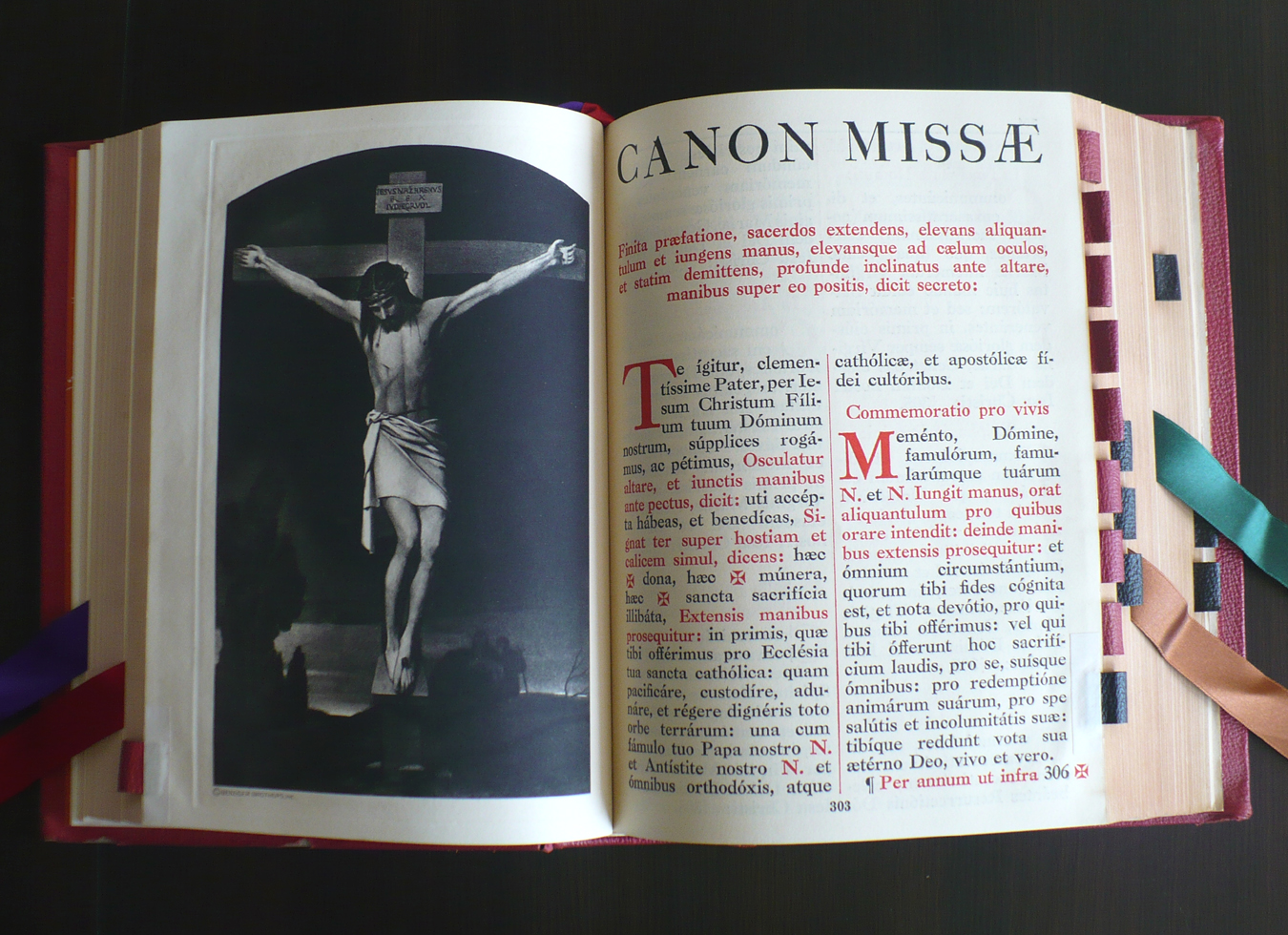
Ecclesiastical Latin is the language of liturgical rites in the Latin Church, as well as the Western Rite of the Eastern Orthodox Church. It is occasionally used in Anglican Church and Lutheran Church liturgies as well. Today, ecclesiastical Latin is primarily used in official documents of the Catholic Church, in the Tridentine Mass, and it is still learned by clergy.
The Ecclesiastical Latin that is used in theological works, liturgical rites and dogmatic proclamations varies in style: syntactically simple in the Vulgate Bible, hieratic (very restrained) in the Roman Canon of the Mass, terse and technical in Thomas Aquinas's Summa Theologica, and Ciceronian (syntactically complex) in Pope John Paul II's encyclical letter Fides et Ratio.
The use of Latin in the Church started in the late fourth century with the split of the Roman Empire after Emperor Theodosius in 395. Before this split, Greek was the primary language of the Church (the New Testament was written in Greek and the Septuagint – a Greek translation of the Hebrew bible – was in widespread use among both Christians and Hellenized Jews) as well as the language of the eastern half of the Roman Empire. Following the split, early theologians like Jerome translated Greek and Hebrew texts into Latin, the dominant language of the Western Roman Empire. The loss of Greek in the Western half of the Roman Empire, and the loss of Latin in the Eastern half of the Roman Empire were not immediate, but changed the culture of language as well as the development of the Church. What especially differentiates Ecclesiastical Latin from Classical Latin is the consequences of its use as a language for translating, since it has borrowed and assimilated constructions and vocabulary from the koine Greek, while adapting the meanings of some Latin words to those of the koine Greek originals, which are sometimes themselves translations of Hebrew originals.
At first there was no distinction between Latin and the actual Romance vernacular, the former being just the traditional written form of the latter. For instance, in ninth-century Spain ⟨saeculum⟩ was simply the correct way to spell [sjeɡlo], meaning 'century'. The writer would not have actually read it aloud as /sɛkulum/ any more than an English speaker today would pronounce ⟨knight⟩ as */knɪxt/.
The spoken version of Ecclesiastical Latin was created later during the Carolingian Renaissance. The English scholar Alcuin, tasked by Charlemagne with improving the standards of Latin writing in France, prescribed a pronunciation based on a fairly literal interpretation of Latin spelling. For example, in a radical break from the traditional system, a word such as ⟨viridiarium⟩ 'orchard' now had to be read aloud precisely as it was spelled rather than */verdʒjær/ (later spelled as Old French vergier). The Carolingian reforms soon brought the new Church Latin from France to other lands where Romance was spoken.
The use of Latin in the Western Church continued into the Early modern period. One of Martin Luther's tenets during the Reformation was to have services and religious texts in the common tongue, rather than Latin, a language that at the time, many did not understand. Protestants refrained from using Latin in services, however Protestant clergy had to learn and understand Latin as it was the language of higher learning and theological thought until the 18th century. After the Reformation, in the Lutheran churches, Latin was retained as the language of the Mass for weekdays, although for the Sunday Sabbath, the Deutsche Messe was to be said. In Geneva, among the Reformed churches, "persons called before the consistory to prove their faith answered by reciting the Paternoster, the Ave Maria, and the Credo in Latin." In the Anglican Church, the Book of Common Prayer was published in Latin, alongside English. John Wesley, the founder of the Methodist churches, "used Latin text in doctrinal writings", as Martin Luther and John Calvin did in their era. In the training of Protestant clergy in Württemberg, as well as in the Rhineland, universities instructed divinity students in Latin and their examinations were conducted in this language. The University of Montauban, under Reformed auspices, required that seminarians complete two theses, with one being in Latin; thus Reformed ministers were "Latinist by training", comparable to Catholic seminarians.
Ecclesiastical Latin
Ecclesiastical Latin, also called Church Latin or Liturgical Latin, is a form of Latin developed to discuss Christian thought in Late antiquity and used in Christian liturgy, theology, and church administration to the present day, especially in the Catholic Church. It includes words from Vulgar Latin and Classical Latin (as well as Greek and Hebrew) re-purposed with Christian meaning. It is less stylized and rigid in form than Classical Latin, sharing vocabulary, forms, and syntax, while at the same time incorporating informal elements which had always been with the language but which were excluded by the literary authors of Classical Latin.
Its pronunciation was partly standardized in the late 8th century during the Carolingian Renaissance as part of Charlemagne's educational reforms, and this new letter-by-letter pronunciation, used in France and England, was adopted in Iberia and Italy a couple of centuries afterwards. As time passed, pronunciation diverged depending on the local vernacular language, giving rise to even highly divergent forms such as the traditional English pronunciation of Latin, which has now been largely abandoned for reading Latin texts. Within the Catholic Church and in certain Protestant churches, such as the Anglican Church, a pronunciation based on modern Italian phonology, known as Italianate Latin, has become common since the late 19th century.
Ecclesiastical Latin is the language of liturgical rites in the Latin Church, as well as the Western Rite of the Eastern Orthodox Church. It is occasionally used in Anglican Church and Lutheran Church liturgies as well. Today, ecclesiastical Latin is primarily used in official documents of the Catholic Church, in the Tridentine Mass, and it is still learned by clergy.
The Ecclesiastical Latin that is used in theological works, liturgical rites and dogmatic proclamations varies in style: syntactically simple in the Vulgate Bible, hieratic (very restrained) in the Roman Canon of the Mass, terse and technical in Thomas Aquinas's Summa Theologica, and Ciceronian (syntactically complex) in Pope John Paul II's encyclical letter Fides et Ratio.
The use of Latin in the Church started in the late fourth century with the split of the Roman Empire after Emperor Theodosius in 395. Before this split, Greek was the primary language of the Church (the New Testament was written in Greek and the Septuagint – a Greek translation of the Hebrew bible – was in widespread use among both Christians and Hellenized Jews) as well as the language of the eastern half of the Roman Empire. Following the split, early theologians like Jerome translated Greek and Hebrew texts into Latin, the dominant language of the Western Roman Empire. The loss of Greek in the Western half of the Roman Empire, and the loss of Latin in the Eastern half of the Roman Empire were not immediate, but changed the culture of language as well as the development of the Church. What especially differentiates Ecclesiastical Latin from Classical Latin is the consequences of its use as a language for translating, since it has borrowed and assimilated constructions and vocabulary from the koine Greek, while adapting the meanings of some Latin words to those of the koine Greek originals, which are sometimes themselves translations of Hebrew originals.
At first there was no distinction between Latin and the actual Romance vernacular, the former being just the traditional written form of the latter. For instance, in ninth-century Spain ⟨saeculum⟩ was simply the correct way to spell [sjeɡlo], meaning 'century'. The writer would not have actually read it aloud as /sɛkulum/ any more than an English speaker today would pronounce ⟨knight⟩ as */knɪxt/.
The spoken version of Ecclesiastical Latin was created later during the Carolingian Renaissance. The English scholar Alcuin, tasked by Charlemagne with improving the standards of Latin writing in France, prescribed a pronunciation based on a fairly literal interpretation of Latin spelling. For example, in a radical break from the traditional system, a word such as ⟨viridiarium⟩ 'orchard' now had to be read aloud precisely as it was spelled rather than */verdʒjær/ (later spelled as Old French vergier). The Carolingian reforms soon brought the new Church Latin from France to other lands where Romance was spoken.
The use of Latin in the Western Church continued into the Early modern period. One of Martin Luther's tenets during the Reformation was to have services and religious texts in the common tongue, rather than Latin, a language that at the time, many did not understand. Protestants refrained from using Latin in services, however Protestant clergy had to learn and understand Latin as it was the language of higher learning and theological thought until the 18th century. After the Reformation, in the Lutheran churches, Latin was retained as the language of the Mass for weekdays, although for the Sunday Sabbath, the Deutsche Messe was to be said. In Geneva, among the Reformed churches, "persons called before the consistory to prove their faith answered by reciting the Paternoster, the Ave Maria, and the Credo in Latin." In the Anglican Church, the Book of Common Prayer was published in Latin, alongside English. John Wesley, the founder of the Methodist churches, "used Latin text in doctrinal writings", as Martin Luther and John Calvin did in their era. In the training of Protestant clergy in Württemberg, as well as in the Rhineland, universities instructed divinity students in Latin and their examinations were conducted in this language. The University of Montauban, under Reformed auspices, required that seminarians complete two theses, with one being in Latin; thus Reformed ministers were "Latinist by training", comparable to Catholic seminarians.
Recent media
Recent media