Hubbry Logo
Anomic aphasiaAnomic aphasiaMain
Open search
Anomic aphasia
Community hub
Anomic aphasia
logo
8 pages, 0 posts
0 subscribers
Be the first to start a discussion here.
Contribute something
Anomic aphasia
Anomic aphasia
from Wikipedia
Anomic aphasia
Other namesDysnomia, nominal aphasia
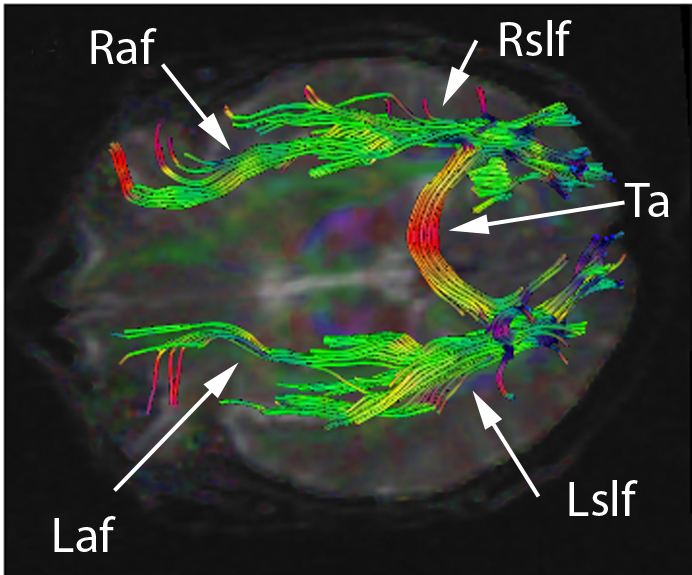
Diffusion tensor imaging of the brain shows the right and left arcuate fasciculus (Raf & Laf). Also shown are the right and left superior longitudinal fasciculus (Rslf & Lslf), and tapetum of corpus callosum (Ta). Damage to the Laf is known to cause anomic aphasia.
SpecialtyNeurology, neuropsychology Edit this on Wikidata

Anomic aphasia, also known as dysnomia, nominal aphasia, and amnesic aphasia, is a mild, fluent type of aphasia where individuals have word retrieval failures and cannot express the words they want to say (particularly nouns and verbs).[1] By contrast, anomia is a deficit of expressive language, and a symptom of all forms of aphasia, but patients whose primary deficit is word retrieval are diagnosed with anomic aphasia.[2] Individuals with aphasia who display anomia can often describe an object in detail and maybe even use hand gestures to demonstrate how the object is used, but cannot find the appropriate word to name the object.[3] Patients with anomic aphasia have relatively preserved speech fluency, repetition, comprehension, and grammatical speech.

Types

[edit]
  • Word selection anomia is caused by damage to the posterior inferior temporal area. This type of anomia occurs when the patient knows how to use an object and can correctly select the target object from a group of objects, and yet cannot name the object. Some patients with word selection anomia may exhibit selective impairment in naming particular types of objects, such as animals or colors.[4] In the subtype known as color anomia, the patient can distinguish between colors but cannot identify them by name or name the color of an object.[5] The patients can separate colors into categories, but they cannot name them.
  • Semantic anomia is caused by damage to the angular gyrus. This is a disorder in which the meaning of words becomes lost. In patients with semantic anomia, a naming deficit is accompanied by a recognition deficit. Thus, unlike patients with word selection anomia, patients with semantic anomia are unable to select the correct object from a group of objects, even when provided with the name of the target object.[4]
  • Disconnection anomia results from the severing of connections between sensory and language cortices. Patients with disconnection anomia may exhibit modality-specific anomia, where the anomia is limited to a specific sensory modality, such as hearing. For example, a patient who is perfectly capable of naming a target object when it is presented via certain sensory modalities like audition or touch, may be unable to name the same object when the object is presented visually. Thus, in such a case, the patient's anomia arises as a consequence of a disconnect between their visual cortex and language cortices.[4]
    • Patients with disconnection anomia may also exhibit callosal anomia, in which damage to the corpus callosum prevents sensory information from being transmitted between the two hemispheres of the brain. Therefore, when sensory information is unable to reach the hemisphere that is language-dominant (typically the left hemisphere in most individuals), the result is anomia. For instance, if patients with this type of disconnection anomia hold an object in their left hand, this somatosensory information about the object would be sent to the right hemisphere of the brain, but then would be unable to reach the left hemisphere due to callosal damage. Thus, this somatosensory information would fail to be transmitted to language areas in the left hemisphere, in turn resulting in the inability to name the object in the left hand. In this example, the patient would have no problem with naming, if the test object were to be held in the right hand. This type of anomia may also arise as a consequence of a disconnect between sensory and language cortices.[4]
  • Articulatory initiation anomia results from damage to the frontal area. Characteristics of this anomia are non-fluent output, word-finding pauses, deficient word lists. Patients perform better at confrontation naming tasks, the selection of a label for a corresponding picture, than word list tasks. Patients are aided in word selection by prompting, unlike those with word selection anomia.[6]
  • Phonemic substitution anomia results from damage to the inferior parietal area. Patients maintain fluent output but exhibit literal and neologistic paraphasia. Literal paraphasia is the incorrect substitution of phonemes, and neologistic paraphasia is the use of non-real words in the place of real words. Patient's naming ability is contaminated by paraphasia.[6]
  • Modality-specific anomia is caused by damage to the sensory cortex, pathways to the dominant angular gyrus, or both. In these patients, word-finding is worst in one sensory modality, for example visual or tactile.[6]

Causes

[edit]

Anomic aphasia, occurring by itself, may be caused by damage to almost anywhere in the left hemisphere and in some cases can be seen in instances of right hemisphere damage.[7] Anomia can be genetic or caused by damage to various parts of the parietal lobe or the temporal lobe of the brain due to traumatic injury, stroke, or a brain tumor.[8] While anomic aphasia is primarily caused by structural lesions, they may also originate in Alzheimer's disease (anomia may be the earliest language deficit in posterior cortical atrophy variant of Alzheimer's) or other neurodegenerative diseases.[7]

Although the main causes are not specifically known, many researchers have found other factors contributing to anomic aphasia. People with damage to the left hemisphere of the brain are more likely to have anomic aphasia. Broca's area, the speech production center in the brain, was linked to being the source for speech execution problems, with the use of functional magnetic resonance imaging (fMRI), now commonly used to study anomic patients.[9] Other experts believe that damage to Wernicke's area, which is the speech comprehension area of the brain, is connected to anomia because the patients cannot comprehend the words that they are hearing.[10]

Although many experts have believed that damage to Broca's area or Wernicke's area are the main causes of anomia, current studies have shown that damage in the left parietal lobe is the cause of anomic aphasia.[11] One study was conducted using a word repetition test as well as fMRI in order to see the highest level of activity as well as where the lesions are in the brain tissue.[11] Fridrikkson, et al. saw that damage to neither Broca's area nor Wernicke's area were the sole sources of anomia in the subjects. Therefore, the original anomia model, which theorized that damage occurred on the surface of the brain in the grey matter was debunked, and it was found that the damage was in the white matter deeper in the brain, on the left hemisphere.[11] More specifically, the damage was in a part of the nerve tract called the arcuate fasciculus, for which the mechanism of action is unknown, though it is known to connect the posterior (back) of the brain to the anterior (front) and vice versa.[12]

While anomic aphasia is associated with lesions throughout the left hemisphere, severe and isolated anomia has been considered a sign of deep temporal lobe or lateral temporo-occipital damage. Damage to these areas is seen in patients showing infarction limited to regions supplied by the dominant posterior cerebral artery (PCA) and is referred to as posterior cerebral artery syndrome.[13]

Diagnosis

[edit]

The best way to see if anomic aphasia has developed is by using verbal and imaging tests. The combination seems to be most effective, since either test done alone may give false positives or false negatives. For example, the verbal test is used to see if a speech disorder presents, and whether the problem is in speech production or comprehension. Patients with Alzheimer's disease have speech problems linked to dementia or progressive aphasias, which can include anomia.[14][15] The imaging test, mostly done using MRI scans, is ideal for lesion mapping or viewing deterioration in the brain. However, imaging cannot diagnose anomia on its own because the lesions may not be located deep enough to damage the white matter or the arcuate fasciculus. However, anomic aphasia is very difficult to associate with a specific lesion location in the brain. Therefore, the combination of speech tests and imaging tests has the highest sensitivity and specificity.[16]

Picture-naming tests, such as the Philadelphia Naming Test (PNT), are also utilized in diagnosing aphasias. Analysis of picture-naming is compared with reading, picture categorizing, and word categorizing. There is a considerable similarity among aphasia syndromes in terms of picture-naming behavior, however anomic aphasiacs produced the fewest phonemic errors and the most multiword circumlocutions. These results suggest minimal word-production difficulty in anomic aphasia relative to other aphasia syndromes.[17]

Anomic aphasia has been diagnosed in some studies using the Aachen Aphasia Test (AAT), which tests language functioning after brain injury. This test aims to: identify the presence of aphasia; provide a profile of the speaker's language functioning according to different language modalities (speaking, listening, reading, writing) and different levels of linguistic description (phonology, morphology, semantics, and syntax); give a measure of severity of any breakdown.[18] This test was administered to patients participating in a study in 2012, and researchers found that on the naming subtest of the AAT patients showed relevant naming difficulties and tended to substitute the words they could not produce with circumlocutions.[19]

The Western Aphasia Battery is another test that is conducted with the goal of classifying aphasia subtypes and rating the severity of the aphasiac impairment. The test is composed of four language and three performance domains. Syndrome classification is determined by the pattern of performance on the four language subtests, which assess spontaneous speech, comprehension, repetition, and naming.[20]

Doing a hearing test first is important, in case the patient cannot clearly hear the words or sentences needed in the speech repetition test.[21] In the speech tests, the person is asked to repeat a sentence with common words; if the person cannot identify the word, but he or she can describe it, then the person is highly likely to have anomic aphasia. However, to be completely sure, the test is given while a test subject is in an fMRI scanner, and the exact location of the lesions and areas activated by speech are pinpointed.[11] Few simpler or cheaper options are available, so lesion mapping and speech repetition tests are the main ways of diagnosing anomic aphasia.[citation needed]

Definition

[edit]

Anomic aphasia (anomia) is a type of aphasia characterized by problems recalling words, names, and numbers. Speech is fluent and receptive language is not impaired in someone with anomic aphasia.[22] Subjects often use circumlocutions (speaking in a roundabout way) to avoid a name they cannot recall or to express a certain word they cannot remember. Sometimes, the subject can recall the name when given clues. Additionally, patients are able to speak with correct grammar; the main problem is finding the appropriate word to identify an object or person.[citation needed]

Sometimes, subjects may know what to do with an object, but still not be able to give a name to the object. For example, if a subject is shown an orange and asked what it is called, the subject may be well aware that the object can be peeled and eaten, and may even be able to demonstrate this by actions or even verbal responses; however, they cannot recall that the object is called an "orange". Sometimes, when a person with this condition is multilingual, they might confuse the language they are speaking in trying to find the right word (inadvertent code-switching).[citation needed]

Management

[edit]

No method is available to completely cure anomic aphasia. However, treatments can help improve word-finding skills.

Although a person with anomia may find recalling many types of words to be difficult, such as common nouns, proper nouns, verbs, etc., many studies have shown that treatment for object words, or nouns, has shown promise in rehabilitation research.[21] The treatment includes visual aids, such as pictures, and the patient is asked to identify the object or activity. However, if that is not possible, then the patient is shown the same picture surrounded by words associated with the object or activity.[23][24] Throughout the process, positive encouragement is provided. The treatment shows an increase in word finding during treatment; however, word identifying decreased two weeks after the rehabilitation period.[21] Therefore, it shows that rehabilitation effort needs to be continuous for word-finding abilities to improve from the baseline. The studies show that verbs are harder to recall or repeat, even with rehabilitation.[21][25]

Other methods in treating anomic aphasia include circumlocution-induced naming therapy (CIN), wherein the patient uses circumlocution to assist with their naming rather than just being told to name the item pictured after given some sort of cue. Results suggest that the patient does better in properly naming objects when undergoing this therapy because CIN strengthens the weakened link between semantics and phonology for patients with anomia, since they often know what an object is used for, but cannot verbally name it.[26]

Anomia is often challenging for the families and friends of those affected by it. One way to overcome this is computer-based treatment models, effective especially when used with clinical therapy. Leemann et al. provided anomic patients with computerized-assisted therapy (CAT) sessions, along with traditional therapy sessions using treatment lists of words. Some of the patients received a drug known to help relieve symptoms of anomia (levodopa), while others received a placebo. The researchers found that the drug had no significant effects on improvement with the treatment lists, but almost all of the patients improved after the CAT sessions. They concluded that this form of computerized treatment is effective in increasing naming abilities in anomic patients.[27]

Additionally, one study researched the effects of using "excitatory (anodal) transcranial direct current stimulation" over the right temporoparietal cortex, a brain area that seems to correlate to language. The electrical stimulation seemed to enhance language training outcome in patients with chronic aphasia.[28]

Contextual repetition priming treatment is a technique which involves repeated repetition of names of pictures that are related semantically, phonologically, or are unrelated. Patients with impaired access to lexical-semantic representations show no long-term improvement in naming, but patients with good access to semantics show long-term benefits.[29]

Development of self-cueing strategies can also facilitate word retrieval. Patients identify core words that can be retrieved without struggle, and establish a relationship between cue words and words that begin with the same sound but cannot be retrieved. Patients then learn to use the cue word to facilitate word retrieval for the target object.[30]

Epidemiology

[edit]

Many different populations can and do have anomia. For instance, deaf patients who have had a stroke can demonstrate semantic and phonological errors, much like hearing anomic patients. Researchers have called this subtype sign anomia.[31]

Multilingual patients typically experience anomia to a greater degree in just one of their fluent languages. However, evidence conflicts as to which language – first or second – is impacted more.[32][33]

Research on children with anomia has indicated that children who undergo treatment are, for the most part, able to gain back normal language abilities, aided by brain plasticity. However, longitudinal research on children with anomic aphasia due to head injury shows that even several years after the injury, some signs of deficient word retrieval are still observed. These remaining symptoms can sometimes cause academic difficulties later on.[34]

Patients

[edit]

This disorder may be extremely frustrating for people with and without the disorder. Although the persons with anomic aphasia may know the specific word, they may not be able to recall it and this can be very difficult for everyone in the conversation. Positive reinforcements are helpful.[21]

Although not many literary cases mention anomic aphasia, many nonfiction books have been written about living with aphasia. One of them is The Man Who Lost His Language by Sheila Hale. It is the story of Hale's husband, John Hale, a scholar who had had a stroke and lost speech formation abilities. In her book, Hale also explains the symptoms and mechanics behind aphasia and speech formation. She adds the emotional components of dealing with a person with aphasia and how to be patient with the speech and communication.[35][36]

See also

[edit]

References

[edit]
[edit]
Revisions and contributorsEdit on WikipediaRead on Wikipedia
from Grokipedia
Anomic aphasia, also known as nominal or anomic aphasia, is a subtype of characterized by a primary deficit in word retrieval and naming, where individuals experience significant difficulty finding specific words despite maintaining fluent speech, intact comprehension of , and preserved repetition abilities. This condition represents a milder form of compared to more severe variants, often resulting from small or diffuse lesions in the dominant hemisphere's network, particularly in the peri-Sylvian region including areas like the or temporal-parietal junction. Common causes include , traumatic brain injury, brain tumors, or neurodegenerative processes, with anomic aphasia frequently emerging as one of the most prevalent types among survivors, affecting approximately 25%–40% of whom develop some form of annually in the United States. Symptoms typically manifest as circumlocution—using descriptive phrases or generic terms like "thing" or "stuff" in place of precise nouns—while , , and overall conversational flow remain largely unaffected, allowing individuals to communicate effectively in many contexts despite frustration from word-finding blocks. involves comprehensive clinical assessment by speech-language pathologists, utilizing standardized tools such as the Boston Diagnostic Aphasia Examination or to evaluate naming, fluency, comprehension, and repetition, often confirming anomic aphasia when deficits are isolated to lexical access without broader impairments. Treatment primarily focuses on speech-language targeting word retrieval through techniques like semantic feature analysis, phonological cueing, or augmentative communication strategies, alongside management of underlying neurological causes to promote functional recovery and adaptation. Anomia itself is a near-universal feature across aphasia syndromes, but in its isolated form, anomic aphasia highlights the brain's modular organization of , underscoring the importance of targeted interventions for improving quality of life.

Overview

Definition

Anomic aphasia, also referred to as anomia or nominal aphasia, is a mild form of fluent primarily characterized by difficulties in word retrieval, especially for nouns and verbs, despite preserved speech fluency, comprehension, repetition, and grammatical structure. This condition manifests as an inability to name correctly perceived objects, people, or concepts, while other language functions remain relatively intact. It is one of the most common types of in clinical settings, particularly due to its subtle presentation, often emerging as an isolated symptom or as a residual deficit following recovery from more severe aphasic syndromes. A hallmark of anomic aphasia is the use of circumlocutions, where individuals compensate for retrieval failures by providing descriptive phrases or approximations instead of the target word, such as referring to a "zebra" as a "horse with stripes" or a "refrigerator" as "the thing that keeps food cold." These strategies highlight preserved semantic knowledge but impaired lexical access, allowing patients to maintain conversational flow without significant pauses or frustration, though the speech may appear vague or indirect. Historically, the disorder has been known by various terms, including dysnomia, amnesic aphasia, and nominal dysphasia, reflecting early emphases on memory-like naming deficits or specific lexical impairments. In contrast to other aphasias, such as Broca's aphasia (which features non-fluent, effortful speech with impaired grammar) or (marked by fluent but incomprehensible output due to poor comprehension), anomic aphasia preserves overall modalities, isolating the deficit to nominative functions. This selective impairment underscores its classification as a fluent aphasia subtype, often linked to subtle disruptions in neural pathways supporting lexical selection rather than broader processing.

Historical Background

The recognition of anomic aphasia, characterized by isolated naming difficulties, emerged within the broader 19th-century advancements in neurology that sought to localize language functions in the brain. Early observations of naming deficits date back to this period, with French neurologist Paul Broca's 1861 case studies of patients like Leborgne highlighting distinctions between motor speech impairments and more selective word-finding problems, laying foundational groundwork for separating expressive deficits from pure anomia. These descriptions marked the initial scientific attention to aphasia subtypes beyond global speech loss, though anomic features were not yet isolated as a distinct entity. In 1874, German neurologist advanced the classification of fluent in his seminal work Der aphasische Symptomenkomplex, describing sensory or receptive forms that included prominent word retrieval failures amid preserved fluency, though typically with comprehension deficits—hallmarks later refined into anomic with intact comprehension. Wernicke's model emphasized lesions in the posterior , influencing subsequent understandings of fluent variants where naming deficits predominate. This contributed to a growing recognition of anomic-like syndromes as part of the spectrum during the late 19th and early 20th centuries. The terminology evolved significantly in the 20th century, shifting from "amnesic aphasia" in early classifications—reflecting perceived memory-like lapses in word access—to "anomic aphasia" by the mid-20th century, emphasizing the core naming impairment. This change gained traction post-1950s, aligning with more precise linguistic analyses that avoided conflating it with broader memory disorders. In the 1960s, American neurologist Norman Geschwind further integrated anomic aphasia into frameworks, proposing that interruptions in pathways, such as the arcuate fasciculus, could isolate lexical retrieval from other processes in fluent aphasias. His 1965 treatise Disconnexion Syndromes in Animals and Man highlighted such mechanisms, bridging classical models with modern . Twentieth-century case studies, particularly those by Soviet neuropsychologist Alexander Luria, underscored anomic aphasia as a "pure" word retrieval disorder, distinct from articulatory or semantic breakdowns. In works like Factors and Forms of Aphasia (1964), Luria detailed acoustic-amnestic cases where patients struggled to retain and access verbal traces, often repeating words incorrectly (e.g., confusing "zabor" for "sabor") due to temporal lobe lesions, yet maintained fluent spontaneous speech. These observations emphasized its role as an isolated lexical deficit, influencing therapeutic approaches focused on retrieval facilitation.

Clinical Presentation

Core Symptoms

The core symptom of anomic aphasia is anomia, characterized by impaired word retrieval that manifests as difficulty naming objects, people, places, or actions during speech or writing. This leads to frequent pauses in conversation, production of empty speech lacking substantive content, and use of indefinite terms or circumlocutions, such as describing a "" as "the thing you use to cut paper" instead of retrieving the specific . Despite these retrieval failures, speech remains fluent and grammatically intact, with preserved prosody and sentence structure, though the overall content is sparse due to repeated naming blocks. Individuals with anomic aphasia commonly struggle with naming concrete nouns more severely than verbs, alongside challenges in identifying colors or body parts, which can result in vague or approximate descriptions to compensate. Semantic paraphasias occur relatively frequently, where a related but incorrect word is substituted—such as saying "" for ""—reflecting a partial grasp of the target concept's meaning. In contrast, phonemic errors, involving sound-based substitutions, are rare, distinguishing anomic aphasia from other fluent aphasias like Wernicke's. These production deficits often cause significant in daily communication, as comprehension of spoken and remains largely intact, allowing individuals to understand others while struggling to express precise ideas. For instance, a person might fully comprehend a question about a recent event but respond with hesitant, circumlocutory phrases that fail to convey the intended details, leading to or repeated clarification requests from listeners.

Associated Features

Individuals with anomic aphasia often exhibit mild deficits in verbal specifically related to lexical-semantic representations, such as temporary activation of word forms, without significant impairment in . These lexical memory issues contribute to challenges in retrieving specific words during production tasks. Additionally, slight hesitations or difficulties may occur in reading and writing due to word-finding problems, though comprehension remains largely intact; for instance, and written naming can be impaired while overall fluency is preserved. The awareness of these deficits frequently leads to behavioral impacts, including heightened anxiety and frustration during communication attempts, prompting avoidance of social conversations. Family members may experience frustration from repeated unsuccessful interactions, further straining relationships and reducing participation in daily activities. Anomic aphasia can extend to non-spoken modalities, such as in deaf individuals, where sign anomia manifests as difficulty retrieving specific signs, often with semantic or phonological errors, while gestures remain relatively preserved. It may also affect specific domains, like numbers, in cases of category-specific anomia, where naming numerals is disproportionately impaired compared to other categories. In multilingual patients, anomia can be language-specific, with word retrieval often better preserved in the dominant language due to factors like acquisition order and therapy focus, leading to differential recovery across languages. Symptoms of anomic aphasia may progress in underlying neurodegenerative conditions like , evolving from isolated word-finding difficulties to broader impairments in comprehension and over years.

Classification

Subtypes

Anomic aphasia encompasses several subtypes distinguished by the specific nature of the naming deficit and the associated brain lesions, reflecting disruptions at different stages of lexical processing. These highlight the heterogeneity of anomic impairments, where word retrieval failures can stem from issues in selection, semantic access, or connectivity between language and perceptual areas. Word selection anomia, the most prevalent subtype, involves difficulty in retrieving the precise lexical form of a word despite intact semantic and comprehension. Patients often produce circumlocutions or functional descriptions (e.g., "the thing you cut with" for "") and show occasional semantic paraphasias, but they benefit little from phonemic cues and perform normally on repetition and matching tasks. This subtype is typically linked to lesions in the posterior inferior , which disrupts the selection process from the . Semantic anomia arises from impaired access to word meanings, leading to fluent but empty speech with poor comprehension of single words or sentences. Individuals fail not only to name objects but also to match them semantically or understand definitions, distinguishing this from pure selection deficits. Lesions are commonly located in the anterior and medial regions of the dominant hemisphere, affecting the integration of conceptual knowledge with linguistic output. Disconnection anomia results from disrupted pathways linking perceptual or conceptual representations to naming centers, preventing the association between sensory input and verbal labels. This subtype includes category-specific forms, where naming fails for particular domains (e.g., animals or tools) due to severed connections between modality-specific cortices and the , and callosal variants causing anomia for objects presented to the non-dominant hand. Lesions often involve tracts linking perceptual and language areas, such as the inferior longitudinal fasciculus. Unique manifestations include color anomia, characterized by inability to name colors despite recognizing and matching them, associated with ventral occipitotemporal lesions that isolate color processing from lexical areas. Similarly, optic aphasia features failure to name visually presented objects while retaining the ability to name them tactilely or from verbal description, with preserved , stemming from left occipito-temporal damage that impairs visual-semantic access. Modality-specific anomia further differentiates disconnection variants, such as visual anomia (naming failure for seen objects but success with touch) versus tactile anomia, reflecting lesions in sensory pathways to hubs; phonemic substitution variants involve error-prone word production with sound-based paraphasias, akin to mild conduction features but centered on retrieval. These subtypes frequently overlap, with the posterior inferior temporal region serving as a common locus for many anomic disturbances due to its role in converging lexical and perceptual functions.

Differential Diagnosis

Anomic aphasia is distinguished from other classic aphasia syndromes primarily by its hallmark word-finding difficulties in the context of preserved fluency, comprehension, and repetition. In contrast, Broca's aphasia features nonfluent, effortful speech production with relatively intact comprehension but impaired repetition, often resulting from lesions in the frontal regions. , on the other hand, involves fluent but nonsensical speech with poor comprehension and repetition deficits, typically linked to damage. presents with fluent speech and good comprehension but notable repetition impairments accompanied by phonemic paraphasias, arising from disruptions in the arcuate fasciculus. Differentiating anomic aphasia from non-aphasic conditions requires ruling out broader cognitive, sensory, or psychological factors that may mimic word-retrieval issues. Dementia-related anomia, such as in Alzheimer's disease, can overlap with anomic aphasia through early word-finding pauses, but dementia involves additional deficits in memory and executive function beyond isolated language impairment. Hearing loss may simulate comprehension challenges in anomic aphasia, yet it stems from auditory processing deficits without intrinsic language disruption, and targeted audiometric evaluation can clarify this. Psychiatric conditions like depression can produce transient word-finding hesitations due to cognitive slowing or altered mental status, but these lack the persistent, lesion-related specificity of anomic aphasia and resolve with mood stabilization. Anomic aphasia frequently co-occurs with mild , where it may represent an initial language manifestation, yet its intact fluency and lack of widespread comprehension deficits differentiate it from global aphasia, which encompasses severe impairments across all language modalities. Diagnostic clues for anomic aphasia include preserved repetition and comprehension, which help distinguish it from variants; for instance, semantic variant shows comprehension deficits alongside anomia, while logopenic variant features repetition impairments, often signaling underlying Alzheimer's pathology. Naming tests, such as confrontation naming tasks, can highlight these selective deficits without broader cognitive decline. In bilingual individuals, anomic aphasia must be differentiated from normal code-switching errors in multilingualism, where pathological language mixing arises from word-retrieval failures rather than voluntary shifts between languages, often more pronounced in the weaker language.

Etiology and Pathophysiology

Primary Causes

The primary cause of anomic aphasia is vascular damage, particularly ischemic strokes in the left cerebral hemisphere that affect territories supplied by the middle cerebral artery, which account for the majority of cases. Small strokes are especially common etiologies due to their prevalence and tendency to produce isolated word-retrieval deficits. Traumatic brain injuries, often involving damage to temporal-parietal regions, represent another significant cause, typically resulting from head trauma that disrupts language networks. Degenerative conditions such as and frequently feature anomia as an early and prominent symptom, with progressive deterioration leading to persistent naming difficulties. Additional etiologies include brain tumors that impinge on language areas, infections like causing focal inflammation and necrosis in temporal lobes, and rare developmental forms observed in children. Genetic factors play a minor role but are implicated in familial variants of , where inherited mutations contribute to early-onset anomia. Post-surgical complications, such as those following temporal lobe resections for in dominant-hemisphere patients, can also induce transient or persistent anomic aphasia in up to 40% of cases. Overall, anomic aphasia occurs more frequently in older adults, reflecting the heightened risk of vascular events with advancing age.

Neural Mechanisms

Anomic aphasia arises primarily from damage to specific regions in the dominant hemisphere, particularly the left posterior inferior temporal gyrus (Brodmann area 37), which is critical for object naming and lexical retrieval. Lesions in this area disrupt the integration of visual object recognition with semantic processing, leading to selective naming deficits while sparing comprehension. The angular gyrus, located in the inferior parietal lobule, also plays a key role, as damage here impairs the mapping of conceptual knowledge to verbal output, often resulting in circumlocution or empty speech. Additionally, disruptions to white matter tracts such as the arcuate fasciculus, which connects posterior temporal and frontal language areas, contribute to anomia by interrupting the flow of information necessary for word selection. At the pathophysiological level, anomic aphasia involves a breakdown in the lexical-semantic network, where semantic concepts fail to activate corresponding phonological word forms. This disconnection prevents the efficient retrieval of specific lexical items from the , despite intact semantic knowledge and fluent . The core deficit lies in the weakened links between conceptual representations in the and phonological output pathways in frontal regions, leading to impaired access during confrontation naming or spontaneous discourse. The connectivity model, building on Geschwind's framework, posits that anomic aphasia results from severed pathways between areas (visual and auditory cortices) and core naming centers in the perisylvian language network. In this model, lesions isolate semantic hubs from articulatory mechanisms, mimicking a "central" anomia where word forms are inaccessible despite preserved comprehension. Although predominantly associated with left-hemisphere damage, right-hemisphere lesions can induce anomia, particularly in non-dominant functions such as proper name retrieval or visuospatial naming tasks. Functional MRI studies reveal compensatory hyperactivation in right-hemisphere homologues, including the and temporal regions, which may support partial recovery by rerouting lexical access.

Diagnosis

Assessment Tools

Assessment of anomic aphasia begins with initial screening to exclude non-neurological contributors to communication difficulties, such as hearing impairment, which can mimic or exacerbate word-finding issues. is commonly employed to evaluate peripheral hearing thresholds in patients presenting with language deficits, as up to 21% of individuals with may have co-occurring that requires differentiation from aphasic symptoms. Standardized naming tests are central to evaluating the core deficit in anomic aphasia, which involves impaired lexical retrieval despite preserved comprehension and fluency. The Boston Naming Test (BNT), consisting of 60 line drawings of objects increasing in difficulty, serves as a primary tool for assessing confrontation naming ability and detecting anomia severity. Scores on the BNT below established norms, particularly for low-frequency items, indicate word-finding impairments characteristic of anomic aphasia. For deeper error analysis, the Philadelphia Naming Test (PNT), a 175-item picture-naming battery, quantifies response accuracy and categorizes errors to inform psycholinguistic models of lexical access deficits in . Comprehensive aphasia batteries provide a broader profile to confirm anomic while assessing related domains like and comprehension. The (WAB) evaluates spontaneous speech, auditory comprehension, repetition, and naming, yielding an Quotient that classifies anomic when naming scores are disproportionately low relative to intact and comprehension. Similarly, the Aachen Aphasia Test (AAT) measures naming performance alongside token test comprehension and repetition, aiding in the diagnosis of anomic profiles through subtest discrepancies. These batteries ensure differential identification from other types by highlighting preserved non-naming functions. Functional assessments extend beyond static naming to dynamic tasks that reveal real-world challenges. Object and action naming tasks, often embedded in batteries like the BNT or PNT, probe category-specific deficits, while confrontation naming—directly identifying presented stimuli—is contrasted with descriptive naming, where patients provide circumlocutory details around unnamed items. Analysis of error types, such as no responses, semantic paraphasias (e.g., "" for "zebra"), circumlocutions (e.g., "the thing you ride" for ""), or phonemic errors, further subtypes anomic aphasia and guides targeted interventions by pinpointing retrieval stage breakdowns.

Imaging and Confirmation

Structural imaging techniques, such as (MRI) and computed tomography (CT) scans, are essential for identifying the underlying associated with anomic aphasia, including ischemic strokes, tumors, or primarily in the left temporal and parietal lobes. These modalities detect structural abnormalities that correlate with word retrieval deficits, with MRI offering superior resolution for delineating boundaries compared to CT, which is often used in acute settings to rule out hemorrhage. For instance, in cases of vascular anomic aphasia, CT or MRI can reveal infarcts in the or surrounding , confirming the localization of damage. Functional neuroimaging methods, including functional MRI (fMRI) and (PET), provide insights into language network during naming tasks, revealing hypoactivation in perisylvian regions among individuals with anomic aphasia. fMRI studies demonstrate reduced BOLD signals in the left and during overt picture naming, highlighting impaired semantic access. Similarly, PET paradigms show discrepancies in fluent anomic aphasia, where semantic tasks elicit lower metabolic activity in the temporal-parietal junction compared to overlearned speech like counting. Advanced techniques like diffusion tensor imaging (DTI) assess the integrity of tracts, such as the arcuate fasciculus, which connects frontal and temporal areas and is often disrupted in anomic aphasia. DTI metrics, including , reveal reduced tract coherence in the left arcuate fasciculus, predicting naming impairments and distinguishing anomic from other aphasia subtypes. Additionally, (EEG) and (MEG) enable real-time mapping of word retrieval failures, capturing event-related potentials or magnetic fields indicative of lexical access delays in temporal regions. Post-2020 advancements incorporate AI-enhanced analysis, where models integrate structural and functional data to classify aphasia severity and predict outcomes from patterns. The confirmation process for anomic aphasia involves correlating findings with clinical symptoms to achieve a definitive , ensuring that observed lesions in temporal-parietal regions align with selective naming deficits while sparing other language functions. This multimodal approach, combining structural, functional, and data, enhances diagnostic accuracy by verifying etiology and ruling out mimics like progressive disorders.

Management and Treatment

Therapeutic Approaches

Therapeutic approaches for anomic aphasia primarily involve speech-language therapy aimed at improving word retrieval, with limited pharmacological options typically reserved for underlying etiologies such as . Speech therapy techniques focus on semantic processing to strengthen associations between words and their meanings, as word-finding difficulties stem from disrupted lexical access rather than motor speech issues. A key method is semantic feature analysis (SFA), which involves generating attributes, functions, and associations for target words to build semantic networks and facilitate naming. In SFA, patients complete worksheets listing features like category, properties, and actions related to nouns (e.g., for "apple": , , eat), leading to improved confrontation naming accuracy for trained items in individuals with , including anomic subtypes. Studies show SFA yields significant gains in word retrieval, though generalization to untrained words is often limited. Constraint-induced language therapy (CILT) is another established approach, promoting verbal output by restricting non-verbal communication during intensive sessions (typically 2-3 hours daily for 2 weeks) and using shaped phrases to encourage naming. CILT has demonstrated positive effects on naming and overall production in chronic poststroke , with meta-analyses indicating improvements comparable to other , particularly for trained stimuli. This method leverages principles of massed practice to enhance , resulting in sustained verbal gains in fluent profiles like anomic. Therapy often prioritizes nouns over verbs, as patients with anomic aphasia typically show better response to retrieval tasks due to stronger semantic representations for objects compared to actions. For verbs, which are more impaired in some cases, interventions incorporate action descriptions and thematic roles (e.g., agent and ) to link verbs to associated nouns, improving production through contextual embedding. This noun-verb distinction guides treatment , with noun-focused SFA often yielding higher accuracy rates than verb-specific exercises. Pharmacological interventions are limited and adjunctive, with no medications routinely recommended for anomic aphasia as of November 2025 due to insufficient evidence. inhibitors like donepezil show modest benefits primarily in dementia-related anomic aphasia, such as primary progressive variants. Donepezil (5-10 mg daily) enhances cholinergic activity to support language recovery, with open-label studies reporting 12-15% improvements in aphasia quotient scores for naming and comprehension after 4-16 weeks in poststroke cases. Evidence is stronger when combined with , but standalone use is not routinely recommended due to variable efficacy and side effects like . Group therapy enhances social communication alongside naming skills, with randomized controlled trials demonstrating naming improvements in chronic aphasia through structured interactions like modified SFA in small cohorts. Participants in group settings show significant gains in confrontation naming for trained items, comparable to individual therapy, though effects may not generalize broadly or persist long-term without maintenance. These sessions foster confidence and reduce isolation, with reported improvements in verbal output during discourse. Family involvement is crucial, with caregiver training in cueing techniques—such as providing semantic hints (e.g., "it's a ") or phonological cues (e.g., initial sounds)—to support word retrieval in daily conversations. Programs teach partners to use hierarchical cues without over-prompting, leading to better communication outcomes in settings for individuals with anomic aphasia. Such improves partner responsiveness and patient independence, with evidence from partner-focused interventions showing sustained functional gains.

Emerging Interventions

Recent advancements in techniques have shown promise for enhancing naming abilities in by targeting key brain regions such as the . Repetitive (rTMS) applied to the right has demonstrated improvements in picture naming accuracy among chronic post-stroke patients, with effects persisting up to eight months in some cases. Similarly, anodal (tDCS) over the inferior parietal region, including the , combined with cognitive training, has improved lexical retrieval in individuals with anomic variants of and . A 2025 study further indicated that semantic and phonological baseline abilities predict the efficacy of TMS in boosting naming performance in post-stroke . Technology-based interventions are increasingly incorporating adaptive digital tools to support naming drills in anomic . The Constant Therapy app delivers personalized, evidence-based exercises focusing on word retrieval, with users engaging in adaptive naming tasks that adjust difficulty based on performance; clinical evaluations in 2025 confirmed its utility in improving quotient scores in post-stroke patients through consistent home-based practice. Complementing this, AI-driven systems provide real-time feedback during therapy, enhancing articulation and word production by analyzing phonetic patterns and offering corrective prompts; a 2024 review highlighted their role in scalable treatment, particularly for anomia, by simulating conversational interactions. These tools address access barriers by enabling intensive, remote practice beyond traditional clinic sessions, including teletherapy approaches shown effective for progressive variants as of 2025. In , including anomic subtypes associated with Alzheimer's pathology, pharmacologic options like cholinesterase inhibitors such as donepezil have shown modest cognitive benefits by targeting amyloid-related pathways. Early 2020s stem cell trials for post-stroke recovery, using mesenchymal s, have reported preliminary improvements in language function among aphasia patients by promoting neural repair, though aphasia-specific outcomes remain secondary to motor gains in most studies. Virtual reality (VR) naming tasks offer immersive practice environments that enhance engagement and retention in anomic aphasia rehabilitation. A 2023 study demonstrated that VR-based lexical improved word production accuracy by 25% in post-stroke patients through contextual naming scenarios, outperforming traditional tablet-based drills. Additionally, AI-enabled virtual lesion modeling in large language models simulates aspects of to better understand language mechanisms; a 2025 study used this approach by disabling components in mixture-of-experts models to model symptoms. Despite these innovations, emerging interventions for anomic aphasia face challenges, including a scarcity of large-scale randomized trials to establish long-term efficacy across diverse etiologies. Emphasis is shifting toward , integrating and genetic data to customize and tech-based therapies based on subtype and lesion location.

Epidemiology and Prognosis

Prevalence and Incidence

Anomic aphasia affects approximately 17% of individuals with post-stroke , translating to roughly 5% of all stroke survivors given that occurs in 25-40% of such cases. In progressive dementias, particularly early-stage , anomic aphasia emerges as one of the most prevalent language impairments. In the logopenic variant of (PPA), often linked to Alzheimer's pathology, anomic features such as word-finding difficulties are a core initial presentation, though PPA accounts for a minority of AD cases overall. In the United States, an estimated 25,000–35,000 new cases of anomic aphasia arise annually from , based on ∼180,000 total new cases per year (primarily -related) and the subtype's ∼17% proportion. Incidence rates are notably higher in aging populations, with individuals over 65 years facing elevated risk due to increased and prevalence. Demographically, anomic aphasia predominantly affects those with left-hemisphere damage in right-handed individuals, as dominance is typically lateralized to the left; cases involving left-handed individuals or right-hemisphere lesions remain rare, occurring in fewer than 5% of instances. distribution is roughly equal overall, though vascular factors contribute to a slight skew in stroke-related cases. In children, anomic aphasia is rare, particularly post-traumatic, often linked to , with limited epidemiological data due to underdiagnosis; recovery tends to be more favorable than in adults due to . Multilingual individuals exhibit higher susceptibility to language-specific anomia, where word retrieval deficits may vary across languages, complicating prevalence estimates in diverse populations. Globally, with ∼15 million annual strokes and rising (∼55 million cases as of 2025), anomic aphasia incidence is projected to increase, though subtype-specific data remain limited outside high-income countries. Projections indicate rising incidence of anomic aphasia, driven by aging populations and increasing prevalence, including Alzheimer's-related variants. As of 2024, overall prevalence is increasing alongside dementia trends.

Recovery Patterns

Recovery from anomic aphasia typically exhibits a characterized by significant spontaneous improvement in the acute phase, followed by stabilization or further gains with therapeutic intervention in chronic cases. In the initial three months post-onset, particularly after , significant spontaneous improvement in language function, including naming, often occurs due to resolution of acute disruptions like , with gains typically ranging 20-40% in milder cases. Complete recovery is frequent in anomic aphasia compared to more severe types, occurring in a substantial proportion of cases within the first year. Several factors influence recovery outcomes, with younger age at onset, smaller size, and prompt initiation of intervention predicting superior . Early rehabilitation enhances neural reorganization, leading to better long-term function, while larger lesions or prior correlate with poorer resolution. In contrast, when anomic aphasia arises from degenerative conditions like , symptoms often progress rather than remit, necessitating ongoing monitoring. Children's greater brain plasticity facilitates favorable recovery in most acquired anomic aphasia cases, with many achieving substantial normalization through adaptive reorganization. Adults, however, typically see average naming gains of 10-30% with combined behavioral approaches, though variability depends on initial severity, therapy intensity, and characteristics. Long-term, a notable proportion of survivors retain mild persistent anomia, particularly in word retrieval, despite overall functional through compensatory strategies. Recent 2022 research highlights improved prognosis through integrated therapies, including paired with speech-language interventions, which augment naming recovery beyond traditional methods alone.

References

Add your contribution
Related Hubs
Contribute something
User Avatar
No comments yet.