Hubbry Logo
EdemaEdemaMain
Open search
Edema
Community hub
Edema
logo
8 pages, 0 posts
0 subscribers
Be the first to start a discussion here.
Contribute something
Edema
Edema
from Wikipedia

Edema
Other namesOedema, œdema, fluid retention, water retention, dropsy, hydropsy
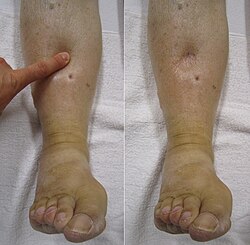
"Pitting" edema
Pronunciation
SpecialtyCardiology, nephrology
SymptomsSkin which feels tight, area may feel heavy[1]
Usual onsetSudden or gradual[2]
TypesGeneralized, localized[2]
CausesVenous insufficiency, heart failure, kidney problems, low protein levels, liver problems, deep vein thrombosis, lymphedema[1][2]
Diagnostic methodBased on a physical exam[3]
TreatmentBased on cause[2]

Edema (American English), also spelled oedema (Commonwealth English), and also known as fluid retention, swelling, dropsy and hydropsy, is the build-up of fluid in the body's tissue.[1][4] Most commonly, the legs or arms are affected.[1] Symptoms may include skin that feels tight, the area feeling heavy, and joint stiffness.[1] Other symptoms depend on the underlying cause.[2]

Causes may include venous insufficiency, heart failure, kidney problems, low protein levels, liver problems, deep vein thrombosis, infections, kwashiorkor, angioedema, certain medications, and lymphedema.[1][2] It may also occur in immobile patients (stroke, spinal cord injury, aging), or with temporary immobility such as prolonged sitting or standing, and during menstruation or pregnancy.[1] The condition is more concerning if it starts suddenly, or pain or shortness of breath is present.[2]

Treatment depends on the underlying cause.[2] If the underlying mechanism involves sodium retention, decreased salt intake and a diuretic may be used.[2] Elevating the legs and support stockings may be useful for edema of the legs.[3] Older people are more commonly affected.[3] The word is from the Ancient Greek οἴδημα oídēma meaning 'swelling'.[5]

Signs and symptoms

[edit]

Specific area

[edit]

An edema will occur in specific organs as part of inflammation, tendinitis or pancreatitis. Certain organs develop edema through tissue specific mechanisms. Examples of edema in specific organs:

  • Peripheral edema ("dependent" edema of legs) is extracellular fluid accumulation in the lower extremities caused by the effects of gravity, and occurs when fluid pools in the lower parts of the body, including the feet, legs, or hands.[6] This often occurs in immobile people, such as paraplegics or quadriplegics, pregnant women, or in otherwise healthy people due to hypervolemia or maintaining a standing or seated posture for an extended time.[6] It can occur due to diminished venous return of blood to the heart due to congestive heart failure or pulmonary hypertension.[6] It can also occur in people with increased hydrostatic venous pressure or decreased oncotic venous pressure, due to obstruction of lymphatic or venous vessels draining the lower extremity. Certain drugs (for example, amlodipine) can cause edema of the feet.
  • Cerebral edema is extracellular fluid accumulation in the brain.[1] It can occur in toxic or abnormal metabolic states and conditions such as systemic lupus or reduced oxygen at high altitudes. It causes drowsiness or loss of consciousness, leading to brain herniation and death.
  • Pulmonary edema occurs when the pressure in blood vessels in the lung is raised because of obstruction to the removal of blood via the pulmonary veins. This is usually due to failure of the left ventricle of the heart. It can also occur in altitude sickness or on inhalation of toxic chemicals. Pulmonary edema produces shortness of breath. Pleural effusions may occur when fluid also accumulates in the pleural cavity.[7]
  • Edema may also be found in the cornea of the eye with glaucoma, severe conjunctivitis, keratitis, or after surgery. Affected people may perceive coloured haloes around bright lights.
  • Edema surrounding the eyes is called periorbital edema (puffy eyes) . The periorbital tissues are most noticeably swollen immediately after waking, perhaps as a result of the gravitational redistribution of fluid in the horizontal position.
  • Common appearances of cutaneous edema are observed with mosquito bites, spider bites, bee stings (wheal and flare), and skin contact with certain plants such as poison ivy or western poison oak,[8] the latter of which are termed contact dermatitis.
  • Another cutaneous form of edema is myxedema, which is caused by increased deposition of connective tissue. In myxedema (and a variety of other rarer conditions) edema is caused by an increased tendency of the tissue to hold water within its extracellular space. In myxedema, this is due to an increase in hydrophilic carbohydrate-rich molecules (perhaps mostly hyaluronin) deposited in the tissue matrix. Edema forms more easily in dependent areas in the elderly (sitting in chairs at home or on aeroplanes) and this is not well understood. Estrogens alter body weight in part through changes in tissue water content. There may be a variety of poorly understood situations in which transfer of water from tissue matrix to lymphatics is impaired because of changes in the hydrophilicity of the tissue or failure of the 'wicking' function of terminal lymphatic capillaries.
  • Myoedema is localized mounding of muscle tissue due to percussive pressure, such as flicking the relaxed muscle with the forefinger and thumb.[medical citation needed] It produces a mound, visible, firm and non-tender at the point of tactile stimulus approximately 1–2 seconds after stimulus, subsiding back to normal after 5–10 seconds. It is a sign in hypothyroid myopathy, such as Hoffmann syndrome.[9]
  • In lymphedema, abnormal removal of interstitial fluid is caused by failure of the lymphatic system.[medical citation needed] This may be due to obstruction from, for example, pressure from a cancer or enlarged lymph nodes, destruction of lymph vessels by radiotherapy, or infiltration of the lymphatics by infection (such as elephantiasis). It is most commonly due to a failure of the pumping action of muscles due to immobility, most strikingly in conditions such as multiple sclerosis, or paraplegia. It has been suggested that the edema that occurs in some people following use of aspirin-like cyclo-oxygenase inhibitors such as ibuprofen or indomethacin may be due to inhibition of lymph heart action.

Generalized

[edit]

A rise in hydrostatic pressure occurs in cardiac failure. A fall in osmotic pressure occurs in nephrotic syndrome and liver failure.[10]

Causes of edema that are generalized to the whole body can cause edema in multiple organs and peripherally. For example, severe heart failure can cause pulmonary edema, pleural effusions, ascites and peripheral edema. Such severe systemic edema is called anasarca. In rare cases, a parvovirus B19 infection may cause generalized edemas.[11]

Although a low plasma oncotic pressure is widely cited for the edema of nephrotic syndrome, most physicians note that the edema may occur before there is any significant protein in the urine (proteinuria) or fall in plasma protein level. Most forms of nephrotic syndrome are due to biochemical and structural changes in the basement membrane of capillaries in the kidney glomeruli, and these changes occur, if to a lesser degree, in the vessels of most other tissues of the body. Thus the resulting increase in permeability that leads to protein in the urine can explain the edema if all other vessels are more permeable as well.[12]

As well as the previously mentioned conditions, edemas often occur during the late stages of pregnancy in some women. This is more common with those of a history of pulmonary problems or poor circulation also being intensified if arthritis is already present in that particular woman. Women who already have arthritic problems most often have to seek medical help for pain caused from over-reactive swelling. Edemas that occur during pregnancy are usually found in the lower part of the leg, usually from the calf down.

Hydrops fetalis is a condition in a baby characterized by an accumulation of fluid in at least two body compartments.

Cause

[edit]

Heart

[edit]

The pumping force of the heart should help to keep a normal pressure within the blood vessels. But if the heart begins to fail (a condition known as congestive heart failure) the pressure changes can cause very severe water retention. In this condition water retention is mostly visible in the legs, feet and ankles, but water also collects in the lungs, where it causes a chronic cough. This condition is usually treated with diuretics; otherwise, the water retention may cause breathing problems and additional stress on the heart.[13]

Kidneys

[edit]

Another cause of severe water retention is kidney failure, where the kidneys are no longer able to filter fluid out of the blood and turn it into urine. Kidney disease often starts with inflammation, for instance in the case of diseases such as nephrotic syndrome or lupus. This type of water retention is usually visible in the form of swollen legs and ankles.[14]

Liver

[edit]

Cirrhosis (scarring) of the liver is a common cause of edema in the legs and abdominal cavity.[14]

Veins

[edit]

Phlebetic lymphedema (or phlebolymphedema) is seen in untreated chronic venous insufficiency and is the most common type of edema (approx. 90%).[15] It is a combination venous/lymphatic disorder that originates in defective "leaky" veins that allows the blood to back flow (venous reflux), slowing the return of the blood to the heart (venous stasis). The venous pressure in the legs changes dramatically while standing compared to lying down. How much pressure there is depends on the person's height, in the average adult person, it is 8 mm Hg while lying down and 100 mm Hg while standing.[16]

In venous insufficiency, venous stasis results in abnormally high venous pressure (venous hypertension) and greater permeability of blood capillaries (capillary hyperpermeability), to drain the blood through the lymphatic system. The lymphatic system slowly removes excess fluid and proteins from the veins in the lower legs towards the upper body; however, as it is not as efficient as an unimpaired circulatory system, swelling (edema) is visible, particularly in the ankles and lower leg. The chronic increased fluid in the lymphatic system and capillary hyperpermeability causes an inflammatory response which leads to tissue fibrosis of both veins and lymphatic system, opening of arteriovenous shunts, all of which then worsens the condition in a vicious cycle.[15][16]

Others

[edit]

Swollen legs, feet and ankles are common in late pregnancy. The problem is partly caused by the weight of the uterus on the major veins of the pelvis. It usually clears up after delivery of the baby, and is mostly not a cause for concern,[17] though it should always be reported to a doctor.

Lack of exercise is another common cause of water retention in the legs. Exercise helps the leg veins work against gravity to return blood to the heart. If blood travels too slowly and starts to pool in the leg veins, the pressure can force too much fluid out of the leg capillaries into the tissue spaces. The capillaries may break, leaving small blood marks under the skin. The veins themselves can become swollen, painful and distorted – a condition known as varicose veins.

Causes of bilateral pedal edema: (after exclusion of cardiac, renal, heart, liver and thyroid disorders, malnutrition or malabsorption).

  • Drugs like CCBs, gabapentin, pregabalin, NSAIDs, steroids, IL-6 inhibitors (e.g., tocilizumab).
  • Chronic leg vein insufficiency (duplex ultrasound of leg veins - often noncontributory).
  • Reduced mobility (geriatric patients/ occupational/ prolonged standing or sitting in same position)> reduced calf muscle activity>dependent edema/ gravitational edema
  • IVC obstruction/ other causes of venous stasis
  • Capillary leakage: acute endothelial dysfunction, sepsis, dengue, systemic capillary leakage syndrome (SCLS) (e.g., MGUS) (associated with hypotension; 3rd space accumulation of fluid).
  • Inflammatory edema: vasculitis/ arthritis (even OA - may have mild inflammation)/ dermatomyositis/panniculitis
  • Vasomotor dysregulation like sympathetic denervation in diabetes, spinal cord injury, double hemiplegia, paraplegia, chronic stress related ( sympathetic activity> vasoconstriction>venous stasis; increased cortisol).
  • Heat edema- in patients returning from cold climate
  • Early lymphatic dysfunction including obesity (also RAAS)
  • Other endocrine- Cushing/Conn/PMS ( estrogen elevation and RAAS activation; also a cause in pregnancy associated edema)
  • Idiopathic cyclical edema (in female)

[18] Muscle action is needed not only to keep blood flowing through the veins but also to stimulate the lymphatic system to fulfil its "overflow" function. Long-haul flights, lengthy bed-rest, immobility caused by disability and so on, are all potential causes of water retention. Even very small exercises such as rotating ankles and wiggling toes can help to reduce it.[19]

Certain medications are prone to causing water retention. These include estrogens, thereby including drugs for hormone replacement therapy or the combined oral contraceptive pill,[20] as well as non-steroidal anti-inflammatory drugs and beta-blockers.[21]

Premenstrual water retention, causing bloating and breast tenderness, is common.[22][23][24]

Mechanism

[edit]

Six factors can contribute to the formation of edema:[25]

  1. increased hydrostatic pressure;
  2. reduced colloidal or oncotic pressure within blood vessels;
  3. increased tissue colloidal or oncotic pressure;
  4. increased blood vessel wall permeability (such as inflammation);
  5. obstruction of fluid clearance in the lymphatic system;
  6. changes in the water-retaining properties of the tissues themselves. Raised hydrostatic pressure often reflects retention of water and sodium by the kidneys.[26]

Generation of interstitial fluid is regulated by the forces of the Starling equation.[27] Hydrostatic pressure within blood vessels tends to cause water to filter out into the tissue. This leads to a difference in protein concentration between blood plasma and tissue. As a result, the colloidal or oncotic pressure of the higher level of protein in the plasma tends to draw water back into the blood vessels from the tissue. Starling's equation states that the rate of leakage of fluid is determined by the difference between the two forces and also by the permeability of the vessel wall to water, which determines the rate of flow for a given force imbalance. Most water leakage occurs in capillaries or post capillary venules, which have a semi-permeable membrane wall that allows water to pass more freely than protein. (The protein is said to be reflected and the efficiency of reflection is given by a reflection constant of up to 1.) If the gaps between the cells of the vessel wall open up then permeability to water is increased first, but as the gaps increase in size permeability to protein also increases with a fall in reflection coefficient.[28]

Changes in the variables in Starling's equation can contribute to the formation of edemas either by an increase in hydrostatic pressure within the blood vessel, a decrease in the oncotic pressure within the blood vessel or an increase in vessel wall permeability. The latter has two effects. It allows water to flow more freely and it reduces the colloidal or oncotic pressure difference by allowing protein to leave the vessel more easily.[citation needed]

Another set of vessels known as the lymphatic system acts like an "overflow" and can return much excess fluid to the bloodstream. But even the lymphatic system can be overwhelmed, and if there is simply too much fluid, or if the lymphatic system is congested, then the fluid will remain in the tissues, causing swellings in legs, ankles, feet, abdomen or any other part of the body.[29]

Molecular biology

[edit]

The excessive extracellular fluid (interstitial fluid) in edemas is to a substantial degree caused by an increased permeability of the smallest blood vessels (capillaries). This permeability is modulated by numerous biochemical chain reactions and can therefore be unbalanced by many influences.[30]

Involved in these processes are, among others, the transmembrane proteins occludin, claudins, tight junction protein ZO-1, cadherins, catenins and actinin, which are directed by intracellular signal chains, in particular in connection with the enzyme protein kinase C.[31]

Diagnosis

[edit]
Grading of edema[32]
Grade Definition
Absent Absent
+ Mild: Both feet / ankles
++ Moderate: Both feet,
plus lower legs,
hands or lower arms
+++ Severe: Generalised
bilateral pitting edema,
including both feet,
legs, arms and face

Edema may be described as pitting edema or non-pitting edema.[33] Pitting edema is when, after pressure is applied to a small area, the indentation persists after the release of the pressure. Peripheral pitting edema, as shown in the illustration, is the more common type, resulting from water retention. It can be caused by systemic diseases, pregnancy in some women, either directly or as a result of heart failure, or local conditions such as varicose veins, thrombophlebitis, insect bites, and dermatitis.[34]

Non-pitting edema is observed when the indentation does not persist. It is associated with such conditions as lymphedema, lipedema, and myxedema.

Edema caused by malnutrition defines kwashiorkor, an acute form of childhood protein-energy malnutrition characterized by edema, irritability, anorexia, ulcerating dermatoses, and an enlarged liver with fatty infiltrates.

Treatment

[edit]
A man with a swollen face
Vein obstruction causes facial edema while lying down to sleep.
The same man with no swelling in his face
After being upright all day, the swelling disappears.

When possible, treatment involves resolving the underlying cause. Many cases of heart or kidney disease are treated with diuretics.[13]

Treatment may also involve positioning the affected body parts to improve drainage. For example, swelling in feet or ankles may be reduced by having the person lie down in bed or sit with the feet propped up on cushions. Intermittent pneumatic compression can be used to pressurize tissue in a limb, forcing fluids—both blood and lymph—to flow out of the compressed area.[35]

References

[edit]
[edit]
Revisions and contributorsEdit on WikipediaRead on Wikipedia
from Grokipedia
Edema is a medical condition characterized by the abnormal accumulation of fluid in the spaces of the body's tissues, resulting in swelling that can range from mild puffiness to significant distension. This excess fluid buildup disrupts normal tissue function and is often most noticeable in the lower extremities, such as the legs, ankles, and feet, due to gravity's influence, though it can affect any body part, including the lungs, , or . The primary mechanism underlying edema involves an imbalance in Starling forces, where capillary hydrostatic pressure exceeds oncotic pressure or lymphatic drainage capacity, leading to net fluid filtration into tissues. Common symptoms include stretched or shiny skin over the swollen area, a sensation of heaviness or aching in the affected limb, and pitting edema—where pressing the skin leaves a temporary indentation—though non-pitting forms exist in conditions like lymphedema. Edema can be classified by location and extent, including peripheral edema (affecting extremities), pulmonary edema (fluid in the lungs causing breathing difficulties), cerebral edema (brain swelling), and generalized edema or anasarca (widespread fluid retention). It may also be described as localized (confined to one area), generalized, unilateral (one side), or bilateral (both sides). Causes of edema are diverse and often indicate underlying pathology; they include increased capillary permeability from inflammation or injury (e.g., burns, infections), elevated hydrostatic pressure from conditions like congestive heart failure or venous insufficiency, reduced plasma oncotic pressure due to low albumin levels in liver cirrhosis or nephrotic syndrome, and lymphatic obstruction as seen in lymphedema following surgery or malignancy. Other contributors encompass medications such as calcium channel blockers, nonsteroidal anti-inflammatory drugs (NSAIDs), or steroids; prolonged immobility; high-salt diets; pregnancy; and malnutrition leading to protein deficiency. Risk factors heighten susceptibility, particularly chronic diseases affecting the heart, kidneys, or liver, as well as hormonal changes or prior lymphatic damage from cancer treatments. Complications of untreated edema can be severe, including increased risk of skin infections (cellulitis), ulcers, reduced mobility, and impaired wound healing due to compromised blood flow; in critical cases like pulmonary or cerebral edema, it may lead to life-threatening respiratory failure or neurological damage. Diagnosis typically involves physical examination, medical history, and tests such as blood work, ultrasound, or imaging to identify the root cause, while management focuses on treating the underlying condition, using diuretics, compression therapy, elevation of affected limbs, and lifestyle modifications like reducing salt intake. Early intervention is crucial, as edema often signals systemic issues requiring prompt medical attention.

Overview and Classification

Definition

Edema is defined as the abnormal accumulation of fluid in the spaces of tissues, resulting in swelling of the affected area. This expansion of the volume occurs when the normal balance of fluid exchange across walls is disrupted, leading to net filtration of fluid into the tissues beyond what can be cleared by lymphatic drainage. Unlike other forms of swelling, edema specifically involves the interstitial compartment and is distinct from intracellular fluid accumulation, such as that seen in cell lysis or hypotonic conditions where water enters cells directly. The physiological basis of edema centers on an imbalance in the Starling forces that govern fluid movement between capillaries and the interstitial space. These forces include the hydrostatic pressure within the capillaries, which promotes fluid filtration out of the vessels, and the oncotic pressure exerted by plasma proteins, which draws fluid back into the capillaries. When hydrostatic pressure increases or oncotic pressure decreases—due to factors like elevated venous pressure or hypoalbuminemia—the net filtration pressure favors excessive fluid leakage into the tissues, overwhelming lymphatic return and causing edema. This mechanism ensures that edema manifests as a primarily extracellular phenomenon, sparing intracellular spaces unless secondary effects occur. Edema must be differentiated from related conditions involving fluid accumulation in confined spaces, such as effusions, which occur within body cavities like the pleural or synovial spaces rather than diffusely in interstitial tissues. For instance, a pleural effusion involves fluid buildup between the lung and chest wall, whereas edema would involve broader tissue swelling without such compartmentalization. The term "edema" derives from the ancient Greek word oidēma, meaning "swelling," and was first described in medical contexts around 400 BCE by Hippocrates in the Corpus Hippocraticum, where it referred to observable dropsical swellings associated with various ailments.

Types

Edema is classified in multiple ways to facilitate clinical assessment and management, primarily based on its location, distribution, underlying mechanisms, and specific etiologies. These classifications help distinguish between conditions requiring different diagnostic approaches and treatments.

Classification by Location

Edema can occur in peripheral or central regions of the body. Peripheral edema typically affects the extremities, such as the legs, ankles, and feet, often resulting from gravitational effects and venous insufficiency that lead to fluid accumulation in dependent areas. Central or visceral edema affects internal organs or tissues, such as pulmonary edema (fluid in the lung interstitium and alveoli) or cerebral edema (swelling in brain tissue). Related conditions include fluid accumulations in body cavities, such as ascites (peritoneal fluid) or pleural effusion (fluid around the lungs), which share pathophysiological mechanisms but are not classified as edema. This distinction is crucial for initial evaluation, as peripheral edema is more visible and accessible for physical examination, while central forms often require imaging or invasive procedures for detection.

Classification by Distribution

Edema is further categorized by its extent across the body. Localized edema is confined to a specific area, such as unilateral swelling in one limb due to local injury or , or focal involvement like . Generalized edema, also known as , involves widespread fluid retention affecting multiple body regions, including the face, trunk, and extremities, and is indicative of systemic disorders like or . The distribution pattern aids in narrowing differential diagnoses; for instance, bilateral symmetric suggests a global process, whereas asymmetry points to regional issues.

Classification by Mechanism

A key mechanistic classification differentiates transudative from exudative edema based on fluid composition and pathophysiology. Transudative edema arises from imbalances in hydrostatic and oncotic pressures, resulting in low-protein leakage across intact capillary walls, as seen in conditions like or where elevated venous pressure or reduced plasma proteins drive filtration. Exudative edema, conversely, involves high-protein due to increased from , , or tissue , leading to protein-rich accumulation in interstitial spaces. Laboratory analysis of protein levels (typically <3 g/dL for transudate vs. >3 g/dL for exudate) confirms this distinction, guiding .

Special Types

Certain forms of edema warrant separate classification due to unique mechanisms. results from impaired lymphatic drainage, causing protein-rich fluid stasis and chronic tissue swelling, often in the limbs following , , or parasitic like . , distinct from typical edema, involves rapid subcutaneous or submucosal swelling primarily in the face, lips, or airways, triggered by allergic reactions, medications, or hereditary C1-inhibitor deficiency, and can be life-threatening if laryngeal involvement occurs. These special types emphasize the role of lymphatic or immune-mediated pathways in edema formation.

Clinical Features

Localized Edema

Localized edema refers to the accumulation of fluid in specific, confined areas of the body, often presenting as asymmetric or focal swelling without widespread involvement. Common sites include the lower extremities, such as the feet and ankles where pedal edema is frequently observed, the face and eyelids manifesting as periorbital edema, or a single limb. This localized nature distinguishes it from generalized edema, which involves diffuse, bilateral swelling across multiple body regions. Clinically, localized edema can be identified by its pitting or non-pitting characteristics. Pitting edema occurs when pressure applied to the swollen area leaves a temporary indentation, commonly seen in the lower extremities due to displacement under the skin. In contrast, non-pitting edema, such as that associated with , resists indentation and may feel firm or rubbery, often affecting a single limb with persistent swelling. Accompanying changes include tightness, shininess, or , particularly if is present, contributing to a stretched appearance over the affected area. Examples of localized edema include unilateral leg swelling, which may present with noticeable asymmetry in the lower extremity, and facial swelling from allergic reactions, often involving the eyelids with rapid onset puffiness. Associated symptoms vary by location and mechanism; inflammatory processes can cause pain, warmth, or tenderness in the swollen region, while non-inflammatory cases may only involve a sensation of heaviness or discomfort without systemic indicators. These features aid in recognizing the focal impact of localized edema on daily function and mobility. Persistent or one-sided foot swelling represents a specific manifestation of localized edema, often warranting further investigation to identify underlying causes. Venous insufficiency, characterized by inefficient upward pumping of blood by veins, commonly leads to chronic, unilateral swelling in the foot or lower leg. Recovery from injury or trauma can result in temporary one-sided swelling due to localized inflammation or impaired drainage. Lymphatic problems, such as lymphedema, cause persistent, non-pitting edema that typically affects a single limb, including the foot. Additionally, systemic conditions like heart failure, kidney disease, or liver dysfunction may present with asymmetric or persistent foot swelling, particularly if there is underlying vascular compromise. Medical attention is recommended for facial swelling if it is frequent, sudden, unilateral, persistent, or accompanied by other symptoms such as pain, redness, fever, or difficulty breathing, as it may indicate serious underlying conditions including allergic reactions, hormonal imbalances, or renal problems.

Generalized Edema

Generalized edema, often termed anasarca, refers to severe, widespread fluid accumulation throughout the body, leading to profound swelling that affects multiple tissues and compartments. This condition manifests as total body edema, prominently featuring ascites, which causes abdominal distension due to fluid buildup in the peritoneal cavity, pleural effusions that accumulate fluid in the thoracic space, and pulmonary edema involving fluid in the lung interstitium and alveoli. These presentations can result in visible and palpable swelling across the face, limbs, trunk, and genitals, significantly impairing mobility and daily function. Key clinical signs include rapid weight gain from fluid retention, exacerbated by recumbent positions, and profound due to reduced oxygen exchange and systemic overload. In most cases, the edema is pitting, where on the skin leaves a persistent indentation, particularly in dependent areas like the lower extremities or ; however, chronic forms such as associated with produce non-pitting edema, characterized by firm, doughy swelling resistant to , often around the eyes and extremities. Unlike localized edema confined to specific regions, generalized edema signals symmetric, multisystem involvement indicative of broader physiological disruption. Early or mild generalized edema from systemic conditions such as heart, kidney, or liver issues can worsen in hot environments due to heat-induced vasodilation and fluid shifts, often accompanied by symptoms like increased leg swelling and fatigue. The severity of generalized edema can be gauged by its onset and progression; rapid development, often within hours to days, is typical in acute conditions like heart failure, where sudden fluid shifts overwhelm compensatory mechanisms and may precipitate respiratory distress. In contrast, gradual onset over weeks to months occurs in scenarios such as malnutrition, where sustained hypoalbuminemia leads to insidious fluid retention without immediate life-threatening symptoms. Complications arise particularly in dependent areas, where prolonged swelling increases the risk of skin breakdown, ulceration, and secondary infections due to impaired tissue perfusion and barrier integrity.

Pathophysiology

Fluid Dynamics

The movement of fluid across capillary walls is governed by the Starling principle, which describes the balance between hydrostatic and oncotic forces driving filtration and reabsorption. The net filtration pressure is quantified by Starling's equation: Jv=Kf[(PcPi)σ(πcπi)]J_v = K_f \left[ (P_c - P_i) - \sigma (\pi_c - \pi_i) \right] where JvJ_v is the net fluid movement, KfK_f is the filtration coefficient representing capillary surface area and permeability, PcP_c and PiP_i are the hydrostatic pressures in the capillary and interstitium, respectively, σ\sigma is the reflection coefficient indicating the permeability of capillaries to proteins, and πc\pi_c and πi\pi_i are the oncotic pressures in the plasma and interstitium, respectively. Under normal conditions, this equation maintains a slight net filtration at the arterial end of capillaries and reabsorption at the venous end, ensuring steady-state interstitial fluid volume. Edema arises when imbalances in these forces favor excessive filtration over reabsorption. Increased hydrostatic pressure (PcP_c), such as from venous obstruction, pushes more fluid into the . Decreased plasma (πc\pi_c), often to , reduces the osmotic pull of proteins back into the . Increased permeability, which increases KfK_f and lowers σ\sigma, allows proteins and fluid to escape more readily. The lymphatic system serves as a critical safety mechanism by draining excess interstitial fluid back to the circulation. In healthy adults, lymphatics transport approximately 3 liters of fluid daily, preventing accumulation even with minor filtration imbalances. Tissue compliance influences the progression to clinically apparent swelling by determining how much interstitial volume can increase before pressure rises significantly. The interstitium initially exhibits low compliance at low volumes, where small fluid additions cause substantial pressure increases that oppose further accumulation; as volume expands, compliance rises, allowing larger fluid shifts with minimal pressure change and eventual visible edema.

Molecular Mechanisms

The endothelial barrier function is primarily maintained by intercellular junctions that regulate paracellular permeability and prevent fluid leakage into the interstitium. Tight junctions, composed of proteins such as claudins (e.g., claudin-5) and occludin, form a seal between endothelial cells, restricting the passage of solutes and water across the vascular wall. Adherens junctions, anchored by vascular endothelial (VE)-cadherin, provide adhesive strength and link to the actin cytoskeleton, enabling dynamic responses to physiological stresses. Disruption of these junctions, such as through phosphorylation of VE-cadherin or downregulation of claudin-5, compromises barrier integrity, leading to increased vascular permeability and edema formation. In pathological states, these molecular alterations allow extravasation of plasma proteins and fluid, initiating interstitial accumulation. Inflammatory mediators, particularly cytokines like interleukin-1 (IL-1) and tumor necrosis factor-alpha (TNF-α), exacerbate endothelial permeability by inducing cytoskeletal remodeling. These cytokines activate signaling pathways, such as RhoA/ROCK, that promote actin stress fiber formation and myosin light chain phosphorylation, resulting in endothelial cell contraction and junctional gap formation. IL-1 binds to its receptor on endothelial cells, triggering NF-κB activation and subsequent expression of adhesion molecules that further destabilize tight and adherens junctions. Similarly, TNF-α disrupts VE-cadherin localization and occludin phosphorylation, enhancing paracellular leakage and contributing to inflammatory edema. This actin cytoskeleton rearrangement is a key molecular event linking inflammation to barrier dysfunction. Oncotic pressure, which opposes fluid efflux from capillaries, is regulated at the molecular level by albumin dynamics and the renin-angiotensin-aldosterone system (RAAS). Albumin, synthesized primarily in the liver by hepatocytes via transcriptional regulation of the albumin gene, maintains colloidal osmotic pressure in the plasma. In inflammatory conditions, albumin undergoes oxidative degradation and increased catabolism in endothelial cells and tissues, reducing plasma levels and impairing oncotic retention of fluid. Concurrently, RAAS activation—initiated by angiotensin II binding to AT1 receptors—promotes sodium reabsorption in renal tubules through epithelial sodium channels (ENaC) and aldosterone-induced gene expression, leading to volume expansion and edema. These processes collectively lower effective circulating volume, driving transudative fluid shifts. Recent advances highlight the endothelial glycocalyx as a critical modulator of vascular permeability in sepsis-induced edema. The glycocalyx, a gel-like layer of proteoglycans and glycoproteins on endothelial surfaces, acts as a mechanosensor and barrier; its degradation by matrix metalloproteinases and heparanase enzymes during sepsis exposes adhesion sites, increases permeability, and promotes leukocyte transmigration. Studies post-2020 demonstrate that glycocalyx shedding correlates with severity of capillary leak and organ dysfunction in septic patients. Additionally, aquaporin channels, particularly aquaporin-4 (AQP4) in astroglial endfeet and aquaporin-1 in endothelial cells, facilitate rapid water transport across membranes, influencing edema resolution or progression in brain and lung tissues. Dysregulated AQP expression amplifies cytotoxic swelling by enabling osmotic water influx, as evidenced in ischemia models. These findings underscore targeted therapies, such as glycocalyx stabilizers, as emerging strategies.

Etiology

Cardiovascular Causes

Cardiovascular dysfunctions contribute to edema by impairing the heart's pumping efficiency or elevating venous pressures, which disrupts fluid homeostasis and favors interstitial fluid accumulation. Congestive heart failure represents a primary cardiovascular etiology of edema, stemming from the heart's inability to maintain adequate output. Right-sided heart failure elevates systemic venous pressure due to impaired right ventricular function, leading to fluid transudation into peripheral tissues and characteristic lower extremity edema. In contrast, left-sided heart failure causes blood to back up into the pulmonary circulation, increasing pulmonary capillary hydrostatic pressure and resulting in pulmonary edema. These mechanisms often coexist in advanced cases, exacerbating fluid overload. Valvular heart diseases further promote edema through abnormal pressure gradients across cardiac chambers. Mitral regurgitation directs retrograde into the left atrium during , raising left atrial and pulmonary venous s that heighten hydrostatic forces in the lungs, thereby inducing . Tricuspid regurgitation similarly allows backflow into the right atrium, increasing right atrial and systemic venous congestion, which manifests as . Arrhythmias, particularly , reduce effective cardiac output by disrupting coordinated atrial-ventricular contraction, triggering compensatory neurohormonal activation such as the renin-angiotensin-aldosterone system that promotes renal sodium and water retention, ultimately contributing to edema formation. Additionally, early or mild edema from cardiovascular conditions such as congestive heart failure can worsen in hot weather due to vasodilation and increased hydrostatic pressure, leading to fluid imbalance; this is typically accompanied by other symptoms like leg swelling and fatigue.

Renal and Hepatic Causes

Renal disorders contribute to edema primarily through impaired excretion of sodium and water or excessive loss of proteins, leading to reduced in the blood vessels. In , a condition characterized by heavy exceeding 3.5 grams per day in adults, significant loss into the results in , which decreases plasma and promotes fluid into interstitial spaces, manifesting as generalized edema. This proteinuria-driven mechanism is particularly prominent in idiopathic , the most common glomerular disease in children, with an incidence of 1.15 to 16.9 cases per 100,000 children annually, making it a leading cause of pediatric edema. (AKI), another renal cause, disrupts the kidneys' ability to filter and excrete sodium and water, leading to retention of these substances and subsequent fluid overload that causes edema, often presenting as swelling in the legs and . Hepatic causes of edema stem from liver dysfunction that impairs protein synthesis and alters vascular dynamics. In cirrhosis, portal hypertension develops due to increased resistance in the portal venous system, driving fluid leakage into the peritoneal cavity to form ascites, which can extend to peripheral edema through mechanisms including splanchnic vasodilation and secondary sodium retention. Additionally, advanced liver disease reduces hepatic synthesis of albumin, leading to hypoalbuminemia and lowered oncotic pressure, further exacerbating fluid accumulation in tissues and contributing to anasarca in severe cases. In patients with advanced liver failure, hepatorenal syndrome represents a combined renal-hepatic etiology where severe cirrhosis triggers intense renal vasoconstriction, often in the context of portal hypertension and ascites, resulting in acute kidney dysfunction and worsened fluid retention that intensifies edema. This syndrome arises from systemic vasodilation in the splanchnic circulation, reducing effective arterial blood volume and prompting compensatory renal hypoperfusion without structural kidney damage. Early or mild edema from renal conditions such as nephrotic syndrome or acute kidney injury, as well as hepatic conditions like cirrhosis, can worsen in heat due to fluid imbalance from vasodilation and increased hydrostatic pressure, typically accompanied by other symptoms such as leg swelling and fatigue.

Vascular and Other Causes

Vascular causes of edema primarily involve disruptions in venous return, leading to increased hydrostatic pressure and fluid extravasation into tissues. Chronic venous insufficiency (CVI) occurs when venous valves in the lower extremities become incompetent, often due to prior thrombosis or varicose vein disease, resulting in ambulatory venous hypertension and progressive leg edema, typically bilateral and pitting, but can manifest as persistent or one-sided foot swelling due to inefficient upward blood pumping. Deep vein thrombosis (DVT), an acute obstruction of deep leg veins by a blood clot, commonly presents as unilateral leg swelling due to impeded venous outflow and secondary inflammation, with edema often accompanied by pain and warmth, frequently involving the foot. Lymphatic causes stem from impaired drainage of interstitial fluid, distinguishing them from venous issues by their non-pitting nature and potential for fibrosis. Primary lymphedema, such as Milroy's disease, is an autosomal dominant genetic disorder caused by mutations in the FLT4 gene encoding vascular endothelial growth factor receptor 3 (VEGFR3), leading to congenital hypoplasia of lymphatic vessels and early-onset bilateral lower limb edema, which is often persistent and prominently affects the feet. In contrast, secondary lymphedema arises from acquired damage to the lymphatic system; common triggers include surgical lymph node dissection, as in cancer treatment, which disrupts lymphatic continuity and causes progressive extremity swelling that can be one-sided and persistent in the foot and leg, and parasitic infections like lymphatic filariasis from Wuchereria bancrofti, prevalent in tropical regions and responsible for chronic lymphatic obstruction and elephantiasis in tens of millions of people worldwide. Other non-vascular factors contribute to edema through diverse mechanisms altering fluid balance. Recovery from injuries to the foot or lower leg, such as sprains or fractures, can cause persistent localized or one-sided foot swelling due to inflammation and temporary impairment of venous and lymphatic drainage. In kwashiorkor, a severe form of protein-energy malnutrition, hypoalbuminemia reduces plasma oncotic pressure, favoring fluid shift into the interstitium and causing dependent edema, often with skin changes and hepatomegaly in affected children. Medications, particularly dihydropyridine calcium channel blockers like amlodipine and nifedipine, induce peripheral edema in 1-15% of users by selectively dilating arterioles, which increases capillary hydrostatic pressure without commensurate venodilation, predominantly affecting the lower limbs. Alcohol consumption can also contribute to peripheral edema, especially in the lower extremities, through dehydrating effects that suppress antidiuretic hormone release, leading to initial diuresis followed by compensatory fluid and sodium retention, as well as vasodilation that increases capillary permeability and promotes fluid leakage into tissues. Chronic alcohol use may further exacerbate edema via associated organ damage, such as liver cirrhosis or cardiomyopathy. Idiopathic cyclic edema, almost exclusively in premenopausal women, manifests as fluctuating weight gain and orthostatic fluid retention, potentially linked to increased capillary permeability and sodium retention, with symptoms worsening during the luteal phase of the menstrual cycle. Emerging research highlights post-acute sequelae of SARS-CoV-2 infection (long COVID) as a contributor to persistent edema, attributed to microvascular endothelial damage and glycocalyx disruption, which promote capillary leakage and low-grade inflammation; studies from 2022-2024 report this in subsets of patients with ongoing vascular permeability issues months after initial infection.

Diagnosis

History and Physical Examination

The history and physical examination form the cornerstone of initial assessment for edema, guiding suspicion toward potential etiologies such as localized or systemic causes. During history taking, clinicians inquire about the onset of swelling, distinguishing acute edema (developing within 72 hours) from chronic forms (evolving over days to months), as acute onset often points to conditions like deep vein thrombosis (DVT) or cellulitis, while chronic patterns suggest heart failure, renal, or hepatic disease. The location of edema is critical: unilateral involvement raises concern for local issues like venous insufficiency or injury, whereas bilateral or generalized edema implicates systemic fluid overload. Associated symptoms, including dyspnea (suggesting cardiac involvement), rapid weight gain (indicating fluid retention, often up to 10% body weight increase before visible pitting), and changes in urination or appetite, help narrow differentials. Risk factors are systematically explored, encompassing recent travel or immobility (predisposing to DVT), medication use (e.g., calcium channel blockers or NSAIDs), and comorbidities like hypertension, diabetes, or liver disease. Physical examination begins with inspection for visible swelling, followed by palpation to assess for pitting edema, a hallmark of fluid accumulation in dependent areas like the ankles or sacrum. Pitting is graded on a 1+ to 4+ scale based on the depth of indentation after applying firm pressure for 5 seconds and the time for rebound: 1+ involves a 2 mm pit rebounding immediately, 2+ a 4 mm pit rebounding in fewer than 15 seconds, 3+ a 6 mm pit rebounding in 15-30 seconds, and 4+ an 8 mm or deeper pit rebounding in over 30 seconds. Quantitative measurements, such as limb circumference using a tape measure at standardized points (e.g., 10 cm above the medial malleolus), track progression and response to interventions. Vital signs are evaluated, including blood pressure to detect orthostatic hypotension (a sign of volume depletion or autonomic issues), alongside auscultation for cardiac murmurs or pulmonary crackles. Skin temperature, color, and tenderness are noted, as warmth and erythema may indicate inflammation or infection. Red flags during assessment prompt urgent evaluation to rule out life-threatening causes. Sudden unilateral limb swelling, particularly with calf pain, signals high risk for DVT, necessitating immediate imaging. Facial or periorbital , often rapid and non-pitting, raises suspicion for allergic reactions or , requiring prompt or epinephrine administration. For suspected venous causes like DVT, the Wells score is employed as a validated clinical prediction rule to stratify pretest probability, originally derived in 1995 and refined in subsequent studies including a 2003 evaluation of its diagnostic utility. Guidelines, such as those from the in 2018, continue to endorse its use alongside testing for low-risk patients to avoid unnecessary imaging.

Laboratory and Imaging Tests

Laboratory tests play a pivotal role in confirming edema and elucidating its underlying causes by assessing fluid balance, organ function, and protein levels. Serum albumin measurement is fundamental, as levels below 3.5 g/dL indicate hypoalbuminemia, which reduces oncotic pressure and promotes fluid extravasation into tissues. Blood urea nitrogen (BUN) and creatinine levels evaluate renal function; elevated BUN (>20 mg/dL) and creatinine (>1.2 mg/dL in adults) suggest impaired kidney filtration leading to fluid retention. For suspected cardiac involvement, B-type natriuretic peptide (BNP) testing is key, with levels exceeding 100 pg/mL supporting a diagnosis of heart failure as a contributor to edema. Urinalysis provides critical insights into renal pathology associated with edema, particularly in cases of suspected nephrotic syndrome. Detection of significant proteinuria (more than 3+ on dipstick) on routine urinalysis signals glomerular damage, often confirmed by quantifying protein excretion via 24-hour urine collection, where nephrotic-range proteinuria exceeds 3.5 g per day. This test differentiates renal causes from other etiologies by highlighting protein loss that correlates with hypoalbuminemia and subsequent edema formation. Imaging modalities offer non-invasive visualization to identify vascular, lymphatic, or cardiac abnormalities underlying edema. serves as the first-line imaging for (DVT), demonstrating high diagnostic accuracy with a sensitivity of approximately 96.5% for proximal DVT and specificity near 98%. complements this by evaluating venous flow dynamics, detecting reflux or obstruction in that can cause localized edema. assesses cardiac function, revealing ejection fractions below 50% or valvular issues in heart failure-related edema. For lymphatic disorders, computed tomography (CT) or magnetic resonance imaging (MRI) enables mapping of lymphatic structures, identifying obstructions or malformations with detailed anatomical resolution. Advanced , such as lymphoscintigraphy, is employed for precise evaluation of , serving as the gold standard for confirming lymphatic transport dysfunction through dynamic isotope of flow. According to the 2023 consensus document of the International Society of Lymphology, this modality provides essential physiological data on lymphatic drainage, guiding differentiation from other edematous conditions.

Management

Treatment Strategies

Treatment of edema primarily focuses on addressing the underlying cause while employing strategies to reduce fluid accumulation and alleviate symptoms. General non-pharmacologic interventions include limb elevation above heart level, which promotes venous return and reduces hydrostatic pressure in dependent areas, particularly effective for lower extremity edema due to venous insufficiency. For peripheral foot edema, additional practical measures can help manage swelling, such as performing short walks or ankle circles to promote circulation, applying cool water soaks or cold compresses to constrict blood vessels and reduce inflammation, and wearing loose compression socks to support venous return without excessive pressure. Reducing salt intake to less than 2,300 mg per day, staying adequately hydrated (typically 2-3 liters of water per day for most adults, adjusted for individual needs), and moderating alcohol consumption—such as pacing intake and hydrating between drinks—to prevent dehydration and vasodilation that exacerbate swelling, are also recommended. Adequate hydration can help the kidneys flush excess sodium and reduce water retention in mild cases of edema; however, for patients with conditions such as heart failure or renal disease, fluid intake may need to be restricted under medical guidance. Dietary interventions, particularly incorporating potassium-rich drinks, can support fluid balance by promoting sodium excretion and acting as natural diuretics. For instance, coconut water, which is high in potassium, has demonstrated diuretic effects that may help reduce swelling. Similarly, pineapple juice contains bromelain, an enzyme with anti-inflammatory and anti-edema properties that can aid in reducing swelling. These should be consumed as part of a low-sodium diet and in consultation with a healthcare provider, especially for persistent symptoms, to ensure they complement medical treatment without causing imbalances. Compression therapy, such as graduated compression stockings exerting 30-40 mmHg pressure, is recommended for venous edema to counteract capillary filtration and improve lymphatic drainage; however, it is contraindicated in arterial insufficiency and requires assessment of ankle-brachial index prior to use. Pharmacologic approaches often center on diuretics to promote fluid excretion. Loop diuretics like furosemide are first-line for edema associated with heart failure, administered at an initial intravenous dose of 20-40 mg, with titration based on response; multiple daily doses may be needed due to its short half-life. In cases of hypoalbuminemia contributing to edema, such as in nephrotic syndrome, intravenous albumin infusion (e.g., 25% solution at 1 g/kg) can temporarily increase oncotic pressure and enhance diuresis when combined with loop diuretics. For cirrhosis-related edema, spironolactone is preferred due to hyperaldosteronism, often combined with furosemide in a 100:40 mg ratio. Cause-specific therapies target the to resolve edema effectively. In deep vein (DVT), anticoagulation with direct oral agents like or prevents propagation and associated swelling, alongside compression. For , particularly allergic or idiopathic types, oral corticosteroids such as 40-60 mg daily for 1-2 days reduce and swelling when antihistamines are insufficient. Refractory from may require surgical interventions like peritoneovenous shunts (e.g., or LeVeen), which divert ascitic fluid into the systemic circulation, offering palliation in patients unresponsive to medical management. Recent advancements include sodium-glucose cotransporter-2 (SGLT2) inhibitors for cardiorenal edema in heart failure. Empagliflozin (10 mg daily), based on the EMPEROR-Reduced trial, reduces hospitalization for worsening heart failure by 25% through and , modulating congestion; the FDA expanded indications in 2021 for heart failure with reduced ejection fraction, with ongoing benefits in preserved ejection fraction per EMPEROR-Preserved. These agents are now integrated into guidelines for in heart failure-related edema.

Prognosis and Prevention

The prognosis of edema varies significantly depending on its underlying etiology and the timeliness of intervention. For reversible causes such as allergic reactions, the outlook is excellent, with most cases resolving promptly following appropriate treatment like antihistamines or epinephrine. In contrast, refractory ascites in advanced cirrhosis carries a poor prognosis, with approximately 50% survival at 6 months and 25% at 1 year. Key factors influencing outcomes include early diagnosis and management, which can substantially improve resolution rates across etiologies, as well as the presence of comorbidities like heart failure or renal impairment that exacerbate fluid retention and increase overall mortality risk. For instance, in acute heart failure complicated by pulmonary edema, in-hospital mortality is approximately 28% in studied cohorts, highlighting the critical role of rapid intervention in high-risk scenarios. Prevention strategies for edema emphasize lifestyle modifications, targeted interventions in endemic or at-risk populations, and vigilant monitoring to mitigate recurrence or initial onset. A low-sodium diet, ideally limited to less than 2 grams (2,000 mg) per day, is a cornerstone for reducing fluid retention in conditions like or venous insufficiency, as excess sodium promotes osmotic water retention in tissues. Incorporating potassium-rich beverages, such as coconut water and pineapple juice, into the diet can further aid in preventing fluid retention by promoting sodium excretion and providing anti-inflammatory effects through components like electrolytes and bromelain. Maintaining adequate hydration by drinking around 2-3 liters of fluid per day for most adults, adjusted for individual needs, can support kidney function and help prevent water retention in mild cases; however, individuals with heart or kidney conditions should consult a healthcare provider, as fluid restriction may be necessary. Regular exercise, such as moderate aerobic activity to enhance circulation and lymphatic drainage, further supports prevention by counteracting sedentary-induced stagnation, particularly in lower extremities. In regions endemic for , which can lead to chronic , the recommends mass drug administration (MDA) with safe antiparasitic medications like , , and as an annual preventive measure to interrupt transmission and avert edema development. For individuals at risk following surgical procedures such as dissection, prospective surveillance through bioimpedance or circumferential measurements enables early detection and intervention to help prevent or mitigate . Emerging environmental factors, including climate change-driven heatwaves, are increasingly linked to heat-induced peripheral edema, where prolonged vasodilation and fluid shifts cause temporary swelling in vulnerable populations like the elderly or those with cardiovascular disease. According to World Health Organization assessments, rising global temperatures exacerbate such heat-related illnesses, with extreme heat events now affecting billions and projected to intensify health burdens like edema without adaptive measures such as hydration protocols and cooling strategies.

References

Add your contribution
Related Hubs
Contribute something
User Avatar
No comments yet.