
Recent from talks
Columbus Day
Knowledge base stats:
Talk channels stats:
Members stats:
Columbus Day
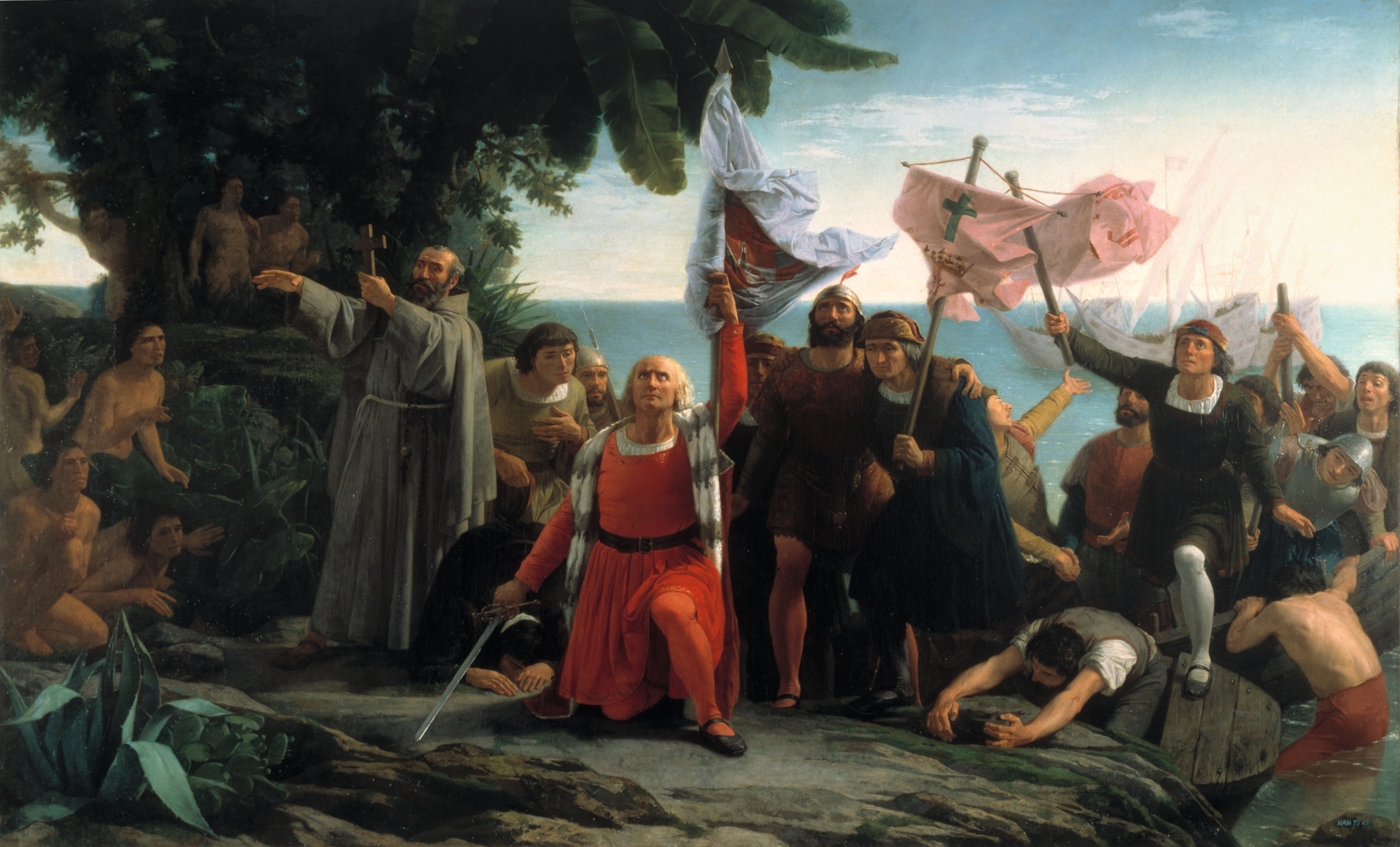
Columbus Day is a national holiday in many countries of the Americas and elsewhere, and a federal holiday in the United States, which officially celebrates the anniversary of Christopher Columbus's arrival in the Americas. He went ashore at Guanahaní, an island in the Bahamas, on October 12, 1492 [OS]. On his return in 1493, he moved his coastal base of operations 110 kilometres (70 mi) east to the island of Hispaniola, in what is now the Dominican Republic and established the settlement of La Isabela, the first permanent Spanish settlement in the Americas.
Christopher Columbus (Italian: Cristoforo Colombo [kriˈstɔːforo koˈlombo]) was an Italian explorer from Genoa who led a Spanish maritime expedition to cross the Atlantic Ocean in search of an alternative route to the Far East. Columbus believed he sailed his crew to the East Indies, but Europeans realized years later that his voyages landed them in the New World. His first voyage to the New World was made on the Spanish ships Niña, Pinta, and Santa María and took about three months. The crew's arrival in the New World initiated the colonization of the Americas by Spain, followed in the ensuing centuries by other European powers, as well as the transfer of plants, animals, culture, human populations, and technology between the New and Old Worlds, an event referred to by some late 20th‐century historians as the Columbian exchange.
The landing is celebrated as Columbus Day in the United States, but the name varies internationally. In some Latin American countries, October 12 is known as Día de la Raza or "Day of the Race". This was the case for Mexico, until it renamed it to "Day of the Pluricultural Nation". Some countries such as Spain refer to the holiday as the Day of Hispanicity or Día de la Hispanidad and is also Spain's National Day or Fiesta Nacional de España, where it coincides with the religious festivity of La Virgen del Pilar. Since 2009, Peru has celebrated Día de los pueblos originarios y el diálogo intercultural ("Indigenous Peoples and Intercultural Dialogue Day"). Uruguay celebrate it as Pan American Day and Día de las Américas ("Day of the Americas"). The day is also commemorated in Italy, as Giornata Nazionale di Cristoforo Colombo or Festa Nazionale di Cristoforo Colombo, and in the Little Italys around the world. In Belize, the day is recognized as Indigenous People's Resistance Day.
The first Columbus Day celebration took place on October 12, 1792, when the Columbian Order of New York, better known as the Tammany Society (the precursor to Tammany Hall), held an event to commemorate the 300th anniversary of the historic landing. The Columbus Obelisk in Baltimore was erected in 1792.
Many Italian Americans observe Columbus Day as a celebration of their heritage and not of Columbus himself, and the day was celebrated in New York City on October 12, 1866. The day was first enshrined as a legal holiday in the United States through the lobbying of Angelo Noce, a first-generation American, in Denver. The first statewide holiday was proclaimed by Colorado governor Jesse F. McDonald in 1905, and it was made a statutory holiday in 1907. (Colorado replaced Columbus Day with Frances Xavier Cabrini Day in 2020, though that holiday is observed a week earlier.)
For the 400th anniversary of Christopher Columbus's voyage in 1892, following the lynchings of 11 Italian immigrants by a mob in New Orleans, President Benjamin Harrison declared Columbus Day as a one-time national celebration. The proclamation was part of a wider effort after the lynching incident to placate Italian Americans and ease diplomatic tensions with Italy. During the anniversary in 1892, teachers, preachers, poets, and politicians used rituals to teach ideals of patriotism. These rituals took themes such as citizenship boundaries, the importance of loyalty to the nation, and the celebration of social progress, included among them was the Pledge of Allegiance by Francis Bellamy.
In 1934, as a result of lobbying by the Knights of Columbus and New York City Italian leader Generoso Pope, Congress passed a statute stating: "The President is requested to issue each year a proclamation (1) designating October 12 as Columbus Day; (2) calling on United States government officials to display the flag of the United States on all government buildings on Columbus Day; and (3) inviting the people of the United States to observe Columbus Day, in schools and churches, or other suitable places, with appropriate ceremonies that express the public sentiment befitting the anniversary of the discovery of America." President Franklin Delano Roosevelt responded by making such a proclamation. This proclamation did not lead to the modern federal holiday; it was similar to language regarding Thomas Jefferson's birthday and Gold Star Mothers Day. In 1941, some 1,881 Italian Americans were interned and lost rights as "enemy aliens" because of a widely held belief that they would remain loyal to Italy, an Axis power, during World War II. Almost all of those interned were citizens of Italy, including Italian students and businessmen residing in the U.S.; the internment did not include the 690,000 Italians who had immigrated to the United States and millions of other Americans of Italian descent. On Columbus Day 1942, Franklin Roosevelt announced the removal of the designation of Italian Americans as "enemy aliens" along with a plan to offer citizenship to 200,000 elderly Italians living in the United States who had been unable to acquire citizenship due to a literacy requirement. However, the implementation of the announcement was not completed until those interned in camps were released following Italy's surrender to the Allies on September 8, 1943.
In 1966, Mariano A. Lucca, from Buffalo, New York, founded the National Columbus Day Committee, which lobbied to make Columbus Day a federal holiday. These efforts were successful and legislation to create Columbus Day as a federal holiday was signed by President Lyndon Johnson on June 28, 1968, to be effective beginning in 1971.
Hub AI
Columbus Day AI simulator
(@Columbus Day_simulator)
Columbus Day
Columbus Day is a national holiday in many countries of the Americas and elsewhere, and a federal holiday in the United States, which officially celebrates the anniversary of Christopher Columbus's arrival in the Americas. He went ashore at Guanahaní, an island in the Bahamas, on October 12, 1492 [OS]. On his return in 1493, he moved his coastal base of operations 110 kilometres (70 mi) east to the island of Hispaniola, in what is now the Dominican Republic and established the settlement of La Isabela, the first permanent Spanish settlement in the Americas.
Christopher Columbus (Italian: Cristoforo Colombo [kriˈstɔːforo koˈlombo]) was an Italian explorer from Genoa who led a Spanish maritime expedition to cross the Atlantic Ocean in search of an alternative route to the Far East. Columbus believed he sailed his crew to the East Indies, but Europeans realized years later that his voyages landed them in the New World. His first voyage to the New World was made on the Spanish ships Niña, Pinta, and Santa María and took about three months. The crew's arrival in the New World initiated the colonization of the Americas by Spain, followed in the ensuing centuries by other European powers, as well as the transfer of plants, animals, culture, human populations, and technology between the New and Old Worlds, an event referred to by some late 20th‐century historians as the Columbian exchange.
The landing is celebrated as Columbus Day in the United States, but the name varies internationally. In some Latin American countries, October 12 is known as Día de la Raza or "Day of the Race". This was the case for Mexico, until it renamed it to "Day of the Pluricultural Nation". Some countries such as Spain refer to the holiday as the Day of Hispanicity or Día de la Hispanidad and is also Spain's National Day or Fiesta Nacional de España, where it coincides with the religious festivity of La Virgen del Pilar. Since 2009, Peru has celebrated Día de los pueblos originarios y el diálogo intercultural ("Indigenous Peoples and Intercultural Dialogue Day"). Uruguay celebrate it as Pan American Day and Día de las Américas ("Day of the Americas"). The day is also commemorated in Italy, as Giornata Nazionale di Cristoforo Colombo or Festa Nazionale di Cristoforo Colombo, and in the Little Italys around the world. In Belize, the day is recognized as Indigenous People's Resistance Day.
The first Columbus Day celebration took place on October 12, 1792, when the Columbian Order of New York, better known as the Tammany Society (the precursor to Tammany Hall), held an event to commemorate the 300th anniversary of the historic landing. The Columbus Obelisk in Baltimore was erected in 1792.
Many Italian Americans observe Columbus Day as a celebration of their heritage and not of Columbus himself, and the day was celebrated in New York City on October 12, 1866. The day was first enshrined as a legal holiday in the United States through the lobbying of Angelo Noce, a first-generation American, in Denver. The first statewide holiday was proclaimed by Colorado governor Jesse F. McDonald in 1905, and it was made a statutory holiday in 1907. (Colorado replaced Columbus Day with Frances Xavier Cabrini Day in 2020, though that holiday is observed a week earlier.)
For the 400th anniversary of Christopher Columbus's voyage in 1892, following the lynchings of 11 Italian immigrants by a mob in New Orleans, President Benjamin Harrison declared Columbus Day as a one-time national celebration. The proclamation was part of a wider effort after the lynching incident to placate Italian Americans and ease diplomatic tensions with Italy. During the anniversary in 1892, teachers, preachers, poets, and politicians used rituals to teach ideals of patriotism. These rituals took themes such as citizenship boundaries, the importance of loyalty to the nation, and the celebration of social progress, included among them was the Pledge of Allegiance by Francis Bellamy.
In 1934, as a result of lobbying by the Knights of Columbus and New York City Italian leader Generoso Pope, Congress passed a statute stating: "The President is requested to issue each year a proclamation (1) designating October 12 as Columbus Day; (2) calling on United States government officials to display the flag of the United States on all government buildings on Columbus Day; and (3) inviting the people of the United States to observe Columbus Day, in schools and churches, or other suitable places, with appropriate ceremonies that express the public sentiment befitting the anniversary of the discovery of America." President Franklin Delano Roosevelt responded by making such a proclamation. This proclamation did not lead to the modern federal holiday; it was similar to language regarding Thomas Jefferson's birthday and Gold Star Mothers Day. In 1941, some 1,881 Italian Americans were interned and lost rights as "enemy aliens" because of a widely held belief that they would remain loyal to Italy, an Axis power, during World War II. Almost all of those interned were citizens of Italy, including Italian students and businessmen residing in the U.S.; the internment did not include the 690,000 Italians who had immigrated to the United States and millions of other Americans of Italian descent. On Columbus Day 1942, Franklin Roosevelt announced the removal of the designation of Italian Americans as "enemy aliens" along with a plan to offer citizenship to 200,000 elderly Italians living in the United States who had been unable to acquire citizenship due to a literacy requirement. However, the implementation of the announcement was not completed until those interned in camps were released following Italy's surrender to the Allies on September 8, 1943.
In 1966, Mariano A. Lucca, from Buffalo, New York, founded the National Columbus Day Committee, which lobbied to make Columbus Day a federal holiday. These efforts were successful and legislation to create Columbus Day as a federal holiday was signed by President Lyndon Johnson on June 28, 1968, to be effective beginning in 1971.
Recent media