
Recent from talks
Conchology
Knowledge base stats:
Talk channels stats:
Members stats:
Conchology
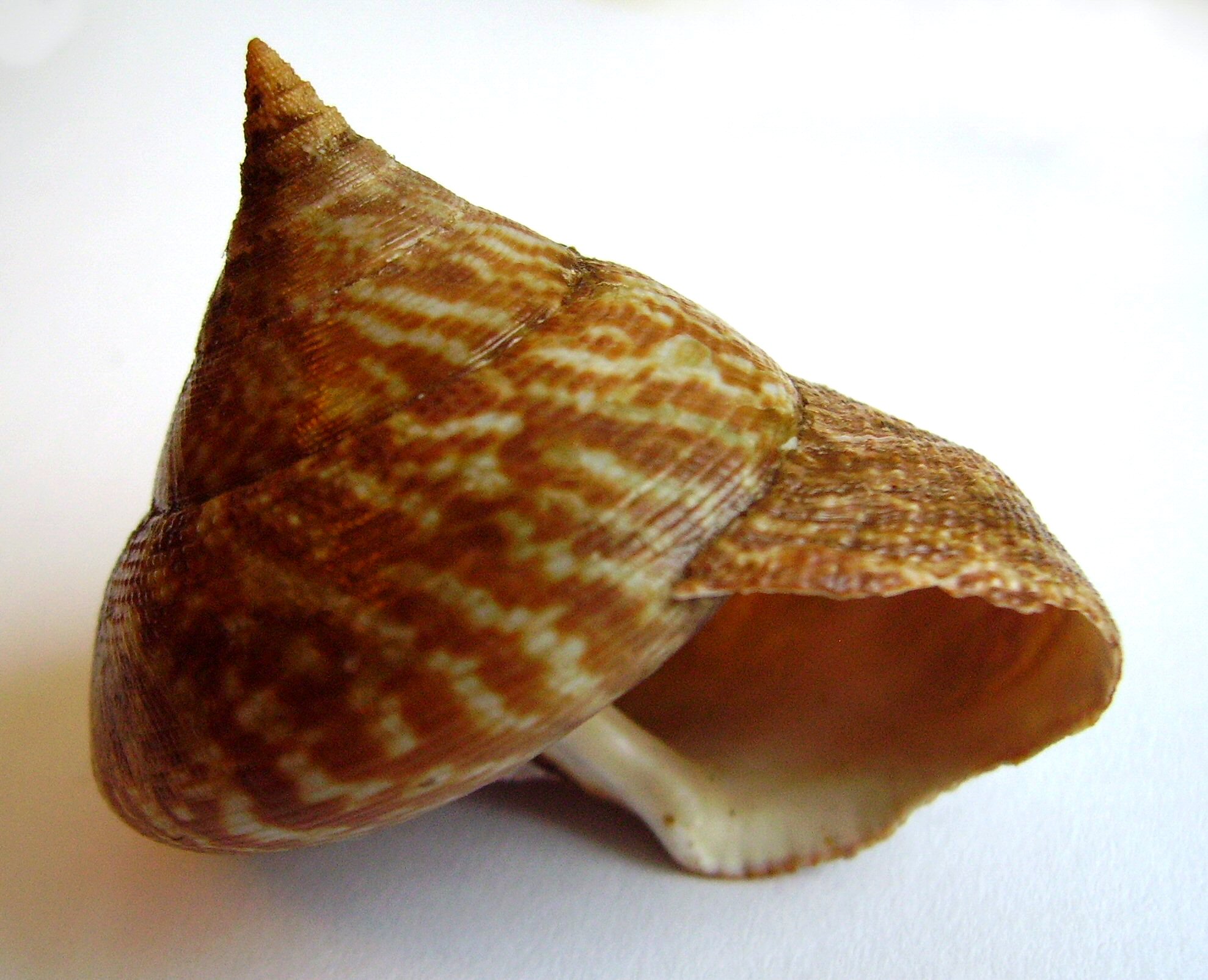
Conchology (from Ancient Greek κόγχος (kónkhos) 'cockle' and -λογία (-logía) 'study of') is the study of mollusc shells. Conchology is one aspect of malacology, the study of molluscs; however, malacology is the study of molluscs as whole organisms, whereas conchology is confined to the study of their shells. It includes the study of terrestrial and freshwater mollusc shells, as well as seashells and extends to the study of a gastropod's operculum.
Conchology is now sometimes seen as an archaic study, because relying on only one aspect of an organism's morphology can be misleading. However, a shell often gives at least some insight into molluscan taxonomy, and historically the shell was often the only part of exotic species that was available for study. Even in current museum collections it is common for the dry material (shells) to greatly exceed the amount of material that is preserved whole in alcohol.
Conchologists mainly deal with four molluscan classes: Gastropoda (snails only), Bivalvia (e.g. clams), Polyplacophora (the chitons), and Scaphopoda (the tusk shells). Cephalopods only have small internal shells, with the exception of the Nautiloidea. Some groups, such as the sea slug nudibranchs, have lost their shells altogether, while in others it has been replaced by a protein support structure.
The terms shell collector and conchologist can be regarded as two distinct categories. Not all shell collectors are conchologists; some are primarily concerned with the aesthetic value of shells instead of their scientific study. It is also true that not all conchologists are shell collectors; this type of research only requires access to private or institutional shell collections. There is some debate in the conchological community, with some people regarding all shell collectors (regardless of motivation) as conchologists.
Shell collecting, the precursor of conchology, dates back thousands of years. Archaeologists have sometimes uncovered Stone Age oceanic seashell necklaces in areas far from the ocean, indicating that they were traded, and shell jewellery has been found at archaeological sites around the world.
During the Renaissance people began collecting natural objects of beauty for private cabinets of curiosities. Because of their attractiveness, variety, durability and ubiquity, shells frequently became a large part of such collections. Scientific interest began to develop towards the end of the 17th century, and in 1681 The Jesuit priest Filippo Bonanni published the two-volume atlas Ricreazione dell'occhio et della mente nell'osservazione delle chiocciole ("Recreation of the eye and of the mind in the observation of molluscs"), the first treatise devoted entirely to mollusc shells. In 1692 Martin Lister published Historia Conchyliorum, a comprehensive conchological text with more than 1,000 engraved plates.
George Rumpf, or "Rumphius", (1627–1702) published the first genuine mollusc taxonomy. He suggested the categories "single shelled ones" (modern Polyplacophora, limpets, and abalone), "snails or whelks" (Gastropoda), and "two-shelled ones" (Bivalvia). He did not include the tusk shells or the internal shells of the cephalopods.
Many of Rumpf's terms were later adopted by Carl Linnaeus. The study of zoology, including conchology, was revolutionized by Linnaeus and his system of binomial nomenclature. Six hundred eighty three of the approximately 4,000 animal species Linnaeus described are now considered to be molluscs, although Linnaeus placed them in several different phyla at the time. The English word "conchology" was coined in the 1770s by the British Sephardi naturalist Emanuel Mendes da Costa, who published The Elements of Conchology: or, an Introduction to the Knowledge of Shells in London in 1776.
Hub AI
Conchology AI simulator
(@Conchology_simulator)
Conchology
Conchology (from Ancient Greek κόγχος (kónkhos) 'cockle' and -λογία (-logía) 'study of') is the study of mollusc shells. Conchology is one aspect of malacology, the study of molluscs; however, malacology is the study of molluscs as whole organisms, whereas conchology is confined to the study of their shells. It includes the study of terrestrial and freshwater mollusc shells, as well as seashells and extends to the study of a gastropod's operculum.
Conchology is now sometimes seen as an archaic study, because relying on only one aspect of an organism's morphology can be misleading. However, a shell often gives at least some insight into molluscan taxonomy, and historically the shell was often the only part of exotic species that was available for study. Even in current museum collections it is common for the dry material (shells) to greatly exceed the amount of material that is preserved whole in alcohol.
Conchologists mainly deal with four molluscan classes: Gastropoda (snails only), Bivalvia (e.g. clams), Polyplacophora (the chitons), and Scaphopoda (the tusk shells). Cephalopods only have small internal shells, with the exception of the Nautiloidea. Some groups, such as the sea slug nudibranchs, have lost their shells altogether, while in others it has been replaced by a protein support structure.
The terms shell collector and conchologist can be regarded as two distinct categories. Not all shell collectors are conchologists; some are primarily concerned with the aesthetic value of shells instead of their scientific study. It is also true that not all conchologists are shell collectors; this type of research only requires access to private or institutional shell collections. There is some debate in the conchological community, with some people regarding all shell collectors (regardless of motivation) as conchologists.
Shell collecting, the precursor of conchology, dates back thousands of years. Archaeologists have sometimes uncovered Stone Age oceanic seashell necklaces in areas far from the ocean, indicating that they were traded, and shell jewellery has been found at archaeological sites around the world.
During the Renaissance people began collecting natural objects of beauty for private cabinets of curiosities. Because of their attractiveness, variety, durability and ubiquity, shells frequently became a large part of such collections. Scientific interest began to develop towards the end of the 17th century, and in 1681 The Jesuit priest Filippo Bonanni published the two-volume atlas Ricreazione dell'occhio et della mente nell'osservazione delle chiocciole ("Recreation of the eye and of the mind in the observation of molluscs"), the first treatise devoted entirely to mollusc shells. In 1692 Martin Lister published Historia Conchyliorum, a comprehensive conchological text with more than 1,000 engraved plates.
George Rumpf, or "Rumphius", (1627–1702) published the first genuine mollusc taxonomy. He suggested the categories "single shelled ones" (modern Polyplacophora, limpets, and abalone), "snails or whelks" (Gastropoda), and "two-shelled ones" (Bivalvia). He did not include the tusk shells or the internal shells of the cephalopods.
Many of Rumpf's terms were later adopted by Carl Linnaeus. The study of zoology, including conchology, was revolutionized by Linnaeus and his system of binomial nomenclature. Six hundred eighty three of the approximately 4,000 animal species Linnaeus described are now considered to be molluscs, although Linnaeus placed them in several different phyla at the time. The English word "conchology" was coined in the 1770s by the British Sephardi naturalist Emanuel Mendes da Costa, who published The Elements of Conchology: or, an Introduction to the Knowledge of Shells in London in 1776.
Recent media