Hubbry Logo
ChitonChitonMain
Open search
Chiton
Community hub
Chiton
logo
8 pages, 0 posts
0 subscribers
Be the first to start a discussion here.
Chiton
Chiton
from Wikipedia

Chiton
Temporal range: Late Cambrian – Present[1][2]
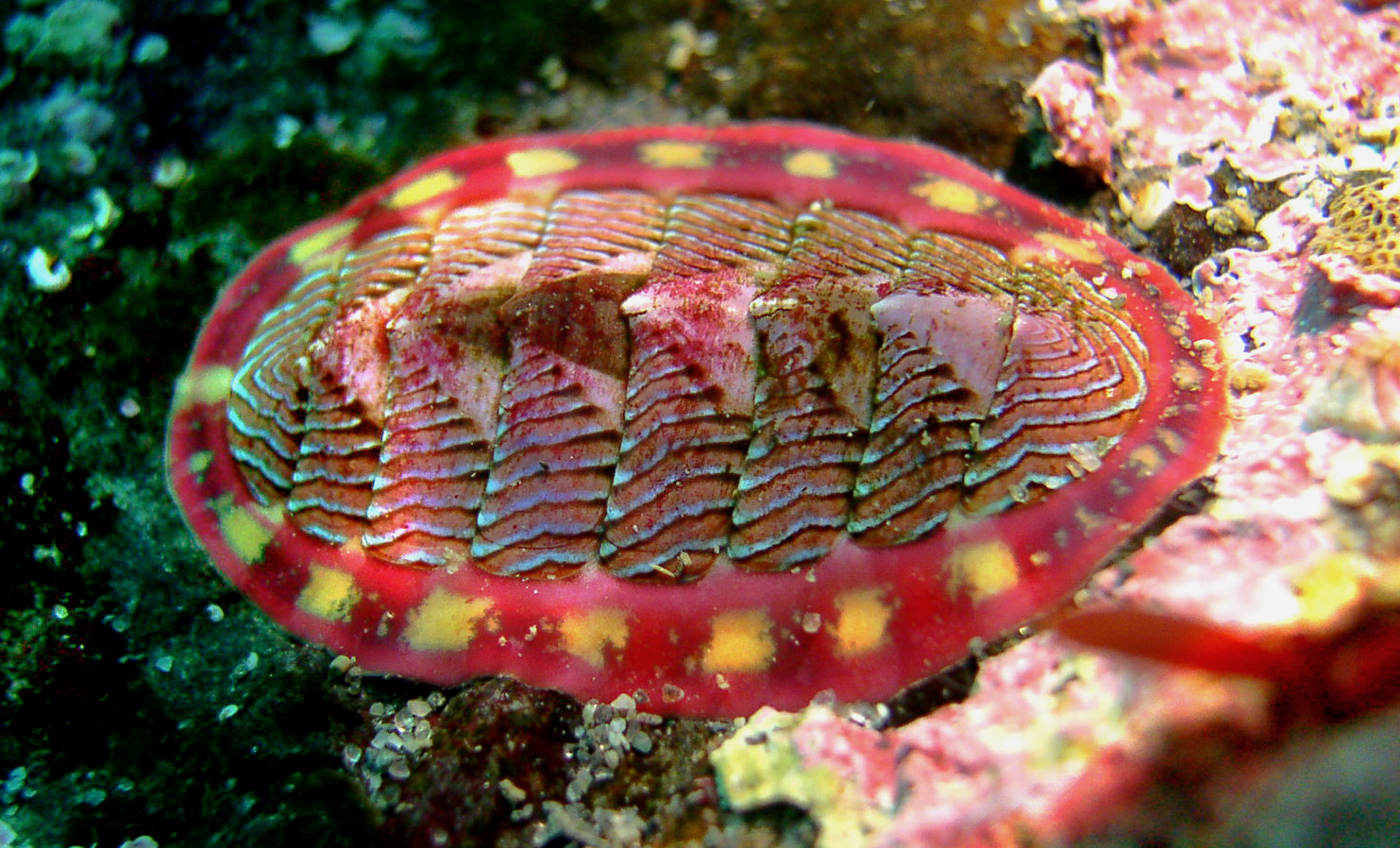
A live lined chiton, Tonicella lineata photographed in situ: The front of the animal is to the right.
Scientific classification Edit this classification
Kingdom: Animalia
Phylum: Mollusca
Class: Polyplacophora
Blainville, 1816
Subgroups

See text.

Chitons (/ˈktənz, -tɒnz/) are marine molluscs of varying size in the class Polyplacophora (/ˌpɒlipləˈkɒfərə/ POL-ee-plə-KOF-ər-ə),[3] formerly known as Amphineura.[4] About 940[5][6] extant and 430[7] fossil species are recognized.

They are also sometimes known as sea cradles or coat-of-mail shells or suck-rocks, or more formally as loricates, polyplacophorans, and occasionally as polyplacophores.

Chitons have a shell composed of eight separate shell plates or valves.[3] These plates overlap slightly at the front and back edges, and yet articulate well with one another. Because of this, the shell provides protection at the same time as permitting the chiton to flex upward when needed for locomotion over uneven surfaces, and even allows the animal to curl up into a ball when dislodged from rocks.[8] The shell plates are encircled by a skirt known as a girdle.

Habitat

[edit]
Two individuals of Acanthopleura granulata on a rock at high tide level in Guadeloupe

Chitons live worldwide, from cold waters through to the tropics. They live on hard surfaces, such as on or under rocks, or in rock crevices.

Some species live quite high in the intertidal zone and are exposed to the air and light for long periods. Most species inhabit intertidal or subtidal zones, and do not extend beyond the photic zone, but a few species live in deep water, as deep as 6,000 m (20,000 ft).[9]

Chitons are exclusively and fully marine, in contrast to the bivalves, which were able to adapt to brackish water and fresh water, and the gastropods which were able to make successful transitions to freshwater and terrestrial environments.

Morphology

[edit]

Shell

[edit]

All chitons bear a protective dorsal shell that is divided into eight articulating aragonite valves embedded in the tough muscular girdle that surrounds the chiton's body. Compared with the single or two-piece shells of other molluscs, this arrangement allows chitons to roll into a protective ball when dislodged and to cling tightly to irregular surfaces. In some species the valves are reduced or covered by the girdle tissue.[10][11] The valves are variously colored, patterned, smooth, or sculptured.

Loose valves or plates of Chiton tuberculatus from the beachdrift on Nevis, West Indies, head plates at the top, tail plates at the bottom
Prepared chiton shell with structure of plates clearly visible.

The most anterior plate is crescent-shaped, and is known as the cephalic plate (sometimes called a head plate, despite the absence of a complete head). The most posterior plate is known as the anal plate (sometimes called the tail plate, although chitons do not have tails.)

The inner layer of each of the six intermediate plates is produced anteriorly as an articulating flange, called the articulamentum. This inner layer may also be produced laterally in the form of notched insertion plates. These function as an attachment of the valve plates to the soft body. A similar series of insertion plates may be attached to the convex anterior border of the cephalic plate or the convex posterior border of the anal plate.[12]

The sculpture of the valves is one of the taxonomic characteristics, along with the granulation or spinulation of the girdle.[12]

After a chiton dies, the individual valves which make up the eight-part shell come apart because the girdle is no longer holding them together, and then the plates sometimes wash up in beach drift. The individual shell plates from a chiton are sometimes known as butterfly shells due to their shape.

Girdle ornament

[edit]

The girdle may be ornamented with scales or spicules which, like the shell plates, are mineralized with aragonite — although a different mineralization process operates in the spicules to that in the teeth or shells (implying an independent evolutionary innovation).[11] This process seems quite simple in comparison to other shell tissue; in some taxa, the crystal structure of the deposited minerals closely resembles the disordered nature of crystals that form inorganically, although more order is visible in other taxa.[11]

The protein component of the scales and sclerites is minuscule in comparison with other biomineralized structures, whereas the total proportion of matrix is 'higher' than in mollusc shells. This implies that polysaccharides make up the bulk of the matrix.[11] The girdle spines often bear length-parallel striations.[11]

The wide form of girdle ornament suggests it serves a secondary role; chitons can survive perfectly well without them. Camouflage or defence are two likely functions.[11] Certainly species such as some members of the genus Acanthochitona bear conspicuous paired tufts of spicules on the girdle. The spicules are sharp, and if carelessly handled, easily penetrate the human skin, where they detach and remain as a painful irritant.[13]

Spicules are secreted by cells that do not express engrailed, but these cells are surrounded by engrailed-expressing cells.[14] These neighbouring cells secrete an organic pellicle on the outside of the developing spicule, whose aragonite is deposited by the central cell; subsequent division of this central cell allows larger spines to be secreted in certain taxa.[15] The organic pellicule is found in most polyplacophora (but not basal chitons, such as Hanleya)[15] but is unusual in aplacophora.[16] Developmentally, sclerite-secreting cells arise from pretrochal and postrochal cells: the 1a, 1d, 2a, 2c, 3c and 3d cells.[16] The shell plates arise primarily from the 2d micromere, although 2a, 2b, 2c and sometimes 3c cells also participate in its secretion.[16]

Internal anatomy

[edit]

The girdle is often ornamented with spicules, bristles, hairy tufts, spikes, or snake-like scales. The majority of the body is a snail-like foot, but no head or other soft parts beyond the girdle are visible from the dorsal side. The mantle cavity consists of a narrow channel on each side, lying between the body and the girdle. Water enters the cavity through openings in either side of the mouth, then flows along the channel to a second, exhalant, opening close to the anus.[17] Multiple gills hang down into the mantle cavity along part or all of the lateral pallial groove, each consisting of a central axis with a number of flattened filaments through which oxygen can be absorbed.[18]

The three-chambered heart is located towards the animal's hind end. Each of the two auricles collects blood from the gills on one side, while the muscular ventricle pumps blood through the aorta and round the body.

The excretory system consists of two nephridia, which connect to the pericardial cavity around the heart, and remove excreta through a pore that opens near the rear of the mantle cavity. The single gonad is located in front of the heart, and releases gametes through a pair of pores just in front of those used for excretion.[18]

The underside of the gumboot chiton, Cryptochiton stelleri, showing the foot in the center, surrounded by the gills and mantle: The mouth is visible to the left in this image.

The mouth is located on the underside of the animal, and contains a tongue-like structure called a radula, which has numerous rows of 17 teeth each. The teeth are coated with magnetite, a hard ferric/ferrous oxide mineral. The radula is used to scrape microscopic algae off the substratum. The mouth cavity itself is lined with chitin and is associated with a pair of salivary glands. Two sacs open from the back of the mouth, one containing the radula, and the other containing a protrusible sensory subradular organ that is pressed against the substratum to taste for food.[18]

Cilia pull the food through the mouth in a stream of mucus and through the oesophagus, where it is partially digested by enzymes from a pair of large pharyngeal glands. The oesophagus, in turn, opens into a stomach, where enzymes from a digestive gland complete the breakdown of the food. Nutrients are absorbed through the linings of the stomach and the first part of the intestine. The intestine is divided in two by a sphincter, with the latter part being highly coiled and functioning to compact the waste matter into faecal pellets. The anus opens just behind the foot.[18]

Chitons lack a clearly demarcated head; their nervous system resembles a dispersed ladder.[19] No true ganglia are present, as in other molluscs, although a ring of dense neural tissue occurs around the oesophagus. From this ring, nerves branch forwards to innervate the mouth and subradula, while two pairs of main nerve cords run back through the body. One pair, the pedal cords, innervate the foot, while the palliovisceral cords innervate the mantle and remaining internal organs.[18]

Some species bear an array of tentacles in front of the head.[20]

Senses

[edit]

The primary sense organs of chitons are the subradular organ and a large number of unique organs called aesthetes. The aesthetes consist of light-sensitive cells just below the surface of the shell, although they are not capable of true vision. In some cases, however, they are modified to form ocelli, with a cluster of individual photoreceptor cells lying beneath a small aragonite-based lens.[21] Each lens can form clear images, and is composed of relatively large, highly crystallographically aligned grains to minimize light scattering.[22] An individual chiton may have thousands of such ocelli.[18] These aragonite-based eyes[23] make them capable of true vision,[24] though research continues as to the extent of their visual acuity. It is known that they can differentiate between a predator's shadow and changes in light caused by clouds. An evolutionary trade-off has led to a compromise between the eyes and the shell; as the size and complexity of the eyes increase, the mechanical performance of their shells decrease, and vice versa.[25]

A relatively good fossil record of chiton shells exists, but ocelli are only present in those dating to 10 million years ago or younger; this would make the ocelli, whose precise function is unclear, likely the most recent eyes to evolve.[19]

Although chitons lack osphradia, statocysts, and other sensory organs common to other molluscs, they do have numerous tactile nerve endings, especially on the girdle and within the mantle cavity.

The order Lepidopleurida also have a pigmented sensory organ called the Schwabe organ.[26] Its function remains largely unknown, and has been suggested to be related to that of a larval eye.[27]

However, chitons lack a cerebral ganglion.[28]

Homing ability

[edit]

Similar to many species of saltwater limpets, several species of chiton are known to exhibit homing behaviours, journeying to feed and then returning to the exact spot they previously inhabited.[29] The method they use to perform such behaviors has been investigated to some extent, but remains unknown. One theory has the chitons remembering the topographic profile of the region, thus being able to guide themselves back to their home scar by a physical knowledge of the rocks and visual input from their numerous primitive eyespots.[30] The sea snail Nerita textilis (like all gastropods) deposits a mucus trail as it moves, which a chemoreceptive organ is able to detect and guide the snail back to its home site.[31] It is unclear if chiton homing functions in the same way, but they may leave chemical cues along the rock surface and at the home scar which their olfactory senses can detect and home in on. Furthermore, older trails may also be detected, providing further stimulus for the chiton to find its home.[30]

The radular teeth of chitons are made of magnetite, and the iron crystals within these may be involved in magnetoreception,[32] the ability to sense the polarity and the inclination of the Earth's magnetic field. Experimental work has suggested that chitons can detect and respond to magnetism.[33]

Culinary uses

[edit]

Chitons are eaten in several parts of the world. This includes islands in the Caribbean, such as Trinidad, Tobago, The Bahamas, St. Maarten, Aruba, Bonaire, Anguilla and Barbados, as well as in Bermuda. They are also traditionally eaten in certain parts of the Philippines, where it is called kibet if raw and chiton if fried. Indigenous people of the Pacific coasts of North America eat chitons. They are a common food on the Pacific coast of South America and in the Galápagos. The foot of the chiton is prepared in a manner similar to abalone. Some islanders living in South Korea also eat chiton, slightly boiled and mixed with vegetables and hot sauce. Aboriginal people in Australia also eat chiton; for example they are recorded in the Narungga Nation Traditional Fishing Agreement.

Life habits

[edit]
Cryptoconchus porosus, a butterfly chiton, which has its valves completely covered by the girdle

A chiton creeps along slowly on a muscular foot. It has considerable power of adhesion and can cling to rocks very powerfully, like a limpet.

Chitons are generally herbivorous grazers, though some are omnivorous and some carnivorous.[34][35] They eat algae, bryozoans, diatoms, barnacles, and sometimes bacteria by scraping the rocky substrate with their well-developed radulae.

A few species of chitons are predatory, such as the small western Pacific species Placiphorella velata. These predatory chitons have enlarged anterior girdles. They catch other small invertebrates, such as shrimp and possibly even small fish, by holding the enlarged, hood-like front end of the girdle up off the surface, and then clamping down on unsuspecting, shelter-seeking prey.[36]

Reproduction and life cycle

[edit]
Larvae of chitons: First image is the trochophore, second is in metamorphosis, third is an immature adult.

Chitons have separate sexes, and fertilization is usually external. The male releases sperm into the water, while the female releases eggs either individually, or in a long string. In most cases, fertilization takes place either in the surrounding water, or in the mantle cavity of the female. Some species brood the eggs within the mantle cavity, and the species Callistochiton viviparus even retains them within the ovary and gives birth to live young, an example of ovoviviparity.

The egg has a tough spiny coat, and usually hatches to release a free-swimming trochophore larva, typical of many other mollusc groups. In a few cases, the trochophore remains within the egg (and is then called lecithotrophic – deriving nutrition from yolk), which hatches to produce a miniature adult. Unlike most other molluscs, there is no intermediate stage, or veliger, between the trochophore and the adult. Instead, a segmented shell gland forms on one side of the larva, and a foot forms on the opposite side. When the larva is ready to become an adult, the body elongates, and the shell gland secretes the plates of the shell. Unlike the fully grown adult, the larva has a pair of simple eyes, although these may remain for some time in the immature adult.[18]

Predators

[edit]

Animals which prey on chitons include humans, seagulls, sea stars, crabs, lobsters and fish.[citation needed]

Evolutionary origins

[edit]

Chitons have a relatively good fossil record, stretching back to the Cambrian,[1][2] with the genus Preacanthochiton, known from fossils found in Late Cambrian deposits in Missouri, being classified as the earliest known polyplacophoran. However, the exact phylogenetic position of supposed Cambrian chitons is highly controversial, and some authors have instead argued that the earliest confirmed polyplacophorans date back to the Early Ordovician.[37] Kimberella and Wiwaxia of the Precambrian and Cambrian may be related to ancestral polyplacophorans. Matthevia is a Late Cambrian polyplacophoran preserved as individual pointed valves, and sometimes considered to be a chiton,[1] although at the closest, it can only be a stem-group member of the group.[38]

Separate plates from Matthevia, a Late Cambrian polyplacophoran from the Hellnmaria Member of the Notch Peak Limestone, Steamboat Pass, southern House Range, Utah are shown with a US one-cent coin (19 mm in diameter).

Based on this and co-occurring fossils, one plausible hypothesis for the origin of polyplacophora has that they formed when an aberrant monoplacophoran was born with multiple centres of calcification, rather than the usual one. Selection quickly acted on the resultant conical shells to form them to overlap into protective armour; their original cones are homologous to the tips of the plates of modern chitons.[1]

The chitons evolved from multiplacophora during the Palaeozoic, with their relatively conserved modern-day body plan being fixed by the Mesozoic.[38]

The earliest fossil evidence of aesthetes in chitons comes from around 400 Ma, during the Early Devonian.[19]

History of scientific investigation

[edit]

Chitons were first studied by Carl Linnaeus in his 1758 10th edition of Systema Naturae. Since his description of the first four species, chitons have been variously classified. They were called Cyclobranchians (round arm) in the early 19th century, and then grouped with the aplacophorans in the subphylum Amphineura in 1876. The class Polyplacophora was named by de Blainville 1816.

Etymology

[edit]

The name chiton is Neo-Latin derived from the Ancient Greek word khitōn, meaning tunic (which also is the source of the word chitin). The Ancient Greek word khitōn can be traced to the Central Semitic word *kittan, which is from the Akkadian words kitû or kita'um, meaning flax or linen, and originally the Sumerian word gada or gida.[citation needed]

The Greek-derived name Polyplacophora comes from the words poly- (many), plako- (tablet), and -phoros (bearing), a reference to the chiton's eight shell plates.

Taxonomy

[edit]

Most classification schemes in use today are based, at least in part, on Pilsbry's Manual of Conchology (1892–1894), extended and revised by Kaas and Van Belle (1985–1990).

Since chitons were first described by Linnaeus (1758), extensive taxonomic studies at the species level have been made. However, the taxonomic classification at higher levels in the group has remained somewhat unsettled.

The most recent classification, by Sirenko (2006),[39] is based not only on shell morphology, as usual, but also other important features, including aesthetes, girdle, radula, gills, glands, egg hull projections, and spermatozoids. It includes all the living and extinct genera of chitons.

Further resolution within the Chitonida has been recovered through molecular analysis.[40]

This system is now generally accepted.

Phylogeny

[edit]

Chiton phylogeny has gone relatively underexplored compared to the more charismatic classes of molluscs, and as such is still somewhat poorly understood. The relationships between orders and superfamilies has been made clear thanks to phylogenomics,[42][43] but interfamilial relationships are still largely unknown because of the lack of sampling from all families.

Polyplacophora

References

[edit]
[edit]
Revisions and contributorsEdit on WikipediaRead on Wikipedia
from Grokipedia
Chitons are marine mollusks belonging to the class Polyplacophora, characterized by a dorsal shell composed of eight overlapping plates that provide protection and flexibility. These oval-shaped, bilaterally symmetrical range in size from 8 mm to 33 cm in length and inhabit rocky intertidal and subtidal zones worldwide, using a broad, muscular foot to cling tightly to substrates amid wave action. Primarily herbivores, they graze on and lichens scraped from rocks with a toothed , though some consume small ; they can roll into a protective ball when dislodged and detect light via sensory organs in their shell. The shell plates of chitons are embedded in a fleshy mantle that encircles the body, often adorned with spines, scales, or hairs for and defense against predators. This secretes to aid and locomotion, enabling chitons to navigate irregular rock surfaces. Their includes a simple , a chain of gills for respiration, and primitive light-sensitive aesthetes scattered across the shell surface, which allow them to shadows and avoid threats without true eyes. Chitons lack a distinct head but possess a at the front for feeding. Ecologically, chitons occupy diverse marine habitats from shallow intertidal pools to depths exceeding 7,000 meters, with around 1,000 extant distributed globally but most abundant in temperate and tropical regions. They are dioecious, with reproduction involving : males release into the water column, triggering females to spawn eggs, which develop into free-swimming trochophore larvae before settling and metamorphosing. As grazers, chitons help maintain algal communities on rocky shores, contributing to in coastal ecosystems.

Classification

Etymology

The term "chiton" in derives from the word khitōn (χίτων), which denotes a loose undergarment or worn in . This linguistic root, borrowed into New Latin, evokes the draped, enveloping quality of the garment, adapted to describe the mollusk's distinctive anatomy. formally introduced the genus name Chiton in the 10th edition of his published in 1758, classifying it within what would later be recognized as the class Polyplacophora. Linnaeus's choice reflected early observations of the animal's protective form, drawing on the Greek term to highlight its segmented, armored exterior. The class name Polyplacophora, meaning "many plate bearers" from Greek poly- (many) and plax (plate) with -phora (bearing), complements this by emphasizing the multiple shell valves. While khitōn originally referred to clothing in and —often a simple, flowing pinned at the shoulders—the zoological usage distinguishes itself by analogy to the mollusk's tough, overlapping that sheathes the dorsal plates and ventral foot like a protective . This adoption underscores the name's shift from apparel to biological descriptor, focusing on the creature's resilient, tunic-like enclosure rather than its cultural or mythological connotations in antiquity.

Taxonomy

Chitons belong to the phylum Mollusca and are classified in the class Polyplacophora Gray, 1821, which encompasses all extant and many extinct species of these mollusks; the former subclass name Amphineura, once used to group Polyplacophora with other minor mollusk classes, is now obsolete as it does not reflect monophyletic relationships. The name Polyplacophora derives from Greek roots meaning "many plate bearing," alluding to the characteristic dorsal shell structure. Within Polyplacophora, the class is subdivided into two subclasses: Paleoloricata Bergenhayn, 1955, known exclusively from fossil records dating back to the Late , and Neoloricata Bergenhayn, 1955, which includes all living chitons and extends into the fossil record from the onward. The subclass Paleoloricata represents early, primitive forms, while Neoloricata comprises the crown group of modern chitons. The subclass Neoloricata is organized into four principal orders: Lepidopleurida Thiele, 1909; Ischnochitonida Bergenhayn, 1930; Chitonida Thiele, 1909; and Acanthochitonida Bergenhayn, 1930, each distinguished by differences in shell microstructure and girdle features as defined in classical morphology-based systems. Representative families include Lepidopleuridae (order Lepidopleurida), Ischnochitonidae (order Ischnochitonida), Mopaliidae (order Acanthochitonida), and Chitonidae (order Chitonida). The type genus of the class is Chiton Linnaeus, 1758, housed within the family Chitonidae, which typifies the order Chitonida. Recent taxonomic revisions, informed by molecular phylogenetic analyses such as mitogenomic sequencing, have largely corroborated Sirenko's (2006) morphological framework while refining inter-order relationships and confirming the recognition of approximately 100 genera across these families, as updated in Sirenko's 2023 compendium. These studies emphasize the monophyly of Neoloricata and highlight minor adjustments to family boundaries based on genetic data.

Diversity

The class Polyplacophora encompasses approximately 1,080 extant species (as of 2023) distributed across nearly 100 genera, positioning it as one of the smaller molluscan classes in comparison to the far more speciose and . This diversity is concentrated primarily in the intertidal zones of temperate and tropical regions worldwide, where rocky substrates support a high number of species, while deep-sea habitats host comparatively fewer, often specialized forms. Representative examples illustrate this range in size and form, including the large Cryptochiton stelleri, the giant Pacific gumboot chiton that attains lengths up to 30 cm and inhabits North Pacific intertidal areas, alongside numerous smaller cryptic species typically under 5 cm that blend into microhabitats. Variations in ecological adaptations, such as diverse ornamentations featuring scales, spines, or tufts, facilitate against predators and integration with local substrates like algae-covered rocks, thereby promoting across habitats. Recent discoveries from 2023, including new described from deep-water biogenic sediments in the , highlight ongoing expansions in documented chiton richness beyond shallow zones.

Phylogeny

Chitons, classified within the molluscan class Polyplacophora, occupy a basal position in the phylum as part of the clade Aculifera, which unites them with the worm-like aplacophorans ( and Caudofoveata). This grouping positions Aculifera as the sister taxon to , the diverse clade encompassing , , Scaphopoda, and Cephalopoda. Molecular phylogenetic analyses, including those utilizing 18S rRNA sequences and mitochondrial genomes, consistently support Polyplacophora as the earliest diverging extant class among modern mollusks. Early DNA-based studies established the of Polyplacophora and highlighted its deep divergence from other classes. More recent mitogenomic investigations, incorporating complete mitochondrial genomes from multiple chiton species, reinforce this placement and provide finer resolution within the class, confirming Polyplacophora's role as a foundational lineage in molluscan evolution. Within Polyplacophora, phylogenetic relationships reveal Lepidopleurida as the basal order, characterized by primitive shell and features, while the remaining taxa form the monophyletic subclass Neoloricata, which includes orders such as Ischnochitonida and Chitonida. Phylogenomic studies employing transcriptomic data further corroborate the of Neoloricata and its divergence following Lepidopleurida, elucidating superfamily-level relationships among chitons. Historical debates centered on whether Polyplacophora represents the to all other or is nested within a broader aculiferan assemblage, with some early molecular datasets suggesting alternative affinities. However, comprehensive genomic analyses from the , integrating hundreds of orthologous genes across mollusk lineages, have resolved these uncertainties in favor of the Aculifera hypothesis, emphasizing shared ancestral traits like spicule-based scleritomes.

Morphology

Shell

The shell of chitons consists of eight transverse, overlapping plates known as valves, arranged in a longitudinal row from the anterior (head) to posterior (tail) end of the animal. These valves are primarily composed of , a form of , which provides a rigid dorsal covering unique among molluscs. The overlapping arrangement allows flexibility while maintaining protection, with the anterior valve (head valve) and posterior valve (tail valve) differing slightly in shape from the intermediate six, which are more uniform. Each exhibits a distinct layered morphology adapted for both structural integrity and integration with surrounding tissues. The outer dorsal layer, called the , is a thin, sculptured surface often featuring microradulae, granules, or ribs for and sensory pores; it houses aesthetes, simple photoreceptive structures that contribute to detection. Beneath the tegmentum lies the thicker articulamentum, the inner insertion layer that forms the valve's base and extends laterally into insertion plates—protrusions that anchor the shell to the underlying muscular for stability and movement. These insertion plates vary in number and complexity across , typically numbering 5–15 per side, and facilitate muscle attachment without compromising the shell's overall cohesion. An outermost organic periostracum covers the tegmentum, offering additional against dissolution in . Chiton valves form completely during , with all eight present in the juvenile stage, and subsequent growth occurs incrementally through marginal accretion of new material at the plate edges, driven by the mantle epithelium. This process allows proportional expansion without altering the number of valves, resulting in size variation across ; most chitons measure 1–5 cm in total length, though giants like Cryptochiton stelleri can reach up to 30 cm. Growth rates differ by environment and , with annual increments visible as rings in some valves for age determination. The primary functions of the shell are mechanical protection against predators, such as birds and , and prevention of during low tide exposure, enabled by the valves' arched shape and impermeable composition. In some species, the tegmentum's aesthetes serve as rudimentary sensory organs, detecting shadows or motion to trigger defensive responses like clamping to the substrate. This multifunctional design balances rigidity with adaptability in rocky intertidal habitats.

Girdle

The , also known as the perinotum, is a leathery, muscular extension of the mantle that encircles the eight dorsal shell plates and the ventral foot of chitons, forming a flexible band that can expand to envelop the entire animal for protection during threats such as predation or dislodgement. This structure is formed from the thickened mantle tissue and surrounds the pallial cavity, contributing to the overall body outline that is typically oval and dorsoventrally flattened. In species like Katharina tunicata, the appears relatively smooth and glossy, while its expandability allows chitons to roll into a ball, enhancing defensive capabilities. The 's composition consists of a tough, multilayered reinforced with embedded calcareous granules, spicules, or sclerites made primarily of , which provide and rigidity without compromising flexibility. Its width varies significantly across : narrower in cryptic forms such as small intertidal dwellers for seamless integration with rocky substrates, and broader in larger, more exposed to offer greater coverage and stability. Ornamentation on the surface is highly variable and species-specific, ranging from smooth and unadorned textures to elaborate features like overlapping scales for , isolated hairs for tactile sensing, or prominent spines composed of mineralized sclerites, as seen in genera like Acanthopleura where these structures deter predators through physical deterrence. These ornamentations are secreted by the and often exhibit color patterns that match the , such as mottled greens and browns on algae-covered rocks. Functionally, the aids locomotion by contracting its longitudinal and circular muscles in coordination with the foot's undulating waves, enabling slow creeping over irregular surfaces while maintaining to substrates via and . It also serves a primary protective role by overlapping the shell plates' edges, shielding vulnerable soft tissues and gills from , abrasion, and attack, particularly in wave-swept intertidal zones. Additionally, the girdle integrates sensory capabilities through its epithelial layer, which houses distributed mechanoreceptors and chemosensors that detect environmental changes, facilitating rapid responses to stimuli without relying solely on centralized organs.

Internal anatomy

The muscular foot of chitons is a broad, flat that enables to substrates via and facilitates slow locomotion through muscular contractions. This foot houses a central pedal cord that contributes to coordinated movement and sensory integration. The digestive system features a , a ribbon-like armed with rows of chitinous teeth mineralized for scraping and other substrates. Food passes from the through the to a large , where initial occurs, followed by processing in a looped intestine that leads to the ; chitons lack a distinct liver, relying instead on paired digestive glands for enzymatic breakdown. Chitons exhibit an open circulatory system characterized by a hemocoel, a spacious filled with that bathes the organs directly. The heart, located posteriorly, consists of a single ventricle and two auricles that pump into sinuses. Respiration occurs via ctenidia, bipectinate gills housed within the pallial groove of the girdle, where water currents facilitated by foot and girdle movements oxygenate the . The is decentralized, comprising a ring of ganglia encircling the , including cerebral, buccal, and pedal ganglia, without a centralized . This arrangement connects to paired lateral cords that innervate the foot and . Reproductive organs consist of paired gonads that fuse into a bilobed structure situated in the pallial groove, producing gametes released through gonoducts near the nephridiopores.

Senses

Chitons possess a distributed sensory embedded within their shell plates, primarily through structures known as aesthetes, which include micraesthetes and megalaesthetes. These are sensory pores located on the , the outer layer of the shell valves, functioning mainly for light detection. Micraesthetes are smaller, single-celled structures often branching from the larger, multicellular megalaesthetes, both of which open to the surface via canals and contain light-sensitive cells that enable the animal to perceive changes in illumination without forming images. In certain species, such as Acanthopleura granulata, aesthetes are supplemented by more advanced visual structures resembling compound eyes. These shell eyes, or ocelli, consist of hundreds to thousands of lenses per individual, embedded across the dorsal shell plates and capable of forming crude images with an angular resolution of approximately 6°; these shell eyes grow by adding new structures as the shell expands throughout the chiton’s life. The lenses, composed of the mineral (a form of also used in shell construction), focus light onto underlying photoreceptor cells, allowing detection of predators or environmental threats. Chemoreception in chitons occurs via specialized receptors on the gills and foot, including the , which detects chemical cues from food sources and the surrounding water. The gills, located in the pallial groove, house this posterior chemosensory structure, facilitating responses to dissolved substances. Tactile sensitivity is provided by endings in the , the muscular mantle surrounding the shell, enabling the chiton to sense mechanical disturbances and shadows; for instance, a sudden shadow prompts the girdle to contract as a defensive response.

Habitat and distribution

Global distribution

Chitons (class Polyplacophora) exhibit a , occurring in all major oceans worldwide, from the to the regions. The highest is concentrated in the and temperate zones, reflecting evolutionary hotspots in these areas. Latitudinal patterns reveal a dominance of temperate species, such as those in the genus Mopalia along the , where multiple species thrive in rocky intertidal and subtidal habitats. In contrast, polar extremes host fewer species, with low diversity reported in shallow waters compared to sub-Antarctic regions. Tropical representatives include Chiton tuberculatus, a common intertidal grazer endemic to the and surrounding western Atlantic waters. Most chiton species inhabit intertidal to subtidal depths, typically up to 200 m, but approximately 2% (around 20-25 species) extend into deep-sea environments, including abyssal zones beyond 2,000 m. Recent surveys have documented deep-water chitons in the , such as in bathyal deposits off the Apulian margin. Endemism is particularly pronounced in isolated regions, with Australia hosting over 150 species, of which 136 are endemic primarily to southern waters. Similarly, the Galápagos Islands support high endemism, with 8 out of their 12 known chiton species (approximately 67%) unique to the archipelago.

Habitat preferences

Chitons (class Polyplacophora) predominantly favor hard, rocky substrates in the intertidal and shallow subtidal zones across marine environments globally. They typically cling to boulders, rock crevices, or the undersides of algae-covered stones, which provide secure attachment points amid dynamic coastal conditions. This preference for stable, firm surfaces supports their sedentary lifestyle and protects against dislodgement by waves. These mollusks demonstrate notable tolerance to wave exposure and , enabling survival in high-energy coastal settings. Species in the low can withstand prolonged air exposure during tidal cycles, while others occupy tide pools or surf-swept areas where constant water movement maintains hydration. Such adaptations allow chitons to exploit vertically stratified habitats from mid- to low-intertidal levels, with distribution influenced by local wave regimes. Chitons thrive in waters of moderate to high , generally between 13 and 46‰, and temperatures ranging from cool (around 5°C) to warm (up to 30°C), varying by geographic region. They select algae-rich rock surfaces that offer suitable microenvironments for attachment and stability. Microhabitat preferences differ by : cryptic forms often shelter in narrow crevices or beneath loose rocks for , whereas larger position on more exposed rock faces. Rare confirmed occurrences in estuarine environments have been reported, though they remain atypical for the group, with no records in freshwater settings.

Biology and behavior

Locomotion and feeding

Chitons locomote primarily using a broad, muscular foot that undulates in waves to propel the animal slowly across rocky substrates. This foot secretes a thin layer of that enhances to the surface, allowing chitons to maintain grip against wave action while enabling creeping movement at speeds typically averaging 0.24 cm per minute, with maximum recorded speeds up to 3 cm per minute in some species. If overturned by waves, chitons can right themselves by contracting the foot and muscles to roll or leverage back into position, a critical for in intertidal zones. Feeding in chitons occurs through a protrusible , a chitinous ribbon-like structure armed with rows of teeth that extends from the to scrape food from rock surfaces. This organ rasps off , diatoms, and encrusting lichens, which are primary dietary components, with the radula's teeth in many species mineralized by to provide exceptional hardness and scraping efficiency. Unlike some mollusks, chitons do not engage in filter-feeding but rely exclusively on this grazing mechanism. Foraging patterns vary by species and habitat but are often nocturnal or crepuscular, with individuals emerging during low tides to graze along linear paths on exposed rocks, covering distances of 10–30 cm per session in some cases. These paths typically follow mucus trails, allowing efficient exploitation of algal films without extensive random searching. Chitons exhibit a low metabolic rate, typically ranging from 0.1 to 0.5 μL O₂ mg⁻¹ h⁻¹ in intertidal species, which supports their largely sessile lifestyle of minimal movement and attachment to substrates. This energy-efficient strategy accommodates sporadic detachment and relocation for or evasion, conserving resources in nutrient-limited environments.

Homing behavior

Homing in chitons involves the precise back to a designated resting site, termed a home scar, following foraging excursions. This etched depression in the rock surface, formed by prolonged occupancy and , serves as a fixed refuge. The is prominently observed in intertidal species such as Mopalia muscosa, where individuals depart from the home scar at night during high tides to graze on and return to the identical location by dawn, often covering distances of several centimeters to meters. The mechanism underlying this homing is thought to rely on a combination of sensory cues, including trail-following along deposits left during outbound travel and tactile recognition of rock surface textures via thigmotactic responses. Experimental evidence also suggests involvement of orientation, with M. muscosa and related exhibiting directed movement aligned to local magnetic north in controlled arenas, though tactile cues may dominate in natural settings. Laboratory studies demonstrate high homing success rates, typically ranging from 66% to 83% across trials, depending on environmental conditions and . This behavior provides adaptive advantages by minimizing exposure to daytime desiccation and visual predators in the protective contour of the home scar, which fits the chiton snugly and reduces evaporative loss. However, homing is not universal among chitons; it is largely absent in highly mobile intertidal species or those in deep-sea habitats lacking tidal rhythms and fixed refuges. Initial documentation of this trait in M. muscosa occurred in studies from the 1970s, highlighting its role in intertidal survival strategies.

Reproduction

Chitons are dioecious, possessing separate sexes with gonads located along that mature seasonally in response to environmental cues such as and photoperiod. In species like Chiton iatricus, peaks during spring, with a prolonged breeding period spanning several months. Reproduction occurs via broadcast spawning, where males release and females release eggs directly into the surrounding seawater, facilitating . This method relies on water currents to synchronize release and ensure proximity between sexes, often triggered by lunar cycles or tidal patterns in intertidal species. Fertilized eggs typically develop into free-swimming trochophore larvae, which possess ciliary bands for locomotion and feeding in the . The trochophore stage lasts approximately 1–2 weeks, during which the larva undergoes further development before metamorphosing into a juvenile chiton upon settlement onto suitable rocky substrates. The planktonic phase typically lasts 1–2 weeks, extending up to 4 weeks or more in some species such as Cryptochiton stelleri; in Mopalia muscosa, larvae become competent to settle after about 10 days. There is no following spawning, leaving larvae vulnerable to environmental conditions. Fecundity varies by species and female size, with intertidal chitons like Chiton articulatus producing 3,700–9,000 eggs per spawning event. While most polyplacophorans exhibit this indirect development with a planktotrophic l stage, variations exist; some species brood eggs in the mantle groove, and certain deep-sea taxa, such as those in the Lepidopleurida, show direct development without a free-living larva to adapt to stable, low-energy environments.

Predators and defenses

Chitons face predation from a variety of marine organisms across different life stages. Adult chitons are commonly preyed upon by sea stars such as Pisaster ochraceus, which use their tube feet to pry individuals from substrates and evert their stomachs to digest them. Crabs, including the green crab Carcinus maenas, dislodge and crush chitons by breaking through their shell plates. Fish like wrasses target chitons by pecking at or dislodging them from rocks, particularly in shallow waters. Shorebirds such as oystercatchers (Haematopus spp.) probe and extract chitons from intertidal crevices using their strong bills. Octopuses, including Octopus bimaculatus, consume chitons as part of their diet of benthic invertebrates, often pulling them into shelters for consumption. The planktonic larvae of chitons are vulnerable to predation by filter-feeding zooplankton and other planktonic predators during their brief dispersal phase. To counter these threats, chitons employ several morphological and behavioral defenses. Their muscular foot generates strong through a combination of and , enabling them to resist dislodgement by waves or predators like sea stars and . When threatened, chitons can retract their foot and expand the surrounding —a flexible band of tissue encircling the eight shell plates—to clamp the shell tightly against the substrate, making prying difficult; this , often adorned with spines or scales, also aids in locomotion when not in defensive mode. Many species exhibit , with coloration and texture mimicking surrounding rocks or to evade visual hunters like and birds. As a last resort, disturbed chitons can roll into a , enclosing vulnerable soft tissues within the shell plates. Some chitons possess additional defenses, including the ability to regenerate lost tissue and shell components following partial predation or damage. Predation pressure is particularly intense in intertidal zones, where exposure to multiple predators influences chiton distribution; for instance, higher densities often occur in crevices or lower intertidal levels to minimize encounters with birds and crabs active during low tide. This selective pressure contributes to patterns of vertical zonation and microhabitat preferences, limiting chitons to safer refuges within their rocky habitats.

Evolutionary history

Origins and fossil record

The earliest evidence of chitons (Polyplacophora) dates to the Late period, approximately 500 million years ago, marking their initial appearance in the fossil record during the early era. Primitive genera such as Matthevia, known from Upper deposits in regions like and , display foundational features including dorsal valve-like structures that foreshadow the eight-plated shell characteristic of later forms. These early s, often preserved as isolated valves or impressions, indicate that chitons originated as mobile, grazing mollusks in shallow marine environments of the time. Chitons experienced significant diversification from the through the periods, becoming prolific components of marine ecosystems with widespread occurrences in Laurentian and other ancient seabeds. Fossil assemblages from these intervals reveal a peak in generic diversity, corresponding to expanded shallow-water habitats and low-energy depositional settings favorable for preservation. However, the Late and Late mass extinctions drastically curtailed this diversity, eliminating many lineages and reducing overall polyplacophoran abundance into the . A subsequent recovery during the era facilitated the radiation of surviving clades, leading to the emergence of modern chiton morphologies by the . Key diagnostic features in chiton fossils include articulated or disarticulated impressions of the eight dorsal calcareous plates (valves) and associated girdle sclerites, which often mineralize into or and preserve tegmental microstructures. To date, paleontologists have described approximately 430 extinct species across to Pleistocene deposits, compared to around 1,000 extant species, underscoring the group's long evolutionary history. Recent paleontological work, including 2023 discoveries from deep-water, deposits in the southwestern (Mediterranean basin), has revealed well-preserved valves of species like Leptochiton antondohrni, updating understandings of chitons' historical bathymetric ranges and confirming their persistence in bathyal environments.

Evolutionary significance

Chitons, as members of the class Polyplacophora, are widely regarded as retaining numerous plesiomorphic traits that provide a window into the ancestral molluscan body plan. Their serial arrangement of gills, positioned in paired rows along the lateral grooves of the foot, exemplifies this retention of metameric structures thought to characterize early mollusks, facilitating in a primitive, segmented fashion. Similarly, the dorsal shell composed of eight overlapping calcareous plates represents a conserved feature, suggesting the polyplacophoran morphology serves as a model for the segmented, armored prototype of basal mollusks before the evolution of more derived forms. These traits underscore chitons' position within the , highlighting their role in reconstructing the evolutionary blueprint of . The shell plates of chitons offer key insights into the evolution of conchiferan mollusks, which include gastropods, bivalves, and cephalopods. These plates, secreted by the mantle and mineralized with aragonite, are considered homologous to the univalved or bivalved shells of conchiferans, potentially serving as precursors that fused or modified over time to form the diverse shell architectures seen in these groups. This homology implies that the polyplacophoran valve system predates and informs the developmental pathways leading to the consolidated shells in more advanced molluscan classes, bridging aculiferan and conchiferan lineages through shared biomineralization mechanisms. Post-Paleozoic adaptive radiations of chitons are closely linked to the proliferation of hard, rocky substrates in marine intertidal and shallow-water environments, enabling their specialization as grazers on and biofilms. Following the Permian-Triassic , chitons diversified significantly during the and , with notable bursts in the , coinciding with tectonic shifts that expanded coastal rocky habitats and facilitated niche partitioning within the aculiferan . This radiation influenced broader aculiferan evolution by stabilizing the clade's dominance in epibenthic ecosystems, where chitons' and adaptations promoted . In the 2020s, genomic studies have illuminated chitons' modern evolutionary relevance, particularly through the identification of conserved genes underpinning . Sequencing of the chiton Acanthopleura granulata revealed iron-responsive pathways and orthologs of shell matrix proteins, such as nacrein-like and Pif-like genes, that are shared across molluscan lineages and essential for deposition in plates and teeth. These findings, corroborated by proteomic analyses, demonstrate how chitons maintain ancient genetic toolkits for , offering clues to the deep-time origins of molluscan shell and potential applications in biomimetic materials. Recent 2024–2025 research has further advanced this understanding, with chromosome-level assemblies of multiple chiton uncovering extensive chromosomal rearrangements and duplications that facilitate adaptive while preserving core traits. A new paleoloricate chiton from the Mississippian () of extends the early fossil record, and phylogenetic analyses of visual systems reveal that complex, distributed eyes evolved independently twice within chitons, illustrating path-dependent evolutionary processes.

Human relations

Culinary and cultural uses

Chitons are harvested as food in various regions, particularly in where Chiton articulatus, locally known as the sea cockroach, is collected from intertidal rocky shores for its muscular foot, which is prepared boiled, grilled, or incorporated into stews and appetizers due to its meaty texture. In , species such as Chiton magnificus and Enoplochiton echinatus are described as edible and consumed along the Southeast Pacific coast, often boiled or grilled as a traditional . Their accessibility in intertidal zones facilitates hand collection by local fishers. In Pacific islands, including the Marquesas, indigenous communities have long gathered chitons like Acanthopleura gemmata for sustenance, contributing significantly to prehistoric diets as evidenced by archaeological shell middens. Nutritionally, chitons offer high protein content—approximately 17 grams per 100 grams—paired with low fat (about 1.6 grams per 100 grams), making them a lean marine protein source historically valued by coastal indigenous groups for . In Polynesian cultural contexts, chitons feature in traditional lore as reliable intertidal sustenance, symbolizing resilience and connection to marine environments in Marquesan oral histories and archaeological records. By 2025, chitons remain available in local markets in Mexico's Bay and Chilean coastal communities, but sustainable harvesting is a growing concern due to unregulated artisanal fishing in overexploited intertidal areas, prompting calls for management to prevent population declines.

Scientific research history

The scientific investigation of chitons (class Polyplacophora) originated with Carl Linnaeus's classification in the 10th edition of Systema Naturae (1758), where he placed them in the genus Chiton under the artificial group Testacea, encompassing various shelled invertebrates, based on their multi-valved dorsal shell. This initial taxonomic framework grouped chitons with other mollusks and crustaceans, reflecting the limited understanding of their distinct at the time, and laid the foundation for subsequent malacological studies by establishing basic for like Chiton magnificus. During the 19th century, anatomical research advanced significantly through detailed morphological examinations, describing the internal anatomy and physiology of chitons, including the muscular girdle, radula, and nervous system, using dissections of various species. This work highlighted the unique eight-valved shell structure and its articulation, distinguishing chitons from other mollusks and influencing early evolutionary interpretations, while also documenting sensory organs such as aesthetes embedded in the shell valves. Twentieth-century research shifted toward behavioral and ultrastructural analyses, with early behavioral studies on homing emerging in the , exemplified by M.J. Thorne's 1968 investigation of Acanthozostera gemmata (now Acanthopleura gemmata), which demonstrated precise return to home scars after via trail-following, using field observations and marking techniques in Australian intertidal zones. Concurrently, electron microscopy revealed the microstructure of shell aesthetes; P.R. Boyle's 1972 study on species like Lepidochitona cinereus identified rhabdomeric photoreceptors in these sensory organs, confirming their role in light detection and environmental sensing through transmission electron micrographs showing microvilli and pigment granules. These findings advanced understanding of chiton sensory , linking shell-embedded eyespots to adaptive behaviors like predator avoidance. In the , research has emphasized molecular and ecological explorations, with a 2020 mitogenomic phylogeny resolving deep relationships among polyplacophoran lineages using complete mitochondrial genomes from 35 , revealing conserved gene arrangements and supporting the of subclasses Neoloricata and Lepidopleurida. Deep-sea studies, such as a 2023 analysis of Polyplacophora from southwestern Adriatic Pleistocene deposits, documented four including Leptochiton asellus via and taxonomic revision, highlighting in under-explored bathyal habitats. Chitons have also become key models in research since H.A. Lowenstam's 1962 discovery of biogenic in radular teeth of like Cryptochiton stelleri, where X- diffraction confirmed ferrimagnetic crystals for iron , inspiring studies on biomimetic materials. Recent efforts address knowledge gaps in tropical and , as in a 2025 molecular study of the commercially harvested Chiton articulatus from Mexico's , using COI barcoding to confirm genetic identity and distribution amid concerns.

References

  1. https://www.[science](/page/Science).org/doi/10.1126/.adg2689
Add your contribution
Related Hubs
User Avatar
No comments yet.