Hubbry Logo
Leiningen familyLeiningen familyMain
Open search
Leiningen family
Community hub
Leiningen family
logo
8 pages, 0 posts
0 subscribers
Be the first to start a discussion here.
Leiningen family
Leiningen family
from Wikipedia
Leiningen
German noble family
Arms of the Leiningen family
CountryHoly Roman Empire
Place of originLeiningerland
Founded12th century
FounderEmich II, Count of Leiningen
Current headAndreas, Prince of Leiningen
Final rulerEmich, Prince of Leiningen
Titles
Deposition1918 (1918)
Websitehttps://fuerst-leiningen.de/
Evolution of the Leiningen arms

The House of Leiningen is the name of an old German noble family whose lands lay principally in Alsace, Lorraine, Saarland, Rhineland, and the Palatinate. Various branches of this family developed over the centuries and ruled counties with Imperial immediacy.

Origins

[edit]
Count Frederick II (d. 1237)

The first count of Leiningen about whom anything definite is known was a certain Emich II (d. before 1138).[1] He (and perhaps his father Emich I) built Leiningen Castle, which is now known as "Old Leiningen Castle" (German: Burg Altleiningen), around 1100 to 1110. Nearby Höningen Abbey was built around 1120 as the family's burial place.

This family became extinct in the male line when Count Frederick I died about 1220. Frederick I's sister, Liutgarde, married Simon II, Count of Saarbrücken. One of Liutgarde's sons, also named Frederick, inherited the lands of the counts of Leiningen, and he took their arms and their name as Frederick II (d. 1237).[1] He became known as a Minnesinger, and one of his songs was included in the Codex Manesse. Before 1212, he built himself a new castle called Hardenburg, about 10 kilometers south of Altleiningen. This was outside the county of Leiningen on the territory of Limburg Abbey, of which his uncle was the overlord (Vogt), which caused some trouble.

His eldest son, Simon (c. 1204–1234), married Gertrude, heiress of the County of Dagsburg, bringing that property into the family. They had no children and Simon's two brothers inherited the county of Leiningen together: Frederick III (d. 1287) also inherited Dagsburg and Emich IV (d. c. 1276) Landeck Castle; he founded the town of Landau, but the Landeck branch extinguished with his grandson in 1290. Frederick III, who disliked sharing Leiningen castle with his brother, had a new castle built in 1238–41 about 5 kilometres northeast of Leiningen, called Neuleiningen Castle ("New Leiningen"). Frederick III's son, Frederick IV (d. 1316), had two sons, who divided the county into Leiningen-Dagsburg and Leiningen-Hardenburg.

Line of Descent

[edit]

Note that different sources use different sequence numbers for some of the Counts. For consistency across sources, dates of birth and death are useful.

Earliest Counts

[edit]
  • Emicho of Leiningen helped lead the German Crusade, 1096. His relationship to the others is unclear.[citation needed]
  • Emich I was Count of Leiningen in 1127,[2] but it is unclear when he died, or his relation to the other counts.
  • Emich II is attested as Count of Leiningen in documents from 1143[3] to 1179[4]
    • His son, Friedrich I had taken over the county by 1189[5]
  • Emich III is attested as Count of Leiningen in documents from 1193[6] through 1208,[7] though it is unclear his relationship to the previous Counts
  • Friedrich I, cousin of Emich III, was recorded as junior count under Emich in 1205,[citation needed] and as count in his own right from 1210[8] to 1217.[9] A document from 1220 refers to his widow.[10]

Saarbrücken Line

[edit]
  • Simon II, Count of Saarbrücken married Liutgarde, the heiress of Leiningen whose descent from the original counts of Leiningen is unclear[citation needed]
    • Their son, Friedrich II (d. 1237) inherited the County of Leiningen
      • His son, Simon (c. 1204 – 16 Mar 1234) married Gertrude, heiress of the County of Dagsburg, bringing that property into the family.
      • Friedrich III, son of Friedrich II, (d. 1287) was attested as count in documents from 1239 and 1249, and married Adelheid of Kyburg
      • Emich IV, brother of Friedrich III (d. c. 1276) ruled a portion of the lands at Leiningen-Landeck
        • His son, Emich V (d. 1289), Count of Leiningen-Landeck had no heir.[citation needed]
        • Agnes (d. between 1299 and 1303) married Otto I, Count of Nassau
        • Kunigunde (d. 1311) married Heinrich I of Salm-Blamont (d. 1331)

Leiningen-Dagsburg (First Line)

[edit]
Dagsburg Castle (1663)
  • Friedrich V (d. 1327), son of Friedrich IV, became Count of Leiningen-Dagsburg,[11] today Dagsbourg at Dabo, Moselle, Lorraine (France)
    • Friedrich VI, Count of Leiningen-Dagsburg (d. before 1342)
Westerburg
  • Kuno I, Lord of Westerburg (1425–1459), was the son of Margaret of Leiningen and Reinhard of Westerburg
    • Reinhard I, Count of Leiningen-Westerburg (1453–1522) inherited the county from his grandmother.[11]
      • Kuno II, Count of Leiningen-Westerburg (1487–1547)
        • Philipp I, Count of Leiningen-Leiningen (1527–1597)
        • George I, Count of Leiningen-Schaumburg (1533–1586)
        • Reinhard II, Count of Leiningen-Westerburg (1530–1584)
          • Albrecht Philipp, Count of Leiningen-Westerburg (1567–1597)
          • Johann Ludwig, Count of Leiningen-Westerburg (1572–1597), last of this branch.

This county was then absorbed into Leiningen-Schaumburg.

Leiningen-Leiningen

[edit]
  • Philipp I, Count of Leiningen-Leiningen (1527–1597), son of Kuno II, Count of Leiningen-Westerburg
    • Ludwig, Count of Leiningen-Leiningen (1557–1622) married Bernardine of Lippe
      • Johann Kasimir, Count of Leiningen-Leiningen (1587–1635)
      • Philipp II, Count of Leiningen-Leiningen (1591–1668)
      • Ludwig Emich, Count of Leiningen-Leiningen (1595–1635)
        • Johann Ludwig, Count of Leiningen-Leiningen (1625–1665)

This branch ended in 1705, and this county was also absorbed into Leiningen-Schaumburg.

Leiningen-Schaumburg

[edit]
Schaumburg Castle
  • George I, Count of Leiningen-Schaumburg (1533–1586), son of Kuno II, Count of Leiningen-Westerburg
    • Philipp Jakob, Count of Leiningen-Schaumburg (1572–1612)
    • Reinhard II, Count of Leiningen-Schaumburg (1574–1655)
    • Christoph, Count of Leiningen-Schaumburg (1575–1635)
      • Margaret Elisabeth (30 June 1604 – 13 August 1667) married Frederick I, Landgrave of Hesse-Homburg
      • Philipp Ludwig, Count of Leiningen-Schaumburg (1617–1637)
      • George Wilhelm, Count of Leiningen-Schaumburg (1619–1695)
        • Johann Anton, Count of Leiningen-Schaumburg (15 Jan 1655 – 2 Oct 1698)
          • George Friedrich, Count of Leiningen-Schaumburg (5 Feb 1693 – 6 Oct 1708)
        • Christoph Christian, Count of Leiningen-Altleiningen (11 Mar 1656 – 17 May 1728)
        • George II Karl Ludwig, Count of Leiningen-Neuleiningen (2 Mar 1666 – 4 Oct 1726)

Leiningen-Westerburg-Altleiningen

[edit]
Altleiningen Castle
  • Christoph Christian, Count of Leiningen-Altleiningen (11 Mar 1656 – 17 May 1728), son of George Wilhelm, Count of Leiningen-Schaumburg
    • George Hermann, Count of Leiningen-Altleiningen (21 Mar 1679 – 4 Feb 1751)
      • Christian Johann, Count of Leiningen-Altleiningen (31 Aug 1730 – 20 Feb 1770)
        • Christian Karl, Count of Leiningen-Altleiningen (18 Sep 1757 – 1 Dec 1811)
        • Friedrich I Ludwig Christian, Count of Leiningen-Altleiningen (2 Nov 1761 – 9 Aug 1839)
          • Friedrich II Eduard, Count of Leiningen-Altleiningen (20 May 1806 – 5 Jun 1868)
          • Károly Leiningen-Westerburg
          • Johann Ludwig (6 Jun 1807 – 31 Oct 1864)
            • Friedrich III Wipprecht Franz, Count of Leiningen-Altleiningen (30 Dec 1852 – 7 Feb 1916)
              • Gustav Friedrich Oskar, Count of Leiningen-Altleiningen (8 Feb 1876 – 23 Jul 1929)

Leiningen-Westerburg-Neuleiningen

[edit]
Neuleiningen Castle
  • George II Karl Ludwig, Count of Leiningen-Neuleiningen (2 Mar 1666 – 4 Oct 1726), son of George Wilhelm, Count of Leiningen-Schaumburg
    • George Karl I August Ludwig, Count of Leiningen-Neuleiningen (Nassau Line) (17 Feb 1717 – 19 Mar 1787)
      • Karl II Gustav Reinhard Waldemar, Count of Leiningen-Neuleiningen (28 Jun 1747 – 7 Jun 1798)
        • Ferdinand Karl III, Count of Leiningen-Neuleiningen (8 Sep 1767 – 26 Nov 1813)
        • August George Gustav, Count of Leiningen-Neuleiningen (19 Feb 1770 – 9 Oct 1849)
          • Christian Franz Seraph Vincenz, Count of Leiningen-Neuleiningen (1810 – 1856)
    • George Ernst Ludwig (Bavaria Line) (3 May 1718 – 24 Dec 1765)
      • Karl IV Joseph Philipp Ludwig Ernst, Count of Leiningen-Neuleiningen (13 Aug 1739 – 27 Jul 1797)
        • George Karl August, Count of Leiningen-Neuleiningen (27 Aug 1789 – 17 Mar 1865)
          • Wilhelm, Count of Leiningen-Neuleiningen (16 Feb 1824 – 29 Apr 1887)

Leiningen-Hardenburg

[edit]
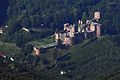
Hardenburg Castle (1580)
Arms of the Princes of Leiningen
  • Gottfried, son of Friedrich IV, inherited the portion of Leiningen ruled from Hardenburg
    • His son Friedrich married Joan of Rixingen, and their children became Counts of Leiningen-Rixingen, which lasted until 1506
    • Gottfried's other son became Emich VI, Count of Leiningen-Hardenburg

Leiningen-Dagsburg (Second Line)

[edit]

Further historical family seats

[edit]

See also

[edit]

Notes

[edit]

References

[edit]
[edit]
Revisions and contributorsEdit on WikipediaRead on Wikipedia
from Grokipedia

The House of Leiningen is an ancient German noble family originating in the early 12th century, with its earliest documented count, Emich II, dying before 1138 in territories spanning Alsace, Lorraine, and the Palatinate within the Holy Roman Empire. The family proliferated through multiple branches, including Leiningen-Dagsburg-Hartenburg and Leiningen-Westerburg, though senior lines faced extinction by the 15th and 18th centuries, leaving the Dagsburg line to persist.
In 1779, Joseph II elevated Carl Friedrich Wilhelm, Count of Leiningen-Dagsburg, to princely rank, formalizing the title Fürst zu Leiningen. The house's territories expanded in 1803 with the creation of the Principality of Leiningen from secularized ecclesiastical lands, though it was mediatized under Napoleonic rearrangements by 1806, stripping direct while preserving noble privileges. Notable marital alliances linked the family to European royalty, exemplified by Emich Carl, 2nd Prince (1763–1814), whose union with produced two children—Princess Feodora and Prince Carl—who became half-siblings to following their mother's remarriage to the . The Leiningens maintained influence through military service, such as , 4th Prince (1830–1904), in the British Royal Navy, and dynastic ties, including Karl, 6th Prince (1898–1946), marrying Grand Duchess Maria Kirillovna of Russia. Today, the house endures as one of Germany's mediatized princely families, headed by , 8th Prince (born 1955), who manages estates like Amorbach Abbey amid modern enterprises in and .

Origins and Early History

Earliest Ancestors and Founding

The origins of the House of Leiningen are rooted in the feudal nobility of the Wormsgau and Nahegau regions in medieval , with the earliest documented progenitor being , Graf im Nahegau und Wormsgau, who held authority in these pagi during the late and died in 1117 during the siege of . Charters record his activities, including donations and confirmations of property, such as one from 1074 and another in 1108, evidencing his role in local land administration under the Salian emperors. This Emicho, sometimes designated as the founder of the Leiningen line, consolidated power through imperial service and familial inheritance, establishing the basis for the county's territorial holdings centered around the Hardt forest and areas. The name "Leiningen" derives from Burg Altleiningen, a castle constructed around 1100–1110, likely by or his immediate successor, serving as the family's primary seat and symbolizing their feudal establishment. The earliest explicit reference to a "comes de Leiningen" appears in subsequent generations, with charters from the early , such as those involving Emicho's descendants witnessing imperial and ecclesiastical acts by circa 1120. These documents, preserved in monastic archives, confirm the family's emergence as distinct counts rather than mere vassals, through grants of allodial lands and comital jurisdictions typical of the period's imperial decentralization under rulers like Henry V, successor to Henry IV. Claims of deeper ancestry linking the Leiningen to Carolingian nobility lack primary evidentiary support, relying instead on later genealogical traditions without corroboration from contemporary charters or ; verifiable thus begins with the 11th-century Emichos in the regional counts' lineage, prioritizing empirical records over speculative pedigrees. Initial territorial founding involved pragmatic alliances with the crown and church, yielding control over scattered estates in the Wormsgau, which formed the core of Leiningen domains before later expansions. This process exemplifies causal feudal dynamics, where and administrative loyalty yielded hereditary rights amid the Holy Roman Empire's fragmented sovereignty.

Initial Territories and Counts

The initial territories of the House of Leiningen were concentrated in the Leiningerland area of the northern Palatinate, now within , encompassing hilly terrain between the and the Hardt Mountains that offered defensive advantages through elevated fortifications and revenue from and . These holdings provided a strategic position for controlling trade routes and local resources, with the region's vineyards contributing significantly to the economic foundation of the early counts. The primary seat was Altleiningen Castle, constructed around 1100–1110 as a hilltop stronghold by Emich II, the first count of Leiningen about whom records exist definitively, who died before 1138. The counts began as ministeriales, servile knights owing allegiance to higher lords such as the Bishop of or imperial authorities, but evolved into hereditary imperial counts by leveraging military service and strategic marriages to secure free noble status and land autonomy. Frederick I (r. circa 1212–1237), inheriting through marriage into the elder Leiningen line after its male extinction around 1220, consolidated these territories amid the turbulent era, forming pragmatic alliances with emperors like Frederick II to defend against encroaching powers and retain comital privileges despite occasional feudal disputes. This period marked the transition from dependent service to independent lordship, with the counts administering justice, tolls, and military obligations over their core domains to sustain regional influence.

Medieval Expansion and Branches

Saarbrücken Line

The Saarbrücken cadet branch diverged from the main Leiningen line circa 1237, following the death of Friedrich II, Count of Leiningen and Saarbrücken (c. 1185–1237), son of Simon II of Saarbrücken and heiress Liutgarde of Leiningen. His sons Emicho IV (c. 1210–c. 1277), who focused on Leiningen-Landeck territories, and Eberhard I (c. 1210–c. 1272) partitioned the inheritance, with Eberhard's descendants consolidating control over Saarbrücken County and associated lands along the Saar River.)) This branch achieved regional dominance through territorial acquisitions secured via marriage alliances and strategic inheritances in the contested borderlands of the . Eberhard I's line extended holdings into and , leveraging proximity to imperial defenses and feudal rights in areas like the Saargau and adjacent gaus, where counts held advocacies over monasteries and castles to bolster local authority. Descendants, including Simon I, Count of Leiningen- (d. 1337), invested in fortifications such as those around and outlying strongholds to repel military pressures, as under the Capetians increasingly probed eastern frontiers for expansion into Lotharingian territories. The branch's male line extinguished in 1488 with the death of the last direct , prompting reversion of core properties—including Saarbrücken lordships—through female inheritance lines, which facilitated absorption by collateral kin or allied houses like Nassau, underscoring reliance on Salic principles tempered by pragmatic feudal succession practices. This outcome preserved dynastic continuity amid the fragmented imperial nobility, though it diluted the Saarbrücken line's autonomous regional power.

Leiningen-Dagsburg (Elder Line)

The Leiningen-Dagsburg elder line originated in the mid-13th century through the House of Leiningen's acquisition of the County of Dagsburg, achieved via the 1224 marriage of Count Simon von Leiningen (d. 1236) to Gertrud, the childless heiress of Dagsburg following her prior unions with Thibaut I of Lorraine and Thibaut IV of Champagne. After Simon's death without male heirs, his brothers Friedrich III (d. 1287), who specifically inherited Dagsburg, and Emich IV jointly administered the expanded territories, marking the formal distinction of the Dagsburg branch from other Leiningen lines. This inheritance integrated Alsatian lands around Dagsburg (near modern Dabo) and Haguenau into Leiningen holdings, enhancing their regional prominence amid feudal rivalries in the Palatinate and Lotharingia. Under King Rudolf I of Habsburg (r. 1273–1291), the branch gained imperial favor, receiving confirmations of lands and roles in Lower Alsace administration, which bolstered their status as counts with rights over castles, tolls, and judicial authority. Emich VI (c. 1325–1381), a key figure, exemplified this era's by overseeing partitions and alliances that temporarily expanded influence, including ties to electors through marriages and feudal obligations, though primary records emphasize defensive fortifications like Dagsburg Castle against incursions. The line's medieval prominence rested on balancing imperial patronage with local governance, amassing revenues from vineyards, forests, and trade routes in the valley. Subsequent generations faced inexorable fragmentation from practices inherent to nobility, where estates divided equally among sons eroded economic viability and military capacity. By the early , holdings splintered into diminutive appanages incapable of sustaining independent comital power, culminating in the elder line's male in 1462 when the final claimant died without heirs, redistributing remnants to cadet branches or imperial fisc. This causal trajectory—driven by demographic pressures and lack of —exemplified broader medieval German dynastic decline, reducing once-consolidated territories to scattered enclaves vulnerable to absorption by rising powers like the Palatinate electors.

Leiningen-Westerburg and Early Cadets

The Leiningen-Westerburg branch originated from the subdivision of the County of Leiningen, which had split into Leiningen-Westerburg and Leiningen-Dagsburg as early as 1317, with the Westerburg association solidified through by the Lords of Westerburg in 1467. By the late , figures such as those succeeding to Alt-Leiningen and Neu-Leiningen territories in formalized the line's holdings, leading to the creation of the County of Leiningen-Westerburg in 1481. This consolidation under counts like the early Heinrichs emphasized control over scattered estates in the and Palatinate regions, adapting to feudal fragmentation through strategic marriages and imperial privileges. In the , the branch underwent initial subdivisions to manage inheritance pressures, producing early cadet lines that preserved family influence amid economic and confessional shifts. The adoption of post-1555, aligning with the Peace of Augsburg's cuius regio principle, represented a key adaptive strategy, enabling the counts to secure ecclesiastical properties and resist Catholic Habsburg centralization. Lines such as Altleiningen, though formally partitioned later in 1695, traced roots to these 16th-century divisions, maintaining distinct Protestant identities while contributing contingents to imperial armies during conflicts like the early Ottoman frontier wars, as evidenced by noble service patterns in the . These early cadets navigated Reformation-era turbulence by leveraging and alliances with Protestant estates, avoiding absorption into larger principalities through repeated partitions that distributed lands among heirs while upholding the family's military obligations to the .

Early Modern Developments

Leiningen-Hardenburg

The Leiningen-Hardenburg branch emerged as the younger line following the partition of the County of Leiningen in 1317, when the inheritance was divided between the elder Dagsburg line and the junior Hardenburg line under Emich V and his brother. This division allocated to Leiningen-Hardenburg key territories centered on Hardenburg Castle near , along with lordships over Rixingen (modern Réchicourt-le-Château), Heidesheim, Guntersblum, and Falkenburg, which provided a base for regional influence in the Palatinate and borderlands. The branch maintained for select holdings, navigating feudal obligations to the Electorate of the Palatinate while asserting autonomy through fortified residences and local jurisdictions. Throughout the , Leiningen-Hardenburg counts pursued administrative roles within the , exemplified by figures like Emich XII (r. 1562–1607) and his successors Johann Philipp II (r. 1607–1643) and Friedrich Emich (r. 1643–1698), who managed estates amid the Thirty Years' War's disruptions. Economic stability derived from agrarian revenues, in the , and oversight of tolls and markets, rather than large-scale ventures, enabling resilience against military devastations that reduced many peer houses to penury. By the late , strategic intermarriages bolstered alliances, with Emich XIII (d. 1701) exemplifying ties to regional nobility that preserved patrimonial integrity. The branch's sub-lines, including Rixingen and Heidesheim, faced attrition through lack of male heirs, culminating in mergers that integrated Leiningen-Hardenburg assets into the broader Leiningen-Dagsburg framework around 1779–1780 under Carl Friedrich Wilhelm Emich, who unified fragmented holdings and secured princely elevation from Emperor Joseph II. This absorption averted total extinction and fragmentation, consolidating approximately 90 square miles of territories into a viable entity capable of withstanding the Empire's dissolution in , though it subordinated Hardenburg's distinct identity to the senior lineage.

Leiningen-Dagsburg (Younger Line)

The younger line of Leiningen-Dagsburg, commonly identified with the Leiningen-Dagsburg-Hardenburg branch, originated from mid-16th-century partitions of the Dagsburg territories, following the division between elder and younger lines after the acquisition of Dagsburg Castle in 1317. This branch persisted through strategic inheritances in the late 1590s, when descendants of Emich XI von Leiningen-Dagsburg-Falkenburg consolidated claims amid fragmenting feudal holdings. The line's counts, including figures like Friedrich X (1593–1651), navigated the Thirty Years' War's devastations by retaining core estates in the , avoiding total absorption into expanding French domains that engulfed Alsatian lands such as Dagsburg proper. Key to the younger line's endurance were its focused possessions in southwestern , notably around Billigheim and Neidenau, which furnished agricultural revenues insulated from Lorraine's French integration after 1680. These territories, centered on castles like Hardenburg near , supported self-sustaining economies through and grain production, countering the fiscal strains of imperial diets and military levies. Survival tactics emphasized defensive alliances within the and avoidance of direct confrontation with Louis XIV's expansions, preserving for select counties. By the early , under counts such as those maintaining the Hardenburg lineage, the branch had stabilized its reduced domains, prioritizing administrative efficiency over territorial overreach. The 1803 merger with the Leiningen-Westerburg , facilitated by the Reichsdeputationshauptschluss's territorial reallocations, amalgamated fragmented Westerburg with Dagsburg-Hardenburg holdings, creating a contiguous bloc in the Palatinate and regions. This consolidation, involving Karl Friedrich Wilhelm Emich, augmented landholdings by approximately 1,200 square kilometers and bolstered the family's leverage in mediatization negotiations, directly enabling subsequent imperial restructuring without reliance on lost French territories.

Leiningen-Schaumburg and Other Subbranches

The Leiningen-Schaumburg branch arose as a line from the Westerburg-Leiningen territories, with Georg I, Count of Leiningen-Westerburg, holding and Kleeberg by the late , and further partitions in 1620 delineating its holdings from the Hardenburg inheritance. This short-lived subbranch absorbed the neighboring Leiningen-Leiningen county upon its extinction in 1705, consolidating minor Rhenish possessions before the male line ended in the early 18th century, with estates reverting to senior kin or mediatized entities. Parallel minor lines, such as Leiningen-Guntersblum, emerged from divisions in the Dagsburg-Falkenburg cadetry around 1658, retaining small enclaves like Guntersblum and Billigheim as collateral claims into the late under counts like Wilhelm-Karl (d. 1809). These subbranches, lacking major territorial power, nonetheless contributed to the family's collective influence as imperial counts, securing representation and votes in the Reichstag's princely bench through their status as immediate estates within the .

Elevation to Imperial and Princely Status

Rise Within the Holy Roman Empire

The House of Leiningen, first reliably documented as counts around 1128, incrementally elevated its status within the Holy Roman Empire through feudal service, territorial consolidation, and kinship ties to high ecclesiastical offices. Early counts leveraged alliances and military contributions to secure holdings in the Palatinate and Rhineland regions, transitioning from vassals of regional powers to holders of imperial immediacy (Reichsunmittelbarkeit), wherein their counties answered directly to the emperor rather than intermediate lords. This status, emblematic of merit-based advancement in the Empire's decentralized hierarchy, was achieved by principal branches by the late 16th century, with further subdivisions like Leiningen-Hardenburg and Leiningen-Dagsburg maintaining autonomous governance over scattered estates. Kinship networks amplified their influence, notably via Gottfried III von Leiningen, who served as Archbishop-Elector of from 1396 to 1397, affording the family indirect sway in the that selected emperors. Such ecclesiastical elevations underscored the Leiningens' navigation of the Empire's confessional and political landscape, where noble families parlayed regional power into broader imperial leverage without yielding to subordinating overlords. By the mid-17th century, following partitions in 1316 and 1593, at least three branches—encompassing territories from Altleiningen to Dagsburg—collectively held immediate counties, aggregating votes and representation in the Imperial Diet and preserving fiscal and judicial independence amid post-Thirty Years' War reconstructions. This ascent culminated in 1779 when Emperor II raised Karl Friedrich Wilhelm, Count of Leiningen-Dagsburg-Hardenburg, to the rank of Prince of the Empire, rewarding accumulated service while affirming the family's entrenched immediacy across fragmented lines. The Leiningens resisted Habsburg absolutist pressures—manifest in II's reforms—by anchoring their autonomy in the Empire's collegiate institutions, such as diet proceedings that curtailed executive overreach and upheld princely prerogatives against centralization. This fidelity to imperial , rooted in causal dynamics of reciprocal obligations between and , ensured their viability as a mediatized on the eve of the Empire's reconfiguration.

Creation of the Principality (1806)

The Principality of Leiningen was established in 1803 through the , a comprehensive reorganization of ecclesiastical and smaller secular territories in the , as compensation to the House of Leiningen for lands lost to French annexation on the . Hereditary Prince Emich Carl (1763–1814), son of the reigning Prince Carl Friedrich Wilhelm, received the secularized Benedictine Abbey of Amorbach along with associated districts such as , Buchen, Ostburken, and others, transforming fragmented holdings into a consolidated entity capable of sustaining princely administration. This allocation, totaling around 800 square kilometers initially, prioritized practical viability over historical claims, reflecting the era's where noble houses negotiated equivalents amid Napoleonic pressures rather than invoking feudal precedents. In 1806, amid the dissolution of the and the formation of the , the principality's status was briefly affirmed as a on July 12, through diplomatic maneuvers emphasizing mutual accommodations among German rulers. played a mediating role in territorial delineations, facilitating Leiningen's inclusion of viable ecclesiastical remnants while advancing its own expansions, as French arbitration resolved overlapping claims from the former Palatinate territories. These negotiations underscored causal incentives—consolidation for military efficiency and administrative streamlining—over ideological loyalty to the Habsburg emperor, with Emich Carl securing immediate governance rights despite the precarious geopolitical landscape. Later that year, however, the principality underwent mediatization, its territories subordinated to the effective October 1806, as mandated the absorption of smaller states to bolster larger allies. Despite this loss of sovereignty, the Leiningen family's princely dignity and standesherrliche privileges—rights to advisory roles in higher diets—were preserved through Emich Carl's adherence to the . The in 1815–1816 formally ratified the hereditary princely title for Emich Carl and his heirs, acknowledging the house's pre-mediatization status amid broader restorations, thereby ensuring dynastic continuity independent of territorial control.

19th-Century Political Role

Participation in German Confederations

Prince Karl Friedrich Wilhelm Emich (1804–1856), third Prince of Leiningen, played a significant role in the political upheavals within the during the revolutions of 1848. As a member state, the Principality of Leiningen sent representatives to the Federal Diet () in , where smaller sovereign houses like Leiningen advocated for reforms amid growing liberal demands for unification. On 15 July 1848, the Frankfurt National Assembly appointed Karl as the first (Ministerpräsident) of the Provisorische Zentralgewalt, the provisional tasked with administering a nascent German federation until a could be ratified. Karl's tenure emphasized , parliamentary institutions, and the curtailment of feudal privileges to foster national cohesion, drawing on his earlier advocacy for progressive governance. However, the ministry's authority was nominal, constrained by the Confederation's decentralized structure and opposition from dominant powers; , in particular, rejected subordination to the Frankfurt assembly's framework. Lacking coercive mechanisms or military backing, Karl resigned on 6 1848 after less than two months, as Prussian maneuvers exposed the provisional government's impotence and shifted momentum toward particularist interests. This episode highlighted the Leiningens' commitment to orderly unification but underscored the limits of diplomatic initiative for minor principalities in federal deliberations. Following Karl's death in 1856, his son Ernst Leopold (1830–1904) assumed leadership amid escalating tensions leading to the Confederation's dissolution. The principality, though small with limited military capacity, navigated the of 1866 by prioritizing pragmatic alignment with Prussian ascendancy, eschewing the revolutionary fervor of in favor of Bismarckian that prioritized monarchical stability and great-power arbitration. This stance facilitated seamless incorporation into the in 1867, preserving the house's influence amid unification without endorsing radical upheaval. Concurrently, investments in , such as regional rail connections in the Palatinate, bolstered economic resilience, enabling the principality to adapt to post-Confederation realities by enhancing trade and administrative efficiency.

Regents and Diplomatic Alliances

Prince Karl Friedrich Wilhelm Emich, 3rd , assumed a pivotal leadership role during the 1848 revolutions by serving as of the provisional central authority established by the Frankfurt National Assembly from June 28 to September 8, 1848. Appointed to counterbalance the assembly's dominant liberal factions, he promoted a conservative constitutional framework favoring monarchical continuity and Prussian predominance, which aimed to curb radical reforms threatening the autonomy and stability of smaller German states like Leiningen. This stance reflected first-principles prioritization of ordered governance over revolutionary upheaval, enabling Leiningen territories to sidestep the widespread unrest and liberal excesses that destabilized neighboring regions. Under subsequent princes, including Ernst Leopold, 4th Prince of Leiningen (r. 1856–1904), conservative administration persisted, reinforcing internal cohesion and forestalling 1848-style agitations through adherence to traditional authority structures within the framework. Diplomatic alliances bolstered this stability via strategic intermarriages with fellow mediatized houses, exemplified by Princess Feodora of Leiningen's 1828 union with Ernst I, Prince of , which embedded Leiningen within a network of South committed to monarchical preservation. This connection extended to the when their son, Hermann, 5th Prince of Hohenlohe-Langenburg, wed Princess Leopoldine of in 1862, cementing familial bonds that facilitated coordinated resistance to liberal encroachments and enhanced collective leverage among minor states. Such ties with , alongside analogous relations cultivated through diplomacy with , underscored causal mechanisms for mutual defense of amid 19th-century pressures for centralization.

Connections to European Royalty

Intermarriages with Major Houses

The House of Leiningen strategically pursued intermarriages with prominent continental dynasties to consolidate territories, secure inheritances, and bolster political influence within the , prioritizing equal unions with houses of comparable rank to preserve dynastic purity. These alliances, often involving the elder lines of Leiningen-Dagsburg and Leiningen-Hardenburg, facilitated claims to fragmented estates amid frequent partitions and extinctions, while excluding morganatic matches that could undermine succession rights until the early . A pivotal union occurred on 16 March 1748, when Countess Maria Louise Albertine of Leiningen-Dagsburg-Falkenburg (1729–1818), daughter of the reigning Count Christian Karl Reinhard, married (1722–1782), brother of Louis IX. This marriage allied Leiningen with the expanding Hessian territories, providing military and diplomatic leverage during the Seven Years' War era; following her father's death in 1770, which extinguished the direct Dagsburg-Falkenburg line, the ensuing inheritance disputes were resolved in favor of the Leiningen-Hardenburg branch, with Hessian ties helping to affirm their claims against rival pretenders and French encroachments. Links to the , ancestral to the Orange dynasty, were forged earlier through Countess Maria Polyxena of Leiningen-Dagsburg-Hardenburg (1662–1725), who wed Count John Ernst of Nassau-Weilburg (1664–1715) circa 1683, yielding heirs who intertwined Leiningen blood with Nassau's Rhenish domains. These connections persisted into the via indirect brides from Nassau cadet branches, such as those enhancing ties to the Walram line, which bolstered Leiningen's position in post-Napoleonic mediatizations and reinforced Protestant alliances across the Rhine Confederation, without diluting the house's sovereign aspirations.

Ties to the British Royal Family

The House of Leiningen's most direct connection to the arose through Karl, 3rd (1804–1856), who was the maternal half-brother of . Both shared the same mother, , Karl from her first marriage to Emich Carl, 2nd , in 1803, and Victoria from her second marriage to Edward, Duke of Kent, in 1818. Karl maintained familial correspondence with his half-sister after her 1837 accession, including visits to , though political differences—such as his role in the 1848 Baden Revolution—limited deeper integration into British court circles. This sibling bond elevated the Leiningens' status among European nobility, positioning them as relatives of the British sovereign without conferring succession rights, as Karl's lineage derived from non-Hanoverian German nobility rather than Sophia of Hanover's Protestant descendants. Karl's eldest son, Ernst Leopold, 4th Prince of Leiningen (1830–1904), forged a practical tie through his service in the Royal Navy, entering as a midshipman aboard HMS Hastings in March 1849 under Rear-Admiral Thomas Austen in the East Indies. Promoted to lieutenant in 1851, commander in 1857, and captain in 1860, Ernst commanded HMS Magicienne (1860–1862) and the royal yacht HMY Victoria and Albert (1866–1871), facilitating Queen Victoria's seaside travels and earning her personal favor. Retiring as rear-admiral in 1894 after 45 years of service, his career exemplified German nobility's assimilation into British institutions, bolstered by his status as Victoria's nephew; he received the Royal Victorian Chain in 1902. This naval tenure not only symbolized prestige but also influenced precedents for morganatic princelings' entry into the service, as Ernst advocated for Prince Louis of Battenberg (later 1st Marquess of Milford Haven) amid debates over his eligibility due to his parents' unequal marriage. These links carried implications for Leiningen prestige, embedding the family in Britain's maritime tradition and extending indirect influence on Mountbatten descendants, who pursued prominent naval roles—such as Louis Mountbatten's commands during —building on the pathways Ernst helped establish. However, no Leiningen heirs pursued British titles or offices, preserving their primary orientation toward German principalities amid 19th-century realignments. The connections waned post-1904 with Ernst's , yielding to continental intermarriages without further British institutional engagement.

20th-Century Challenges and Survival

World Wars and Property Losses

During , members of the House of Leiningen served in the German military, reflecting the tradition of noble participation in imperial forces. Emich Ernst, eldest son of Emich, 5th Prince of Leiningen, was on March 21, 1918, at age 21. His brother, Karl (1898–1946), pursued a military career, enlisting in the and advancing through ranks amid the conflict's demands. In , Karl, who succeeded as 6th in 1939 following his father's death, continued military service until capture by Soviet forces. He died on August 2, 1946, in a near in the Mordovian ASSR, one of numerous German officers held post-surrender. Family properties, including castles like Amorbach, faced requisitions: Nazis commandeered estates for administrative or storage uses, while advancing Allied troops occupied sites in , leading to temporary seizures and damage from hostilities. Post-1945 land reforms in western zones, including and where Leiningen holdings concentrated, dismantled large agrarian estates to redistribute to smallholders and curb feudal remnants, reducing the family's land to primarily forested areas by the early 1950s. Unlike eastern expropriations, western measures spared wholesale confiscation of residences, allowing retention of titles as surnames under the 1919 provisions that ended monarchical privileges but preserved nominal status. These changes halved noble landownership overall, compelling diversification into management and investments for .

Post-1945 Adaptation and Mediatization Effects

Emich Kyrill, 7th (1926–1991), succeeded his father Karl as head of the house in 1946 amid the establishment of the Federal Republic of , navigating the loss of sovereign status through entrepreneurial pursuits and estate management rather than political agitation. As a German entrepreneur, he directed family resources toward sustainable forestry operations and diversified investments, leveraging surviving properties from pre-war holdings in forested regions such as the Palatinate to ensure economic viability in a democratized state devoid of feudal privileges. This shift emphasized private enterprise over restorationist claims, aligning with the broader pattern of mediatized noble houses adapting to constitutional equality under the . The family retained Amorbach Abbey as their principal residence, originally acquired in from secularized Benedictine holdings, preserving its structures and cultural assets—including a of over 30,000 volumes accumulated by princely predecessors—as a bulwark against disruptions. Maintenance of this seat facilitated cultural continuity, with provisions for , infrastructure, and local , while legal protections for noble titles as integral to surnames (affirmed in West German post-1949) shielded familial identity without conferring special rights. These strategies underscored a focus on heritage stewardship and regional contribution, eschewing radical ideologies in favor of integration into republican civic life.

Contemporary House and Disputes

Current Leadership and Heirs

Andreas, 8th Prince of Leiningen (Andreas Karl Friedrich Peter; born 27 November 1955 in Frankfurt am Main), has served as head of the princely house since 30 October 1991, following the death of his father, Emich Kyrill, 7th Prince of Leiningen. He acceded after his elder brother, Prince Karl Emich, was excluded from succession under house laws prohibiting morganatic marriages; Karl Emich's 1991 union with Gabriele Freifrau von und zu Franckenstein (née Thyssen) was deemed unequal by the 7th Prince, prompting the designation of Andreas as heir. The house adheres to strict agnatic primogeniture, prioritizing male-line descendants from equal unions for leadership and titular claims. Andreas married Princess Alexandra Irene of Hanover (born 18 February 1959), daughter of Ernest Augustus, Hereditary Prince of Brunswick, on 5 October 1981 in a civil ceremony followed by religious rites. The couple has three children, ensuring continuity in the main line: Hereditary Prince Ferdinand Heinrich Emich Christian Karl (born 12 August 1982 in am Main), who holds the position of ; Olga Alexandra Irene (born 16 April 1984); and Hermann Friedrich Ferdinand (born 25 May 1987). Ferdinand, trained in diplomacy and , represents the family's next generation in titular succession, while Hermann oversees operational aspects of family enterprises, including forestry and in Amorbach . Collateral lines, such as the former counts of Leiningen-Guntersblum originating from 18th-century partitions, persist as noble houses with comital titles but lack claims to the princely headship, which remains vested in the senior branch per historical house statutes and mediatization precedents. These branches hold no role in the main succession, focusing instead on private estates and lesser nobility status post-1806 dissolution of the .

Succession Claims and Family Conflicts

Prince (b. June 12, 1952), eldest son of Emich, 7th , contracted a on May 24, 1991, to Gabriele Renate Thyssen without his father's approval, resulting in the loss of his dynastic succession rights under house rules excluding unequal unions from the line of inheritance. This paved the way for his younger brother, , to succeed as 8th Prince upon their father's death on October 8, 1991, adhering to male-preference as codified in the family's 1779 house law and upheld by subsequent legal precedents. An ensuing inheritance dispute escalated in 2000, when Karl Emich challenged the exclusion from his father's approximately £100 million estate, including castles, forests, and properties, arguing against the morganatic disqualification's application to private assets. German courts ultimately rejected the claim, affirming Andreas's entitlement as head of house and prioritizing in both titular and patrimonial succession, thereby resolving the matter in favor of the younger brother despite Karl Emich's descent as the senior male. In June 2013, following his conversion to , Karl Emich was proclaimed heir to the defunct Russian imperial throne by the , leveraging his matrilineal descent from Grand Duchess Maria Kirillovna (daughter of Kirill Vladimirovich) as a basis for eligibility under debated Romanov succession principles allowing Orthodox German princely heirs. This assertion, tied to a fringe micronational project styled the "Romanov Empire," has garnered negligible support among broader Romanov descendants or Russian monarchists, who prioritize direct patrilineal claimants like Grand Duchess Maria Vladimirovna, rendering it a marginal pretension disconnected from Leiningen house leadership. Tensions resurfaced in 2024 when , 8th Prince, appointed his younger son, Prince Hermann (b. 2009), to oversee family enterprises—encompassing , , and investments—bypassing Hereditary Prince Ferdinand (b. 2006), the designated successor under . Heirs, including Ferdinand, have reportedly raised allegations of mismanagement in Andreas's handling of the Leiningen investment portfolio, prompting calls for greater transparency, though no formal legal action has been confirmed and the dispute centers on administrative competence rather than titular rights. These frictions highlight ongoing familial divisions over of a diminished post-mediatization patrimony valued in the tens of millions of euros.

Heraldry, Seats, and Legacy

Arms, Motto, and Symbols

The of the House of Leiningen features a field of gules charged with a bend argent, a design rooted in medieval and preserved across primary branches of the family. This , symbolizing strength and continuity, appears in historical records as the core emblem distinguishing Leiningen from contemporaneous noble houses. Variations emerged in cadet lines to incorporate inherited or allied territories; the Leiningen-Westerburg branch, for instance, quartered the foundational arms with lozengy patterns from the Westerburg inheritance, reflecting fusion of lineages while maintaining the distinctive bend. Such adaptations ensured heraldic differentiation amid the family's extensive divisions, including Dagsburg and Hartenburg lines. Upon elevation to princely status with the of Leiningen in , later mediatized in 1806, the arms received imperial augmentations, including the black , a privilege denoting Reichsunmittelbarkeit and alignment with imperial authority. This enhancement, typical for elevated houses in the late , underscored the family's enduring prestige amid restructuring.

Historical Residences and Enduring Influence

The House of Leiningen centered its historical residences around fortified castles and ecclesiastical sites, with Amorbach Abbey emerging as a core seat after its in 1803, when the family acquired the property and adapted it for princely use, retaining it as a into modern times. Other key strongholds included Hardenburg Castle, erected circa 1210 by the Leiningen-Dachsburg-Hardenburg line as one of the Palatinate's largest and most defensible fortresses, featuring extensive walls, turrets, and later additions for residential comfort. Altleiningen Castle and Neuleiningen Castle represented early medieval cores, built in the 12th-13th centuries to assert territorial control, though both suffered irreversible destruction during the in 1690-1691 at French hands, leaving them as enduring ruins. Additional seats such as Guntersblum Castle, reconstructed in the early with a completed shell by 1708, and Landeck Castle in Landau underscored the family's dispersed holdings across and adjacent regions. Many of these structures, including those in the Leiningerland landscape, now exist primarily as archaeological remnants, their decay accelerated by wartime devastations and lack of comprehensive postwar restoration, preserving them as testaments to medieval defensive architecture rather than functional estates. The Leiningens' architectural patronage advanced Palatinate Gothic styles, integrating robust stone fortifications with evolving residential features in castles like Hardenburg, which combined Romanesque bases with Gothic expansions to balance military utility and noble habitation. This legacy influenced regional castle-building traditions, emphasizing strategic hilltop placements and multi-phase constructions that withstood sieges for centuries. Beyond physical sites, the family's enduring influence manifests in genealogical prestige, with descendants embedding Leiningen lineage into broader European nobility, sustaining aristocratic networks and countering assumptions of noble obsolescence amid modern egalitarian shifts.

References

Add your contribution
Related Hubs
User Avatar
No comments yet.