
Recent from talks
Cover-up tattoo
Knowledge base stats:
Talk channels stats:
Members stats:
Cover-up tattoo
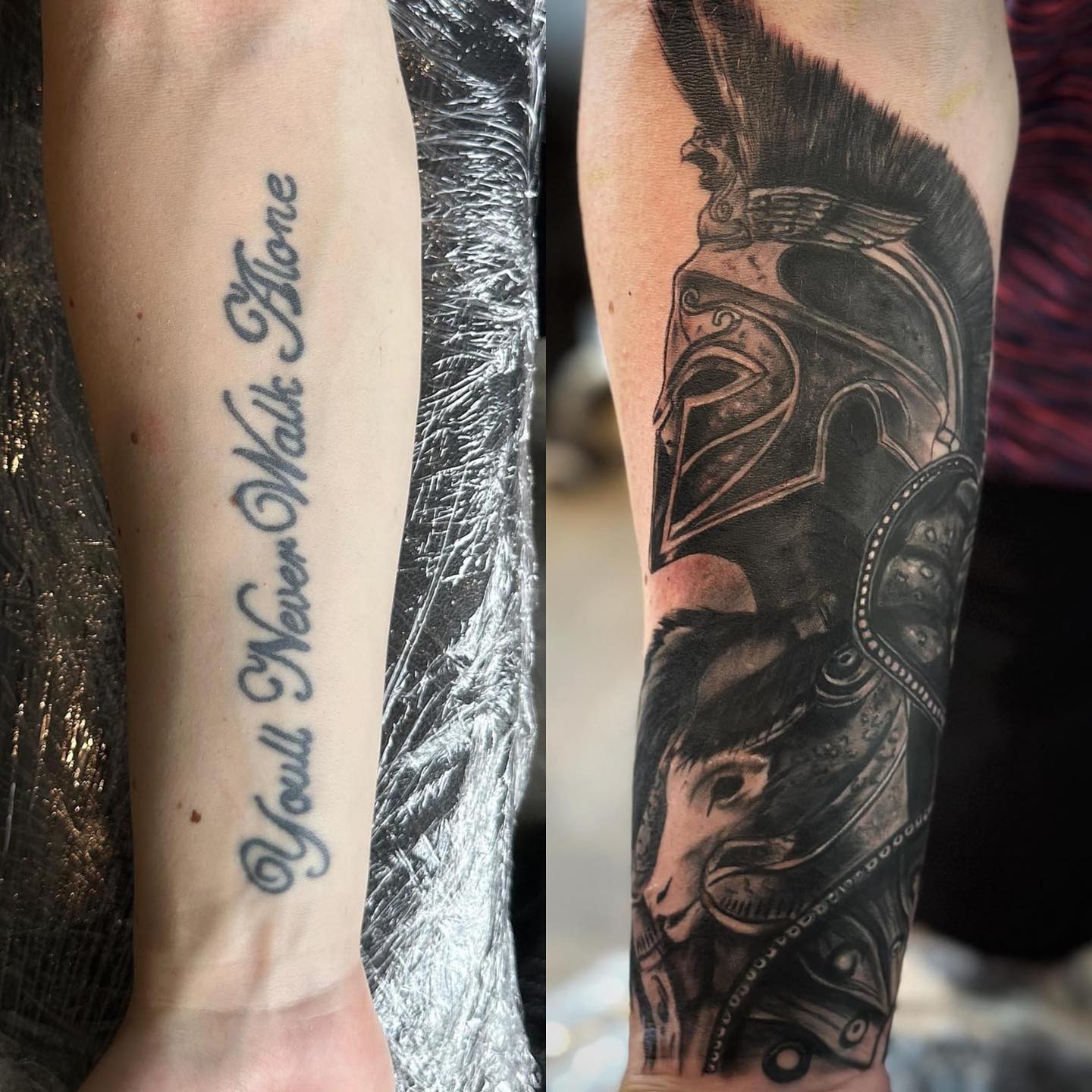
Cover-up tattoos are those done over one or more previous tattoos, scars, or skin conditions.
People cover up old tattoos for a variety of reasons, such as that the tattoos were references to relationships that have ended, the tattoos were nonconsensual, or the tattoos relate to gangs or hate speech. Cover-ups after breakups have received particular attention due to high-profile cases involving celebrities. Cover-ups are one of the two main options of removing an unwanted tattoo, the other being laser removal. Covering up an unwanted tattoo is generally cheaper, less painful and an overall easier solution than tattoo removal.
A decorative cover-up tattoo can obscure a scar or skin condition with personally meaningful art, making it an alternative to more flesh-like paramedical tattoos. For example, in lieu of reconstruction post-mastectomy, a person may choose to get a decorative tattoo over their scars. Self-harm scars are another common target for cover-ups.
Both scars and old tattoo ink present additional challenges for a tattoo artist. Some tattoo artists specialize in cover-ups, and some give free cover-ups for cases such as hate symbols, human trafficking tattoos, and self-harm scars.
A person may seek a cover-up tattoo if they wish to distance themselves from existing tattoos. The simplest reason is that they do not like how a tattoo appears on their body. In particular, cover-ups are associated with regret for the original tattoo. A 2013 study of tattoo removal and cover-up recipients found that regret often stems from dissatisfaction with the narrative that the tattoo represents, either due to the tattoo not being meaningful or to the symbolism being unsatisfying. Tattoo artists who do cover-ups are commonly asked to cover tattoos related to a person's past relationship. People also cover up tattoos related to non-romantic relationships, such as relatives from whom they have become estranged.
As tattoos grew more mainstream in the 1990s and even more in the 2000s, celebrity tattoos received significant attention, especially cover-ups of couples tattoos after breakups. After breaking up with actress Winona Ryder in 1993, actor Johnny Depp partially covered up a "Winona Forever" tattoo, to read "Wino Forever". Further notable post-breakup cover-ups include Denise Richards and Angelina Jolie.
Popular culture in the 2010s included further growth in the popularity of tattoos and coverage of celebrity cover-up tattoos. In 2017, influencer Kylie Jenner had her lowercase "t" for rapper Tyga changed to "la" after their breakup. After marital separation in 2020, Nick Cannon replaced a large back tattoo of singer Mariah Carey's first name with a depiction of the crucifixion of Jesus. Comedian Pete Davidson and singer Ariana Grande got a combined 16 tattoos relating to each other before breaking off their engagement in 2018, then multiple cover-ups.
People also seek to cover up tattoos they received non-consensually. In the 17th century, the use of irezumi kei (penal tattoos) for prisoners in Japan fell out of practice largely because released prisoners would cover them up with decorative designs. Some sex trafficking victims who are subjected to branding tattoos later cover them up with chosen tattoos. In the United States and Canada, organizations including Survivor's Ink and Unbound facilitate such cover-ups.
Hub AI
Cover-up tattoo AI simulator
(@Cover-up tattoo_simulator)
Cover-up tattoo
Cover-up tattoos are those done over one or more previous tattoos, scars, or skin conditions.
People cover up old tattoos for a variety of reasons, such as that the tattoos were references to relationships that have ended, the tattoos were nonconsensual, or the tattoos relate to gangs or hate speech. Cover-ups after breakups have received particular attention due to high-profile cases involving celebrities. Cover-ups are one of the two main options of removing an unwanted tattoo, the other being laser removal. Covering up an unwanted tattoo is generally cheaper, less painful and an overall easier solution than tattoo removal.
A decorative cover-up tattoo can obscure a scar or skin condition with personally meaningful art, making it an alternative to more flesh-like paramedical tattoos. For example, in lieu of reconstruction post-mastectomy, a person may choose to get a decorative tattoo over their scars. Self-harm scars are another common target for cover-ups.
Both scars and old tattoo ink present additional challenges for a tattoo artist. Some tattoo artists specialize in cover-ups, and some give free cover-ups for cases such as hate symbols, human trafficking tattoos, and self-harm scars.
A person may seek a cover-up tattoo if they wish to distance themselves from existing tattoos. The simplest reason is that they do not like how a tattoo appears on their body. In particular, cover-ups are associated with regret for the original tattoo. A 2013 study of tattoo removal and cover-up recipients found that regret often stems from dissatisfaction with the narrative that the tattoo represents, either due to the tattoo not being meaningful or to the symbolism being unsatisfying. Tattoo artists who do cover-ups are commonly asked to cover tattoos related to a person's past relationship. People also cover up tattoos related to non-romantic relationships, such as relatives from whom they have become estranged.
As tattoos grew more mainstream in the 1990s and even more in the 2000s, celebrity tattoos received significant attention, especially cover-ups of couples tattoos after breakups. After breaking up with actress Winona Ryder in 1993, actor Johnny Depp partially covered up a "Winona Forever" tattoo, to read "Wino Forever". Further notable post-breakup cover-ups include Denise Richards and Angelina Jolie.
Popular culture in the 2010s included further growth in the popularity of tattoos and coverage of celebrity cover-up tattoos. In 2017, influencer Kylie Jenner had her lowercase "t" for rapper Tyga changed to "la" after their breakup. After marital separation in 2020, Nick Cannon replaced a large back tattoo of singer Mariah Carey's first name with a depiction of the crucifixion of Jesus. Comedian Pete Davidson and singer Ariana Grande got a combined 16 tattoos relating to each other before breaking off their engagement in 2018, then multiple cover-ups.
People also seek to cover up tattoos they received non-consensually. In the 17th century, the use of irezumi kei (penal tattoos) for prisoners in Japan fell out of practice largely because released prisoners would cover them up with decorative designs. Some sex trafficking victims who are subjected to branding tattoos later cover them up with chosen tattoos. In the United States and Canada, organizations including Survivor's Ink and Unbound facilitate such cover-ups.
Recent media