Recent from talks
All channels
Be the first to start a discussion here.
Welcome to the community hub built to collect knowledge and have discussions related to Cuco Valoy.
Nothing was collected or created yet.
Cuco Valoy
View on Wikipediafrom Wikipedia
Key Information
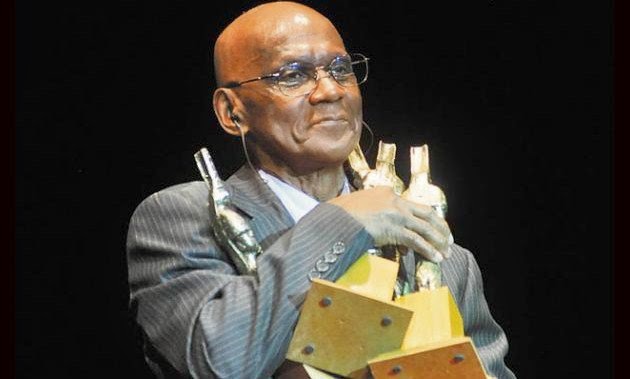
Cuco Valoy (born January 6, 1937, in Manoguayabo, Santo Domingo, Dominican Republic) is a Dominican Republic singer, songwriter, percussionist and guitarist, who is versatile in salsa, son montuno, guaracha and merengue. He began performing with his brother Martín, under the name Los Ahijados.[1] Valoy is the father of Ramón Orlando, with whom he formed the band Los Virtuosos, later changed to La Tribu.[1] He is widely known for the song "Juliana", which was covered by the group DLG; a cover that featured Valoy's vocals.
Discography
[edit]- 1993: Bien Sobao/Y Lo Virtuoso (Kubaney)
- 1993: Lo Mejor de Cuco Valoy (Kubaney)
- 1993: Lo Mejor de Cuco Valoy, Vol. 2 (Kubaney)
- 1995: Época de Oro (Kubaney)
- 1996: Disco de Oro (Kubaney)
- 2003: Gold (Edenways)
- 2004: Intacto (Kubaney)
- 2004: Grandes Soneros de la Época
- 2007: Sonero y Valor
- 2008: Reserva Musical
- 2009: La Piedra
References
[edit]- ^ a b Colin Larkin, ed. (1992). The Guinness Encyclopedia of Popular Music (First ed.). Guinness Publishing. p. 2572/3. ISBN 0-85112-939-0.
External links
[edit]- Biography of Cuco Valoy with performance videos
- Cuco Valoy, Biografía autorizada. Escrita por Jose Díaz. ISBN 978-0-578-94606-1 (Julio 2021)
- Cuco Valoy: Afropop vocalist
Cuco Valoy
View on Grokipediafrom Grokipedia
Early Life
Birth and Family
Cuco Valoy was born on January 6, 1937, in the San Miguel sector of Manoguayabo, a rural barrio on the outskirts of Santo Domingo in the Dominican Republic.[3][1] His mother died when he was four years old.[6] This area, known for its agricultural roots and proximity to the capital, provided an early immersion in the vibrant folk music traditions of the island nation. Valoy grew up in a family of 12 children with deep musical inclinations, rooted in his father's profession as a carpenter who nonetheless prioritized his sons' artistic development. His father, of humble means, enrolled Cuco in music studies at the National Conservatory of Music in the Dominican Republic, fostering a household environment where music was both a passion and a potential pathway out of socioeconomic constraints.[1] A key figure in this heritage was his brother Martín Valoy, a guitarist and early collaborator who shared Cuco's affinity for Dominican and Cuban rhythms, laying the groundwork for their lifelong musical partnership.[1][7] The Valoy family's working-class background in mid-20th-century Dominican Republic reflected the broader challenges of rural life under the Trujillo regime, where agriculture dominated and opportunities were limited for those without land or capital. This context exposed young Cuco to local folk traditions such as merengue and son, which were integral to community gatherings and cultural identity in Manoguayabo, shaping his foundational appreciation for the island's sonic landscape.[1]Musical Beginnings
Cuco Valoy's musical journey began in the rural community of Manoguayabo, Santo Domingo, where he was immersed in informal education shaped by family dynamics and local traditions during the 1950s, despite limited general formal schooling. Growing up in a large family in a humble environment, Valoy absorbed musical knowledge through everyday interactions and communal activities, influenced by his father's engaging storytelling style that honed his expressive abilities.[6] This familial setting fostered an early appreciation for rhythm and melody, as household gatherings often featured impromptu singing and playing rooted in Dominican cultural practices.[6] At age 14, Valoy moved to the capital to work, broadening his exposure.[6] By his early teens, he started experimenting with percussion instruments in community settings, beginning around age 10 when he crafted his first tambora from available materials to join local fun and festivities. He soon explored other traditional tools like the güiro and maracas, using them to accompany neighborhood gatherings and personal play, which allowed him to develop a hands-on understanding of rhythm without structured lessons beyond his formal music training at the Conservatory.[6] These early sessions in Manoguayabo's vibrant social fabric provided a playground for his innate talent, emphasizing self-taught techniques over formal training.[2] During his adolescence in the 1950s, Valoy's versatile approach was profoundly shaped by the sounds of Dominican folk music and broader Afro-Caribbean influences, often heard through radio broadcasts of Cuban son and bolero that permeated the region. This exposure to rhythmic complexities from neighboring Caribbean traditions blended with local merengue and son elements, inspiring a multifaceted style that prioritized adaptability and cultural fusion.[6] Occasionally, he jammed informally with his brother Martín, a guitarist, which further enriched his exploratory phase before any organized pursuits.[8]Career
Formation of Early Groups
In the mid-1950s, Cuco Valoy and his brother Martín formed the musical duo Los Ahijados in Santo Domingo, Dominican Republic, drawing from their shared family interest in music to perform traditional Cuban son montuno.[2][1] As lead vocalist and rhythm guitarist, Cuco complemented Martín's lead guitar, creating a tight harmony-driven sound that emphasized rhythmic percussion and call-and-response vocals characteristic of son montuno.[2][9] The duo quickly established themselves through initial live performances in local Dominican venues, including clubs and community gatherings in the capital region, where they honed their repertoire of son classics and original compositions.[10][2] Their first recording, the album Duo Los Ahijados, released in 1958 on Kubaney Records, captured this early focus on son montuno with tracks blending acoustic guitar lines and percussive elements, marking Valoy's professional entry into organized music.[11][12] By the early 1970s, after years of duo performances, Valoy transitioned to a larger ensemble by co-founding Los Virtuosos in 1975 with his son Ramón Orlando on piano, expanding the group's instrumentation to include horns, bass, and additional percussion for a fuller son montuno sound.[1][2] This formation evolved into La Tribu after the release of early recordings like Salsa Con Coco (1978), which featured live-inspired arrangements performed at Dominican dance halls and theaters.[13][1][14]Peak in Salsa and Merengue
During the 1970s, Cuco Valoy achieved significant commercial success by forming the band Los Virtuosos in 1975, later known as La Tribu, which marked his rise in the salsa and merengue scenes.[1][7] This ensemble, featuring his sons Ramón Orlando on piano and arrangements and Marcos Antonio on trombone, along with vocalist Henry García, released influential albums that blended Dominican rhythms with broader Latin influences. Key releases included Salsa Con Coco in 1978, which showcased Valoy's prowess as a sonero through energetic tracks, and Tremenda Salsa later that same year, solidifying the band's reputation for vibrant, dance-oriented salsa.[7][14] Valoy's breakthrough hits from this period, such as "Juliana" from 1978 and "Nació Varón" in 1979, captured widespread attention in the Dominican Republic and beyond, highlighting his lyrical storytelling and improvisational skills as a salsa sonero.[15][7] "Juliana," a poignant salsa-son fusion about heartbreak and betrayal, became a classic that resonated across Latin America and was later covered by the group DLG in the 1990s, featuring Valoy's own vocals on the track.[1] These songs, recorded primarily on labels like Kubaney and Discolor, exemplified Valoy's ability to merge traditional son montuno elements with commercial salsa appeal, contributing to his prominence in the genre during the decade.[7] The band's evolution into La Tribu facilitated Valoy's expansion into international tours throughout Latin America and the United States in the late 1970s and 1980s, where he gained recognition as a leading Dominican salsa sonero.[7] Performances in major cities like New York and Miami helped bridge Dominican merengue with the burgeoning salsa movement, earning acclaim for his versatile command of Afro-Caribbean rhythms and establishing La Tribu as a staple in regional Latin music circuits.[1] This period of heightened visibility culminated in Valoy's enduring status as a pivotal figure in the Dominican and broader Latin American salsa landscape.[15]Later Recordings and Activity
In the 1990s, Cuco Valoy sustained his presence in Latin music through releases like Bien Sobao/Y Lo Virtuoso in 1993 on Kubaney Records, which showcased his signature blend of salsa rhythms and merengue flair.[16] Two years later, Época de Oro (1995) followed on the same label, featuring reinterpreted classics such as "Nació Varón" and "Juliana," drawing from his peak-era hits while adapting to contemporary production styles. These albums marked a transitional phase, emphasizing Valoy's versatility as a sonero amid evolving tastes in tropical music. Entering the 2000s, Valoy's output included Sonero y Valor in 2007, distributed by Fania Records, a collection of 14 tracks that paid homage to salsa traditions with energetic arrangements and guest contributions from veteran soneros.[17] This release highlighted his enduring role as a bandleader with La Nueva Tribu, maintaining a focus on live-wire performances rooted in Dominican and Cuban influences. The 2010s saw a resurgence with Y Su Nueva Tribu in 2019 via J&N Records, an album of 12 songs that fused merengue's upbeat percussion with salsa's improvisational vocals, including tracks like "Amarilis" and "Si Supieras."[18] Valoy continued sporadic releases into the 2020s, such as the single "Tu Cumpleaños" in 2024 and the track "La Revancha" on the compilation Salsibiri, Vol. 1 in 2025, reflecting selective involvement in recording as he approached age 88.[19][20] By this period, his activities had shifted toward occasional projects and production oversight, with live engagements becoming less frequent.[1]Musical Style and Influences
Genres and Instruments
Cuco Valoy's musical contributions spanned a diverse array of genres rooted in Dominican and broader Caribbean traditions, including son montuno, salsa, merengue, bolero, bachata, and Afro-Dominican folk styles such as palo. His versatility allowed him to navigate these forms fluidly, blending rhythmic complexities from Cuban-influenced son with the upbeat energy of merengue and the romantic introspection of bolero and bachata.[1][21] As a multi-instrumentalist, Valoy excelled on percussion, notably playing bongos in his early son recordings and tambora in traditional merengue setups, while also demonstrating skill on rhythm guitar, piano, and bass. These instruments formed the backbone of his sound, enabling authentic expressions across genres from intimate folk palo performances to larger ensemble arrangements.[1][22] Valoy's style evolved notably from the acoustic, traditional son montuno of the 1950s, where he provided guitar and percussion accompaniment in duo settings, to expansive big-band salsa and orchestral merengue configurations by the 1970s, incorporating fuller horn sections and layered rhythms. This progression reflected broader shifts in Latin music while preserving core Dominican elements in his percussion-driven foundations.[1][2] Valoy's influences were deeply rooted in Cuban son traditions, which inspired his early work with Los Ahijados, as well as broader Caribbean rhythms that shaped his fusions of salsa and merengue. He drew from Afro-Cuban soneros and Dominican folk elements, adapting them into innovative hybrids that bridged traditional and commercial Latin music.[2][1]Key Compositions and Innovations
One of Cuco Valoy's most iconic compositions, "Juliana" (1978), exemplifies his innovative fusion of guaracha and merengue rhythms within a salsa framework, creating a vibrant, danceable structure that accelerates the tempo through layered percussion and syncopated horn sections to evoke both urgency and nostalgia.[1] The song's rhythmic innovations lie in its seamless integration of merengue's accordion-like guira accents with guaracha's playful, rapid-fire call-and-response, blending Afro-Dominican percussion elements to heighten the montuno sections' improvisational energy.[2] Lyrically, "Juliana" explores themes of romance tinged with abandonment, narrating a man's lament over his lover's departure to New York after securing a U.S. visa, a poignant reflection on migration's emotional toll.[1] Among Valoy's other notable originals, "Mami Dame Lo Mio" (1991) showcases his skill in blending merengue and salsa elements, resulting in a high-energy track driven by rhythmic percussion and brass arrangements.[2] This composition highlights Valoy's broader innovation in adapting traditional Dominican roots to contemporary Latin dance music, incorporating faster rhythms to appeal to evolving audiences.[1] As an arranger and producer, Valoy pioneered the infusion of Afro-Dominican elements, such as palo drum patterns and santería-inspired motifs, into commercial salsa, evident in works like "El Brujo" (1976) where these rhythms underpin Afro-Christian lyrical narratives.[2] His arrangements often featured orchestral expansions of folk traditions, introducing conga and tambora accents to salsa ensembles, thereby enriching the genre with Dominican cultural depth while maintaining broad accessibility.[1] Over his career, Valoy composed more than 300 songs, many centered on romantic and social themes, solidifying his role in evolving Latin music hybrids like "merensalsa."[2]Personal Life
Family Relationships
Cuco Valoy is the father of the prominent Dominican musician Ramón Orlando Valoy, with whom he co-founded the orchestra Los Virtuosos in 1975, later rebranded as La Tribu, where Ramón Orlando contributed on piano and arrangements.[1][21] This father-son collaboration exemplified the seamless integration of family talent in Valoy's ensembles, fostering innovative blends of salsa and merengue that propelled the group's popularity in the Dominican Republic and beyond.[23] Valoy shared a enduring professional partnership with his brother Martín Valoy, beginning in the mid-1950s as the guitar duo Los Ahijados, which specialized in light, swinging boleros and sones inspired by Cuban traditions.[21] Martín's roles as guitarist and bassist shaped the duo's rhythmic dynamics and harmony, creating a foundational sound that influenced Valoy's later bandleading approach and highlighted fraternal synergy in early Dominican tropical music scenes.[23] Additional family involvement extended to Valoy's son Tony Valoy, further embedding familial roles within the musical circle and emphasizing the intergenerational transmission of Dominican rhythms and performance techniques.[23] These ties not only sustained Valoy's creative output but also perpetuated cultural traditions across generations in Latin music.[1] Ramón Orlando's subsequent independent career as a bandleader and composer extended this legacy into modern merengue and bachata.Later Years and Health
In the later stages of his career, following the 2000s, Cuco Valoy significantly reduced his international touring schedule due to advancing age, opting instead for selective public engagements within the Dominican Republic and occasional festival appearances abroad. For instance, in April 2024, he performed at the Viva el Merengue festival in Barranquilla, Colombia, alongside artists such as Eddy Herrera and Sergio Vargas, captivating audiences with his enduring energy despite being 87 years old. Similarly, he took the stage at the same festival's edition in Bogotá later that month, contributing to over five hours of merengue performances at the Corferias venue. These sporadic outings highlight his preference for high-profile, culturally significant events over exhaustive tours. Public information regarding Valoy's health remains limited, with no major medical disclosures reported as of 2025; however, he has demonstrated notable resilience, continuing to participate in interviews and performances at age 88. In 2021, Valoy firmly denied circulating rumors that he was residing in a nursing home, affirming he was comfortably at home with his family in Manoguayabo, Santo Domingo. By 2023, he described himself as "strong like a lion" during a television appearance, and in June 2024, he appeared vital on the show Esta Noche Mariasela, performing alongside Ramón Orlando and Henry García. This pattern persisted into May 2025 with a live interview on Intimamente con Andrés Gómez, underscoring his ongoing selective involvement in media. Valoy resides in the Dominican Republic, specifically in Manoguayabo, where he focuses on preserving his musical legacy through his extensive family network, which includes 14 children, several of whom are involved in the arts. His son Ramón Orlando, a prominent musician, has taken a leading role in directing La Tribu de Cuco Valoy, ensuring the group's continuity. Valoy's most recent releases, such as the 2023 album En Dos Tiempos and the 2024 single "Tu Cumpleaños," reflect this familial collaboration in maintaining his contributions to merengue and salsa.Legacy
Impact on Latin Music
Cuco Valoy served as a pivotal ambassador for Afro-Cuban and Dominican rhythms, integrating elements of son montuno and other Cuban traditions into the Dominican musical landscape. His early work with the duo Los Ahijados, influenced by Cuban soneros like Miguel Matamoros, helped bridge these Afro-Cuban forms with local Dominican expressions, fostering a cross-Caribbean dialogue that enriched salsa's development in the region.[1][24] By performing and recording in son, salsa, and merengue, Valoy promoted the rhythmic complexity of Afro-Dominican folk styles such as palo, making them accessible to broader Latin audiences and solidifying his role in cultural exchange.[1] Valoy's versatility inspired subsequent generations of artists in merengue and salsa, as seen in his formation of ensembles like Los Virtuosos and La Tribu, which blended orchestral merengue with salsa's improvisational energy. Musicians such as Ramón Orlando, who collaborated with Valoy in La Tribu, drew from his fusion approach to create their own hybrid styles, extending merengue's reach while incorporating salsa's urban flair.[23] His indirect influence on bachata fusions is evident in his pioneering role as a radio DJ and producer, where he introduced early bachateros like Edilio Paredes and arranged bachata songs as merengues, helping legitimize the genre within mainstream Dominican music.[1][25] Hits like "Juliana," a salsa staple from 1978, exemplified this boundary-crossing, inspiring later artists to experiment with rhythmic layering across genres.[1] Valoy's adoption of the "El Brujo" persona, derived from his 1976 song of the same name, popularized a symbolic archetype of rhythmic sorcery in Latin music, portraying the musician as a mystical conjurer of beats and emotions. This nickname, meaning "the sorcerer," encapsulated his innovative command over percussion and improvisation, influencing how performers in salsa and merengue embodied charismatic, almost magical authority on stage.[15] Through over 300 compositions, Valoy's "El Brujo" identity reinforced the enchanting power of Caribbean rhythms, leaving a lasting imprint on the performative traditions of Latin genres.[23]Recognition and Tributes
Cuco Valoy has earned several prestigious honors throughout his career, reflecting his enduring impact on Dominican and Latin music. In 2017, he received the Lifetime Achievement Award from the Latin Recording Academy, acknowledging his decades-long contributions as a singer, songwriter, and performer across genres like salsa and merengue. That same year, Valoy was bestowed the Gran Soberano Award at the Premios Soberano, the Dominican Republic's premier accolade for excellence in the arts, presented in recognition of his foundational role in the nation's musical heritage. Earlier, in 2009, Broadcast Music, Inc. (BMI) honored him with a Special Citation of Appreciation during celebrations for Dominican Independence Day, highlighting his influence on salsa and merengue.[26][27][28] Within Dominican music lore, Valoy is revered under affectionate aliases such as "El Brujo" (The Sorcerer), evoking his masterful and enchanting style, and "El Pupy de Quisqueya" (The Kid of Quisqueya), a nod to his early bachata recordings and youthful energy in representing the Dominican Republic—often called Quisqueya in indigenous Taíno lore. These monikers underscore his cultural status as a beloved figure in local traditions. His compositions have received contemporary tributes through high-profile covers, notably Dark Latin Groove (DLG)'s 1997 rendition of "Juliana," which incorporated Valoy's own vocals and achieved widespread popularity in the salsa scene during the late 1990s.[29] Valoy's legacy has been celebrated through dedicated events and festival features in the Dominican Republic. In 2015, the Stars Salsa Fest was organized as a homage to "El Brujo del son," drawing crowds to honor his pioneering work in son and related rhythms. He has also been a recurring highlight at the Dominican Republic Jazz Festival, with notable performances in 2012 and 2020 that paid tribute to his versatility in blending jazz elements with Latin genres. In 2024, Valoy was honored at the Barranquilla Carnival in Colombia for his contributions to Latin music. That year, he reunited with his son Ramón Orlando for the "El Reencuentro" performance, showcasing their collaborative legacy.[30][22][31][5]Discography
Studio Albums
Cuco Valoy's studio albums span over six decades, showcasing his evolution as a Dominican musician who pioneered the fusion of salsa and merengue, often referred to as "merensalsa." His recordings emphasize rhythmic vitality, with early works rooted in traditional son montuno and bolero influences, transitioning to more commercial blends in later years that incorporated contemporary Latin pop elements. These albums highlight his role as a bandleader with groups like Los Virtuosos and Su Tribu, featuring original compositions that captured the energy of Caribbean dance music.[2] In the late 1970s and early 1980s, Valoy released several pivotal albums under the Discolor label, establishing his signature sound through high-energy salsa arrangements infused with merengue percussion. These works often explored themes of love, betrayal, and urban life, solidifying his popularity in the Dominican Republic and Puerto Rico.| Year | Album Title | Label | Description |
|---|---|---|---|
| 1978 | Salsa Con Coco | Discolor Records | A vibrant salsa-merengue blend featuring the hit "Juliana," a narrative of romantic disillusionment, marking Valoy's breakthrough in fusing Dominican rhythms with Puerto Rican salsa styles.[2][32] |
| 1978 | Tremenda Salsa | Discolor Records | Also known as Cuco Valoy y su Tribu en Curazao, this album delivers intense salsa tracks with merengue undertones, emphasizing explosive brass sections and call-and-response vocals typical of Valoy's live performances.[2][33] |
| 1979 | Arrollando | Discolor Records | Focused on driving salsa rhythms, the album showcases Valoy's arranging prowess with tracks that blend bolero ballads and upbeat son montuno, reflecting the band's evolution toward a more polished tropical sound.[2][34] |
| 1980 | Tiza! | Discolor Records | Highlighting melodramatic storytelling, including the salsa track "Mendigo de Amor," this release experiments with theatrical elements in its merengue-salsa hybrids, underscoring Valoy's narrative-driven compositions.[2][21] |
| Year | Album Title | Label | Description |
|---|---|---|---|
| 1993 | Bien Sobao / Y Lo Virtuoso | Kubaney | A double-titled release celebrating virtuoso musicianship, blending traditional salsa with merengue flair through tracks like "Matilda," emphasizing Valoy's enduring commitment to rhythmic innovation.[16][35] |
| 1995 | Época de Oro | Kubaney | Capturing the golden era of Valoy's career, this album features reimagined classics in salsa-merengue style, with songs like "Amor Para Mí" highlighting themes of passion and resilience in Dominican music traditions.[36] |
| 2007 | Sonero y Valor | Kubaney | Showcasing Valoy's vocal prowess as a sonero, the album mixes timeless son montuno with contemporary merengue beats, including popular tracks like "Juliana" and "Los Soneros De Ayer," reflecting his lasting influence on Latin genres.[17][37] |
| Year | Album Title | Label | Description |
|---|---|---|---|
| 2019 | Y Su Nueva Tribu | Independent | Reviving his Tribu lineup, this album blends classic salsa with updated merengue elements, emphasizing energetic tracks that pay homage to Valoy's career-spanning innovations in Dominican tropical music.[18] |
| 2023 | Presentan A Alberto Beltrán | Unknown | A collaborative album introducing singer Alberto Beltrán, continuing Valoy's tradition of mentoring new talent in salsa and merengue styles.[7] |
