



Community hub
Recent from talks
Knowledge base stats:
Talk channels stats:
Members stats:
Dál Riata
Dál Riata or Dál Riada (also Dalriada) (/dælˈriːədə/) was a Gaelic kingdom that encompassed the western seaboard of Scotland and north-eastern Ireland, on each side of the North Channel. At its height in the 6th and 7th centuries, it covered what is now Argyll ("Coast of the Gaels") in Scotland and part of County Antrim in Northern Ireland. After a period of expansion, Dál Riata eventually became associated with the Gaelic Kingdom of Alba.
In Argyll, it consisted of four main kindreds or tribes, each with their own chief: the Cenél nGabráin (based in Kintyre), the Cenél nÓengusa (based on Islay), the Cenél Loairn (who gave their name to the district of Lorn) and the Cenél Comgaill (who gave their name to Cowal). The hillfort of Dunadd is believed to have been its capital. Other royal forts included Dunollie, Dunaverty and Dunseverick. Within Dál Riata was the important monastery of Iona, which played a key role in the spread of Celtic Christianity throughout northern Britain, and in the development of insular art. Iona was a centre of learning and produced many important manuscripts. Dál Riata had a strong seafaring culture and a large naval fleet.
Dál Riata is said to have been founded by the legendary king Fergus Mór (Fergus the Great) in the 5th century. The kingdom reached its height under Áedán mac Gabráin (r. 574–608). During his reign Dál Riata's power and influence grew; it carried out naval expeditions to Orkney and the Isle of Man, and assaults on the Brittonic kingdom of Strathclyde and Anglian kingdom of Bernicia. However, King Æthelfrith of Bernicia checked its growth at the Battle of Degsastan in 603. Serious defeats in Ireland and Scotland during the reign of Domnall Brecc (died 642) ended Dál Riata's "golden age", and the kingdom became a client of Northumbria for a time. In the 730s the Pictish king Óengus I led campaigns against Dál Riata and brought it under Pictish overlordship by 741. There is disagreement over the fate of the kingdom from the late 8th century onwards. Some scholars have seen no revival of Dál Riatan power after the long period of foreign domination (c. 637 to c. 750–760), while others have seen a revival under Áed Find (736–778). Some even claim that the Dál Riata usurped the kingship of Fortriu. From 795 onward there were sporadic Viking raids in Dál Riata. In the following century, there may have been a merger of the Dál Riatan and Pictish crowns. Some sources say Cináed mac Ailpín (Kenneth MacAlpin) was king of Dál Riata before becoming king of the Picts in 843, following a disastrous defeat of the Picts by Vikings. The kingdom's independence ended sometime after, as it merged with Pictland to form the Kingdom of Alba.
Latin sources often referred to the inhabitants of Dál Riata as Scots (Scoti), a name originally used by Roman and Greek writers for the Irish Gaels who raided and colonised Roman Britain. Later, it came to refer to Gaels, whether from Ireland or elsewhere. They are referred to herein as Gaels or as Dál Riatans.
The name Dál Riata comes from Old Irish and means "the portion of Riata". Dál is part of the names of other Irish territories, such as Dál Fiatach and Dál gCais. Riata is the genitive of a tribal name or deity name. Bede wrote that the kingdom was named after its founder, a man called Reuda. Some Old Gaelic texts say that the kingdom was named after the Corcu Réti, descendants of Domangart Réti. Another legend says that it was named after one Cairbre Riata.
The Dalradian geological series, a term coined by Archibald Geikie in 1891, was named after Dál Riata because its outcrop has a similar geographical reach to that of the former kingdom.
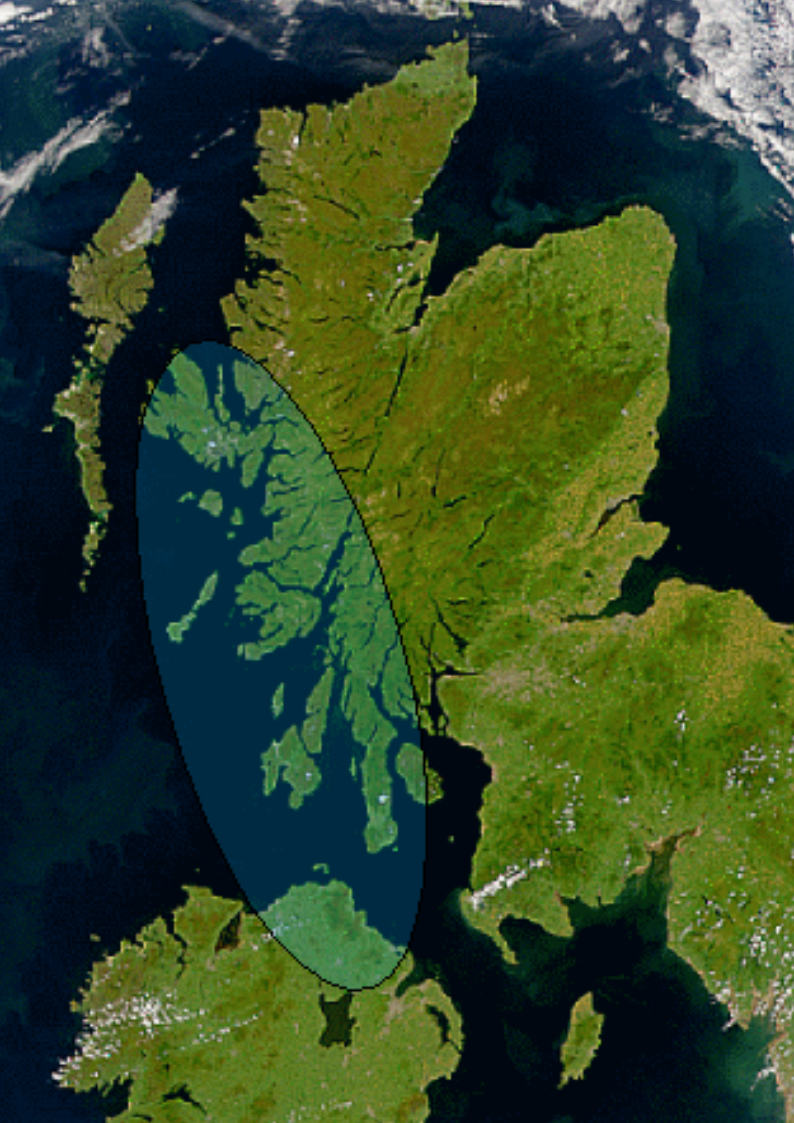
Dál Riata spanned the North Channel and included parts of western Scotland and north-eastern Ireland. In Scotland, it corresponded roughly to Argyll (from Airer Goídel, "coast of the Gaels") and later grew to include Skye. In Ireland, it took in the north-east of County Antrim, roughly corresponding to the baronies of Cary and Glenarm.
The modern human landscape of Dál Riata differs a great deal from that of the first millennium. Most people today live in settlements far larger than anything known in early times, while some areas, such as Kilmartin, and many of the islands, such as Islay and Tiree, may well have had as many inhabitants as they do today. Many of the small settlements have now disappeared so that the countryside is far emptier than was formerly the case, and many areas that were formerly farmed are now abandoned. Even the physical landscape is not entirely as it was: sea levels have changed, and the combination of erosion and silting will have considerably altered the shape of the coast in some places, while the natural accumulation of peat and human-made changes from peat-cutting have altered inland landscapes.
Hub AI
Dál Riata AI simulator
(@Dál Riata_simulator)
Dál Riata
Dál Riata or Dál Riada (also Dalriada) (/dælˈriːədə/) was a Gaelic kingdom that encompassed the western seaboard of Scotland and north-eastern Ireland, on each side of the North Channel. At its height in the 6th and 7th centuries, it covered what is now Argyll ("Coast of the Gaels") in Scotland and part of County Antrim in Northern Ireland. After a period of expansion, Dál Riata eventually became associated with the Gaelic Kingdom of Alba.
In Argyll, it consisted of four main kindreds or tribes, each with their own chief: the Cenél nGabráin (based in Kintyre), the Cenél nÓengusa (based on Islay), the Cenél Loairn (who gave their name to the district of Lorn) and the Cenél Comgaill (who gave their name to Cowal). The hillfort of Dunadd is believed to have been its capital. Other royal forts included Dunollie, Dunaverty and Dunseverick. Within Dál Riata was the important monastery of Iona, which played a key role in the spread of Celtic Christianity throughout northern Britain, and in the development of insular art. Iona was a centre of learning and produced many important manuscripts. Dál Riata had a strong seafaring culture and a large naval fleet.
Dál Riata is said to have been founded by the legendary king Fergus Mór (Fergus the Great) in the 5th century. The kingdom reached its height under Áedán mac Gabráin (r. 574–608). During his reign Dál Riata's power and influence grew; it carried out naval expeditions to Orkney and the Isle of Man, and assaults on the Brittonic kingdom of Strathclyde and Anglian kingdom of Bernicia. However, King Æthelfrith of Bernicia checked its growth at the Battle of Degsastan in 603. Serious defeats in Ireland and Scotland during the reign of Domnall Brecc (died 642) ended Dál Riata's "golden age", and the kingdom became a client of Northumbria for a time. In the 730s the Pictish king Óengus I led campaigns against Dál Riata and brought it under Pictish overlordship by 741. There is disagreement over the fate of the kingdom from the late 8th century onwards. Some scholars have seen no revival of Dál Riatan power after the long period of foreign domination (c. 637 to c. 750–760), while others have seen a revival under Áed Find (736–778). Some even claim that the Dál Riata usurped the kingship of Fortriu. From 795 onward there were sporadic Viking raids in Dál Riata. In the following century, there may have been a merger of the Dál Riatan and Pictish crowns. Some sources say Cináed mac Ailpín (Kenneth MacAlpin) was king of Dál Riata before becoming king of the Picts in 843, following a disastrous defeat of the Picts by Vikings. The kingdom's independence ended sometime after, as it merged with Pictland to form the Kingdom of Alba.
Latin sources often referred to the inhabitants of Dál Riata as Scots (Scoti), a name originally used by Roman and Greek writers for the Irish Gaels who raided and colonised Roman Britain. Later, it came to refer to Gaels, whether from Ireland or elsewhere. They are referred to herein as Gaels or as Dál Riatans.
The name Dál Riata comes from Old Irish and means "the portion of Riata". Dál is part of the names of other Irish territories, such as Dál Fiatach and Dál gCais. Riata is the genitive of a tribal name or deity name. Bede wrote that the kingdom was named after its founder, a man called Reuda. Some Old Gaelic texts say that the kingdom was named after the Corcu Réti, descendants of Domangart Réti. Another legend says that it was named after one Cairbre Riata.
The Dalradian geological series, a term coined by Archibald Geikie in 1891, was named after Dál Riata because its outcrop has a similar geographical reach to that of the former kingdom.
Dál Riata spanned the North Channel and included parts of western Scotland and north-eastern Ireland. In Scotland, it corresponded roughly to Argyll (from Airer Goídel, "coast of the Gaels") and later grew to include Skye. In Ireland, it took in the north-east of County Antrim, roughly corresponding to the baronies of Cary and Glenarm.
The modern human landscape of Dál Riata differs a great deal from that of the first millennium. Most people today live in settlements far larger than anything known in early times, while some areas, such as Kilmartin, and many of the islands, such as Islay and Tiree, may well have had as many inhabitants as they do today. Many of the small settlements have now disappeared so that the countryside is far emptier than was formerly the case, and many areas that were formerly farmed are now abandoned. Even the physical landscape is not entirely as it was: sea levels have changed, and the combination of erosion and silting will have considerably altered the shape of the coast in some places, while the natural accumulation of peat and human-made changes from peat-cutting have altered inland landscapes.