
Recent from talks
Daniel Dunglas Home
Knowledge base stats:
Talk channels stats:
Members stats:
Daniel Dunglas Home
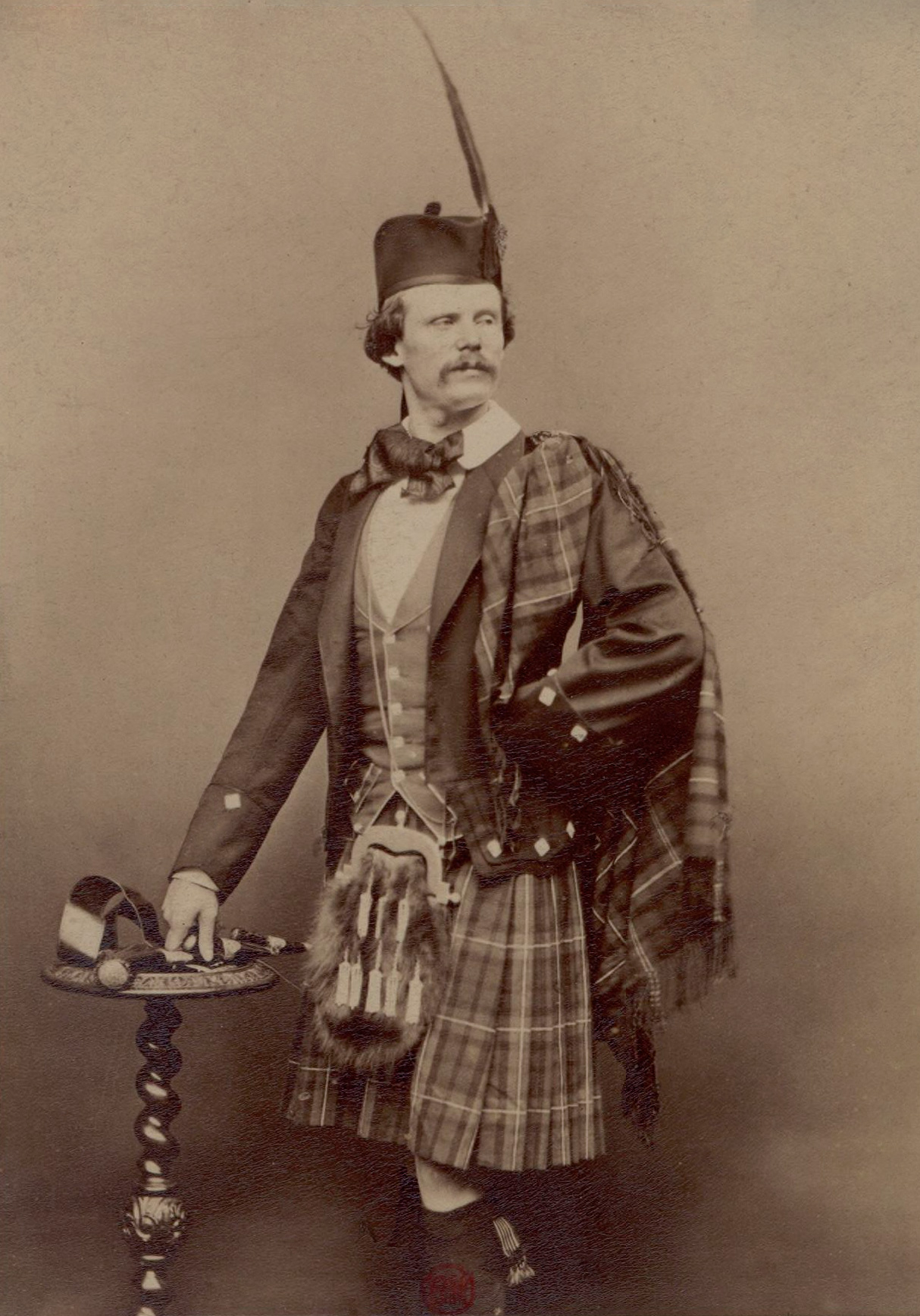
Daniel Dunglas Home (pronounced Hume; 20 March 1833 – 21 June 1886) was a Scottish physical medium with the reported ability to levitate to a variety of heights, speak with the dead, and to produce rapping and knocks in houses at will. His biographer Peter Lamont opines that he was one of the most famous men of his era. Harry Houdini described him as "one of the most conspicuous and lauded of his type and generation" and "the forerunner of the mediums whose forte is fleecing by presuming on the credulity of the public." Home conducted hundreds of séances, which were attended by many eminent Victorians. There have been eyewitness accounts by séance sitters describing conjuring methods and fraud that Home may have employed.
Daniel Home's mother, Elizabeth ("Betsy") Home (née McNeill) was known as a seer in Scotland, as were many of her predecessors, like her great-uncle Colin Urquhart, and her uncle Mr. McKenzie. The gift of second sight was often seen as a curse, as it foretold instances of tragedy and death. Home's father, William Home, was the illegitimate son of Alexander, the 10th Earl of Home. Evidence supports the elder Home's illegitimacy, as various payments meant for William were made by the 10th Earl. Elizabeth and William were married when he was 19 years old, and found employment at the Balerno paper mill. The Homes moved into one of small houses built in the mill for the workforce, in Currie (six miles south-west of Edinburgh). William was described as a "bitter, morose and unhappy man" who drank, and was often aggressive towards his wife. Elizabeth had eight children while living in the mill house: six sons and two daughters, although their lives were not fully recorded. The eldest, John, later worked in the Balerno mill and eventually managed a paper mill in Philadelphia, Mary drowned in a stream at the age of 12 years in 1846, and Adam died at sea at the age of 17 while en route to Greenland, which Home says he saw in a vision and reportedly confirmed five months later.
Daniel Home was Elizabeth's third child, and was born on 20 March 1833. He was baptised by the Reverend Mr. Somerville three weeks after his birth at Currie Parish Church on 14 April 1833. The one-year-old Home was deemed a delicate child, having a "nervous temperament", and was passed to Elizabeth's childless sister, Mary Cook. She lived with her husband in the coastal town of Portobello, 3 miles (4.8 km) east of Edinburgh. According to Home, his cradle rocked by itself at the Cooks' house, and he had a vision of a cousin's death, who lived in Linlithgow, to the west of Edinburgh.
Sometime between 1838 and 1841, Home's aunt and uncle decided to emigrate to the United States with their adopted son, sailing in the cheapest class of steerage as they could not afford a cabin. After landing in New York, the Cooks travelled to Greeneville, near Norwich, Connecticut. The red-haired and freckled Home attended school in Greeneville, where he was known as "Scotchy" by the other students. The 13-year-old Home did not join in sports games with other boys, preferring to take walks in the local woods with a friend called Edwin. The two boys read the Bible to each other and told stories, and made a pact stating that if one or the other were to die, they would try to make contact after death. Home and his aunt soon moved to Troy, New York, which is about 155 miles (249 km) from Greeneville, although Home in his own book stated it was 300 miles (480 km) away. Home lost contact with Edwin until one night when Home, according to Lamont, saw a brightly lit vision of him standing at the foot of the bed, which gave Home the feeling that his friend was dead. Edwin made three circles in the air before disappearing, and a few days later a letter arrived stating that Edwin had died of malignant dysentery three days before Home's vision.
A few years later Home and his aunt returned to Greeneville, and Elizabeth Home emigrated from Scotland to America with the surviving members of the family to live in Waterford, Connecticut, which was 12 miles (19 km) away from the Cook's house. Home and his mother's reunion was short-lived, as Elizabeth appeared to foretell her own death in 1850. Home said he saw his mother in a vision saying, "Dan, 12 o'clock", which was the time of her death. After Elizabeth's death Home turned to religion. His aunt was a Presbyterian, and held the Calvinist view that one's fate has been decided, so Home embraced the Wesleyan faith, which believed that every soul can be saved. Home's aunt resented Wesleyans so much that she forced Home to change to Congregationalist, which was not to her liking, either, but was more in line with her own religion. The house was reportedly disturbed by rappings and knocking similar to those that had occurred two years earlier at the home of the Fox sisters. Ministers were called to the Cooks' house: a Baptist, a Congregationalist, and even a Wesleyan minister, who all believed that Home was possessed by the Devil, although Home believed it was a gift from God. According to Home, the knocking did not stop, and a table started to move by itself, even though Home's aunt put a bible on it and then placed her full body weight on it. According to Lamont, the noises did not stop and were attracting the unwanted attention of Cook's neighbours, so Home was told to leave the house.
The 18-year-old Home stayed with a friend in Willimantic, Connecticut, and later Lebanon, Connecticut. Home held his first séance in March 1851, which was reported in a Hartford newspaper managed by W. R. Hayden, who wrote that the table moved without anyone touching it, and kept moving when Hayden physically tried to stop it. After the newspaper report, Home became well known in New England, travelling around healing the sick and communicating with the dead, although he wrote that he was not prepared for this sudden change in his life because of his supposed shyness.
Home never directly asked for money, although he lived very well on gifts, donations and lodging from wealthy admirers. He felt that he was on a "mission to demonstrate immortality", and wished to interact with his clients as one gentleman to another, rather than as an employee. In 1852, Home was a guest at the house of Rufus Elmer in Springfield, Massachusetts, giving séances six or seven times a day, which were visited by crowds of people, including a Harvard professor, David Wells, and the poet and editor of the New York Evening Post, William Cullen Bryant. They were all convinced of Home's credibility and wrote to the Springfield Republican newspaper stating that the room was well lit, full inspections were allowed, and said, "We know that we were not imposed upon nor deceived". It was also reported that at one of Home's demonstrations five men of heavy build (with a combined weight of 850 pounds) sat on a table, but it still moved, and others saw "a tremulous phosphorescent light gleam over the walls". Home was investigated by numerous people, such as Professor Robert Hare, the inventor of the oxy-hydrogen blowpipe, and John W. Edmonds, a trial court judge, who were sceptical, but later said they believed Home was not fraudulent.
In his book, Incidents in My Life, Home claims that in August 1852, in South Manchester, Connecticut, at the house of Ward Cheney, a successful silk manufacturer, he was reportedly seen to levitate twice and then rise to up to the ceiling, with louder rappings and knocking than ever before, more aggressive table movements and the sounds of a ship at sea in a storm, although persons present said that the room was badly lit so as to see the spirit lights.
Hub AI
Daniel Dunglas Home AI simulator
(@Daniel Dunglas Home_simulator)
Daniel Dunglas Home
Daniel Dunglas Home (pronounced Hume; 20 March 1833 – 21 June 1886) was a Scottish physical medium with the reported ability to levitate to a variety of heights, speak with the dead, and to produce rapping and knocks in houses at will. His biographer Peter Lamont opines that he was one of the most famous men of his era. Harry Houdini described him as "one of the most conspicuous and lauded of his type and generation" and "the forerunner of the mediums whose forte is fleecing by presuming on the credulity of the public." Home conducted hundreds of séances, which were attended by many eminent Victorians. There have been eyewitness accounts by séance sitters describing conjuring methods and fraud that Home may have employed.
Daniel Home's mother, Elizabeth ("Betsy") Home (née McNeill) was known as a seer in Scotland, as were many of her predecessors, like her great-uncle Colin Urquhart, and her uncle Mr. McKenzie. The gift of second sight was often seen as a curse, as it foretold instances of tragedy and death. Home's father, William Home, was the illegitimate son of Alexander, the 10th Earl of Home. Evidence supports the elder Home's illegitimacy, as various payments meant for William were made by the 10th Earl. Elizabeth and William were married when he was 19 years old, and found employment at the Balerno paper mill. The Homes moved into one of small houses built in the mill for the workforce, in Currie (six miles south-west of Edinburgh). William was described as a "bitter, morose and unhappy man" who drank, and was often aggressive towards his wife. Elizabeth had eight children while living in the mill house: six sons and two daughters, although their lives were not fully recorded. The eldest, John, later worked in the Balerno mill and eventually managed a paper mill in Philadelphia, Mary drowned in a stream at the age of 12 years in 1846, and Adam died at sea at the age of 17 while en route to Greenland, which Home says he saw in a vision and reportedly confirmed five months later.
Daniel Home was Elizabeth's third child, and was born on 20 March 1833. He was baptised by the Reverend Mr. Somerville three weeks after his birth at Currie Parish Church on 14 April 1833. The one-year-old Home was deemed a delicate child, having a "nervous temperament", and was passed to Elizabeth's childless sister, Mary Cook. She lived with her husband in the coastal town of Portobello, 3 miles (4.8 km) east of Edinburgh. According to Home, his cradle rocked by itself at the Cooks' house, and he had a vision of a cousin's death, who lived in Linlithgow, to the west of Edinburgh.
Sometime between 1838 and 1841, Home's aunt and uncle decided to emigrate to the United States with their adopted son, sailing in the cheapest class of steerage as they could not afford a cabin. After landing in New York, the Cooks travelled to Greeneville, near Norwich, Connecticut. The red-haired and freckled Home attended school in Greeneville, where he was known as "Scotchy" by the other students. The 13-year-old Home did not join in sports games with other boys, preferring to take walks in the local woods with a friend called Edwin. The two boys read the Bible to each other and told stories, and made a pact stating that if one or the other were to die, they would try to make contact after death. Home and his aunt soon moved to Troy, New York, which is about 155 miles (249 km) from Greeneville, although Home in his own book stated it was 300 miles (480 km) away. Home lost contact with Edwin until one night when Home, according to Lamont, saw a brightly lit vision of him standing at the foot of the bed, which gave Home the feeling that his friend was dead. Edwin made three circles in the air before disappearing, and a few days later a letter arrived stating that Edwin had died of malignant dysentery three days before Home's vision.
A few years later Home and his aunt returned to Greeneville, and Elizabeth Home emigrated from Scotland to America with the surviving members of the family to live in Waterford, Connecticut, which was 12 miles (19 km) away from the Cook's house. Home and his mother's reunion was short-lived, as Elizabeth appeared to foretell her own death in 1850. Home said he saw his mother in a vision saying, "Dan, 12 o'clock", which was the time of her death. After Elizabeth's death Home turned to religion. His aunt was a Presbyterian, and held the Calvinist view that one's fate has been decided, so Home embraced the Wesleyan faith, which believed that every soul can be saved. Home's aunt resented Wesleyans so much that she forced Home to change to Congregationalist, which was not to her liking, either, but was more in line with her own religion. The house was reportedly disturbed by rappings and knocking similar to those that had occurred two years earlier at the home of the Fox sisters. Ministers were called to the Cooks' house: a Baptist, a Congregationalist, and even a Wesleyan minister, who all believed that Home was possessed by the Devil, although Home believed it was a gift from God. According to Home, the knocking did not stop, and a table started to move by itself, even though Home's aunt put a bible on it and then placed her full body weight on it. According to Lamont, the noises did not stop and were attracting the unwanted attention of Cook's neighbours, so Home was told to leave the house.
The 18-year-old Home stayed with a friend in Willimantic, Connecticut, and later Lebanon, Connecticut. Home held his first séance in March 1851, which was reported in a Hartford newspaper managed by W. R. Hayden, who wrote that the table moved without anyone touching it, and kept moving when Hayden physically tried to stop it. After the newspaper report, Home became well known in New England, travelling around healing the sick and communicating with the dead, although he wrote that he was not prepared for this sudden change in his life because of his supposed shyness.
Home never directly asked for money, although he lived very well on gifts, donations and lodging from wealthy admirers. He felt that he was on a "mission to demonstrate immortality", and wished to interact with his clients as one gentleman to another, rather than as an employee. In 1852, Home was a guest at the house of Rufus Elmer in Springfield, Massachusetts, giving séances six or seven times a day, which were visited by crowds of people, including a Harvard professor, David Wells, and the poet and editor of the New York Evening Post, William Cullen Bryant. They were all convinced of Home's credibility and wrote to the Springfield Republican newspaper stating that the room was well lit, full inspections were allowed, and said, "We know that we were not imposed upon nor deceived". It was also reported that at one of Home's demonstrations five men of heavy build (with a combined weight of 850 pounds) sat on a table, but it still moved, and others saw "a tremulous phosphorescent light gleam over the walls". Home was investigated by numerous people, such as Professor Robert Hare, the inventor of the oxy-hydrogen blowpipe, and John W. Edmonds, a trial court judge, who were sceptical, but later said they believed Home was not fraudulent.
In his book, Incidents in My Life, Home claims that in August 1852, in South Manchester, Connecticut, at the house of Ward Cheney, a successful silk manufacturer, he was reportedly seen to levitate twice and then rise to up to the ceiling, with louder rappings and knocking than ever before, more aggressive table movements and the sounds of a ship at sea in a storm, although persons present said that the room was badly lit so as to see the spirit lights.
Recent media