Hubbry Logo
David TipperDavid TipperMain
Open search
David Tipper
Community hub
David Tipper
logo
8 pages, 0 posts
0 subscribers
Be the first to start a discussion here.
David Tipper
David Tipper
from Wikipedia

Key Information

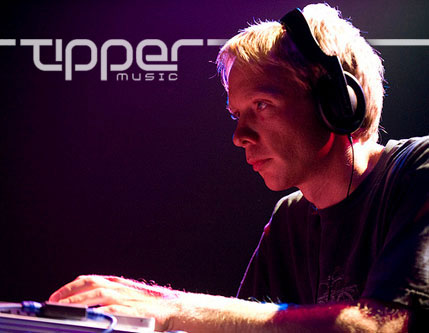
David Alexander Tipper, also known as Tipper for short (born c. 1976[2] in Wimbledon, London, England)[3] is a British composer and producer specialising in electronic music that ranges from ambient, through trip hop, to uptempo nu skool breaks. His live performances consist largely of his own unreleased compositions, and he is noted for scratching his own sounds over his music, creating a live element of turntablism stemming from prowess early in his career as a vinyl DJ.

Tipper is widely respected as a surround sound composer, releasing one of the first albums composed, produced, and intended for the DualDisc format, in addition to providing content for multichannel music industry leaders DTS, Inc. His talents at sound design (his work is included in several of the major music making software programs[4]), and in digital audio mastering, are also in great demand. His catalogue has been consistently licensed for use as background in a variety of mainstream television programmes,[5] and also featured in commercials[6] and cable television projects.

Career

[edit]

Tipper was "discovered" as a teenager DJing in a London nightclub by soon-to-be manager Richie Warren. Their earliest conversations centred on bass frequencies and rhythms underlying beats, and they began researching the science involved in creating the most effective dance music. Richie founded Fuel Records (UK), and Tipper released the first of several vinyl EP's in 1997. Renault licensed one of these, Twister, for a European ad campaign. Soon thereafter, Sony UK signed Tipper to their fledgling dance music label, Higher Ground.[citation needed]

Higher Ground

[edit]

In the late 1990s, Tipper completed numerous remix projects of his Higher Ground label mates, and released several singles, each highlighting his penchant for electronic dance music with extreme bass frequencies and intricate polyrhythms; this sound helped usher in a popular new music genre referred to as Nu skool breaks, and Tipper is recognised as one of the pioneering producers of this movement. In 1999 Tipper released his first album, The Critical Path. It was not, however, the breakbeat dance record that the label hoped for. Tipper's vision was decidedly more artistic than anticipated, confusing the label as to how to promote it, and disappointing sales led to an amicable parting of ways with Sony.[citation needed]

The Fuel years

[edit]

During the late 1990s while Tipper was busy in the studio, Richie Warren & Co conceptualised the Fuel Sound System. This consisted of 2 identical black 1970s Dodge Challengers, both fitted with 6 x18" subwoofers (replacing where the back seats had previously been) and a Funktion-One mid/tops speaker unit, that could be raised out of the trunk on hydraulics with the flick of a switch from the driver's dashboard. These cars were able to run independently, without the need for an electrical generator, using 6 batteries charged via an alternator salvaged out of a lorry. With a totally discreet and fully mobile sound system, the Fuel crew, assuming the role of sonic pranksters, began a "pilgrimage" of sound that took them on tour to various music festivals, parties & spontaneous gatherings, setting them up outside events and garnering attention for the label and its artists. One of the urban myths surrounding these appearances recounts the incident at the 1997 V Festival, when Richie Warren received complaints from The Prodigy's stage manager, because the band couldn't hear itself due to the excess volume.[7]

With this activity as a backdrop, Tipper released his second album Holding Pattern in early 2001. Many of the individual tracks from this album found their way into DJ boxes internationally, and accordingly Tipper began touring extensively through Europe, the United States and Australia. Reflecting his travels was the DJ Mix album Sound Off which he completed for Fuel later the same year. Tipper focused on the music, and Richie promoted a lifestyle – taking the cars wherever possible to create a happening around both.[citation needed]

Crunch

[edit]

Tipper and long time friend Mike Wallis formed Crunch in the late 1990s. The pair released two albums and several EP's together over the following years on labels such as Musik Aus Strom and Mike's own imprint Colony Productions. The Full Moon Gathering 2016 was their first USA performance together in over a decade.[citation needed]

MyUtopia

[edit]

Under the guise of “Correctional Facilities” he created his first Surround Sound album called “Cell: Five”.Then later while touring across the United States in 2003 with the Fuel cars, Tipper began composing tracks for what would become his first “Tipper” album intended entirely as a surround sound listening experience. Surrounded was released in 2004 by fledgling 5.1 venture MyUtopia Recordings.[8] Eventually nominated as Best Album Intended for Surround Sound[9] this downtempo album also marked a turn in Tipper's musical output away from the nu skool breaks genre which he was more widely associated with. It was during this period that digital music sales and/or reproduction usurped the music industry, and ultimately Fuel Records (UK) met its demise. As Tipper toured and performed his album in 5.1 wherever possible, Richie re-focused his talents towards advanced automobile parts, and Tipper set off on a non-stop touring schedule for two years, with London only a temporary base between tours. Constantly seen living out of his suitcase, and keeping his "studio" in his backpack, earned him the temporary moniker The Global Nomad.[citation needed]

Late 2004 saw his Surrounded album re-released as a DualDisc title, and this in turn led to the creation of a MP3 Surround Sound Player, by mp3 rights holders Fraunhofer Society. Regarded as one of the foremost composers in the multichannel realm, Tipper continues to provide content for a number of companies who use his highly detailed productions to demonstrate their own advanced technologies.[10]

Tippermusic

[edit]

2005 witnessed the establishment of his own imprint Tippermusic, and he embraced the digital music revolution for the freedom it gave musicians to finally determine their own path. No longer constrained by label requirements, Tipper set about releasing his music independently, mostly via online stores. Some investment was made in CDs and vinyl, but ultimately online sales figures showed their declining relevance for his style of output.

Tipper began releasing albums at an accelerated rate. First was the ground breaking Tip Hop, which focused on merging hip hop production with electronic trickery and helped usher in a new genre referred to as glitch hop. He immediately followed up with Relish The Trough, which was material consisting of compositions from his catalogue used primarily for his performances on tour. Both albums found favour in Hollywood, and a number of tracks were used as background in prime-time television shows.[5]

His second full downtempo release The Seamless Unspeakable Something debuted in 2006, with Tipper in full guise as an electronica trip hop artist. Tracks from this album also found favour as background music for TV shows. In 2007, he digitally remastered his old vinyl catalogue and quietly released The Fuel Years and Higher Ground. In early 2008, he made more of his unreleased "performance catalogue" available when he released Tertiary Noise, a production which was rumored to be his final foray into the uptempo breakbeat genre that he helped create, and which also used some earlier releases from the likes of The Seamless Unspeakable Something, Relish The Trough, and Holding Pattern as source material for its production.[11]

His 9th studio album, Wobble Factor would be unveiled later in 2008, and solidified Tipper's influence on the burgeoning glitch hop musical movement, especially in the United States.[12]

Shortly after its release, his health demanded his immediate focus, curtailing his studio time and forcing cancellation of all tour dates. While recuperating over time, he laboured on his new ambient/downtempo LP, Broken Soul Jamboree.[13] This album showcased many facets of Tipper's composition and production style, with striking artwork for the album cover and a limited edition poster accompanying the initial CD run.[14]

After Broken Soul Jamboree, Tipper released a series of EPs. These included Snake Eyes, the Bubble Control/Puzzle Dust/Shatter Box trilogy, and an EP of three remixes from that trilogy, "Dusty Bubble Box", which was released to raise money for his medical expenses. In 2013, Tipper announced he would only participate in two festival appearances for health reasons.[15] On 6 June, he underwent a successful mitral valve repair surgery.[16] Shortly after his recovery, the full-length album Forward Escape was released in 2014. It took on a darker, more electronically-driven tone than its predecessors, and marked the beginning of a new Tipper sound. He has since released an EP with a similar sound, Fathoms, and a more purely electronic EPs, It's Like..., and "Lattice". The most recent full-length album, "Jettison Mind Hatch", continues the pattern of downtempo, atmospheric soundscapes that almost enter the realm of ambient.

His notoriety has risen considerably in these years as well, and he is often featured as a headlining act at electronic music festivals spanning the entire continental US, with an extensive showing on the West Coast and occasional East Coast shows. Often, especially when he plays over multiple evenings, Tipper splits his sets into "uptempo" and "downtempo." His "uptempo" sets feature fast tempos and tend toward being a wild dance party. His downtempo sets feature slow to medium tempos and heavy use of melodies. He has also begun to play occasional ambient sets, which generally have limited seating and sell out quickly.[citation needed]

As of 2015, Tipper continues to play concerts a few times a year, and frequently appears at Burning Man.[citation needed]

In April 2016, Tipper headlined his first ever appearance at the Spirit of the Suwannee Music Park in Live Oak, Florida, USA, during Tipper & Friends - The Full Moon Gathering.[17] He confirmed after the show that he would return in 2017.

In August 2017, Tipper curated his own Tipper & Friends music festival at the Astral Valley Art Park, 45 minutes south of St. Louis, Missouri.[17] The event was called '4321' and was held to commemorate the 2017 Solar Eclipse. The venue itself is located in the path of direct totality, and attendees were provided custom Tipper-themed safety glasses to view the event.

In January 2018, Tipper curated yet another "Tipper & Friends" event, this installment being a "4 Nights in NOLA" event (also known as the "4567" event) located in New Orleans, Louisiana. This event took place from 4 to 7 January and featured two historic New Orleans venues: Tipitina's & the Orpheum Theater. In further homage to New Orleans culture and musical heritage, the event included legendary local acts such as DJ Cochon de Lait and The Madd Wikkid Archived 13 June 2017 at the Wayback Machine.

Following the conclusion of the "4567" event, it was announced that Tipper is expected to present an "ambient journey" performance on 20 April at the Arlene Schnitzer Concert Hall in Portland, Oregon. The event is also listed to feature legendary kora players Toumani Diabaté and Sidiki Diabaté.

Following the success of 2016's event, April 2019 lead to the historic "Tipper & Friends - The Full Moon Return" back in Spirit of the Suwannee Music Park in Live Oak, Florida, USA.

In January 2020, Tipperfam assembled for another "Tipper & Friends" event with a 3-night run back in NOLA (New Orleans, Louisiana). This event took place from 3 to 5 January, this time around playing at The Saenger Theatre. In continuing to pay homage to New Orleans culture and musical heritage, the theatre was left with a great impression of the community involved, even going as far engaging with the crowd in the spirit of Tipper during the 3rd and final night, as this event was extremely private with very few in attendance. The unofficial after-parties deep within the streets of NOLA continued to further the Tipper-vibes until beyond sunrise. This 3-day event was the 8th, and most recent, installment of the "Tipper & Friends" events to date.

In April 2022, Tipper & Friends was again held for another 3 night run, returning to Spirit of the Suwannee Music Park in Live Oak, Florida. The 3 day event was held from April 1-3rd and featured LTJ Bukem, Mickman, Schmoop, Humandala, Resonant Language, Detox Unit and Entangled Mind (winner of the submission contest)

In February 2024, Tipper announced his intention to retire in 2025, stating "I'm very grateful for all the support over the years."[18] He has since performed at multiple festivals and curated events, including Rendezvous, Lightning in a Bottle, Secret Dreams, Snowta and his own Tipper and Friends events in Alabama (The Orion Amphitheater) and Washington (The Gorge Amphitheater).

On Sunday, September 21st, 2025, Tipper played the presumed last show of his career at Red Rocks Amphitheater in Morrison, Colorado.[19]

Discography

[edit]

Albums

[edit]
Year Title Label
1999 The Critical Path Higher Ground
2001 Holding Pattern Fuel Records (UK)
2003 Surrounded Myutopia Recordings
2005 Tip Hop Tippermusic
2006 Relish the Trough Tippermusic
2006 The Seamless Unspeakable Something Tippermusic
2008 Tertiary Noise Tippermusic[11]
2008 Wobble Factor Tippermusic
2010 Broken Soul Jamboree Tippermusic
2014 Forward Escape Tippermusic
2019 Jettison Mind Hatch Tippermusic
2022 Marble Hunting Tippermusic

EPs

[edit]
Year Title Label
1997 Six Pak Fuel Records (UK)
1997 Bassgunner Fuel Records (UK)
1998 Twister Fuel Records (UK)
1999 L.E.D. Down Higher Ground
1999 Supersport Higher Ground
1999 Supersport (Remixes) Higher Ground
2000 Dissolve (Out) Higher Ground
2001 Tug of War Fuel Records (UK)
2001 Furlong Fuel Records (UK)
2001 Sound Off Fuel Records (UK)
2002 Sound Off 2 Fuel Records (UK)
2002 Donut Fuel Records (UK)
2005 Open The Jowls Tippermusic
2005 Ruck Tippermusic
2006 What's Heavy/RE: Am I? Tippermusic
2006 Unlock The Geometry/Deal With It Tippermusic
2008 Learning Is Remembering Tippermusic
2011 Snake Eyes Tippermusic
2011 Bubble Control Tippermusic
2012 Puzzle Dust Tippermusic
2012 Shatter Box Tippermusic
2013 Algae Bloom In Seven Tippermusic
2013 Dusty Bubble Box Tippermusic
2015 Fathoms Tippermusic
2015 Its Like Tippermusic
2017 Flunked Tippermusic
2017 Lattice Tippermusic
2021 Insolito Tippermusic

References

[edit]
[edit]
Revisions and contributorsEdit on WikipediaRead on Wikipedia
from Grokipedia
David Tipper, known professionally as Tipper, is a British electronic music , , DJ, and renowned for his innovative contributions to genres such as nu skool breaks, glitch hop, , and ambient. Active since the mid-1990s, he pioneered the "Tip-Hop" style, blending hip-hop production techniques with electronic elements, and became celebrated for his intricate , extreme bass frequencies, vinyl scratching, and multi-channel compositions. Tipper's career gained momentum in the late through releases on labels like Higher Ground and the founding of his own imprint, Fuel Records, in 1997 alongside Ritchie Warren. He transitioned to his independent Tippermusic label in 2005, where he has exclusively released his work since, producing over a dozen albums and developing and sample packs that have influenced a generation of electronic music creators. His live performances, characterized by immersive visuals and dynamic sets, built a devoted fanbase at festivals worldwide, including through his curated "Tipper & Friends" events. Following a health diagnosis in 2022 that impacted his daily life and led to fewer shows, Tipper announced in February 2024 that he would retire from live performances, with his final tours concluding in 2025. His final performance was a farewell set at in September 2025, marking the end of nearly three decades of touring after shaping the electronic music landscape.

Biography

Early life

David Alexander Tipper was born around 1976 in Wimbledon, London, England. During his teenage years, Tipper immersed himself in the local electronic music scene, where he honed his skills as a DJ in London nightclubs. His performances, characterized by an emphasis on bass-heavy rhythms and innovative mixing, caught the attention of Richie Warren, a key figure in the emerging UK breakbeat and rave culture. This discovery marked a pivotal moment, propelling Tipper from amateur DJing into professional opportunities within the industry. In 1997, Tipper co-founded Fuel Records alongside Richie Warren, establishing his initial foothold in music production and label management. This venture emerged amid the vibrant 1990s rave and breakbeat scenes, where Tipper developed his expertise through self-taught methods, experimenting with electronic sound design without formal training. His early work reflected the era's DIY ethos, focusing on intricate beats and atmospheric textures that would define his later contributions.

Personal life and health

In the early 2000s, Tipper relocated from the to the to capitalize on expanding career opportunities in the electronic music scene, eventually basing himself in by 2010. Tipper maintains a notably private , with scant public details available regarding his family or relationships. In 2013, he faced significant health challenges stemming from a heart condition, leading to a successful surgery; the procedure necessitated limited festival appearances that year and a period of recovery that temporarily affected his productivity, though he resumed releasing music with the album Forward Escape in 2014. In 2022, following his performance at Sonic Bloom in June, Tipper received a diagnosis that altered his daily life and resulted in significantly reduced live performances that year, with only a few select appearances. Following his announced retirement from touring in 2025, Tipper has expressed intentions to prioritize personal well-being after decades of intensive performances, stating, "After spending the better part of my adult life touring and playing shows, I feel like it's time to stop."

Career

1997–2004: Beginnings and Fuel/Higher Ground years

In 1997, David Tipper co-founded the independent label Fuel Records alongside Richie Warren, marking his entry into professional music production within the UK electronic scene. The label quickly became a platform for Tipper's initial output, with his debut EP Six Pak released that same year on Fuel, featuring tracks like "Six Pak (Original Mix)" and "Vanishin' Point" that introduced his penchant for heavy basslines and rhythmic experimentation. This release, pressed on vinyl with a minimalist black sleeve design, captured the raw energy of late-1990s breakbeat culture and helped establish Tipper as an emerging talent in London's underground clubs. Tipper's first full-length album, The Critical Path, arrived in 2000 on Higher Ground, Sony's electronic music imprint, following a transitional signing from around 1999. The album solidified his signature and nu skool breaks sound, blending warped bass, glitchy percussion, and atmospheric layers across tracks such as "Twister" and "L.E.D. Down," the latter featuring vocals by Sophie Barker that hinted at early influences. Produced with a focus on innovative , including manipulated samples and dynamic tempo shifts, The Critical Path emphasized conceptual depth over straightforward dancefloor utility, drawing from Tipper's self-taught engineering background. During the early 2000s, Tipper navigated releases across both labels, including EPs like Supersport (1999) on Higher Ground and the 2001 album Holding Pattern on , which further explored production techniques such as layered synthesis and irregular rhythms. This period saw growing critical acclaim in electronic circles for his experimental approach, with reviewers noting his ability to fuse nu skool breaks with subtle elements, positioning him as a pioneer amid the genre's evolution. By 2004, as began to wind down, Tipper's foundational work had laid the groundwork for his more independent pursuits, earning recognition for pushing boundaries in bass-heavy electronic music.

2005–2013: Tip Hop, MyUtopia, and independent era

In 2005, Tipper established his independent label, Tippermusic, with the release of the album Tip Hop, a collection blending hip-hop production techniques, (IDM), and broken beats to create intricate, rhythmic soundscapes. This project marked a pivotal shift toward genre innovation, as Tip Hop is widely regarded as a foundational work in pioneering glitch hop, a style characterized by glitchy electronic manipulations overlaid on hip-hop-inspired grooves and basslines. Featuring guest raps by and Tipper's own , the album's experimental approach helped bridge underground electronic scenes with more accessible bass-heavy elements, influencing subsequent producers in the evolving EDM landscape. Tipper's association with the MyUtopia label, focused on innovations, continued to shape his independent output, exemplified by the 2003 Surrounded, one of the earliest electronic releases composed entirely in format. This work emphasized spatial audio composition, utilizing multi-channel mixing to immerse in dynamic, three-dimensional environments, a technique that Tipper refined throughout his Tippermusic era. By 2008, Tipper released Wobble Factor on Tippermusic, an delving deeper into hop and territories with tracks like "Tiny Face" and "," showcasing wobbly basslines and meticulous effects that solidified his growing reputation in electronic music circles. This period saw Tipper's relocation to around 2010, enhancing his integration into American scenes and contributing to hop's transition toward festival-oriented, bass-heavy EDM. The 2010 album Broken Soul Jamboree, also on Tippermusic, further exemplified Tipper's independent evolution, embracing and ambient influences while retaining glitchy percussion and emotional depth in tracks such as "" and "Dead Soon." Released amid his U.S. base, it amplified his impact on North American electronic audiences, with its layered, instrumental compositions drawing acclaim for pushing glitch hop boundaries. During this time, Tipper collaborated on the Crunch project with longtime partner Mike Wallis, uploading experimental tracks like "Karot" and "Cassette (Acid Mix)" to in 2012, exploring raw, acid-tinged and broken rhythms outside traditional album formats. These releases highlighted Tipper's commitment to unpolished, innovative , complementing his correctional facilities-themed alias work from earlier in the decade while maintaining independence from major labels.

2014–2025: Tippermusic and retirement

From 2014 onward, Tipper continued releasing music through his independent label Tippermusic, established in , allowing further evolution in creative control without external constraints. The label's output in this period debuted with the album Forward Escape, a exploration blending intricate with atmospheric textures, released on May 5. This era refined Tipper's production process, emphasizing composition and experimental electronic elements. Subsequent Tippermusic releases highlighted Tipper's evolving style, incorporating glitchy rhythms and immersive sonic landscapes. In 2019, Jettison Mind Hatch emerged as a pivotal work, featuring tracks that fused neurohop intricacies with fluid, organic progressions, released on May 15. Building on this, Marble Hunting arrived in 2022 on November 1, showcasing heightened complexity in bass manipulation and spatial audio, further solidifying Tippermusic's role in distributing his mature output. The year 2025 brought Tipper's final major productions before his performance retirement, reflecting a deepened ambient influence alongside neurohop foundations. Sunrise at the Gorge, an ambient-focused album, was released on July 11 via Tippermusic, emphasizing serene, expansive soundscapes. Concurrently, under the Crunch moniker (a collaboration with Mike Wallis), the album 1 dropped on September 26 through Colony Productions, blending re-edited classics with new neurohop-infused tracks. In February 2024, Tipper announced his retirement from live performances, effective sometime in 2025, citing exhaustion from decades of touring: "After spending the better part of my adult life touring and playing shows, I feel like its time to stop." This decision followed health challenges disclosed in that had already limited his touring schedule. Post-retirement, Tipper intends to concentrate on and audio mastering, areas where he is renowned for contributions to major music software and techniques, while continuing to operate Tippermusic.

Musical style and influences

Genres and evolution

David Tipper's music primarily encompasses , nu skool breaks, , and ambient genres, drawing initial influences from the 1990s UK rave scene characterized by energetic, uptempo rhythms and electronic experimentation. His early work in the late 1990s and early 2000s featured fast-paced tracks with intricate percussion and futuristic soundscapes, reflecting the vibrant UK club culture of the era. As his career progressed, Tipper's sound shifted toward more experimental territories, incorporating elements of (IDM) and electro while maintaining a foundation in broken beats. Tipper played a pioneering role in the development of glitch hop through his 2005 album Tip Hop, which innovatively blended IDM's glitchy textures, electro's synthetic pulses, and hip hop rhythms at approximately 110 BPM, creating a midtempo style that emphasized syncopated grooves and digital manipulation. This fusion marked a departure from traditional uptempo breaks, introducing a "glitchy" aesthetic that influenced the broader movement in the electronic scene. Often regarded as a foundational figure in glitch hop, Tipper's approach during this period established a template for producers seeking to merge hip hop's swing with electronic glitches, solidifying his transition from rave roots to a more introspective, rhythmically complex sound. In his later works from the onward, Tipper evolved toward neurohop and ambient styles, integrating heavy low-end bass, fragmented broken beats, and immersive elements to evoke spatial depth and emotional nuance. This progression incorporated neurohop's neurological-inspired sonic distortions and bass-heavy drops, as heard in releases like Forward Escape (2014), while emphasizing composition for a three-dimensional listening experience. By the , Tipper's music had leaned further into ambient introspection, with albums such as Marble Hunting (2022) and Sunrise at the Gorge (2025) prioritizing atmospheric textures, organic field recordings, and subtle evolutions over high-energy rhythms, marking a contemplative arc from the uptempo breaks of his early output.

Sound design techniques

Tipper's sound design is distinguished by his custom creation of intricate, evolving textures that define his electronic productions, often employing effects to generate the "wonky" and unpredictable sonic landscapes characteristic of his work. These techniques involve manipulating audio fragments into fragmented, stuttering patterns that add organic irregularity to rhythms and melodies, contributing to the immersive depth in his tracks. This approach aligns with his contributions to glitch-hop and IDM, where elements serve as a core method for transforming conventional sounds into something alien and rhythmic. In studio recordings, Tipper incorporates and vinyl manipulation to infuse percussive dynamism, extending his roots into layered compositions by scratching custom samples and effects like Reaktor-generated squelches directly onto recordings. This method creates hybrid percussive layers that blend analog tactility with digital precision, enhancing the tactile feel of his beats without relying on standard drum programming. Tipper demonstrates particular mastery in mastering, pioneering its application in electronic music through the 2003 album Surrounded, composed specifically for 5.1-channel playback on the format to envelop listeners in spatial audio environments. His later ambient works, such as the 2019 CoSM Ambient Mix, further exemplify this expertise by crafting expansive, multi-dimensional sound fields that leverage surround capabilities for meditative immersion. A key aspect of Tipper's production involves merging hip hop sampling with IDM-inspired algorithmic processes to forge hybrid rhythms, where sampled breaks and loops are algorithmically restructured to produce swinging, non-linear grooves that eschew traditional drum machines in favor of and rhythmic innovation.

Live performances

Performance style

Tipper's live performances are characterized by a heavy reliance on unreleased compositions, which form the core of his sets and ensure each show feels fresh and unpredictable. He constructs these performances around custom loops created in , allowing for real-time mixing and that adapts to the venue's energy and audience response. This approach, facilitated by controllers like the APC40 and software such as for scratching integration, emphasizes spontaneity over pre-recorded sequences, drawing from his sound design expertise in layering intricate, glitchy elements. A hallmark of Tipper's style is his signature technique, where he manipulates personal sound samples—often custom vocal snippets or abstract effects—over his electronic tracks using gear like the turntable and Numark CDX. This adds a live hip hop flair, infusing turntablist precision and rhythmic disruption into the foundational electronic grooves, creating dynamic transitions that blend aggression with experimental textures. Tipper integrates visuals seamlessly into his audio narratives through custom projections and immersive setups, collaborating with artists like Datagramma for projection-mapped stage elements that respond to the music's glitchy, evolving structures. These visuals, often rendered in real-time via software on a , enhance the atmospheric depth with synchronized light patterns and 3D mappings that mirror the low-frequency pulses and spatial audio cues in his mixes. Over time, Tipper's performance style has evolved from the high-energy DJing of the 2000s, featuring rapid tempos and dense drum patterns, to more atmospheric, low-end focused shows in the that prioritize immersive soundscapes and subtle builds. This shift reflects his broader musical progression toward ambient and explorations, as seen in multi-night events like Tipper & Friends, where sets vary from up-tempo drives to reverb-heavy, bass-centric narratives optimized for advanced audio systems.

Festivals and tours

Tipper's live performances in the early focused on the burgeoning electronic music scenes in the UK and , where he toured extensively as part of the Fuel Records collective, including a notable tour in 2003 with the Fuel Cars sound system, performing at raves and breakbeat-oriented events that highlighted his nu-skool breaks style. These appearances helped establish his presence in underground circuits, blending live DJ sets with the label's mobile sound system showcases across North American venues. Throughout the 2010s, Tipper's festival activity peaked, with regular slots at major electronic and bass music gatherings that showcased his evolving glitch hop and sound. He made memorable appearances at , debuting in 2012 and returning for editions like 2024, where his immersive visuals and improvisational sets drew large crowds. Similarly, he performed at Bonnaroo in 2025, marking a significant milestone in his career amid his farewell performances, and at The Rendezvous in 2024, a boutique event at Spirit of the Suwannee Music Park emphasizing community and electronic experimentation. Tipper curated his signature Tipper & Friends events starting in 2016, transforming them into intimate, multi-day gatherings featuring collaborative sets and guest artists at scenic venues. The inaugural edition, titled The Full Moon Gathering, took place April 22–23, 2016, at Spirit of the Suwannee Music Park in , setting the template for nocturnal, bass-heavy lineups. The following year, the Nocturnal Edition returned to the same location on May 19–21, 2017, expanding with acts like and to emphasize extended jams and visual artistry. These events grew in scale, culminating in 2024's three-night run at Alabama's Orion Amphitheater in Huntsville from August 29–31, which featured sound systems and drew praise for its production quality. As part of his 2024–2025 wind-down, Tipper & Friends continued with a final Suwannee edition, "The Final Chapter," held April 18–20, 2025, at Spirit of the Suwannee Music Park, billed as his last multi-set appearance there before retirement. This led into additional farewell stops, including a July 4–6, 2025, event at in , highlighted by sunrise ambient sets and collaborative performances. The tour concluded with Tipper's retirement show at on September 21, 2025, a sold-out event that served as an emotional capstone to his live career, complete with custom visuals and guest appearances.

Discography

Studio albums

David Tipper, performing under the moniker Tipper, has released eleven solo studio albums since his debut in 1999, primarily through his own label Tippermusic following early releases on other imprints. These works span genres like IDM, glitch hop, and bass music, showcasing his evolution from intricate constructions to immersive, bass-driven soundscapes. Each album features meticulous , with varying track counts and runtimes reflecting his experimental approach. His debut, The Critical Path (1999, Higher Ground), comprises 10 tracks over approximately 60 minutes, establishing Tipper's early style rooted in and IDM with glitchy percussion and atmospheric layers; it received praise for its innovative rhythmic complexity in underground electronic circles. Holding Pattern (2001, Fuel Records), a 12-track album lasting 65 minutes, explores playful and IDM with tracks like "Subalicious" and "," bridging roots with experimental elements and earning acclaim for its cheeky, genre-merging attitude. Surrounded (2003, MyUtopia Recordings), with 12 tracks spanning 51 minutes, innovated as one of the first electronic albums mixed in , emphasizing spatial audio in compositions like "California Rolls"; it was acclaimed for pushing immersive listening experiences in ambient . Tip Hop (2005, Tippermusic), a 20-track collection running 86 minutes, is widely regarded as a cornerstone of the glitch hop genre, blending hip-hop rhythms with warped electronics and featuring collaborations like on "Ruck"; critics lauded its playful, midtempo grooves as a pivotal fusion of and . Relish the Trough (2006, Tippermusic), featuring 13 tracks over 62 minutes, delves into glitchy and experimental with thematic pieces like "The Red" and "Re: Am I," noted for its detail-rich and motifs of excess, marking an early independent milestone. Wobble Factor (2008, Tippermusic), a 12-track lasting 53 minutes, explores wobbly basslines and glitchy breaks in tracks such as "Tiny Face," earning positive reviews for its energetic, dancefloor-oriented evolution from prior works. Broken Soul Jamboree (2010, Tippermusic) features 13 tracks over 59 minutes, delving into cinematic with emotional, glitch-infused narratives in pieces like ""; it was hailed as a visionary, detail-rich effort in electronic , often cited among Tipper's most immersive releases. Forward Escape (2014, Tippermusic), comprising 12 tracks in 53 minutes, marks a bass-heavy shift with neurohop elements in tracks like "," praised by reviewers for its dynamic, psychedelic production and evolution toward heavier sub-bass textures. Jettison Mind Hatch (2019, Tippermusic) includes 12 tracks totaling 51 minutes, blending IDM and in fluid, experimental flows like "Vection"; critics noted its hallmark glitchy innovation while appreciating the seamless, exploratory . Marble Hunting (2022, Tippermusic), a concise 10-track release at 30 minutes, intensifies neurohop and influences in aggressive, stomping cuts like "Trouble Pig"; it garnered acclaim for its no-nonsense, high-energy experiments in futuristic . Tipper's most recent solo effort, Sunrise at the Gorge (2025, Tippermusic), is a 61-minute ambient piece capturing a live sunrise set, emphasizing ethereal, evolving textures; it was celebrated for its rare official release of an ambient performance, highlighting his versatility in immersive electronica. Additionally, under the collaborative project Crunch (with Mike Wallis), Tipper contributed to the 2025 album 1 (Colony Productions), a re-edit and remaster collection with new material spanning leftfield IDM over 50 minutes across multiple tracks; it was well-received for revitalizing their early 1990s sound with modern polish.

Extended plays

David Tipper's extended plays represent a cornerstone of his discography, serving as vital spaces for sonic experimentation and bridging the gaps between his full-length albums. With approximately 28 releases in total across his career, many categorized as EPs or EP-length works, these shorter formats allowed Tipper to explore nascent ideas in , , and bass-heavy without the constraints of album-length narratives. Early EPs emphasized raw, club-oriented production, while later ones delved into immersive , including surround mixes and collaborative ventures under aliases like Crunch, reflecting his evolution toward more abstract, genre-blending compositions. Tipper's debut EP, Six Pak (1997, ), marked his entry into the electronic scene with experiments, featuring tracks like "Six Pak (Original Mix)" and "Vanishin' Point," which showcased pulsating basslines and rhythmic complexity suited for vinyl play. Released initially on 12-inch vinyl and later in format, it laid the groundwork for his signature warped soundscapes. Similarly, Bassgunner EP (1996, ), an early 4-track vinyl release, introduced aggressive elements that foreshadowed his IDM leanings. In the mid-2000s, as Tipper launched his independent label Tippermusic, EPs became platforms for precursors and hip-hop infusions. Ruck (2005, Tippermusic), a vinyl-only release, featured "Ruck (feat. )" alongside dubs and instrumentals, experimenting with sampled vocals and crunchy percussion that foreshadowed his neurohop style. Open the Jowls (2005, Tippermusic), limited to three tracks on 12-inch, pushed aesthetics with erratic rhythms in the title track and "Blat," earning praise for its innovative breaks and serving as a sonic interlude before fuller explorations. Later EPs under Tippermusic further emphasized experimental formats and collaborations. The Crunch project, a partnership with Mike Wallis (Osmetic), produced EPs like Vexem (12" Laurel EP) (2002, Colony Productions), which featured joint tracks testing aggressive bass manipulations and IDM structures, distinct from Tipper's solo work yet integral to his evolution. In 2015, Fathoms (Tippermusic) introduced ambient depths with tracks such as "Sorus" and "," incorporating surround mixes to enhance spatial audio experiences for listeners. Culminating recent output, Insolito (2021, Tippermusic), a six-track digital EP, revisited bass experimentation with "Diapaused" and "C'est La VIP," fusing drops and drum n bass glitches in a compact 24-minute format that bridged his 2019 Jettison Mind Hatch and subsequent live sets. These EPs, spanning vinyl, CD, and digital, underscore Tipper's role in pushing electronic boundaries, often previewing techniques later refined in . Additionally, Higher Ground (2007, Tippermusic), a 19-track digital compilation (~90 minutes) remastering early Sony-era works and remixes including "Supersport," serves as a bridging roots with IDM influences, though not a traditional EP.

References

Add your contribution
Related Hubs
User Avatar
No comments yet.