


Community hub
Recent from talks
Contribute something
Nothing was collected or created yet.
Roy DeMeo
View on Wikipedia
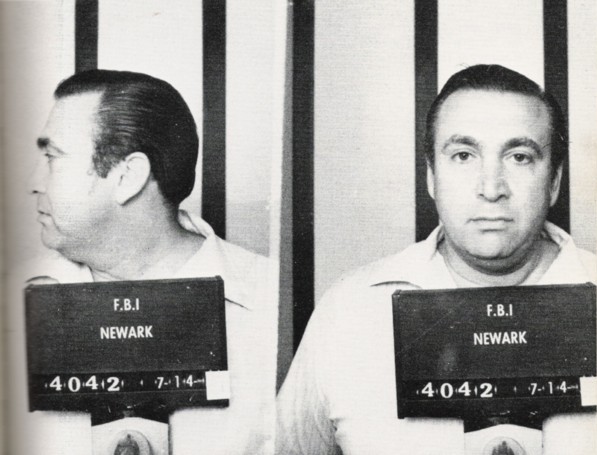
Roy Albert DeMeo (/dəˈmeɪoʊ/; September 7, 1940[1] – January 10, 1983) was an American mobster in the Gambino crime family in New York City. He headed a group known as the "DeMeo crew", which consisted of approximately twenty associates involved in murder, car theft, drug dealing, prostitution and pornography.[2] The DeMeo crew became notorious for the large number of murders they committed and for the grisly way they disposed of the bodies, which became known as "the Gemini Method".[3] The crew is believed to be responsible for up to 200 murders, many of which were committed by DeMeo himself.[4]
Key Information

.jpg)
Early life
[edit]DeMeo was born on September 7, 1940, in the Flatlands neighborhood of Brooklyn in New York City into a working-class Italian immigrant family originating from Formia in the region of Lazio.[5][6] The fourth of five children of Antonio Joseph "Anthony" DeMeo, a laundry company deliveryman,[7] and Eleanor DeMeo (née Colarullo), a housewife, Roy graduated from James Madison High School in 1959, during which time he began earning money as a loanshark.[8] Economist Walter Block and future presidential candidate Bernie Sanders were among DeMeo's graduating year classmates.[9]
Between the ages of 15 and 22, DeMeo worked at a local grocery store, where he trained as an apprentice butcher.[10][11] His older brother Anthony Frank "Chubby" DeMeo, a United States Marine Corps corporal, was killed in action during the Korean War on April 23, 1951, aged 20.[12][13] DeMeo's father died of a heart attack on December 12, 1960, and his mother subsequently returned to Italy with Roy's youngest brother to live with relatives near Naples.[8]
Criminal career
[edit]Gambino family
[edit]DeMeo was initially an associate of the Brooklyn faction of the Lucchese crime family, which controlled towing companies, junkyards and car theft operations in Flatlands and Canarsie.[14] Anthony "Nino" Gaggi, a soldier in the Gambino crime family, noticed DeMeo in 1966 and told him that he could make even more money with his successful business if he shifted his allegiance to the Gambinos.[15] Through the late 1960s, DeMeo's organized crime prospects increased on two fronts: he continued in the loansharking business with Gaggi and began developing a crew of young men involved in car theft. It was this collective of criminals that became known both in the underworld and in law enforcement circles as the "DeMeo crew".
The first member of the DeMeo crew was 16-year-old Harvey "Chris" Rosenberg, who met DeMeo in 1966 when he was dealing marijuana at a Canarsie gas station. DeMeo helped Rosenberg increase his business and profits by loaning him money so that he could deal in larger amounts.[15] By 1972, Rosenberg had introduced his friends to DeMeo and they began working for him as well.[16] The additional members of the crew came to include Joseph and Patrick Testa, Anthony Senter, Richard and Frederick DiNome, Henry Borelli, Joseph "Dracula" Guglielmo (DeMeo's cousin), and later, Vito Arena and Carlo Profeta.[17]
DeMeo joined a Brooklyn credit union in 1972, gaining a position on the board of directors shortly afterward. He utilized his position to launder money earned through his illegal ventures. He also introduced colleagues at the credit union to a lucrative side-business, laundering the money of drug dealers he had become acquainted with. DeMeo also built up his loansharking business with funds stolen from credit union reserves.[17]
DeMeo's collection of loanshark customers, while still primarily those in the car industry, soon included other businesses such as a dentist's office, an abortion clinic, restaurants and flea markets. He was also listed as an employee for a Brooklyn company named S & C Sportswear Corporation, and frequently told his neighbors he worked in construction, food retailing and the used car business.[18] Bonanno family underboss Salvatore Vitale claimed to the FBI that in 1974 he was ordered to deliver the corpse of a man who had just been murdered to a garage in Queens so that it could be disposed of by DeMeo.[19]
In late 1974, a conflict escalated between the DeMeo crew and Andrei Katz, a young auto repair shop owner who was partners with DeMeo in a stolen car ring. In January 1975, Katz visited the Brooklyn District Attorney's Office and voluntarily provided them information that Rosenberg was heavily involved in car theft.[20] DeMeo learned about the meeting immediately afterward from an NYPD auto crimes detective on his payroll. DeMeo ordered Borelli to contact a female acquaintance, Babette Judith Questel, about being used as bait.[21] In May 1975, Katz appeared before a Brooklyn grand jury and divulged what he knew about the DeMeo crew's illegal activities.[22]
On June 13, 1975, Questel was used to successfully lure Katz to her apartment complex for what he thought was a date, where upon arrival he was immediately abducted by members of the DeMeo crew.[21][23] He was then taken to the meat department of a supermarket in Rockaway Beach, Queens, where he was stabbed multiple times in the heart and then in the back with a butcher knife.[24] After being decapitated, Katz's head was then put through a machine normally used for compacting cardboard boxes, where it was crushed. The body parts were wrapped in plastic bags and deposited into the supermarket's dumpster, where they were discovered days later when a pedestrian walking his dog spotted one of Katz's legs lying on a curb near the store.[25] The police reported to the press that a grisly, brutal killing had occurred, but that was the extent of the information given. The body was identified as Katz's two days later through the use of dental records.[26]
Gemini Method
[edit]As the 1970s progressed, DeMeo cultivated his followers into a crew experienced with the process of murdering and dismembering victims. With the exception of killings intended to send a message to any who would hinder their criminal activities, or murders that presented no other alternative, a set method of execution was established by the DeMeo crew to ensure that victims would be dispatched quickly and then made to disappear. The style of execution was dubbed the "Gemini Method", after the Gemini Lounge, a bar which served as the primary hangout of the crew, as well as the site where most of their victims were killed.[27][3]
The process of the Gemini Method, as revealed by multiple crew members and associates who became government witnesses in the early 1980s, was to lure the victim through the side door of the lounge and into the apartment in the back portion of the building. At this point, a crew member, almost always DeMeo according to crew member-turned-government witness Frederick DiNome, would approach with a silenced pistol in one hand and a towel in the other, shooting the victim in the head then wrapping the towel around the victim's head wound like a turban to stanch the blood flow.[28] Immediately after, another member of the crew, originally Rosenberg, would stab the victim in the heart to prevent more blood from pumping out of the gunshot wound. By then, the victim would be dead, at which point the body would be stripped of clothing and dragged into a bathroom, where the remaining blood drained out or congealed within the body. This was to eliminate the messiness of the next step, when crew members would place the body onto plastic sheets laid out in the main room and proceed to dismember it, cutting off the arms, legs and head.[28]
Following dismemberment, the body parts would then be put into bags, placed in cardboard boxes and sent to the Fountain Avenue landfill in Brooklyn.[29] So many tons of garbage were dropped each day at the dump that it would be nearly impossible for the bodies to be discovered. During the initial stages of an early 1980s investigation targeting the DeMeo crew, a plan by authorities to excavate sections of the dump to locate remains was aborted when it was deemed too costly and unlikely to locate any meaningful evidence. The landfill, opposite the Starrett City Apartment Complex on Pennsylvania Avenue in the East New York section of Brooklyn, was closed in 1985 and capped over since. All signs and odors that suggest that a landfill had existed are gone, because the area was replaced by parkland.[30]
Some victims were killed in other ways for varying reasons. At times, suspected informants or those who committed an act of disrespect against a member of the crew or their superiors had their bodies left in the streets to serve as a message and warning. There were also occasions where it would not be possible to lure the intended victim into the Gemini Lounge, in which case other locations would have to be used. A cabin cruiser owned by Richard DiNome was used on at least one occasion to dispose of remains at sea.[31]
Further criminal career
[edit]In the latter half of 1975, DeMeo became a silent partner in a peep show and prostitution establishment in Bricktown, New Jersey, after the owner of the business became unable to pay his loansharking debts. DeMeo also began dealing in bestiality and child pornography, which he sold to his New Jersey establishment as well as connections in Rhode Island.[32] When Gaggi found out about DeMeo's involvement in such taboo films, he demanded that DeMeo stop under the threat of death.[33] However, DeMeo defied Gaggi and continued the practice. Gaggi did not retaliate, and, according to his nephew Dominick Montiglio, the subject was never mentioned again as long as DeMeo continued making payments to Gaggi.[34]
DeMeo also dealt in narcotics despite the Gambino family strictly forbidding such activity; he financed a major operation importing Colombian marijuana, which was unloaded from an offshore freighter and sold at various auto shops in Canarsie, and also sold cocaine out of the Gemini Lounge.[33]
As 1975 drew to a close, DeMeo was the subject of Internal Revenue Service (IRS) investigations into his income. Months earlier, DeMeo's credit union had been pushed into insolvency as a result of the plundering of its finances by DeMeo and his crew; DeMeo quit the credit union as a result. Before an indictment could be handed down against him, DeMeo utilized false affidavits from businesses owned by friends and acquaintances claiming he was on their payrolls as an employee. These affidavits served to account for some of his income, allowing him to reach a settlement with the IRS.[35]
DeMeo's sources of income, as well as his crew, continued to grow. By July 1976 he added an automobile firm by the name of Team Auto Wholesalers to his loanshark customers. The owner of Team Auto, Matthew Rega, also purchased stolen vehicles from the DeMeo crew and sold them off at a New Jersey car lot that he owned.[36] DeMeo also involved himself with hijacking delivery trucks from John F. Kennedy International Airport. His crew now included Edward "Danny" Grillo, a hijacker who had just been released from prison.[37]
In the fall of 1976, the Gambino family went through a massive change when its boss, Carlo Gambino, died of natural causes. Paul Castellano was named as Gambino's successor, with Aniello Dellacroce retaining the position of underboss. The implications of this were twofold for DeMeo. Gaggi was elevated to the position of caporegime, taking over the crew of men Castellano previously headed.[38] This promotion was beneficial for DeMeo, whose mentor was now even closer to the family leadership. Another advantage was that with Gambino deceased, new associates would be eligible for membership into the family.[39]
Castellano did not immediately "open the books" for new members, opting instead to promote existing members and reshuffle his capos to new crews. He also allegedly opposed the idea of DeMeo being "made", looking down on street-level members and instead involving himself in white-collar crime. Additionally, Castellano felt DeMeo was uncontrollable. Gaggi's attempts at persuading Castellano to make DeMeo were continually rejected.[40] By 1977, DeMeo became distraught by this situation and searched for opportunities that would ensure larger returns for his superiors.[41]
The Westies alliance and Rosenberg
[edit]DeMeo secured his induction into the Gambino family by forming an alliance with an Irish-American gang known as the Westies, based in Hell's Kitchen. The leader of a rival Irish gang, Mickey Spillane, was causing delays for the construction of the Jacob K. Javits Convention Center, much to the frustration of Castellano, who had an interest in the project. After the unsolved murder of Spillane in May 1977, Westies leader James "Jimmy" Coonan assumed control of the Irish mob rackets on the West Side of Manhattan.[42]
DeMeo, sensing an opportunity to create a vast source of income for the Gambino family, persuaded Gaggi to consider a partnership with the Westies. Shortly afterwards, Coonan and his second-in-command Mickey Featherstone were called to a meeting with Castellano, in which they agreed to become a de facto arm of the family and share ten percent of all profits. In exchange, the Westies would be privy to several lucrative union deals and take on murder contracts for the family.[43]
It was his pivotal role in the Westie–Gambino alliance that reportedly convinced Castellano to give DeMeo his "button", or formally induct him into the family. DeMeo was made in mid-1977 and put in charge of handling all family business with the Westies. He was ordered to get permission before committing any murders and to avoid drug dealing. His crew, however, continued to sell large amounts of cocaine, marijuana and a variety of narcotic pills.[44] DeMeo also continued to commit unsanctioned killings, such as the 1977 double homicide of Johnathan Quinn, a car thief suspected of cooperating with law enforcement, and Cherie Golden, Quinn's 19-year-old girlfriend. The DeMeo crew dumped the bodies in locations where they would be discovered to serve as a warning against cooperation with authorities.[45][46]
In 1978, Frederick DiNome, previously DeMeo's chauffeur, joined the crew.[47] DeMeo and his crew murdered Grillo, who had fallen into heavy debt with DeMeo and was believed to be becoming susceptible to police coercion.[48] Grillo, who was dismembered and disposed of like many of the crew's victims, was the first known occurrence of internal crew discipline.[49]
The next member to be killed was Rosenberg, who had set up a drug deal with a Cuban man living in Florida and then murdered him and his associates when they traveled to New York to complete the sale. The Cuban had connections with a Cuban drug cartel, raising the possibility of violence between the Gambino family and the Cubans unless Rosenberg was dealt with. DeMeo was ordered to kill Rosenberg but stalled for weeks.[50]
During this period, DeMeo committed his most public murder. The victim was a college student with no criminal ties named Dominick Ragucci, who was paying for his tuition as a door-to-door salesman.[48] DeMeo saw Ragucci parked outside his house in Massapequa Park, Long Island, and assumed he was a Cuban assassin.[51] DeMeo and crew members Joseph Guglielmo and Frederick DiNome pursued Ragucci in a seven-mile car chase on Route 110 through Amityville and Farmingdale, after which the student was shot to death by DeMeo.[52][53][54] After returning home and gathering his family, DeMeo drove them out of Long Island and left them at a hotel in upstate New York for two weeks.[55] According to DeMeo's son Albert, he started crying when he discovered he had murdered an innocent teenager and did not eat for several days afterwards.[56] The public execution also put a strain on DeMeo's relationship with his wife Gladys, who had previously been able to ignore her husband's criminal activities.[57]
Gaggi was infuriated by the murder of Ragucci, and ordered DeMeo to kill Rosenberg before there were any other innocent victims. On May 11, 1979, Rosenberg reported to the Gemini Lounge for the crew's usual Friday night meeting. Shortly after his arrival, DeMeo fired a single bullet into the unsuspecting Rosenberg's head. The usually ice-cold DeMeo hesitated when the still-living Rosenberg managed to rise off the floor and onto one knee, but Senter then moved in and finished him off with four shots to the head.[51]
Unlike Grillo, Rosenberg's body was not dismembered or made to disappear. The Cubans had demanded that his murder make the newspapers. DeMeo's men placed Rosenberg's body in his car and left it on the side of Cross Bay Boulevard, near the Gateway National Wildlife Refuge in Broad Channel, Queens, to be found.[58] Albert later recounted that Rosenberg's murder affected his father deeply, and that when DeMeo came home after the killing, he went into his study room and didn't emerge for two days.[59] After the murder, DeMeo spent six weeks hiding out with Guglielmo in a safe house near 42nd Street in Times Square, growing a full beard and disguising himself with a baseball cap and sunglasses when out in public.[60]
Empire Boulevard operation
[edit]As 1979 continued, DeMeo began to expand his business activities, in particular his auto theft operation, which soon became the largest in history of New York City. Dubbed the Empire Boulevard Operation by Federal Bureau of Investigation (FBI) agents,[61] it consisted of hundreds of stolen cars being shipped from the port of Newark to Kuwait and Puerto Rico.[62][63] DeMeo put together a group of five active partners in the operation, all of whom earned approximately $30,000 a week each in profit.[64] Aside from stolen automobiles, DeMeo was also shipping cigarettes and pornographic magazines to the Middle East.[65]
Aside from the active partners, other associates and crew members performed the actual stealing of the automobiles off the streets of New York. Among these associates was Vito Arena, a long-time car thief and armed robber who began working for DeMeo in 1978 after murdering his old partner.[66] Like DiNome, Arena became closely involved with the DeMeo crew by the end of the 1970s. In 1979, the Empire Boulevard Operation was nearly stopped by a legitimate car dealer who threatened to inform the police. He was murdered along with an uninvolved acquaintance before he could provide authorities with information.[67]
Eppolito murders
[edit]In late 1979, DeMeo and Gaggi became involved in a conflict with James Eppolito and James Eppolito Jr., two made Gambino members in Gaggi's crew.[68] They were the paternal uncle and cousin, respectively, of a corrupt former New York City Police Department (NYPD) detective, Louis Eppolito, whose father, Ralph, brother of James Sr., was also a made member of the Gambino family.[69]
The elder Eppolito met with Castellano and accused DeMeo and Gaggi of drug dealing, which carried the penalty of death. Castellano, to whom Gaggi was a close ally, sided against Eppolito and gave Gaggi permission to do what he pleased.[70] He and DeMeo shot both Eppolitos to death in the younger Eppolito's car en route to the Gemini Lounge on October 1, 1979. A witness driving by right as the shots were fired within the parked car alerted a nearby police officer, who arrested Gaggi after a shootout between the two that left Gaggi with a bullet wound in his neck.[71] Since DeMeo had split up with Gaggi as they left the scene, he was not arrested or identified by the witness.[72]
Gaggi was charged with murder and the attempted murder of a police officer, but through jury tampering was convicted only of assault and given a five- to fifteen-year sentence in federal prison.[73] DeMeo murdered the witness shortly after Gaggi's sentencing in March 1980.[20] The Empire Boulevard Operation had continued to expand into 1980 until the warehouse serving as its headquarters was raided by agents from the Newark branch of the FBI that summer. Henry Borelli and Frederick DiNome were arrested in May 1981 for their roles in the operation, but there was not enough evidence to arrest any of the other active partners. DeMeo ordered Borelli and DiNome to plead guilty to the charges in hopes that it would stop any further investigations into his activities.
Downfall and murder
[edit]
By 1982, the FBI was investigating the enormous number of missing and murdered persons who were linked to DeMeo or who had last been seen entering the Gemini Lounge. Arena began cooperating with a state and federal task force investigating the DeMeo crew after he was arrested on June 4, 1982, for a string of robberies.[75] Fearing that they would be arrested as a result of Arena's testimony, DeMeo and members of his crew went into hiding during the summer and fall of 1982.[76] DeMeo eventually emerged from hiding to consult with lawyers as he anticipated an indictment stemming from the Southern District of New York's investigation into his crew's activities.[77]
Due to Arena's knowledge of the chain of command in the Gambino family, Gaggi and Castellano became concerned upon learning that Arena had turned state's evidence, and Castellano began conspiring to have DeMeo killed.[78] Around this time, an FBI bug in the home of Gambino soldier Angelo Ruggiero picked up a conversation between him and Gene Gotti, a brother of John Gotti.[79] In the conversation, it was discussed that Castellano had put out a hit on DeMeo, but was having difficulty finding someone willing to do the job.[79] Gene Gotti mentioned that John was wary of taking the contract, as DeMeo had an "army of killers" around him. It is also mentioned that, at that time, John had killed fewer than ten people,[80] while DeMeo had killed 37 that they had known about.[79] According to mob informant Sammy Gravano, eventually the contract was given to Frank DeCicco, but DeCicco and his crew could not reach DeMeo either. DeCicco allegedly handed the job to DeMeo's own men.[81]
DeMeo's son Albert wrote that in his final days, DeMeo was depressed and paranoid, aware that he would soon be killed.[82] In the winter of 1982–1983, DeMeo rarely left his mansion and wore a leather jacket with a sawn-off shotgun concealed underneath whenever he did venture outside.[83][84] DeMeo considered faking his own death by having his son shoot him and laying low.[3] On January 10, 1983, DeMeo went to crew member Patty Testa's house for a meeting with his men. That night, he failed to attend his daughter Dione's birthday party, which caused his family to be suspicious. Albert later found DeMeo's personal belongings such as his watch, wallet and ring in his study room, along with a Catholic pamphlet.[85]
Ten days later, on January 20, 1983, DeMeo's Cadillac Coupe DeVille was discovered in the parking lot of the Varuna Boat Club in Sheepshead Bay, Brooklyn. The car was towed to a nearby police station, where it was searched by NYPD Organized Crime Control Bureau detectives.[86] DeMeo's partially frozen body was found in the trunk with a chandelier on top of it.[85] He had been shot multiple times in the head and had a bullet wound in his hand, assumed by law enforcement to be a defensive wound caused when his killers opened fire on him.[87]
The task force investigating the DeMeo crew theorized that DeMeo was set up in a similar manner to how he set up Rosenberg, and that Gaggi, Testa and Senter were present when he was killed.[88] Albert DeMeo also believed that his father was killed by members of his own crew.[3] In April 1984, Colombo family soldier Ralph Scopo was overheard on a wiretap explaining to an associate that DeMeo had been killed by his own family because they suspected that he would not be able to stand up to legal charges that resulted from his stolen car ring.[89][90] According to Scopo, Castellano also "had to put him away" because DeMeo "was crazy and had cast-iron balls".[91]
Lucchese family underboss-turned-government witness Anthony "Gaspipe" Casso claimed that Castellano ordered John Gotti and Frank DeCicco to kill DeMeo, but they were unable to get close to him. DeCicco suggested Casso could do it, as he knew Senter and Joseph Testa well. Casso ordered them to kill DeMeo, assuring them that there would be no retribution and that afterwards they would join him in the Lucchese family. DeMeo visited the home of Patty Testa to collect some money he was owed. Joseph Testa and Senter were both there. As DeMeo sat down and waited for a coffee, they shot him dead.[92]
According to Casso, Castellano ordering DeMeo's execution sealed Castellano's own fate, as Gotti and DeCicco were planning to kill him, and would do so on December 16, 1985. Casso said they would never have dared to move against Castellano while DeMeo was still alive.[93]
Aftermath
[edit]In 1984, a 78-count indictment was filed against 24 defendants, including Castellano, Gaggi and the surviving members of the DeMeo crew. The charges related to car theft, racketeering and drug trafficking.[94][95] Castellano was indicted for ordering DeMeo's murder, as well as a host of other crimes, but was killed in December 1985 while out on bail in the middle of the first trial. John Gotti, who ordered the hit, became the new boss of the Gambino family. Gaggi became the lead defendant after Castellano's death, but himself soon died later of natural causes.[94]
In March 1986, six members of the DeMeo crew were convicted, with Borelli and one other defendant found guilty of two counts of murder. They were found guilty of murdering two people who threatened to expose the car theft ring.[94] In June 1989, nine additional members, including Anthony Senter and Joseph Testa, were convicted.[95] At sentencing, Senter and Testa were given life sentences for murder with an additional twenty years for racketeering. Prosecutor William Mack Jr. stated that "The Roy DeMeo Crew is the most violent crew ever prosecuted in federal court, as far as my knowledge", and that DeMeo "engaged in wholesale slaughter".[74]
The convictions were secured in large part by testimony of former members Frederick DiNome and Dominick Montiglio,[96] as well as Vito Arena.[97] Montiglio turned when he learned that Gaggi, his uncle, had put a contract on his life, and was placed in the witness protection program for twenty years for his testimony.[98] Richard DiNome was murdered in 1984.[99][100] Frederick DiNome died in what was ruled as a suicide in 1989.[101][102] Arena left New York City that same year after serving six years of an eighteen-year sentence after his testimony. He was killed in a 1991 robbery in Texas.[103] The Gemini Lounge later became a storefront church.[104]
DeMeo is the subject of the 1992 book Murder Machine by Jerry Capeci and Gene Mustaine.[98] DeMeo's son Albert also wrote a book about his life growing up called For the Sins of My Father, published in 2002.[3] DeMeo is portrayed by Michael A. Miranda in the 2001 film Boss of Bosses.[105] Ray Liotta plays DeMeo in the 2012 film adaptation of Anthony Bruno's book about Richard Kuklinski, The Iceman: The True Story of a Cold-Blooded Killer.[106] Danny A. Abeckaser plays DeMeo in the 2023 film Inside Man.
Personal life
[edit]"I grew up in a very normal household. Now I read this about my Dad, and it really upsets me. This was cathartic. I went into this book with noble intentions, but I realise now that I can't fix my father's image. He did kill, I know those things. I can't fool myself. But I can show that there was another side to him: a father who took care of his family," – Albert DeMeo in 2002[104]
DeMeo married Gladys Rosamond Brittain (1939–2002) in 1960.[8] In 1966, he moved into a custom-built home in Massapequa, where he lived with his wife and three children.[107] The couple had two daughters and a son.[108]
DeMeo was raised Catholic but stopped practicing the religion in later life. His children were raised in his wife's Lutheran faith.[108] By all accounts, he was a devoted family man.[109] Describing growing up, Albert DeMeo recalled, "I grew up in a very normal household."[104]
Albert became a stockbroker but suffered a nervous breakdown after the release of Murder Machine in 1992. He was later diagnosed with post-traumatic stress disorder. One of DeMeo's daughters became a clothing designer, and the other a medical doctor.[3]
List of murders allegedly committed by the DeMeo crew
[edit]| Name | Date | Reason |
|---|---|---|
| Paul Rothenberg | July 29, 1973 | 43-year-old pornographer and extortion victim Rothenberg was shot twice in the head in an alley in Flower Hill, Long Island by DeMeo and Nino Gaggi after being suspected of cooperating with authorities.[110][111][112][113] |
| Joseph Umile | December 4, 1973 | 41-year-old Umile was shot four times in the chest and once in the head by DeMeo and dumped from a car onto a street in Flatlands, Brooklyn following a dispute over money.[114][115] |
| Andrei Katz | June 13, 1975 | 22-year-old Katz was kidnapped in Manhattan and taken to Pantry Pride Supermarket in Rockaway, Queens where he was stabbed to death and dismembered by DeMeo, Henry Borelli, Anthony Senter and Joseph Testa after he testified before a Grand Jury in May 1975.[116][117][118][119] |
| Joseph Brocchini | May 20, 1976 | 43-year old Lucchese family soldier Brocchini was shot 5 times in the head inside of his office at Parliament Auto Sales in Woodside, Queens by DeMeo and Henry Borelli as a result of previously arguing with and punching DeMeo.[120][121][122] |
| Vincent Governara | June 12–19, 1976 | 34-year-old Governara was shot multiple times in Bensonhurst, Brooklyn by DeMeo and Nino Gaggi as revenge for breaking Gaggi's nose in a fistfight about 1964; Governara had made disrespectful sexually harassing comments to Gaggi's sister-in-law, precipitating the fight. He died in hospital a week after being shot.[123][124][125] |
| George Byrum | July 13, 1976 | Killed by DeMeo for tipping off thieves that led to Nino Gaggi's vacation home in Florida being robbed; 42-year-old Byrum was shot in the face and stabbed 11 times in a motel room at the Ocean Shore Motel in Sunny Isles Beach, Florida.[126][127][128][129] |
| Charles "Ruby" Stein | May 5, 1977 | 61-year old loan shark and Genovese/Colombo associate, killed by DeMeo crew member Danny Grillo and Jimmy Coonan at the 596 Club in Hell's Kitchen, Manhattan after Coonan fell into Stein's debt; Grillo shot Stein 6 times.[130][131] His body was dismembered by members of the Westies gang and disposed of in the East River.[132] Stein's torso washed ashore at Rockaway Beach, Queens on May 15, 1977.[133][134][135] |
| Mickey Spillane | May 13, 1977 | 44-year-old Irish mob boss Spillane was shot five times and killed outside his apartment building in Woodside, Queens by DeMeo and Danny Grillo as a favor to Jimmy Coonan.[136][137][138] |
| Jerome Hofaker | June 16, 1977 | 23-year old Hofaker was shot five times and killed by Anthony Senter and Joseph Testa outside his girlfriend's house in Canarsie, Brooklyn for getting into a fight with Joey's brother Dennis Testa.[139][140][141][142] |
| John Quinn & Cherie Golden | July 20, 1977 | DeMeo crew shot and killed 34-year-old John Quinn once in the back of the head with a .32 caliber handgun and his 19-year old girlfriend Cherie Golden three times in the head with a .38 caliber handgun after Quinn testified before a Grand Jury.[143][144] Quinn's body was found the same night it was dumped along a road in Dongan Hills, Staten Island, while Golden's was found in a car in Gerritsen Beach, Brooklyn on July 24, 1977.[46][145][146] |
| Daniel Conti | October 29, 1977 | 28-year-old Conti was shot and killed by DeMeo and Conti's brother-in-law Peter LaFroscia after concerns he would cooperate due to an investigation being opened into a failed hijacking attempt involving the DeMeo crew.[147] His body was discovered in the trunk of an automobile that was being stripped for parts in Crown Heights, Brooklyn.[148] Conti was shot in the eye and the neck.[149] |
| John Costello | November 1977 | 20-year old Costello was shot several times in the head by DeMeo and Peter LaFroscia after concerns he would cooperate with law enforcement into an illegal hijacking involving the DeMeo crew.[147] His body was found in a car trunk in Park Slope, Brooklyn.[150] |
| Michael Mandelino & Nino Martini | March 19, 1978 | Both were shot multiple times in the head by the DeMeo crew. 37-year old Mandelino was accused of setting up Peter LaFroscia for robbery and 38-year old Martini had no involvement.[151][152][153] |
| Patrick Presenzano/Prisinzano | March 23, 1978 | 31-year old Bonanno associate, son of Bonanno family capo Angelo Prisinzano; beaten, shot and killed then throat slit from ear to ear by Roy DeMeo in Sheepshead Bay, Brooklyn, after refusing to return stolen jewellery from an associate of DeMeo.[154][155][156][157] |
| Michael DiCarlo | May 16, 1978 | Lucchese associate, his death was ordered by a Lucchese capo for raping a young boy. He was shot, stabbed, beaten and sodomized by DeMeo, Joseph Guglielmo, Danny Grillo, Henry Borelli, Anthony Senter and Joseph Testa. His body was dismembered.[158] |
| Kevin Guelli | June 9, 1978 | 28-year old cocaine dealer, shot and killed by DeMeo crew member Chris Rosenberg after he attempted to scam him out of $10,000.[153] |
| Joseph Scorney | September 28, 1978 | 28-year old Scorney was shot and bludgeoned with a sledgehammer by Vito Arena and Richard DiNome after refusal to join DeMeo's auto-theft operation.[159] His body was put into a concrete filled barrel and dumped off a pier. Arena was sentenced to 18 years in prison in 1985 for his murder.[67][160] |
| Danny Grillo | November 14, 1978 | 44-year old DeMeo crew member Grillo was killed and dismembered by Chris Rosenberg, DeMeo, Anthony Senter and Joseph Testa for racking up gambling debts and acquiring a drug addiction.[161][162] |
| Gary Gardine | November 30, 1978 | 25-year old Gardine was shot and killed by Chris Rosenberg after he failed to pay him back from a marijuana deal. Gardine was found inside the trunk of his torched car.[153] |
| Peter Waring | February 7, 1979 | 30-year old cocaine dealer, he was shot, stabbed and dismembered by DeMeo, Henry Borelli and Paul Dordal at the Gemini Lounge for being a suspected informant.[163] |
| Scott Cafaro | February–March 1979 | Shot multiple times, DeMeo crew hired by rape victim's family to kill Cafaro.[163] |
| Fred Todaro | February 19, 1979 | 60-year old Todaro was shot by Roy DeMeo and stabbed by Chris Rosenberg after his nephew hired the DeMeo crew to murder him due to dispute over the building in which they duplicated pornographic films.[164][165] |
| Charles Padnick, William Serrano & 2 Unnamed | March 17, 1979 | Shot and killed by Chris Rosenberg during 12-kilo cocaine deal; Rosenberg was shot in the head and arm, but survived.[166][167] |
| Jamie Padnick | March 19, 1979 | Shot, killed and dismembered at the Gemini Lounge by DeMeo crew after he travelled to New York to investigate his father's disappearance.[167] |
| Dominick Ragucci | April 19, 1979 | 18-year-old college student, mistaken for a Cuban hitman parked outside his home. DeMeo chased him from Massapequa Park, New York, to Suffolk County, Long Island, shot 7 times by DeMeo after he crashed his car.[48][168] |
| Chris Rosenberg | May 11, 1979 | Shot and killed by Roy DeMeo and Anthony Senter to avoid a war with the Cuban drug cartels over the March 1979 cocaine rip-off murders caused by Rosenberg.[169][170] |
| James Eppolito & Eppolito Jr. | October 1, 1979 | Nino Gaggi was given permission by Gambino boss Paul Castellano to kill 62-year old Gambino capo Eppolito and his son after he implicated DeMeo and Gaggi in narcotics involvement and cheating 33-year old Eppolito Jr. out of $7,000 in a cocaine deal. Both of them were shot in the back of the head inside of a car in Coney Island, Brooklyn.[171][172] |
| Khaled Daoud & Ronald Falcaro | October 12, 1979 | Both were lured to Frederick DiNome's auto shop in East Flatbush, Brooklyn then shot, killed and dismembered for being competitor of stolen car ring and suspected of cooperating with law enforcement against DeMeo.[62][67][173][174] |
| Joseph Coppolino | March 7, 1980 | 37-year old Coppolino was stabbed and decapitated by Roy DeMeo after suspected of implicating DeMeo to law enforcement in seized 23-ton marijuana shipment.[175] |
| Patrick Penny | May 12, 1980 | 21-year old Patrick Penny was shot 9 times in the head by DeMeo and Richard DiNome after he testified against Nino Gaggi.[20][123][176] |
| Charles Mongitore & Daniel Scutaro | June 5, 1980 | 30-year old Mongitore was shot 14 times by Henry Borelli and Roy DeMeo then slit his throat, after he refused to drop an assault charge on the son of Gambino soldier Salvatore Mangialino. His friend 25-year old Daniel Scutaro was killed after he asked for the whereabouts of Mongitore. Both bodies were found in the trunk of a car near Holy Cross Cemetery, Brooklyn.[48][177][178] |
| Frank Amato | September 20, 1980 | Gambino boss Paul Castellano ordered his son-in-law's death after hitting his pregnant daughter Constance, shot and killed by Roy DeMeo, body dismembered by the DeMeo crew.[179][180] |
| Vito Borelli | Fall 1980 | Gambino boss Paul Castellano ordered his death after Borelli made a statement on Castellano's appearance and made the comparison to Frank Perdue in front of his daughter. He was shot in the face and body at a building in Manhattan owned by Anthony Rabito and former Bonanno underboss Salvatore Vitale allegedly drove his body to a garage in Queens, where he saw DeMeo holding a knife to dismember Borelli.[181][182][183][184] |
| James Bennett | April 29, 1981 | 65-year old Lucchese associate set to testify against DeMeo crew member Richard Mastrangelo, shot twice in the head by Anthony Senter and Joseph Testa.[185][186] |
| Joseph Viggiano | December 4, 1981 | Shot, killed and dismembered on the 11th floor office of Show World Times Square, Manhattan by Gus Kalevas and Roy DeMeo, owed money to Kalevas.[citation needed] |
| Albert & Paul Viggiano | December 21, 1981 | The father and brother of Joseph Viggiano, both were shot to death on a sidewalk in Canarsie, Brooklyn by Roy DeMeo while investigating the disappearance of Joseph.[187] Albert Viggiano was a Genovese member.[188] |
| Constance Burke | April 4, 1982 | 33-year old Burke, a federal informant, went missing after leaving the Gemini Lounge on April 4, 1982, and her remains were discovered in Canarsie, Brooklyn on June 9, 1982, after federal investigators were alerted to the whereabouts by another informant.[189][190][191] |
| John & Anthony Romano | July 4, 1982 | Shot and killed by DeMeo after believing the Romano brothers set up DeMeo crew member Peter LaFroscia for robbery in 1978.[192] |
| Albert Somma | October 18, 1982 | 38 year old Gambino family associate Somma accused the DeMeo crew of drug dealing. He was found in October shot multiple times in the back and head off a highway in Lake George, New York.[citation needed] |
| Richard DiNome, John Baida & Frederick Seiden | February 24, 1984 | Believed to be a potential cooperating witness, DiNome was shot execution-style along with associates Baida and Seiden, by Anthony Senter and Joseph Testa, in DiNome's Gravesend, Brooklyn home after he was indicted by a federal grand jury.[100][193][194] |
References
[edit]- ^ "Individual Record". FamilySearch. Archived from the original on September 29, 2007. Retrieved November 30, 2006.
- ^ p. 21-22 "Roy Albert Demeo Part 01 of 03". FBI Records - The Vault. Archived from the original on February 25, 2024. Retrieved May 30, 2024.
- ^ a b c d e f Kilgannon, Corey (September 29, 2002). "Growing Up in Massapequa, and in the Mafia". The New York Times. Archived from the original on February 13, 2011.
- ^ My dad, the family man, who murdered 200 for the Mafia Charles Laurence, Irish Independent (October 21, 2002) Archived April 25, 2022, at the Wayback Machine
- ^ Abadinsky, Howard (2016). Organized Crime. Cengage Learning. ISBN 978-1305633711. Archived from the original on January 28, 2021. Retrieved November 2, 2020 – via Google Books.
- ^ Le origini formiane di Roy DeMeo Golfo Eventi (October 28, 2019) Archived February 9, 2023, at the Wayback Machine
- ^ Jerry Capeci (1992). Murder Machine. New York City: Onyx. p. 26. ISBN 0-451-40387-8.
- ^ a b c Jerry Capeci (1992). Murder Machine. New York City: Onyx. p. 31. ISBN 0-451-40387-8.
- ^ If Bernie Were to Win, His High School Would Rule Alex Gangitano, Roll Call (April 3, 2016) Archived April 25, 2022, at the Wayback Machine
- ^ Jerry Capeci (1992). Murder Machine. New York City: Onyx. p. 29. ISBN 0-451-40387-8.
- ^ Jerry Capeci (1992). Murder Machine. New York City: Onyx. p. 34. ISBN 0-451-40387-8.
- ^ Jerry Capeci (1992). Murder Machine. New York City: Onyx. p. 27. ISBN 0-451-40387-8.
- ^ Military Funeral Set Friday For Corp. Anthony F. DeMeo The Brooklyn Daily Eagle (October 23, 1951) Archived January 24, 2024, at the Wayback Machine
- ^ Jerry Capeci (1992). Murder Machine. New York City: Onyx. p. 23. ISBN 0-451-40387-8.
- ^ a b Jerry Capeci (1992). Murder Machine. New York City: Onyx. p. 36. ISBN 0-451-40387-8.
- ^ Jerry Capeci (1992). Murder Machine. New York City: Onyx. p. 37. ISBN 0-451-40387-8.
- ^ a b Jerry Capeci (1992). Murder Machine. New York City: Onyx. p. 40. ISBN 0-451-40387-8.
- ^ Jerry Capeci (1992). Murder Machine. New York City: Onyx. p. 69. ISBN 0-451-40387-8.
- ^ Kerr, Gordon (2000). Rats and Squealers. Canary Press eBooks. p. 230. ISBN 978-1907795640. Archived from the original on January 28, 2021. Retrieved January 24, 2020.
- ^ a b c Lubasch, Arnold (April 8, 1984). "Informers Helped Indict Mob Figures in 25 Slayings". The New York Times. Archived from the original on December 20, 2016. Retrieved November 5, 2020.
- ^ a b Lubasch, Arnold (April 1, 1988). "Abduction of Man in '75 Recounted by Witness". The New York Times. Archived from the original on January 25, 2020. Retrieved November 5, 2020.
- ^ Jerry Capeci (1992). Murder Machine. New York City: Onyx. p. 99. ISBN 0-451-40387-8.
- ^ Arnold H. Lubasch (March 30, 1988). "Judge Accepts Witness Despite 1975 Hypnosis". The New York Times. Archived from the original on March 19, 2021. Retrieved March 19, 2021.
- ^ Mustain, Gene; Capeci, Jerry (1993). Murder Machine. Penguin. ISBN 0-451-40387-8.
- ^ "2 Held in Murder of Auto Mechanic". The New York Times. July 6, 1975. Archived from the original on January 25, 2020. Retrieved November 6, 2020.
- ^ Grab 2, Seek 3 and Girl in Butchering Martin Gottlieb, New York Daily News (July 6, 1975) Archived September 9, 2024, at the Wayback Machine
- ^ Sometimes, Mob Victims Have Plenty of Company Archived August 24, 2017, at the Wayback Machine William K. Rashbaum, The New York Times (October 6, 2004)
- ^ a b Jerry Capeci (1992). Murder Machine. New York City: Onyx. p. 223. ISBN 0-451-40387-8.
- ^ Fernandez, Manny (April 13, 2011). "Densely Populated, but No Shortage of Grisly Dumping Sites". New York Times. Archived from the original on April 17, 2011.
- ^ Jerry Capeci (1992). Murder Machine. New York City: Onyx. p. 395. ISBN 0-451-40387-8.
- ^ Jerry Capeci (1992). Murder Machine. New York City: Onyx. p. 297. ISBN 0-451-40387-8.
- ^ Jerry Capeci (1992). Murder Machine. New York City: Onyx. p. 111. ISBN 0-451-40387-8.
- ^ a b Jerry Capeci (1992). Murder Machine. New York City: Onyx. p. 112. ISBN 0-451-40387-8.
- ^ Mustain & Capeci 1992, p. 111-112.
- ^ Jerry Capeci (1992). Murder Machine. New York City: Onyx. p. 113. ISBN 0-451-40387-8.
- ^ Jerry Capeci (1992). Murder Machine. New York City: Onyx. p. 123. ISBN 0-451-40387-8.
- ^ Jerry Capeci (1992). Murder Machine. New York City: Onyx. p. 124. ISBN 0-451-40387-8.
- ^ Jerry Capeci (1992). Murder Machine. New York City: Onyx. p. 134. ISBN 0-451-40387-8.
- ^ Jerry Capeci (1992). Murder Machine. New York City: Onyx. p. 130. ISBN 0-451-40387-8.
- ^ Jerry Capeci (1992). Murder Machine. New York City: Onyx. p. 135. ISBN 0-451-40387-8.
- ^ Jerry Capeci (1992). Murder Machine. New York City: Onyx. p. 143. ISBN 0-451-40387-8.
- ^ Jerry Capeci (1992). Murder Machine. New York City: Onyx. p. 147. ISBN 0-451-40387-8.
- ^ Westies Informer Tells of Links to Gambino Mob Arnold H. Lubasch, The New York Times (November 6, 1987) Archived December 18, 2022, at the Wayback Machine
- ^ Jerry Capeci (1992). Murder Machine. New York City: Onyx. p. 148. ISBN 0-451-40387-8.
- ^ Jerry Capeci (1992). Murder Machine. New York City: Onyx. p. 153. ISBN 0-451-40387-8.
- ^ a b Body in car identified as Brooklyn woman, 19 The New York Times (July 26, 1977) Archived January 17, 2024, at the Wayback Machine
- ^ Jerry Capeci (1992). Murder Machine. New York City: Onyx. p. 163. ISBN 0-451-40387-8.
- ^ a b c d "Murder and the Mob". New York Daily News. April 2, 1989. Archived from the original on March 23, 2021. Retrieved March 20, 2021.
- ^ Jerry Capeci (1992). Murder Machine. New York City: Onyx. p. 209. ISBN 0-451-40387-8.
- ^ Jerry Capeci (1992). Murder Machine. New York City: Onyx. p. 231. ISBN 0-451-40387-8.
- ^ a b Frenzied Hitmen New York Daily News (September 21, 1992) Archived October 1, 2021, at the Wayback Machine
- ^ DeMeo 2002, p. 118–119.
- ^ Seek clue in youth's slaying Nat Kanter, New York Daily News (April 22, 1979) Archived October 1, 2021, at the Wayback Machine
- ^ Suffolk residents shaken by 2 slayings Michael Hanrahan, New York Daily News (April 23, 1979) Archived October 1, 2021, at the Wayback Machine
- ^ DeMeo 2002, p. 119–122.
- ^ DeMeo 2002, p. 122–123.
- ^ DeMeo 2002, p. 130.
- ^ Woodmere Man Killed By Machine Gun Blast Newsday (May 13, 1979) "Chris Harvey Rosenberg - Roy DeMeo murder". Newsday (Nassau Edition). May 13, 1979. p. 19. Archived from the original on August 28, 2024. Retrieved September 8, 2024.
{{cite web}}: CS1 maint: bot: original URL status unknown (link) - ^ DeMeo 2002, p. 125.
- ^ DeMeo 2002, p. 135–136.
- ^ Agents describe car-theft ring at Gambino trial Ronald Smothers, The New York Times (November 20, 1985) Archived October 10, 2021, at the Wayback Machine
- ^ a b Elkin, Larry (November 1, 1985). "After Gory Murders, Time Out For Pizza". Associated Press. Archived from the original on March 19, 2021. Retrieved March 19, 2021.
- ^ Jerry Capeci (1992). Murder Machine. New York City: Onyx. p. 245. ISBN 0-451-40387-8.
- ^ Witness Details Operations Of Alleged Mob Ring Larry Elkin, Associated Press (November 4, 1985) Archived March 31, 2021, at the Wayback Machine
- ^ DeMeo 2002, p. 111.
- ^ Jerry Capeci (1992). Murder Machine. New York City: Onyx. p. 205. ISBN 0-451-40387-8.
- ^ a b c Smothers, Ronald (November 1985). "Gambino Jurors Hear Testimony on Killing of 3". The New York Times. Archived from the original on January 25, 2020. Retrieved January 25, 2020.
- ^ Jerry Capeci (1992). Murder Machine. New York City: Onyx. p. 247. ISBN 0-451-40387-8.
- ^ 10 Facts about the Mafia Cops Orlando Camacho, Medium (September 26, 2018) Archived December 1, 2021, at the Wayback Machine
- ^ Jerry Capeci (1992). Murder Machine. New York City: Onyx. p. 248. ISBN 0-451-40387-8.
- ^ Jerry Capeci (1992). Murder Machine. New York City: Onyx. p. 249. ISBN 0-451-40387-8.
- ^ Father and Son Are Slain in Car In Coney Island David Bird, The New York Times (October 3, 1979) Archived December 1, 2021, at the Wayback Machine
- ^ Jerry Capeci (1992). Murder Machine. New York City: Onyx. p. 283. ISBN 0-451-40387-8.
- ^ a b "Gambino associates get life sentences plus 20". Poughkeepsie Journal. Associated Press. September 15, 1989. p. 5C. Archived from the original on March 31, 2021. Retrieved March 26, 2021.
- ^ Mustain & Capeci 1992, p. 332-337.
- ^ Mustain & Capeci 1992, p. 337-340.
- ^ Mustain & Capeci 1992, p. 340-341.
- ^ Mustain & Capeci 1992, p. 338.
- ^ a b c Sifakis, Carl (2005). The mafia encyclopedia (3rd ed.). New York: Facts On File. pp. 139–141. ISBN 0-8160-6989-1. OCLC 69951434.
- ^ Plaza, Valrie (2015). American Mass Murderers. Lulu.com. p. 146. ISBN 9781312961401.
- ^ Plaza 2015, p. 146.
- ^ DeMeo 2002, p. 165-169.
- ^ Mustain & Capeci 1992, p. 345-347.
- ^ DeMeo 2002, p. 167.
- ^ a b Mustain, Gene and Capeci, Jerry (2012). Murder Machine. Ebury Press. pp. 347–350. ISBN 978-0091941123.
{{cite book}}: CS1 maint: multiple names: authors list (link) - ^ Duddy, James (January 21, 1983). "Body found in car trunk". New York Daily News. Archived from the original on March 23, 2021. Retrieved March 23, 2021.
- ^ Mustain & Capeci 1992, p. 348.
- ^ Mustain, Gene and Capeci, Jerry (2012). Murder Machine. Ebury Press. pp. 348–351. ISBN 978-0091941123.
{{cite book}}: CS1 maint: multiple names: authors list (link) - ^ The Complete Idiot's Guide to the Mafia Jerry Capeci (2005)
- ^ The Three Racketeers – Ralph Scopo mafiabookreviews.com (October 30, 2021) Archived May 29, 2022, at the Wayback Machine
- ^ See No Evil: The true story of a mafia doctor's double life Ron Felber (2013)
- ^ Carlo, Philip (2008). Gaspipe: Confessions of a Mafia boss. Harper Collins. pp. 127–129. ISBN 978-0061429842.
- ^ Carlo, Philip (2008). Gaspipe: Confessions of a Mafia boss. Harper Collins. pp. 129. ISBN 978-0061429842.
- ^ a b c Reilly, William M. (March 6, 1986). "Reputed mobsters convicted of murder and auto theft". UPI. Archived from the original on January 22, 2024. Retrieved April 2, 2021.
- ^ a b Reilly, William M. (June 28, 1989). "Nine Gambino mobsters found guilty of racketeering". United Press International. Archived from the original on March 21, 2021. Retrieved April 1, 2021.
- ^ Smothers, Ronald (March 6, 1986). "Six in Gambino Trial Guilty of Roles in a Car Theft Ring". The New York Times. Archived from the original on May 24, 2015. Retrieved March 23, 2021.
- ^ Smothers, Ronald (February 10, 1986). "Gambino Trial Statements to Resume". The New York Times. Archived from the original on February 3, 2018. Retrieved March 23, 2021.
- ^ a b JAMES, SUSAN (February 3, 2010). "Mafia Hit Man Finds Redemption in Art". ABC News. Archived from the original on September 26, 2020. Retrieved March 15, 2021.
- ^ Reilly, William M. (October 31, 1985). "An auto thief testified Thursday he and two alleged..." UPI. Archived from the original on March 23, 2021. Retrieved March 23, 2021.
- ^ a b "Slaying Victim Faced U.S. Charges". The New York Times. February 7, 1984. Archived from the original on June 28, 2018. Retrieved March 23, 2021.
- ^ Reilly, William M. (June 28, 1989). "A Protected Witness in the Gambino Trial Is Termed a Suicide". United Press International. Archived from the original on March 21, 2021. Retrieved March 23, 2021.
- ^ Smothers, Ronald (February 19, 1986). "A Protected Witness in the Gambino Trial Is Termed a Suicide". The New York Times. Archived from the original on November 16, 2018. Retrieved March 23, 2021.
- ^ Davidian, Geoff (October 8, 1991). "The Gay HIT MAN - Same shady way of life led mobster to his grave" (PDF). Houston Chronicle. Archived (PDF) from the original on September 2, 2016. Retrieved March 23, 2021.
- ^ a b c Laurence, Charles (October 20, 2002). "The hitman's son faces up to the sins of the father". Daily Telegraph. Archived from the original on July 22, 2017. Retrieved March 30, 2021.
- ^ "Boss of Bosses". IMDb.
- ^ THR Staff (August 30, 2012). "The Iceman: Venice Review". Hollywood Reporter. Archived from the original on March 31, 2019.
- ^ Jerry Capeci (1992). Murder Machine. New York City: Onyx. p. 24. ISBN 0-451-40387-8.
- ^ a b DeMeo 2002, p. 14.
- ^ "For the Sins of My Father". New Yorker. August 25, 2002. Archived from the original on March 20, 2021. Retrieved March 30, 2021.
- ^ Smut King Shot to Death in Nassau Stewart Ain and Paul Meskil, New York Daily News (July 30, 1973) Archived September 9, 2024, at the Wayback Machine
- ^ Rothenberg Linked to Mob Michael Alexander, Newsday (July 31, 1973) Archived January 17, 2024, at the Wayback Machine
- ^ Mustain & Capeci 1992, p. 40-43.
- ^ Bloodbath unleashed by Roy Demeo's 'Murder Machine' Brad Hunter, Toronto Sun (November 27, 2021) Archived November 27, 2021, at the Wayback Machine
- ^ Man Is Shot, Body Dumped On Sidewalk New York Daily News (December 5, 1973) Archived September 15, 2024, at the Wayback Machine
- ^ DeMeo Crew Murders LCN Bios (May 13, 2018) Archived December 20, 2023, at the Wayback Machine
- ^ "2 Held in Murder of Auto Mechanic". The New York Times. July 6, 1975. Archived from the original on January 25, 2020. Retrieved January 24, 2020.
- ^ H. Lubasch, Arnold (April 1988). "Abduction of Man in '75 Recounted by Witness". The New York Times. Archived from the original on January 25, 2020. Retrieved January 24, 2020.
- ^ Mustain & Capeci 1992, p. 93-108.
- ^ Cimino, Al (2017). Mafia Crimes. Arcturus. ISBN 978-1788284172. Archived from the original on January 28, 2021. Retrieved January 24, 2020.
- ^ Porno Figure Found Shot Dead Bernard Rabin and Robert Carroll, New York Daily News (May 20, 1976) Archived September 9, 2024, at the Wayback Machine
- ^ The King Is Dead; Long Live The Smut Empire William Federici and Thomas Collins, New York Daily News (April 14, 1977) Archived December 12, 2021, at the Wayback Machine
- ^ Mustain & Capeci 1992, p. 115-116.
- ^ a b Smothers, Ronald (December 4, 1985). "Crime Group's Activities Detailed by Key Witness in Gambino Trial". The New York Times. Archived from the original on January 26, 2020. Retrieved January 26, 2020.
- ^ Mustain & Capeci 1992, p. 116-121.
- ^ Crime and punishment Ian Gittins, The Guardian (July 1, 2005) Archived November 6, 2023, at the Wayback Machine
- ^ Murder victim identified The Miami News (July 16, 1976) Archived September 9, 2024, at the Wayback Machine
- ^ Mustain & Capeci 1992, p. 120.
- ^ Revenge Killing in Miami: The 1976 Mob Murder of George Byrum Archived December 12, 2021, at the Wayback Machine Justin Dugard, MafiaHistory.us
- ^ Mafia Files: Case Studies of the World's Most Evil Mobsters Al Cimino (2014)
- ^ English 1990, p. 190-196.
- ^ Mustain & Capeci 1992, p. 146.
- ^ "Former "Westies" Gang member tells court how leader dismembered victim's corpse". The Journal News. Gannet. October 22, 1987. p. 23. Archived from the original on March 23, 2021. Retrieved March 23, 2021.
- ^ Torso Found in Bay Newsday (May 16, 1977) Archived September 9, 2024, at the Wayback Machine
- ^ Torso Found In Bay Is That of Top Mob Shark Martin Gottlieb and Paul Meskil, New York Daily News (July 18, 1977) Archived September 9, 2024, at the Wayback Machine
- ^ English 1990, p. 196-197.
- ^ Woodside Murder Victim Linked to Loansharking Newsday (May 15, 1977) Archived September 9, 2024, at the Wayback Machine
- ^ West Side Funeral of Mob Figure Traces Divergent Paths in Area Howard Blum, The New York Times (May 17, 1977) Archived December 13, 2022, at the Wayback Machine
- ^ Mustain & Capeci 1992, p. 145-146.
- ^ Canarsie Man Found Shot To Death On Avenue J Sidewalk Canarsie Courier (June 16, 1977) Archived September 9, 2024, at the Wayback Machine
- ^ Mustain & Capeci 1992, p. 368.
- ^ Notorious Gambino mob 'Gemini Twins' hitman linked to 11 murders, dismemberments paroled after getting life sentence Jon Levine, Mary Kay Linge and Georgia Worrell, New York Post (December 9, 2023) Archived December 11, 2023, at the Wayback Machine
- ^ Notorious mafia hitman linked to 11 murders to be released from jail News.com.au (December 10, 2023) Archived December 10, 2023, at the Wayback Machine
- ^ Slain Gang Figure's Girl Missing, Feared Dead Vincent Lee and Paul Meskil, New York Daily News (July 24, 1977) Archived November 18, 2023, at the Wayback Machine
- ^ Smothers, Ronald (October 16, 1985). "Gambino Trial Hears Car Thief Describe Work". The New York Times. Archived from the original on March 19, 2021. Retrieved March 19, 2021.
- ^ Body of Woman, 19, Is Identified as Date Of Slain Gang Figure Lou Parajos, New York Daily News (July 26, 1977) Archived September 10, 2024, at the Wayback Machine
- ^ Mustain & Capeci 1992, p. 150-156.
- ^ a b Mustain & Capeci 1992, p. 158.
- ^ Body of Man Who Was Shot to Death Found in a Car Trunk in Brooklyn The New York Times (October 31, 1977) Archived January 22, 2024, at the Wayback Machine
- ^ Identify Body in Car Trunk New York Daily News (October 31, 1977) Archived January 22, 2024, at the Wayback Machine
- ^ Slain Man Found in Car New York Daily News (November 15, 1977) Archived September 15, 2024, at the Wayback Machine
- ^ 2 Bodies in Brooklyn Car Identified The New York Times (April 1, 1978) Archived January 22, 2024, at the Wayback Machine
- ^ 2 Car-Trunk Victims Traced New York Daily News (April 1, 1978) Archived January 22, 2024, at the Wayback Machine
- ^ a b c Mustain & Capeci 1992, p. 159.
- ^ Three Men Linked to Mobs Found Slain in Brooklyn Leonard Buder, The New York Times (March 24, 1978) Archived January 22, 2024, at the Wayback Machine
- ^ Killings seen as part of mob war The Central New Jersey Home News (March 24, 1978) Archived January 23, 2024, at the Wayback Machine
- ^ Mob At War For Power Indianapolis News (March 24, 1978) Archived January 23, 2024, at the Wayback Machine
- ^ Mustain & Capeci 1992, p. 158-159.
- ^ Mustain & Capeci 1992, p. 168-169.
- ^ Elkin, Larry. "Triggerman Describes Slaying of Car-Theft Partner". AP News. Archived from the original on January 25, 2020. Retrieved January 25, 2020.
- ^ Mustain & Capeci 1992, p. 203-204.
- ^ English 1990, p. 138.
- ^ Mustain & Capeci 1992, p. 206-210.
- ^ a b Mustain & Capeci 1992, p. 224.
- ^ Mustain, Gene; Capeci, Jerry (January 15, 2013). "Prologue". Murder Machine. Ebury Press. ISBN 978-0091941123.
- ^ Mustain & Capeci 1992, p. 224-225.
- ^ Capeci, Jerry (September 20, 1992). "Corpses left hi to dry". New York Daily News. pp. 32–33. Archived from the original on March 20, 2021. Retrieved March 22, 2021.
- ^ a b Mustain & Capeci 1992, p. 226-227.
- ^ Mustain & Capeci 1992, p. 231-233.
- ^ Glaberson, William (May 28, 1989). "After 15 Months, Mob Trial Nears End". The New York Times. Archived from the original on December 20, 2017. Retrieved March 22, 2021.
- ^ Mustain & Capeci 1992, p. 235-240.
- ^ Eppolito, Lou (2005). Mafia Cop. Simon and Schuster. p. 203. ISBN 978-1416523994. Archived from the original on January 28, 2021. Retrieved January 26, 2020.
- ^ Mustain & Capeci 1992, p. 247-249.
- ^ Reward for Two Missing Men Newsday (December 20, 1979) Archived February 24, 2024, at the Wayback Machine
- ^ Mustain & Capeci 1992, p. 257-262.
- ^ Mustain & Capeci 1992, p. 283.
- ^ Mustain & Capeci 1992, p. 284-290.
- ^ United States of America v. Paul Castellano Justia (June 6, 1985)
- ^ Mustain & Capeci 1992, p. 294-295.
- ^ Felber, Ron (2013). See No Evil: The true story of a mafia doctor's double life. Robson Press. ISBN 978-1849545785. Archived from the original on January 28, 2021. Retrieved January 26, 2020.
- ^ Mustain & Capeci 1992, p. 297.
- ^ Murder of Vito Borelli (Fall 1980) LCN Bios (December 26, 2017) Archived December 20, 2023, at the Wayback Machine
- ^ Mustain & Capeci 1996.
- ^ Kerr, Gordon (2000). Rats and Squealers. Canary Press eBooks. p. 230. ISBN 978-1907795640. Archived from the original on January 28, 2021. Retrieved January 24, 2020.
- ^ DeStefano 2007, p. 60-63.
- ^ Witness is slain on Brooklyn street hours before drug case testimony Josh Barbanel, The New York Times (April 30, 1981) Archived July 3, 2022, at the Wayback Machine
- ^ Reputed leader of a crime family is indicted by U.S. Arnold H. Lubasch, The New York Times (March 31, 1984) Archived April 23, 2023, at the Wayback Machine
- ^ Link two killings to mob porn war Don Gentile, New York Daily News (January 6, 1982) Archived January 20, 2024, at the Wayback Machine
- ^ 2 killed on street in B'klyn Patrick Doyle and Richard Rosen, New York Daily News (December 22, 1981) Archived August 28, 2024, at the Wayback Machine
- ^ Missing relatives worry two families Jerry Schmetterer, New York Daily News (April 11, 1982) Archived January 23, 2024, at the Wayback Machine
- ^ Snitch Reveals Underworld Graves Philadelphia Daily News (June 11, 1982) Archived January 23, 2024, at the Wayback Machine
- ^ Informant Leads Feds To 3 Bodies The Town Talk (June 11, 1982) Archived January 23, 2024, at the Wayback Machine
- ^ Mustain & Capeci 1992, p. 340.
- ^ Gravesend man and two others are found slain Douglas C. McGill, The New York Times (February 6, 1984) Archived November 22, 2021, at the Wayback Machine
- ^ Mustain & Capeci 1992, p. 404, 430.
Sources
[edit]- Abadinsky, Howard. Organized Crime. 5th Edition, Chicago: Nelson-Hall, 1997
- DeMeo, Albert (2002). For the Sins of My Father: A Mafia Killer, His Son, and the Legacy of a Mob Life. New York City: Broadway Books. ISBN 9780767906791.
- DeStefano, Anthony M. (2007). King of the Godfathers: "Big Joey" Massino and the Fall of the Bonanno Crime Family. New York: Pinnacle Books. ISBN 9780786018932.
- English, T.J. (1990). The Westies: Inside New York's Irish Mob. New York City: St. Martin's Press. ISBN 9780312362843.
- Mustain, Gene; Capeci, Jerry (1992). Murder Machine: A True Story of Murder, Madness, and the Mafia. New York: Onyx. ISBN 9780091941116.
- Mustain, Gene; Capeci, Jerry (1996). Gotti: The Rise and Fall. New York: Signet. ISBN 9780091943172.
- O'Brien, Joseph. Boss of Bosses: The Fall of the Godfather: The FBI and Paul Castellano. NY: Dell, 1992.
- Raab, Selwyn. The Five Families: The Rise, Decline & Resurgence of America's Most Powerful Mafia Empire. New York: St. Martins Press, 2005.
External links
[edit]- Roy Albert DeMeo Federal Bureau of Investigation Records
- Mobsters: Roy DeMeo - Full Episode (S2, E1) | A&E
- My father the mobster - Albert DeMeo, The Guardian
- Albert DeMeo: "For The Sins of My Father" - The Diane Rehm Show
- Roy DeMeo at IMDb

| International | |
|---|---|
| National | |
| Other | |

Roy DeMeo
View on GrokipediaBiography
Early life
Roy Albert DeMeo was born on September 7, 1940, in Bath Beach, Brooklyn, New York, to working-class Italian immigrant parents.[6] The family resided in a modest home within the tight-knit, predominantly Italian-American neighborhood of Bath Beach, a community steeped in the cultural traditions of Sicilian immigrants where organized crime influences were subtly present but not yet central to daily life.[7] DeMeo attended James Madison High School in the Midwood section of Brooklyn, graduating in 1959 as an average student.[6] During his teenage years at the school, he became involved in minor mischief and street altercations common among local youth, but it was his initiation into petty crime that marked a turning point; he began operating a small-scale loansharking scheme, lending money to cash-strapped classmates at exorbitant interest rates.[7] Following graduation, DeMeo took up work as a butcher's apprentice at a grocery store in Brooklyn, where he honed practical skills in meat cutting and dismemberment techniques under the guidance of experienced butchers.[1] These early experiences in a hands-on trade provided him with foundational knowledge that would later prove useful, though at the time they represented typical employment for a young man from his socioeconomic background seeking stability in a blue-collar environment.[8]Personal life
Roy DeMeo married Gladys Rosamond Brittain in 1960, with whom he had three children, including son Albert and two daughters.[2][9] In 1966, the family relocated to a custom-built waterfront home in Massapequa Park, Long Island, where DeMeo cultivated a suburban middle-class facade through family barbecues and involvement in community activities.[9][4] This idyllic setting starkly contrasted with his criminal operations centered in Brooklyn. DeMeo presented himself as a devoted father, coaching his children's youth sports teams, including Little League baseball, and prioritizing family time to sustain an appearance of normalcy amid his accumulating illicit wealth.[4][10] His secretive profession, however, created ongoing tensions in the marriage, though the couple never divorced and avoided public scandals during his lifetime.[10] After DeMeo's murder in January 1983, his widow Gladys and children grappled with profound emotional and financial hardships, including the stigma of his criminal legacy and the loss of his primary income.[10] Albert DeMeo later chronicled these family struggles and his father's dual life in the memoir For the Sins of My Father (2002), reflecting on the enduring impact of the violence that defined their household.[10][4]Criminal career
Association with the Gambino family
Roy DeMeo entered organized crime through connections in Brooklyn's underworld during the mid-1960s, where he first encountered Anthony "Nino" Gaggi, a caporegime in the Gambino crime family, via mutual involvement in auto theft operations.[1] Gaggi, recognizing DeMeo's potential, mentored him and provided sponsorship that facilitated DeMeo's formal induction as a soldier in the Gambino family under boss Carlo Gambino by the early 1970s.[1][11] DeMeo's initial assignments within the family focused on loansharking and enforcing gambling operations, activities that allowed him to demonstrate reliability and generate steady revenue for the organization.[1] These roles helped build his loyalty and reputation among Gambino hierarchy members, as he efficiently managed collections and resolved disputes to protect family interests.[1] DeMeo also developed ties with other prominent Gambino figures, including Paul Castellano, who succeeded Gambino as boss in 1976 and later exerted influence over DeMeo's activities by receiving regular payoffs from his rackets.[1] His rapid ascent within the family stemmed from this mentorship under Gaggi and his proven effectiveness in addressing operational challenges, positioning him for greater responsibilities.[1]Formation and operations of the DeMeo crew
In the early 1970s, Roy DeMeo assembled a personal crew within the Gambino crime family, recruiting key members from his network of street associates in Brooklyn.[12] Among the initial recruits were Henry Borelli, a trusted operative involved in various crew activities; Anthony Senter, a skilled car thief brought in through associate Chris Rosenberg; Joseph Testa, Senter's childhood friend who joined alongside him; and Rosenberg himself, who facilitated their entry into DeMeo's operations.[1][12] These individuals, often young and ambitious locals from neighborhoods like Flatlands and Canarsie, formed the core of what became known as the DeMeo crew, operating under DeMeo's direct leadership.[12] The crew functioned as a semi-autonomous unit within the Gambino family hierarchy, with DeMeo reporting directly to caporegime Anthony "Nino" Gaggi and handling assignments funneled from higher levels of the organization.[13] DeMeo served as the central figure, coordinating activities and distributing proceeds upward to ensure the crew's loyalty and productivity aligned with family interests.[1] This structure allowed the group relative independence in day-to-day affairs while maintaining oversight from Gaggi, who valued DeMeo's ability to generate reliable revenue streams for the Gambinos.[13] The DeMeo crew's primary non-violent enterprises included loansharking, where DeMeo and his associates lent money at high interest rates to individuals and businesses in Brooklyn; extortion, targeting local merchants and contractors for protection payments; and fencing stolen goods, which provided a steady flow of illicit income.[1] These activities, conducted with efficiency and discretion, funneled substantial profits to the Gambino family, solidifying the crew's financial role within the organization.[1] Starting around 1973, the crew established the Gemini Lounge at 4021 Flatlands Avenue in Brooklyn's Flatlands neighborhood as their primary headquarters, a nondescript bar that doubled as a social gathering spot and operational planning center.[1] The lounge facilitated coordination of rackets and served as a hub for crew members to meet, discuss business, and unwind away from prying eyes.[1] The crew quickly earned a reputation for reliability in managing sensitive assignments, particularly in resolving problematic situations for the Gambino leadership, which led to an expansion of their responsibilities and greater trust from capos like Gaggi.[1] This dependability ensured the DeMeo crew received a broader array of tasks, enhancing their status and income within the family without compromising operational secrecy.[13]The Gemini Method
The Gemini Method was a notorious body disposal technique devised by Roy DeMeo, a former butcher's apprentice whose skills in dismemberment informed its gruesome efficiency, and implemented by his crew at their headquarters, the Gemini Lounge in Brooklyn during the mid-1970s.[1] Named after the lounge where many executions occurred, the method was designed to eliminate physical evidence of victims, adhering to the principle that "no body, no crime," thereby minimizing police investigations and protecting the crew's operations within the Gambino crime family.[1] It enabled the disposal of remains from an estimated 200 murders carried out in the 1970s and early 1980s, allowing the crew to maintain a high volume of killings with reduced risk of detection.[1] The process began with luring victims to the Gemini Lounge under false pretenses, where they were executed using a firearm fired into the back of the head to ensure immediate incapacitation.[1] A towel was then wrapped around the head to contain initial bleeding, followed by a deep stab to the heart with a knife or ice pick to redirect and minimize blood flow throughout the body.[1] The corpse was dragged to the lounge's bathroom, where it was positioned in the shower or bathtub to allow blood to drain completely, preventing messy spills that could leave forensic traces.[1] Crew members, often working in their underwear to avoid stains, then moved the drained body to the living quarters, spreading a plastic pool liner on the floor to catch any residual fluids during dismemberment.[1] Dismemberment relied heavily on DeMeo's butchery expertise, utilizing knives, saws, and other tools to section the body into manageable parts, which were subsequently packed into plastic bags and cardboard boxes for transport.[1] These packages were dispersed across multiple locations to hinder identification and recovery, including the Fountain Avenue landfill in Brooklyn, nearby canals, and remote dumpsites, ensuring that body parts were unlikely to be found intact or linked back to the crew.[1] The method's streamlined procedure, refined over time for speed and thoroughness, allowed the crew to process victims rapidly—often within hours—facilitating their role as prolific enforcers for the Gambino family while evading law enforcement scrutiny.[1]Vehicle theft and hijacking schemes
In the 1970s, Roy DeMeo organized a large-scale car theft ring as part of his operations with the Gambino crime family, focusing on luxury vehicles stolen primarily from the streets of Manhattan and areas near JFK Airport. Crew members targeted high-end models such as Cadillacs and Mercedes, using stolen license plates and fake identification to facilitate the thefts and transport the cars to chop shops in Brooklyn, where they were disassembled for parts. DeMeo personally oversaw the distribution network, coordinating with associates to process and sell the components efficiently.[14] The operation's profitability directly contributed to DeMeo's promotion within the family hierarchy and the crew's overall wealth accumulation, enabling further expansion of their rackets. A significant portion of proceeds was funneled upward to Gambino family leadership, including caporegime Anthony "Nino" Gaggi and boss Paul Castellano.[1] Complementing the auto thefts, the DeMeo crew ran hijacking schemes targeting cargo trucks along the Long Island Expressway, stealing loads of electronics, clothing, and other goods destined for New York markets. Crew members like Joseph Testa and Anthony Senter frequently served as drivers or spotters, pulling over rigs in isolated stretches and offloading merchandise to fences connected to the Gambinos. These hijackings peaked between 1974 and 1980, providing a steady cash flow and reinforcing the crew's reputation as prolific earners, though they occasionally led to violent disputes over territory. The Gemini Lounge in Brooklyn often served as a brief coordination point for planning these thefts.[15]Alliances and the Rosenberg murder
In the late 1970s, Roy DeMeo forged a strategic alliance with the Westies, an Irish-American gang based in Hell's Kitchen led by James Coonan, to provide mutual protection in overlapping territories for drug trafficking and hijacking operations.[16] This partnership allowed the DeMeo crew to expand influence into Manhattan while leveraging the Westies' local muscle against rivals. The groups collaborated on joint ventures, including sharing profits from heroin distribution networks and labor racketeering schemes targeting Manhattan construction sites, where they extorted unions and skimmed funds from no-show jobs.[16] Weekly meetings between DeMeo and Coonan divided earnings from these rackets, with the Westies serving as enforcers for Gambino interests, including approved contract killings.[16] The DeMeo crew had tensions with Cuban drug suppliers, and Chris Rosenberg, a trusted early member of the DeMeo crew since 1966 and a known heroin addict, played a key role in auto theft and drug deals but crossed lines in 1979 by participating in the killing of Cuban gang members during a dispute. To resolve the conflict with the Cuban connection and preserve his standing within the Gambino family, DeMeo ordered Rosenberg's execution on May 11, 1979, in Canarsie, Brooklyn.[17] Rosenberg was lured to DeMeo's home, shot in the head, and his body dismembered and discarded using the crew's signature Gemini Method of draining blood and chopping remains to delay identification. The Rosenberg killing, intended to stabilize relations, instead drew heightened FBI scrutiny to both groups' activities, straining the alliance amid intensified surveillance and internal paranoia.[17] By 1981, escalating law enforcement pressure led to the partnership's dissolution as members distanced themselves to avoid broader indictments.Empire Boulevard pornography operation
The DeMeo crew's entry into the pornography industry began with extortion rackets targeting key figures in New York's adult entertainment sector during the early 1970s. A prominent example was Paul Rothenberg, the owner of the largest illegal pornography production and distribution operation in the city, who was forced to make regular protection payments to Roy DeMeo and his superior, Anthony "Nino" Gaggi.[1] Following a 1973 police raid on Rothenberg's film processing lab, he reluctantly began cooperating with authorities by revealing the extortion scheme, prompting Gaggi to order his murder; DeMeo executed the killing by shooting Rothenberg twice in the head in a Roslyn, Long Island alley.[1][7] By the latter half of 1975, DeMeo expanded the crew's direct involvement by becoming a silent partner in a peep show and prostitution establishment in Bricktown, New Jersey, after the original owner defaulted on debts owed to the crew.[18] This partnership allowed the crew to skim profits from adult entertainment venues and distribute pornographic materials, including more illicit varieties, to the New Jersey site and associated networks in Rhode Island.[18] The operation complemented the crew's broader extortion tactics against performers and rival operators in Brooklyn's adult industry, where threats of violence ensured compliance and territorial control.[7] These activities provided a lucrative side enterprise for income diversification amid the crew's core rackets like loansharking and auto theft, generating steady revenue through skimming and protection fees during the late 1970s.[1] The pornography ventures peaked alongside the crew's overall operations around 1979–1982, but were dismantled following DeMeo's murder in January 1983 and subsequent law enforcement crackdowns on the Gambino family associates.[1]The murders of the Eppolitos
In late 1979, James Eppolito Sr., a Gambino crime family soldier and bookmaker operating under caporegime Anthony "Nino" Gaggi in Brooklyn's Bath Beach and Bensonhurst areas, and his son James "Jimmy" Eppolito Jr., a low-level associate involved in narcotics deals with Roy DeMeo's crew, became targets of internal enforcement within the organization. Eppolito Sr. had previously held caporegime status under Carlo Gambino but had been demoted, and both father and son were accused of multiple infractions, including Jimmy Jr.'s alleged cheating in a cocaine transaction that resulted in significant losses for the crew, attempts by Eppolito Sr. to report DeMeo and Gaggi's unauthorized drug trafficking to family boss Paul Castellano, and their involvement in a fraudulent children's charity scam that drew unwanted attention to the Gambinos.[19][3] The murders were ordered with Castellano's explicit approval to discipline the crew and reinforce loyalty, as the boss overruled Eppolito Sr.'s pleas for protection despite his own rules against internal killings without permission. On October 1, 1979—coinciding with Pope John Paul II's visit to New York—DeMeo and Gaggi lured the pair to the Gemini Lounge under the pretense of a meeting arranged by mutual associate Peter Piacenti, but instead ambushed them en route, shooting both in the head while they sat in Jimmy Jr.'s car on Shore Parkway near Coney Island. The execution was intended as a public warning, deviating from the crew's typical dismemberment practices to ensure the bodies were discovered intact.[19][3] A civilian witness observed the shooting and alerted nearby police, leading to the rapid discovery of the bodies by the Brooklyn District Attorney's Organized Crime Squad; notably, Detective Louis Eppolito, James Sr.'s nephew and an NYPD officer later implicated in corruption, identified the victims at the morgue. Despite the eyewitness account and the overt nature of the crime, the investigation stalled amid organized crime's influence, with no immediate arrests; DeMeo and Gaggi were only formally charged in a 1984 federal RICO indictment after cooperating witnesses from the crew provided testimony following DeMeo's 1983 death.[19][3]Downfall and murder
By 1982, intensified FBI and local law enforcement investigations into the DeMeo crew's car theft operations and suspected murders had created mounting pressure on Roy DeMeo. A key development was the cooperation of crew member Vito Arena, who turned informant and provided details on multiple killings, including the discovery of a body in Moriches Bay in June 1982. These probes, combined with DeMeo's receipt of a second grand jury subpoena in late 1982, forced the crew to scale back activities at the Gemini Lounge and relocate operations to avoid detection.[1] DeMeo's paranoia escalated amid these threats, as he grew increasingly isolated and suspicious of his own associates, fearing they might flip or betray him to reduce prison time. His mentor, Gambino soldier Anthony "Nino" Gaggi, and the family's new boss, Paul Castellano, viewed DeMeo as a growing liability due to the crew's high body count—estimated at up to 200 murders—and unsanctioned killings, such as that of an innocent salesman, which drew unwanted attention. DeMeo reportedly threatened crew members and clashed with Gaggi over unauthorized hits, further straining his position within the Gambino family. In late 1982, Castellano ordered DeMeo's elimination to neutralize the risk he posed.[1] On January 10, 1983, DeMeo was lured to a garage in Brooklyn under the pretense of a meeting. There, Gaggi and several crew members ambushed him, shooting him multiple times, including seven wounds to the head. His body was placed in the trunk of his Cadillac alongside a chandelier for added weight, and the car was abandoned at a boat club parking lot in Brooklyn. The frozen corpse was discovered about 10 days later by police.[1] The murder triggered the immediate collapse of the DeMeo crew, with surviving members like Anthony Senter and Joseph Testa fleeing and going into hiding to evade retaliation or arrest. DeMeo's family later received over $1 million in assets from his criminal enterprises.[1]Aftermath
Dismantling of the DeMeo crew
Following Roy DeMeo's murder on January 10, 1983, the DeMeo crew's structure rapidly disintegrated as law enforcement intensified scrutiny and internal fractures emerged. The Gemini Lounge in Canarsie, Brooklyn—the crew's primary operational hub and site of numerous executions—ceased functioning as a criminal base shortly thereafter, closing in early 1983 amid FBI raids that revealed persistent bloodstains on floors and walls, prompting deeper probes into its role as a "death house."[20][1] Peripheral crew members faced swift arrests, with authorities seizing assets linked to their car theft rings, extortion schemes, and pornography operations, effectively crippling the group's financial backbone. Internal betrayals accelerated the collapse, as figures like Vito Arena and Dominick Montiglio turned government informants, divulging operational details on murders, hijackings, and alliances that fueled federal investigations.[20][21] The Gambino crime family, under boss Paul Castellano, moved aggressively to purge DeMeo associates and sever ties to the volatile crew, reassigning territories in Brooklyn previously controlled by DeMeo to loyal capos in an effort to contain fallout from the group's notoriety. This distancing included authorizing hits on remaining members suspected of loose ends, further eroding the crew's remnants.[20][1] The dismantling created a significant power vacuum in Brooklyn's rackets, including loansharking, pornography, and hijacking, which other Gambino factions—particularly John Gotti's emerging group—exploited to consolidate control in the mid-1980s, reshaping local organized crime dynamics.[20]Trials and convictions of crew members
The federal prosecutions of surviving DeMeo crew members began in the mid-1980s under the Racketeer Influenced and Corrupt Organizations (RICO) Act, targeting racketeering, extortion, and multiple murders linked to the group's operations. In 1985, indictments were issued against key figures including Anthony Senter, Joseph Testa, and Henry Borelli, charging them with involvement in at least 11 homicides as part of the Gambino crime family's violent Brooklyn-based enterprise. These charges stemmed from evidence gathered through surveillance, wiretaps, and cooperating witnesses, highlighting the crew's role in enforcing mob discipline through killings often executed via the so-called Gemini Method at the Gemini Lounge.[22] The pivotal 1989 federal trial in Brooklyn, which lasted over 15 months, relied heavily on testimony from informants such as Frederick DiNome, a former crew associate whose brother Richard had been a member before his 1984 murder. DiNome's detailed accounts of the crew's murder racketeering, including the 1979 slaying of associate Chris Rosenberg, provided crucial corroboration for prosecutors. The jury convicted Senter and Testa on all counts, sentencing each to life imprisonment without parole for their direct participation in 11 murders, while other defendants including Salvatore Mangialino, Ronald Ustica, Carlo Profeta, Douglas Rega, and Sol Hellman received sentences ranging from 20 years to life for racketeering and related offenses. Note that Henry Borelli, a crew associate, was separately convicted in 1989 on non-homicide racketeering charges related to auto theft.[5][23][24] Additional convictions targeted peripheral figures and accomplices tied to specific schemes, such as those involved in the Rosenberg murder and vehicle theft operations. For instance, accomplices in Rosenberg's drug-related activities faced state charges for extortion and conspiracy, resulting in prison terms of 5 to 15 years, while other crew associates pleaded guilty to lesser racketeering counts involving hijackings and loansharking. These cases dismantled remaining networks but focused on non-homicide offenses to secure quicker resolutions.[17] Over the decades, paroles have gradually freed the last major crew members, marking the end of their incarceration. Joseph Testa was granted parole in February 2024 and released on April 30, 2024, after serving 35 years. Anthony Senter, whose parole was granted in December 2023 following a U.S. Parole Commission review, was released on June 22, 2024, after approximately 35 years, becoming the final prominent DeMeo crew convict to walk free. Henry Borelli, convicted separately on non-homicide racketeering charges, remains incarcerated as of 2025 despite parole eligibility since 1996. These releases, despite the severity of their crimes, were based on good behavior and federal sentencing reforms.[25][26] The trials' legacy persists through ongoing legal and cultural impacts, including civil suits filed by victims' families seeking restitution for losses tied to the crew's murders and extortion schemes. Publications such as the 1992 book Murder Machine by journalists Gene Mustain and Jerry Capeci, which drew extensively from trial transcripts and informant interviews, have further documented the prosecutions and ensured public awareness of the DeMeo crew's accountability.[27]List of murders allegedly committed by the DeMeo crew
The DeMeo crew is alleged to have committed between 75 and 200 murders, primarily between 1973 and 1983, though exact figures vary by source. The following table lists known victims based on trial testimonies, informant accounts, and investigative reports, focusing on those directly linked to Roy DeMeo and his core associates. Not all details are confirmed, and some attributions are disputed.[1]| Victim | Date | Details (Motive/Method) |
|---|---|---|
| Paul Rothenberg | July 29, 1973 | Loanshark debtor cooperating with authorities; shot in public by DeMeo and crew. Body found in 1982 in cement-filled barrel in Moriches Bay.[28] |
| Andrei Katz | June 13, 1975 | Reported stolen car operation to police; lured to Gemini Lounge, shot, stabbed, dismembered, and dumped.[29] |
| Joseph Brocchini | May 20, 1976 | Fought and injured DeMeo; shot in office, staged as robbery. Lucchese associate.[29] |
| Vincent Governara | June 12, 1976 | Previously assaulted Nino Gaggi; shot by Gaggi and DeMeo, died in hospital after a week.[29] |
| George Byrum | July 13, 1976 | Provided information leading to Gaggi home invasion; shot by DeMeo, body left in hotel.[29] |
| Charles "Ruby" Stein | May 5, 1977 | Genovese associate; killed on Westies contract, dismembered by crew; torso found in Jamaica Bay. DeMeo not directly informed.[29] |
| Michael "Mickey" Spillane | May 13, 1977 | Irish mob leader challenging Italian dominance; shot outside home by DeMeo as favor to Westies.[29] |
| Jerome Hofaker | June 1977 | Fought Testa's brother; shot by Testa and Senter.[29] |
| John Quinn and Cherie Golden | July 20, 1977 | Quinn informed on crew activities; both shot, bodies left in car trunk.[29] |
| Daniel Conti | October 29, 1977 | Suspected informant in hijacking scheme; shot by DeMeo and LaFroscia.[29] |
| John Costello | November 1977 | Weak link in hijacking operation; shot, body in car trunk.[29] |
| Michael Mandelino and Nino Martini | March 19, 1978 | Suspected of tipping off robbery; gunned down, bodies in car. Lucchese associates.[29] |
| Patrick Presenzano | March 23, 1978 | Stole and sold stolen jewelry; shot and throat slit, body in car. Bonanno associate.[29] |
| Kevin Guelli | June 9, 1978 | Failed to repay drug loan to Rosenberg; shot by Rosenberg.[29] |
| Michael DiCarlo | May 16, 1978 | Lucchese contract for alleged molestation; stabbed and beaten, dismembered at Gemini Lounge.[29] |
| Joseph Scorney | September 28, 1978 | Resisted extortion; shot, beaten with hammer, body in drum dumped at pier.[29] |
| Danny Grillo | November 14, 1978 | Debt to DeMeo and Westies ties; Gemini method used.[29] |
| Gary Gardine | November 30, 1978 | Failed to pay for marijuana; shot by Rosenberg, body burned in car.[29] |
| Scott Carfaro | Early 1979 | Beat a rape charge; shot as message.[29] |
| Peter Waring | February 7, 1979 | Suspected cooperation; shot, stabbed, dismembered, dumped at Fountain Avenue.[29] |
| Frederick Todaro | February 19, 1979 | Contract to allow nephew business takeover; shot and stabbed, dismembered.[29] |
| Charles Padnick, William Serrano, and two unnamed associates | March 17, 1979 | Rosenberg stole their cocaine; all shot by Rosenberg, Testa, Senter.[29] |
| James "Jamie" Padnick | March 19, 1979 | Inquired about father's murder; shot by crew.[29] |
| Dominick Ragucci | April 19, 1979 | Mistaken identity for hitman; shot in daylight by DeMeo.[29] |
| Chris Rosenberg | May 11, 1979 | Caused "Cuban crisis" losses; shot on Gaggi's orders at crew meeting.[29] |
| James Eppolito Sr. and Jr. | October 1, 1979 | Accused DeMeo of drug dealing; shot in car by DeMeo and Gaggi. Gambino soldiers.[29] |
| Khaled Doud and Ronald Falcaro | October 12, 1979 | Doud threatened to expose car theft ring; shot and dismembered.[29] |
| Joseph Coppolino | March 7, 1980 | Suspected informant; stabbed and decapitated, body left in street.[29] |
| Patrick Penny | May 12, 1980 | Witness to Eppolito murders; shot by DeMeo.[29] |
| Charles Mongitore and Daniel Scutaro | June 5, 1980 | Mongitore cooperated with police; shot in garage.[29] |
| Frank Amato | September 20, 1980 | Abused Castellano's daughter; Gemini method, body never found. Gambino associate.[29] |
| Vito Borelli | Fall 1980 | Insulted Castellano; killed by multiple, body disposed by DeMeo crew. Gambino associate.[29] |
| James Bennett | April 29, 1981 | Cooperating witness; shot by Testa and Senter. Lucchese associate.[29] |
| Joseph Viggiano | December 4, 1981 | Debt in pornography business; shot and dismembered.[29] |
| Al Viggiano and Paul Viggiano | December 21, 1981 | Searching for Joseph; shot by DeMeo.[29] |
| Anthony Romano and John Romano | July 4, 1982 | Suspected of setting up robbery; shot, bodies tied up in car.[29] |
| Roy DeMeo | January 10, 1983 | Feared turning informant; shot by Gaggi, Testa, Senter on Castellano's orders.[1] |