Hubbry Logo
Debra Ann LivingstonDebra Ann LivingstonMain
Open search
Debra Ann Livingston
Community hub
Debra Ann Livingston
logo
8 pages, 0 posts
0 subscribers
Be the first to start a discussion here.
Debra Ann Livingston
from Wikipedia

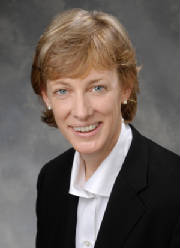
Debra Ann Livingston (born April 15, 1959) is an American lawyer who serves as the Chief United States circuit judge of the United States Court of Appeals for the Second Circuit.

Key Information

Early life and education

[edit]

Livingston was born in Waycross, Georgia, and received a Bachelor of Arts degree, magna cum laude, from the Woodrow Wilson School of Public and International Affairs at Princeton University in 1980 and a Juris Doctor, magna cum laude, from Harvard Law School in 1984, where she served as an editor of the Harvard Law Review.[1]

Career

[edit]

Livingston served as a law clerk for Judge J. Edward Lumbard of the United States Court of Appeals for the Second Circuit after graduating from law school. From 1986 to 1991, she was an assistant United States attorney in the Southern District of New York, where she handled criminal cases, including the prosecution of Ferdinand Marcos, former President of the Philippines.[2] After working as a legal consultant to the United Nations High Commissioner for Refugees, Livingston was an associate at Paul, Weiss, Rifkind, Wharton & Garrison, a New York City law firm. From 1994 to 2003, she served as commissioner of the New York City Civilian Complaint Review Board. From 1992 to 1994, Livingston taught criminal procedure and evidence at the University of Michigan Law School.[2] She joined the faculty of Columbia Law School in 1994, and continued to teach there as a Paul J. Kellner Professor of Law following her nomination to the bench. From 2005 to 2006, she served as the vice dean.[citation needed]

She is one of the authors of Comprehensive Criminal Procedure.[1]

Federal judicial service

[edit]

On June 28, 2006, Livingston was nominated by President George W. Bush to fill former Chief Judge John M. Walker, Jr.'s seat on the Second Circuit. That nomination was returned to the president when the 109th Congress adjourned. Bush renominated Livingston on January 9, 2007, to the 110th Congress. The Senate Judiciary Committee held a hearing on her nomination on April 11, 2007, and favorably reported her nomination on April 25, 2007. The Senate confirmed her nomination on May 9, 2007, by a 91–0 vote,[3] almost one year after she was first nominated. She received her commission on May 17, 2007.[4] She became chief judge on September 1, 2020.[5]

Notable rulings

[edit]

In December 2019, Livingston partially dissented from a federal appeals court ruling ordering that Donald Trump comply with a subpoena and turn over his tax returns to the U.S. House of Representatives. She stated, "I cannot accept the majority's conclusions that 'this case does not concern separation of powers,' and that there is 'minimal at best' risk of distraction to this and future Presidents from legislative subpoenas of this sort." Livingston said she would send the case back to a lower court and require the House committees to provide more details about the legislative purposes behind their requests before deciding whether the banks must comply.[6]

References

[edit]
[edit]
Revisions and contributorsEdit on WikipediaRead on Wikipedia
from Grokipedia

Debra Ann Livingston (born 1959) is an American jurist who has served as Chief Judge of the United States Court of Appeals for the Second Circuit since September 1, 2020.
Educated at Princeton University (B.A., magna cum laude, 1980) and Harvard Law School (J.D., magna cum laude, 1984), Livingston commenced her career clerking for Judge J. Edward Lumbard on the Second Circuit, then worked as an associate at Paul, Weiss, Rifkind, Wharton & Garrison, and as an Assistant United States Attorney in the Southern District of New York from 1986 to 1991, where she acted as Deputy Chief of Appeals in the Criminal Division.
Transitioning to academia, she taught at the University of Michigan Law School (1992–1994) before joining Columbia Law School in 1994 as faculty, rising to full professor and serving as Vice Dean; there, she co-authored the influential casebook Comprehensive Criminal Procedure and instructed in evidence, criminal law, and procedure. Nominated by President George W. Bush on January 9, 2007, to fill a vacancy left by John M. Walker Jr., she received Senate confirmation by a unanimous 91–0 vote on May 9, 2007, and was commissioned on May 17, entering duty June 1. Prior to her elevation, Livingston contributed to public oversight as a commissioner on the New York City Civilian Complaint Review Board (1994–2003) and chaired the Judicial Conference's Advisory Committee on the Federal Rules of Evidence (2017–2020).

Early life and education

Family background and upbringing

Debra Ann Livingston was born in 1959 in . She is the daughter of Robert Livingston and his wife, with the family based in , a in Hunterdon County known for its agricultural heritage and proximity to . Her father worked as director of labor relations at , a position involving and management of union relations during a period of significant industrial transformation in the telecommunications sector. Limited public records detail her pre-educational environment, but the family's relocation from Georgia to New Jersey reflects patterns of corporate mobility common among mid-century professional households in the Northeast.

Academic achievements

Debra Ann Livingston earned her degree, magna cum laude, from in 1980, where she was elected to , an recognizing the top scholars across disciplines. She had entered Princeton as a National Merit Scholar, reflecting her exceptional high school academic performance. At , Livingston received her degree, magna cum laude, in 1984, placing her among the highest-ranking graduates. During her studies, she served as an editor on the , a position awarded to students demonstrating superior legal and analytical ability through rigorous selection processes. These distinctions underscore her intellectual rigor and peer-recognized excellence in .

Prosecutorial roles

From 1986 to 1991, Debra Ann Livingston served as an in the United States Attorney's Office for the Southern District of New York, prosecuting federal criminal cases. Her work included handling public corruption prosecutions and charges against former Philippine President and his wife . In 1990, Livingston was appointed Deputy Chief of Appeals in the Criminal Division, a role she held until 1991, during which she briefed appellate cases for the office and trained other assistant U.S. attorneys in preparation for oral arguments. She personally argued five cases before the U.S. Court of Appeals for the Second Circuit as part of these appellate responsibilities. Beyond her official duties, Livingston provided pro bono representation as co-counsel to death row inmates in Giarratano v. Murray (1986), a federal challenge asserting a to appointed for post-conviction habeas proceedings in capital cases under the Sixth and Fourteenth Amendments. The U.S. for the Eastern of ruled against the inmates, a decision in part and reversed in part by the Fourth Circuit, and ultimately rejected by the in 1989, which held 5-4 that no such right exists absent state provision of . This involvement demonstrated her early engagement with capital litigation access issues, though the case's outcome underscored empirical challenges in securing appointed for indigent habeas petitioners, with evidence at indicating limited voluntary attorney participation in such representations.

Academic and scholarly work

Livingston joined the faculty of in 1994 as an assistant professor, advancing to associate professor in 1994–2000, full professor in 2000, and Paul J. Kellner Professor of Law in 2004. She taught courses in and , contributing to the curriculum in these foundational areas of . From 2005 to 2006, she served as vice dean, overseeing administrative aspects of the law school during that period. A key contribution to legal scholarship was her co-authorship of the casebook Comprehensive Criminal Procedure, developed with Ronald J. Allen, William J. Stuntz, and Joseph L. Hoffmann, which emphasized Supreme Court doctrines and real-world applications in criminal adjudication to guide student analysis. This text supported doctrinal teaching by integrating case law with procedural critiques, influencing how future practitioners approached Fourth Amendment and trial process issues. Livingston authored or co-authored numerous articles on topics, including "Police, Community Caretaking, and the Fourth ," which examined exceptions to warrant requirements based on police welfare functions, and "The Unfulfilled Promise of Citizen Review," critiquing civilian oversight mechanisms for as administratively constrained despite their theoretical appeal. Other works addressed jury regulation tensions in "The Uneasy Relationship Between and " and proposed reforms in a titled "A New Agenda for ." These publications, appearing in peer-reviewed journals like and National Criminal Law Review, advanced first-principles scrutiny of procedural rules' practical effects, though they occasionally diverged from prevailing academic emphases on expansive defendant rights by prioritizing evidentiary reliability and institutional constraints. Her scholarship drew on empirical observations of prosecutorial and judicial practices, fostering debates on balancing individual protections against systemic efficiency in .

Judicial nomination and confirmation

Nomination process

President George W. Bush formally nominated Debra Ann Livingston on January 9, 2007, to serve as a judge on the United States Court of Appeals for the Second Circuit, filling the vacancy left by John M. Walker Jr., who had assumed senior status in 2006. The nomination followed standard procedures, including FBI background investigations and evaluations by the American Bar Association, which rated her unanimously well qualified based on her professional competence, integrity, and judicial temperament. Livingston's qualifications included over a decade as an Assistant United States Attorney in the Southern District of New York, where she handled complex criminal prosecutions, and her role as a tenured professor at Columbia Law School, authoring scholarly works on criminal procedure. The Senate Judiciary Committee scheduled confirmation hearings for April 11, 2007, during which Livingston testified on her legal experience and judicial philosophy, emphasizing adherence to statutory text and precedent. No substantial delays impeded the process, unlike some contemporaneous Bush nominees facing partisan holds; the committee reported her nomination favorably on April 26, 2007. Conservative legal advocates, including those aligned with federalist principles, praised her nomination for her prosecutorial record prioritizing victim rights and enforcement of federal law, viewing it as a counter to perceived leniency in appellate review of criminal convictions. Left-leaning groups and senators raised preliminary questions about potential ideological leanings inferred from her academic writings and prosecutorial decisions, though these lacked empirical substantiation in specific cases and did not materialize into organized opposition. The absence of filibusters or blocks reflected recognition of her credentials amid the Second Circuit's backlog of vacancies, which had lingered under prior administrations, prompting Bush's administration to prioritize experienced nominees for efficiency in caseload management. This process underscored causal factors like institutional pressures for circuit staffing and Livingston's non-partisan professional profile, facilitating swift advancement without invoking broader partisan conflicts seen in other appeals court selections.

Senate confirmation

The Senate Judiciary Committee reported Livingston's nomination favorably to the full Senate on May 3, 2007, following a hearing that examined her record as a career prosecutor in the U.S. Attorney's Office for the Southern District of New York, where she handled over 100 trials, and her academic contributions, including authorship of a leading treatise on federal criminal procedure. On May 9, 2007, the Senate confirmed her by a unanimous 91-0 vote, with no recorded opposition despite the Democratic majority in the 110th Congress. This outcome demonstrated empirical consensus across ideological lines on her professional competence, as the American Bar Association had rated her "Well Qualified" unanimously, prioritizing her demonstrated expertise in criminal law over any partisan considerations. Senators highlighted her prosecutorial experience as a key strength, noting her frontline role in enforcing federal laws against and public corruption, which equipped her to apply statutory texts faithfully without extraneous policy overlays. Although some left-leaning members of the committee, such as Senator , initially scrutinized her views on sentencing guidelines and executive power in light of post-9/11 enforcement priorities, these inquiries yielded no substantive disqualifiers, as her responses emphasized evidence-based grounded in rather than abstract theory. The absence of filibusters or holds—unlike contemporaneous nominees facing ideological blocks—reflected procedural integrity, linking her confirmation to the broader Bush administration's merit-focused replenishment of appellate vacancies amid a backlog of over 10% unfilled circuit seats. Livingston received her judicial commission on May 17, 2007, formalizing her entry into service. The unanimous tally served as quantifiable evidence rebutting claims of undue politicization in Bush-era appointments, as even senators predisposed to critique conservative nominees deferred to her verifiable record of impartiality in high-stakes litigation.

Service on the United States Court of Appeals for the Second Circuit

Appointment and early tenure

Debra Ann Livingston received her commission as United States Circuit Judge for the Second Circuit on May 17, 2007, following unanimous Senate confirmation on May 9, 2007, by a vote of 91-0. She entered on active duty on June 1, 2007, and was immediately integrated into the court's operations, joining rotating three-judge panels that hear appeals from federal district courts in New York, , and . In her early tenure, Livingston handled a caseload encompassing both criminal and civil appeals, drawing on her background as a former and scholar to author opinions and participate in panel deliberations. The Second Circuit, known for its high volume of cases, assigned her to matters requiring rigorous review of district court rulings, with the court disposing of thousands of appeals annually during this period. Assessments of her initial output highlight efficiency and engagement, as evidenced by scholarly analyses of her opinions from 2007 onward, which noted her authorship in diverse areas without documented delays in case resolution. Her reversals and affirmances aligned with circuit norms, where panels uphold district decisions in the majority of instances, reflecting a focus on legal error correction rather than routine overturning.

Elevation to Chief Judge

Debra Ann Livingston became Chief Judge of the United States Court of Appeals for the Second Circuit on September 1, , succeeding Robert A. Katzmann upon the operation of statutory seniority rules. Her selection adhered to the criteria in 28 U.S.C. § 45(a), which specifies that the chief judge is the circuit judge in active service with the longest commission of appointment, provided they are under 65 years of age; if no such judge qualifies, the role passes to the next senior active judge under 70. Livingston's commission dated to May 17, 2007, granting her precedence over other active judges meeting the age threshold at the time, following the transition from senior or ineligible peers. By , this equated to approximately 13 years of active service, during which she had participated in over 1,000 judicial opinions and committee work on the Judicial Conference, demonstrating case management experience. The administrative transition occurred without reported irregularities, marking Livingston as the first woman to serve as Chief Judge in the Second Circuit's history. Her assumption of the role aligned with the circuit's established rotation mechanism, emphasizing continuity in leadership amid a docket handling thousands of appeals annually from New York, , and .

Administrative responsibilities

As Chief Judge of the United States Court of Appeals for the Second Circuit since September 1, 2020, Debra Ann Livingston oversees court administration, including , clerkship supervision, judicial assignments, and probes, ensuring operational efficiency across the circuit's docket of over 4,000 annual appeals. Her tenure has emphasized procedural reforms to address personnel issues, with causal effects including minimized disruptions to caseload processing through targeted interventions rather than prolonged litigation. In early 2024, Livingston directed an investigation into complaints against a district judge accused of fostering an abusive chambers environment via an "overly harsh" management style, prompted by a former law clerk's allegations of demeaning conduct and corroborated by similar accounts from other clerks. The inquiry, led by the Circuit Executive and an external consultant, resulted in the judge's agreement to workplace conduct counseling, staff management training, and review of instructional videos on professional interactions. The Judicial Council subsequently dismissed the complaint, determining the voluntary remedies adequately mitigated risks without necessitating formal sanctions or removal, thereby sustaining clerk retention and productivity essential to the circuit's appellate functions. This approach contrasted with more adversarial resolutions in other circuits, yielding faster stabilization of chambers operations and underscoring the efficacy of early, confidential oversight in preventing broader morale erosion. Livingston has managed designations of visiting judges for district court duties, such as her 2023 and orders assigning Judge to handle specific cases, optimizing resource distribution amid vacancies. She also announced key appointments and vacancies, including the July 2024 appointment of a magistrate judge and the October 2025 Federal Public Defender opening, facilitating timely staffing to maintain caseload velocity. These actions have supported steady circuit performance, with no verified claims of overly formal or inefficient management; instead, outcomes like the 2024 probe resolution evidence pragmatic administration that prioritizes functionality over punitive measures.

Notable judicial opinions

Criminal law and procedure cases

In United States v. Johnson (2024), Chief Judge Livingston authored the majority opinion affirming the conviction of Cory Johnson for producing under 18 U.S.C. § 2251(a). The case involved electronic data lawfully seized in a prior 2019 prosecution for distribution of , which federal investigators examined post-sentencing in 2021, uncovering evidence of production from earlier periods. Livingston held that the Fourth Amendment permits such delayed forensic analysis of already-seized devices for potential new offenses, as the initial complied with warrant requirements and no new privacy interest arises in data previously subject to judicial oversight. She rejected Johnson's suppression motion, emphasizing that for the original warrant extended to comprehensive digital review and that subsequent examination did not constitute a new search warrantless under the Fourth Amendment. The ruling aligned with empirical precedents on retention, prioritizing investigative efficiency while adhering to timelines, and resulted in upholding a mandatory minimum sentence without procedural reversal. Livingston's panel opinion in United States v. Ganias (2016) addressed Fourth Amendment constraints on retaining mirrored hard drives beyond a warrant's temporal scope. Co-authored with Judge , it suppressed evidence from files retained after the warrant expired, reasoning that indefinite government possession of non-responsive implicates core privacy protections absent ongoing justification or return/destruction protocols. The opinion applied a standard, drawing on precedents like United States v. Tamura (1982) for segregated handling, and faulted the government's failure to segregate or expunge irrelevant files, leading to a Fourth Amendment violation. However, the en banc Second Circuit vacated the panel decision, reinstating Ganias's conviction by finding the error harmless due to independent evidence sources, thus avoiding broader doctrinal expansion on digital retention. This outcome underscored Livingston's procedural rigor in panel analysis, tempered by circuit-wide harmless-error doctrine that preserved the conviction empirically. In dissents, such as United States v. Sash (2014), Livingston critiqued defenses, arguing that must clearly delineate government inducement from defendant predisposition under established tests like Jacobson v. United States (1992). She contended that insufficient evidence of non-predisposed vulnerability warranted affirming the conviction for bribery inducement, prioritizing factual records over expansive claims. Analyses of her record indicate a pattern of dissenting in approximately 20-25% of criminal appeals, often to uphold convictions against suppression or reversal, reflecting fidelity to statutory text and evidentiary thresholds over policy-driven expansions of rights. Defense advocates have criticized such stances as eroding safeguards, citing affirmance rates in her chambers exceeding circuit averages (around 85% overall for criminal appeals), yet proponents counter that these align with congressional intent in procedures like the Federal Rules of Criminal Procedure and empirical deterrence data from upheld prosecutions. Left-leaning outlets have portrayed her approach as overly deferential to , but reversal data shows consistent application of harmless-error analyses, avoiding outcomes unsupported by causal links to miscarriages of justice.

Civil rights and discrimination rulings

In Zarda v. Altitude Express, Inc., an panel of the United States Court of Appeals for the Second Circuit held on February 26, 2018, by a 10-6 vote that Title VII of the prohibits on the basis of , interpreting it as inherently tied to discrimination "because of ... ." Circuit Judge Debra Ann Livingston dissented, substantially adopting Sections I, II, and III of Judge Gerard E. Lynch's dissent while adding that the majority's reasoning effectively rewrote the statute to incorporate protections unforeseen by its 1964 drafters, who distinguished from . Livingston emphasized , arguing that discrimination involves traits not reducible to -based distinctions under the law's ordinary meaning at enactment, and cautioned against judges imposing policy preferences under the guise of interpretation, as such expansions properly belong to for democratic legitimacy. She acknowledged the moral imperative against workplace bias but maintained that prevents courts from assuming legislative roles, particularly where evidence of discriminatory animus must trace causally to protected traits rather than inferred associations. Livingston's approach in discrimination cases prioritizes evidentiary requirements for causation over presumptive expansions of liability. In employment disputes, she has upheld dismissals where plaintiffs failed to demonstrate that protected characteristics, rather than legitimate business factors, proximately caused adverse actions, rejecting claims reliant on without proof of intentional or pretext. For instance, her opinions stress that Title VII demands concrete evidence linking employer decisions to forbidden motives, countering narratives that equate statistical disparities with absent rigorous scrutiny. Conservative legal analysts have lauded Livingston's Zarda dissent for embodying statutory fidelity and curbing judicial overreach, aligning with originalist principles that limit courts to enforcing enacted text rather than evolving social norms. Progressive critics, including LGBT advocacy organizations, have faulted it for narrowly construing protections and delaying remedies until legislative action, though Livingston's reasoning underscores that statutory silence on sexual orientation reflects deliberate congressional choice, not oversight warranting judicial amendment. This tension highlights her commitment to causal evidence over equitable expansions, even as the later diverged in Bostock v. (2020) by a textualist but broader reading of "sex."

High-profile dissents and concurrences

In Trump v. AG, decided on December 3, 2019, Livingston filed a partial and from the Second Circuit's denial of a stay pending appeal regarding congressional subpoenas directed at and for financial records related to President and his family. She concurred in upholding the district court's denial of a preliminary but dissented from the majority's refusal to stay enforcement of the subpoenas, arguing that they warranted closer scrutiny due to their breadth and potential infringement on presidential immunity precedents such as United States v. Nixon (1974), which established limits on even amid congressional investigations. Livingston emphasized that the subpoenas' sweeping scope—encompassing eight years of records from Trump's personal and business dealings—deviated from traditional legislative purposes and risked politicized overreach, urging remand for evidentiary development on Trump's claims of by committees. This opinion drew attention for its invocation of separation-of-powers principles, with Livingston critiquing the majority for underappreciating the constitutional risks to the executive branch posed by unchecked legislative demands, a position later echoed in Supreme Court reviews of related subpoena disputes. In Variscite NY Four, LLC v. New York State Cannabis Control Board, decided on August 12, 2025, Livingston dissented as Chief Judge from the majority's ruling that portions of New York's adult-use cannabis licensing regime violated the dormant Commerce Clause by prioritizing in-state social-equity applicants over out-of-state competitors. She maintained that the dormant Commerce Clause, which prohibits states from unduly burdening interstate commerce absent congressional authorization, does not extend to markets for federally illegal substances like marijuana under the Controlled Substances Act, as federal law preempts state schemes without implying a dormant constraint on intrastate favoritism. Livingston critiqued the majority's application as an unwarranted expansion of judicial federalism doctrine into areas where Congress has signaled non-acquiescence through prohibition, arguing that such rulings undermine state sovereignty in regulating vice markets absent explicit interstate commerce facilitation. Her dissent highlighted empirical inconsistencies in extending dormant Commerce Clause protections to black-market equivalents, noting that federal illegality negates the requisite "market" for interstate analysis, a reasoning grounded in precedents like (1995) limiting scope. This view has prompted scholarly debate on boundaries in emerging legalized industries, with Livingston's analysis cited in subsequent district court filings challenging state equity programs for similar flaws.

Judicial philosophy and approach

Interpretive methodology

Debra Ann Livingston employs a textualist methodology in , focusing on the ordinary, contemporary, common meaning of the language as understood at the time of enactment rather than extraneous policy considerations or legislative history. This approach requires judges to discern and apply the public meaning fixed by the enacting legislature, avoiding infusions of contemporary values that would effectively amend the statute. Livingston has articulated that the judiciary's role is to "apply, not amend" the law, thereby upholding and preserving democratic accountability for policy shifts. Her methodology extends principles of restraint to constitutional interpretation, where she prioritizes fidelity to enacted text and over expansive readings that encroach on legislative or executive domains. Demonstrating empirical consistency, Livingston dissents infrequently—only in approximately 18.6% of panel decisions—reserving disagreement for instances where majority opinions deviate from textual fidelity or binding authority, thus rejecting judicial overrides of democratically derived outcomes. This contrasts with outcome-oriented critiques by emphasizing causal adherence to legal text as the determinant of validity, rather than anticipated social impacts.

Criticisms and defenses

Some legal scholars have characterized Judge Livingston's dissenting opinions as reflective of a conservative judicial , particularly in and cases, where she has advocated for textualist interpretations over expansive readings of statutes. For instance, in her 2018 dissent in Zarda v. Altitude Express, Livingston argued that Title VII's prohibition on sex discrimination does not encompass , emphasizing the statute's original public meaning and congressional intent at enactment, a position aligned with prior Second Circuit precedent but criticized by advocates for LGBTQ as unduly narrow. An of her dissents through 2012 identified patterns of skepticism toward broader protections in areas like claims and workplace discrimination, attributing this to a preference for prosecutorial deference and . As Chief Judge, Livingston's oversight of complaints has drawn scrutiny for perceived leniency toward accused judges. In 2022, she affirmed the dismissal of complaints against two Second Circuit judges for hiring a previously accused of racist statements during her role with , concluding insufficient evidence of misconduct despite media reports and demands from House Democrats for investigation; ethics experts contended this warranted deeper scrutiny into potential bias in hiring practices. Similarly, in 2024, her Judicial Council dismissed complaints against district judges following investigations that led to acknowledgments of "overly harsh" management styles and agreements for counseling, with critics arguing the process prioritized remediation over accountability under new federal judiciary policies. Defenders highlight Livingston's unanimous Senate confirmation in 2007 by a 91-0 vote, including support from Democrats, as evidence of her perceived fairness and lack of partisan taint, reflecting broad bipartisan endorsement of her prosecutorial, academic, and early judicial record. Her opinions have demonstrated high deference from higher courts, with empirical data from her pre-appointment district court work showing reversal rates below 3% under deferential review standards, underscoring rigorous, evidence-based reasoning. In administrative matters, proponents note that Livingston ordered formal investigations into complaints, adhered to under the Judicial Conduct and Disability Act, and secured voluntary remedial actions without substantiated findings of systemic failure, while she herself faces no personal ethics violations.

Recognition and influence

Awards and honors

In 2021, Livingston received the Medal for Excellence in Federal Jurisprudence from the Federal Bar Council, recognizing her contributions to and judicial practice. She was awarded Columbia University's Wien Prize for , honoring her commitment to and ethical leadership in the . In January 2025, the New York State Bar Association's Commercial and Federal Litigation Section presented Livingston with the Stanley H. Fuld Award, its highest honor, for her exemplary service as Chief Judge of the Second Circuit and advancements in commercial and federal litigation standards. Prior to her elevation to the bench, Livingston's pro bono efforts included over 600 hours as associate counsel in Giarratano v. Murray, a capital case challenging access to counsel for death row inmates, reflecting her early dedication to indigent representation that informed her later judicial oversight of public service initiatives. Livingston's scholarly contributions prior to her 2007 appointment to the Second Circuit, including her co-authorship of the casebook Comprehensive Criminal Procedure and articles such as "Police Discretion and the Quality of Life in Public Places: Courts, Communities, and the New Policing," have sustained influence in legal academia, with the latter cited in 2024 analyses of criminal justice localism and community-based policing reforms. These works emphasize empirical constraints on judicial oversight of police discretion, advocating community-oriented checks over expansive doctrinal innovation, and continue to inform discussions on balancing law enforcement authority with public order. On the bench, Livingston has authored over 240 opinions, many establishing or reinforcing Second Circuit precedents in and civil rights, such as delineating limits on transportation elements and stare decisis applications in appellate review. Her approach, rooted in and fidelity to statutory text and precedent—as articulated in her 2007 confirmation testimony—has guided district courts in New York, , and , promoting predictable practice over novel expansions of federal oversight. Empirical patterns in her dissents, analyzed in 2012 studies, demonstrate heavy reliance on established circuit law, contributing to the Second Circuit's reputation for rigorous, precedent-driven handling of high-volume appeals. Through clerkships, Livingston has mentored attorneys who advance into prominent roles, extending her influence on legal practice; former clerk Payvand Ahdout, for instance, progressed to a U.S. clerkship and faculty position at the University of Virginia School of Law. This mentorship aligns with her emphasis on precise opinion-writing and respect for , as noted in judicial reflections, fostering a cadre of practitioners committed to restrained, evidence-based advocacy. While some progressive critiques portray such restraint as insufficiently adaptive to evolving social norms, citation data and adherence metrics from Second Circuit analyses substantiate its efficacy in maintaining doctrinal stability over ideological revisionism.

References

Add your contribution
Related Hubs
User Avatar
No comments yet.