
Recent from talks
Democritus
Knowledge base stats:
Talk channels stats:
Members stats:
Democritus
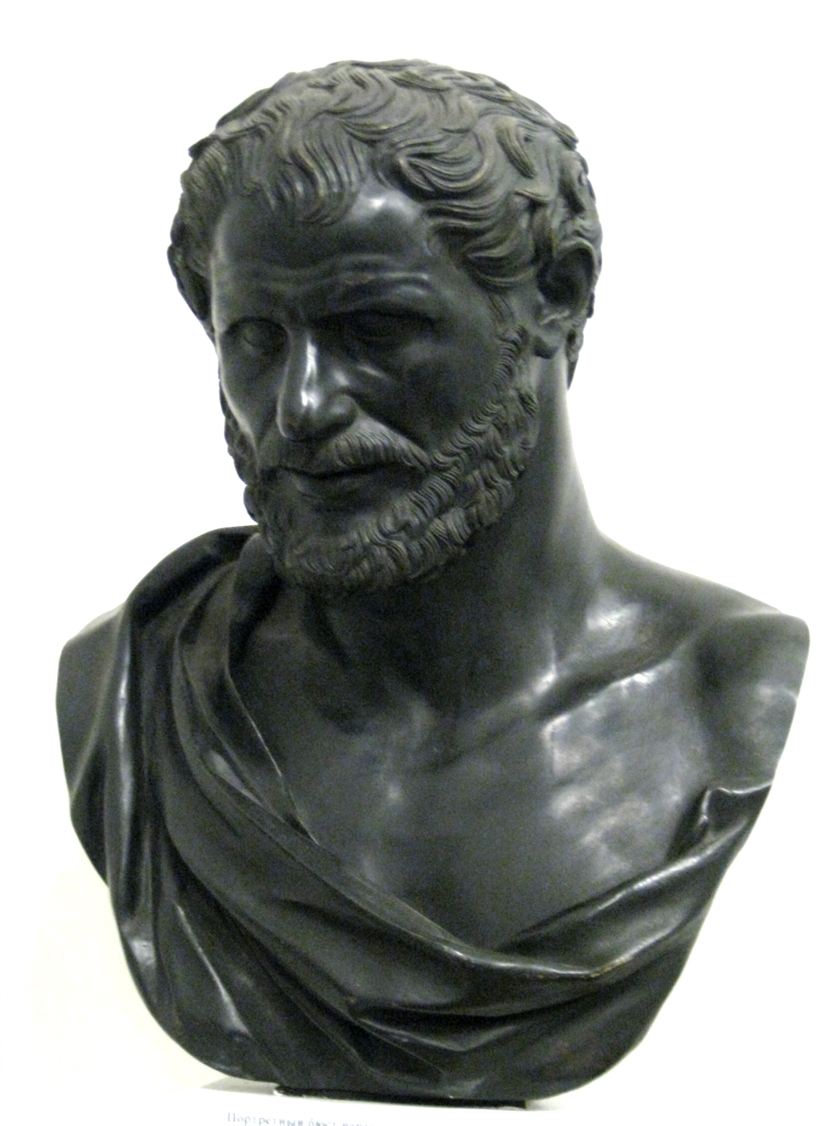
Democritus (/dɪˈmɒkrɪtəs/, dim-OCK-rit-əs; Greek: Δημόκριτος, Dēmókritos, meaning "chosen of the people"; c. 460 – c. 370 BC) was an Ancient Greek pre-Socratic philosopher from Abdera, primarily remembered today for his formulation of an atomic theory of the universe. Democritus wrote extensively on a wide variety of topics.
None of Democritus' original work has survived, except through second-hand references. Many of these references come from Aristotle, who viewed him as an important rival in the field of natural philosophy. He was known in antiquity as the ‘laughing philosopher’ because of his emphasis on the value of cheerfulness.
Although many anecdotes about Democritus' life survive, their authenticity cannot be verified and modern scholars doubt their accuracy.
According to Aristotle, Democritus was born in Abdera, on the coast of Thrace. He was a polymath and prolific writer, producing nearly eighty treatises on subjects such as poetry, harmony, military tactics, and Babylonian theology. Some called him a Milesian, and the name of his father too is stated differently. His birth year was fixed by Apollodorus in the first year of the 80th Olympiad, or 460 BC, while Thrasyllus had referred it to as the 3rd year of the 77th Olympiad. Democritus had called himself forty years younger than Anaxagoras. His father, Hegesistratus,--or as others called him Damasippus or Athenocritus,--was possessed of so large a property, that he was able to receive and treat Xerxes on his march through Abdera.
Democritus spent the inheritance, which his father left him, on travels into distant countries, which he undertook to satisfy his extraordinary thirst for knowledge. He travelled over a great part of Asia, and, as some state, he even reached India and Aethiopia. We know that he wrote on Babylon and Meroe; he must also have visited Egypt, and Diodorus Siculus even states, that he lived there for a period of five years. He himself declared, that among his contemporaries none had made greater journeys, seen more countries, and made the acquaintance of more men distinguished in every kind of science than himself. Among the last he mentions in particular the Egyptian mathematicians (ἀρπεδόναπ-ται ; comp. Sturz, de Dialect. Maced. p. 98), whose knowledge he praises, without, however, regarding himself inferior to them. Theophrastus, too, spoke of him as a man who had seen many countries. It was his desire to acquire an extensive knowledge of nature that led him into distant countries at a time when travelling was the principal means of acquiring an intellectual and scientific culture; and after returning to his native land he occupied himself only with philosophical investigations, especially such as related to natural history.
In Greece itself, too, he endeavored by means of traveling and residing in the principal cities to acquire a knowledge of Hellenic culture and civilization. He mentioned many Greek philosophers in his writings, and his wealth enabled him to purchase the works they had written. He thus succeeded in excelling, in the extent of his knowledge, all the earlier Greek philosophers, among whom Leucippus, the founder of the atomistic theory, is said to have exercised the greatest influence upon his philosophical studies. The opinion that he was a disciple of Anaxagoras or of the Pythagoreans, perhaps arose merely from the fact, that he mentioned them in his writings. The account of his hostility towards Anaxagoras, is contradicted by several passages in which he speaks of him in terms of high praise. It is further said, that he was on terms of friendship with Hippocrates, and some writers even speak of a correspondence between Democritus and Hippocrates; but this statement does not seem to be deserving of credit. As he was a contemporary of Plato, it may be that he was acquainted with Socrates, perhaps even with Plato, who, however, does not mention Democritus anywhere. Aristotle describes him and his views as belonging to the pre-Socratic period; but some scholars, such as Groen van Prinsterer, assert that there are symptoms in Plato which show a connection with Democritus, in Plato's language and style an imitation of Democritus.
The many anecdotes about Democritus which are preserved, especially in Diogenes Laertius, show that he was a man of a most sterling and honourable character. His diligence was incredible: he lived exclusively for his studies, and his disinterestedness, modesty, and simplicity are attested by many features which are related of him. Notwithstanding his great property, he seems to have died in poverty, though highly esteemed by his fellow-citizens, not so much on account of his philosophy, as "because," as Diogenes says, " he had foretold them some things which the event proved to be true." This had probably reference to his knowledge of natural phaenomena. His fellow-citizens honoured him with presents in money and bronze statues. Even the scoffer Timon, who in his Silloi spared no one, speaks of Democritus only in terms of praise. We cannot leave unnoticed the tradition that Democritus deprived himself of his sight, in order to be less disturbed in his pursuits. But this tradition is one of the inventions of a later age, which was fond of piquant anecdotes. It is more probable that he may have lost his sight by too severe application to study. This loss, however, did not disturb the cheerful disposition of his mind and his views of human life, which prompted him everywhere to look at the cheerful and comical side of things, which later writers took to mean, that he always laughed at the follies of men.
Ancient accounts of his life have claimed that he lived to a very old age, with some writers claiming that he was over a hundred years old at the time of his death, (some say that he was 109 years old), and even the manner in which he died is characteristic of his medical knowledge, which, combined as it was with his knowledge of nature, caused a report, which was believed by some persons, that he was a sorcerer and a magician. His death is placed in the 4th year of the 105th Olympiad, or 357 BC, in which year Hippocrates also is said to have died.
Hub AI
Democritus AI simulator
(@Democritus_simulator)
Democritus
Democritus (/dɪˈmɒkrɪtəs/, dim-OCK-rit-əs; Greek: Δημόκριτος, Dēmókritos, meaning "chosen of the people"; c. 460 – c. 370 BC) was an Ancient Greek pre-Socratic philosopher from Abdera, primarily remembered today for his formulation of an atomic theory of the universe. Democritus wrote extensively on a wide variety of topics.
None of Democritus' original work has survived, except through second-hand references. Many of these references come from Aristotle, who viewed him as an important rival in the field of natural philosophy. He was known in antiquity as the ‘laughing philosopher’ because of his emphasis on the value of cheerfulness.
Although many anecdotes about Democritus' life survive, their authenticity cannot be verified and modern scholars doubt their accuracy.
According to Aristotle, Democritus was born in Abdera, on the coast of Thrace. He was a polymath and prolific writer, producing nearly eighty treatises on subjects such as poetry, harmony, military tactics, and Babylonian theology. Some called him a Milesian, and the name of his father too is stated differently. His birth year was fixed by Apollodorus in the first year of the 80th Olympiad, or 460 BC, while Thrasyllus had referred it to as the 3rd year of the 77th Olympiad. Democritus had called himself forty years younger than Anaxagoras. His father, Hegesistratus,--or as others called him Damasippus or Athenocritus,--was possessed of so large a property, that he was able to receive and treat Xerxes on his march through Abdera.
Democritus spent the inheritance, which his father left him, on travels into distant countries, which he undertook to satisfy his extraordinary thirst for knowledge. He travelled over a great part of Asia, and, as some state, he even reached India and Aethiopia. We know that he wrote on Babylon and Meroe; he must also have visited Egypt, and Diodorus Siculus even states, that he lived there for a period of five years. He himself declared, that among his contemporaries none had made greater journeys, seen more countries, and made the acquaintance of more men distinguished in every kind of science than himself. Among the last he mentions in particular the Egyptian mathematicians (ἀρπεδόναπ-ται ; comp. Sturz, de Dialect. Maced. p. 98), whose knowledge he praises, without, however, regarding himself inferior to them. Theophrastus, too, spoke of him as a man who had seen many countries. It was his desire to acquire an extensive knowledge of nature that led him into distant countries at a time when travelling was the principal means of acquiring an intellectual and scientific culture; and after returning to his native land he occupied himself only with philosophical investigations, especially such as related to natural history.
In Greece itself, too, he endeavored by means of traveling and residing in the principal cities to acquire a knowledge of Hellenic culture and civilization. He mentioned many Greek philosophers in his writings, and his wealth enabled him to purchase the works they had written. He thus succeeded in excelling, in the extent of his knowledge, all the earlier Greek philosophers, among whom Leucippus, the founder of the atomistic theory, is said to have exercised the greatest influence upon his philosophical studies. The opinion that he was a disciple of Anaxagoras or of the Pythagoreans, perhaps arose merely from the fact, that he mentioned them in his writings. The account of his hostility towards Anaxagoras, is contradicted by several passages in which he speaks of him in terms of high praise. It is further said, that he was on terms of friendship with Hippocrates, and some writers even speak of a correspondence between Democritus and Hippocrates; but this statement does not seem to be deserving of credit. As he was a contemporary of Plato, it may be that he was acquainted with Socrates, perhaps even with Plato, who, however, does not mention Democritus anywhere. Aristotle describes him and his views as belonging to the pre-Socratic period; but some scholars, such as Groen van Prinsterer, assert that there are symptoms in Plato which show a connection with Democritus, in Plato's language and style an imitation of Democritus.
The many anecdotes about Democritus which are preserved, especially in Diogenes Laertius, show that he was a man of a most sterling and honourable character. His diligence was incredible: he lived exclusively for his studies, and his disinterestedness, modesty, and simplicity are attested by many features which are related of him. Notwithstanding his great property, he seems to have died in poverty, though highly esteemed by his fellow-citizens, not so much on account of his philosophy, as "because," as Diogenes says, " he had foretold them some things which the event proved to be true." This had probably reference to his knowledge of natural phaenomena. His fellow-citizens honoured him with presents in money and bronze statues. Even the scoffer Timon, who in his Silloi spared no one, speaks of Democritus only in terms of praise. We cannot leave unnoticed the tradition that Democritus deprived himself of his sight, in order to be less disturbed in his pursuits. But this tradition is one of the inventions of a later age, which was fond of piquant anecdotes. It is more probable that he may have lost his sight by too severe application to study. This loss, however, did not disturb the cheerful disposition of his mind and his views of human life, which prompted him everywhere to look at the cheerful and comical side of things, which later writers took to mean, that he always laughed at the follies of men.
Ancient accounts of his life have claimed that he lived to a very old age, with some writers claiming that he was over a hundred years old at the time of his death, (some say that he was 109 years old), and even the manner in which he died is characteristic of his medical knowledge, which, combined as it was with his knowledge of nature, caused a report, which was believed by some persons, that he was a sorcerer and a magician. His death is placed in the 4th year of the 105th Olympiad, or 357 BC, in which year Hippocrates also is said to have died.
Recent media