
Recent from talks
Die-cast toy
Knowledge base stats:
Talk channels stats:
Members stats:
Die-cast toy
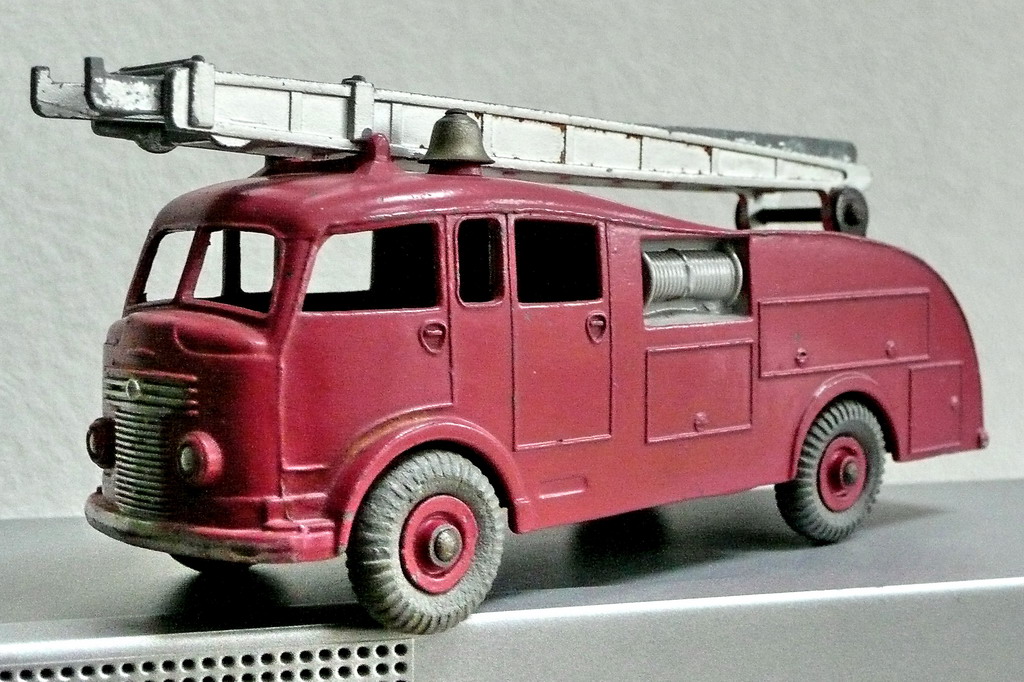
A die-cast toy (also spelled diecast, or die cast) is a toy or a collectible model produced by using the die-casting method of putting molten lead, zinc alloy or plastic in a mold to produce a particular shape. Such toys are made of metal, with plastic, rubber, glass, or other machined metal parts. Wholly plastic toys are made by a similar process of injection molding, but the two methods are distinct because of the properties of the materials.
The metal used in die-casting is either a lead alloy (used early on), or more commonly, zamak (called Mazak in the UK), an alloy of zinc with small quantities of aluminium and copper. Lead or iron are impurities that must be carefully avoided in zamak, as they give rise to a deterioration of the metal most commonly called zinc pest. The terms white metal or pot metal are also used when applied to alloys based more on lead or iron. The most common die-cast vehicles are scale models of automobiles, aircraft, military vehicles, construction equipment, and trains, although almost anything can be produced by this method, like Monopoly game pieces, furniture handles, or metal garden sprinklers.
Die-cast toys were first produced early in the 20th century by manufacturers such as Meccano (Dinky Toys) in the United Kingdom, Dowst Brothers (TootsieToys) in the United States and Fonderie de précision de Nanterre (Solido) in France. The first models on the market were basic, consisting of a small vehicle body with no interior. In the early days, as mentioned, it was common for impurities in the alloy to result in zinc pest, and the casting would distort, crack, or crumble. As a result, die-cast toys made before World War II are difficult to find in good condition. The later high-purity Zamak alloy avoided this problem.
Lesney began making die-cast toys in 1947. Their popular Matchbox 1–75 series was so named because there were always 75 different vehicles in the line, each packaged in a small box designed to look like those used for matches. These toys became so popular that the "Matchbox" became widely used as a generic term for any die-cast toy car, regardless of manufacturer.
The popularity of die-cast toys developed through the 1950s as their detail and quality increased. More companies entered the field, including successful brands like Corgi brand, produced by Mettoy, Italian Mercury, Danish Tekno, or German Schuco and Gama Toys. Corgi Toys appeared in 1956 and pioneered the use of interiors and windows in their models.
In 1968, Hot Wheels were introduced in the United States by Mattel to address the complaint that they had no line of toys for boys to balance their line of Barbie dolls for girls. Because they looked fast and were fast (they were equipped with a low-friction wheels/axles), Hot Wheels quickly became the most popular die-cast cars in the toy market, becoming one of the world's top sellers, challenging the popularity of Matchbox.
Since 2009, the Diecast Hall of Fame inducts designers, industry executives and others that have made major contributions to the industry.
Although advertising had been used by Meccano (Dinky Toys) since 1934, during the 1960s new companies began to use die-cast vehicles exclusively as promotional items. The idea that children play a large role in a family's purchasing decisions was key. There is also the fact that children grown up to buy products that they were exposed to when young. Matchbox vehicles mildly advertised a variety of mainly British products like Singer sewing machines, Tetley tea, Pickford's movers, or Coca-Cola. As time passed, companies such as McDonald's, Sears Roebuck, Kodak and Texaco commissioned toymakers to produce promotional models featuring their names and logos or licensed their use. One early example was an American Airlines London bus produced by Matchbox, an idea some other airlines quickly copied.
Hub AI
Die-cast toy AI simulator
(@Die-cast toy_simulator)
Die-cast toy
A die-cast toy (also spelled diecast, or die cast) is a toy or a collectible model produced by using the die-casting method of putting molten lead, zinc alloy or plastic in a mold to produce a particular shape. Such toys are made of metal, with plastic, rubber, glass, or other machined metal parts. Wholly plastic toys are made by a similar process of injection molding, but the two methods are distinct because of the properties of the materials.
The metal used in die-casting is either a lead alloy (used early on), or more commonly, zamak (called Mazak in the UK), an alloy of zinc with small quantities of aluminium and copper. Lead or iron are impurities that must be carefully avoided in zamak, as they give rise to a deterioration of the metal most commonly called zinc pest. The terms white metal or pot metal are also used when applied to alloys based more on lead or iron. The most common die-cast vehicles are scale models of automobiles, aircraft, military vehicles, construction equipment, and trains, although almost anything can be produced by this method, like Monopoly game pieces, furniture handles, or metal garden sprinklers.
Die-cast toys were first produced early in the 20th century by manufacturers such as Meccano (Dinky Toys) in the United Kingdom, Dowst Brothers (TootsieToys) in the United States and Fonderie de précision de Nanterre (Solido) in France. The first models on the market were basic, consisting of a small vehicle body with no interior. In the early days, as mentioned, it was common for impurities in the alloy to result in zinc pest, and the casting would distort, crack, or crumble. As a result, die-cast toys made before World War II are difficult to find in good condition. The later high-purity Zamak alloy avoided this problem.
Lesney began making die-cast toys in 1947. Their popular Matchbox 1–75 series was so named because there were always 75 different vehicles in the line, each packaged in a small box designed to look like those used for matches. These toys became so popular that the "Matchbox" became widely used as a generic term for any die-cast toy car, regardless of manufacturer.
The popularity of die-cast toys developed through the 1950s as their detail and quality increased. More companies entered the field, including successful brands like Corgi brand, produced by Mettoy, Italian Mercury, Danish Tekno, or German Schuco and Gama Toys. Corgi Toys appeared in 1956 and pioneered the use of interiors and windows in their models.
In 1968, Hot Wheels were introduced in the United States by Mattel to address the complaint that they had no line of toys for boys to balance their line of Barbie dolls for girls. Because they looked fast and were fast (they were equipped with a low-friction wheels/axles), Hot Wheels quickly became the most popular die-cast cars in the toy market, becoming one of the world's top sellers, challenging the popularity of Matchbox.
Since 2009, the Diecast Hall of Fame inducts designers, industry executives and others that have made major contributions to the industry.
Although advertising had been used by Meccano (Dinky Toys) since 1934, during the 1960s new companies began to use die-cast vehicles exclusively as promotional items. The idea that children play a large role in a family's purchasing decisions was key. There is also the fact that children grown up to buy products that they were exposed to when young. Matchbox vehicles mildly advertised a variety of mainly British products like Singer sewing machines, Tetley tea, Pickford's movers, or Coca-Cola. As time passed, companies such as McDonald's, Sears Roebuck, Kodak and Texaco commissioned toymakers to produce promotional models featuring their names and logos or licensed their use. One early example was an American Airlines London bus produced by Matchbox, an idea some other airlines quickly copied.
Recent media