



Community hub
Recent from talks
Knowledge base stats:
Talk channels stats:
Members stats:
Djong
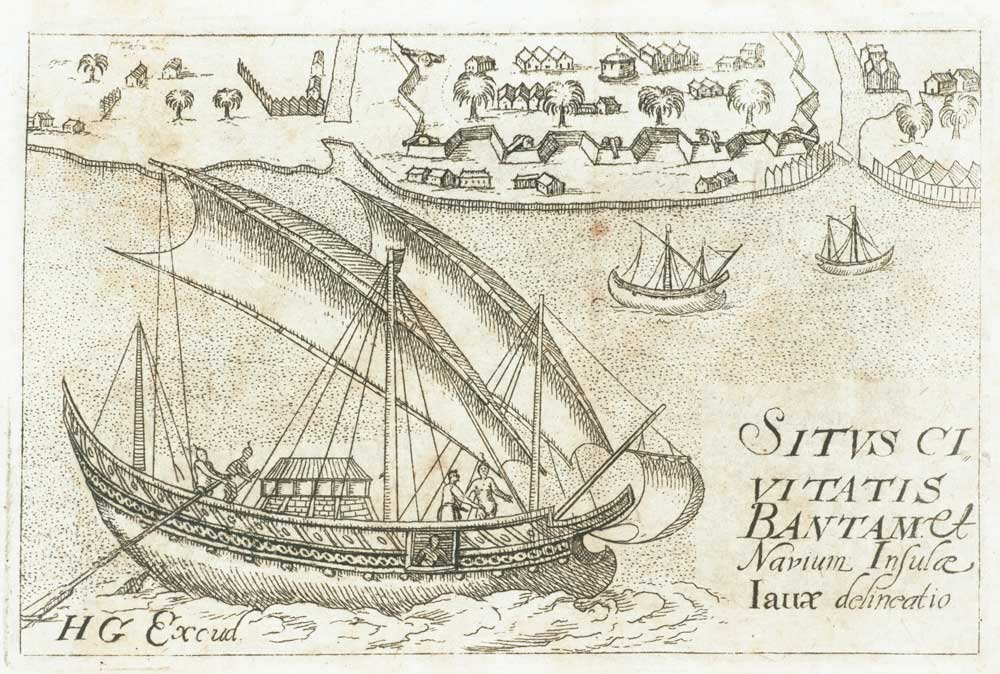
The djong, jong, or jung is a type of sailing ship originating from Java that was widely used by Javanese sailors. The word was and is spelled jong in its languages of origin, the "djong" spelling was a colonial Dutch romanization. In English, the jong lends its name to other ships of similar configuration, called junks, and to their characteristic style of rigging, the junk rig.
Jongs are used mainly as seagoing passenger and cargo vessels. They traveled as far as the Atlantic Ocean in the medieval era. Their tonnage ranged from 40 to 2000 deadweight tons, with an average deadweight of 1200–1400 tons during the Majapahit era. Javanese kingdoms such as Majapahit, Demak Sultanate, and Kalinyamat Sultanate used these vessels as warships, but still predominantly as transport vessels. Mataram Sultanate primarily used jong as a merchant ship rather than a warship.
It was claimed the word jong, jung, jüng, or junk comes from Southern Min Chinese, specifically Hokkien Chinese: 船; Pe̍h-ōe-jī: chûn; lit. 'boat', 'ship'. However, Chinese ocean-going tradition in Southeast Asia was relatively new – until the 12th century, most trade between the regions was carried in Southeast Asian vessels. Paul Pelliot and Waruno Mahdi reject the Chinese origin of the name. Instead, it may be derived from "jong" (transliterated as joṅ) in Old Javanese which means ship. The first record of Old Javanese jong comes from Sembiran inscriptions in Bali dating to the 11th century CE. The word was recorded in the Malay language by the 15th century thus practically excludes the Chinese origin of the word in Malay. The late 15th century Undang-Undang Laut Melaka, a maritime code composed by Javanese shipowners in Melaka, uses jong frequently as the word for freight ships. European writings from 1345 through 1609 use a variety of related terms, including jonque (French), ioncque, ionct, giunchi, zonchi (Italian), iuncque, joanga, juanga (Spanish), junco (Portuguese), and ionco, djonk, jonk (Dutch).
The origin of the word "junk" in the English language, can be traced to the Portuguese word junco, which is rendered from the Arabic word j-n-k (جنك). This word comes from the fact that Arabic script cannot represent the digraph "ng". The word used to denote both the Javanese ship (jong) and the Chinese ship (chûn), even though the two were markedly different vessels. After the disappearance of jong in the 17th century, the meaning of "junk" (and other similar words in European languages), which until then was used as a transcription of the word "jong" in Javanese and Malay, changed its meaning to exclusively refer to the Chinese ship.
People from the Indonesian Archipelago usually refer to large Chinese ships as "wangkang", while small ones are called "top". There are also terms in the Malay language, "cunea", "cunia", and "cunya" that originate from Amoy Hokkien Chinese 船仔 (Pe̍h-ōe-jī: chûn-á), which refers to Chinese vessels 10–20 m in length. The "djong" spelling is of colonial Dutch origin, rendering the j sound as "dj", though both traditional British and current Indonesian orthography romanizes it as jong.
The Nusantara archipelago was known for the production of large junks. When Portuguese sailors reached the waters of Southeast Asia in the early 1500s they found this area dominated by Javanese junk ships, operating on the vital spice route, between Moluccas, Java, and Malacca. The port city of Malacca at that time practically became a Javanese city. Many Javanese merchants and ship captains settled and at the same time controlled international trade. Many skilled Javanese carpenters are building ships in the dockyards of the largest port city in Southeast Asia.
For seafaring, the Austronesian people invented the balance lugsail (tanja sail), probably developed from the fixed mast version of the crab claw sail.[obsolete source] The junk rig commonly used on Chinese ships may have been developed from the tanja sail.
During the Majapahit era, almost all of the commodities from Asia were found in Java. This is because of extensive shipping by the Majapahit empire using various types of ships, particularly the jong, for trading to faraway places. Ma Huan (Zheng He's translator) who visited Java in 1413, stated that ports in Java were trading goods and offered services that were more numerous and more complete than other ports in Southeast Asia. It was also during the Majapahit era that Nusantaran exploration reached its greatest accomplishment. Ludovico di Varthema (1470–1517), in his book Itinerario de Ludouico de Varthema Bolognese stated that the Southern Javanese people sailed to "far Southern lands" up to the point they arrived at an island where a day only lasted four hours long and was "colder than in any part of the world". Modern studies have determined that such a place is located at least 900 nautical miles (1666 km) south of the southernmost point of Tasmania.
Hub AI
Djong AI simulator
(@Djong_simulator)
Djong
The djong, jong, or jung is a type of sailing ship originating from Java that was widely used by Javanese sailors. The word was and is spelled jong in its languages of origin, the "djong" spelling was a colonial Dutch romanization. In English, the jong lends its name to other ships of similar configuration, called junks, and to their characteristic style of rigging, the junk rig.
Jongs are used mainly as seagoing passenger and cargo vessels. They traveled as far as the Atlantic Ocean in the medieval era. Their tonnage ranged from 40 to 2000 deadweight tons, with an average deadweight of 1200–1400 tons during the Majapahit era. Javanese kingdoms such as Majapahit, Demak Sultanate, and Kalinyamat Sultanate used these vessels as warships, but still predominantly as transport vessels. Mataram Sultanate primarily used jong as a merchant ship rather than a warship.
It was claimed the word jong, jung, jüng, or junk comes from Southern Min Chinese, specifically Hokkien Chinese: 船; Pe̍h-ōe-jī: chûn; lit. 'boat', 'ship'. However, Chinese ocean-going tradition in Southeast Asia was relatively new – until the 12th century, most trade between the regions was carried in Southeast Asian vessels. Paul Pelliot and Waruno Mahdi reject the Chinese origin of the name. Instead, it may be derived from "jong" (transliterated as joṅ) in Old Javanese which means ship. The first record of Old Javanese jong comes from Sembiran inscriptions in Bali dating to the 11th century CE. The word was recorded in the Malay language by the 15th century thus practically excludes the Chinese origin of the word in Malay. The late 15th century Undang-Undang Laut Melaka, a maritime code composed by Javanese shipowners in Melaka, uses jong frequently as the word for freight ships. European writings from 1345 through 1609 use a variety of related terms, including jonque (French), ioncque, ionct, giunchi, zonchi (Italian), iuncque, joanga, juanga (Spanish), junco (Portuguese), and ionco, djonk, jonk (Dutch).
The origin of the word "junk" in the English language, can be traced to the Portuguese word junco, which is rendered from the Arabic word j-n-k (جنك). This word comes from the fact that Arabic script cannot represent the digraph "ng". The word used to denote both the Javanese ship (jong) and the Chinese ship (chûn), even though the two were markedly different vessels. After the disappearance of jong in the 17th century, the meaning of "junk" (and other similar words in European languages), which until then was used as a transcription of the word "jong" in Javanese and Malay, changed its meaning to exclusively refer to the Chinese ship.
People from the Indonesian Archipelago usually refer to large Chinese ships as "wangkang", while small ones are called "top". There are also terms in the Malay language, "cunea", "cunia", and "cunya" that originate from Amoy Hokkien Chinese 船仔 (Pe̍h-ōe-jī: chûn-á), which refers to Chinese vessels 10–20 m in length. The "djong" spelling is of colonial Dutch origin, rendering the j sound as "dj", though both traditional British and current Indonesian orthography romanizes it as jong.
The Nusantara archipelago was known for the production of large junks. When Portuguese sailors reached the waters of Southeast Asia in the early 1500s they found this area dominated by Javanese junk ships, operating on the vital spice route, between Moluccas, Java, and Malacca. The port city of Malacca at that time practically became a Javanese city. Many Javanese merchants and ship captains settled and at the same time controlled international trade. Many skilled Javanese carpenters are building ships in the dockyards of the largest port city in Southeast Asia.
For seafaring, the Austronesian people invented the balance lugsail (tanja sail), probably developed from the fixed mast version of the crab claw sail.[obsolete source] The junk rig commonly used on Chinese ships may have been developed from the tanja sail.
During the Majapahit era, almost all of the commodities from Asia were found in Java. This is because of extensive shipping by the Majapahit empire using various types of ships, particularly the jong, for trading to faraway places. Ma Huan (Zheng He's translator) who visited Java in 1413, stated that ports in Java were trading goods and offered services that were more numerous and more complete than other ports in Southeast Asia. It was also during the Majapahit era that Nusantaran exploration reached its greatest accomplishment. Ludovico di Varthema (1470–1517), in his book Itinerario de Ludouico de Varthema Bolognese stated that the Southern Javanese people sailed to "far Southern lands" up to the point they arrived at an island where a day only lasted four hours long and was "colder than in any part of the world". Modern studies have determined that such a place is located at least 900 nautical miles (1666 km) south of the southernmost point of Tasmania.