Hubbry Logo
Doc ScurlockDoc ScurlockMain
Open search
Doc Scurlock
Community hub
Doc Scurlock
logo
8 pages, 0 posts
0 subscribers
Be the first to start a discussion here.
Doc Scurlock
Doc Scurlock
from Wikipedia

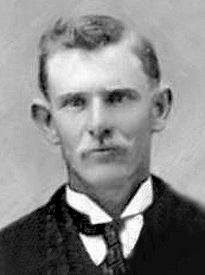
Josiah Gordon "Doc" Scurlock (January 11, 1849 – July 25, 1929) was an American Old West figure, cowboy, and gunfighter. A founding member of the Regulators during the Lincoln County War in New Mexico, Scurlock rode alongside such men as Billy the Kid.

Key Information

Early life

[edit]

He was born in Tallapoosa County, Alabama, January 11, 1849, the sixth of 11 children born to Priestly Norman Scurlock (July 3, 1806 – June 22, 1876) and Esther Ann Brown (May 19, 1819 – June 1, 1903). Josiah was said to have studied medicine in New Orleans, thus receiving his nickname "Doc".

Described as 5 feet 8 inches (1.73 m) tall, weighing 150 pounds (68 kg), with brown eyes and dark blond hair, Doc went to Mexico in about 1870. While there, he and another man had an argument over a card game and drew their pistols. The other man shot first and the bullet went through Doc's mouth, knocking out his front teeth and coming out the back of his neck without any more serious damage. He quickly returned fire and killed the man who shot him.

Cowboy

[edit]

In 1871, Scurlock went to work as a line rider for John Chisum. He and other riders were also used to defend Chisum and his cattle holdings in the event cattle rustlers attempted to prey on them. Sometime during 1873, he and Jack Holt were surprised by a group of Indians, and Holt was killed. Scurlock found refuge among some rocks and, after a protracted fight, he killed the Indian leader. During the night he slipped away and walked 20 miles (32 km) for help. At some time after the fight, Holt's body was partially dismembered, as his right arm was removed at the elbow.

In September 1875, Scurlock's riding partner, Newt Higgins, was killed by Indians. Scurlock was so upset over this incident he told Chisum he wanted to quit. Chisum, however, would not hear of it and refused to pay him. Scurlock then made the newspapers when he stole three horses, two saddles, and a rifle and left for Arizona. Chisum sent some of his men after Scurlock and they caught up with him, but when he explained that he took the things because Chisum would not pay him, they agreed with him and let him go.

In Arizona, he met Charlie Bowdre and the two men opened a cheese factory on the Gila River. Some of Scurlock's and Bowdre's descendants have said that one of their first employees was Billy the Kid. After they closed the cheese factory in the spring of 1876, Scurlock and his best friend, Bowdre, returned to Lincoln County, New Mexico, where they bought a ranch on public domain land on the Rio Ruidoso from L. G. Murphy on credit, which made them victims of the L. G. Murphy & Co. monopoly.

Scurlock, Bowdre, Frank Coe, George Coe, and Ab Saunders stormed the very weak Lincoln jail on July 18, 1876, freeing cattle rustler Jesus Largo from the custody of Sheriff Saturnino Baca. They took Largo outside of town and hanged him. Scurlock accidentally shot and killed his friend, Mike G. Harkins, manager of John H. Riley's store at Blazer's Mill, while he was examining a pistol on September 2, 1876.

On October 19, 1876, Scurlock and María Antonia Miguela Herrera (June 13, 1860 – November 27, 1912) were married in Lincoln, New Mexico. (Around the same time, Antonia's sister, Manuela Herrera, married Charlie Bowdre, which made Bowdre a brother-in-law of Scurlock.) Ten children were eventually born of Scurlock and Antonia's union.

Lincoln County War

[edit]

For over a year, Scurlock was in several posses to pursue and arrest horse thieves. He, Bowdre, and others lynched some of the thieves they caught. In January 1877, Scurlock and a neighbor, George Coe, were arrested by Sheriff William J. Brady for suspicion of harboring a murdering fugitive and member of the Jesse Evans Gang named Frank Freeman. For the next few days, Scurlock and Coe received very harsh treatment from Brady. They were allegedly tortured, but were eventually released. In October 1877, the Evans Gang stole horses belonging to John Tunstall, Alexander McSween, and Richard "Dick" Brewer from Brewer's Rio Ruidoso ranch. Scurlock and Bowdre, as well as Brewer, went off in pursuit of the Evans Gang and located them, but were unable to regain possession of the stolen horses.[1]

After Tunstall was murdered in February 1878, Scurlock became a founding member of the Regulators and was involved in most of the battles of the Lincoln County War. In the Gunfight of Blazer's Mills on April 4, Scurlock was shot in the leg by Buckshot Roberts. Scurlock later became the third and final leader of the Regulators, after prior leaders Dick Brewer and Frank McNab had been killed.[2]

Scurlock served as a deputy sheriff under Sheriff John Copeland, who was a McSween partisan and replaced Sheriff Brady. On May 14, 1878, he led a posse of 18 to 20 men, which included Billy the Kid, Bowdre, George Coe, Brown, and Scroggins, to the Dolan-Riley cattle ranch, ostensibly in search of those implicated in the killing of MacNab and the wounding of Saunders. According to Riley, they drove off 26 horses and two mules, killed a herder named Wair; a Navajo Indian employed at the ranch as a cook; and a 15-year-old boy called Johnny. However, W.T. Thornton, Thomas B. Catron's law partner, reported that the latter two were only wounded. Writer Robert M. Utley says that they captured a man named "Indian" Manuel Segovia, the likely shooter of McNab, but he was shot while allegedly trying to escape.[2]

Since Catron had foreclosed on the property of J. J. Dolan & Co., the horses appear to have been his property. As a result of his strong protest to the governor, Copeland was removed as sheriff due to his refusing to side with the Murphy-Dolan faction. The raid by the Regulators resulted in the removal of one of their partisans from a position of authority and his replacement with George Peppin, who was just as strongly attached to the other side.

When Billy attempted to make a deal with Governor Lew Wallace, Scurlock was captured and held in custody with him. He was held on suspicion of the murder of "Buckshot" Roberts. When Wallace's deal fell through, Billy and Scurlock were told they were going to be charged. Faced with extradition for murder, on June 17, 1879, Billy and Scurlock rode out of Lincoln. Sheriff Kimball did nothing to stop them.[3] In August Billy and associates stole a large number of cattle from Chisum. After Chisum sent a posse after them, Scurlock decided to leave the gang.[4]

Later life

[edit]

In about October or November 1879, Scurlock moved to Texas, where he settled down and became a highly respected citizen. On the 1880 census in Potter County, Texas, he was keeping the mail station.

Doc Scurlock died at age 80 from a heart attack in Eastland, Texas. He is interred in Eastland City Cemetery, along with his wife and other family members.

Movie portrayals

[edit]

In the western film, Young Guns, Scurlock was portrayed by actor Kiefer Sutherland, as a polite, moral, poetry writing cowboy. At the end of the film, Scurlock left Billy the Kid's posse, fleeing from New Mexico with an Asian woman he fell for earlier in the movie in the hopes of starting a new life in the East.

In the sequel, Young Guns II, Scurlock (again played by Sutherland) is serving as a school teacher in New York City when he is arrested and taken back to New Mexico, where he is saved from hanging by The Kid. He rejoins Billy's posse and is mortally wounded in an ambush led by John W. Poe, played by Viggo Mortensen, when he steps out of their hideout. Back inside, he staggers out again to be killed in a hail of bullets. This is based on the death of Charlie Bowdre in an ambush organized by Pat Garrett. In fact, Scurlock was married to a Mexican woman in 1876 and died peacefully in Texas many years after the period of time covered by the movie. The original "Young Guns II" screenplay accurately portrays Scurlock as heading off to Texas with his bride. It has been reported that Kiefer Sutherland, faced with scheduling conflicts, refused to return to the Young Guns franchise unless his character died in the movie's "Stinking Springs Shoot Out". Writer John Fusco fought against this demand, but ultimately rewrote the scene to accommodate Sutherland's schedule.

In the John Wayne film, Chisum, Scurlock is mentioned as one of the people Billy is recruiting in his crusade against Murphy. He appears during the climactic shootout, but it is unclear which out of half-a-dozen gang members (all played by unknown extras) is meant to be Scurlock.

References

[edit]
[edit]
Revisions and contributorsEdit on WikipediaRead on Wikipedia
from Grokipedia
Josiah Gordon "Doc" Scurlock (January 11, 1849 – July 25, 1929) was an American cowboy, rancher, and gunfighter of , renowned for founding and leading elements of the Regulators vigilante group during the in . Born in , to farmer Priestly Norman Scurlock and Esther Ann Brown, he briefly studied medicine in New Orleans—earning his nickname—before relocating westward amid health concerns, including fears of . Scurlock arrived in Texas around 1871, working as a cattle hand for rancher , and by 1875 had settled in , where he engaged in pursuits against horse thieves and rustlers alongside partners like . His involvement in the 1878 positioned him as a key antagonist to the Murphy-Dolan faction, participating in skirmishes such as the ambush at Blazer's Mills, where he sustained a leg wound, and briefly serving as deputy sheriff under John Copeland. Through the Regulators, he associated closely with William Bonney, known as , though their paths diverged after the conflict's resolution via federal intervention and amnesty for participants like Scurlock. Following the war, Scurlock married María Antonia Miguela Herrera in 1876, fathering ten children, and relocated to in 1879, renouncing violence to pursue ranching, teaching, and local medicine while cultivating interests in , , and classical . He lived quietly in communities including Tascosa, Cleburne, and Eastland, avoiding reminiscences of his frontier exploits until his death from a heart attack at age 80. Scurlock's survival as one of the longest-lived Regulators underscored his resilience and adaptability, distinguishing him as an intellectual figure amid the era's gunmen.

Early Years

Childhood and Family Background

Josiah Gordon Scurlock, later known as "Doc," was born on January 11, 1850, in , although some historical records list the year as 1849. He was the sixth of eleven children born to Priestly Norman Scurlock (born July 3, 1806; died June 22, 1876) and Esther Ann Brown (born circa 1820), who married around 1836. The family resided in rural Alabama, where Priestly worked as a , reflecting the agrarian of the . Scurlock's early years unfolded amid the disruptions of the Civil War (1861–1865), as aligned with the Confederacy and experienced economic strain from the conflict, though specific family impacts remain undocumented beyond the regional context of Southern agrarian households. Census records from the period indicate the Scurlocks maintained a large household typical of extended Southern families, with known siblings including an older sister, Rhoda Ann (born 1837), and at least three older brothers, though full names and details for all eleven children are not comprehensively verified in primary sources. This environment likely exposed young Scurlock to practical rural skills, such as horsemanship, essential for farm life in the region, prior to any later migrations. No records indicate family wealth beyond subsistence farming, consistent with mid-19th-century census data for similar households.

Education and Early Medical Training

Josiah Gordon Scurlock, born January 11, 1849, in , received his foundational education through local schools, supported by his father's emphasis on learning for his sons. This early instruction provided basic literacy and arithmetic skills typical of mid-19th-century Southern rural upbringing, though specific institutions remain undocumented in primary records. In the late 1860s, at approximately age 18 to 20, Scurlock relocated to New Orleans, Louisiana, to study medicine, attending sessions at Charity Hospital. His training was brief and informal, focusing on rudimentary procedures rather than comprehensive certification, and he abandoned it amid personal setbacks, including romantic disappointment. This period nonetheless equipped him with practical knowledge, leading to his nickname "Doc," which originated from ad hoc medical aid rendered during subsequent travels, such as treating wounds with available remedies like spider webs for clotting. Scurlock's intellectual pursuits extended to self-study in languages, including Spanish, and classical texts, as reflected in his later proficiency and compositions. These skills, honed through personal reading and observation rather than formal academia, underscored his capacity for multilingual communication and literary engagement, traits corroborated by family recollections and his own writings preserved in historical collections. Such attributes challenged prevailing notions of unlettered frontiersmen, revealing a deliberate cultivation of amid itinerant youth.

Initial Frontier Experiences

Following the , Josiah Gordon Scurlock departed his native around 1869–1870, drawn by post-war prospects for a young man with rudimentary medical training amid the South's and reconstruction challenges. Reports attribute his southward move partly to fears of contracting , prompting a quest for warmer climates or remedies beyond local options. In during 1870, at age 21, Scurlock encountered frontier violence in a saloon dispute that escalated to gunfire; his opponent fired first, striking Scurlock in the mouth with a bullet that exited the back of his neck and dislodged his front teeth, yet Scurlock retaliated effectively, killing the man with a single shot in an act framed by accounts as defensive response to the initial attack. By 1871, Scurlock returned northward to , where the expansive ranchlands and emerging trails offered first-hand immersion in the livestock-driven economy and rough borderlands ethos that shaped itinerant workers of the era. This phase marked his shift from Southern roots to the practical demands of Western mobility, unmarred by formal records of further immediate scrapes but setting groundwork for ranch-hand pursuits.

Pre-War Frontier Career

Migration Westward and Cowboy Employment

In the early 1870s, following his return from brief ventures southward, Scurlock secured employment in Texas's burgeoning cattle industry, working as a and line rider for rancher beginning in 1871. This role involved herding livestock and safeguarding ranges from rustlers and raiders, reflecting the economic pull of frontier expansion where independent operators like Chisum capitalized on open ranges to drive herds northward for profit amid post-Civil War demand. Such work demanded versatility in ranch handiwork, including riding long hours to manage cattle and basic maintenance of frontier operations, establishing Scurlock's reputation for dependability in a high-risk environment where individual initiative outweighed formal oversight. Scurlock's capabilities were tested in 1873 during an Apache ambush in , where he and partner Jack Holt faced prolonged gunfire from raiders. Holt was killed in the exchange, but Scurlock demonstrated proficient marksmanship by fatally shooting the Indian leader after hours of combat, then walking 20 miles to summon aid. This incident underscored the perils of work, including sudden raids that preyed on isolated herders, yet highlighted Scurlock's resourcefulness and shooting accuracy under duress, traits essential for survival and earning trust among employers and peers. By 1875, Scurlock's westward migration led him to , where he formed an association with fellow , partnering in a cheese-making venture near the that operated until spring 1876. This enterprise exemplified personal entrepreneurship on the , leveraging local resources like dairy from cattle operations to diversify beyond pure herding, amid the same expansive opportunities that drew frontiersmen to stake claims independently rather than under centralized control. Their collaboration, rooted in shared experiences, foreshadowed mutual reliance in hazardous pursuits, though it dissolved before further ventures.

Arrival and Activities in New Mexico Territory

Josiah "Doc" Scurlock relocated to Lincoln County, New Mexico Territory, in 1876 following the failure of a cheese manufacturing venture he co-owned with Charlie Bowdre along the Gila River in Arizona Territory. Upon arrival, Scurlock engaged in ranching, purchasing land on credit from Lawrence G. Murphy, a prominent merchant whose operations dominated local commerce. This period marked Scurlock's entry into the territory's competitive cattle economy, where open ranges facilitated herding but also bred disputes over stock ownership amid sparse formal law enforcement. Scurlock's activities included participating in posses to pursue horse thieves, reflecting the personal vigilance required to protect in the setting. On September 2, 1876, he accidentally shot and killed his friend Mike G. Harkins at Blazer's Mill while examining a , an incident resolved without formal charges due to its unintentional nature. In January 1877, Scurlock and associate faced arrest by Sheriff William Brady on suspicions of aiding a , enduring alleged before release, underscoring the informal justice prevalent in Lincoln County. By late 1876, Scurlock formed early ties with incoming rancher , who sought to challenge Murphy's mercantile monopoly through competitive enterprises in cattle and dry goods. These associations positioned Scurlock within emerging rivalries among outfits vying for economic control, though disputes remained minor and typically settled through individual resolve rather than escalation. In the fall of 1876, Scurlock married Antonia Miguela Herrera, establishing a local family presence amid these ranching pursuits.

Role in the Lincoln County War

Contextual Background of the Conflict

The Lincoln County War stemmed from entrenched economic monopolies and crony protections in , where the faction led by Lawrence G. Murphy and James J. Dolan wielded near-total control over commerce through their general store known as "The House." Established in the early 1870s, this operation monopolized dry goods, provisions, and banking for local ranchers, settlers, and Hispanic communities, while securing exclusive federal contracts to supply beef, vegetables, and other essentials to Fort Stanton and nearby military posts—contracts that generated substantial revenue amid sparse competition. Political influence amplified this dominance, with alliances to territorial officials enabling favorable debt enforcements, high-interest loans that trapped debtors, and control over appointments like the county sheriff, effectively blocking market entry and violating principles of open trade. This structure faced disruption in 1877 when English rancher John H. Tunstall relocated to the area, partnering with lawyer Alexander A. McSween to launch a rival ranching outfit, banking services, and mercantile ventures aimed at undercutting "The " through lower costs and direct cattle dealings with suppliers like . Tunstall's initiatives threatened the faction's profit streams, prompting systematic harassment including spurious court orders to attach assets and organized theft of his growing herds—actions that prioritized monopoly preservation over and exemplified business as the core incentive for conflict. Tensions culminated on February 18, 1878, with Tunstall's by a posse deputized under William Brady, a Dolan ally, who ambushed him en route from his near Lincoln, shooting him multiple times in an execution-style killing without resistance. The economic stakes were evident in the scale of operations: "The House" handled inventories supporting demands worth thousands in annual contracts, while Tunstall's land claims and 300-head herds represented viable alternatives that could erode such dominance, rendering violence a calculated response to competitive incursions rather than isolated vendettas.

Alliance with Tunstall, McSween, and the Regulators

In late 1877, Josiah "Doc" Scurlock joined the employ of , an English rancher who had arrived in , to establish a competing mercantile and ranching operation against the dominant Murphy-Dolan House monopoly. Tunstall partnered with attorney to offer banking, trade, and cattle services, supported by large cattleman , aiming to break the entrenched control over local commerce and supplies. Scurlock, an experienced already in the territory, befriended Tunstall and his foreman Dick Brewer, aligning with this faction's push for open competition rather than the restrictive practices favored by Dolan interests, which relied on political favoritism for enforcement. Following Tunstall's murder on February 18, 1878, by a posse under Lincoln County Sheriff William Brady—widely viewed as an act shielding the Dolan monopoly—Scurlock pledged loyalty to McSween, who inherited Tunstall's business concerns. This killing exemplified crony enforcement, as Brady's group operated with impunity to eliminate rivals, prompting the Tunstall-McSween side to organize for legal recourse amid threats of further violence. Scurlock played a founding role in the Regulators, a deputized posse formed under Brewer's authority as to execute warrants against Tunstall's killers, with Scurlock serving as third-in-command behind Brewer and William Bonney. Initially intended for warrant service and judicial pursuit, the group evolved into a defensive force against aggression from Dolan-backed enforcers, including , reflecting a rational response to protect enterprise from monopolistic . Their organization is attested in records and affidavits filed in subsequent legal proceedings.

Key Engagements and Personal Combat Actions

On March 6, 1878, Josiah "Doc" Scurlock joined a Regulator posse led by Dick Brewer in arresting William "Buck" Morton and Frank Baker near the , approximately 60 miles from Lincoln, as suspects in the murder of . The group, which included Billy Bonney, John Middleton, and Frank MacNab, took the prisoners into custody after a gunfight, with Morton and Baker surrendering under promise of safe escort to testify. En route to Lincoln, the prisoners were executed by the Regulators on March 9 as reprisal for Tunstall's killing, with accounts indicating Scurlock's direct involvement in their guard and the subsequent shooting near Rio Peñasco. In the ambush at Blazer's Mill on April 4, 1878, Scurlock participated with a Regulator group of about 13 men, including Billy Bonney and Charlie Bowdre, who surrounded buffalo hunter Buckshot Roberts outside the mill on the Mescalero Apache reservation. Roberts, armed with a Winchester rifle and shotgun, mounted a fierce defense from cover, killing Brewer and wounding several others before succumbing to shots from Middleton and Bonney; Scurlock sustained a leg wound from Roberts' fire but escaped with survivors amid the chaotic exchange that demonstrated the Regulators' reliance on numerical superiority and initial surprise against a lone, entrenched defender. Eyewitness reports from participants, including Bonney's later accounts, described Roberts' accurate fire pinning the attackers, forcing them to withdraw after losing three dead and multiple injured. During the five-day siege at Alexander McSween's home in Lincoln from , 1878—known as the Battle of Lincoln—Scurlock fought as part of the defending force trapped inside against Murphy-Dolan forces led by Sheriff , employing defensive positions and sporadic counterfire to hold off assaults. On , as Peppin's men set the house ablaze, Scurlock escaped amid the chaos through a rear corral, sustaining wounds alongside Middleton and others while McSween was killed in the breakout; this action marked a tactical retreat under fire, with Regulators firing from windows and loopholes to cover their evasion against a larger besieging party supported by distant riflemen. Overall, the resulted in approximately 15 Regulator deaths and 11 wounded, including Scurlock's injuries, against 8 killed and 12 wounded on the opposing side, underscoring the guerrilla-style engagements' high toll from ambushes and sieges.

Controversies and Disputes Involving Scurlock

Prior to his involvement in the , Scurlock faced controversy over a fatal dispute in around 1870, where he exchanged gunfire with another player amid accusations of cheating. The opponent drew first and shot Scurlock in the mouth, knocking out his front teeth and exiting through the back of his neck, after which Scurlock returned fire and killed the man. This incident, while resulting in a death, aligned with frontier norms of rather than premeditated , as both parties armed themselves and initiated violence simultaneously, with Scurlock sustaining severe injury. No formal charges or convictions arose, reflecting the era's tolerance for such armed altercations in remote territories lacking immediate legal oversight. During the , Scurlock drew accusations of excessive force and as a leader of the Regulators, particularly following the April 4, 1878, ambush at Blazer's Mill, where the group killed two deputies while pursuing suspects in John Tunstall's murder. Scurlock, wounded in the leg during the exchange with , assumed command after prior leaders' deaths and faced murder charges for the deputies' killings, yet no trials or convictions materialized amid the conflict's chaos and mutual recriminations. Critics portrayed Regulator actions as outlaw reprisals, but empirical context reveals Dolan faction precedents, including the unprovoked , 1878, execution-style slaying of Tunstall by deputies without warrants, which prompted the Regulators' initial legal posse formation under existing arrest orders. The absence of Scurlock's convictions underscores disputed claims of illegality, as territorial authorities failed to prosecute amid evidence of bidirectional violence and corruption favoring the Murphy-Dolan interests. Claims of internal Regulator disputes, including alleged leadership overreach by Scurlock or strains with , persist in some accounts but lack substantiation against records of their sustained collaboration. Scurlock's assumption of command post-Blayzer's Mill emphasized pragmatic coordination over personal dominance, with Bonney deferring to established figures rather than contesting authority. Surviving contemporary reports depict no irreconcilable tensions, portraying Scurlock as a steadying influence amid the group's operations, consistent with their joint evasion of capture and negotiations, such as overtures to in 1879. These assertions often stem from romanticized narratives rather than primary evidence, which instead highlights driven by shared opposition to Dolan control.

Post-War Life and Relocation

Escape from New Mexico and Settlement in Texas

Following the Lincoln County War's violent conclusion in July 1878, New Mexico Territorial Governor Samuel Axtell issued a proclamation offering amnesty to participants not already under indictment, though enforcement remained inconsistent and did little to quell lingering animosities between the McSween-Regulator faction and surviving Dolan-Murphy allies, who retained economic and political influence in the region. Scurlock, having aligned with the Regulators, accepted the amnesty terms but departed in October or November 1879, relinquishing most firearms—including selling off his arsenal except for a single outdated squirrel rifle—to signal a break from prior conflicts and evade potential reprisals or legal entanglements. Scurlock relocated his family to the , initially to Tascosa before establishing residence in Potter County, where the 1880 U.S. Census recorded him as a engaged in non-outlaw pursuits such as operating a mail station or local freighting amid the area's expanding and economies. This move capitalized on Texas's post-Reconstruction land availability and ranching opportunities, allowing Scurlock to prioritize self-sustaining enterprises over renewed violence, as evidenced by his avoidance of further recorded criminal activity or factional disputes. By focusing on pragmatic economic reintegration, he transitioned from wartime participant to a figure of local stability in a region drawing migrants seeking legitimate livelihoods.

Ranching, Farming, and Community Involvement

Following his departure from , Scurlock established himself in agriculture, engaging in ranching and farming to support a stable civilian existence. By 1879, he had transitioned to these pursuits in the state, marking a deliberate shift from frontier conflicts to productive land-based enterprises. Scurlock's operations included handling consistent with his prior experience, though specific herd sizes or acreage in areas such as Eastland County remain undocumented in primary records. He diversified into crop farming amid 's variable market conditions, contributing to local economies through sustained output despite regional challenges like arid spells in the late 19th century, attributable to persistent labor rather than fortuitous circumstances. In community capacities, Scurlock served as a schoolteacher in , beginning around 1881, drawing on his self-acquired to instruct youth in practical subjects. Subsequent relocations to locales including Cleburne, Granbury, and Mabank extended this role, where he facilitated educational access without reliance on authoritative enforcement. By 1919, in Eastland County, he maintained analogous civic engagements, aiding administrative functions akin to clerical duties in rural settings.

Family, Intellectual Pursuits, and Later Occupations

Scurlock married Maria Antonia Miguela Martinez Herrera in , on an unspecified date in 1876. The couple relocated to following the , where they raised a family of ten children amid frequent moves between counties such as Eastland, Hood, and Wilbarger to support ranching and farming endeavors. This nomadic pattern within reflected efforts to establish stability while avoiding potential reprisals from former adversaries. In his later years, Scurlock engaged in intellectual activities including the composition of , study of , and reading classical , activities documented in personal papers and accounts from descendants. These pursuits served as reflective outlets, contrasting his earlier violent experiences and demonstrating a sustained interest in and self-education. Scurlock supplemented family income through low-profile occupations such as ranching, farming, and teaching in . He avoided drawing attention to his past, focusing instead on community-integrated roles that aligned with his scholarly inclinations and ensured family security.

Death, Legacy, and Depictions

Final Years and Passing

Scurlock spent his final years residing in , where he had relocated with his family in 1919. He died on July 25, 1929, at the age of 80, succumbing to a heart attack at his home. The , confirmed as natural cardiac failure without evidence of acute trauma or violence, aligned with typical age-related decline rather than lingering effects from prior wounds, such as the facial injury sustained decades earlier that resulted in the loss of his front teeth. Scurlock was interred in Eastland City Cemetery, alongside family members including his wife , whose remains were later relocated there. Reaching advanced age through non-violent means demonstrated the feasibility of sustained civilian normalcy for individuals emerging from frontier conflicts, as Scurlock avoided further gunplay or legal entanglements in his later decades.

Historical Evaluations and Significance

Josiah "Doc" Scurlock is recognized by historians as the longest-surviving member of the , living until July 25, 1929, at age 80, long after the deaths of contemporaries like and Dick Brewer, thereby symbolizing the endurance of those who confronted frontier power imbalances. His survival through gunshot wounds, ambushes, and legal threats underscores a pragmatic resilience that biographers contrast with the short, violent ends of many associates. Scholarly evaluations portray Scurlock as a "frontier renaissance man" gunfighter, blending lethal combat skills with intellectual versatility as a physician, , linguist, and reader of classical texts, which elevated him beyond mere stereotypes. As a founding Regulator leader following Brewer's death on March 18, 1878, and subsequent command after , he demonstrated organizational acumen in coordinating engagements against the Murphy-Dolan faction's economic dominance. This leadership, coupled with his prior deputization under Sheriff John Copeland, positioned him as a defender of property rights amid the monopolistic that gripped Lincoln County, where the opposing faction controlled trade, banking, and judicial processes. Debates on Scurlock's moral ambiguity center on the Regulators' extralegal vigilantism—such as executions of suspected thieves like Jesus Largo on July 18, 1876, and lethal raids on Dolan operations—versus the contextual necessity driven by a compromised legal system allied with corrupt interests. Archival evidence and period accounts reveal systemic graft under territorial governor Samuel B. Axtell, who favored Murphy-Dolan, rendering formal justice ineffective and justifying Regulator actions as a bulwark against illicit property seizures and economic strangulation. While critics highlight incidents like the accidental shooting of Mike G. Harkins on September 2, 1876, modern scholarship weighs these against achievements in disrupting monopolies, ultimately framing Scurlock as a pragmatic figure in frontier lore rather than an unalloyed hero or villain.

Representations in Media and Culture

In the 1988 Western film Young Guns, directed by Christopher Cain, Josiah "Doc" Scurlock is portrayed by Kiefer Sutherland as an educated, poetry-inclined founding member of the Regulators, accurately capturing his historical ties to Billy the Kid and participation in retaliatory actions following John Tunstall's murder on February 18, 1878. The film highlights Scurlock's role in group engagements like the March 1878 pursuit of John Riley Dunn and Jesse Evans' associates, but compresses the Lincoln County War's timeline and motivations into a narrative of youthful camaraderie and revenge, sidelining the underlying economic rivalry between the established Murphy-Dolan mercantile interests and the disruptive Tunstall-McSween partnership. This approach prioritizes visceral gunfights and dramatic escapes over the war's causal drivers in regional commerce control, a common trope in Western genre depictions that favors entertainment over contextual depth. The 1990 sequel extends Sutherland's portrayal, depicting Scurlock's evasion of pursuit after the war's 1878-1879 clashes and his death in a sensationalized , which fabricates a premature end absent from records of his 50 subsequent years in . Elements like Scurlock reciting original verse amid violence underscore his documented affinity for and classics, yet exaggerate these traits to romanticize him as a refined , diverging from primary accounts of his pragmatic ranching life post-relocation. Such characterizations perpetuate a mythic lens, often glossing over disputed family lore, including unverified assertions of Scurlock employing in later ventures, which lack corroboration in contemporary sources. Biographical documentaries and niche publications frequently counterbalance cinematic sensationalism by emphasizing Scurlock's intellectual legacy, portraying him as a philosopher-gunslinger whose verse and readings reflected a deliberate pivot from violence, though these works sometimes indulge in speculative intrigue around his pre-war Mexican sojourns or Regulator oaths. This selective focus critiques media tendencies to historical figures, preserving Scurlock's multifaceted image against oversimplifications that eclipse the era's commercial animosities in favor of individual heroism.

References

Add your contribution
Related Hubs
User Avatar
No comments yet.