


Community hub
Recent from talks
Contribute something
Nothing was collected or created yet.
Dryas iulia
View on Wikipedia
| Dryas iulia | |
|---|---|

| |
| Dorsal view | |

| |
| Side view | |
Scientific classification 
| |
| Kingdom: | Animalia |
| Phylum: | Arthropoda |
| Class: | Insecta |
| Order: | Lepidoptera |
| Family: | Nymphalidae |
| Subfamily: | Heliconiinae |
| Genus: | Dryas Hübner, 1807 |
| Species: | D. iulia
|
| Binomial name | |
| Dryas iulia (Fabricius, 1775)
| |
| Subspecies | |
|
14, see text | |
| Synonyms[1][2] | |
|
Genus synonymy
Species synonymy
| |
Dryas iulia (often incorrectly spelled julia),[3] commonly called the Julia butterfly, Julia heliconian, the flame, or flambeau, is a species of brush-footed (or nymphalid) butterfly. The sole representative of its genus Dryas,[4] it is native from Brazil to southern Texas and Florida, and in summer can sometimes be found as far north as eastern Nebraska. Over 15 subspecies have been described.
Its wingspan ranges from 82 to 92 mm, and it is colored orange (brighter in male specimens) with black markings; this species is somewhat unpalatable to birds and belongs to the "orange" Müllerian mimicry complex.[5]
This butterfly is a fast flier and frequents clearings, paths, and margins of forests and woodlands. It feeds on the nectar of flowers, such as lantanas (Lantana) and shepherd's-needle (Scandix pecten-veneris), and drinks the tears of caiman, the eye of which the butterfly irritates to produce tears.[6] Its caterpillar feeds on leaves of passion vines, including Passiflora affinis and yellow passionflower (P. lutea) in Texas.
Its mating behavior is complex and involves a prolonged courtship whose outcome appears to be controlled by the female. This raises questions pertaining to the occurrence of the evolution of sexual conflict.[7]
The species is popular in butterfly houses because it is long-lived and active throughout the day. However, the caterpillars are spiky and may cause a skin rash.[8]
Identification
[edit]Dryas iulia is characterized by elongated orange wings with black wing markings that vary by subspecies. Black markings are mainly located near the wing tips. Male Julia butterflies can be identified by their brighter orange color, compared to the duller orange exhibited by females .[8] Images of many Julia butterfly subspecies can be found at the bottom of the page.
Distribution
[edit]Dryas iulia is common in the tropical and subtropical areas of North, Central, and South America. In South America, throughout countries like Brazil, Ecuador, and Bolivia, the Julia butterfly is commonly distributed. The butterfly is also widespread throughout a number of the Caribbean islands, with endemic subspecies located in Cuba, Dominica, the Bahamas, and Puerto Rico, among others. Moving further north, the species can be commonly witnessed in Central America up into Texas and Florida (and can occasionally be found to move into the Nebraska area during the summer).[8] The geographic distribution of D. iulia overlaps with the ranges of other butterflies which sometimes leads to conflict. For example, the ranges of D. iulia and the gulf fritillary overlap; in some cases, gulf fritillaries can sometimes be subjected to competition and fighting from Dryas iulia moderata when the two species have breeding populations in similar areas and within the same geographic range.[9]
Habitat
[edit]D. iulia prefer open, sunny breaks in the subtropical and tropical forests it inhabits. The butterfly is also common in open areas such as gardens, cattle grazing lands, and forest clearings, due to human impact.[10] D. iulia can be found on a few main hostplants (or shrubs in Latin America) including the passion vine of the family Passifloraceae.[8]
Migration
[edit]D. iulia flights take place throughout the year in southern Florida and southern Texas, but especially during the fall. The butterfly in its U.S. range has been seen to occasionally migrate as far north as Nebraska. However, south of its United States range, the Julia butterfly generally does not migrate. The butterfly's flight pattern can be fast or slow, and is usually seen around the middle story of their forest habitat.[8]
Food resources
[edit]
Dryas iulia larvae feed on Passiflora plants almost exclusively, specifically those of subgenuses Astrophea (also known as Passiflora), Polyanthea, Tryphostemmatoides, and Plectostemma.[8]
As adults, males and females feed differently based on their reproductive needs. As mentioned further down, males engage in mud-puddling behavior in order to gain valuable minerals for their spermatophores. They have also been seen to agitate the eyes of caimans and turtles in order to produce tears that the butterflies can drink.[11][12] Observations of this from points 1500 km apart, were probably the first time scientific observations were coordinated via films broadcast on terrestrial television.
Females, meanwhile, besides visiting certain flower species for their nectar, like Lantana and Eupatorium (as both male and female D. iulia butterflies do) – also use pollen from flowers to gain nutrients needed for egg production.[13]
Hostplant coevolutionary strategies
[edit]Passiflora vines and D. iulia (among other Heliconian butterflies) have shown strong evidence of coevolution, as the butterflies attempt to gain better survival for their laid eggs and the plants attempt to stop their destruction from larval feeding. Many members of the genus Passiflora have evolved to produce very tough, thick leaves that are hard to break down by caterpillars. Some Passiflora vines have gone further by producing small leaves that look like a perfect place for the butterflies to lay eggs but break off at the stem within a few days, carrying the D. iulia eggs with them. Other Passiflora vines actually mimic eggs of the butterfly species that use it as a hostplant, so that a passing butterfly thinks the plant already has eggs on it and consequently does not oviposit. The butterflies have thus evolved to be more discerning in their egg placement, and better able to detect strategies used by their host plant, the Passiflora[14]
Mud-puddling behavior
[edit]Mud-puddling is a peculiar social behavior engaged in by a number of butterfly species, including D. iulia. It involves male butterflies crowding around damp ground in order to drink dissolved minerals through a process of water filtration. During copulation, the male butterfly uses minerals in his spermatophore, which must be replenished before the following mating. When a male finds a suitable spot for the behavior, other males can quickly join and hundreds of butterflies may become attracted to the site. Multiple species may join the group, but the butterflies do not evenly distribute between species. Instead, D. iulia and others usually remain near members of their own species.[15]
Protective coloration
[edit]Dryas iulia butterflies are part of the "orange" Müllerian mimicry complex, one of the similar Heliconian species that employ this protective tactic. Passifloracae, the primary food source of D. iulia caterpillars, contains trace amounts of cyanide. This has led to the development of cyanogenic glycosides that make the butterfly unpalatable to its predators, which come from a mixture of storage from their hostplant and larval synthesis. The mimicry in D. iulia involves other butterfly species having evolved to look similar to the Julia butterfly in order to convey their presumed unpalatability.[16]

Life history
[edit]Egg
[edit]Dryas iulia eggs tend to be a light yellow color when laid, which turns to a darker orange or brown shade before hatching. Each of the butterfly's eggs are separately laid onto new leaf tendrils of its host plant, usually the passionflower vine.[8]
The egg of the butterfly measures about 1.2 mm in height and 1.0 mm in diameter. They have approximately 20 vertical ridges and 13 horizontal ridges.[10]
Larva
[edit]
D. iulia caterpillars eat slots into the leaves of their hostplant once they emerge from their egg. However, they do not have nests in their hostplants. They instead use the remaining part of the leaf as a protected area to rest on.
The caterpillars of the Julia butterfly have pink, gray, and black coloration throughout their body with maroon and cream patches. Long, branched, black spines also cover their entire body. A cream-colored, inverted Y-shaped mark can be seen on the front of the caterpillar's head.
Larvae emit noxious chemicals in their larval stage because of the trace cyanide in their hostplant. This makes the larvae unpalatable to certain bird species, especially tanagers.[8]
Pupa
[edit]D. iulia has five larval stages, and at the fifth, the larva becomes a pupa. The pupa of the Julia butterfly is grayish-white in color, and somewhat resembles a dead leaf.[8]
Adult
[edit]After emerging from their chrysalis, the male Julia butterfly spends the majority of its time looking for mates. At night, the butterfly roosts close to the ground, either in a small group or alone. D. iulia's adult lifespan lasts for less than a month.[8]
Reproduction
[edit]Courtship behavior
[edit]Courtship behavior in Dryas iulia involves a very specific sequence of steps that can be categorized into three sequential phases: an aerial phase, an air-ground phase, and a ground phase.[7] The observed courtship steps are outlined in detail below:
First, the male D. iulia approaches the female from behind. Then, the female takes flight, with the male flying in front of and above the female. This position is taken by the male so that the female can smell the male's scent scales and become sexually stimulated. Next, the female attempts to fly higher than the male, which can be seen as an anti-copulatory behavior, before landing. After that, the male D. iulia continues to beat his wings above and in front of the female, while both face the same direction. The female butterfly then opens and vibrates her hind wings and front wings. Her hind wings are fully opened, while her forewings are only partially so. At the same time, the female emits scent glands from her raised abdomen. The male then beats his wings behind and then in front of the female once again. If the female is satisfied by the courtship, she lowers her abdomen and shuts her wings in preparation for mating.[8]
Mating behavior
[edit]Mating can occur within two weeks of the Julia butterfly's exit from the chrysalis. As adults, male D. iulia spend the majority of their time searching for females to mate with. Females of this butterfly species can mate four times in their lifetime, which is unusual for female Heliconius butterflies who generally mate just once.[8]
Many mating behaviors in D. iulia are sex-specific and can include receptive and non-receptive behaviors by the females of the species. Some female behaviors regarded as showing non-receptiveness include abdomen raising and overflight, in which the female attempts to fly higher than the male during the aerial phase of courtship. On the other hand, a female behavior such as shutting her wings has been found to be a key receptive behavior. For males, persistence did not seem to be a key driver of success, as behaviors performed by persistent males, such as hovering over the female did not often lead to copulation.[7]
The inability of persistent males—meaning those that carried on extended courtship behavior – to increase copulation has led to researchers theorizing female copulation acceptance as the primary determinant of successful copulation in D. iulia. For example, the only male behavioral acts found to be indicative of successful copulation occurred in response to signals of female receptiveness.[7]
Evolutionary basis of sexual selection and conflict
[edit]Julia butterfly copulation is always terminated by the males after the ground phase. The female remains at the mating site as the male flies away. This raises the idea of an evolutionary basis for this behavior based on a conflict of interests between males and females of the species. This conflict arises because of a difference in reproductive interests between the male and the female that has its beginnings in anisogamy. Sexual selection studies favor forms of sexual conflict such as this one to be one of the major sources of speciation in certain insects.[7]
The methods of mate selection (by which a female accepts or denies a male suitor) are not completely understood. Some studies have reported the sexual dimorphism (of color and body size) of the butterfly as a key factor that may suggest an evolutionary basis towards understanding sexual selection.[10] D. iulia male butterflies have been seen to chase females of butterfly species with similar visual cues, which has led researchers to believe that these visual recognition strategies form the basis of sexual partner selection in this species. However, more research is needed to identify how different aspects of D. iulia's physical features factor into mate selection.[7]
Interaction with humans
[edit]When Dryas iulia are caterpillars, they can cause a skin rash on humans if touched. This is likely from the yellow liquid that is produced from the tips of the long, black spines that cover its body, which is emitted as a predator deterrent related to their cyanogenic glycosides[8]
Introduced invasiveness
[edit]D. iulia are commonly admired for their coloration. As a diurnal species of butterfly that is quite active during the day, Julia butterfly are often found in butterfly houses. One butterfly house in Phuket, Thailand, obtained Julia butterflies, specifically Dryas iulia moderata from an exporter butterfly farm in Costa Rica and released them during Buddhist ceremonies and weddings. The released butterflies have now colonized areas of Thailand and Malaysia and established a wild population. D. iulia are now too widespread in the region to eradicate.[17] They feed on invasive Passiflora species around its invasive range, usually Passiflora suberosa and sometimes Passiflora foetida.
Subspecies
[edit]Listed alphabetically:[18]
- D. i. alcionea (Cramer, 1779) – (Suriname, Bolivia, Brazil)
- D. i. carteri (Riley, 1926) – (Bahamas)
- D. i. delila (Fabricius, 1775) – (Jamaica)
- D. i. dominicana (Hall, 1917) – (Dominica)
- D. i. framptoni (Riley, 1926) – (St. Vincent)
- D. i. fucatus (Boddaert, 1783) – (Dominican Republic)
- D. i. iulia (Fabricius, 1775) – (Puerto Rico)
- D. i. largo (Clench, 1975) – (Florida)
- D. i. lucia (Riley, 1926) – (St. Lucia)
- D. i. martinica (Enrico & Pinchon, 1969) – (Martinique)
- D. i. moderata (Riley, 1926) – (Mexico, Honduras, Ecuador)
- D. i. nudeola (Bates, 1934) – (Cuba)
- D. i. warneri (Hall, 1936) – (St. Kitts)
- D. i. zoe (Miller & Steinhauser, 1992) – (Cayman Islands)[19]
-
 D. i. alcionea – MHNT
 -
 D. i. dominicana MHNT
 -
 Caterpillar
 -
 D. i. alcionea
Brazil -
 D. i. alcionea
Brazil -
 D. i. alcionea
Brazil -
 D. i. delila
female, Jamaica -
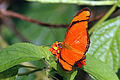 D. i. iulia
male, Trinidad -
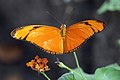 D. i. moderata
Panama -
 D. i. moderata
Panama -
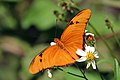 D. i. nudeola
male, Cuba -
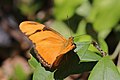 D. i. nudeola
female, Cuba -
 D. i. zoe
male, Grand Cayman -
 D. i. zoe
male, Grand Cayman -
 D. i. zoe
female, Grand Cayman


.jpg)
.JPG)
_underside.JPG)
_female_J.JPG)
_male.JPG)
.jpg)
_underside.jpg)
_male.JPG)
_female.JPG)
_male.JPG)
_male_underside.JPG)
_female.JPG)
References
[edit]- ^ "Dryas". BioLib.
- ^ "Dryas iulia". BioLib.
- ^ Lamas, G. (editor) (2004). Atlas of Neotropical Lepidoptera. Checklist: Part 4A. Hesperioidea – Papilionoidea. ISBN 978-0-945417-28-6
- ^ JRG Turner 1967 The generic name of Papilio iulia Fabricius, sometimes called the Flambeau (Lepidoptera, Nymphalidae) Entomologist vol. 100 p. 8
- ^ Pinheiro, Carlos E. G. (1996): Palatability and escaping ability in Neotropical butterflies: tests with wild kingbirds (Tyrannus melancholicus, Tyrannidae). Biol. J. Linn. Soc. 59(4): 351–365. doi:10.1111/j.1095-8312.1996.tb01471.x (HTML abstract)
- ^ Barkham, Patrick (6 April 2011). "The real butterfly effect – not chaos, but wonder". the Guardian.
- ^ a b c d e f Mega, Nicolás Oliveira; Araújo, Aldo Mellender de (2009). "Analysis of the mating behavior and some possible causes of male copulatory success in Dryas iulia alcionea (Lepidoptera, Nymphalidae, Heliconiinae)". Journal of Ethology. 28 (1): 123–132. doi:10.1007/s10164-009-0163-y. S2CID 31479690.
- ^ a b c d e f g h i j k l m Scott, James A. (1997). The butterflies of North America: a natural history and field guide. Stanford, Calif.: Stanford University Press. ISBN 978-0-8047-2013-7. OCLC 49698782.
- ^ Ross, Gary N.; Fales, Henry M.; Lloyd, Helen A.; Jones, Tappey; Sokoloski, Edward A.; Marshall-Batty, Kimberly; Blum, Murray S. (June 2001). "Novel Chemistry of Abdominal Defensive Glands of Nymphalid Butterfly Agraulis vanillae". Journal of Chemical Ecology. 27 (6): 1219–1228. doi:10.1023/A:1010372114144. PMID 11504024. S2CID 2815219.
- ^ a b c Brown, K S (1981-01-01). "The Biology of Heliconius and Related Genera". Annual Review of Entomology. 26 (1): 427–457. doi:10.1146/annurev.en.26.010181.002235. ISSN 0066-4170.
- ^ de la Rosa, Carlos L (2014-05-01). "Additional observations of lachryphagous butterflies and bees". Frontiers in Ecology and the Environment. 12 (4): 210. Bibcode:2014FrEE...12..210D. doi:10.1890/14.wb.006. ISSN 1540-9309.
- ^ JRG Turner, M Andrews, A McGregor "Drinking crocodile tears: the only use for a butterfly" - Antenna (Royal Entomological Society London) 1986, volume 10 (3) pages 119-120
- ^ "Butterflies of Amazonia – Dryas iulia". learnbutterflies.com. Retrieved 2017-10-03.
- ^ Benson, WW; Brown, S Jr; Gilbert, LE (1975). "Coevolution of plants and herbivores". Evolution. 29 (4): 659–680. doi:10.2307/2407076. JSTOR 2407076. PMID 28563089.
- ^ Beck, Jan; Mühlenberg, Eva; Fiedler, Konrad (1999-04-01). "Mud-puddling behavior in tropical butterflies: in search of proteins or minerals?". Oecologia. 119 (1): 140–148. Bibcode:1999Oecol.119..140B. doi:10.1007/s004420050770. ISSN 0029-8549. PMID 28308154. S2CID 20103546.
- ^ Benson, Woodruff W. (1971). "Evidence for the Evolution of Unpalatability Through Kin Selection in the Heliconinae (Lepidoptera)". The American Naturalist. 105 (943): 213–226. doi:10.1086/282719. JSTOR 2459551. S2CID 84261089.
- ^ Burg, Noah A.; Pradhan, Ashman; Gonzalez, Rebecca M.; Morban, Emely Z.; Zhen, Erica W.; Sakchoowong, Watana; Lohman, David J. (2014-08-13). "Inferring the Provenance of an Alien Species with DNA Barcodes: The Neotropical Butterfly Dryas iulia in Thailand". PLOS ONE. 9 (8) e104076. Bibcode:2014PLoSO...9j4076B. doi:10.1371/journal.pone.0104076. ISSN 1932-6203. PMC 4132105. PMID 25119899.
- ^ Dryas iulia (Fabricius, 1775) at Markku Savela's Lepidoptera and Some Other Life Forms
- ^ R. R. Askew and P. A. van B. Stafford, Butterflies of the Cayman Islands (Apollo Books, Stenstrup 2008) ISBN 978-87-88757-85-9, pp. 62-65
Further reading
[edit]- Butterflies and Moths of North America (BMNA) (2008). Julia Heliconian. Retrieved 2008-AUG-14.
- Miller, L. D. & Miller, J. Y. (2004). The Butterfly Handbook: 115. Barron's Educational Series, Inc., Hauppauge, New York. ISBN 0-7641-5714-0
External links
[edit] Media related to Dryas iulia at Wikimedia Commons
 Data related to Dryas (Nymphalidae) at Wikispecies


Dryas iulia
View on GrokipediaTaxonomy and Description
Taxonomy
Dryas iulia belongs to the kingdom Animalia, phylum Arthropoda, class Insecta, order Lepidoptera, family Nymphalidae, subfamily Heliconiinae, tribe Heliconiini, genus Dryas, and species D. iulia (Fabricius, 1775).[5][6][3] The genus name Dryas is derived from the Greek term for Dryads, the mythological nymphs associated with trees and woodlands.[3][7] The origin of the specific epithet iulia remains uncertain.[7] Dryas iulia is the only species in the monotypic genus Dryas.[8][9] Phylogenetically, the genus Dryas is positioned as the sister group to Heliconius within the tribe Heliconiini, based on analyses of mitochondrial DNA, nuclear genes, and whole-genome data.[10][11] A 2021 genome assembly of D. iulia revealed repetitive elements and chromosomal features that support multiple independent origins of the W chromosome from supernumerary B chromosomes across the Heliconiini tribe.[12] Earlier synonyms for D. iulia include Papilio iulia Fabricius, 1775.[5][13]Physical Description
Dryas iulia, commonly known as the Julia heliconian, exhibits distinctive morphological features across its life stages, with the adult form characterized by elongated wings that facilitate its rapid flight. The adult wingspan measures 72-92 mm, featuring notably long forewings and hindwings that are predominantly bright orange, accented by black apical spots, streaks along the veins, and borders on the wing margins. Males display a more vivid orange coloration with narrower black markings compared to females, which tend to have a duller hue with broader and additional black markings.[1] Both sexes exhibit an iridescent sheen on their wings, enhancing their visual appeal under light.[2] The egg is light yellow and flask-shaped, with dimensions of approximately 1.2 mm in height and 1.0 mm in width, featuring about 20 vertical ridges and 13 horizontal ridges that provide structural support and aid in adhesion to host plant leaves. These ridges contribute to the egg's distinctive sculptured appearance, typical of heliconiine butterflies. Larvae are brown with white spots, reaching up to 40 mm in length, and covered in numerous branched black spines that vary in size and may deter predators.[2] The pupa is brown with silver markings, measuring approximately 22 mm in length, and adopts a leaf-like shape with metallic spots that provide cryptic protection during this vulnerable stage.[2]Distribution and Habitat
Geographic Range
Dryas iulia is native to the Neotropical region, with its distribution extending from northern South America, including countries such as Brazil, Bolivia, Ecuador, and southward to Argentina, northward through Central America to southern Mexico.[1][5] The species is also widespread across the Caribbean islands, including Cuba and Jamaica, where distinct subspecies are endemic.[14] In North America, its established range reaches the northern limit in peninsular Florida and southern Texas.[1] Occasional vagrants extend the species' presence northward, with records as far as eastern Nebraska during summer months.[1] These northward movements have been documented since the 19th century, reflecting seasonal expansions from tropical core areas. Introduced populations of D. iulia have become established in Southeast Asia, particularly in Thailand and Malaysia, following releases likely from the pet trade in the early 2000s; breeding in the wild was confirmed by 2007.[15] The species has shown potential for further spread in subtropical Asian regions, and has established populations in Singapore as of 2022.[16] In its northern native range, particularly southern Texas and Florida, D. iulia co-occurs with the gulf fritillary (Agraulis vanillae), where both species share passionflower (Passiflora spp.) host plants, potentially leading to competition for larval resources.[17]Preferred Habitats
Dryas iulia primarily inhabits open, sunny forest clearings, edges, gardens, and grazing lands within tropical and subtropical zones.[18] These butterflies thrive in disturbed and anthropized areas that provide ample sunlight and vegetation cover, such as hammock margins and second-growth scrub.[19] The species shows a strong dependence on host plants from the Passifloraceae family, particularly Passiflora species, for oviposition and larval development.[18] It preferentially selects disturbed habitats rich in these passionflower vines, which support the early life stages.[1] These parameters align with its adaptation to neotropical environments where temperature fluctuations influence adult body size and overall population dynamics.[20] In microhabitats, adults often roost communally in loose groups on low shrubs, typically less than 2 m above the ground at night. During the day, they patrol sunny paths and open areas in search of nectar from plants such as Lantana and Eupatorium species.[3]Behavior and Ecology
Foraging Behaviors
The larvae of Dryas iulia are monophagous, feeding almost exclusively on foliage from species within the genus Passiflora (Passifloraceae).[21] This hostplant specialization allows larvae to tolerate and sequester cyanogenic glycosides—toxic compounds produced by Passiflora as a defense against herbivores—converting them into protective chemicals within their own tissues.[22] These sequestered glycosides enhance larval survival by deterring predators, though they represent a coevolutionary adaptation to the plant's chemical defenses. Larvae often face interspecific competition for these limited hostplants, particularly with sympatric Heliconius species, leading to altered feeding behaviors and reduced growth rates when resources overlap. Adult D. iulia primarily engage in nectarivory, sourcing carbohydrates from flowers such as Lantana spp. and Eupatorium capillifolium.[3] Their foraging involves rapid, direct flight patterns that enable efficient location of floral resources in forest clearings and edges.[4] This mobility supports trap-lining behavior, where individuals revisit productive nectar sites along established routes.[1] To acquire essential minerals like sodium, which are scarce in nectar, males commonly exhibit mud-puddling, congregating at damp soil or sand to extract ions via proboscis uptake. Both sexes supplement their diet through lachryphagy, drinking tears from vertebrates such as caimans (Caiman crocodilus), turtles, and occasionally birds to obtain salts and proteins. These behaviors address nutritional deficiencies and support reproductive fitness, with sequestered minerals transferred to offspring via spermatophores in males.[23] Coevolutionary dynamics between D. iulia and Passiflora have driven hostplant specialization, where larvae preferentially select vines with balanced nutritional value and lower defensive toxin levels to optimize performance.[21] A 2023 study demonstrated that adults can learn color preferences for foraging resources using artificial feeders, highlighting adaptive visual learning in nectar-seeking contexts.[24] Sequestered cyanogenic glycosides from larval feeding also contribute to adult defense mechanisms.Migration and Movement
_Dryas iulia exhibits year-round residency in tropical and subtropical regions, including southern Florida and South Texas, where adults fly continuously due to consistent climatic conditions and host plant availability. In more northern areas, the species shows seasonal northward movements during summer, with records of strays reaching the U.S. Midwest, including eastern Nebraska, representing the northernmost extent of its range. These pulses are primarily driven by the temporary availability of host plants, such as species of Passiflora, which expand northward with warmer summer conditions, enabling breeding opportunities beyond the core range.[1][25] The butterfly is capable of long-distance dispersal, often undertaking straight-line flights in open clearings and forest margins, facilitated by its fast-flying behavior. Males engage in patrolling flights to locate females, covering set routes that may span several kilometers daily. This mobility supports the species' ability to exploit transient resources during seasonal expansions.[1][26] Daily activity is diurnal, with peak flight occurring in the morning and afternoon as adults forage and mate, while activity diminishes at dusk when individuals seek roosting sites. Roosting occurs communally in loose groups within low vegetation, typically less than 2 meters above ground, providing protection overnight. These patterns align with the species' reliance on daylight for navigation and resource location.[1][26] Environmental factors, particularly temperature gradients and rainfall, trigger breeding migrations by influencing host plant growth and larval survival rates. Warmer temperatures correlate with expanded northern distributions, while seasonal rainfall variations affect host plant abundance, prompting dispersal to suitable breeding habitats.[27][20]Protective Coloration and Mimicry
The larvae and adults of Dryas iulia sequester cyclopentenyl cyanogenic glucosides, such as epivolkenin and tetraphyllin A, from host plants in the genus Passiflora, which serve as a chemical defense mechanism.[28] These compounds are retained through the pupal stage into adulthood, making the butterfly unpalatable to avian predators, including tanagers, by releasing toxic hydrogen cyanide upon tissue damage.[28] Although D. iulia accumulates lower concentrations of these glucosides compared to more toxic heliconiines like Heliconius species, the sequestration still confers significant protection against bird predation.[22] The distinctive orange wings with black markings in D. iulia form part of a Neotropical Müllerian mimicry ring shared with chemically defended Heliconius species, such as H. erato and H. melpomene.[29] In this mutualistic mimicry, co-occurring species converge on similar aposematic patterns, amplifying the learned avoidance by predators and reducing individual attacks across the ring.[29] This shared warning coloration enhances survival in diverse habitats, from forest edges to open areas, where D. iulia frequently interacts with its mimics. Complementing these visual and chemical strategies, D. iulia employs behavioral defenses, including rapid, erratic flight that closely resembles the evasive maneuvers of co-mimetic Heliconius butterflies.[30] This convergence in flight behavior reinforces the overall mimetic complex, deterring aerial predators like flycatchers by increasing the difficulty of capture.[30] Field experiments with Neotropical birds, such as tropical kingbirds, have shown that mimetic forms including D. iulia elicit higher rates of visual rejection and lower predation compared to non-mimetic butterflies in the same habitats.[31] These studies indicate that the combined defenses lead to significantly reduced attack rates on mimetic individuals, particularly in areas with high predator familiarity with the ring's warning signals.[31]Life Cycle
Egg, Larva, and Pupa
Females of Dryas iulia lay eggs singly on the tendrils or new growth of Passiflora host plants, such as P. suberosa. The eggs are buff yellow, elongate, and measure approximately 1.15 mm in height by 1.04 mm in diameter, featuring 18-21 vertical ridges and 12-14 horizontal ridges; they become mottled with brown prior to hatching. Incubation typically lasts 4-5 days under natural conditions, though durations of 4-7 days have been observed in subtropical environments.[26][32][18] The larval stage consists of five instars and lasts 13-20 days total, depending on host plant quality and environmental factors; for instance, development averages 13.1 days (SD 0.93) on optimal hosts. Newly hatched larvae are approximately 2-4 mm long, with an orange head and body covered in dark spines tipped with white; later instars grow to 30-40 mm, appearing dark brown with transverse white stripes, black branched spines, and an orange head with dark cephalic projections. Early instars feed gregariously on tender Passiflora leaves before becoming more solitary, constructing silk-and-frass shelters as resting sites to avoid detection; they sequester low levels of cyanogenic glycosides from the host plant, providing chemical defense against predators like birds and lizards. Growth rates vary by host, with higher relative growth (0.062 g/g/day) and better survival (up to 23% higher) on nutrient-rich species like P. misera compared to defended ones like P. suberosa.[33][34][32][26] The pupal stage endures 7-8 days on average (7.5 days, SD 0.51, in controlled studies), during which the larva attaches to the host plant stem via a cremaster and silk pad, forming a mottled grey, vertically suspended chrysalis that is rounded and slightly S-shaped with a bowed thorax. The pupa lacks spines and features dark brown and white patterning with dark spiracles, providing camouflage against foliage.[33][32][26] Mortality in early stages is high, primarily from predation; ants attracted to Passiflora extrafloral nectaries cause up to 48% larval mortality in 2 days on unmanipulated plants, though shelter-building reduces this risk, especially in early instars. Parasitoid wasps and competition for high-quality host leaves further contribute to losses, with survival varying 13-23% based on plant defenses like glandular trichomes and cyanogenic compounds.[35][34][26]Adult Morphology and Longevity
The adult stage of Dryas iulia, known as the imago, averages around 18 days (range 3 to 42 days) in captivity.[36] In the wild, lifespans are generally shorter due to environmental pressures, aligning with the 2-4 week range observed in similar non-pollen-feeding Heliconiini species. A 2025 study on longevity evolution in the Heliconiini tribe highlights significant variation, with D. iulia exhibiting shorter adult lifespans (median ~24 days across non-pollen-feeders) compared to pollen-feeding Heliconius species, which can reach medians of 56.5 days and maxima over 300 days, underscoring dietary and physiological differences driving extended longevity in the genus.[37] Post-eclosion, adult D. iulia undergo wing expansion and scaling, where the initially soft, crumpled wings harden and reach full size within hours, enabling flight; this process shows minimal associated neural plasticity in brain structures like the mushroom body calyx, unlike more pronounced growth in Heliconius erato.[38] Adults possess digestive enzymes, including sucrases, that facilitate carbohydrate breakdown from floral nectar sources, supporting their trap-lining foraging strategy. Sodium conservation is achieved through puddling behavior, where males aggregate at damp soil or animal exudates to extract minerals, enhancing reproductive success via larger spermatophores; females rarely puddle but may supplement via tear-feeding (lachryphagy) on vertebrates like caimans for sodium and proteins.[4] The sensory systems of adult D. iulia include compound eyes with three spectral classes of photoreceptors (UV-, blue-, and long-wavelength-sensitive opsins peaking at approximately 385 nm, 470 nm, and 555 nm), enabling color detection crucial for mate location and flower identification. Antennae serve as chemosensory organs, detecting pheromones and olfactory cues during courtship, where males release sex-specific scents to elicit female responses.[39][40][41] D. iulia adults are strictly diurnal, with activity peaking during sunny midday hours when temperatures are warm, facilitating rapid flight and nectar foraging; males show higher flight activity in pursuit of mates, while females remain more sedentary near host plants. At dusk, they roost in small, low groups for protection.[26][42]Reproduction
Courtship and Mating Rituals
The courtship of Dryas iulia involves a structured sequence of behavioral phases that facilitate mate attraction and copulation. The process begins with an aerial phase, characterized by the male pursuing the female in flight, often involving spiraling maneuvers to maintain proximity. This phase typically lasts approximately 66 seconds on average, during which the male assesses the female's receptivity through visual cues.[43] Following the aerial pursuit, the interaction transitions to an air-ground phase, where the female alights on vegetation and the male hovers nearby, performing overflights and wing flares to display his bright orange coloration and elongated forewings. These displays, including wing levering and flapping, emphasize sexual dimorphism and last about 68 seconds on average, allowing the female to evaluate the male before permitting closer approach. The male may also engage in looping behaviors during this stage, potentially aiding in chemical signaling, though pheromones from specialized structures like hairpencils are not prominently documented in this species.[43] If the female accepts the male, the courtship culminates in the ground phase, involving genital coupling and copulation. This phase includes coupled rotation on the ground for protection and lasts approximately 120 minutes (2 hours) on average, with the male typically initiating termination by flying away, leaving the female at the site. Copulation occurs in sunny clearings near host plants such as Passiflora species, where visibility aids in mate location. Females are polyandrous, mating multiple times and storing sperm in their spermatheca for fertilization, enabling enhanced reproductive success.[43]Sexual Selection and Conflict
In Dryas iulia, female choice plays a central role in mating decisions, with females exerting decisive control over copulation outcomes during courtship interactions. Females signal acceptance by shutting their wings, facilitating male access to the abdomen, whereas rejection is demonstrated through wing pressure against the male and elevation of the abdomen to prevent intromission. This behavioral mechanism ensures that only preferred males succeed, independent of male persistence duration, as observed in field studies where approximately 49% of courtships resulted in copulation based on female responsiveness. Successful males display higher stereotypy in their courtship sequences, characterized by fewer behavioral transitions and greater consistency, which may indicate a preference for vigorous or reliable suitors capable of executing precise displays.[43] Male-male competition in D. iulia primarily manifests through a patrolling strategy, where males actively scan habitats and engage in aerial chases to intercept receptive females. These pursuits often occur in flight, with males initiating contact by landing near or hovering over potential mates. While direct confrontations between males are less frequent, chases can extend to rival males to deter competition, reducing interference during courtship attempts. This competitive dynamic aligns with broader patterns in Heliconiini, where territorial patrolling enhances male access to females but incurs energetic costs.[43][41] Sperm competition arises from polyandrous mating in D. iulia, as females mate multiple times, receiving spermatophores from successive partners that transfer nutrients and sperm to the bursa copulatrix. This post-copulatory selection intensifies sexual conflict, as males allocate resources to overcome rival sperm while females benefit from nutrient gains across matings. Post-mating refractoriness in females, though temporary, limits immediate remating but does not fully prevent polyandry, contributing to ongoing coevolutionary pressures.[44] Within the Heliconiini tribe, sexual conflict drives evolutionary dynamics in D. iulia, particularly through male exploitation of visual cues for mate attraction that impose costs on females, such as increased harassment after mating. A 2023 study demonstrated that D. iulia and related species exhibit reversal learning of visual stimuli. Genetic evidence from a 2021 genome assembly reveals the D. iulia W chromosome's unique origin from a B chromosome, featuring high repetitiveness and female-specific gene expression. These findings underscore how chromosomal evolution facilitates aspects of reproductive biology in butterflies.[45][46][12]Interactions with Humans and Environment
Conservation Status
Dryas iulia has not been formally assessed by the International Union for Conservation of Nature (IUCN) Red List. The species is ranked as globally secure (G5) by NatureServe, reflecting its widespread distribution and abundance across much of its native range in the Neotropics.[5] Potential threats, similar to those affecting many butterflies, include habitat loss from deforestation and pesticide applications on host plants in the genus Passiflora, which contribute to broader declines as evidenced by a 2025 U.S. study documenting a 22% drop in overall butterfly abundance from 2000 to 2020, with historical 20th-century trends showing even steeper losses linked to habitat loss and insecticides.[47] In its core Neotropical range, D. iulia populations remain relatively stable, with short-term trends indicating minimal change (less than 10%).[5] Its vagrant status in northern areas, such as the United States, affords natural protection against overcollection, as transient occurrences do not support sustained harvesting. Monitoring efforts for D. iulia primarily involve citizen science initiatives, such as observations submitted to iNaturalist, which track distribution and phenology across its range.[8] No subspecies are classified as endangered, though some, like D. i. largo, receive lower subnational rankings due to restricted distributions.[48]Invasiveness and Human Cultivation
Dryas iulia has become established as an invasive species in Southeast Asia, with first records dating to 2007 in southern Thailand (including islands such as Samui, Phuket, and Phi Phi Don) and Malaysia (such as Tioman Island).[15] The butterfly's spread is human-mediated, originating from breeding stock at facilities like the Phuket Butterfly Garden, where it has been reared since the 1990s for release during events such as weddings and ceremonies; genetic analysis confirms that wild populations trace back to Costa Rican imports.[15] In these regions, D. iulia breeds successfully using the invasive host plant Passiflora foetida, potentially aiding in its control while competing with native butterflies, including Cethosia cyane and Vindula erota, for this shared resource.[15] Despite its expanding range—now including Singapore, where it was first recorded in 2022 and is widespread as of 2025—no major ecological disruptions have been reported, though risks such as pathogen transmission to local species remain a concern.[15][16][49] Interactions with humans include minor health effects from the larvae, which possess spiny structures capable of causing skin rashes upon contact.[50] The species is popular in educational and display settings due to its vibrant coloration and diurnal activity, featured in exhibits such as the Butterfly Jungle at the San Diego Zoo Safari Park.[51] Cultivation occurs primarily in butterfly houses for tourism and release purposes, with D. iulia valued for its longevity and appeal; however, accidental escapes from these facilities have facilitated its invasive establishment.[15] Such breeding contributes economic value through ecotourism, as butterfly gardens like those in Phuket attract visitors and support local livelihoods.[15][52] Management efforts in Asia focus on monitoring populations and restricting live releases to curb further spread, with no formal control programs implemented given the absence of severe impacts and the species' reliance on an already invasive host plant.[15]Subspecies and Variation
Recognized Subspecies
Dryas iulia is currently recognized as comprising approximately 13-14 subspecies (as of 2024), based on morphological differences in wing patterns and genitalia, distributed across the Americas from southern Florida to South America. These subspecies were largely described between the late 18th and mid-20th centuries, with taxonomic revisions in the 1970s resolving several synonyms and clarifying boundaries between continental and Antillean forms, and additional descriptions in the 1990s.[53][54] The following table summarizes the accepted subspecies, their type localities, and key diagnostic traits:| Subspecies | Type Locality | Diagnostic Traits |
|---|---|---|
| D. i. largo Clench, 1975 | Key Largo, Monroe Co., Florida | No androconia on veins M₃ and M₄; heavier fuscous "teeth" on forewing termen; underside lacks purplish cast.[53] |
| D. i. nudeola Bates, 1934 | Cuba (including Isla de Pinos) | Male forewing cell-end bar posteriorly convergent; elevated from infrasubspecific status.[53] |
| D. i. carteri Riley, 1926 | Bahamas | Variable purplish cast on underside; distinct from Cuban and Florida populations.[53] |
| D. i. zoe L. Miller & Steinhauser, 1992 | Cayman Islands | Distinct wing markings from nearby Antillean populations; endemic subspecies.[55] |
| D. i. fucatus (Boddaert, 1783) [= hispaniola Hall, 1925] | Dominican Republic | Females with dark costal area on hindwing upperside; part of Antillean group; hispaniola is a synonym.[53][56] |
| D. i. iulia Fabricius, 1775 | St. Croix, Virgin Islands | Females with dark costal area on hindwing upperside; nominate form for certain Antilles. Synonym: iuncta Comstock, 1944 (Puerto Rico).[53] |
| D. i. warneri Hall, 1936 | St. Kitts | Females with dark costal area on hindwing upperside; recognized despite prior synonymy with nominate.[53] |
| D. i. dominicana Hall, 1917 | Dominica; Guadeloupe | Females with light or partially dark costal borders on hindwing; transitional between groups.[53] |
| D. i. martinica Pinchon & Enrico, 1969 | Martinique | Females with white costal area on hindwing upperside; continental group form.[53] |
| D. i. lucia Riley, 1926 | St. Lucia | Females with white costal area on hindwing upperside; continental group.[53] |
| D. i. framptoni Riley, 1926 | St. Vincent; Barbados; Grenadines; Grenada | Females with white costal area on hindwing upperside; extends continental traits.[53] |
| D. i. alcionea Cramer, 1779 | Suriname | Widely distributed in South America; replaces nominate for mainland populations. Synonym: titia Stichel, 1907 (Bolivia).[53] |
| D. i. moderata Riley, 1926 | Middle America (Texas to Panama; Pacific coast to Ecuador) | Males variable from immaculate to fuscous-marked; no evidence of sympatric forms.[53] |
| D. i. delila Fabricius, 1775 | Jamaica | Thin hindwing border; deeply crenulate hindwing margin. Synonyms: cillene Cramer, 1779 (Jamaica); delia dos Passos, 1964 (misspelling).[53] |