


Community hub
Recent from talks
Contribute something
Nothing was collected or created yet.
Duke Robillard
View on WikipediaKey Information


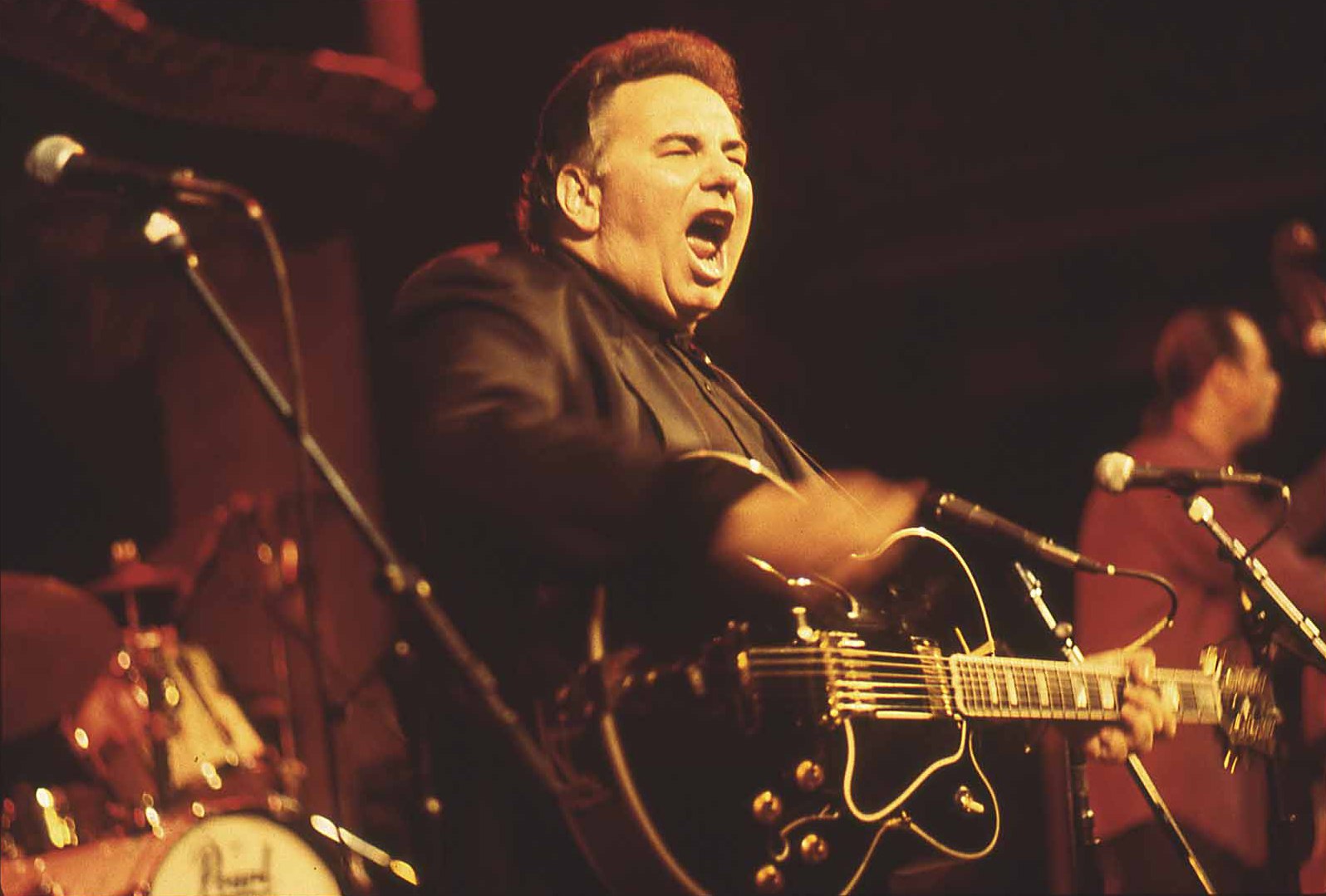
Michael John "Duke" Robillard (born October 4, 1948)[1] is an American guitarist and singer. He founded the band Roomful of Blues and was a member of the Fabulous Thunderbirds. Although he is known as a rock and blues guitarist, he also plays jazz and swing.
Career
[edit]
He was born in Woonsocket, Rhode Island.[1] He played in bands as Mike "Honey Bear" Robillard and worked for the Guild Guitar Company based in Oxnard, California. In 1967, he and Al Copley founded the band Roomful of Blues.[2][3]
Robillard spent over ten years with Roomful of Blues before departing in 1979, becoming the guitarist for singer Robert Gordon and then a member of the Legendary Blues Band.[4] Robillard started the Duke Robillard Band in 1981, eventually adopting the name Duke Robillard and the Pleasure Kings, with whom he toured throughout the 1980s and recorded for Rounder Records.[1] He became a member of the Fabulous Thunderbirds in 1990 to replace Jimmie Vaughan.[3][4]
Although he was a member of bands, Robillard simultaneously pursued a solo career in which he toured and recorded solo albums in other genres, such as jazz and blues.[1] He formed a duo with jazz guitarist Herb Ellis and New Guitar Summit, a swing trio with Gerry Beaudoin and Jay Geils. He explored jump blues in A Swingin Session with Duke Robillard, returned to his rhythm and blues roots in Stomp! The Blues Tonight, and covered blues songs from the 1940s and 1950s in Low Down and Tore Up. Briefly in 2013, he was the guitarist for Bob Dylan's tour.[4][5]
Along with lap steel guitarist Joel Paterson, Robillard played on the 2015 album Clinch! by Danish blues group, The Blues Overdrive.[6]
Awards and honors
[edit]- Best Blues Guitarist, W. C. Handy Award, 2000, 2001, 2003, 2004. Keeping the Blues Alive Award for Producer, 2004. Traditional Blues Male Artist, 2010. Acousitic Blues Album of the Year, 2016, The Acoustic Blues & Roots of Duke Robillard; All from the International Blues Foundation; The 2001, 2002, 2003 Maple Blues Awards, International Artist of the Year from the Toronto Blues Society, the highest blues honor in Canada[7]
- Grammy nomination, Best Contemporary Blues Album, Guitar Groove-a-Rama, 2007
- Grammy nomination, Best Traditional Blues Album, Stomp! The Blues Tonight, 2010
Discography
[edit]As leader/co-leader
[edit]- Duke Robillard & the Pleasure Kings (Rounder Records, 1984)
- Too Hot to Handle (Rounder, 1985)
- Swing (Rounder, 1987)
- You Got Me (Rounder, 1988)
- After Hours Swing Session (Rounder, 1990)
- Turn it Around (Rounder, 1991)
- Temptation (Pointblank Records, 1994)
- Duke's Blues (Pointblank, 1994)
- Dangerous Place (Pointblank, 1997)
- Stretchin' Out Live (Stony Plain Records, 1998)
- New Blues for Modern Man (Shanachie Records, 1999)
- La Palette Bleue (Dixiefrog Records, 1999)
- Conversations in Swing Guitar with Herb Ellis (Stony Plain, 1999)
- Explorer (Shanachie, 2000)
- Living with the Blues (Stony Plain, 2002)
- More Conversations In Swing Guitar with Herb Ellis (Stony Plain, 2003)
- Exalted Lover (Stony Plain, 2003)
- Blue Mood: The Songs of T-Bone Walker (Stony Plain, 2004)
- The Duke Meets the Earl with Ronnie Earl (Stony Plain, 2005)
- Guitar Groove-a-Rama (Stony Plain, 2006)
- Duke Robillard's World of Blues (Stony Plain, 2007)
- A Swingin' Session with Duke Robillard (Stony Plain, 2008)
- Stomp! The Blues Tonight (Stony Plain, 2009)
- Tales from the Tiki Lounge with Sunny Crownover (Blue Duchess, 2010) [8]
- Passport to the Blues (Stony Plain, 2010)
- Low Down and Tore Up (Stony Plain, 2011)
- Wobble Walkin' (Blue Duchess Records, 2012)
- Independently Blue (Stony Plain, 2013)
- Calling All Blues (2014) (Stony Plain)
- The Acoustic Blues & Roots of Duke Robillard (Stony Plain, 2015)
- Blues Full Circle (Stony Plain, 2016)
- Duke Robillard and His Dames of Rhythm (M.C. Records, 2017)
- Ear Worms (Stony Plain, 2019)
- Blues Bash! (Stony Plain, 2020)
- Swingin' Again with Scott Hamilton (Blue Duchess, 2021)
- They Called It Rhythm & Blues (Stony Plain, 2022)
- Roll With Me (2024) (Stony Plain)
- BLAST OFF! (2025) (Nola Blue Records)
With Roomful of Blues
- Roomful of Blues (1978)
- Let's Have a Party (1979)
With The Fabulous Thunderbirds
- Walk That Walk, Talk That Talk (1991)
- Wrap It Up (1993) compilation
With New Guitar Summit (Duke Robillard/Jay Geils/Gerry Beaudoin)
- New Guitar Summit (Stony Plain, 2004)
- Live at the Stoneham Theater (Stony Plain, 2004)
- Shivers (Stony Plain, 2009)
As sideman or guest
[edit]With Al Basile
- Blue Ink (2004)
- Down on Providence Plantation (2005)
- Groovin' in the Mood Room (2006)
- The Tinge (2008)
- Soul Blue (2009)
- The Goods (2010)
- At Home Next Door (2012)
With Joe Beard
- For Real (AudioQuest Music, 1998)
- Dealin' (AudioQuest, 2000)
With Gerry Beaudoin
- Minor Swing (1994)
- Swing Cafe (2005)
With Eddy Clearwater
- Cool Blues (1998)
- Reservation Blues (2000)
With Al Copley
- Royal Blue (1991)
- Good Understanding (1994)
With Ronnie Earl
- Soul Searchin' (1988)
With Sax Gordon
- Have Horn, Will Travel (1998)
- You Knock Me Out (2000)
With Scott Hamilton
- Blues, Bop & Ballads (1999)
- Across the Tracks (2008)
- Remembering Billie (2013)
With Jay McShann
- Hootie's Jumpin' Blues (1997)
- Still Jumpin' the Blues (1999)
- Goin' to Kansas City (2003)
With Jerry Portnoy
- Poison Kisses (1991)
- Home Run Hitter (1995)
- Down in the Mood Room (2002)
With Jimmy Witherspoon
- Spoon's Blues (1995)
- Jimmy Witherspoon with the Duke Robillard Band (2000)
With others
- Too Cool to Move, Snooky Pryor (1992) (Antone's Records)
- Pinetop's Boogie Woogie, Pinetop Perkins (1992) (Antone's)
- Toolin' Around Arlen Roth (1993) (Blue Plate Records)
- Married to the Blues, Mark Hummel (1995) (Flying Fish Records)
- Found True Love, John Hammond (1996) (Pointblank)
- Time Out of Mind, Bob Dylan (1997) (Columbia)
- Wiggle Outta This, Curtis Salgado (1999)
- The Blues Keep Me Holding On, Savoy Brown (1999)
- A Good Day for the Blues, Ruth Brown (1999)
- West Coast House Party, Kid Ramos (2000)
- Three Feet Off the Ground, Bruce Katz (2000)
- Memphis, Tennessee, Rosco Gordon (2000)
- Blow Mr. Low, Doug James (2001)
- Love the Game, Debbie Davies (2001)
- Boogie 'n' Shuffle, Billy Boy Arnold (2001)
- Guitar, Jimmy Thackery (2003)
- Blues in My Heart, Chris Flory (2003)
- Introducing... Sunny and Her Joy Boys (2009)
- Between a Rock and the Blues, Joe Louis Walker (2009)
- Porchlight, Todd Sharpville (2010)
References
[edit]- ^ a b c d Colin Larkin, ed. (1995). The Guinness Who's Who of Blues (Second ed.). Guinness Publishing. pp. 305/6. ISBN 0-85112-673-1.
- ^ Russell, Tony (1997). The Blues: From Robert Johnson to Robert Cray. [Great Britain]: Carlton. p. 159. ISBN 1-85868-255-X.
- ^ a b Yanow, Scott (2013). The Great Jazz Guitarists. San Francisco: Backbeat. p. 166. ISBN 978-1-61713-023-6.
- ^ a b c Erlewine, Stephen Thomas. "Duke Robillard". AllMusic. Retrieved 19 October 2017.
- ^ "Bob Dylan changes guitarist mid-tour". Uncut. July 3, 2013. Retrieved May 28, 2019.
- ^ La hora del blues, Fecha crítica: 2/2016 - The Blues Overdrive “Clinch!”
- ^ Brian D. Holland (2007-11-09). "A Bluesy World: An Interview with Duke Robillard". Premierguitar.com. Archived from the original on 2012-02-09. Retrieved 2015-10-06.
- ^ "Duke Robillard | Credits | AllMusic". AllMusic. Retrieved 22 April 2017.
External links
[edit]

Duke Robillard
View on GrokipediaEarly life and career beginnings
Childhood and early influences
Michael John Robillard, known professionally as Duke Robillard, was born on October 4, 1948, in Woonsocket, Rhode Island.[2] He was raised in the rural town of Burrillville, in a household where music was present but not formally pursued, with guitars introduced through an uncle's old mail-order acoustic and his older brothers' instruments.[2] From an early age, Robillard was exposed to a variety of sounds via radio broadcasts featuring big band vocalists, early rhythm and blues, and emerging rock 'n' roll, as well as phonograph records by artists such as Frank Sinatra, Doris Day, and Chuck Berry.[2] This initial immersion sparked his interest in guitar, and by around age 10, he began secretly teaching himself on his brothers' forbidden acoustic and electric guitars, practicing chords and solos by ear from the records he heard.[4][2] As a self-taught musician, Robillard progressed quickly during his pre-teen and teenage years, drawing inspiration from rock pioneers like Chuck Berry, Buddy Holly, James Burton, and Scotty Moore, whose electric guitar techniques he emulated.[2] In eighth grade, around age 13, he built his first electric guitar with his father's assistance, using a Kay neck, DeArmond pickup, and a Formica pickguard, marking a pivotal step in his hands-on development.[2] By high school, his influences expanded to include blues figures such as T-Bone Walker and B.B. King, whose recordings he studied intently, alongside local guitarist Jerry Leveille of The Bel-Aires, whom he admired through regional performances.[5][2] This period solidified his affinity for the electric blues guitar, blending rock energy with rhythmic precision. During the early 1960s, while still in high school in Rhode Island, Robillard gained practical experience playing in local bands, starting with The Wildcats and later forming The Stingers as a sophomore, where he performed at Catholic Youth Organization mixers, school dances, and regional events.[2] He briefly joined Florian Monday & The Mondos in 1964, honing his skills in a live setting that emphasized rhythm and blues covers.[2] His growing fascination with jump blues and rhythm and blues deepened as he sought out original recordings beyond British Invasion interpretations, collecting 45 RPM singles and delving into the roots of artists like Ray Charles and Chuck Willis to understand the swing and horn-driven styles that would shape his sound.[2] After graduating high school, Robillard took a job at the Guild Guitar Company factory, where his daily work assembling and repairing instruments further enriched his technical knowledge of guitar construction and tone.[2]Founding Roomful of Blues
In late 1967, Duke Robillard co-founded Roomful of Blues in Westerly, Rhode Island, alongside pianist Al Copley, drawing initial inspiration from Chicago-style electric blues artists.[6][2] The band's name originated from a poem by local figure Randy Saunders, and the early lineup featured Robillard on guitar and vocals, Copley on piano, bassist Larry Peduzzi, harmonica player and vocalist Tony Lamb, rhythm guitarist and saxophonist George Peterle, and alternating drummers Chuck Riggs and Joe Ferraro.[2] This configuration reflected a straightforward blues ensemble, performing in local colleges, coffeehouses, and clubs across Rhode Island during its formative phase.[2] By 1968, the band underwent significant lineup changes that shaped its evolving sound, with drummer Fran Christina joining permanently, followed by tenor saxophonists Greg Piccolo and Rich Lataille, introducing a three-piece horn section.[2][7] Further adjustments occurred in the early 1970s, including the addition of drummer John Rossi and bassist Ed Parnagoni in 1971, solidifying a fuller ensemble.[2] A pivotal influence came in 1970 when Robillard, inspired by Buddy Johnson's Rock 'n' Roll album and a performance by Eddie "Cleanhead" Vinson at the Ann Arbor Blues Festival, shifted the group's focus toward a horn-heavy style that blended jump blues, swing, and R&B elements.[2][7] This development created Roomful's signature energetic sound, distinguishing it from contemporary blues acts.[8] The band's initial recordings captured this transitional period; in 1967–1968, they produced a five-song demo on 10-inch acetates, though these remained unreleased at the time.[2] Their first official release came in 1975 via the independent Room-Tone label, a single featuring Robillard's original composition "Don't You Want to Roll with Me" on the A-side, which showcased his growing songwriting prowess.[2] This track helped secure a contract with Island Records, leading to widespread gigs, including a key residency at Westerly's Knickerbocker Cafe starting in 1972 and expansions into New England and New York venues by the mid-1970s.[2] As lead guitarist, Robillard contributed a versatile style influenced by figures like T-Bone Walker, delivering both original material and adaptations of classics such as "Texas Flood" and "Stormy Monday Blues," which highlighted the band's rhythmic precision and improvisational flair.[2][9][10] Roomful of Blues achieved national recognition in the late 1970s following the release of their self-titled debut album in 1977 on Island Records, produced by Doc Pomus and Joel Dorn, which featured a mix of covers and originals performed with jazz-like sophistication.[6][2] The album's success propelled extensive touring and collaborations with established artists, cementing the band's reputation as a leading jump blues revival act.[9][2]Major band affiliations
Roomful of Blues tenure
Duke Robillard co-founded Roomful of Blues in 1967 and served as the band's guitarist, arranger, and de facto leader through 1979, shaping its evolution from a small blues-rock combo into a prominent jump blues ensemble.[8][2] During this period, he guided the group's musical direction, drawing on influences like Big Joe Turner and Buddy Johnson to integrate swinging horn arrangements with traditional blues structures.[1] His leadership emphasized tight ensemble playing, where his guitar work complemented the expanding horn section, creating a dynamic sound that revitalized 1940s and 1950s R&B styles.[11] Under Robillard's tenure, Roomful of Blues released two key albums that highlighted their signature blend of blues standards and original material, featuring robust ensemble horn sections. The debut album, Roomful of Blues (1977, Island Records), later reissued as The First Album, showcased tracks like "Duke's Blues" and "Texas Flood," with Robillard's gritty guitar leads and vocals driving the band's energetic interpretations of classics.[12] Their follow-up, Let's Have a Party (1979, Antilles/Island), further emphasized this approach through upbeat covers such as "Straight Jack" and "Got My Mojo Working," underscoring the group's ability to infuse blues standards with jump-blues flair and precise horn interplay.[8] These recordings captured the band's commitment to authentic roots music while appealing to a broader audience interested in blues revival.[2] The band built its reputation through extensive tours across the United States in the 1970s, performing in clubs, festivals, and opening slots for established acts like Count Basie and Fats Domino, which helped solidify Roomful as a leading blues revival outfit.[2] Robillard's arrangements ensured the group's live shows were high-energy affairs, blending shuffle rhythms with horn-driven solos that energized audiences from New England venues like the Knickerbocker Café to national circuits.[8] This touring schedule, spanning 1974 to 1979, fostered a dedicated following and showcased the band's growth into a cohesive unit capable of delivering polished yet raw performances.[1] Internal dynamics during Robillard's leadership involved navigating frequent lineup shifts to maintain the band's momentum and expand its sound. Starting as a four-piece in 1967, the group grew in 1970 with the addition of saxophonists Greg Piccolo and Rich Lataille, transforming it into a horn-augmented ensemble; further changes included Doug James on baritone sax in 1971 and trombonist Carl Querfurth in 1978.[8][2] Robillard handled these transitions adeptly as arranger and leader, ensuring seamless integration of new members while preserving the core blues foundation, which allowed Roomful to evolve without losing its distinctive swing-blues identity.[11] In 1979, after more than a decade of commitment, Robillard departed Roomful of Blues to pursue solo exploration and new musical opportunities, including an offer to join rockabilly artist Robert Gordon's band.[13] This decision reflected his desire to move beyond the ensemble format toward more guitar-focused projects, marking the end of his foundational role in the group's early success.[1]Fabulous Thunderbirds period
In 1990, Duke Robillard joined the Fabulous Thunderbirds as lead guitarist, replacing Jimmie Vaughan amid the band's move to the major label Epic Records.[13][14] This transition marked a pivotal shift for the Texas blues outfit, incorporating Robillard's East Coast blues roots alongside fellow ex-Roomful of Blues alumni Fran Christina on drums and Preston Hubbard on bass.[13] Robillard's tenure contributed to the band's evolving sound, blending his versatile guitar style with their rock-tinged Texas blues. The debut album under the new configuration, Walk That Walk, Talk That Talk (1991), showcased his prominent guitar leads and songwriting, including co-authoring the track "Born to Love You."[15][16] Extensive tours followed to promote the release, taking the group across the U.S. and internationally while adapting to a more energetic, rock-infused presentation.[17] Throughout his time with the group, Robillard participated in songwriting and production efforts, aiding stability during personnel shifts such as the addition of second guitarist Kid Bangham.[14] His involvement helped refresh the band's commercial footing on a major label, though internal challenges like reduced pay prompted his exit around 1993 to prioritize his solo endeavors.[13][18]Solo career
Formation of Duke Robillard Band
After departing from Roomful of Blues in 1979, Duke Robillard spent time with other projects before establishing his own group in 1981, initially named the Duke Robillard Band.[1] This formation marked a shift toward greater artistic control, allowing Robillard to explore a wider range of blues, swing, and roots music without the constraints of a larger ensemble.[19] The early lineup featured close ties to his Roomful of Blues roots, including collaborations with musicians like saxophonist Doug James, who had been part of the original Roomful sound, though the core group for initial recordings centered on bassist and backing vocalist Thomas Enright and drummer Tom DeQuattro.[2][20] The band soon evolved into Duke Robillard & the Pleasure Kings, a name suggested by Fabulous Thunderbirds bassist Keith Ferguson during Robillard's later associations.[2] This rebranding occurred in the early 1980s as the group secured a recording deal with Rounder Records, leading to their debut album, Duke Robillard & the Pleasure Kings, released in 1984.[21] The album highlighted Robillard's eclectic style, blending jump blues, swing, and traditional blues elements, and established the band's reputation through initial U.S. tours that emphasized live performances of original material and covers.[20] Following Robillard's stint with the Fabulous Thunderbirds from 1990 to 1993, he reformed his group in the mid-1990s, reverting to the Duke Robillard Band moniker to reflect its ongoing development and focus on his leadership.[19] This period solidified the band's independence, with new label affiliations like Stony Plain Records enabling sustained touring and recordings that built on the foundational work of the 1980s.[1] The transition underscored Robillard's commitment to a versatile ensemble capable of adapting across genres while maintaining a core blues identity.[21]Key albums and tours
In his solo career, Duke Robillard has released several standout albums that showcase his versatile guitar work and blend of blues traditions with swing and jazz elements. The 2006 album Guitar Groove-a-Rama, issued on Stony Plain Records, earned a Grammy nomination for Best Contemporary Blues Album in 2007, highlighting Robillard's eclectic influences through tracks like instrumental covers of Bob Dylan and original compositions emphasizing rhythmic grooves.[22][3] Similarly, Stomp! The Blues Tonight (2010, Stony Plain Records) received a Grammy nomination for Best Traditional Blues Album, capturing the high-energy jump blues style with Robillard's band delivering lively ensemble performances rooted in 1940s and 1950s sounds.[22][3] Robillard's sound evolved notably in jazz-infused collaborations, such as the 2000 release Conversations in Swing Guitar with veteran jazz guitarist Herb Ellis on Justice Records, where the duo explored understated swing standards and improvisations that bridged blues phrasing with sophisticated chord progressions. His most recent solo effort, Roll With Me (2024, Stony Plain Records), revisits unreleased 2005 sessions with added polish, featuring 12 tracks of rootsy blues and R&B that reflect his ongoing commitment to authentic, groove-oriented material.[3][23] Since the 1980s, Robillard has undertaken extensive world tours with his band, performing regularly in Europe— including Scandinavian dates in 1989 and a 2025 swing through Switzerland and the UK—and making multiple trips to Japan to connect with international blues audiences.[11][24] These tours often emphasize live improvisation and band chemistry, replicating the spontaneous energy of his recordings. Robillard frequently takes on production duties for his projects, whether self-released or through labels like Stony Plain, prioritizing captures of raw, in-the-moment performances to preserve the vitality of his ensemble's sound.[3][11] As of 2025, Robillard remains active with festival appearances, such as the Reading Blues Festival on November 22 and performances at Jimmy's Jazz & Blues Club on November 28, alongside his 2025 Blues Music Awards nominations including Traditional Blues Album of the Year for Roll With Me.[25][24] These engagements signal his continued output, with hints of new material in development following the 2024 release.[1]Collaborations and sideman work
Notable collaborations
In the late 1970s, following his departure from Roomful of Blues, Robillard served as lead guitarist for rockabilly revivalist Robert Gordon.[1][5] Robillard explored jazz-swing territory through his duo partnership with legendary jazz guitarist Herb Ellis, beginning with Conversations in Swing Guitar (1999) on Stony Plain Records, followed by More Conversations in Swing Guitar (2003); these albums showcased intricate dual-guitar dialogues rooted in swing standards and blues, highlighting Robillard's versatility in complementing Ellis's sophisticated phrasing.[26][27] He delved into gypsy jazz influences alongside guitarist Gerry Beaudoin on Minor Swing (1993) with the Gerry Beaudoin Trio and special guest David Grisman, where Robillard's acoustic guitar added bluesy warmth to Django Reinhardt-inspired arrangements like the title track. In 2013, Robillard joined Bob Dylan's touring band as lead guitarist for a brief stint spanning approximately 27 shows from March to June, providing sharp, roots-oriented solos during performances of Dylan's catalog, including tracks like "Visions of Johanna," before being replaced by Charlie Sexton.[28][13] Robillard also produced and contributed guitar to Ronnie Earl's instrumental album The Duke Meets the Earl (2005), a collaborative effort that paired their signature blues styles across eight tracks, emphasizing swinging rhythms and telepathic interplay between the two former Roomful of Blues alumni.[29][30]Guest appearances
Throughout his career, Duke Robillard has amassed over 100 sideman credits since 1980, frequently contributing guitar, production, and arrangements to blues and swing releases by other artists.[31] These guest roles highlight his versatility, often blending jump blues rhythms with sophisticated guitar lines on projects rooted in traditional genres. One early example is his guest guitar performance on the Legendary Blues Band's 1983 album Red Hot 'n' Blue, where he added rhythmic support to tracks like "Money" alongside harmonica player Jerry Portnoy and pianist Pinetop Perkins.[32] Robillard also co-produced the band's 1981 debut Life of Ease, providing additional guitar on select cuts to enhance its Chicago blues foundation.[33] In the 1990s, Robillard served as guitarist and co-producer on Joe Beard's albums Dealin' (2000) and For Real (1998), delivering clean, rootsy solos that complemented Beard's soulful vocals on songs such as "Don't Start Me Talkin'" and "Drinking Old Taylor."[34] His contributions helped Beard transition from local Chicago scenes to broader recognition in electric blues circles. Robillard's longstanding partnership with cornetist Al Basile has yielded multiple guest appearances, including production and guitar duties on Basile's Down on Providence Plantation (1998), Groovin' in the Mood Room (2006), and The Goods (2010), where he backed Basile's original songs with swing-infused arrangements featuring Roomful of Blues alumni on horns.[35] On the jazz front, Robillard collaborated with J. Geils in the New Guitar Summit trio alongside Gerry Beaudoin, contributing acoustic and electric guitar to instrumental tracks on albums like New Guitar Summit (2005) and American Impressions (2008), evoking pre-bebop swing styles through intricate three-guitar harmonies.Musical style and influences
Guitar technique and equipment
Duke Robillard's guitar technique is characterized by a versatile approach that seamlessly blends single-note lead lines with intricate chordal work and rhythmic phrasing reminiscent of swing-era horn sections. His playing often incorporates swinging rhythms and triplet-based shuffles, drawing on jazz-derived elements such as chromatic approaches to chord tones and the use of the 6th degree for added tension over dominant 7th chords.[36] This horn-like phrasing, influenced by swing masters, emphasizes legato lines and melodic contouring that mimic brass improvisation, allowing his solos to outline harmony clearly even in isolation.[36] Robillard prioritizes tone and expression over speed, focusing on meaningful note selection and relaxed execution to evoke authentic blues emotion, a philosophy shaped by advice from veteran musicians to "take your time."[5] In rhythm playing, Robillard frequently employs fingerstyle techniques, such as a simple finger-picked pattern featuring quarter-note bass root thumps on the low strings while articulating melody on the higher strings, which lends authenticity to his blues and swing interpretations.[37] He complements this with pick-based hybrid elements, using heavy Dunlop gel picks for firmer attack in more aggressive contexts, though his overall style has mellowed with age toward greater precision and less forceful strumming.[38] Double-stops and bluesy arpeggios further enhance his chordal vocabulary, blending Texas and Chicago blues sensibilities with jazz inflection for a polished yet gritty sound.[36] Robillard's preferred guitars reflect his affinity for both blues grit and jazz warmth, including Fender Telecasters and Stratocasters for their single-coil snap in blues settings, as well as archtops like the D'Angelico New Yorker reissue for its woody resonance in swing contexts.[39] He has long favored Guild models, such as the Starfire XII, stemming from his early career experience working in quality control at the Guild factory in the 1970s, where he gained intimate knowledge of their hollowbody designs.[40] Custom archtops, including an 18-inch JW Murphy and a D'Angelico Excel, serve as signatures for his jazz-blues hybrid tone, often fitted with out-of-phase switching for tonal variety.[38] For amplification, Robillard seeks warm, clean platforms that preserve dynamics, commonly using a modified Fender Deluxe Reverb for its natural tube compression and reverb, or a custom Louis Electric model designed to his specifications for vintage-inspired clarity.[41] He pairs these with occasional solid-state options like the Gibson Lab Series L-7 or Sovtek MIG 50 head into an EV-loaded cabinet for reliable stage volume without excessive breakup.[39] Effects remain minimal, limited to amp-integrated reverb and light overdrive from pedals such as the DigiTech Bad Monkey, ensuring his signal chain highlights guitar and amp interaction over heavy processing.[38] Over his career, Robillard's setup has evolved from 1950s-inspired vintage gear—rooted in his early influences like T-Bone Walker and 78-rpm recordings—to more hybrid configurations in the 2020s, incorporating modern reissues and custom mods for durability on tour while retaining authentic tones.[38] Following shoulder surgery around 2015 to repair tendons and muscles from decades of playing, his technique adapted to emphasize sustain and phrasing over rapid techniques, with reduced movement but pain-free execution as of 2020.[5] In July 2025, he suffered a broken right wrist requiring reconstructive surgery after a fall, further influencing his approach to relaxed, expressive playing.[42] This progression underscores his commitment to evolving sound without abandoning the clean, expressive core of his style.[39]Genres explored
Duke Robillard's musical career is deeply rooted in the blues, where he has extensively explored variants such as Chicago, Texas, and jump blues. During his early tenure with Roomful of Blues, he immersed himself in the horn-driven energy of jump blues, drawing from the swing-infused rhythms of postwar ensembles. His affinity for Texas blues reflects influences like T-Bone Walker, characterized by fluid, hornless phrasing and a blend of swing and shuffle elements, while his engagement with Chicago West Side and Kansas City styles incorporates gritty urban tones and boogie-woogie grooves.[5][1][43] Robillard has extended his blues foundation into jazz guitar through key collaborations, notably with Herb Ellis on swing-oriented projects that emphasize melodic improvisation and big-band swing aesthetics. His work with Gerry Beaudoin in the Gerry Beaudoin Trio featuring David Grisman further incorporates elements of gypsy jazz, evident in renditions of standards like "Minor Swing," blending acoustic fingerpicking with European hot jazz flair.[5][44] These endeavors highlight his ability to navigate the harmonic sophistication of jazz while retaining bluesy phrasing. The New Guitar Summit with Gerry Beaudoin and Jay Geils focused on swing jazz and blues.[13] Additional explorations include rockabilly, informed by his time with vocalist Robert Gordon, where he adopted the upbeat, slap-bass-driven sound of 1950s Sun Records-era revivalism. Robillard has also delved into R&B, particularly jump R&B and postwar variants, channeling the energetic horn sections and call-and-response patterns associated with artists like Ruth Brown. Western swing appears in his repertoire as a fusion of country, jazz, and big-band elements, reflecting influences from Bob Wills and the Texas Playboys.[1][11] In acoustic settings, Robillard has adapted pre-war blues styles from the 1920s and 1930s, evoking the raw, fingerstyle Delta and country blues of pioneers like Blind Blake, Son House, Robert Johnson, and Lonnie Johnson through vintage instrumentation and original compositions in that vein, as showcased in his 2016 album The Acoustic Blues & Roots of Duke Robillard.[45] Overall, Robillard's eclecticism defies strict categorization, as he seamlessly blends blues, jazz, swing, R&B, rock and roll, gospel, and soul across his projects, a versatility affirmed in recent interviews where he discusses connecting these genres through shared roots in American popular music.[46][11][13]Awards and honors
Blues Music Awards
Duke Robillard has received multiple honors from the Blues Music Awards, formerly known as the W.C. Handy Awards, administered by the Blues Foundation. These accolades recognize outstanding contributions to blues music, and Robillard's achievements highlight his prowess as a guitarist, producer, and artist.[47] He won the Best Blues Guitarist award four times: in 2000, 2001, 2003, and 2004, establishing him as one of the most celebrated guitarists in the genre during that period.[3][48] In 2004, Robillard also received the Keeping the Blues Alive Award for Producer, acknowledging his significant work behind the scenes in producing blues recordings.[1] Robillard earned the Traditional Blues Male Artist award in 2010, reflecting his strong performances and recordings in the traditional blues style.[49] His album The Acoustic Blues & Roots of Duke Robillard won the Acoustic Album award in 2016, praised for its authentic exploration of acoustic blues traditions.[50] In 2025, Robillard won the B.B. King Entertainer of the Year award.[51] Throughout his career, Robillard has accumulated over 20 nominations for the Blues Music Awards since 1989, spanning categories such as Song of the Year, Instrumentalist, and Album of the Year.[52]Grammy nominations
Duke Robillard has earned two Grammy nominations throughout his career, recognizing his contributions to blues music. In 2007, at the 49th Annual Grammy Awards, he was nominated in the Best Contemporary Blues Album category for Guitar Groove-a-Rama, an album that showcased his eclectic guitar stylings across various blues influences. This recognition came from the Recording Academy, highlighting his innovative approach to the genre.[1] In 2010, Robillard received another nomination at the 52nd Annual Grammy Awards, this time for Best Traditional Blues Album with Stomp! The Blues Tonight, a high-energy collection featuring his band's rootsy sound. The album's nod placed it among works by other blues veterans, underscoring Robillard's established presence in traditional blues circles.[22] Although Robillard has not secured a Grammy win, these nominations affirm his significant impact on mainstream blues, elevating the visibility of guitar-driven blues artistry within the broader music industry. They positioned him alongside acclaimed figures like Robert Cray, Dr. John, and Ramblin' Jack Elliott, reinforcing his veteran status. As of 2025, amid continued Grammy attention to blues categories—as seen in recent nods for artists like Buddy Guy—these honors continue to illustrate the Academy's role in promoting blues' cultural relevance and drawing new audiences to the genre.Discography
As leader/co-leader
Duke Robillard has released over 30 albums as a leader or co-leader since 1980, with many self-produced to maintain creative control over his blend of blues, swing, and jazz styles. His recordings have appeared primarily on labels such as Rounder Records and Stony Plain Records, often in CD and vinyl formats, spanning studio sessions, live performances, and collaborations. Notable co-leads include duo projects with guitarist Herb Ellis, such as Conversations in Swing Guitar (1999, Stony Plain Records), which features instrumental swing dialogues, and More Conversations in Swing Guitar (2003, Stony Plain Records). Another key co-lead is New Guitar Summit (2004, Stony Plain Records) with Gerry Beaudoin and Jay Geils, emphasizing three-guitar harmony in jazz-blues arrangements.[21][18][53] The following table lists his major releases chronologically, focusing on original studio and live albums (formats primarily CD unless noted as LP or digital-only where specified):| Year | Title | Label | Notes |
|---|---|---|---|
| 1984 | Duke Robillard & the Pleasure Kings | Rounder Records | Debut LP; self-produced elements in early solo work. |
| 1985 | Too Hot to Handle | Rounder Records | LP/CD. |
| 1987 | Swing | Rounder Records | LP/CD; jump blues focus. |
| 1988 | You Got Me | Rounder Records | LP/CD. |
| 1988 | Rockin' Blues | Rounder Records | LP/CD. |
| 1990 | Duke Robillard & The Pleasure Kings | Rounder Records | Reissue/expanded edition, LP/CD. |
| 1991 | Turn It Around | Rounder Records | CD; self-produced. |
| 1992 | After Hours Swing Session | Rounder Records | CD. |
| 1994 | Temptation | Point Blank Records | CD. |
| 1996 | Duke's Blues | Virgin Records | CD; self-produced. |
| 1997 | Dangerous Place | Point Blank Records | CD. |
| 1998 | Stretchin' Out | Stony Plain Records | CD; instrumental focus. |
| 1999 | New Blues for Modern Man | Shanachie Records | CD. |
| 1999 | Conversations in Swing Guitar | Stony Plain Records | Co-lead with Herb Ellis; CD. |
| 1999 | La Palette Bleu | Dixiefrog Records | CD; European release of New Blues for Modern Man, French-inspired jazz-blues.[54] |
| 2000 | Explorer | Shanachie Records | CD. |
| 2002 | Living with the Blues | Stony Plain Records | CD; self-produced. |
| 2003 | Exalted Lover | Stony Plain Records | CD. |
| 2003 | More Conversations in Swing Guitar | Stony Plain Records | Co-lead with Herb Ellis; CD. |
| 2004 | Blue Mood: The Songs of T-Bone Walker | Stony Plain Records | CD; tribute album. |
| 2005 | The Duke Meets the Earl | Stony Plain Records | Co-lead with Ronnie Earl; CD. |
| 2006 | Guitar Groove-a-Rama | Stony Plain Records | CD; self-produced. |
| 2007 | Duke Robillard's World of Blues | Stony Plain Records | CD. |
| 2008 | A Swingin' Session with Duke Robillard | Stony Plain Records | CD; jump blues. |
| 2009 | Stomp! The Blues Tonight | Stony Plain Records | CD; self-produced. |
| 2010 | Passport to the Blues | Stony Plain Records | CD. |
| 2011 | Wobble Walkin' | Blue Duchess Records | Digital/CD. |
| 2011 | Low Down and Tore Up | Stony Plain Records | CD. |
| 2013 | Independently Blue | Stony Plain Records | CD; self-produced. |
| 2014 | Calling All Blues | Stony Plain Records | CD. |
| 2015 | The Acoustic Blues & Roots of Duke Robillard | Stony Plain Records | CD/LP. |
| 2016 | Blues Full Circle | Stony Plain Records | CD; all-star ensemble. |
| 2017 | Duke Robillard & His Dames of Rhythm | M.C. Records | CD; vocal ensemble project. |
| 2019 | Ear Worms: Songs to Wriggle Your Ears To | Stony Plain Records | CD; self-produced originals. |
| 2020 | Blues Bash! | Stony Plain Records | CD; with friends including guest artists. |
| 2021 | Swingin' Again | Blue Duchess Records | Co-lead with Scott Hamilton; CD. |
| 2022 | They Called It Rhythm & Blues | Stony Plain Records | CD/LP; self-produced. |
| 2022 | Duke's Mood: Live in Bremen 1985 & 2008 | Stony Plain Records | Live CD/digital; archival release. |
| 2023 | A Smooth One | Stony Plain Records | CD; jazz trio. |
| 2023 | Six Strings of Steel | Stony Plain Records | CD; steel guitar focus. |
| 2024 | Roll With Me | Stony Plain Records | CD; blues-rock hybrid, self-produced. |
As sideman
Robillard began his recording career as a sideman with the band he co-founded, Roomful of Blues, contributing guitar and vocals to their early albums in the late 1970s before departing in 1980. His work during this period helped define the band's jump blues sound.[58] Following his exit from Roomful of Blues, Robillard joined rockabilly revivalist Robert Gordon, providing guitar on the 1979 album Rock Billy Boogie.[1] In the late 1980s and early 1990s, Robillard served as lead guitarist for the Fabulous Thunderbirds, appearing on several of their albums after replacing Jimmie Vaughan in 1989. He remained with the band until 1993.[27] Throughout the 1990s and 2000s, Robillard frequently collaborated with former Roomful of Blues associates and other blues artists, often in the roles of guitarist and producer. Notable examples include his contributions to albums by Jimmy Witherspoon, Ronnie Earl, and Al Basile. He produced and played guitar on multiple records for Al Basile, starting with Down on Providence Plantation in 1998 and continuing through series like B's Hot House in 2019.[59][60] Robillard's sideman and guest appearances extend across more than 100 recordings from the 1970s to the 2020s, encompassing blues, jazz, and rockabilly genres with artists including Jay McShann, Ron Levy, and the Legendary Blues Band.[61] The following table highlights selected key credits, grouped by artist for clarity:| Artist | Album | Year | Role(s) |
|---|---|---|---|
| Roomful of Blues | The First Album | 1977 | Guitar, vocals |
| Roomful of Blues | Tricks of the Trade | 1978 | Guitar, vocals |
| Roomful of Blues | Let's Have a Party | 1979 | Guitar, vocals |
| Robert Gordon | Rock Billy Boogie | 1979 | Guitar |
| The Fabulous Thunderbirds | Powerful Stuff | 1989 | Guitar |
| The Fabulous Thunderbirds | Walk That Walk, Talk That Talk | 1991 | Guitar |
| The Fabulous Thunderbirds | Wrap It Up | 1993 | Guitar |
| Jimmy Witherspoon | Spoon's Blues | 1995 | Guitar, producer |
| Al Basile | Down on Providence Plantation | 1998 | Guitar, producer |
| Jimmy Witherspoon | Jimmy Witherspoon with the Duke Robillard Band | 2000 | Guitar, bandleader |
| Ronnie Earl & Duke Robillard | The Duke Meets the Earl | 2005 | Guitar, co-leader |
| Al Basile | The Tinge | 2008 | Guitar, producer |
| Al Basile | Soul Blue 7 | 2012 | Guitar, producer |
| Ronnie Earl & the Broadcasters | Just for Today | 2013 | Guest guitar |
| Al Basile | B's Hot House | 2019 | Guitar, producer |