Recent from talks
Nothing was collected or created yet.
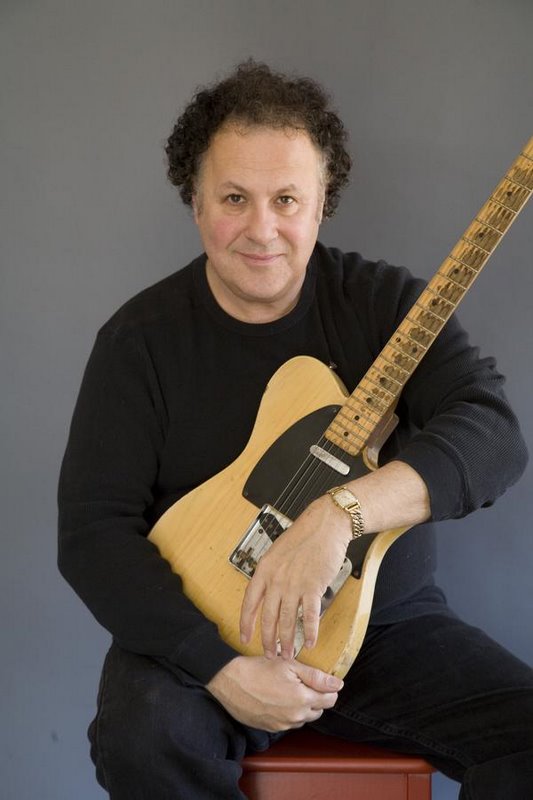
Arlen Roth
View on WikipediaThis article has multiple issues. Please help improve it or discuss these issues on the talk page. (Learn how and when to remove these messages)
|
Key Information
Arlen Roth (born October 30, 1952) is an American guitarist, teacher, and author. From 1982 to 1992, he was a columnist for Guitar Player magazine. Those ten years of columns became a book, Hot Guitar.
Music career
[edit]Arlen Roth's father, Al Ross (Abraham Roth), was a cartoonist for The New Yorker magazine and many other publications over a 75-year career. He lived to the age of 100, and was one of the four Roth Brothers: Al Ross, Irving Roir, Ben Roth and Salo, all of whom became cartoonists. Al Ross was also a great painter and fine artist, and he was the one who encouraged Arlen to become a guitarist when he saw Arlen playing along with the flamenco records he would play in the Bronx apartment.
Roth attended the High School of Music and Art in New York City as an art student from 1966 to 1969. He then studied at the Philadelphia College of Art from 1969 to 1971. His band Steel lived with him and played in Woodstock, New York, on weekends, where he was discovered. In 1970, Steel put on the first Woodstock Reunion concert to commemorate the one-year anniversary of the festival in Bethel, New York, where Roth lived every summer since he was born. Steel was the only band and played four hours each day. Soon after, he moved to Woodstock and began his career as a professional guitarist.
He began to back-up in recording and touring with Happy and Artie Traum, Eric Andersen, Tony Bird, Paul Butterfield, Art Garfunkel, John Herald, Janis Ian, Janey & Dennis (Janey Street & Dennis Pereca}, Looking Glass, Don McLean, John Prine, Helen Schneider, Pete Seeger, Phoebe Snow, Dusty Springfield, Loudon Wainwright III. He toured with the Bee Gees in 1974, Simon and Garfunkel in 1983, and Duane Eddy with Huey Lewis and the News. In 1976, he appeared in the Bob Dylan film Renaldo and Clara performing with Ramblin' Jack Elliott, Patti Smith and Phil Ochs.
He is featured performing on his 1953 Telecaster with Patti Smith in the 2019 Bob Dylan / Martin Scorsese film "Rolling Thunder." From the 1975 tour of the same name. Bob Dylan borrowed Roth's Martin 000-18 guitar that night, which Arlen bought from Ry Cooder earlier that year when Arlen was on tour with John Prine.
His first book, Slide Guitar, was published by Oak Publications when he was 21. In 2012 Thank You Les, a Les Paul tribute album and documentary, were released with Roth performing "Mr. Sandman" and his daughter Lexie Roth singing the Les Paul and Mary Ford song "Vaya Con Dios".
He released a Slide Guitar Summit album in 2015 featuring duets with guitarists Cindy Cashdollar, Sonny Landreth, David Lindley, Greg Martin, Lee Roy Parnell, Jack Pearson, Rick Vito, Jimmy Vivino, and Johnny Winter. This is said to be Winter's final recording.
Roth is a Telecaster enthusiast who wrote the book Masters of the Telecaster detailing the techniques of many famous Telecaster guitarists.[2] He has been called "Master of the Telecaster."
He has performed and recorded with Eric Andersen, the Bee Gees, Rory Block, Cindy Cashdollar, Ry Cooder, Bob Dylan, Duane Eddy, Ramblin' Jack Elliot, Pete Seeger, John Entwistle, Art Garfunkel, Danny Gatton, Vince Gill, Levon Helm, Bill Kirchen, Sonny Landreth, Albert Lee, David Lindley, Don McLean, Steve Morse, Phil Ochs, Brad Paisley, John Prine, John Sebastian, Simon and Garfunkel, Paul Simon, Phoebe Snow, James Taylor, Kate Taylor, Doris Abrahams, Rachel Faro, Livingston Taylor, Dan Hill, Rick Wakeman, Happy & Artie Traum, Marion Williams, Joe Louis Walker, and Steve Wariner.[3]
Roth's version of "Scarborough Fair" is featured on the soundtrack of the film Lost In Translation.
In 1998, Roth lost his wife Deborah, and their first child Gillian in a fatal auto accident on the Merritt Parkway in Connecticut. Gillian was 14 years old, and Deborah was 47. Gillian was an actress, a model, and a guitarist. She had just signed on to do a 27-episode TV show for Nickelodeon called the "Gunks" a show about an all-girl rock band, loosely based on "The Monkees."
Hot Licks video and audio instruction
[edit]In 1979 Roth and his wife Deborah started the Hot Licks Audio and Video label. With only $2000 left to their names, Roth decided that he was going to act on the idea he had had in 1973 to create taped musical instruction, as he had always encouraged his students to tape their private lessons. His very first advertisement featured 42 cassette lessons in all, stretched over 7 series of 6 tapes apiece. The tapes very quickly became very successful worldwide - many of his students were also very experienced professionals. While teaching Ralph Macchio the guitar parts for the movie Crossroads, he began recording his first videos (in 1984). Six of these featured Roth as instructor and one was by his friend John Entwistle, bass player of The Who. The close-ups of fretting, strumming, and other techniques he helped develop, and which were prominent in Crossroads, became the trademark of the videos.
The Hot Licks catalog grew to also include instructional videos for drums, banjo, lap steel, mandolin, voice and harmonica, with 150 artists and 180 videos. Roth has been recognized as the first to create video music instruction.[citation needed] In 2006 The Music Sales Group acquired the Hot Licks video catalog.[4]
From 2007 to 2012 Roth hosted a series of daily video lessons at Gibson.com.[5] It is estimated he has had close to 1 million students on Gibson.[citation needed] He also wrote daily blogs for Gibson Guitar. Arlen has also been known as the Master of the Telecaster.
Roth has stated that "many of these Hot Licks artists were also personal heroes of mine, and it was an honor to work with them".[6]
Eric Johnson, Joe Pass, George Benson, Ronnie Earl, Jimmy Bruno, Greg Martin, Lee Roy Parnell, Adrian Legg, Andy Summers, Emily Remler, Tuck Andress, Mick Taylor, Buddy Guy, Danny Gatton, James Burton, Jorge Morel, Bill Kanengiser, Joe Morello, Stuart Hamm, Harvey Mandel, Debbie Davies, David Bryan, Tico Torres, Joe Beck, Ginger Baker, Max D. Barnes, Rudy Sarzo, Tommy Aldridge, Carmine Appice, Vinnie Moore, Brian Setzer, Tal Farlow, Charlie Byrd, Mundell Lowe, Larry Coryell, Cornell Dupree, Junior Wells, J. Geils, Jimmy Thackery, Ronnie Earl, Duke Robillard, Warren Haynes, Allen Woody, David Grissom, Scotty Anderson, Lonnie Mack, Otis Rush, Gil Parris, Joe Morello, Sal Salvador, Jeff Tamelier, Steve Douglas, Mick Taylor, John Entwistle, Jerry Jemmott, Brent Mason, Johnny Hiland, Joe Bonamassa, Jimmy Thackery, Nils Lofgren, Robin Trower, Marty Friedman, Tommy Tedesco, Craig Chaquico, Steve Morse, John Jarvis, Michael Lee Firkins, Jason Becker, Michael Fath.
Media appearances
[edit]- Roth wrote and performed most, and coached all of Ralph Macchio's guitar parts in the 1986 movie Crossroads and directed many of those scenes. He also served as the film's official authenticator of any scenes involving music, and the performing of the music. On one day, the scene of Robert Johnson recording was halted because Roth noticed that the guitar's tuning pegs were from the wrong era.
- Roth appeared in the Bob Dylan film, Renaldo and Clara, performing with Bob Dylan, Joan Baez, Ramblin' Jack Elliot, Phil Ochs, and Patti Smith.
- Roth appeared on Late Night with Conan O'Brien with friend Danny Gatton, in 1994, performing "Tequila" from his album Toolin' Around.
- He appeared on Saturday Night Live in 1978 with Art Garfunkel. During warm-ups for this show Roth, Dan Aykroyd, and John Belushi, just for fun, put on sunglasses and outfits and performed "Rocket 88" for the audience.
- Roth's trademark tune is his instrumental version of "When a Man Loves a Woman", and was called "Perhaps the most intense workout ever recorded on a Telecaster" by Tom Wheeler of Guitar Player magazine. It reached No. 2 on the British Pop Charts, and was used by BBC Radio to sign off the air every night for many years.
- His column in Guitar Player, "Hot Guitar", ran for 10 years, and was later published as a book. He also wrote numerous articles for this and other magazines.
- Roth performed on the live German TV show, Ohne Filter, with Jack Bruce on bass, in 1984.
- Roth created and performed all the music for the Aaron Spelling TV show, 10-8: Officers on Duty.
- In 2014 Roth was interviewed on Dan Aykroyd's syndicated "Elwood's Bluesmobile" radio show for his SLIDE GUITAR SUMMIT album, and they talked about when he was on SNL in 1978, and when he, John Belushi and Akyroyd initiated the first trial Blues Brothers performance to warm up the crowd before the show.
- Entertainment Tonight did two specials on Arlen Roth's contributions to the film Crossroads
- In 2016 Roth wrote and performed a solo acoustic guitar piece for an ESPN film at the Minskoff Theater in NYC with Daveed Diggs and Leslie Odom, Jr. of the play Hamilton.
- In 2021 Roth performed at The Grand Ole Opry in Nashville with John Sebastian.
- In 2022 Roth was hired by Jessica Chastain, T. Bone Burnett and Michael Shannon to make Mr. Shannon believable as a guitarist in the film "George and Tammy."
Awards and honors
[edit]- Top 100 Most Influential Guitarists of All-time, Vintage Guitar magazine
- Top 50 Acoustic Guitarists of All-Time, Gibson.com
- Top 29 Best Rock Guitarists Ever Music Industry How-to
- Top 10 Guitar Sounds Ever Recorded, Vintage Guitar magazine, "Treat Her Right"
- New York Blues Hall of Fame (2015)
- Warren Guitars has a 3-pickup Arlen Roth Signature electric guitar model
- Santa Cruz Guitars released an Arlen Roth signature AR/OM acoustic guitar model
- Delaney Guitars has an Arlen Roth signature electric guitar model
- Inducted into the New York Country Music Hall of Fame (2023)
Discography
[edit]- Guitarist (Rounder, 1978)
- Hot Pickups (Rounder, 1979)
- Paint Job Breaking Records 1983
- Lonely Street (Flying Fish, 1984)
- Arlen Roth (Rounder, 1987)
- Toolin' Around (Blue Plate/Horizon, 1993)
- Drive It Home (Solid Air, 2001)
- Landscape (Aquinnah, 2005)
- Toolin' Around Woodstock w/Levon Helm (Aquinnah, 2007)
- Subway Walls and Tenement Halls: The Music of Simon and Garfunkel (Aquinnah, 2009)
- How Does it Feel? The Music of Bob Dylan (Aquinnah, 2009)
- All Tricked Out (Aquinnah, 2012)
- Arlen Roth and the Cordobas Live at the Iridium (2012)
- Slide Guitar Summit (Aquinnah, 2015)
- Paint it Black: Acoustic Stones (Aquinnah, 2016)[7]
- TELEMASTERS (Aquinnah, 2019)
- John Sebastian and Arlen Roth Explore the Spoonful Songbook (BMG/Renew/Sony, 2021)
- SUPER SOUL SESSION with Jerry Jemmott (BlueHeart Records, 2023)
- PLAYING OUT THE STRING(Aquinnah Records, 2024)
Bibliography
[edit]- Slide Guitar, Oak Publications
- How to Play Blues Guitar, Acorn Music
- Nashville Guitar, Oak Publications
- Arlen Roth's Complete Electric Guitar, Doubleday, Hal Leonard
- Hot Guitar, Miller/Freeman
- Arlen Roth's Complete Acoustic Guitar, Schirmer/Macmillan, Hal Leonard
- Heavy Metal Guitar, Schirmer/Macmillan
- Rock Guitar for Future Stars, Ballantine Books
- Masters of the Telecaster, Warner Publications
- Arlen Roth Teaches Slide Guitar, Hal Leonard
- Arlen Roth Teaches Fingerpicking, Hal Leonard
See also
[edit]References
[edit]- ^ Torreano, Bradley. "Arlen Roth". AllMusic. Retrieved 3 June 2018.
- ^ Masters of the Telecaster book description Archived March 20, 2006, at the Wayback Machine at JK Lutherie's website, (Accessed 12 August 2006)
- ^ Endorsing Artists: Arlen Roth Archived 2006-09-12 at the Wayback Machine at the Dean Markley Strings website, (Accessed 12 August 2006)
- ^ [1] Archived November 6, 2012, at the Wayback Machine
- ^ Gibson Guitar Lessons Archived 2008-09-15 at the Wayback Machine(Accessed 17 September 2008)
- ^ "Arlen Roth". Arlen Roth. Archived from the original on 2011-06-30. Retrieved 2015-11-04.
- ^ "Arlen Roth". AllMusic. Retrieved 3 June 2018.
External links
[edit]Arlen Roth
View on GrokipediaEarly Life and Influences
Childhood and Musical Beginnings
Arlen Roth was born on October 30, 1952, in the Bronx, New York City. His father, Al Ross (born Abraham Roth), was a prominent cartoonist who contributed to The New Yorker magazine over a 75-year career, fostering an artistic household that encouraged creative pursuits.[1][2][5] Roth's interest in music emerged early, sparked by his father's habit of listening to radio broadcasts featuring diverse sounds, which exposed him to the evolving American music landscape. At around age nine, he became drawn to the guitar, beginning his musical journey by learning informally through listening and imitation. Roth attended the High School of Music and Art in Manhattan from 1966 to 1969 as an art student, further immersing him in a creative environment.[6] By age 11 in 1963, he started formal classical guitar lessons in Greenwich Village, though these were brief; after acquiring an electric guitar, he largely became self-taught, honing his skills by studying records of influential artists like The Beatles.[2][7][8] The cultural vibrancy of 1960s New York, amid the folk revival, shaped Roth's early development, with his family's artistic environment providing a foundation for his growing passion. He soon began performing publicly in local scenes, including weekend gigs in Woodstock, New York, where he immersed himself in the burgeoning music community before transitioning to professional opportunities.[9][6]Key Inspirations and Early Training
Arlen Roth's guitar playing was profoundly shaped by a diverse array of influences during his formative years, drawing heavily from blues pioneers such as Muddy Waters, Son House, and Robert Johnson, whose raw emotional delivery and improvisational style informed his approach to expression on the instrument.[3] Folk figures like Rev. Gary Davis and Doc Watson further inspired Roth's appreciation for intricate acoustic arrangements and narrative-driven picking patterns, emphasizing precision and storytelling through music.[3] In the rock realm, innovators including Eric Clapton and Jimi Hendrix captivated him with their innovative use of electric tones and dynamic phrasing, blending blues roots with amplified energy to expand the guitar's sonic possibilities.[3] These artists collectively guided Roth's eclectic style, fostering a foundation in American roots music that prioritized feel and authenticity over rigid structure.[10] Roth developed his signature fingerpicking, slide guitar, and acoustic techniques primarily through self-directed study, immersing himself in early recordings of these influential musicians to dissect their methods note by note.[3] Although he briefly pursued formal classical guitar lessons in Greenwich Village starting around age 11, Roth quickly diverged from this path, preferring to emulate the organic, genre-blending approaches of blues and folk masters like Elmore James and Merle Travis, who emphasized slide work and thumb-picked rhythms.[2][10] His early training was thus experiential, honed by repeated listening to albums and historical tracks that captured the essence of pre-war blues and Appalachian folk traditions, allowing him to internalize complex patterns without extensive notation.[3] This hands-on absorption cultivated a versatile technique that integrated flatpicking precision with open-tuning explorations, setting the stage for his later professional adaptability.[10] In the late 1960s, as a teenager in New York City, Roth frequented the vibrant folk scenes of Greenwich Village, where the lingering echoes of the 1960s revival exposed him to live performances and communal jamming sessions that reinforced his inspirations from Dylan-era folk and emerging rock fusions.[2] These experiences, amid the coffeehouses and street corners buzzing with acoustic innovation, deepened his connection to the cultural undercurrents of blues-infused folk, encouraging experimentation with both traditional and amplified sounds in informal settings.[3] By age 15, Roth had begun experimenting with electric guitars and amplification, transitioning from his initial nylon-string classical instrument to models like a four-pickup Ideal electric, which allowed him to explore the distorted edges of rock and blues influences in a home setup.[3] This shift marked a pivotal evolution in his playing, bridging acoustic roots with electric vitality and laying groundwork for techniques that would later appear in session contexts.[10]Performing Career
Session Work and Tours
Roth began his professional career in the early 1970s as a session musician, contributing guitar parts to folk-rock recordings, including work with Pete Seeger during that decade.[3] His adaptability across genres allowed him to provide subtle guitar textures in studio settings, blending acoustic and electric elements to support diverse artists without overpowering their visions. He has also recorded and performed with artists such as Bob Dylan, Ry Cooder, James Taylor, Vince Gill, and Huey Lewis and the News.[2][3] One of Roth's first major tours came in 1974, when he joined the Bee Gees as rhythm guitarist, supporting their rising popularity during a pivotal period in their career shift toward disco influences.[11] This engagement highlighted his ability to deliver solid rhythmic support in high-profile live settings.[3] In the late 1970s, Roth toured extensively with Phoebe Snow across the US and Canada, serving as her lead guitarist and musical director starting in 1979.[12] His role emphasized versatile guitar work that complemented Snow's soulful vocals and jazz-inflected arrangements.[13] Roth's touring resume expanded in the 1980s with the Simon and Garfunkel reunion concert tour in 1983, where he performed lead guitar duties during their high-profile Central Park performance and subsequent shows.[12] Throughout these engagements, Roth's contributions focused on enhancing the duo's harmonic and melodic layers, demonstrating his proficiency in folk-rock and pop contexts.[14]Solo Recordings and Collaborations
Arlen Roth's solo recording career began with his debut album Guitarist in 1978, a instrumental showcase that earned him the Montreux Critics Award for Best Instrumental Album at the Montreux Jazz Festival.[2] Released on Rounder Records, the album highlighted Roth's early prowess in acoustic fingerpicking and blues-inflected melodies, drawing from influences like Mississippi John Hurt and Rev. Gary Davis.[2] Throughout the 1980s and beyond, Roth expanded his solo output with albums that demonstrated his growing mastery of electric guitar techniques, particularly on the Fender Telecaster. His 1980 release Hot Pickups blended rock, blues, and soul covers with original material, featuring tracks like a reinterpretation of "When a Man Loves a Woman," underscoring his shift toward more electrified, groove-oriented sounds.[15] Later works such as Tele-Masters (2019) further exemplified his Telecaster expertise through instrumental duets and tributes to the instrument's legacy in country, blues, and rock.[16] These recordings marked Roth's evolution from intricate acoustic fingerpicking—rooted in folk and ragtime traditions—to electric slide guitar and blues-rock, incorporating pedal steel and amplified tones for a fuller, more dynamic expression.[3][14] Roth's collaborative projects often positioned him as a co-lead artist, blending his style with peers to explore genre boundaries. The Slide Guitar Summit series, starting with its 2015 installment on Aquinnah Records, brought together slide specialists like Johnny Winter (in one of his final recordings), Sonny Landreth, and Rick Vito for a 14-track exploration of slide techniques across blues and rock contexts.[17] Similarly, Super Soul Session (2023), a partnership with bassist Jerry Jemmott on Blue Heart Records, reimagined soul and R&B classics with 13 tracks emphasizing Roth's electric guitar leads alongside Jemmott's foundational bass lines from artists like Aretha Franklin and Ray Charles.[18] These efforts highlighted Roth's ability to fuse his evolving slide and blues-rock sensibilities with collaborators' strengths. In 2024, Roth released Playing Out the String, his 20th solo album and fifth all-acoustic effort, returning to rootsy fingerpicking on 11 tracks of folk, blues, and standards performed on guitars like a 1960 Stella 12-string.[19] This self-released project via Aquinnah Records circled back to his acoustic origins while incorporating subtle slide elements, demonstrating a mature synthesis of his stylistic journey.[20]Educational Contributions
Hot Licks Instruction Series
In 1979, Arlen Roth co-founded Hot Licks Audio and Video in New York City with his wife Deborah, using just $2,000 to launch what became the pioneering provider of video-based music instruction.[12] Inspired by a 1973 student request for taped lessons during Roth's private teaching sessions, the company initially produced cassette-based audio lessons advertised in Guitar Player magazine, featuring 48 titles by Roth himself.[12] As VCR ownership grew in the 1980s, Hot Licks transitioned to video formats, establishing itself as the first to offer visual guitar instruction on VHS, which revolutionized accessible music education by demonstrating techniques in real-time.[12][21] Over its 25-year run under Roth's direction, Hot Licks produced hundreds of instructional videos, averaging 10 to 15 new titles annually and totaling around 180 lessons featuring Roth as instructor alongside guest artists such as Steve Morse, James Burton, and Eric Johnson.[12][6] Notable releases include Roth's Lap Steel Guitar (1999), which explores Hawaiian-style techniques, chord work, and damping on the instrument, and Masters of the Telecaster (1999), a comprehensive guide to Telecaster licks, riffs, and pedal steel bends drawn from iconic players.[22][23] These videos emphasized practical, performance-oriented learning, often including on-screen tablature and bonus performances to aid self-study.[12] In 2005, following personal tragedies including the deaths of his wife Deborah and daughter Gillian in 1998, Roth sold Hot Licks to Music Sales Corporation, which reissued the catalog on DVD and integrated it into digital platforms.[12] The series' enduring influence persists through online access via Hal Leonard, transitioning from VHS to streaming formats and continuing to shape modern guitar pedagogy.[24] Overall, Hot Licks has taught millions of students worldwide, democratizing advanced techniques across genres like blues, rock, and country for generations of guitarists.[12]Books and Authorship
Arlen Roth's contributions to guitar instruction through print media began with his seminal work Slide Guitar: Traditional, Country and Electric, published in 1975 by Oak Publications when he was 22 years old. This book pioneered detailed instruction on slide guitar techniques, covering essential riffs, exercises, tunings, and 16 complete songs for beginners to advanced players, filling a gap in accessible resources for bottleneck and open-string methods at the time.[25][2] In the late 1970s and early 1980s, Roth expanded his authorship with a series of instructional books on specialized styles, including How to Play Blues Guitar, Chicago Blues Guitar, and Nashville Guitar, which provided practical lessons on regional techniques such as Chicago-style blues phrasing and country picking patterns. These early titles, also issued by Oak Publications, became instant best-sellers and established Roth as a leading authority on electric and acoustic guitar pedagogy.[5][2] A major milestone in Roth's writing career was Hot Guitar, published in 1996 by Hal Leonard (formerly under the Hot Licks imprint), which compiled over a decade of his "Hot Licks" columns from Guitar Player magazine (1982–1992) into a comprehensive guide featuring licks, tips, and transcriptions across rock, blues, and fusion genres. Similarly, Masters of the Telecaster, released in 1996 by Warner Bros. Publications (now Alfred Music), served as a print companion to his instructional video, detailing Telecaster-specific techniques with historical insights and exercises drawn from iconic players.[26][27][2][28] Roth has authored eight best-selling instructional books in total, encompassing fingerstyle, blues, acoustic, and electric methods, with additional titles such as Arlen Roth’s Complete Acoustic Guitar (1980s, Oak/Hal Leonard), Arlen Roth’s Complete Electric Guitar (1980s, Oak/Hal Leonard), Rock Guitar for Future Stars (1990s, Hot Licks), and Heavy Metal Guitar (1990s, Hot Licks). These works, published initially through independent imprints like Oak and his own Hot Licks label, later transitioned to major publishers including Hal Leonard and Alfred Music for broader distribution.[2][29] Many of Roth's books have undergone updates and reissues since the 2000s, incorporating digital audio tracks, CDs, or online video access to enhance learning, and the 2023 The Art of Soloing under the Hot Licks series. Some titles, like Masters of the Telecaster, include brief references to companion videos for visual demonstration of techniques.Magazine Column and Teaching Impact
From 1982 to 1992, Arlen Roth wrote a monthly column titled "Hot Guitar" for Guitar Player magazine, where he explored guitar techniques, equipment reviews, and practical advice for players of all levels.[2] The column was highly regarded by readers, earning the top spot in annual polls by the widest margin during its decade-long run.[21] Roth's contributions to the magazine were later compiled into the book Hot Guitar, which preserved his insights on slide playing, Telecaster mastery, and innovative approaches to tone and phrasing for future generations.[2] This serialization allowed him to reach a broad audience beyond live performances, fostering a dialogue on evolving guitar methodologies. Beyond print, Roth's teaching legacy extends to extensive workshops and clinics held worldwide since the 1990s, where he demonstrated acoustic and electric techniques drawn from his collaborations with artists like Ry Cooder and Johnny Winter.[2] These sessions emphasized experiential learning, encouraging students to adapt styles from blues and folk traditions to their own playing. Post-2000, he expanded into online tutorials, producing over 1,000 video lessons and blog posts for Gibson.com from 2007 to 2012, amassing more than one million followers.[3][2] Roth's pedagogical influence has shaped generations of guitarists, earning him recognition as one of the top 100 most influential players by Vintage Guitar magazine and a spot in Gibson's top 50 acoustic guitarists.[2] His focus on authentic, personality-driven instruction—rather than rigid exercises—has inspired countless musicians to explore diverse genres, from rockabilly to slide blues. As of 2025, Roth maintains an active educational presence through his website, offering resources on technique and gear, alongside social media platforms like Facebook and Instagram, where he shares clips and tips for ongoing learner engagement.[2][3]Media Appearances
Film and Documentary Roles
Arlen Roth made notable appearances in several films and documentaries, beginning with his role in Bob Dylan's experimental 1978 feature Renaldo and Clara. In this semi-autobiographical work, which blends concert footage, interviews, and narrative elements from Dylan's 1975-1976 Rolling Thunder Revue tour, Roth performed on guitar during a segment featuring Ramblin' Jack Elliott.[30] Roth also appeared in Martin Scorsese's 2019 Netflix documentary Rolling Thunder Revue: A Bob Dylan Story, which chronicles the same 1975 tour through a mix of archival performances, interviews, and fictionalized elements. He is featured performing on his 1953 Fender Telecaster alongside artists like Patti Smith, capturing the raw energy of the revue's live shows.[11] Beyond on-screen roles, Roth contributed significantly to film soundtracks as a session guitarist during the 1970s and 1980s. A prominent example is his work on the 1986 blues drama Crossroads, where he composed and recorded many of the guitar parts, served as musical consultant, and coached lead actor Ralph Macchio in guitar performance for authenticity in scenes depicting the legend of Robert Johnson.[31][32] Roth extended his influence into directing and producing instructional films focused on guitar techniques. In 1999, he helmed Arlen Roth - Lap Steel Guitar, a video tutorial demonstrating slide and lap steel playing styles, and Arlen Roth's Masters of the Telecaster, which explores the history and mastery of the Fender Telecaster through demonstrations and interviews with notable players.[23] Additionally, Roth featured prominently in music documentaries centered on guitar traditions. The 2016 short film Brass, Glass, & Steel: The Making of Arlen Roth's Slide Guitar Summit follows the recording process of his collaborative album, showcasing sessions with slide guitarists like Cindy Cashdollar and Roy Book Binder in studios from New York to Nashville, highlighting the instrument's evolution in American roots music.[33]Television and Broadcast Features
Arlen Roth made notable guest appearances on major television programs during the 1980s, including The Tonight Show Starring Johnny Carson, where he showcased his Telecaster expertise alongside other music luminaries.[34] He also performed on the BBC's Wogan Show, highlighting his versatile guitar style in a live international broadcast.[34] Additional spots on American music series such as Austin City Limits and Nashville Now further established his presence in broadcast media, focusing on country and roots influences.[34] In the 1990s, Roth contributed to cable and instructional programming through his Hot Licks video series, which aired segments on guitar techniques via specialized music channels, reaching aspiring musicians with demonstrations of slide, blues, and Telecaster playing.[12] These broadcasts emphasized practical lessons, including collaborations with artists like Danny Gatton, whose 1994 performance with Roth on Late Night with Conan O'Brien—featuring a high-energy rendition of "Tequila"—gained cult status among guitar enthusiasts.[35] Roth's radio presence spanned decades, with his music featured on public radio folk programs such as Juke Joint on WCMU, including alongside bassist Jerry Jemmott in episodes blending blues and roots music since the 1980s.[36] More recently, in 2024, he discussed his career and new acoustic album Playing Out the String on podcasts like Zig At The Gig, sharing insights into his instructional legacy and collaborations.[37] Online broadcasts, including YouTube interviews such as the June 2025 episode with Levi Clay on guitar teaching innovations, continued to promote his 2024 release through live discussions and demonstrations.[38]Awards and Honors
Hall of Fame Inductions
Arlen Roth was inducted into the New York Blues Hall of Fame in 2015 for his longstanding contributions to blues guitar playing and education.[39] The ceremony occurred on May 31, 2015, at the B.B. King Blues Club & Grill in New York City as part of an induction event and fundraiser, featuring live performances by Roth and fellow inductees such as Garland Jeffreys, Garth Hudson and Sister Maud Hudson, Kirk Yano, Larry Johnson, Porkchop Willie, and Richard Lee.[40] Roth performed with his band, including drummer Shawn Pelton and guitarist John Paris, highlighting his blues-infused acoustic and electric styles during the event.[41] Roth received another major honor with his induction into the New York State Country Music Hall of Fame in 2023, acknowledging his innovative acoustic and slide guitar techniques within country and roots music traditions.[2] The annual ceremony, a dinner dance inducting select artists, took place on October 29, 2023, in Cortland, New York, at the Cortland Country Music Park.[42] Roth performed at the event, showcasing his signature Olympus guitar and engaging with longtime country music enthusiasts in attendance.[43] These institutional recognitions have underscored Roth's cross-genre influence, amplifying his visibility among blues and country audiences through subsequent performances and tributes to his foundational role in guitar innovation.[44]Critical Acclaim and Endorsements
Arlen Roth's debut album Guitarist (1978) received the Montreux Critics Award for Best Instrumental Album of the Year, recognizing his innovative acoustic and electric guitar work.[2] This early accolade highlighted Roth's ability to blend traditional fingerpicking with modern techniques, establishing him as a versatile instrumentalist early in his career.[45] Roth earned four Grammy nominations for his 2012 album All Tricked Out!, which showcased his mastery of the Telecaster through a series of duets and original compositions.[2] These nominations underscored his influence in blues and roots music production.[46] His guitar techniques have been praised in industry publications for their precision and expressiveness. Guitar Player magazine, where Roth contributed a regular column from 1982 to 1992, lauded his instructional approach and playing style as foundational for aspiring guitarists, emphasizing his clean tone and rhythmic drive.[3] Similarly, Acoustic Guitar magazine has highlighted Roth's fingerstyle and slide techniques in features, describing them as influential in acoustic blues traditions.[3] Roth's 2024 release Playing Out the String, an all-acoustic collection of folk and blues standards, garnered positive reviews in blues and roots music outlets for its intimate, rootsy interpretations. Blues Blast Magazine commended the album's "consummate skill on the strings," noting standout solo renditions of classics like Blind Blake's "Diddy Wah Diddy."[19] Americana Highways praised its authenticity and creativity in revitalizing old folk tunes.[20]Discography
Solo Albums
Arlen Roth has released 20 solo albums since his debut in 1978, marking a prolific career that blends rock, blues, jazz, and acoustic roots music. His early recordings were issued on established independent labels like Rounder Records and Flying Fish, reflecting his emergence as a versatile guitarist in the late 1970s and 1980s. Beginning with Landscape in 2005, Roth shifted to releasing music on his own Aquinnah Records label, which he founded to maintain creative control over his projects. This transition allowed for greater experimentation, particularly in self-production and thematic explorations of acoustic guitar techniques.[3][1] Roth's solo work demonstrates a clear evolution from electric, high-energy instrumental rock in his initial releases to a predominant focus on acoustic fingerstyle and slide guitar in later decades. Albums from the 1970s and 1980s often featured electric Telecaster-driven tracks with influences from blues and rockabilly, while post-2000 efforts emphasize intimate, roots-oriented acoustics, including tributes to iconic songwriters. Many of these later albums are self-produced, highlighting Roth's hands-on approach to capturing his signature tone and arrangements.[10][47] The following table lists select verified solo albums in chronological order, focusing on studio releases under his primary name (total of 20 solo albums released as of 2024):| Year | Title | Label |
|---|---|---|
| 1978 | Guitarist | Rounder Records[48] |
| 1980 | Hot Pickups | Rounder Records[49] |
| 1984 | Paint Job | Breaking Records |
| 1985 | Lonely Street | Flying Fish Records |
| 1987 | Arlen Roth | Rounder Records[50] |
| 1994 | Toolin' Around | Blue Plate Music |
| 2001 | Drive It Home | Solid Air Records |
| 2005 | Landscape | Aquinnah Records |
| 2008 | Toolin' Around Woodstock | Aquinnah Records |
| 2009 | Plays the Music of Bob Dylan: How Does It Feel? | Aquinnah Records |
| 2012 | All Tricked Out! | Aquinnah Records |
| 2015 | Plays the Music of Simon & Garfunkel: Subway Walls and Tenement Halls | Aquinnah Records |
| 2016 | Paint It Black: Acoustic Stones | Aquinnah Records |
| 2024 | Playing Out the String | Aquinnah Records |
