
Recent from talks
Eldiguzids
Knowledge base stats:
Talk channels stats:
Members stats:
Eldiguzids
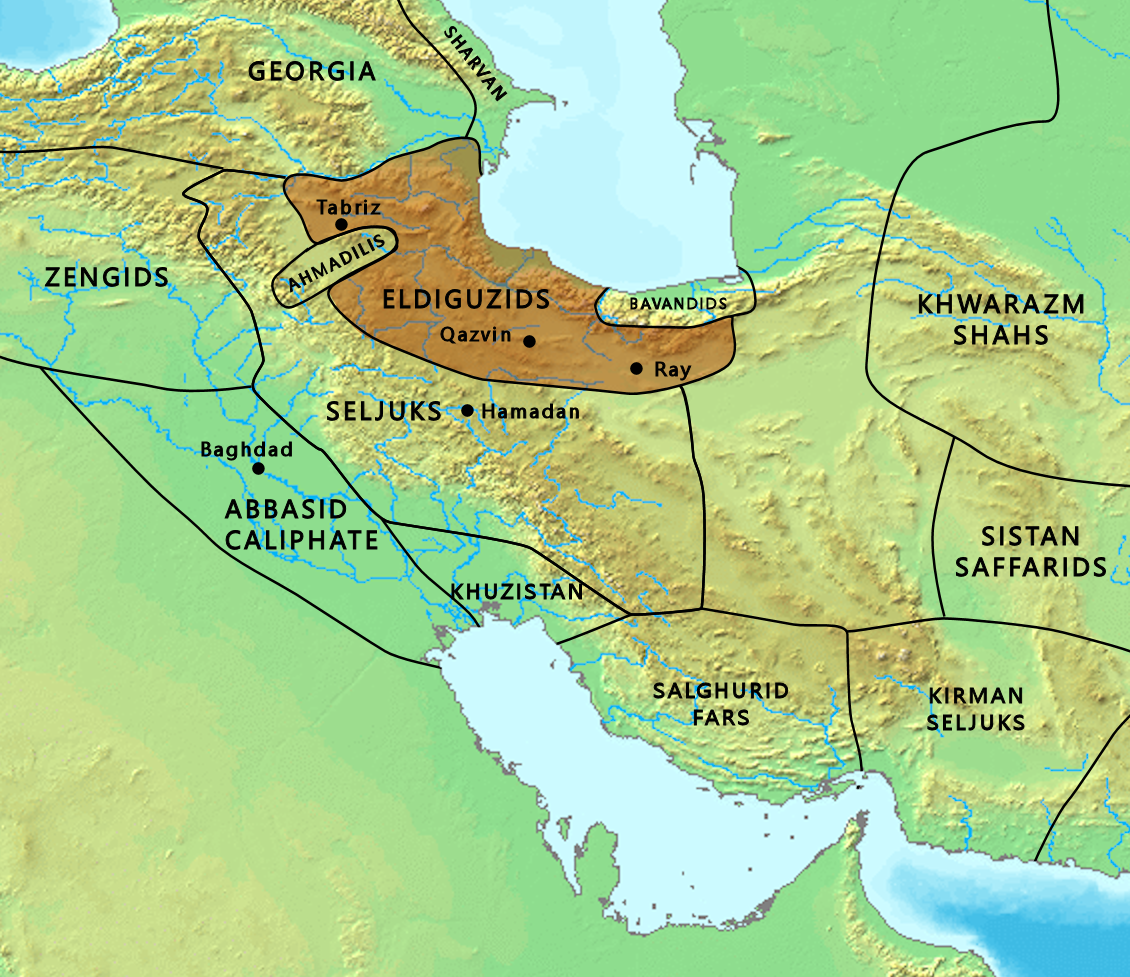
The Ildegizids, Eldiguzids or Ildenizids, also known as Atabegs of Azerbaijan (اتابکان آذربایجان Atabakan-e Āzarbayjan), were an Atabegate of the Seljuk Empire, and a Sunni Muslim Turkic dynasty (started by Eldiguz of Kipchak origin), which controlled most of northwestern Persia, eastern Transcaucasia, including Arran, most of Iranian Azerbaijan, and Jibal. At their maximum extent, the territory under their control, roughly corresponds to most of north-western Iran, most of the regions of modern Azerbaijan and smaller portions in modern Armenia (southern part), Turkey (northeastern part) and Iraq (eastern part). Down to the death in war 1194 of Toghril b. Arslan, last of the Great Seljuq rulers of Iraq and Persia, the Ildenizids ruled as theoretical subordinates of the Sultans, acknowledging this dependence on their coins almost down to the end of the Seljuqs. Thereafter, they were in effect an independent dynasty, until the westward expansion of the Mongols and the Khwarazm-Shahs weakened and then brought the line to its close.
Atabeg (literally "father-lord" in Turkic) was the title conferred upon the Turkic officers who served as guardians of minor Seljuq rulers. In the political circumstances of the time, Atabegs were not only tutors and vice-regents of their princes, but also de facto rulers. At the height of Eldiguzid power, their territory stretched from Isfahan in the south to the borders of Kingdom of Georgia and Shirvan in the north. However, closer to the end of their reign amidst continuous conflicts with the Kingdom of Georgia, the Eldiguzid territory shrank to include only Azerbaijan and eastern Transcaucasia.
The historical significance of the Atabeg of Azerbaijan lies in their firm control over north-western Persia during the later Seljuq period and also their role in Transcaucasia as champions of Islam against the Bagratids of Georgia.
In 1136, Sultan Ghiyath ad-Din Mas'ud (c. 1134–1152) appointed Shams ad-Din Eldiguz (c. 1135/36–1175) to be an atabeg of Arslan-Shah, the juvenile successor of the throne and transferred Azerbaijan to his possession as iqta. Eldegiz chose Barda as his residence, and attracted the local emirs to his camp.
He made himself virtually independent ruler of Azerbaijan by 1146. His marriage with the widow of Sultan Toghrul II (1132–1133; Masud's brother and predecessor) afforded him to intervene in the dynastic strife which erupted upon Mas'ud's death in 1152. He succeeded, in 1160, in deposing Suleiman-Shah and installing his stepson Arslan-Shah (c.1160–1175) as a Sultan. Conferred with the rank of Atabeg, Eldiguz now became a chief protector of the Sultan's authority.
The word azam (meaning "great" in Arabic) was added to his title and he was also known as Atabek-e Azam. All of the state's subsequent rulers used to hold this title. During his reign, Eldiguz could subdue a spacious territory between the Caucasus and Persian Gulf. The territory belonging to him stretched from the gate of Tbilisi up to Makran.[citation needed] He had possessed Iranian Azerbaijan, Arran, Shirvan, Jibal, Hamadan, Gilan,[citation needed] Mazandaran,[citation needed] Isfahan and Rey. The Atabegs of Mosul, Kerman and Fars as well as the feudals of Shirvan, Khuzestan, Ahlat, Arzan-ar-Rum and Maragha became his liegemen.
Kingdom of Georgia, whose army was additionally strengthened by the Kipchak mercenaries, became the strongest rival of the Shams al-Din Eldiguz. In 1138, Georgian king Demetrius I, attacked the earthquake-ridden city of Ganja. While leaving the city, his troops carried off the well-known gate of Ganja as their trophy, which up to this date remains on display at the Gelati monastery. From 1161 onwards Georgians began to make plundering raids and outright conquests on Ani, Dvin, Ganja, Nakhchivan and other regions controlled by Atabegs.
Eldiguz formed a coalition with other Seljuqids in the beginning of the 1160s to fight against the Georgians, and in 1163 the allies inflicted a defeat on king George III of Georgia.[citation needed] The Seljuqid rulers were jubilant, and they prepared for a new campaign. However, this time they were forestalled by George III, who marched into Arran at the beginning of 1166, occupied a region extending to faraway cities as Nakhchivan and Beylagan, devastated the land and returned with prisoners and booty. There seemed to be no end to the war between George III and atabeg Eldiguz. But the belligerents were exhausted to such an extent that Eldiguz proposed an armistice. George had no alternative but to make concessions. Eldiguz restored Ani to its former rulers, the Shaddadids, who became his vassals.[citation needed]
Hub AI
Eldiguzids AI simulator
(@Eldiguzids_simulator)
Eldiguzids
The Ildegizids, Eldiguzids or Ildenizids, also known as Atabegs of Azerbaijan (اتابکان آذربایجان Atabakan-e Āzarbayjan), were an Atabegate of the Seljuk Empire, and a Sunni Muslim Turkic dynasty (started by Eldiguz of Kipchak origin), which controlled most of northwestern Persia, eastern Transcaucasia, including Arran, most of Iranian Azerbaijan, and Jibal. At their maximum extent, the territory under their control, roughly corresponds to most of north-western Iran, most of the regions of modern Azerbaijan and smaller portions in modern Armenia (southern part), Turkey (northeastern part) and Iraq (eastern part). Down to the death in war 1194 of Toghril b. Arslan, last of the Great Seljuq rulers of Iraq and Persia, the Ildenizids ruled as theoretical subordinates of the Sultans, acknowledging this dependence on their coins almost down to the end of the Seljuqs. Thereafter, they were in effect an independent dynasty, until the westward expansion of the Mongols and the Khwarazm-Shahs weakened and then brought the line to its close.
Atabeg (literally "father-lord" in Turkic) was the title conferred upon the Turkic officers who served as guardians of minor Seljuq rulers. In the political circumstances of the time, Atabegs were not only tutors and vice-regents of their princes, but also de facto rulers. At the height of Eldiguzid power, their territory stretched from Isfahan in the south to the borders of Kingdom of Georgia and Shirvan in the north. However, closer to the end of their reign amidst continuous conflicts with the Kingdom of Georgia, the Eldiguzid territory shrank to include only Azerbaijan and eastern Transcaucasia.
The historical significance of the Atabeg of Azerbaijan lies in their firm control over north-western Persia during the later Seljuq period and also their role in Transcaucasia as champions of Islam against the Bagratids of Georgia.
In 1136, Sultan Ghiyath ad-Din Mas'ud (c. 1134–1152) appointed Shams ad-Din Eldiguz (c. 1135/36–1175) to be an atabeg of Arslan-Shah, the juvenile successor of the throne and transferred Azerbaijan to his possession as iqta. Eldegiz chose Barda as his residence, and attracted the local emirs to his camp.
He made himself virtually independent ruler of Azerbaijan by 1146. His marriage with the widow of Sultan Toghrul II (1132–1133; Masud's brother and predecessor) afforded him to intervene in the dynastic strife which erupted upon Mas'ud's death in 1152. He succeeded, in 1160, in deposing Suleiman-Shah and installing his stepson Arslan-Shah (c.1160–1175) as a Sultan. Conferred with the rank of Atabeg, Eldiguz now became a chief protector of the Sultan's authority.
The word azam (meaning "great" in Arabic) was added to his title and he was also known as Atabek-e Azam. All of the state's subsequent rulers used to hold this title. During his reign, Eldiguz could subdue a spacious territory between the Caucasus and Persian Gulf. The territory belonging to him stretched from the gate of Tbilisi up to Makran.[citation needed] He had possessed Iranian Azerbaijan, Arran, Shirvan, Jibal, Hamadan, Gilan,[citation needed] Mazandaran,[citation needed] Isfahan and Rey. The Atabegs of Mosul, Kerman and Fars as well as the feudals of Shirvan, Khuzestan, Ahlat, Arzan-ar-Rum and Maragha became his liegemen.
Kingdom of Georgia, whose army was additionally strengthened by the Kipchak mercenaries, became the strongest rival of the Shams al-Din Eldiguz. In 1138, Georgian king Demetrius I, attacked the earthquake-ridden city of Ganja. While leaving the city, his troops carried off the well-known gate of Ganja as their trophy, which up to this date remains on display at the Gelati monastery. From 1161 onwards Georgians began to make plundering raids and outright conquests on Ani, Dvin, Ganja, Nakhchivan and other regions controlled by Atabegs.
Eldiguz formed a coalition with other Seljuqids in the beginning of the 1160s to fight against the Georgians, and in 1163 the allies inflicted a defeat on king George III of Georgia.[citation needed] The Seljuqid rulers were jubilant, and they prepared for a new campaign. However, this time they were forestalled by George III, who marched into Arran at the beginning of 1166, occupied a region extending to faraway cities as Nakhchivan and Beylagan, devastated the land and returned with prisoners and booty. There seemed to be no end to the war between George III and atabeg Eldiguz. But the belligerents were exhausted to such an extent that Eldiguz proposed an armistice. George had no alternative but to make concessions. Eldiguz restored Ani to its former rulers, the Shaddadids, who became his vassals.[citation needed]
Recent media