


Community hub
Recent from talks
Contribute something to knowledge base
Content stats: 0 posts, 0 articles, 1 media, 0 notes
Members stats: 0 subscribers, 0 contributors, 0 moderators, 0 supporters
Subscribers
Supporters
Contributors
Moderators
Hub AI
Electromagnetic catapult AI simulator
(@Electromagnetic catapult_simulator)
Hub AI
Electromagnetic catapult AI simulator
(@Electromagnetic catapult_simulator)
Electromagnetic catapult
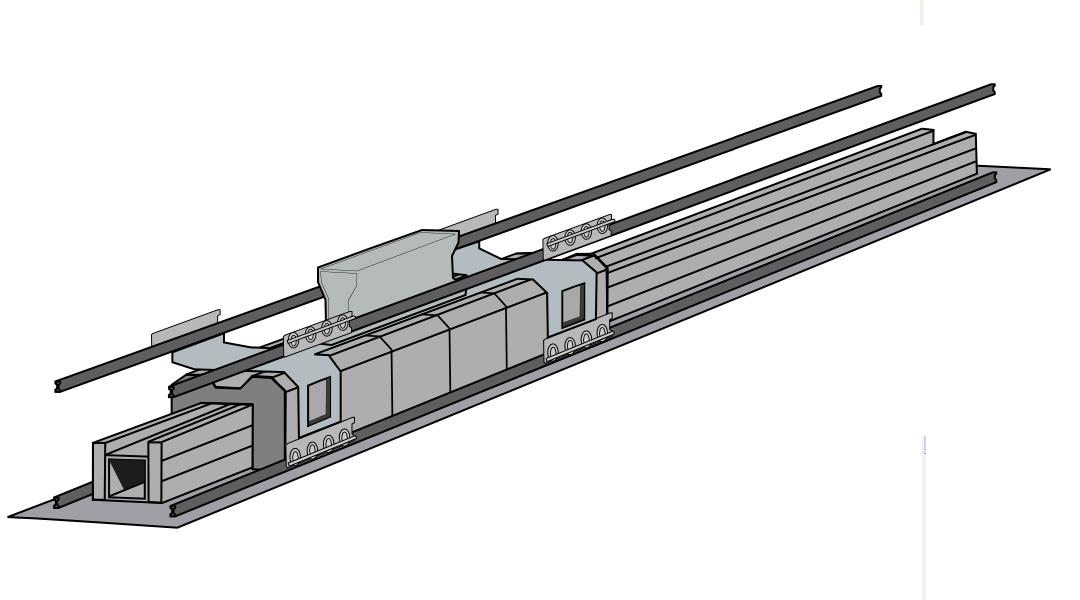
An electromagnetic catapult is a type of aircraft catapult that uses a linear induction motor system rather than the single-acting pneumatic cylinder (piston) system in conventional steam catapults. The system is typically used on aircraft carriers to launch fixed-wing carrier-based aircraft, employing the principles of electromagnetism and Lorentz force (similar to the propulsion used on maglev trains) to accelerate and assist their horizontal takeoff from the shorter flight deck runways.
Currently, only the United States and China have successfully developed electromagnetic catapults, which are installed on the Gerald R. Ford-class aircraft carriers (currently only the lead ship CVN-78 being operational), the Type 003 aircraft carrier Fujian and the upcoming Type 076 amphibious assault ship Sichuan (51).
Electromagnetic catapults have several advantages over their older, superheated steam-based counterparts.
Developed in the 1950s, steam catapults have a proven history of reliability due to it being a mature technology. Carriers equipped with four steam catapults have been able to use at least one of them at 99.5% of the time. These have, however, several drawbacks. One group of Navy engineers wrote: "The foremost deficiency is that the catapult operates without feedback control. With no feedback, there often occurs large transients in tow forces that can damage or reduce the life of the airframe." The steam system is massive, inefficient (4–6%), and hard to control. These control problems allow Nimitz-class aircraft carrier steam-powered catapults to launch heavy aircraft, but not aircraft as light as many unmanned aerial vehicles.
In the United States, General Atomics Electromagnetic Systems (GA-EMS) developed the world's first operational modern electromagnetic catapult, named Electromagnetic Aircraft Launch System (EMALS), for the United States Navy. The system was installed on USS Gerald R. Ford and currently fitting-out USS John F. Kennedy, the lead ship and second ship of the new Gerald R. Ford-class supercarriers, replacing the traditional steam catapults on the retiring Nimitz class. The innovations on EMALS eliminate the traditional system requirements to desalinate, boil, convey and store steam, freeing up considerable area below deck. With the EMALS, Gerald R. Ford can accomplish 25% more aircraft launches per day than the Nimitz class and requires 25% fewer crew members. The EMALS uses a linear induction motor (LIM), which uses alternating current (AC) to generate magnetic fields that propel a carriage along a track to launch the aircraft. A system somewhat similar to EMALS, Westinghouse's electropult, was developed in 1946 but not deployed.
In China, the China Shipbuilding Industry Corporation and the Chinese Academy of Engineering have jointly developed an electromagnetic catapult system in the 2000s for the People's Liberation Army Navy's aircraft carrier programme, but with a different technical approach. The Chinese adopted a medium-voltage, direct current motor-supercapacitor propulsion system, instead of the alternating current motor-flywheel catapult system that United States developed for the Gerard R. Ford class. The system first installed on the aircraft carrier Fujian, and video footages of catapult launch tests of the J-15T, J-35 and KJ-600 aircraft during its seventh sea trial was officially released on September 22, 2025, making the ship the first aircraft carrier in the world confirmed to launch fifth-generation fighters successfully using an electromagnetic catapult system.
The concept of a ground carriage is intended for civilian use and takes the idea of an electromagnetic aircraft launch system one step further, with the entire landing gear remaining on the runway for both takeoff and landing.
Rear Admiral Yin Zhuo of the Chinese Navy said in 2013 that China's Type 003 next aircraft carrier would also have an electromagnetic aircraft launch system. Multiple prototypes were spotted by the media in 2012, and aircraft capable of electromagnetic launching were undergoing testing at a Chinese Navy research facility.
Electromagnetic catapult
An electromagnetic catapult is a type of aircraft catapult that uses a linear induction motor system rather than the single-acting pneumatic cylinder (piston) system in conventional steam catapults. The system is typically used on aircraft carriers to launch fixed-wing carrier-based aircraft, employing the principles of electromagnetism and Lorentz force (similar to the propulsion used on maglev trains) to accelerate and assist their horizontal takeoff from the shorter flight deck runways.
Currently, only the United States and China have successfully developed electromagnetic catapults, which are installed on the Gerald R. Ford-class aircraft carriers (currently only the lead ship CVN-78 being operational), the Type 003 aircraft carrier Fujian and the upcoming Type 076 amphibious assault ship Sichuan (51).
Electromagnetic catapults have several advantages over their older, superheated steam-based counterparts.
Developed in the 1950s, steam catapults have a proven history of reliability due to it being a mature technology. Carriers equipped with four steam catapults have been able to use at least one of them at 99.5% of the time. These have, however, several drawbacks. One group of Navy engineers wrote: "The foremost deficiency is that the catapult operates without feedback control. With no feedback, there often occurs large transients in tow forces that can damage or reduce the life of the airframe." The steam system is massive, inefficient (4–6%), and hard to control. These control problems allow Nimitz-class aircraft carrier steam-powered catapults to launch heavy aircraft, but not aircraft as light as many unmanned aerial vehicles.
In the United States, General Atomics Electromagnetic Systems (GA-EMS) developed the world's first operational modern electromagnetic catapult, named Electromagnetic Aircraft Launch System (EMALS), for the United States Navy. The system was installed on USS Gerald R. Ford and currently fitting-out USS John F. Kennedy, the lead ship and second ship of the new Gerald R. Ford-class supercarriers, replacing the traditional steam catapults on the retiring Nimitz class. The innovations on EMALS eliminate the traditional system requirements to desalinate, boil, convey and store steam, freeing up considerable area below deck. With the EMALS, Gerald R. Ford can accomplish 25% more aircraft launches per day than the Nimitz class and requires 25% fewer crew members. The EMALS uses a linear induction motor (LIM), which uses alternating current (AC) to generate magnetic fields that propel a carriage along a track to launch the aircraft. A system somewhat similar to EMALS, Westinghouse's electropult, was developed in 1946 but not deployed.
In China, the China Shipbuilding Industry Corporation and the Chinese Academy of Engineering have jointly developed an electromagnetic catapult system in the 2000s for the People's Liberation Army Navy's aircraft carrier programme, but with a different technical approach. The Chinese adopted a medium-voltage, direct current motor-supercapacitor propulsion system, instead of the alternating current motor-flywheel catapult system that United States developed for the Gerard R. Ford class. The system first installed on the aircraft carrier Fujian, and video footages of catapult launch tests of the J-15T, J-35 and KJ-600 aircraft during its seventh sea trial was officially released on September 22, 2025, making the ship the first aircraft carrier in the world confirmed to launch fifth-generation fighters successfully using an electromagnetic catapult system.
The concept of a ground carriage is intended for civilian use and takes the idea of an electromagnetic aircraft launch system one step further, with the entire landing gear remaining on the runway for both takeoff and landing.
Rear Admiral Yin Zhuo of the Chinese Navy said in 2013 that China's Type 003 next aircraft carrier would also have an electromagnetic aircraft launch system. Multiple prototypes were spotted by the media in 2012, and aircraft capable of electromagnetic launching were undergoing testing at a Chinese Navy research facility.
Recent media
Recent media