



Community hub
Recent from talks
Contribute something to knowledge base
Content stats: 0 posts, 0 articles, 1 media, 0 notes
Members stats: 0 subscribers, 0 contributors, 0 moderators, 0 supporters
Subscribers
Supporters
Contributors
Moderators
Emilio Salgari
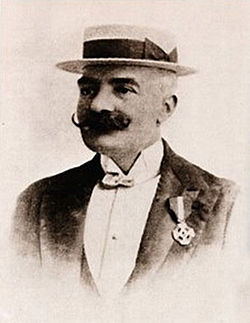
Emilio Salgari (Italian pronunciation: [eˈmiːljo salˈɡaːri], but often erroneously pronounced [ˈsalɡari]; 21 August 1862 – 25 April 1911) was an Italian writer of action adventure swashbucklers and a pioneer of science fiction.
In Italy, his extensive body of work was more widely read than that of Dante Alighieri. In the 21st century, he is still among the 40 most translated Italian authors. Many of his most popular novels have been adapted as comics, animated series and feature films. He is considered the father of Italian adventure fiction and Italian pop culture, and the "grandfather" of the Spaghetti Western.
Emilio Salgari was born in Verona to a family of modest merchants. From a young age, he had the desire to explore the seas; he studied seamanship at a nautical technical institution in Venice, but his academic performance was too poor, and he never graduated.
He began his writing career as a reporter for the daily La Nuova Arena, which published some of his work as serials. As his powers of narration grew, so did his reputation for having lived a life of adventure. He claimed to have explored the Sudan desert, met Buffalo Bill in Nebraska (he had actually met him during his "Wild West Show" tour of Italy), and sailed the Seven Seas. His early biographies were filled with adventurous tales set in the Far East, events which he claimed were the basis for much of his work. Salgari had actually never ventured farther than the Adriatic Sea.
He turned his passion for exploration and discovery to writing. His first stories were serialized in newspapers. Early in his career, he began signing his tales as "Captain Salgari", a title he once defended in a duel when his claim to it was questioned.
Though knighted by the Queen of Italy and wildly popular, Salgari did not earn much money from his books and lived hand to mouth for most of his life.
In 1892, Salgari married Ida Peruzzi – nicknamed "Aida," with whom he was very happy for years. The couple had four children. Salgari's private life was clouded by several tragedies. In 1889 his father committed suicide. Ida became ill after 1903 and Salgari's struggling increased with her medical bills.
These events led Salgari to depression, and he attempted suicide in 1910. After Ida was committed to a mental ward in 1911, Salgari was overwhelmed and took his own life soon afterwards, imitating the Japanese ritual of seppuku, and died on 25 April 1911. He left three letters, addressed to his and Ida's children, his publisher, and the editors of his newspaper in Turin. The letter to his publisher said:
Emilio Salgari
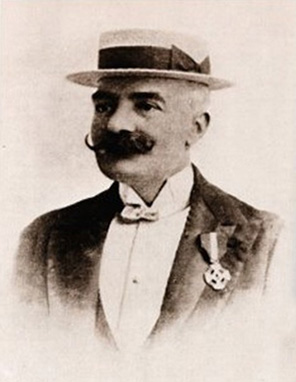
Emilio Salgari (Italian pronunciation: [eˈmiːljo salˈɡaːri], but often erroneously pronounced [ˈsalɡari]; 21 August 1862 – 25 April 1911) was an Italian writer of action adventure swashbucklers and a pioneer of science fiction.
In Italy, his extensive body of work was more widely read than that of Dante Alighieri. In the 21st century, he is still among the 40 most translated Italian authors. Many of his most popular novels have been adapted as comics, animated series and feature films. He is considered the father of Italian adventure fiction and Italian pop culture, and the "grandfather" of the Spaghetti Western.
Emilio Salgari was born in Verona to a family of modest merchants. From a young age, he had the desire to explore the seas; he studied seamanship at a nautical technical institution in Venice, but his academic performance was too poor, and he never graduated.
He began his writing career as a reporter for the daily La Nuova Arena, which published some of his work as serials. As his powers of narration grew, so did his reputation for having lived a life of adventure. He claimed to have explored the Sudan desert, met Buffalo Bill in Nebraska (he had actually met him during his "Wild West Show" tour of Italy), and sailed the Seven Seas. His early biographies were filled with adventurous tales set in the Far East, events which he claimed were the basis for much of his work. Salgari had actually never ventured farther than the Adriatic Sea.
He turned his passion for exploration and discovery to writing. His first stories were serialized in newspapers. Early in his career, he began signing his tales as "Captain Salgari", a title he once defended in a duel when his claim to it was questioned.
Though knighted by the Queen of Italy and wildly popular, Salgari did not earn much money from his books and lived hand to mouth for most of his life.
In 1892, Salgari married Ida Peruzzi – nicknamed "Aida," with whom he was very happy for years. The couple had four children. Salgari's private life was clouded by several tragedies. In 1889 his father committed suicide. Ida became ill after 1903 and Salgari's struggling increased with her medical bills.
These events led Salgari to depression, and he attempted suicide in 1910. After Ida was committed to a mental ward in 1911, Salgari was overwhelmed and took his own life soon afterwards, imitating the Japanese ritual of seppuku, and died on 25 April 1911. He left three letters, addressed to his and Ida's children, his publisher, and the editors of his newspaper in Turin. The letter to his publisher said:
Recent media
Recent media